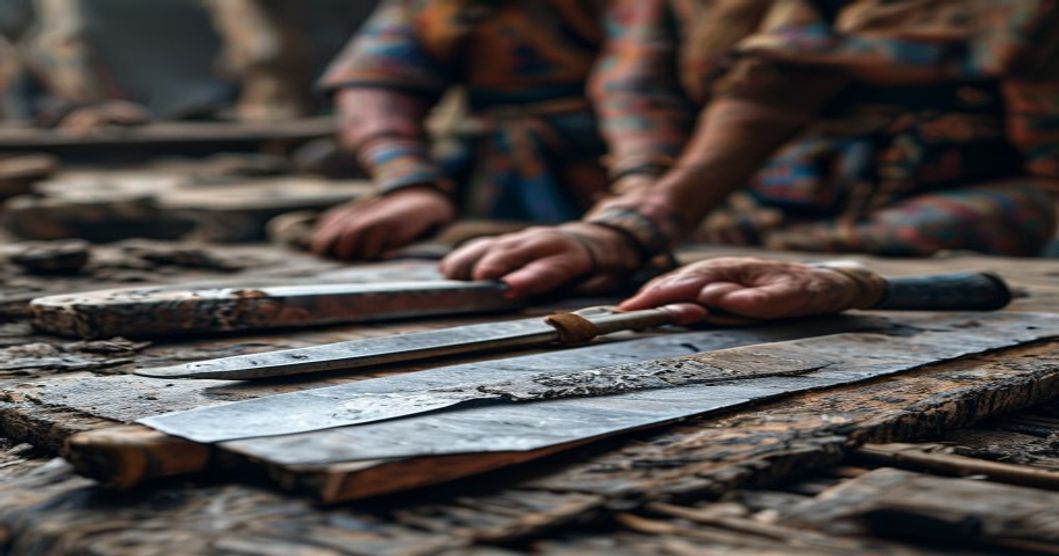
The Historical Foundations of Sami Knife Making
For centuries, Sami knife making traditions have evolved alongside the nomadic lifestyles of indigenous Sámi communities across northern Scandinavia. Unlike conventional European blacksmithing practices, traditional Sámi craftsmanship emerged as a direct response to Arctic survival demands. Early artisans relied on localized iron deposits and recycled trade metals to forge tools capable of withstanding extreme temperatures while maintaining reliable edge retention.
Early Forging Methods and Nomadic Requirements
The earliest Sami blades were shaped using bellows-powered charcoal forges and hand-forged techniques adapted to mobile winter camps. Each knife served as an essential multi-tool for hide processing, antler carving, food preparation, and emergency repairs. The absence of standardized manufacturing meant that every piece reflected the smith’s intimate understanding of material behavior under rapid heating and cooling cycles.
Core Materials and Authentic Component Selection
Authentic traditional knife crafting depends entirely on precise material sourcing. Modern reproductions often compromise quality by substituting industrial steel, but genuine Sámi blades historically utilized high-carbon iron with carefully controlled impurity levels. The selection process extended beyond the blade to include handles, bolsters, and scabbards, each chosen for durability and environmental compatibility.
Steel Composition and Blade Geometry
Traditional Scandinavian knife making favored forged high-carbon steel with a hardness range optimized for field sharpening. Artisans achieved this through repeated heating, hammering, and slow cooling in ash or sawdust. The resulting blade geometry typically features a flat grind with a slightly recurved spine, enabling efficient draw cuts while preserving structural integrity during heavy load tasks.
Reindeer Horn, Antler, and Root Handle Craftsmanship
The Sámi craftsmanship identity is inseparable from its handle materials. Artisans harvested cured reindeer antler, dried birch root, or compacted wood burls, then shaped them using chisels, files, and abrasive stones. The natural curvature of root handles provided ergonomic grip stability, while horn scales were often secured with brass pins and animal-sinew backing to prevent cracking in subzero conditions.
The Forging Process: Traditional Techniques Passed Down Through Generations
Mastering Sami knife making traditions requires years of apprenticeship under experienced smiths. The process begins with selecting raw iron stock, followed by controlled carburization to increase carbon content. Artisans then fold and forge-weld the metal multiple times to homogenize the grain structure while eliminating slag inclusions.
Fire Control, Folding, and Pattern Development
Temperature management remains the most critical skill in hand-forged Scandinavian blades. Skilled smiths judge heat levels by charcoal color and flame behavior, striking only when the metal reaches a consistent yellow-orange hue. Repeated folding creates visible grain patterns that indicate proper consolidation, while differential hardening preserves a tough core alongside a wear-resistant edge.
Cultural Symbolism and Functional Mastery in Sámi Life
Beyond utility, the authentic Sami knife techniques carry profound cultural weight. Historically, knives were gifted during life milestones, used in ceremonial gatherings, and passed down as heirlooms documenting family lineage. The blade’s proportions, handle shape, and sheath decoration often communicated regional origin, occupational specialization, and social status within Sámi communities.
Everyday Utility Versus Ceremonial Significance
Working knives featured reinforced tips and reinforced bolsters for continuous heavy use, while ceremonial variants incorporated intricate silver inlays, colored leather wrapping, and symbolic carvings. Both categories demand the same traditional knife crafting rigor, proving that Sámi artisans never separated craftsmanship from cultural expression.
Preserving the Craft: Modern Challenges and Artisan Revival
Industrial mass production once threatened to erase Sami knife making traditions, but a dedicated revival movement has restored regional forge sites and apprenticeship programs. Contemporary artisans now combine historical methods with modern metallurgical testing to ensure performance matches heritage standards. Collectors and cultural institutions increasingly recognize these knives as irreplaceable artifacts of Arctic ingenuity.
Sustainable Sourcing and Ethical Artisan Practices
Responsible Sámi craftsmanship today emphasizes regulated material harvesting, carbon-neutral forge operations, and transparent origin documentation. By prioritizing ecological balance alongside technical excellence, modern makers ensure that these centuries-old practices remain viable for future generations without compromising cultural authenticity.
Frequently Asked Questions: Sami Knife Making Traditions
What is Sami Knife Making Traditions?
Sami Knife Making Traditions refer to the centuries-old craftsmanship of the Indigenous Sami people of Northern Europe, who forge functional and ornamental knives using reindeer antler, birch wood, and traditional ironworking techniques passed down through generations.
Key facts about Sami Knife Making Traditions
Key facts include the use of locally sourced materials like reindeer antler handles, hand-forged carbon steel blades, intricate decorative engravings that often hold cultural or symbolic meaning, and the reliance on traditional tools and fire techniques that have remained largely unchanged for hundreds of years.