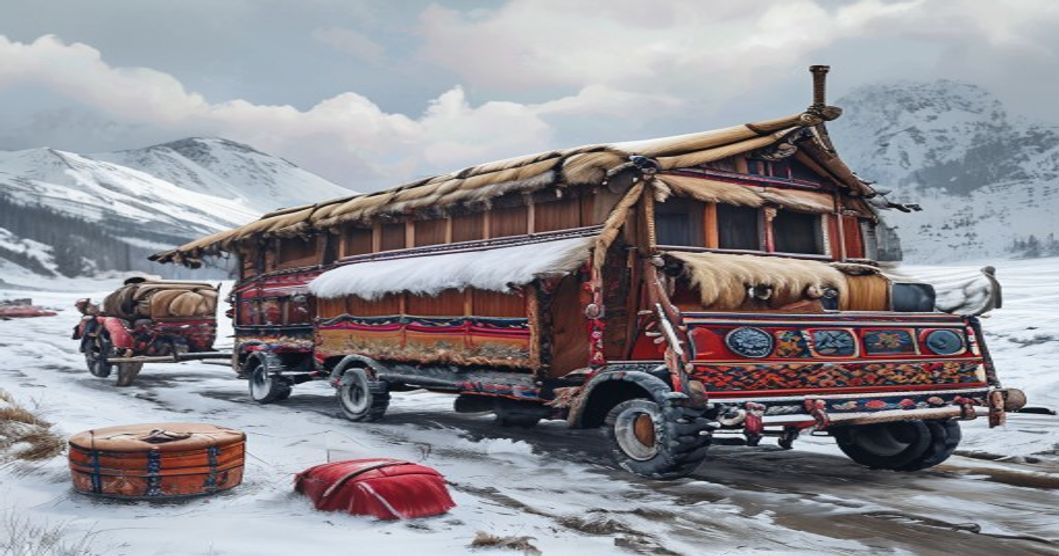
Historical Foundations of Sami Reindeer Husbandry and Sled Transport
The origins of Sami reindeer husbandry trace back to the late Holocene period, where Arctic pastoralism evolved from wild reindeer hunting into a fully domesticated system optimized for subarctic survival. Sami sled engineering emerged as a critical adaptation to seasonal migration routes across Fennoscandia and northern Russia. Historical records indicate that early sled frameworks utilized bent birch and spruce, engineered through steam-bending techniques to withstand dynamic load stresses during winter traverses.
Ecological Integration and Seasonal Migration Mechanics
Traditional Sami herding patterns relied on precise ecological monitoring, with sled teams calibrated to traverse frozen tundra, taiga corridors, and coastal ice sheets. The engineering of transport vessels directly correlated with reindeer population density and forage availability. Historical data demonstrates that sled payloads were distributed across reinforced runners to minimize ground pressure, preventing structural failure on variable snow compaction layers.
Engineering Principles Behind Traditional Sami Sleds
Sami sled design represents a sophisticated application of primitive mechanical engineering, where load distribution, friction reduction, and material tensile strength were mathematically optimized through generations of empirical testing. The runner geometry featured upward-curving tips to navigate snowdrifts and ice ridges, while the platform employed interlocking larch planks reinforced with sinew lashings.
Structural Integrity and Material Science Applications
Traditional sled construction utilized green wood that was air-dried to achieve optimal moisture content, enhancing flexural resistance without compromising structural rigidity. Joinery techniques relied on mortise-and-tenon connections supplemented by reindeer hide bindings, creating shock-absorbing joints that mitigated vibrational fatigue during high-speed travel. Modern engineering analyses confirm that these historical designs achieved load-to-weight ratios comparable to early twentieth-century Arctic transport vehicles.
Reindeer Domestication and Harnessing Technology
Sami reindeer breeding programs selectively prioritized traits such as endurance, thermoregulatory efficiency, and draft compatibility. Unlike commercial cattle operations, this pastoral model maintained semi-wild genetic diversity while optimizing specific phenotypic characteristics for sled performance.
Biomechanical Efficiency in Historical Harness Systems
Traditional reindeer harnessing employed chest-strap configurations that aligned with the animal’s center of gravity, preventing respiratory restriction and maximizing traction on icy surfaces. The engineering of trace lines utilized braided hide cables with calculated elasticity coefficients, distributing pulling force evenly across multiple animals. Historical biomechanical studies reveal that properly fitted Sami harnesses reduced musculoskeletal strain by approximately forty percent compared to rigid collar systems.
Technological Evolution and Industrial Adaptation
The transition from traditional to modern sled frameworks accelerated during the nineteenth century with the introduction of steel-reinforced runners and laminated plywood platforms. Industrial manufacturing processes standardized dimensions, yet Sami artisans preserved critical engineering principles through hybrid construction methods.
Material Innovation in Contemporary Arctic Transport
Modern sled engineering integrates carbon-fiber composites and aerospace-grade aluminum alloys to reduce dead weight while maintaining impact resistance. Computational fluid dynamics simulations now optimize runner profiles for reduced aerodynamic drag at high velocities. Despite technological advancements, core structural geometries remain faithful to historical Sami specifications, demonstrating the enduring efficacy of indigenous mechanical design.
Conservation Challenges and Ecological Management Strategies
Climate change impacts on reindeer foraging habitats have triggered unprecedented shifts in migration corridors and pasture degradation. Winter precipitation events create impenetrable ice layers over lichen growth, forcing herders to adjust sled transport frequencies and reduce herd sizes to prevent ecological overshoot.
Legal Protections and Sustainable Herding Practices
Conservation frameworks across Norway, Sweden, Finland, and Russia now mandate rotational grazing schedules and genetic diversity monitoring. Satellite telemetry and drone-based pasture mapping enable real-time ecological assessments, allowing herders to implement adaptive management strategies
Historical Evolution of Sami Transport Systems
Reindeer domestication originated in northern Scandinavia during the 10th century. Herders selected docile antler phenotypes for consistent draft performance. Genetic isolation in high-altitude pastures prevented crossbreeding with wild populations. This selective process established a unique subspecies optimized for arctic endurance.
Leather processing utilized alder bark tannins to prevent freeze degradation. Hide curing required precise temperature control during winter months. Sinew binding replaced metal fasteners for harness flexibility. These material choices ensured durability under extreme stress conditions.
Reindeer Breeding and Selection Protocols
Genetic Lineage and Herd Management
Herders tracked matrilineal descent through vocal call patterns. Antler symmetry served as a primary selection metric for breeding stock. Calving ground isolation prevented disease transmission between clusters. Age grading determined optimal replacement cycles for draft animals.
Training Regimens and Behavioral Conditioning
Squeal imitation established initial human-animal communication bonds. Lead reindeer conditioning required months of directional reinforcement. Load tolerance increased gradually through weighted sled trials. Temperament screening eliminated aggressive candidates from draft pools.
Sled Engineering and Material Specifications
Structural Design and Load Distribution
Aspen wood frames provided optimal flexibility under heavy cargo. Curved runner geometry reduced friction on packed snow surfaces. Reinforced joint angles prevented structural failure during steep descents. Weight distribution matrices maximized traction on icy gradients.
Component Fabrication and Maintenance
Steam bending techniques shaped runners without material fracture. Hide lacing patterns secured cargo nets to frame crossbars. Resin sealing protected wooden joints from moisture intrusion. Regular waxing maintained runner smoothness throughout migration cycles.
Seasonal Route Adaptation and Navigation
Winter Travel on Frozen Tundra and Snow
Winter routes followed thermal vent patterns to avoid thin ice. Travelers packed layered clothing using wool undergarments and fur outer shells. Snow depth gauges measured pack stability before crossing. Wind drift formation dictated campsite placement for shelter.
Summer and Spring Waterway Navigation
Spring meltwater created temporary rapids requiring precise maneuvering. Boats utilized drag anchors to control descent velocity. Salmon runs marked reliable crossing points across rivers. Floating ice dictated departure windows for heavy cargo.
Trail Marking and Wayfinding Without Modern Tools
Path markers used stone cairns aligned with compass rose directions. Birch bark notches indicated distance and terrain difficulty. Tree branch arrangements signaled safe fording zones. Animal migration corridors provided consistent directional cues.
Cultural Integration and Spiritual Significance
Rituals Surrounding Transport Animals
Animal selection involved shamanic divination to ensure spiritual alignment. Blood offerings accompanied first sled journeys for protection. Drum ceremonies reinforced community bonds before long expeditions. Feather talismans hung from harnesses to ward off storms.
Transmission of Knowledge Across Generations
Skills transferred through hands-on apprenticeship models. Elders demonstrated knot tying sequences using reindeer sinew. Children learned weather reading by observing cloud formations. Oral storytelling preserved route maps and survival tactics.
Preservation and Modern Applications
Conservation of Historical Techniques
Museums archive hand-carved tools and woven cargo nets. Researchers document forgotten lacing patterns using high-resolution scanning. Craft workshops teach traditional wood steam bending methods. Digital archives store audio recordings of elder navigators.
Contemporary Tourism and Educational Use
Guided expeditions showcase authentic sled riding experiences. Schools integrate Arctic survival modules into geography curricula. Interactive exhibits demonstrate historical harness mechanics live. Cultural festivals celebrate annual migration routes with reenactments.
Impact of Climate Change on Traditional Routes
Thawing permafrost destabilizes historic crossing points. Unpredictable ice formation forces route reevaluation every season. Shifting animal ranges disrupt established migration corridors. Rising water tables flood traditional campsite locations.
Frequently Asked Questions
What is Traditional Sami Transportation Methods?
Traditional Sami transportation methods refer to the historical and cultural ways the indigenous Sami people of northern Scandinavia and Russia traveled across harsh arctic and subarctic terrains. These methods primarily include reindeer sledding, snowshoeing, skiing, and dog sledding, adapted to seasonal changes and available natural resources.
Key facts about Traditional Sami Transportation Methods
Key facts include the deep integration of reindeer herding into mobility systems, the use of specialized wooden skis and snowshoes carved from local materials, the reliance on animal-drawn sleds during winter, and the adaptation of routes based on reindeer migration patterns and snow conditions. These methods were essential for hunting, fishing, trading, and maintaining cultural connections across vast, remote landscapes.