The Cultural Significance of Sámi Duodji
Defining Duodji in Sámi Heritage
The term duodji encompasses the entire spectrum of traditional Sámi handicrafts, weaving together utility, artistry, and ancestral knowledge. Unlike Western craft classifications that separate fine art from functional objects, duodji operates as a holistic practice where every created item serves both practical survival needs and deep cultural expression. Historically passed through oral instruction and generational mentorship, duodji preserves linguistic nuances, ecological awareness, and social identity across the Sámi people’s dispersed territories spanning northern Norway, Sweden, Finland, and Russia.
Spiritual and Practical Connections to Nature
Sámi crafts are fundamentally rooted in a reciprocal relationship with the Arctic environment. Artisans select materials based on seasonal availability, migration patterns of reindeer herds, and botanical cycles. This ecological mindfulness ensures that crafting practices remain sustainable while reinforcing the Sámi worldview where humans exist as participants rather than dominators of nature. Tools, garments, and ceremonial objects crafted through duodji function as tangible links to ancestral landscapes, embedding geographical memory into every stitch, carve, and weave.
Core Materials and Sustainable Sourcing
Reindeer Antler, Bone, and Leather Processing
Reindeer antler and bone serve as the foundational materials for knife handles, needle cases, and decorative inlays. The processing requires precise temperature control and gradual drying to prevent cracking, techniques refined over centuries. Reindeer hide undergoes traditional brain tanning or smoking methods to produce supple, weather-resistant leather essential for footwear, clothing, and tent coverings. Each material is utilized completely, reflecting a zero-waste philosophy inherent to Sámi craftsmanship.
Birch Bark, Wool, and Precious Metalwork
Birch bark provides durable containers, fishing traps, and wrapping materials prized for its natural water resistance. Sámi raggwool, spun from coarse outer wool fibers, offers exceptional insulation and durability when woven into textiles or felted into hats. Traditional metalwork incorporates silver and copper, frequently applied through repoussé and engraving techniques to create intricate surface decorations on belts, brooches (porsse), and ceremonial regalia.
Iconic Sámi Handicrafts and Their Functions
The Gákti: Traditional Clothing and Regional Patterns
The Sámi gákti functions as a complex visual identifier, communicating the wearer’s specific community, marital status, social rank, and geographical origin through precise color combinations and embroidery motifs. Each regional variant adheres to strict codified rules governing stripe placement, button arrangements, and belt configurations. Modern artisans continue hand-weaving, spinning, and embroidering gákti components using centuries-old techniques, ensuring the garment remains a living symbol of Sámi resilience rather than a static museum artifact.
Knives (Puukko) and Toolcraft in Daily Life
Sámi knives represent the pinnacle of functional toolcraft, featuring short blades optimized for skinning reindeer, processing fish, and carving wood. Handles are meticulously shaped from antler or root burls to fit the palm securely during prolonged use. The accompanying belt system integrates multiple specialized tools including awls, scrapers, needle cases, and fire starters into a single mobile workshop. Mastery of knife forging and handle fitting requires years of apprenticeship under experienced duodji practitioners.
Weaving, Raggwool Textiles, and Basketry
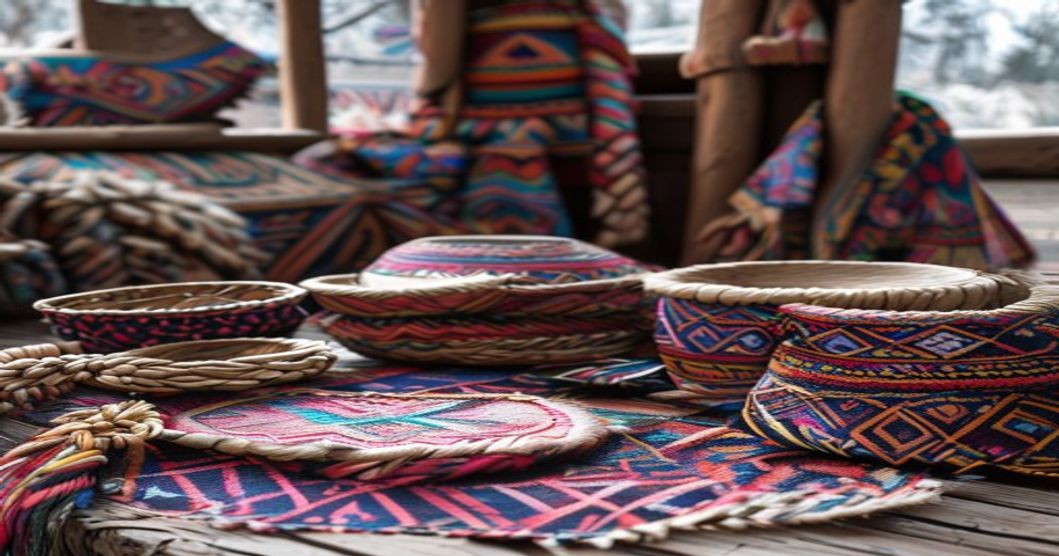
Sámi weaving predominantly utilizes horizontal looms to produce sturdy textiles for clothing, saddlebags, and domestic use. The distinctive raggwool technique preserves the wool’s natural crimp, resulting in fabrics that regulate temperature effectively in extreme Arctic conditions. Traditional basketry employs woven willow or birch root strips, reinforced with leather bindings to create flexible yet rigid containers used for gathering berries, storing dried meat, and transporting household goods across tundra terrain.
Symboism, Motifs, and Contemporary Preservation
Geometric Patterns and Shamanic Heritage
Sámi decorative motifs derive from astronomical observations, animal tracking patterns, and historical shamanic drum designs. Circular elements represent the sun or sacred drums, while zigzag lines mimic reindeer antlers or mountain ridges. Color symbolism carries specific regional meanings, with blue denoting water and sky, red representing blood and vitality, green symbolizing vegetation, yellow indicating sunlight, and white reflecting snow and purity. Contemporary artisans reinterpret these visual languages to maintain cultural continuity while addressing modern aesthetic demands.
Modern Adaptations and Ethical Craft Tourism
Contemporary Sámi craftsmanship balances tradition with innovation through cooperative workshops, digital pattern archives, and international craft exhibitions. Authentic duodji production maintains strict ethical sourcing standards, prohibiting commercial exploitation of reindeer materials and protecting indigenous intellectual property rights. Responsible tourism initiatives now support artisan cooperatives that offer transparent workshops, ensuring visitors engage with Sámi handicrafts through respectful education rather than superficial souvenir consumption.
Frequently Asked Questions
What is Traditional Sami Handicrafts Explained?
Traditional Sami Handicrafts Explained refers to the comprehensive cultural and technical overview of the indigenous Sámi craft traditions from Sápmi. It details the historical context, symbolic patterns, and sustainable methods used to create functional and ceremonial items that have sustained Sámi communities for centuries.
Key facts about Traditional Sami Handicrafts Explained
Key facts include that Sámi crafts are collectively known as duodji, emphasizing functionality and harmony with nature. Artisans primarily use locally sourced materials such as reindeer leather, antlers, birch wood, and wool. Each region has distinct color palettes and motifs, and the craft is officially recognized as a vital component of Sámi cultural identity and intangible heritage.