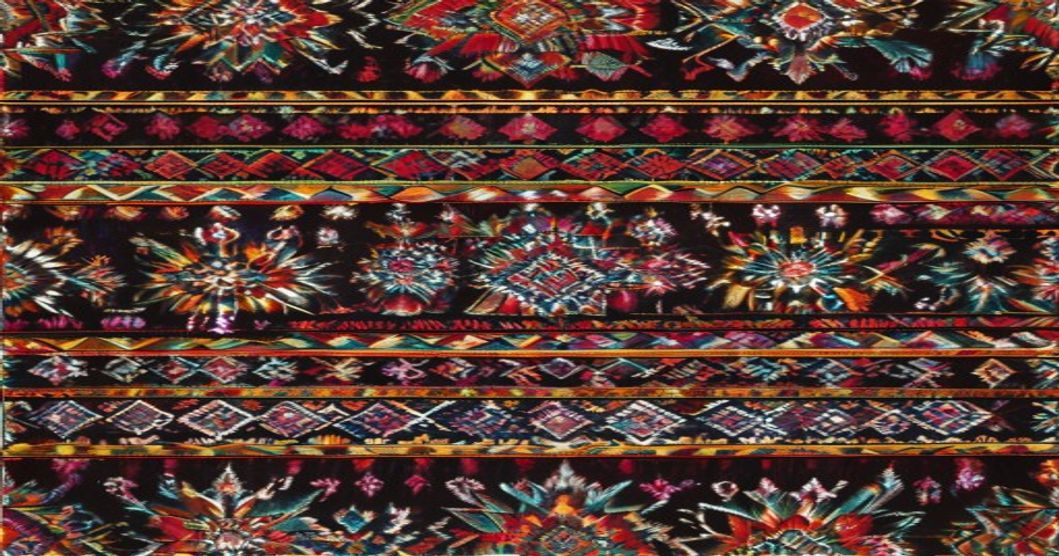
Historical Origins and Material Foundations of Traditional Semitic Patterns
The evolution of traditional Semitic patterns traces back to the Bronze Age civilizations of the Levant, Mesopotamia, and the Arabian Peninsula, where artisans developed highly structured visual languages long before the standardization of classical iconography. Archaeological excavations at sites such as Ugarit, Byblos, and ancient Petra reveal that early Semitic cultures relied on geometric interlacing, sacred geometry, and botanical motifs to communicate cosmological beliefs, territorial markers, and social hierarchy. These designs were not merely decorative; they functioned as encoded systems of knowledge transferred across generations through craft workshops, temple artisans, and nomadic trade networks. The material constraints of the region heavily influenced pattern development, with bronze casting, wool weaving, stone carving, and clay pottery dictating the mathematical precision and repetitive symmetry characteristic of ancient Semitic design traditions.
Geometric Precision in Ancient Craftsmanship
Semitic artisans mastered the use of compasses, straightedges, and proportional grids to create interlocking polygons, hexagonal lattices, and radial star formations that appear on cylinder seals, metalwork, and architectural friezes. The mathematical rigor behind these traditional geometric motifs reflects an advanced understanding of tessellation and recursive repetition, principles later formalized in Islamic art but deeply rooted in earlier Canaanite and Aramaic workshops. Patterns were often constructed through iterative division of the circle, a technique that allowed craftsmen to generate infinite complexity from simple base shapes while maintaining structural balance. This mathematical approach ensured that patterns could be scaled across mediums without losing symbolic integrity, making them ideal for both monumental temple architecture and portable artifacts traded along Silk Road precursors.
Botanical Motifs and Regional Variations
While geometric structures provided organizational frameworks, Semitic floral designs introduced organic fluidity into the visual lexicon. The stylized lotus, pomegranate, grapevine, and cedar motifs emerged as region-specific identifiers, with each plant carrying distinct agricultural, economic, and spiritual connotations. In coastal Phoenician cities, maritime trade introduced palmette variations that blended Egyptian and Aegean influences, while inland Aramaean artisans favored tightly wound acanthus scrolls that emphasized continuity and renewal. These botanical patterns were rarely naturalistic; instead, they were abstracted into repeating units that could be woven into textiles, embossed onto silver goblets, or carved into limestone doorframes. The regional divergence in historical patternwork styles demonstrates how environmental adaptation and cultural exchange shaped the visual identity of Semitic artistic heritage.
Symbolic Architecture of Traditional Semitic Patterns
Within the framework of Semitic symbolic designs, every curve, intersection, and negative space carried deliberate semantic weight. Patterns were constructed to reflect dualities inherent in ancient Near Eastern cosmology: order versus chaos, fertility versus aridity, mortality versus transcendence. The repetition of shapes was not arbitrary but served as a visual prayer or protective invocation, embedding spiritual functionality into everyday objects. Scholars of material culture recognize these motifs as early forms of non-linear notation, where spatial relationships replaced alphabetic syntax to convey theological and philosophical concepts across literacy barriers.
Cosmological Representations in Interlacing Designs
Interlaced knotwork and braided borders dominate the corpus of traditional Semitic pattern art, symbolizing the interconnectedness of celestial bodies, agricultural cycles, and human lineage. The endless loop structure mirrors ancient beliefs about cyclical time, where harvests, droughts, and dynastic successions were viewed as recurring phases rather than linear progressions. In temple architecture, these patterns were positioned at thresholds and rooflines to demarcate sacred space from profane ground, functioning as visual filters that prepared worshippers for ritual transition. The mathematical symmetry of interlacing also reinforced concepts of divine balance, suggesting that harmony in the cosmos was maintained through precise, unbreakable connections between opposing forces.
Protective Iconography and Sacred Geometry
A substantial portion of surviving ancient Semitic motifs incorporates apotropaic functions, designed to ward off misfortune, disease, or spiritual corruption. Concentric circles, eye formations, and diamond-shaped lattices were strategically placed on household vessels, weapon hilts, and burial goods to create protective fields around the user. The eye symbol, frequently rendered as a stylized almond or lotus petal arrangement, represented vigilance and divine oversight rather than literal vision. Sacred geometry in these patterns relied on proportional ratios that artisans believed resonated with natural frequencies, embedding mathematical harmony into objects meant to endure physical wear. This fusion of aesthetic precision and functional symbolism distinguishes Semitic traditional patterning from purely ornamental traditions found in neighboring cultures.
Narrative Transmission Through Patternwork
Beyond symbolic and geometric functions, traditional Semitic patterns operated as narrative vessels, preserving oral histories, mythological frameworks, and communal identities through visual repetition. In societies where written records were limited to elite or priestly classes, patterned textiles, architectural reliefs, and metalwork served as accessible archives of cultural memory. Artisans acted as custodians of these narratives, embedding regional legends, migration routes, and ecological knowledge into the structural logic of their designs. The endurance of these patterns across millennia demonstrates how visual storytelling outlasted political regimes and linguistic shifts.
Weaving Traditions and Oral History Preservation
Textile production remained one of the most reliable mediums for Semitic historical pattern transmission, with loom-based techniques allowing complex motifs to be recorded in warp and weft. Nomadic and semi-nomadic groups utilized tightly knotted kilims and embroidered tunics to map territorial boundaries, seasonal migrations, and clan affiliations. Each color shift or geometric interruption in the weave often corresponded to a specific historical event, marriage alliance, or ecological adaptation. Women artisans played a central role in this knowledge transfer, passing down pattern codes through tactile instruction rather than written manuals. The resulting traditional textile symbolism functioned as a living archive, where every garment carried embedded genealogical and environmental narratives.
Manuscript Illumination and Calligraphic Symbolism
As writing systems evolved, Semitic artistic patterns integrated with early alphabetic scripts, transforming manuscripts into multidimensional storytelling mediums. Aramaic and Syriac scribes incorporated floral borders, geometric margins, and interlaced initial capitals to elevate sacred texts beyond mere communication. These decorative frameworks were not secondary embellishments but structural components that guided the reader’s focus, marked textual divisions, and reinforced theological authority. The convergence of calligraphy and patternwork established a visual grammar where letterforms themselves became geometric entities, blurring the line between writing and drawing. This synthesis preserved mythological references, liturgical sequences, and philosophical commentaries within the very architecture of the page, ensuring that historical Semitic visual culture remained inseparable from textual tradition.
“`html
Frequently Asked Questions about Traditional Sami Decorative Patterns
What is Traditional Sami Decorative Patterns?
Traditional Sami decorative patterns are intricate geometric and symbolic designs originating from the indigenous Sámi people of Sápmi, a region spanning northern Norway, Sweden, Finland, and Russia’s Kola Peninsula. These patterns are deeply rooted in Sámi culture and are traditionally used in clothing (notably the gákti), woven textiles, basketry, woodwork, and jewelry. The motifs often draw inspiration from the natural Arctic environment—reindeer, sun symbols, mountains, and rivers—and are characterized by bold colors such as red, blue, yellow, and green. Each pattern and color combination can carry specific meanings, denote regional identity, social status, or even spiritual beliefs tied to Sámi animist and shamanistic traditions.
Key facts about Traditional Sami Decorative Patterns
- Sámi decorative patterns are region-specific, with each of the major Sámi groups (e.g., North Sámi, Lule Sámi, South Sámi) having distinct visual styles and color palettes.
- The traditional motifs include the sun symbol (beaivi), reindeer antlers, zigzag lines representing rivers or lightning, and crosses introduced through Christian influence.
- Colors are historically derived from natural dyes: lichens for yellow, cloudberry leaves for red, and berries for blue and green tones.
- These patterns were traditionally hand-stitched onto clothing using a technique called duodji, the Sámi craft tradition recognized by UNESCO.
- Sámi decorative arts experienced a revival in the 20th century as part of a broader Sámi cultural and political awakening, leading to their widespread adoption in modern Sámi identity and contemporary fashion.
- Today, Sámi patterns are protected against cultural appropriation, and the Sámi seal (Sámi Duodji) certifies authentic Sámi-made crafts.
“`