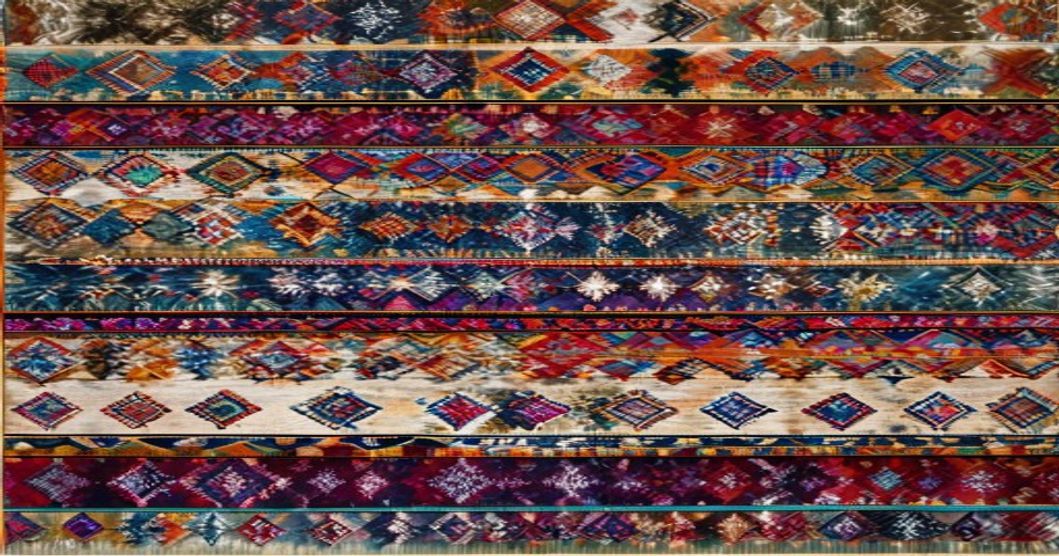
The Historical Foundations of Sámi Textile Artistry
The development of traditional Sami textile patterns traces back centuries across the Fennoscandian tundra, where indigenous craftsmanship evolved in direct response to extreme Arctic climates and seasonal reindeer migration routes. Early Sámi communities utilized locally available resources to construct durable, functional garments that simultaneously operated as visual markers of tribal affiliation, marital status, and spiritual cosmology. The historical trajectory of Arctic art in this northern corridor reflects continuous adaptation to environmental constraints while maintaining strict cultural protocols regarding motif transmission and design inheritance.
Geographic Origins and Cultural Significance
Sámi textile traditions concentrate across four primary sovereign territories: Norway, Sweden, Finland, and Russia’s Kola Peninsula. Each region developed distinct weaving frameworks due to isolated settlement patterns and historically restricted trade networks. These textiles functioned as portable archives, recording ancestral narratives through codified symbols that required precise stitch counts for accurate reproduction. The cultural weight of Sámi duodji (traditional craftsmanship) mandates that pattern creation follows inherited structural guidelines rather than individual artistic innovation, preserving the integrity of indigenous knowledge systems across generations.
Traditional Materials and Natural Dyeing Methods
Authentic traditional Sami textile patterns rely exclusively on regionally sourced fibers, primarily reindeer wool, sheep fleece, and historically imported linen. Before synthetic dyes became accessible in the nineteenth century, Sámi artisans extracted pigments from birch bark, cloudberry leaves, specialized lichen species, and iron-rich bog mud. The resulting chromatic profiles demonstrated remarkable colorfastness under prolonged UV exposure and subzero temperatures, a technical achievement that modern textile conservators continue to analyze for sustainable dye applications.
Decoding Traditional Sami Textile Patterns
The visual language of Sámi cultural motifs operates on a structured symbolic system rather than decorative abstraction. Each geometric configuration carries specific ethnographic data, requiring exact warp alignments to maintain authenticity. Contemporary researchers analyze these designs through cross-cultural comparative studies, identifying shared Nordic indigenous elements alongside uniquely Sámi structural innovations that differentiate regional craft lineages.
Geometric Motifs and Symbolic Meanings
Core patterns include the rune-inspired zigzag, representing reindeer antlers or atmospheric lightning, and the concentric circle motif, symbolizing solar cycles and seasonal grazing territories. The diamond grid structure denotes mountain topography and historical hunting boundaries, while stepped borders indicate generational lineage progression. In Nordic indigenous textiles, these elements are never applied randomly; their placement follows strict compositional rules that align with ceremonial calendar cycles and regional dialect boundaries.
Regional Variations in Pattern Design
Western Sámi groups favor high-contrast red and blue dominance with pronounced angular borders, reflecting historical contact with coastal Norse trading posts. Eastern Sámi textiles incorporate broader yellow and green fields alongside intricate cross-stitch overlays, mirroring taiga forest ecosystems and Finnish commercial influences. Coastal Finnmark patterns utilize tighter warp densities to resist wind abrasion, while inland variants prioritize thermal insulation through thicker yarn twists. These geographical differentiations remain critical for authenticating Arctic art provenance.
Core Techniques in Sámi Weaving and Embroidery
The mechanical execution of Sámi weaving techniques demands specialized loom configurations and manual tension control. Artisans utilize backstrap looms and floor-standing upright frames that allow precise warp manipulation without structural deformation. The fabric integrity depends on consistent beat density and controlled weft insertion, preventing material distortion during repeated wear in freezing conditions.
Hand-Loom Construction and WarpFrequently Asked Questions
What is Sami Textile Patterns and Arctic Art?
Sami Textile Patterns and Arctic Art refers to the traditional weaving, embroidery, and decorative designs created by the indigenous Sami people of northern Scandinavia. These intricate patterns are deeply rooted in Sami culture, symbolizing nature, spirituality, and daily life in the Arctic region.
Key facts about Sami Textile Patterns and Arctic Art
Key facts include: traditional patterns are unique to specific Sami groups and regions; natural dyes like lichen, berries, and roots were historically used; the art form is officially recognized by UNESCO as an Intangible Cultural Heritage; and modern artisans continue to preserve these techniques while adapting them to contemporary designs.
Frequently Asked Questions
What is Sami Textile Patterns and Arctic Art?
Sami Textile Patterns and Arctic Art refers to the traditional weaving, embroidery, and decorative designs created by the indigenous Sami people of northern Scandinavia. These intricate patterns are deeply rooted in Sami culture, symbolizing nature, spirituality, and daily life in the Arctic region.
Key facts about Sami Textile Patterns and Arctic Art
Key facts include: traditional patterns are unique to specific Sami groups and regions; natural dyes like lichen, berries, and roots were historically used; the art form is officially recognized by UNESCO as an Intangible Cultural Heritage; and modern artisans continue to preserve these techniques while adapting them to contemporary designs.