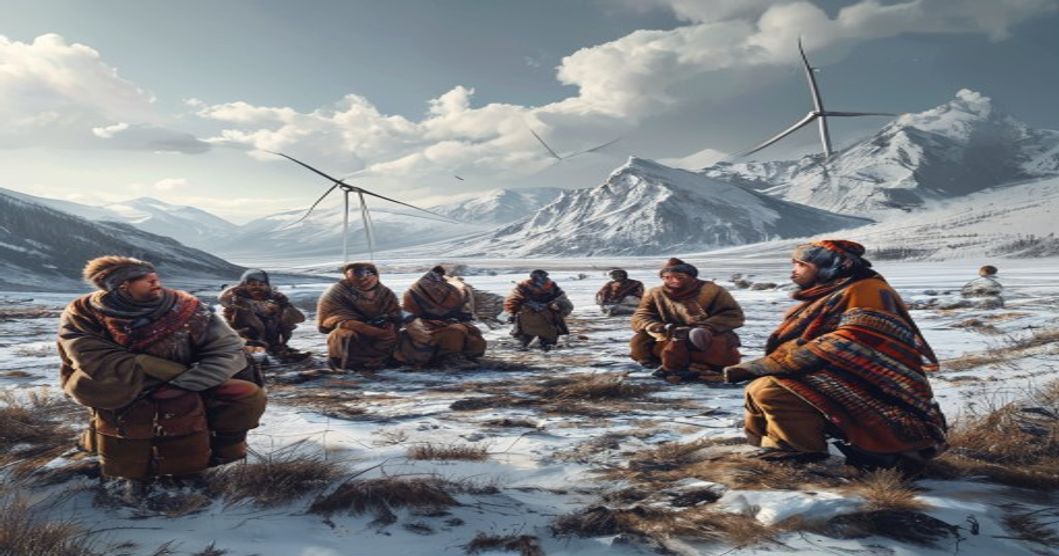
Historical and Legal Foundations of Sámi Land Rights
The Sámi people, an Indigenous population spanning northern Norway, Sweden, Finland, and Russia, have maintained ancestral territorial claims for centuries. Modern legal frameworks increasingly recognize these rights, yet implementation gaps persist across Scandinavian jurisdictions.
ILO Convention 169 and Constitutional Protections
Norway ratified the International Labour Organization’s Convention 169 in 1990, establishing a binding obligation to protect Indigenous land use and ensure consultation before resource extraction. Sweden and Finland have adopted parallel legislative measures, though enforcement varies significantly by municipal and national policy.
Traditional Livelihoods and Territorial Claims
Reindeer herding remains the economic and cultural cornerstone of Sámi communities. Seasonal migration routes, calving grounds, and grazing pastures require vast, uninterrupted landscapes. Legal precedents in all three countries affirm that customary land tenure carries weight comparable to statutory property rights when documented through historical use patterns.
The Renewable Energy Push in Sápmi
Northern Europe’s climate mitigation targets have accelerated large-scale renewable infrastructure development across Sápmi. Wind and hydroelectric projects dominate investment portfolios, driven by grid expansion mandates and corporate sustainability commitments.
Wind Power Expansion and Infrastructure Demands
Onshore wind farms require extensive land clearance for turbine placement, access roads, and substation networks. In Finnmark and Norrbotten counties, developers have prioritized high-wind corridors that frequently overlap with designated reindeer grazing zones. Environmental impact assessments often underestimate cumulative disturbance effects on herd behavior and vegetation recovery.
Hydroelectric Projects and Ecological Impact
Decades of river damming have already altered aquatic ecosystems critical to Sámi fishing and water management practices. New run-of-river installations continue to fragment watersheds, reducing sediment flow and disrupting fish migration patterns that sustain both ecological balance and traditional food systems.
Core Points of Conflict
Free, Prior, and Informed Consent (FPIC) Disputes
The application of FPIC principles remains the most contentious legal boundary. While corporations often frame consultations as procedural checkboxes, Sámi representatives argue that meaningful consent requires veto power over projects threatening livelihood continuity. Courts have inconsistently interpreted whether consultation equates to consent.
Environmental Justice vs. Climate Mitigation Goals
Policymakers frequently position renewable energy deployment as an ecological imperative that supersedes localized Indigenous concerns. This framing overlooks the reality that climate justice and environmental justice are interdependent. Displacing Sámi land management practices can degrade peatlands and boreal forests, releasing stored carbon and undermining broader decarbonization efforts.
Economic Marginalization and Benefit Sharing
Revenue distribution models rarely reflect proportional benefit sharing. Corporate profits flow to external investors and national tax bases, while Sámi communities bear infrastructure costs, habitat fragmentation, and tourism displacement. Joint venture structures remain limited, with most partnerships restricted to low-level consultancy contracts rather than equity participation.
Legal Battles and Policy Shifts
Court Rulings Across Norway, Sweden, and Finland
Norwegian Supreme Court decisions have progressively strengthened Sámi land claims, particularly regarding state licensing authority limits. Swedish administrative courts have mandated stricter consultation documentation for energy permits, while Finnish tribunals have delayed projects pending ecological baseline studies. These rulings create a fragmented regulatory landscape that complicates developer compliance.
Corporate Compliance and Indigenous Consultation Frameworks
Energy firms are adapting by establishing dedicated Indigenous affairs departments and adopting international standards like the UN Guiding Principles on Business and Human Rights. However, operational timelines rarely align with Sámi consensus-building processes, leading to repeated litigation and project suspensions.
Pathways Toward Equitable Coexistence
Community-Led Energy Models and Joint Ownership
Co-ownership structures allow Sámi reindeer herding cooperatives to hold equity stakes in wind developments, aligning corporate timelines with seasonal management cycles. Revenue-sharing agreements tied to performance metrics ensure that financial benefits directly fund habitat restoration and infrastructure adaptation.
Integrated Land Use Planning and Monitoring Systems
Geospatial mapping combined with real-time ecological monitoring enables dynamic project adjustments. By integrating Sámi traditional knowledge into site selection algorithms, developers can avoid critical calving zones while maintaining energy output targets. Cross-border coordination mechanisms further standardize consultation protocols across Sápmi.
The Intersection of Sami Land Rights and Renewable Energy Development
Traditional revenue models systematically exclude local community stakeholders. Tax benefits predominantly flow to national treasuries. Cultural preservation requires direct financial investment. Sustainable economic structures demand explicit equity allocation.
Revenue Sharing and Corporate Partnership Models
Joint ventures require explicit Sami equity participation. Profit-sharing contracts must carry direct legal enforcement. Corporate social responsibility funds lack independent audit mechanisms. Transparent accounting protocols prevent revenue leakage.
Loss of Traditional Livelihoods and Identity
Herding decline directly reduces intergenerational knowledge transmission. Language erosion accelerates alongside economic displacement. Youth migration fragments established community networks. Livelihood restoration demands combined spatial and financial support.
Community-Led Energy Cooperatives
Community co-ops enable direct project ownership and control. Generated revenue funds localized infrastructure development. Governance structures prioritize territorial stewardship over external profit. Scalable models require direct regulatory licensing reform.
Regional Case Studies and Outcomes
Regional cases demonstrate divergent judicial and operational outcomes. Legal rulings directly shape industry permitting standards. Technological mitigation reduces measurable ecological impact. Policy adaptation determines long-term project viability.
Fosen Vind Case: Norwegian Supreme Court Ruling
The supreme court ruled initial permits violated ILO Convention 169 standards. Significant compensation was awarded to affected herding families. Industry operators must completely redesign consultation protocols. This ruling forces nationwide permit revision.
Swedish Wind Expansion in Sápmi
Rapid permitting accelerated direct land conversion in grazing zones. Local opposition successfully triggered administrative appeals. New zoning regulations restrict development in high-value territories. Independent territorial monitoring ensures enforcement compliance.
Finnish Hydroelectric Controversies in Lapland
Reduced flow rates directly damaged downstream fishery populations. Community lawsuits successfully halted planned project extensions. Ecological baselines now mandate pre-construction data collection. Water management plans formally integrate indigenous technical input.
Strategic Recommendations for Balanced Development
Project co-design prevents future territorial conflicts. Mitigation standards require independent technical verification. Policy frameworks must balance grid expansion with territorial rights. Implementation demands continuous stakeholder oversight.
Technical Integration and Monitoring Systems
Technical mapping occurs alongside traditional ecological knowledge. Route optimization actively avoids critical seasonal habitats. Construction scheduling aligns with established movement patterns. Joint oversight committees manage daily operational compliance.
Technological Mitigation Tools
Real-time sensor networks track active herd movement patterns. Noise reduction technology limits operational disturbance levels. Habitat restoration funds ensure measurable ecological recovery. Data transparency prevents regulatory evasion.
Policy and Regulatory Frameworks
Regulatory frameworks must mandate FPIC in all permitting stages. Independent territorial review boards require statutory authority. Renewable subsidies must align with cultural impact metrics. Binding cross-border consultation frameworks prevent regulatory fragmentation.
Frequently Asked Questions
What is Sami People and Renewable Energy Debates?
The Sami People and Renewable Energy Debates refer to the ongoing discussions and conflicts regarding the development of renewable energy projects (such as wind farms and hydropower) on traditional Sami lands in Northern Europe. These debates center on balancing green energy transition goals with the preservation of Sami culture, reindeer herding rights, and environmental stewardship.
Key facts about Sami People and Renewable Energy Debates
- Renewable energy infrastructure, particularly wind farms, is often built on lands historically used by the Sami for reindeer herding and other cultural practices.
- The Sami have legal and constitutional rights to land and resources in Norway, Sweden, and Finland, which are frequently contested by energy companies and governments.
- Environmental impact assessments often overlook traditional ecological knowledge and the cumulative effects of industrial development on Sami livelihoods.
- International human rights bodies, including the UN, have emphasized the need for Free, Prior, and Informed Consent (FPIC) for projects affecting Indigenous communities.
- The debate highlights a broader tension between global climate action priorities and Indigenous rights, sustainability, and self-determination.