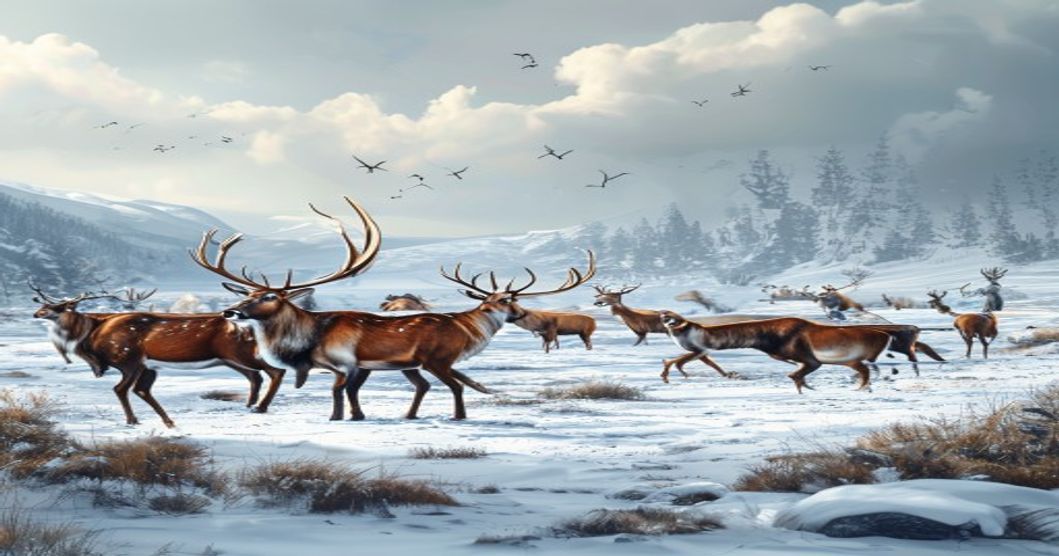
Reindeer Migration Patterns and Sami Communities: Ecological and Historical Framework
The ecological and historical framework governing reindeer migration patterns rests upon centuries of co-evolution between indigenous Sami pastoralists and Rangifer tarandus domesticus. Herders rely on precise phenological cues to direct seasonal movements, shifting herds between alpine summer pastures and boreal winter ranges. Vegetation cycles dictate these transitions: Cladonia rangiferina availability peaks in late autumn, while nutrient-rich grasses and dwarf shrubs emerge in spring highlands. Historical archives confirm that transhumant reindeer husbandry emerged approximately eight centuries ago in Fennoscandia, adapting to harsh subarctic conditions where conventional agriculture proved ecologically unviable.
Migration corridors follow ancient topographical pathways shaped by glacial retreat and permafrost distribution limits. Herders interpret wind direction, snow crust formation, and insect activity to optimize grazing efficiency across fragmented terrain. Modern ecological surveys confirm that healthy herds require approximately two hundred kilometers of annual travel distance to maintain metabolic balance and prevent localized overgrazing. The Sami traditional knowledge system, encoded in seasonal calendars and oral transmission, maps microclimatic variations across dozens of distinct pasture districts known as guohtun.
- Summer Migration Dynamics: Herds ascend to exposed mountain ridges where thin snowpack accelerates lichen thawing. Insect harassment drives movement toward windward slopes and high-elevation wetlands where cooler temperatures reduce parasitic load.
- Winter Pasture Utilization: Dense coniferous forests provide snow interception canopies, reducing drift depth by forty percent compared to open tundra. Herders manually excavate ice layers to access forage during freeze-thaw cycles that seal off ground vegetation.
- Historical Boundary Shifts: Nineteenth-century state border demarcations fractured continuous migration routes, forcing herding cooperatives to negotiate seasonal grazing permits across administrative divisions and military exclusion zones.
Climate data spanning the past fifty years demonstrates a fourteen-day advancement in spring vegetation green-up, compressing the critical calving window. Altered precipitation patterns generate basal ice layers that restrict foraging access, triggering herd fragmentation and elevated mortality rates among vulnerable age classes. Contemporary land-use planning increasingly integrates satellite-derived NDVI indices with indigenous grazing calendars to preserve corridor connectivity. Regulatory frameworks now recognize seasonal migration rights as essential ecosystem services, linking biodiversity conservation directly to culturally sustained pastoral practices.
Seasonal Route Dynamics Across Northern Fennoscandia
The migratory corridors traversing northern Fennoscandia operate on a highly calibrated ecological timetable, dictated primarily by snowpack depth, lichen biomass distribution, and temperature fluctuations across Norway, Sweden, Finland, and the Russian Kola Peninsula. Reindeer herds do not follow fixed geographic lines but rather exploit microclimatic gradients and topographical relief to optimize energy expenditure during extreme seasonal transitions.
During spring and early summer, herds ascend toward alpine tundra and coastal lowlands where snowmelt exposes nutrient-dense forage. These calving grounds are strategically selected for their open visibility, reduced predator density, and proximity to mineral-rich soils that support rapid antler development in calves. Snow depth thresholds below forty centimeters typically trigger the initial south-to-north push, while persistent wind-scoured ridges provide critical relief during late spring thaws.
- Lichen Availability: Cladonia and Cetraria species dominate winter pastures, requiring undisturbed moss beds beneath dense larch or birch canopies.
- Altitudinal Shifts: Herds navigate elevation gradients exceeding eight hundred meters, balancing thermal exposure against forage accessibility.
- Hydrological Barriers: Rapid glacial melt and river discharge force temporary route deviations, often overlapping with historical human settlement zones.
Autumn and winter migrations reverse this trajectory as herds descend into boreal forest belts where snow crust formation enables efficient lichen excavation. Traditional pathways frequently intersect with geological fault lines and ancient moraine deposits that naturally channel herd movement. Modern infrastructure, including wind farms, high-voltage transmission corridors, and expanded logging roads, introduces acoustic and visual disturbances that fragment these centuries-old routes, forcing herds into suboptimal grazing zones and increasing metabolic stress during critical fasting periods.
Long-term monitoring indicates a progressive shift in migration timing, with spring departures now occurring two to three weeks earlier due to accelerated permafrost thaw and altered precipitation regimes. These temporal adjustments compress the window for calf survival and reduce lichen recovery cycles, necessitating adaptive grazing management that aligns with real-time vegetation phenology rather than historical precedent.
Climatic Triggers Governing Annual Pastoral Movement
Winter snowpack accumulation dictates the primary movement corridors across Fennoscandia. When temperatures drop below minus twenty degrees Celsius, reindeer naturally seek sheltered valleys where wind scouring exposes lichen pastures. The Sami herders monitor these thermal shifts through generations of empirical observation, tracking ice crust formation that blocks foraging access. Spring thaw initiates a precise ecological cascade. Meltwater saturates the tundra, triggering rapid vegetation emergence that aligns with calving seasons. Herding teams relocate to higher elevations where drainage prevents mosquito proliferation during summer months. These altitude adjustments minimize parasite loads while maximizing nutrient-dense grasses and willow shoots.
Ice rime formation creates impenetrable barriers that force herders to redirect livestock toward leeward slopes within forty-eight hours of detection. Lichen biomass recovery depends entirely on summer moisture retention levels, which dictate winter foraging capacity across traditional territories. Microclimate variations along mountain ridges generate localized grazing zones that require continuous route assessment during transitional periods.
Snow depth thresholds exceeding sixty centimeters force rapid strategic repositioning. Heavy snowfall compresses traditional grazing routes, requiring immediate adaptation to compensate for energy deficits. Modern meteorological data now supplements traditional knowledge systems, providing real-time precipitation forecasts that refine historical migration timelines. Temperature anomalies directly impact pasture accessibility and calving survival rates. Early spring warming accelerates vegetation cycles but desynchronizes nutritional availability from fetal development stages. Late autumn frosts compress the grazing window, demanding extended movement periods across established corridors.
Autumn temperature inversion patterns signal return migrations. When frost first crystallizes on northern slopes, the reindeer instinctively move toward coastal zones with milder maritime influences. The Sami interpret these atmospheric changes through wind direction shifts and lichen moisture content measurements. These climatic variables operate as invisible boundary markers, structuring seasonal rhythms that persist despite modern infrastructure expansion. Herding decisions remain anchored to atmospheric indicators rather than calendar dates, maintaining ecological balance across decades of environmental fluctuation.
Traditional Knowledge Systems Within Reindeer Migration Patterns and Sami Communities
The Sami people have developed a highly refined system of traditional ecological knowledge that directly governs reindeer migration routes across the Arctic and sub-Arctic landscapes.
Environmental Observation and Seasonal Indicators
- Sami herders conduct systematic snow-pit analyses to measure ice layer formation, wind-drift patterns, and temperature fluctuations, which determine the feasibility of lichen excavation.
- Vegetation phenology operates as a primary migration calendar; specific lichen species such as Cladonia rangiferina indicate optimal grazing windows based on frost penetration depth and summer precipitation levels.
- Auroral intensity, prolonged twilight duration, and insect swarm density historically functioned as temporal markers for initiating autumn drifts toward sheltered winter pastures.
Intergenerational Transmission and Spatial Mapping
- Migration routes are encoded in oral narratives, topographic place names, and acoustic landmark references that specify elevation thresholds, river crossing points, and predator avoidance corridors.
- Apprenticeship models require youth to navigate using terrain contour reading, reindeer vocalization interpretation, and wind-relative herd positioning rather than modern cartographic tools.
- Generational memory preserves multi-decadal climate anomalies, enabling herders to shift calving grounds toward higher elevations or southern valleys during years of early freeze or delayed snowmelt.
Ecological Integration and Adaptive Management
- Traditional grazing regimes prevent pasture degradation by rotating seasonal territories according to soil recovery rates, moss regeneration cycles, and snowpack compaction levels rather than fixed agricultural calendars.
- Herders monitor physiological indicators within the herd, including fat layer thickness, antler velvet shedding stages, and calf birth weight, to determine migration triggers independently of external meteorological forecasts.
- Community governance structures enforce seasonal movement restrictions, ensuring that critical breeding corridors remain undisturbed by commercial forestry, mineral extraction, or transportation infrastructure development.
- Terrain decoding through lichen coverage patterns and snowpack density variations
- Route calibration using solar position tracking and prevailing wind corridors
- Herd behavior interpretation during rutting periods and early calving windows
- Emergency navigation protocols when whiteout conditions reduce visibility to zero
- Snow density and stratigraphy dictate movement corridors. Deep powder facilitates efficient travel, while ice layers or crust formations require detours that bypass historically reliable crossings.
- Permafrost degradation and bog expansion fragment traditional pathways. Summer thaw periods transform stable tundra into impassable wetlands, pushing herds toward higher elevations where vegetation maturity lags behind lower slopes.
- Photoperiod variation and atmospheric clarity synchronize hormonal cycles with food availability. Reindeer rely on precise light thresholds to initiate migration instincts, making movement timing highly sensitive to cloud cover patterns and shifting weather systems.
- Biomass regeneration timelines span eight to twelve years in heavily grazed zones, requiring rotational rest periods to maintain pasture carrying capacity.
- Snow density thresholds above four hundred kilograms per cubic meter prevent effective lichen extraction, forcing herds into alternative foraging behaviors or supplemental feeding protocols.
- Climate-driven phenological shifts desynchronize lichen dormancy cycles with winter grazing windows, compressing viable forage periods by up to twenty-two days over the past three decades.
- Route Timing Adjustments: Migration schedules shift to align with specific weather windows. Herders delay crossings over known wind-exposed plateaus until natural thawing or fresh snowfall softens the surface enough for hoof penetration.
- Pasture Selection Protocols: Lichen-rich taiga regions become primary destinations when tundra crust reaches critical thickness. Herding groups split to distribute grazing pressure across multiple microhabitats, preventing localized overgrazing during extended stays.
- Terrain Navigation Tactics: Reindeer are guided along contour lines rather than direct paths, following natural drainage patterns where meltwater prevents ice bonding and preserves forage accessibility throughout the winter months.
- Spatial Knowledge Systems: Toponymic mapping encodes historical grazing data, enabling herders to navigate terrain using ancestral landmarks alongside modern telemetry.
- Social Coordination Networks: Herding camps operate through decentralized decision-making, where elder expertise guides youth participation in route planning and livestock health monitoring.
- Economic Resilience Models: Seasonal migration supports diversified income streams, including sustainable tourism, reindeer meat distribution, and traditional textile markets tied to pasture cycles.
- Spring Transition: Relocation follows thawing patterns and lichen exposure, requiring precise timing to avoid stranding herds in snowbound zones.
- Summer Forage Optimization: Movement aligns with peak biomass production, maximizing nutritional intake while allowing lower pastures time for regrowth.
- Autumn Descent & Rutting Management: Herd consolidation during the breeding season reduces energy expenditure and prevents premature winter dispersal.
- Cooperative pricing models prevent market saturation during peak slaughter periods.
- Digital herd mapping integrates satellite vegetation indices with ancestral migration knowledge.
- Community lending institutions provide targeted financing for veterinary supplies and winter infrastructure upgrades.
- Remote sensing analysis confirms that pasture fragmentation has increased by nearly forty percent in key herding districts over the past two decades, directly correlating with reduced herd mobility and declining body condition scores across multiple generations.
- Youth outmigration to urban centers creates a generational knowledge gap in traditional route navigation and pasture assessment techniques, threatening long-term operational continuity.
- Barrier Effect Dynamics: Even unpaved access roads generate acoustic and visual disturbance that triggers avoidance behavior, forcing herds to abandon optimal foraging patches.
- Seasonal Bottlenecks: Narrow corridors between mountain ridges and coastal lowlands concentrate movement traffic, magnifying collision risk and predation exposure when vehicles or equipment operate nearby.
- Permafrost Interaction: Gravel extraction for road bases accelerates ground thaw, converting stable tundra into waterlogged terrain that restricts hoof traction and limits access to lichen-rich plateaus.
- Grazing area allocation procedures that prioritize historical usage patterns over modern property boundaries
- Mandatory ecological monitoring requirements for infrastructure projects near migration corridors
- Legal recognition of seasonal pasture zones with restricted commercial activity during calving and autumn roundups
- Dispute resolution frameworks addressing overlapping claims between forestry companies, hunting associations, and reindeer herders
- Legal Protection of Migration Corridors: Establishing statutory buffer zones along historical movement routes prevents industrial encroachment and ensures uninterrupted seasonal passage.
- Climate-Adaptive Pasture Management: Monitoring snowpack depth, lichen availability, and temperature shifts allows herders to adjust grazing schedules dynamically while maintaining ecological thresholds.
- Cross-Border Coordination Mechanisms: Reindeer routes span Norway, Sweden, Finland, and Russia. Multilateral agreements standardize grazing rights, share migration data, and harmonize land-use policies across jurisdictions.
- Infrastructure Mitigation Protocols: Wildlife overpasses, seasonal road closures, and noise reduction measures minimize disturbance during critical calving and rutting periods.
- Movement Monitoring: Continuous data collection through camera networks, drone surveys, and genetic scat analysis tracks corridor utilization rates and identifies usage gaps.
- Barrier Mitigation: Fencing modifications, culvert enlargements, and seasonal road closures are implemented based on real-time herd movement alerts.
- Vegetation Rehabilitation: Lichen restoration timelines are synchronized with reindeer calving seasons to prevent nutritional stress during critical metabolic periods.
- Weather stations positioned along historical migration routes record wind velocity, humidity, and ground temperature gradients.
- These localized readings feed into predictive models that adjust daily grazing directives before extreme weather events compromise pasture accessibility.
- Automated alerts notify herding teams when snow depth exceeds critical thresholds or when vegetation green-up occurs outside expected phenological windows.
Siida Governance and Seasonal Grazing Territory Allocation
The siida operates as a decentralized cooperative network where governance emerges from accumulated ecological literacy rather than administrative hierarchy. Authority rests with experienced herders who interpret terrain shifts, snowpack density, and vegetation cycles across multi-decade observation periods. Seasonal territory allocation follows a strict physiological calendar synchronized with reindeer reproductive cycles and forage regeneration rates. Each spring, the group maps migration corridors connecting highland summer ranges to lowland winter pastures. These boundaries function as fluid ecological zones rather than static survey lines, constantly recalibrated through real-time snow depth measurements and lichen biomass assessments.
Grazing pressure distribution requires precise herd management to prevent ground cover depletion in sensitive subarctic ecosystems. Herders calculate animal density against regrowth timelines for reindeer moss, dwarf birch, and cloudberry patches. When winter pastures exhibit structural degradation, the siida fragments herds across satellite camps to distribute browsing pressure evenly. Coordination between dispersed units relies on encrypted radio channels and scheduled checkpoint assemblies where route modifications are logged in standardized ecological registers.
Monitoring stations positioned along primary migration axes record temperature gradients and wind exposure levels that directly influence route selection. When early snowfall disrupts traditional pathways, herders deploy auxiliary grazing zones previously restored through controlled soil aeration and native grass seeding. Territory rotation schedules incorporate fifteen-year lichen succession cycles, ensuring ground forage recovers before secondary herd passage. This calculated pacing prevents overbrowsing during critical calving seasons and stabilizes population metrics across generational herds.
Internal territory disputes undergo consensus mediation guided by senior members who reference historical grazing markers, glacial erratics, and watershed divides. Modern land tenure frameworks require herders to overlay ancestral corridors with cadastral boundaries and protected habitat zones. The siida responds by establishing rotational fallback pastures and implementing staggered departure windows that reduce spatial conflict with forestry concessions or agricultural expansion. This adaptive allocation system maintains herd nutritional intake while preserving soil stability across fragile arctic-tundra ecotones.
Oral Mapping Techniques and Intergenerational Navigation Transfer
Sami herders operate a spatial navigation system rooted in topographic memory and precise place naming conventions that function as dynamic geographic databases. Each location along a migration corridor carries a lexical identifier encoding elevation gradients, grazing biomass, water accessibility, and historical herd density. These toponyms are not static labels but active navigational markers that guide seasonal movement across fragmented tundra landscapes. The routing logic emerges from decades of empirical observation rather than cartographic surveying, allowing herders to adjust pathways in response to microclimatic shifts and forage availability.
Knowledge transmission follows a structured apprenticeship model embedded within daily herd management. Senior herders direct younger generations through continuous field instruction during autumn and spring rounds. Instruction occurs via tactile demonstration, environmental pointing, and rhythmic vocalization. Melodic chants synchronize with terrain undulations, embedding directional cues into auditory memory. This method ensures that spatial reasoning remains anchored to physical experience rather than abstract mapping tools.
This intergenerational transfer maintains operational continuity by prioritizing adaptive decision-making over fixed geographic coordinates. Herders cross-reference migration logs during communal assemblies, validating historical paths against current ecological indicators such as reindeer hoof impact patterns and moss regrowth cycles. Satellite telemetry provides supplementary data, yet traditional navigation persists because it captures relational knowledge between animal physiology, vegetation phenology, and topographic constraints. Sustained field exposure remains the primary mechanism for skill retention, ensuring that spatial literacy stays integrated with lived environmental interaction. The system functions as a living archive where each migration season rewrites and reinforces the collective navigational framework.
Environmental Drivers of Reindeer Migration Patterns and Sami Communities
Reindeer migration is fundamentally dictated by the interaction between seasonal snowpack dynamics, vegetation phenology, and terrain accessibility across northern latitudes. During winter months, reindeer depend on specialized digestive physiology and hoof morphology to excavate ground lichen beneath snow layers. When temperature fluctuations create wind-packed ice crusts or depth hoar formations, foraging efficiency drops significantly. These physical barriers force herds to abandon established routes, increasing energy expenditure and reducing fat reserves before spring grazing begins.
Vegetation green-up patterns serve as the primary biological trigger for seasonal movement. Reindeer track subtle shifts in soil temperature and moisture content to locate calving grounds that minimize predator exposure while maximizing nutrient-dense forage. Long-term ecological memory enables herds to anticipate resource availability across multi-year climate cycles. When spring arrives earlier due to shifting thermal zones, departure dates from winter pastures compress, intensifying competition for limited high-elevation grazing sites.
Sami reindeer herders monitor these environmental signals through direct observation of animal behavior, snow profile analysis, and lichen growth indicators. Traditional ecological knowledge integrates meteorological forecasting with terrain assessment, allowing herders to anticipate route modifications before satellite data confirms movement shifts. When environmental drivers destabilize, herding camps relocate earlier, adjust grazing rotations, or consolidate smaller herd units to maintain mobility across fragmented landscapes.
Infrastructure development compounds natural pressures by altering local microclimates and blocking historical pathways. Road networks disrupt snow bridges that historically enabled safe river crossings during winter migrations. Wind turbine installations and extraction operations modify wind patterns, accelerating snow erosion in certain zones while depositing drifts that obstruct access to traditional pastures. The cumulative effect requires continuous route optimization, reducing the effective grazing radius available to each herd unit.
Sustainable migration management depends on preserving landscape connectivity along elevation gradients. Corridor protection ensures herds can track shifting vegetation zones without encountering permanent barriers. Adaptive pasture zoning, coordinated with regional weather forecasting networks, allows herders to align grazing pressure with ecological recovery cycles. Maintaining these environmental drivers in their natural state remains essential for both reindeer population stability and the continuity of Sami pastoral practices.
Lichen Biomass Distribution and Winter Forage Accessibility
Lichen biomass distribution across Scandinavian and Siberian boreal forests follows distinct spatial gradients driven by substrate stability, canopy cover, and historical grazing pressure. Cladonia species dominate winter pastures, accumulating at rates of two to four centimeters annually under undisturbed conditions. However, continuous reindeer trampling and lichen stripping accelerate soil exposure, triggering erosion cycles that reduce regrowth potential. Microclimatic variations create patchy biomass maps where sheltered ravines retain thick layers while exposed ridges show severe depletion. These patterns dictate migration corridors, as herds track biomass density rather than following fixed geographical routes.
Winter forage accessibility hinges on the physical interaction between snowpack structure and lichen availability. When temperatures fluctuate around freezing, rain-on-snow events form impenetrable ice layers that lock reindeer away from subsurface lichen mats. Herds compensate by extending digging duration, depleting energy reserves and increasing mortality risk during harsh winters. Accessible biomass correlates strongly with snow depth below fifteen centimeters; deeper accumulations reduce foraging efficiency by seventy percent within forty-eight hours of initial contact. Reindeer utilize wind-scoured areas, south-facing slopes, and forest openings where snow accumulation remains minimal, creating predictable high-yield zones that traditional herders map through generational observation.
Sami pastoral systems integrate these ecological constraints through dynamic migration scheduling and pasture zoning. Herders monitor lichen recovery rates using standardized quadrat sampling alongside GPS-tracked herd movements, adjusting grazing intensity before biomass drops below critical thresholds. Modern range management combines satellite-derived vegetation indices with indigenous phenological markers to forecast forage availability. This dual-knowledge framework prevents overgrazing collapse while maintaining seasonal mobility essential for reindeer physiological health and cultural continuity.
Snow Crust Formation and Herding Route Adaptation Strategies
Arctic winter conditions dictate reindeer movement through precise snowpack dynamics. When temperature fluctuations trigger freeze-thaw cycles, liquid water migrates upward in the snow column and refreezes at the surface, creating a dense ice layer known as crust. This formation severely restricts foraging efficiency. Reindeer must break through layers exceeding two centimeters to access lichen beneath, expending critical energy reserves during the coldest months. Wind exposure accelerates this process, compacting loose snow into wind slabs that further reduce permeability. Consequently, historical migration corridors become impassable without strategic modification.
Sami reindeer herders monitor microclimates and topographical variations to anticipate crust development before it solidifies. Elevated ridges and exposed slopes typically experience stronger winds, which either scour snow completely or harden it into barriers. Valleys and sheltered depressions accumulate deeper drifts that develop depth hoar near the ground, creating unstable layers beneath a fragile surface. Herders adjust seasonal trajectories by prioritizing forested zones where canopy cover moderates temperature swings and reduces wind speed. These areas maintain softer snowpacks that allow easier digging for browse without triggering avalanche risk.
Modern herding operations integrate satellite imagery and ground-penetrating radar with traditional ecological knowledge. Digital elevation models identify historical crust zones, while thermal sensors detect subsurface ice lenses in real time. Herders use this data to deploy temporary fencing that channels movement toward viable corridors before the snowpack consolidates beyond recovery. Windbreak structures are strategically positioned to reduce abrasive conditions during high-winter storms. The synergy between observed snow physics and adaptive management ensures herd survival while maintaining sustainable pasture rotation across decades of climatic variability.
Cultural Integration in Reindeer Migration Patterns and Sami Communities
The Sami people’s seasonal migration routes function as living archives of ecological knowledge, directly dictating settlement patterns, resource allocation, and intergenerational education across northern latitudes. Herders track subtle environmental indicators—snow density, lichen availability, predator activity, and daylight shifts—to adjust herd trajectories with precision. These navigational decisions rely heavily on oral traditions, landscape-embedded place names, and kinship networks that coordinate large-scale livestock movements throughout Norway, Sweden, Finland, and the Russian Kola Peninsula.
Modern land-use policies frequently intersect with traditional migration corridors, yet Sami communities maintain cultural continuity through adaptive management frameworks. Seasonal grazing zones require exact timing; late spring calving grounds depend on thaw patterns that trigger vegetation emergence, while autumn pastures must align with snowfall thresholds to prevent herd exhaustion. The cultural framework extends beyond livestock management into craft production, where antler and hide processing follows migration cycles, sustaining artisan economies and ritual practices. Legal recognition of indigenous rights has gradually improved corridor protection, though infrastructure expansion and climate volatility remain persistent threats to route integrity.
Climate-driven shifts in precipitation patterns disrupt historical migration synchrony, forcing herders to modify seasonal calendars while preserving cultural protocols. Community-led monitoring programs now combine satellite tracking with indigenous phenological observations, creating hybrid datasets that inform both conservation policy and cultural preservation initiatives. Educational institutions across Sápmi integrate migration ecology into curricula, ensuring younger generations understand the interdependence between herd dynamics and watershed management. This synthesis of traditional ecological knowledge and contemporary science strengthens land stewardship while maintaining the cultural identity rooted in nomadic livestock management.
Seasonal Rituals Aligning with Calving and Pasture Cycles
The Sami reindeer herding calendar operates as a precise ecological framework, dictating community movement through strict adherence to natural biological markers rather than fixed calendar dates. Each year, the onset of spring triggers a coordinated shift from winter pastures to coastal or mountainous calving grounds. These specific locations are selected based on centuries of accumulated observational data: sheltered valleys with early snowmelt, abundant lichen regrowth zones, and terrain that minimizes predator exposure for vulnerable newborns. The calving period typically spans late April through June, requiring herders to maintain constant proximity to the advancing front of birth events. During this window, traditional practices emphasize minimal human interference while ensuring herd safety. Herders conduct daily perimeter checks, monitor weather shifts, and relocate camps only when wind patterns or predator activity necessitate movement.
Summer grazing follows immediately after calving, driven by the rapid growth of nutrient-dense vegetation in subarctic tundra regions. Pasture cycles dictate a northward or upward migration toward higher elevations where summer forage peaks. The Sami utilize natural landmarks, snowline progression, and insect activity levels to determine optimal grazing windows. Overgrazing prevention remains central to this system. Herders actively rotate grazing zones based on lichen recovery rates, which can take decades to fully regenerate. This rotational approach is not theoretical but enforced through intergenerational knowledge transfer and strict herd size management tied to pasture carrying capacity.
Autumn rituals coincide with the rutting season and the gradual descent toward winter forests. Traditional herding techniques during this phase rely on acoustic signals, specific saddle designs for terrain navigation, and coordinated group formations that prevent straying. The community’s annual gathering at designated autumn markets serves both economic purposes and ecological assessment. Herders evaluate reindeer condition, track migration delays caused by anomalous weather patterns, and adjust breeding strategies accordingly. These seasonal rhythms remain embedded in Sami governance structures, influencing land use permits, grazing rights allocation, and conservation partnerships with regional forestry agencies. The alignment of cultural practice with biological cycles demonstrates a sustainable model where human activity functions as an extension of Arctic ecosystem dynamics rather than an external force.
Livelihood Economics and Nomadic Resource Exchange Networks
The economic architecture of Sami pastoralism functions through a precise alignment between seasonal migration corridors and resource distribution cycles. Reindeer movement patterns establish rigid temporal frameworks that govern labor allocation, capital deployment, and commercial transaction timing. Spring migrations direct herds toward coastal fens rich in mineral deposits essential for calving success, while autumn movements shift populations to inland lichen plateaus that sustain winter metabolism. These geographic transitions directly determine household revenue models, as slaughter quotas are calculated against herd density metrics and pasture carrying capacity thresholds.
Historical barter mechanisms have transitioned into sophisticated exchange networks operating across municipal markets and international boundaries. Herding cooperatives implement standardized pricing tiers to stabilize meat distribution across regions experiencing seasonal demand fluctuations. Modern tracking infrastructure monitors grazing boundaries in real time, minimizing territorial conflicts while optimizing feed rotation schedules. Cross-border livestock movement relies on harmonized veterinary certification protocols, though regulatory compliance requires continuous financial adjustments to varying taxation frameworks and quarantine requirements.
Kinship-based resource pooling forms the operational foundation of community economics. Extended family units combine labor for corralling operations, veterinary interventions, and equipment maintenance, drastically reducing individual overhead expenses. Shared capital assets—including snowmobile convoys, aviation transport contracts, and communal processing facilities—function as collective economic infrastructure. Contemporary market pressures from climate instability and land-access restrictions force continuous margin recalibration. Herders systematically diversify revenue streams through certified meat products, regulated craft sales, and controlled ecotourism ventures that complement rather than displace pastoral activities.
This economic resilience stems from continuous adaptation without abandoning foundational pastoral logic. Migration routes remain economically optimal because they minimize supplemental feeding costs while maximizing natural forage utilization. Younger operators deploy algorithm-driven inventory systems alongside traditional route memorization, ensuring long-term viability across shifting climatic and regulatory landscapes.
Contemporary Pressures on Reindeer Migration Patterns and Sami Communities
Climate change fundamentally disrupts the ecological synchrony that sustains traditional reindeer husbandry across Fennoscandia. Rising winter temperatures repeatedly freeze precipitation into impenetrable ice crusts, locking herders out of critical lichen pastures and triggering mass starvation events during extreme weather years. Earlier snowmelt accelerates vegetation phenology, causing a temporal mismatch between calving periods and peak nutritional availability, which directly lowers calf survival rates.
These climatic disruptions operate alongside aggressive industrial land conversion. Wind energy developments in Finnmark, Norrbotten, and Lapland frequently bisect historic migration corridors, while mining concessions secure extraction rights over plateau grazing lands without mandatory ecological offset requirements. Linear infrastructure such as arterial highways and high-voltage transmission lines fragments herd movement, increases traffic-related mortality, and exacerbates human-wildlife conflict as predator populations expand into newly accessible territories.
Regulatory frameworks remain structurally misaligned with ground realities. Although the ILO Convention 169 and national Sami parliament statutes grant grazing privileges, permit allocations consistently favor commercial forestry, tourism infrastructure, and renewable energy projects over indigenous land use rights. Economic pressures compound these structural barriers. Herding households face rising operational costs for feed, veterinary care, and equipment maintenance while reindeer meat prices fluctuate with global commodity markets.
Adaptive resilience requires spatial planning that integrates historical migration data with real-time climate modeling, establishes legally enforceable grazing corridors independent of commercial zoning, and mandates Sami co-governance in all environmental impact assessments. Without institutional alignment between ecological monitoring, infrastructure regulation, and indigenous land tenure systems, both the biological viability of herds and the cultural transmission of husbandry practices face irreversible degradation.
Infrastructure Corridors and Habitat Fragmentation Risks
Infrastructure development across northern Fennoscandia and Siberia has fundamentally altered reindeer movement ecology. Linear corridors—highways, rail networks, and high-voltage power lines—act as physical and behavioral barriers that fragment continuous tundra and boreal forest ecosystems. Reindeer herds rely on expansive seasonal ranges to track nutritional availability, shifting between summer grazing pastures at higher elevations and winter feeding grounds in sheltered valleys. When infrastructure slices through these traditional pathways, herds face extended detours that deplete fat reserves during critical overwintering periods. Long-term GPS collaring studies consistently show increased travel distances, altered route fidelity, and elevated stress markers when reindeer encounter road networks or fenced industrial zones.
The cumulative effect of linear disturbances extends beyond immediate avoidance behavior. Habitat fragmentation isolates subpopulations, reducing genetic exchange and increasing vulnerability to climate-induced forage shifts. In regions where permafrost thaw has already compressed viable grazing zones, additional infrastructure pressure accelerates ecological tipping points. For Sami reindeer herders, this fragmentation translates directly into operational uncertainty. Traditional knowledge systems, refined over centuries of observing subtle environmental cues, become less reliable when landscape connectivity is compromised. Herding routes that once followed natural topography now require costly detours around wind farms, mining concessions, and urban expansion zones. These adjustments increase labor demands, reduce livestock weight gain, and heighten dependency on emergency forage supplementation.
Effective mitigation demands spatial precision rather than generic conservation pledges. Strategic placement of wildlife overpasses and underpasses must align with documented movement bottlenecks identified through multi-year tracking datasets. Implementing seasonal road closures during calving and autumn migration windows significantly reduces disturbance mortality. Land-use planning that integrates Sami advisory boards into permitting processes prevents irreversible fragmentation before infrastructure breaks ground. Regulatory frameworks treating reindeer corridors as critical ecological infrastructure—not optional landscape features—prove essential for sustaining both migratory continuity and indigenous livelihoods.
Policy Shifts in Land Management and Pastoral Rights
Recent legislative frameworks across Scandinavia have redefined how grazing territories are allocated to Sami reindeer herding districts. National governments have gradually transitioned from state-controlled land distribution toward co-management models that recognize traditional ecological knowledge. The Norwegian Reindeer Husbandry Act amendments, the Swedish Reindeer Herding Act revisions, and Finnish pastoral legislation updates all reflect a measurable shift in how grazing corridors are legally protected. These adjustments prioritize seasonal migration routes over historical settlement boundaries, acknowledging that reindeer movement follows vegetation cycles rather than administrative lines.
Commercial extraction industries continue to pressure traditional pastures, prompting regulatory responses that balance economic development with pastoral sustainability. Environmental impact assessments now require mandatory consultation with Sami districts before forestry permits or mining licenses are issued. Cross-border cooperation mechanisms between Norway, Sweden, and Finland have established joint grazing committees that monitor snow depth variations, lichen biomass depletion, and corridor fragmentation. These agreements standardize data collection methods while allowing each district to adjust herd sizes based on local carrying capacity.
Adaptive management strategies have replaced static zoning policies as governments recognize the dynamic nature of tundra ecosystems. Climate-driven shifts in snowpack duration force earlier spring migrations and delayed autumn movements, which directly conflict with fixed grazing permits. Authorities now issue flexible seasonal grazing licenses that adjust annually based on satellite vegetation indices and ground-level lichen surveys. Herding cooperatives utilize real-time weather data to relocate camps, while municipal planning departments integrate pastoral movement patterns into regional development plans.
Contemporary legal precedents continue to test the boundaries of pastoral sovereignty. Court rulings in northern districts have increasingly invalidated commercial permits that fragment critical migration pathways. The European Court of Human Rights and national constitutional tribunals have reinforced the principle that reindeer husbandry constitutes a protected cultural practice requiring substantive rather than symbolic recognition. Ongoing policy negotiations focus on digital grazing registries, automated corridor mapping, and revenue-sharing models for land use conflicts. These mechanisms aim to reduce administrative friction while preserving intergenerational knowledge transfer within herding communities.
Conservation Strategies for Reindeer Migration Patterns and Sami Communities
Reindeer migration across the Arctic tundra relies on precisely timed seasonal movements between summer calving grounds and winter foraging zones. These routes have been preserved through centuries of ecological balance, yet modern pressures including infrastructure expansion, mining operations, and fragmented land management severely disrupt traditional pathways. Protecting these corridors requires coordinated conservation frameworks that prioritize landscape connectivity over isolated habitat patches.
Sámi communities remain the primary stewards of reindeer herding ecosystems. Conservation initiatives gain measurable success only when traditional ecological knowledge guides modern policy. Sámi land rights recognition under international frameworks like ILO Convention 169 directly correlates with healthier herd populations and more resilient migration patterns. Community-based monitoring programs empower local herders to track snow density, predator activity, and forage quality in real time.
Technology integration amplifies these efforts without displacing indigenous management practices. GPS tracking collars, satellite telemetry, and drone surveys generate granular movement data that inform dynamic conservation zoning. Predictive models analyze freeze-thaw cycles and vegetation phenology to forecast route shifts, enabling proactive pasture rotation adjustments. When policy designers combine remote sensing outputs with Sámi grazing calendars, conservation outcomes align with both biological requirements and cultural continuity.
Wildlife Connectivity Projects and Corridor Restoration Protocols
Effective wildlife connectivity depends on precise corridor mapping that aligns with historical reindeer migration routes and seasonal grazing cycles. Conservation teams utilize high-resolution satellite imagery, digital elevation models, and GPS telemetry data from collared herds to identify critical movement bottlenecks and seasonal crossing points. These spatial analyses form the foundation of restoration protocols, ensuring that interventions target areas where fragmentation most severely impacts herd viability.
Corridor restoration follows a tiered protocol system. Initial assessments evaluate soil stability, riparian health, and existing infrastructure barriers such as highways, rail lines, and mining concessions. Where vehicular traffic intersects traditional routes, engineers implement wildlife overpasses or underpasses designed with reindeer-specific dimensions and vegetation cover to encourage natural usage. Ground-level interventions include replanting native lichen-rich understory species, removing invasive shrub encroachment, and restoring seasonal wetlands that serve as natural water sources during spring calving migrations.
Sami communities operate as primary stewards in corridor maintenance, integrating centuries-old land-use observations with modern ecological monitoring. Co-management agreements grant indigenous grazing councils direct authority over seasonal access restrictions, infrastructure permitting, and restoration prioritization within designated reindeer husbandry districts. This governance model reduces bureaucratic delays while ensuring that conservation measures respect cultural grazing calendars and sacred landscape boundaries.
Climate-driven shifts in snowpack depth and vegetation phenology require adaptive corridor management. Restoration teams adjust seasonal fencing rotations, modify water point placements, and implement dynamic land-use buffers that expand or contract based on annual migration timing. Policy frameworks increasingly mandate cross-jurisdictional coordination between national park authorities, municipal planners, and Sami reindeer herding associations to prevent habitat fragmentation from infrastructure expansion.
Long-term corridor viability depends on sustained funding mechanisms and standardized ecological baselines. Regular habitat quality audits, genetic diversity tracking, and predator-prey balance assessments ensure that restored pathways remain functionally integrated into the broader tundra ecosystem rather than operating as isolated conservation patches.
Climate-Responsive Grazing Schedules and Data Collection Systems
Traditional reindeer herding relies on predictable seasonal shifts, but accelerating climate volatility disrupts established migration corridors. Herders now monitor microclimatic variables to adjust grazing timelines dynamically. Satellite-derived vegetation indices like NDVI provide real-time insights into forage availability across tundra and boreal zones. Ground sensors track snow crust formation, ice layer depth, and permafrost thaw rates, all critical factors that determine whether reindeer can access lichen pastures beneath frozen surfaces.
GPS collars transmit movement data at regular intervals, enabling herders to map route deviations caused by unexpected thaws or late-season frosts. This geospatial information merges with meteorological forecasts to generate adaptive pasture allocation models. When temperature anomalies trigger premature snowmelt, grazing pressure shifts toward elevated terrain where vegetation remains dormant longer. Conversely, rapid ice formation forces herds toward wind-scoured ridges where crust thickness stays minimal.
Data collection extends beyond environmental metrics. Herders document reindeer body condition scores, calf survival rates, and parasite loads, correlating physiological responses with pasture quality. Mobile applications facilitate field reporting, allowing remote communities to upload observations directly
Frequently Asked Questions
What is Reindeer Migration Patterns and Sami Communities?
Reindeer migration patterns and Sami communities refer to the seasonal movements of reindeer herds across northern Scandinavia and Russia, guided for centuries by the indigenous Sami people. These migrations are deeply intertwined with Sami culture, livelihoods, and traditional ecological knowledge.
Key facts about Reindeer Migration Patterns and Sami Communities
Key facts include: reindeer migrate hundreds of kilometers annually between winter and summer pastures; the Sami are Europe’s only indigenous reindeer herders; migration routes follow ancient ecological corridors shaped by terrain and climate; modern grazing laws sometimes restrict traditional movements, impacting both reindeer health and Sami cultural continuity.