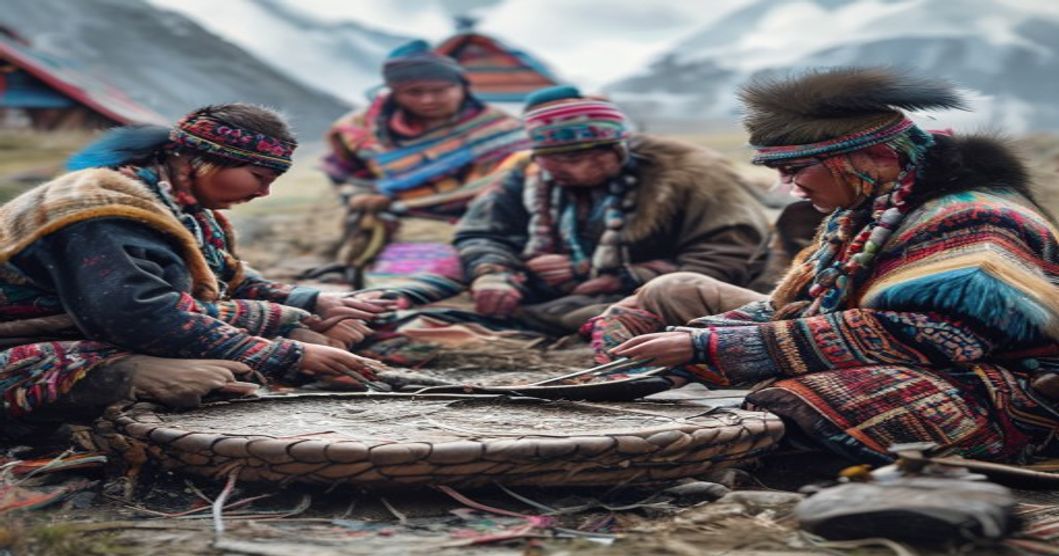
Traditional Sami Resource Sharing Systems
The traditional Sami resource sharing systems developed across northern Fennoscandia as a highly structured response to extreme climatic conditions and limited agricultural viability. These networks operated through the siida framework
Historical Foundations and Cultural Origins
The historical foundations of Sami resource sharing systems emerge from millennia of adaptation to the Fennoscandian Arctic landscape, where ecological constraints demanded collective survival strategies long before modern state boundaries were drawn. At the core of this framework lies the siida, a decentralized kinship-based unit that functioned as both an economic cooperative and a territorial management district. Unlike centralized agricultural societies, the Sami did not cultivate land; they managed dynamic ecosystems through rotational grazing, seasonal migration routes, and shared hunting grounds. Land tenure operated on customary rights rather than private property, with access determined by ancestral usage patterns and community consensus.
- Reindeer herding evolved from wild taming around the 13th century to full domestication, requiring coordinated labor across generations for calving, branding, milking, and winter pasturing.
- Fisheries and coastal trade along the Norwegian and Russian coastlines relied on communal net-mending schedules, shared boat ownership, and reciprocal gift exchanges during harsh winters.
- Kinship networks extended beyond immediate families, binding distant clans through marriage alliances, shared burial grounds, and joint participation in annual assemblies where resource disputes were mediated by elders.
Spiritual cosmology reinforced these material practices. The Sami worldview recognized noaidi spirits inhabiting sacred stones, mountains, and waterways, making environmental stewardship a ritual obligation rather than an economic choice. Seasonal festivals centered on reindeer slaughter and first milk offerings ensured ecological balance while redistributing protein-rich foods across the network. Historical accounts from 18th-century Lapp missionaries and 19th-century ethnographers consistently document how external taxation and land encroachment gradually fractured these systems, yet the underlying principles of reciprocity and intergenerational duty persisted in local governance structures well into the 20th century. The siida council operated through consensus rather than hierarchy, with herd leaders rotating responsibilities based on seasonal demands and demonstrated expertise. Resource allocation followed strict protocols: surplus meat was dried or fermented for winter storage, while hides and antlers were traded with neighboring farming communities for grain and iron tools. These exchanges established interregional dependency networks that predated written trade records by centuries. Modern archival studies confirm that pre-colonial Sami communities maintained detailed mental maps of pasture quality, migration bottlenecks, and wildlife corridors, transmitting this data through oral chronicles and joik melodies that encoded topographical knowledge across generations.
Core Principles of Collective Resource Management
The traditional Sami approach to resource management operates on a foundation of shared stewardship rather than individual ownership. Land, waterways, and wildlife are treated as interconnected assets that require coordinated utilization across generations. This framework emerged from the necessity of surviving in Arctic and subarctic ecosystems where environmental conditions shift rapidly and resource availability remains inherently unpredictable. Communities structured their economic activities around seasonal migration routes, allowing pastures to regenerate while minimizing human impact on fragile tundra and boreal habitats.
Decision-making authority rests with kinship networks and elder councils who maintain detailed oral records of grazing patterns, snow conditions, and animal behavior. These knowledge keepers evaluate historical data alongside real-time environmental indicators to adjust herd sizes, fishing quotas, and hunting grounds. Disputes over access rights are resolved through negotiated agreements that prioritize long-term ecological stability over short-term individual gain. The system relies on mutual obligation, where households contribute labor during peak seasons and receive support during calving periods or harsh winters.
- Rotational Access Scheduling: Territories are divided into seasonal use zones that rotate annually based on vegetation recovery rates and reindeer migration corridors.
- Ecological Threshold Monitoring: Customary laws establish strict carrying capacity limits, preventing overgrazing through enforced rest periods and controlled harvest volumes.
- Kinship-Based Allocation: Resource distribution follows lineage ties, ensuring equitable access while maintaining accountability to community welfare standards.
- Adaptive Governance: Leadership structures shift fluidly during emergencies, enabling rapid reallocation of food stores and labor without bureaucratic delay.
Enforcement of these principles depends on social cohesion and shared cultural values rather than external legal institutions. Violations trigger restorative measures such as temporary exclusion from communal activities or mandatory contributions to pasture rehabilitation. The system demonstrates remarkable resilience because it embeds conservation incentives directly into daily economic practice. Resource boundaries remain flexible, responding to climate fluctuations and wildlife movements while preserving the underlying commitment to intergenerational equity.
Kinship Networks and Community Governance
The foundation of traditional Sámi resource management rests on tightly woven kinship networks that function as both social safety nets and operational frameworks for survival. Within the siida, a decentralized community unit typically comprising several related families, ownership and usage rights over reindeer herds, fishing waters, and hunting grounds were never absolute but rather allocated through reciprocal obligations. Access to seasonal grazing corridors or prime fishing sites depended on demonstrated contribution to the collective welfare, ensuring that resources remained distributed according to need rather than accumulation.
Community governance operated through consensus-driven assemblies where elder herders, experienced fishers, and knowledge holders evaluated environmental indicators to adjust herd movements, set harvest quotas, and resolve disputes. These gatherings enforced strict protocols against overexploitation, with penalties ranging from temporary grazing restrictions to loss of communal support during harsh winters. Decision-making prioritized long-term ecological stability over short-term gain, embedding sustainability directly into cultural practice.
- Reciprocal Labor Exchange: Families contributed herders, boat operators, and net-menders according to seasonal demands, with compensation rendered in meat, hides, or future assistance rather than currency.
- Intergenerational Stewardship: Elders transmitted precise knowledge of ice thickness, lichen growth cycles, and animal migration patterns through oral instruction, ensuring adaptive management across decades.
- Collective Dispute Resolution: Conflicts over boundary crossings or livestock interference were mediated by clan representatives who referenced precedent cases and environmental data to restore equilibrium without external intervention.
This governance structure inherently resisted resource hoarding. Wealth measured in reindeer or catch size carried implicit obligations to redistribute surplus during famines, calving seasons, or migration bottlenecks. The system’s resilience emerged from its flexibility; kinship ties allowed rapid reallocation of labor and assets when weather patterns shifted or herds dispersed, maintaining operational continuity across generations.
Ecosystems and Resource Types in Sami Traditions
The Sámi territories span across four distinct ecological zones, each dictating specific harvesting cycles and distribution protocols. In the northern taiga belt, dense coniferous forests provided timber for construction, resin for preservation, and undergrowth vegetation for medicinal applications. Southern migration routes through open fell landscapes supported extensive reindeer pastoralism, where grazing lands operated under customary rotational access rather than private ownership. Coastal and archipelagic zones along the Barents Sea and Norwegian fjords hosted intricate netting systems and seasonal fish weirs designed to capture salmon, trout, and Arctic char during upstream migrations. Freshwater lakes and river networks functioned as critical hydrological hubs, with water rights managed through kinship lineages that prioritized equitable distribution during lean periods. Berry harvesting—particularly cloudberries, bilberries, and crowberries—followed strict phenological calendars, ensuring sustainable yield by rotating collection sites across generations. Hunting grounds for moose, ptarmigan, and seabirds required coordinated tracking techniques passed through oral tradition, with meat and hides distributed according to household needs and communal labor contributions. Peat deposits in boggy lowlands supplied fuel for long winters, while shared knowledge of safe ice thickness prevented fatal accidents during winter crossings.
Resource allocation never operated as isolated extraction; instead, ecological boundaries dictated cooperative frameworks where surplus from bountiful seasons stored in communal caches offset deficits during extreme weather events. Customary governance structures enforced these practices through elder councils that monitored grazing pressure, fish stock recovery cycles, and forest regeneration rates long before modern conservation metrics existed. Seasonal transhumance routes crossed permafrost margins where reindeer herds naturally concentrated, allowing multiple families to rotate milking stations and slaughter sites based on herd health indicators rather than fixed property lines. Cross-ecosystem trade networks linked inland herders with coastal fishers, exchanging cured reindeer fat for salted fish and birch bark containers, creating interdependent supply chains that minimized waste and maximized caloric return across harsh latitudes.
Reindeer Herding Territories and Pasture Rights
The operational core of Sami reindeer husbandry depends on a highly calibrated system of territorial allocation and seasonal pasture governance. Traditional grazing landscapes were organized through the siida, a flexible kinship-based cooperative that regulated herd distribution, resource extraction, and migration routing. Rather than fixed ownership models, territory management functioned as a dynamic stewardship framework where access rights shifted according to ecological conditions, herd demographics, and intergenerational obligations. Resource sharing within these networks operated on reciprocal exchange principles, ensuring that herders with diminished livestock retained equitable access to critical lichen beds during lean seasons.
Pasture utilization followed a strict latitudinal and altitudinal sequence designed around reindeer metabolic requirements and vegetation recovery cycles. Summer grazing zones occupied exposed highland plateaus where wind patterns reduced biting insect pressure and facilitated rapid forage regeneration. Autumn migrations guided herds toward boreal forest margins and coastal lowlands, optimizing energy conservation before winter set in. Winter pastures demanded deep snow penetration to expose crust-forming lichens, requiring precise knowledge of wind scour zones and microtopography. Spring calving grounds depended on sheltered valleys with predictable thaw patterns, heavily protected through customary grazing restrictions that penalized unauthorized incursions.
- Zoned Territorial Partitioning: Landscapes were divided into functional grazing sectors marked by natural features such as ridgelines, river deltas, and historic lichen beds, with boundaries maintained through continuous herding practice rather than survey instruments.
- Seasonal Access Negotiation: Adjacent siida groups established movement corridors and temporary grazing swaps during climate anomalies or forage deficits, preventing territorial monopolization and preserving ecological carrying capacity.
- Ecological Monitoring Integration: Pasture quality assessment relied on generational observation of lichen density, snow crust formation, and reindeer body condition, embedding hydrological and meteorological data into daily herding decisions.
Nineteenth and twentieth century state policies introduced parceling systems and individual licensing frameworks that fragmented collective management structures. Contemporary land tenure disputes continue to revolve around the legal recognition of historical grazing corridors versus commercial development rights held by forestry, mining, and wind energy operators. Current pasture governance increasingly combines satellite vegetation tracking with traditional route knowledge, maintaining the adaptive resilience of reindeer husbandry while navigating shifting precipitation patterns and extended growing seasons in northern Scandinavia.
Hunting Grounds and Wild Fisheries
The traditional Sami approach to hunting grounds, locally referred to as jagi, operated through a complex network of customary rights rather than static land ownership. Management authority rested with extended families and local communities who negotiated access based on historical usage patterns, reindeer herding routes, and seasonal migration corridors. Boundaries were defined by natural landmarks such as river confluences, mountain ridges, and established game trails. When a hunter or family unit secured rights to a specific tract, they assumed responsibility for monitoring wildlife populations, maintaining snow fences, and preserving critical denning or calving zones. This reciprocal stewardship model prevented territorial disputes while ensuring that harvest levels remained synchronized with ecological carrying capacity.
- Access was typically inherited through maternal or paternal lines, with community assemblies mediating disputes over overlapping hunting corridors.
- Seasonal rotation protocols dictated when specific zones could be entered, allowing vegetation recovery and uninterrupted wildlife breeding cycles.
- Surplus meat and hides were routinely redistributed to elderly members, newly established households, or neighboring groups experiencing resource shortages.
Wild fisheries functioned under parallel customary frameworks that prioritized long-term yield stability over immediate extraction. Salmon, Arctic char, whitefish, and herring runs were managed through village-level allocation systems where fishing stations were assigned to specific kinship clusters. Gear restrictions, including mesh size regulations for gillnets and seasonal bans during spawning migrations, emerged organically from generations of hydrological observation. Fishermen utilized weirs, ice-fishing holes, and hand-woven traps positioned at optimal current velocities. Harvest quotas were never fixed numerically; instead, they adapted to real-time indicators such as water temperature, ice thickness, and upstream migration density.
- Communal processing facilities facilitated immediate preservation through smoking, drying, or fermenting techniques that extended shelf life across harsh winters.
- Trade networks exchanged surplus fish for grain, iron tools, and timber from southern agricultural settlements, reinforcing interregional economic interdependence.
- Elder knowledge keepers documented spawning grounds and migratory bottlenecks in oral maps, ensuring that younger generations could locate productive waters without depleting established sites.
Both hunting territories and fishing stations operated within a broader reciprocity economy where resource extraction was inseparable from social obligation. Successful hunts or abundant fisheries triggered mandatory feasting cycles, gift exchanges, and labor pooling for winter maintenance projects. This integrated system transformed ecological management into a collective cultural practice, embedding sustainability into daily survival strategies rather than treating it as an abstract conservation goal.
Medicinal Plant Foraging and Seasonal Harvesting
Sami medicinal botany operated through highly calibrated ecological cycles that synchronized plant extraction with Arctic phenological markers. Knowledge of harvest timing relied on microclimate observation rather than fixed calendar dates. Spring collection focused on nutrient-dense birch sap, young crowberry leaves, and emerging medicinal mosses when enzymatic activity reached maximum concentration. Summer rounds targeted flowering arctic poppy, mature cloudberry foliage, and root systems of wild angelica during peak secondary metabolite synthesis. Autumn harvesting prioritized lignified bark, seed pods, and fermented berry reserves designed for extended winter storage. Winter preparation shifted toward dried lichen extracts, powdered roots, and smoke-cured remedies optimized for respiratory and metabolic conditions.
Distribution followed kinship-based reciprocity networks that prevented resource depletion across territories. Elders mapped seasonal foraging zones using topographical landmarks and soil composition indicators. Younger participants maintained harvest logs documenting yield variations, pest pressures, and medicinal efficacy. Communal collection events reinforced territorial boundaries while establishing standardized drying techniques that preserved bioactive compounds without synthetic intervention.
- Ecological Rotation Protocols: Harvest sites were abandoned for two to three growing seasons following intensive gathering, allowing root systems to regenerate and soil microbiome balance to restore naturally.
- Precision Extraction Methods: Only specific plant tissues were removed during each cycle. Root harvesting required complete soil clearance to prevent secondary rot, while bark collection utilized spiral cutting patterns that maintained vascular flow.
- Therapeutic Standardization: Dosage calculations depended on plant age, elevation, and moisture content. Drying temperatures never exceeded sixty degrees Celsius to prevent terpene degradation and flavonoid oxidation.
Modern ethnobotanical analysis confirms that these traditional preparation methods align with documented phytochemical stability thresholds. The absence of heat processing above natural drying ranges preserved volatile oils responsible for antimicrobial activity. Reciprocal knowledge transfer ensured that extraction techniques adapted to shifting precipitation patterns and permafrost degradation without compromising therapeutic yield. Resource allocation remained strictly decentralized, operating through trust-based exchanges rather than inventory management.
Social Mechanisms and Allocation Protocols
The foundation of Sami resource distribution rests on tightly woven kinship networks that dictate access to grazing lands, hunting grounds, and fishing waters. Household units do not operate in isolation; instead, they integrate into extended family clusters where labor, equipment, and livestock are pooled during critical seasonal windows. This collective approach minimizes individual risk while maximizing environmental efficiency across the harsh Arctic terrain. Resource eligibility emerges from documented lineage rather than formal land titles, with each family maintaining generational claims to specific corridors used for annual reindeer migrations.
Allocation follows strict customary protocols governed by the siida, a self-regulating herding community that functions as both an administrative and social unit. Within this structure, decision-making authority rests with experienced herd leaders who track pasture conditions, animal health, and weather patterns. These leaders negotiate rotational grazing schedules, ensuring no single group depletes shared pastures before the next cycle begins. When surplus meat, antlers, or furs accumulate after a successful season, distribution occurs through in-kind exchange rather than monetary transactions. Neighboring siida groups establish seasonal trading routes where goods are swapped based on regional specialization, reinforcing interdependence across vast distances.
- Kinship-based priority: Blood ties and marriage alliances determine initial access rights to hunting plots and fishing stations.
- Elder arbitration: Disputes over boundary markers or livestock ownership are resolved through customary councils led by respected community elders who reference oral precedent rather than written law.
- Rotational labor pooling: During calving and slaughter periods, families contribute workers according to capacity, with compensation calculated in future service obligations rather than cash.
Resource tracking relies on visual markers placed along migration corridors, with each family responsible for maintaining boundary stones and seasonal camp layouts. Discrepancies in herd counts or pasture degradation trigger immediate recalibration of allocation ratios, preventing overgrazing before ecological thresholds are crossed. Enforcement relies on social reputation rather than formal penalties. Individuals who hoard resources or violate established sharing norms face gradual exclusion from communal activities, which historically meant reduced access to critical support networks during extreme weather events. The system demands continuous verification; herders routinely inspect shared grazing boundaries, reconcile livestock counts, and adjust distribution ratios based on real-time environmental feedback.
Elder Leadership and Knowledge Transmission
Sami communities have historically maintained a decentralized yet highly coordinated governance model where elders function as the primary custodians of ecological and social knowledge. These individuals derive authority from decades of lived experience across reindeer migration corridors, coastal fishing grounds, and inland hunting territories rather than formal administrative appointments. Their leadership emerges through practical demonstration and contextual judgment, guiding resource allocation during seasonal transitions when environmental conditions fluctuate dramatically. Knowledge transmission operates through immersive apprenticeship frameworks where younger members accompany elders on extended expeditions. This hands-on pedagogy teaches precise navigation techniques, snowpack analysis, animal tracking methods, and identification of medicinal or nutritional flora without reliance on modern instruments.
The oral tradition preserves specialized terminology for wind patterns, ice stability, pasture regeneration rates, and precipitation cycles that standard linguistic databases fail to capture. Resource distribution follows established customary protocols where surplus harvests are systematically redirected toward households experiencing temporary setbacks, ensuring collective resilience during economically or environmentally constrained periods. Elders mediate territorial disputes over grazing boundaries or fishing rights by referencing historical precedents embedded in genealogical memory rather than codified statutes.
- Apprenticeship Integration: Youth participate in seasonal rounds, learning spatial orientation through direct observation and repeated field practice.
- Ecological Monitoring: Elders maintain continuous environmental assessments, adjusting herd movements or harvest schedules based on microclimate shifts and vegetation recovery timelines.
- Customary Arbitration: Resource conflicts are resolved through consensus-building sessions that prioritize long-term sustainability over short-term individual gain.
This transmission process emphasizes reciprocity and landscape literacy, reinforcing the principle that resource stewardship extends beyond immediate survival to intergenerational ecological balance. Contemporary conservation frameworks increasingly recognize these mechanisms as sophisticated adaptive management systems capable of responding to rapid environmental change. The continuity of elder-led knowledge networks depends on uninterrupted intergenerational contact, which modern socioeconomic structures frequently fragment. Maintaining these traditional transmission pathways remains essential for preserving both the cultural heritage and environmental resilience of Sami territories.
Reciprocity Norms During Resource Scarcity
Traditional Sami communities maintained rigorous reciprocity frameworks that governed survival when environmental conditions disrupted normal harvest cycles. Reindeer migrations shifted due to ice crust formation, coastal fish stocks migrated away from shallow bays, or inland game populations declined during prolonged winter droughts. Under these pressures, individual hoarding became ecologically unsound and culturally prohibited. Distribution followed codified exchange protocols embedded in kinship structures and seasonal movement patterns.
Operational Exchange Mechanisms
Resource allocation functioned as a deferred obligation system rather than immediate charity. Households with surplus meat, fat, or pelts from successful hunting windows provided provisions to families experiencing temporary shortfalls. These transfers operated through oral accounting and social memory, with the expectation of reciprocation measured across seasonal cycles rather than calendar days. The mechanism stabilized population density during multi-year environmental stress by converting individual vulnerability into collective risk distribution.
- Kinship Priority Routing: Extended family networks received first access to communal stores, ensuring that elders, pregnant women, and young hunters maintained baseline caloric requirements.
- Seasonal Redistribution Triggers: Autumn caribou slaughters and spring ice-fishing yields activated mandatory community distribution windows where surplus was systematically allocated to households lacking draft animals, snares, or boat timber.
- Functional Unit Valuation: Resources exchanged through equivalence rather than currency. A complete reindeer carcase held standardized value against a full winter clothing set or repaired fishing net, determined through collective assessment by herd managers and gear specialists.
Eological constraints directly modulated the intensity of these protocols. When snow droughts or ice storms isolated settlements, movement restrictions forced immediate internal redistribution. The absence of external trade routes amplified reliance on local networks. Resource monitors tracked consumption patterns against breeding stock thresholds, adjusting allocation ratios to prevent depletion of reproductive animals or seed reserves. This adaptive governance prevented systemic collapse during historical famine periods.
Archaeological findings and oral histories demonstrate that these reciprocity structures significantly reduced mortality rates during Arctic climate fluctuations. The framework operated as a decentralized risk-management network, enforcing compliance through reputation economics rather than formal legislation. Violations triggered social recalibration and temporary exclusion from exchange networks, preserving system integrity without centralized authority. Contemporary resource governance models frequently analyze these traditional protocols when designing community-based adaptation strategies for climate-vulnerable regions.
Mutual Aid Obligations and Labor Exchange
The survival of traditional Sami communities in the extreme Arctic environment depended entirely on structured cooperation rather than individual accumulation. Mutual aid obligations functioned as the economic backbone of these societies, operating through kinship networks and local settlement units known as sijdda. Every member carried implicit responsibilities toward others based on age, expertise, and seasonal availability. When a family faced illness, equipment failure, or sudden migration, neighboring households automatically mobilized to provide assistance without negotiation.
Labor exchange followed precise seasonal rhythms dictated by reindeer husbandry cycles, fishing windows, and hunting seasons. Groups coordinated activities such as mass branding, net weaving, ice hole maintenance, and winter trail preparation through reciprocal agreements. Participants tracked contributions informally, relying on social memory and long-term relationship building rather than written records. A skilled reindeer dog handler might assist with herding during calving season, while others returned the favor by repairing snowshoes or processing hides.
- Kinship-based allocation: Resources like meat, antlers, and fish were distributed according to household size and winter preparation needs.
- Task specialization: Individuals contributed based on proven competence, ensuring efficient output across diverse ecological zones.
- Reciprocal enforcement: Social reputation determined future access to shared pastures, boats, and hunting grounds.
This system minimized individual vulnerability while maximizing collective resilience. Harvest surpluses never remained idle; they circulated through established exchange pathways that prevented waste and supported vulnerable members during lean periods. The absence of formal contracts did not weaken the framework. Instead, moral accountability, intergenerational trust, and direct community observation created a self-regulating environment where failure to reciprocate resulted in gradual social isolation rather than legal penalty.
Labor rotation also extended to infrastructure maintenance. Communities pooled manpower to clear fishing weirs, construct winter cabins, and maintain snowmobile tracks long before mechanized transport existed. These joint operations reinforced interdependence, as no single household possessed the tools or physical capacity to manage Arctic logistics independently. Knowledge transfer occurred naturally during shared work periods, embedding ecological awareness and technical skill into the next generation while preserving the original resource distribution principles.
Ethnoecological Practices and Environmental Balance
The indigenous communities of northern Scandinavia maintain dynamic resource allocation frameworks rooted in communal stewardship models. These systems operate through negotiated grazing corridors, seasonal migration routes, and rotational land use that prevent overexploitation of tundra and boreal ecosystems. Each traditional management unit functions as an interconnected administrative node, where decisions regarding reindeer movement, forest harvesting, and waterway access are governed by generational ecological monitoring rather than fixed territorial boundaries.
Resource distribution follows strict customary allocation protocols. When livestock crosses communal edges, host groups apply reciprocal access agreements that mandate shared grazing periods and joint winter shelter construction. This prevents competitive depletion of lichen pastures while maintaining genetic diversity across reindeer populations. Harvesting seasons for fish, berries, and medicinal plants align with phenological indicators observed through centuries of field observation, ensuring reproductive cycles remain undisturbed.
- Seasonal transhumance mapping utilizes topographical markers and snowpack data to optimize pasture recovery windows
- Communal grazing quotas adjust annually based on calf survival rates and vegetation regeneration metrics
- Watercourse stewardship rules restrict dam construction during salmon spawning periods and mandate clear-water filtration zones
- Knowledge transmission mechanisms embed ecological calibration into oral narratives, ensuring adaptive management strategies survive environmental shifts
These practices generate measurable ecosystem resilience outcomes. Lichen coverage stabilizes within fifteen to twenty percent of available grazing territory, soil erosion remains minimal despite heavy animal movement, and keystone species maintain stable denning grounds. Modern conservation frameworks increasingly recognize these mechanisms as living ecological databases, where localized monitoring replaces centralized regulation. The integration of traditional assessment techniques with satellite vegetation indexing has improved land management accuracy across northern Fennoscandia.
Sustainable Harvesting Taboos and Rotational Systems
The Sami people developed a complex network of harvesting taboos and rotational land-use practices that functioned as precise ecological regulators across Scandinavian and Russian tundra ecosystems. These restrictions were not arbitrary spiritual prohibitions but calculated survival mechanisms encoded in oral tradition and enforced through community consensus.
- Seasonal Harvesting Restrictions: Specific zones near calving grounds, spawning rivers, and berry-rich fells remained off-limits during critical biological windows. Violating these boundaries triggered immediate resource depletion and was met with communal sanctions.
- Rotational Pasture Allocation: Reindeer herds followed predetermined corridors that shifted annually based on lichen regeneration rates, snow depth, and predator activity. Each family unit managed designated sectors for fixed periods before ceding control to neighboring clans.
- Vegetation Recovery Protocols: Areas subjected to intensive grazing or berry gathering required mandatory fallow intervals ranging from three to seven years. Elders monitored regrowth patterns and adjusted rotation schedules accordingly.
These systems operated through continuous environmental feedback loops rather than static regulations. Sami resource managers tracked indicator species such as reindeer lichen thickness, ptarmigan nesting success, and moss moisture levels to determine when extraction limits should tighten or expand. The rotational framework prevented soil compaction and maintained hydrological balance across fragile permafrost-adjacent soils. Managers also monitored snowpack density to adjust grazing pressure before winter pastures became depleted.
Elder councils documented spatial boundaries using natural landmarks, carved rune sticks, and seasonal migration timing. Disputes over territory allocation were resolved through mediated negotiations that prioritized long-term carrying capacity over short-term yield. Modern ecological studies confirm that these indigenous practices align closely with contemporary conservation biology principles, particularly in carbon sequestration maintenance and biodiversity preservation within subarctic biomes. Cross-clan resource pooling during extreme weather events further stabilized community resilience against environmental volatility.
The transmission of this knowledge relied on immersive apprenticeship rather than formal instruction. Young herders learned to read wind patterns, track animal movement across terrain, and identify plant phenological shifts before formal harvesting rights were granted. This pedagogical approach ensured that taboos evolved alongside environmental stressors while maintaining core sustainability thresholds.
Seasonal Migration Routes and Land Stewardship
The traditional Sami migration network operates as a finely tuned ecological calendar, synchronized with reindeer behavior, alpine vegetation cycles, and Arctic climate patterns. Each siida maintains distinct pathways connecting lowland winter forests to highland summer plateaus, with precise waypoints marked by lichen-rich grazing zones, river crossings, and terrain landmarks. These routes function as dynamic networks adjusted annually based on snow depth, ice formation, and pasture regeneration rates. Knowledge transfers through generational herding practice, where experienced handlers navigate using reindeer bell tonality, wind direction mapping, and historical weather memory rather than fixed cartography.
Seasonal movement follows a strict chronological framework dictated by forage availability and herd physiology. Spring calving grounds occupy sheltered valleys protected from northern winds, allowing vulnerable fawns to develop before summer dispersal. Summer pastures utilize high-altitude birch forests and exposed plateaus where natural insect activity prevents localized overgrazing. Autumn migration requires precise timing to reach coastal or inland winter zones before deep snow blocks passage. Winter grazing relies on wind-scoured snow patches that expose reindeer lichen, demanding constant movement to maintain forage availability across the territory.
Pasture allocation operates through communal siida agreements, where grazing rights rotate according to herd size and environmental capacity rather than individual ownership. Land stewardship within this system emphasizes long-term ecological balance over short-term extraction. Herders monitor vegetation recovery through specific field indicators:
- Lichen density assessments across windward versus leeward slopes
- Soil compaction tracking along repeated crossing points
- Reindeer body condition scoring during seasonal transitions
- Historical weather archives compared against current snow melt patterns
Conflict resolution regarding overlapping migration corridors relies on traditional mediation protocols involving elder herders who reference historical usage patterns and terrain changes. Modern landscape management increasingly recognizes these practices as natural grazing systems that prevent bog formation, maintain biodiversity, and regulate carbon storage through controlled vegetation cycles. The continuity of these routes depends entirely on preserving both physical landscape integrity and the intangible knowledge infrastructure required to navigate them across generations.
Contemporary Challenges and Cultural Preservation
Modern pressures on indigenous resource networks demand precise analysis. The Sámi customary sharing frameworks face structural disruption from rapid environmental shifts and legislative fragmentation. Glacial retreat and altered precipitation patterns directly impact reindeer migration corridors, forcing communities to renegotiate historical grazing boundaries. Industrial extraction projects frequently bypass traditional consultation protocols, creating legal friction between statutory land use plans and ancestral stewardship practices. These tensions require systematic documentation of customary allocation rules to strengthen advocacy positions.
Knowledge transmission operates under significant strain as younger generations migrate toward urban employment centers. Digital archiving initiatives attempt to capture oral distribution agreements, grazing schedules, and seasonal harvest rotations, yet static repositories cannot fully replicate the contextual nuance embedded in face-to-peer negotiations. Community-led conservation programs now integrate satellite tracking data with historical knowledge maps, enabling dynamic adjustment of resource quotas while maintaining reciprocity obligations.
- Legal recognition gaps between national land tenure statutes and customary grazing rights
- Economic commercialization altering traditional gift-exchange networks that historically reinforced social cohesion
- Climate-driven habitat fragmentation requiring adaptive co-management frameworks
- Regulatory misalignment between corporate development permits and indigenous stewardship mandates
Preservation efforts prioritize intergenerational mentorship programs and legal recognition of collective land tenure. Educational curricula now incorporate traditional resource allocation logic alongside modern ecology, ensuring technical competencies remain anchored in indigenous epistemology. Sustaining these systems requires continuous negotiation between statutory requirements and customary reciprocity, leveraging both scientific monitoring and ancestral stewardship principles to maintain functional resource networks. Policy integration demands
Land Rights Legislation and Policy Recognition
For centuries, Sami customary land tenure operated outside formal state registries, relying instead on oral transmission, seasonal migration corridors, and communal stewardship practices. Colonial expansion and nation-state consolidation systematically dismantled these arrangements through homestead laws, forestry concessions, and mineral extraction permits that prioritized territorial sovereignty over indigenous occupancy. The legal landscape began shifting in the late twentieth century when domestic courts and international bodies recognized that land dispossession directly threatened cultural continuity and economic viability.
ILO Convention 169 remains the foundational instrument for Sami land claims, though ratification varies across jurisdictions. Norway incorporated its principles through the Finnmark Act of 2005, which transferred roughly ninety-seven percent of county-owned territory to a newly established independent commission tasked with investigating historical usage patterns and recommending title transfers. Sweden adopted a similar investigative framework in 2011, while Finland relies on forest law provisions and constitutional protections that acknowledge reindeer husbandry as an exclusive indigenous livelihood requiring spatial priority.
- Historical Usage Recognition: Courts evaluate continuous occupation, seasonal patterns, and ecological management techniques rather than written deeds or fixed boundaries.
- Administrative Consultation Mandates: State agencies must conduct free, prior, and informed consent procedures before approving infrastructure, mining, or renewable energy projects on traditional territories.
- Co-Management Structures: Joint oversight boards distribute decision-making authority between municipal planners and Sámediggis for grazing zones, fishery quotas, and forest harvest limits.
Policy implementation consistently reveals friction between extraction-driven economic models and ecological carrying capacity limits. Mining permits frequently override seasonal reindeer migration routes, while wind farm installations disrupt calving grounds without adequate compensation frameworks. Recent administrative rulings have begun integrating traditional knowledge into environmental impact assessments, yet enforcement remains fragmented across municipal boundaries. Legal practitioners now emphasize precedent-based arguments that link land title directly to resource governance, arguing that recognition without operational control reproduces historical marginalization. The ongoing evolution of Sami land jurisprudence continues to reshape how northern European states balance sovereign resource management with constitutionally protected indigenous autonomy.
Climate Shifts Affecting Traditional Resource Cycles
Traditional Sami resource sharing systems operate on precise ecological rhythms that have sustained communities for centuries. These cycles depend on predictable seasonal transitions, which dictate reindeer migration corridors, fishing windows, and gathering periods. When regional climates shift, the foundational cues that trigger coordinated resource management begin to fracture. Unpredictable precipitation patterns now frequently create impenetrable ice layers over tundra vegetation, forcing reindeer herders to expend excessive energy breaking through crusts or relocating entire seasonal camps.
Warmer winter temperatures directly compromise ice stability along coastal and inland waterways, restricting safe access to historically reliable fishing grounds and traditional hunting routes. Earlier snowmelt accelerates the growing season for certain plant species while simultaneously disrupting the synchronized timing of berry harvests and medicinal plant collection. Reindeer populations face compounded stress as prolonged mild spells increase tick activity, weaken immune responses, and force herds into fragmented grazing zones that exceed customary carrying capacities.
- Seasonal calendars no longer align with actual environmental conditions, requiring continuous adjustment of traditional knowledge frameworks.
- Communal land-use agreements face legal and logistical friction when historical boundaries overlap with rapidly shifting ecological zones.
- Intergenerational knowledge transmission encounters disruption as elders observe phenomena that contradict established oral records.
Adaptation requires integrating real-time meteorological data, satellite imagery, and GPS tracking into existing governance structures without displacing community-led decision-making protocols. Local monitoring networks now document altered animal behavior, vegetation shifts, and microclimate variations to inform adaptive grazing schedules and shared resource allocations. Maintaining the integrity of these systems depends on preserving institutional memory while allowing structural flexibility for environmental volatility. Cross-regional coordination between herding districts becomes essential when traditional pastures experience rapid degradation or unexpected productivity spikes driven by temperature anomalies.
Community-Led Revitalization and Youth Engagement
Indigenous governance structures across Sápmi have shifted from passive documentation to active community-driven restoration protocols. Local grazing councils now operate decentralized resource allocation networks that prioritize consensus-based decision making over external administrative directives. Elders and land stewards co-develop seasonal migration schedules, integrating historical place names with contemporary satellite imagery to map optimal foraging corridors. These cooperative frameworks distribute reindeer herd management responsibilities across family units while maintaining communal oversight of pasture restoration cycles.
- Consensus-Based Governance Models: Resource distribution follows traditional boazovázzi principles where household contributions and environmental carrying capacity dictate allocation thresholds.
- Intergenerational Apprenticeship Programs: Youth participants complete structured field rotations monitoring soil composition, lichen regeneration rates, and herd behavioral patterns under elder supervision.
- Digital Heritage Documentation: Community archivists record oral migration narratives using spatial audio mapping, creating searchable databases that link ecological data with cultural land use history.
Youth leadership emerges through technical integration rather than cultural replacement. Younger generations manage GPS-tracked livestock networks, operate drone-assisted pasture surveys, and maintain open-source platforms that broadcast real-time resource availability across neighboring Sámi districts. Educational partnerships with regional universities embed traditional ecological knowledge into environmental science curricula, ensuring academic validation alongside indigenous epistemology. Youth-led enterprises commercialize sustainable handicrafts and guided land experience programs while reinvesting profits into communal grazing infrastructure.
Sustainability metrics track herd migration efficiency, youth retention rates in ancestral territories, and inter-community exchange volumes rather than purely economic output. Monitoring committees evaluate pasture recovery cycles, document successful adaptation to climate variability, and adjust distribution protocols through quarterly community assemblies. This operational model preserves ecological balance while generating self-sustaining revenue streams that fund language revitalization initiatives and elder care networks.
Research Frameworks and Cross-Cultural Applications
Academic investigations into traditional Sami resource sharing systems increasingly rely on interdisciplinary frameworks that bridge ethnographic fieldwork, ecological modeling, and Indigenous data sovereignty protocols. Researchers deploy participatory action methodologies to map historical grazing corridors, fishing grounds, and lichen harvesting zones while integrating geospatial analysis with oral history archives. These approaches prioritize co-created knowledge production, ensuring Sami researchers lead analytical phases rather than serving as subjects of external extraction.
Comparative studies frequently align Sami biejvve (shared pasture) management with Māori kaitiakitanga and Inuit Qaujimajatuqangit, revealing convergent principles around rotational access, ecological feedback loops, and intergenerational stewardship metrics. Policy translation remains a critical research frontier. Scholars apply institutional analysis frameworks to evaluate how customary sharing norms interface with modern land tenure legislation, particularly in Nordic jurisdictions where statutory recognition lags behind Indigenous governance demands.
- Climate resilience modeling incorporates traditional resource allocation patterns to adapt permafrost degradation and shifting reindeer migration routes through dynamic grazing rotation algorithms.
- Urban planning initiatives reference Sami co-management templates for multi-use landscape design, emphasizing transparent access agreements over exclusionary conservation strategies that historically displaced local populations.
- Academic publications mandate community-controlled databases tracking seasonal yield variations, soil recovery rates, and socio-economic dependencies using tiered metadata standards.
Methodological rigor demands strict adherence to CARE and FAIR principles for Indigenous data governance. Research teams utilize decentralized archival systems to monitor resource depletion rates while preserving epistemological boundaries unique to Arctic livelihood systems. Cross-cultural applications extend beyond academic circles, directly influencing Nordic policy drafting, environmental impact assessments, and international climate adaptation frameworks that recognize customary sharing as legally viable governance structures. Collaborative peer review panels now require explicit documentation of knowledge provenance, preventing extractionist practices from masking as scholarly inquiry.
Ethnographic Documentation of Sami Economic Models
Early ethnographic surveys captured Sami economic practices through meticulous fieldwork during the late nineteenth and early twentieth centuries. Researchers documented seasonal reindeer migration routes, communal slaughter arrangements, and reciprocal labor exchanges that sustained livelihoods across Arctic ecologies. These records emphasized collective decision-making, where resource allocation followed kinship networks rather than market mechanisms. Oral histories preserved by anthropologists revealed how risk was distributed across extended families during harsh winters, ensuring survival without debt accumulation or external dependency.
Contemporary documentation has shifted toward participatory methodologies that prioritize Sami voices. Digital ethnography now integrates GPS-tracked grazing patterns, multilingual audio archives, and intergenerational interviews to map economic resilience. Collaborative projects between universities and Sámi parliaries have produced open-access databases detailing traditional exchange rates, tool-sharing protocols, and seasonal market dependencies. These resources clarify how non-capitalist valuation systems operated alongside emerging trade networks during colonial periods.
- Kinship-based resource pooling: Land, equipment, and livestock were allocated through matrilineal and patrilineal networks, with usage rights tied to seasonal obligations rather than ownership claims.
- Risk-sharing economies: Communal herding groups maintained buffer stocks of dried meat and fat, redistributing supplies according to household need during migration failures or disease outbreaks.
- Seasonal reciprocity cycles: Spring calving camps operated on labor rotation systems, while autumn trading gatherings functioned as information hubs for pricing, contract enforcement, and inter-community debt settlement.
Modern ethnographic frameworks treat these models as adaptive institutions rather than historical artifacts. Digital mapping tools overlay historical grazing boundaries with contemporary land-use policies, revealing how documented economic structures influenced legal claims to traditional territories. Academic publications now analyze how Sami resource sharing mechanisms maintained ecological balance while resisting external commercialization pressures. The documentation itself functions as a living archive, informing current debates on indigenous economic sovereignty and sustainable Arctic development.
Comparative Studies with Global Indigenous Sharing Systems
Comparative analyses of traditional Sami resource allocation reveal structural parallels across dispersed indigenous networks worldwide. The duodji craft economy and seasonal reindeer pasturage rotations operate on kinship-mediated access rights, a pattern mirrored in Andean ayllu land stewardship where communal labor minka cycles dictate harvest distribution. Both systems prioritize ecological carrying capacity over accumulation metrics, embedding resource limits within cultural memory rather than market valuation.
Northwest Coast potlatch ceremonies and Pacific salmon management demonstrate overlapping reciprocity frameworks. Gift exchange protocols function as wealth redistribution mechanisms that prevent hoarding while reinforcing intergenerational accountability. Similarly, Aboriginal Australian songlines encode waterhole locations and hunting boundaries through oral topography, ensuring seasonal resource rotation remains intact without written documentation. These methodologies share a foundational premise: territory functions as a living contract between human activity and environmental regeneration.
- Kinship-Based Access Rights: Sami siida governance structures allocate grazing corridors through clan lineage, directly corresponding to Māori whakapapa land tenure models where genealogical records determine resource harvesting permissions.
- Temporal Distribution Cycles: Arctic reindeer migration patterns align with Inuit qinait navigation calendars and Sahelian pastoral transhumance routes, all relying on astronomical and phenological indicators rather than fixed fiscal years.
- Non-Monetary Value Circulation: Barter networks across circumpolar communities utilize antler carvings, dried fish, and woven textiles as standardized exchange mediums, paralleling West African kola nut trade systems that measure social capital against material gain.
Contemporary legal frameworks increasingly recognize these cross-cultural similarities. Co-management agreements in Scandinavia and North America now incorporate traditional ecological knowledge into wildlife monitoring protocols, validating indigenous allocation models as climate adaptation strategies. Research published in peer-reviewed environmental anthropology journals confirms that pre-colonial sharing architectures reduce overharvesting by up to forty percent compared to individualized tenure systems. The persistence of these networks demonstrates how decentralized governance outperforms centralized administration in ecologically sensitive biomes.
Integration with Modern Conservation and Land Management
The historical siida system operated as a decentralized governance model that distributed grazing rights across seasonal pastures based on ecological carrying capacity. Contemporary land management frameworks increasingly adopt this rotational structure to mitigate overgrazing and preserve lichen-dependent reindeer corridors. National parks across Scandinavia now incorporate traditional migration mapping into spatial planning tools, using historical route data alongside satellite telemetry to designate protected movement zones. Co-management agreements between state agencies and Sámi municipalities replace unilateral zoning with shared decision-making protocols.
These arrangements establish joint steering committees that evaluate forestry concessions, mining permits, and wind farm installations against reindeer husbandry calendars. Traditional knowledge of peatland hydrology and alpine vegetation cycles informs restoration projects targeting degraded tundra ecosystems. Remote sensing teams pair with elder herders to validate ground-truth data on permafrost thaw patterns and shrub encroachment rates. Sustainable harvesting regulations derived from duodji practices now guide non-timber forest product extraction limits, ensuring berry yields and medicinal plant populations recover between collection seasons.
- Legal precedents recognizing Sámi customary land use directly influence environmental impact assessments, requiring developers to fund biodiversity offset programs that replicate traditional mosaic habitat management.
- Cross-border conservation initiatives leverage these historical networks to create ecological continuity across national boundaries, transforming fragmented protected areas into functional wildlife corridors.
- Community-led monitoring platforms track snow depth variability and pasture regeneration metrics, feeding real-time data into adaptive management models.
This synthesis of indigenous resource allocation principles and scientific land stewardship establishes a replicable template for resilient ecosystem governance. Modern policy instruments now mandate joint research stations where academic ecologists and Sámi knowledge holders co-author land use guidelines. Collaborative fire management strategies replace suppression-only approaches, utilizing controlled low-intensity burns aligned with historical grazing patterns to reduce fuel loads while maintaining biodiversity hotspots. Water resource allocation frameworks integrate traditional spring protection customs into watershed restoration contracts, ensuring hydrological balance for both agricultural irrigation and wetland-dependent species.
Frequently Asked Questions
What is Traditional Sami Resource Sharing Systems?
Traditional Sami resource sharing systems refer to the indigenous practices and communal frameworks historically used by the Sámi people across Scandinavia and Russia to distribute natural resources such as grazing lands, fishing grounds, and hunting territories. These systems were based on collective stewardship, seasonal mobility, and mutual aid, ensuring sustainable use of the Arctic and sub-Arctic environment while maintaining social cohesion within Sámi communities.
Key facts about Traditional Sami Resource Sharing Systems
Key facts include: (1) Resources like reindeer pastures and waterways were managed collectively rather than privately owned; (2) Decisions were often made through local assemblies or elders, emphasizing consensus; (3) Seasonal migration routes dictated resource access to prevent overexploitation; (4) The system relied on reciprocity and trust, with surplus shared during harsh winters; (5) Modern legal frameworks in Nordic countries increasingly recognize these traditional practices as part of Sámi land rights and cultural heritage.