


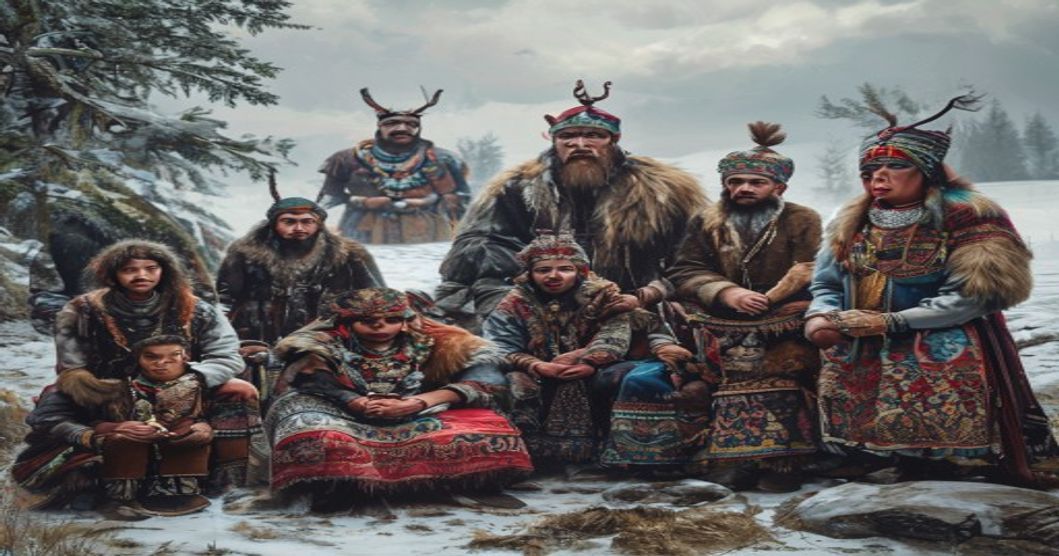
The Most Mysterious Sami Folk Tales Ever Recorded: A Comprehensive Guide
The oral narratives of the Sámi people emerge from a cultural ecosystem where spirituality, ecology, and survival intersected long before written records existed. Spanning across northern Norway, Sweden, Finland, and Russia’s Kola Peninsula, these tales were not mere entertainment but functional knowledge systems encoded through generations via joik melodies, rhythmic drumming, and seasonal storytelling cycles. What distinguishes them from neighboring Norse or Finnish mythologies is their deliberate ambiguity regarding supernatural boundaries. Entities in Sámi lore rarely operate on clear moral binaries; instead, they respond to environmental equilibrium, reciprocal respect, and ritual precision.
- Sieidi worship involved sacred stones or geological formations considered dwelling places for invisible forces. Offerings were deposited at these sites as transactional exchanges to maintain balance during hunting seasons or reindeer migration routes.
- The noaidi, or Sámi ritual specialist, navigated spirit realms using a handcrafted drum painted with cosmological maps. Ritual journeys were recorded in fragmented ethnographic accounts, yet the exact symbolic syntax of the drum patterns remains partially undeciphered due to historical suppression and linguistic fragmentation.
- Figures like Bieggaálmmuš (the wind spirit) and Lepikko (forest dwellers) operate outside human temporal logic. Their appearances signal ecological shifts, atmospheric anomalies, or spiritual warnings rather than literal antagonists.
Ethnographic collections by early twentieth-century researchers such as Sten Kahle and Antti Aarne captured hundreds of variant narratives, yet many resist linear interpretation. The tales frequently employ circular time structures, non-human perspectives, and conditional causality that defy Western narrative expectations. Modern folklorists attribute this to Sámi epistemology, where knowledge is situational rather than absolute. Linguistic isolation across nine distinct Sámi languages further complicates translation, as core concepts like luonddu (nature’s agency) or vuoigŋa (spiritual breath) lack direct equivalents in Scandinavian or Russian lexicons.
Contemporary scholarship approaches these narratives through interdisciplinary frameworks: archaeoastronomy, linguistic typology, and ecological anthropology. Field recordings from the 1970s onward revealed that certain tale motifs align with solstice cycles, auroral activity patterns, and reindeer calving grounds. This suggests the stories functioned as navigational and meteorological archives disguised as myth. Preservation efforts now prioritize community-led documentation rather than academic extraction, recognizing that authentic understanding requires linguistic fluency and cultural participation.
Origins of Sámi Oral Tradition and Arctic Cosmology
The Sámi oral tradition emerged from the ecological constraints of Fennoscandia, evolving over millennia through direct environmental interaction rather than institutional documentation. Knowledge transmission relied on rhythmic vocalization, seasonal migration cycles, and communal gatherings during polar nights. These narratives functioned as survival frameworks, encoding navigation routes, weather prediction methods, and resource management strategies into mnemonic structures.
Arctic cosmology within Sámi worldview operates on a tripartite model: the upper realm governed by celestial deities, the middle world inhabited by humans and terrestrial fauna, and the lower underworld associated with aquatic spirits and ancestral forces. Animistic reciprocity forms the foundational principle, asserting that every landscape feature, animal species, and natural phenomenon possesses agency. Sacred stones known as sieidi served as ritual focal points for offerings, divination, and seasonal rites. The noaidi functioned as spiritual intermediaries, utilizing drum iconography, trance states, and specialized incantations to negotiate cosmic equilibrium.
Linguistic continuity across Sámi dialects preserves phonetic markers that align with pre-Christian ritual cadences. Petroglyph sites near Alta, dating to approximately 4000 BCE, depict reindeer, boat motifs, and celestial alignments, confirming the antiquity of these cosmological frameworks. Oral transmission mechanisms adapted to extreme latitudes by embedding ecological data into joik melodies and duodji craftsmanship. These methods ensured precise tracking of migratory patterns, solar cycles, and grazing territories without reliance on written documentation.
- Seasonal Synchronization: Narrative structures mapped directly onto the polar night, midnight sun, and reindeer calving periods to regulate communal labor and spiritual observance.
- Ecological Encoding: Mythological boundaries delineated sustainable harvesting zones and seasonal territory rotations, preventing resource depletion.
- Ritual Continuity: Drum symbolism and sacrificial protocols maintained intergenerational knowledge transfer under shifting climatic conditions.
Archaeological and comparative linguistic research confirms that Sámi cosmological architectures predate Scandinavian Christianization by over two millennia. The preservation of these oral systems demonstrates a sophisticated epistemological adaptation to high-latitude environments, where environmental volatility demanded precise observational knowledge and flexible belief structures capable of sustaining cultural continuity.
Key Mythological Figures: Noaidi, Beaivi, and Raibloásstá
The Sami cosmological framework relies heavily on archetypal forces that govern survival, spirituality, and cosmic order. Among the most documented figures across historical recordings are the Noaidi, Beaivi, and Raibloásstá. Each represents a distinct pillar of traditional Sámi worldview, deeply embedded in oral narratives, drum divination practices, and seasonal rituals.
- Noaidi functions as the primary spiritual intermediary between mortal communities and the unseen realms. Historical accounts from 17th-century clergy and modern ethnographic studies confirm that Noaidi utilized carved reindeer antler drums to enter trance states, journey to upper or lower worlds, and negotiate with deities such as Bieggolmmái (the Wind Man) or Máttaráhkká (the Mother of the Forest). Their role extended beyond healing; they settled disputes, interpreted omens, and maintained ecological balance by appeasing territorial spirits.
- Beaivi, the Sun deity, appears in numerous folk tales as a luminous female figure who drives a golden chariot across the tundra sky. Unlike fragmented Norse solar myths, Sami narratives portray Beaivi as an active participant in human livelihood. Her daily arc dictates reindeer migration patterns, fishing seasons, and birthing cycles. In some regional versions, she shares her light with struggling communities during polar nights, though certain taboos warn against direct observation of her path to avoid spiritual imbalance.
- Raibloásstá, identified as the North Star, operates as both a navigational anchor and a mythological guide. Arctic explorers and indigenous hunters historically relied on its fixed position for winter travel across frozen seas. Folklore elevates this celestial body to a protective entity that watches over lost travelers and dictates moral boundaries. Legends describe Raibloásstá as the eldest child of the sky father, tasked with holding the heavens in place while other stars rotate around it. Violations of hunting codes or ethical transgressions were believed to cause the star to dim or shift position.
These figures rarely operate in isolation within recorded tales. Narrative structures frequently depict Noaidi performing rituals during Beaivi’s lowest winter solstice point, seeking Raibloásstá’s guidance to restore community harmony after ecological disturbances. The interplay between human agency, celestial cycles, and spiritual mediation forms the core of Sámi mythological transmission, preserved through joik cadences, drum iconography, and generational storytelling. Ethnographic archives consistently note how these deities were invoked during critical life transitions, reinforcing their enduring role in indigenous Arctic epistemology.
Unpacking the Lore Behind Arctic Legends
The Sami oral tradition preserves a complex ecosystem of supernatural beings, sacred geography, and cosmological frameworks that diverge sharply from mainstream Scandinavian mythology. Central to this lore is the sieidi, a naturally occurring rock formation or ancient tree considered an active dwelling place for spirits and a focal point for offering rituals. These sites functioned as conduits between the human realm and the divine, where reindeer herders left antlers, dried fish, or iron nails to secure favorable hunting outcomes or herd migration patterns. The noaidi, often mischaracterized simply as a shaman, operated within a structured spiritual hierarchy that facilitated journeying into parallel realms for divination, healing, and weather manipulation. Knowledge transmission relied entirely on mnemonic techniques, with elders encoding historical events, survival strategies, and ecological warnings into rhythmic chants known as joik. Unlike narrative songs, joik does not describe a subject; it evokes its essence through tonal modulation, breath control, and repetitive melodic motifs that mirror wind patterns or animal vocalizations.
- Northern Finnmark traditions emphasize sky deities like Bieggemánnu (the Wind Man) and ice spirits that dictate seasonal thaw cycles and aurora borealis phenomena.
- Southern Laponia folklore integrates
The Role of Vuokko and Aurora Borealis in Sámi Narratives
In Sámi oral tradition, Vuokko functions as a seasonal deity governing the transition from winter dormancy to spring vitality. Her narratives are embedded within pedagogical tales that encode survival knowledge for Arctic ecosystems. Hunters and gatherers invoked her presence through ritual offerings at sieidi stones or by preserving birch branches in dwellings, signaling alignment with natural cycles rather than domination over them.
The Aurora Borealis, known across Sámi dialects as guovssahasat, operates as a dynamic narrative framework rather than a static celestial event. Different Sámi communities mapped auroral behavior into distinct moral and practical teachings. Among northern reindeer herding groups, flickering lights were interpreted as the breath of ancestral spirits guiding migrations, while southern forest Sámi associated sudden displays with impending weather shifts or hunting fortune.
- Vuokko’s spring narratives frequently intersect with auroral sightings during equinox periods, creating layered metaphors for ecological rebirth and spiritual vigilance.
- Auroral patterns dictated seasonal mobility routes; communities aligned calving seasons and berry harvesting windows with observed light behavior to optimize resource acquisition.
- Ritual incantations directed toward Vuokko often incorporated auroral terminology, framing natural phenomena as active participants in human survival strategies rather than passive backdrop elements.
Contemporary Sámi scholars note that these narratives function as cognitive maps. The goddess embodies predictable ecological rhythms, while the Aurora Borealis represents unpredictable environmental variables. Their combined presence in storytelling preserves adaptive knowledge across generations, ensuring that practical survival techniques remain culturally encoded within spiritual frameworks.
Sacred Geography: How Tundra Landscapes Shape Storytelling
The tundra does not merely host Sami narratives; it actively constructs them. Vast permafrost plains, glacial valleys, and wind-sculpted fells dictate the rhythm of oral transmission. Storytellers align their cadence with seasonal light cycles—the polar night demands tales of inner warmth and ancestral memory, while the midnight sun fuels epics of movement and boundary-crossing spirits. Geographic features function as narrative anchors. Sieidi formations, often isolated basalt outcrops or glacial erratics, serve as physical portals in mythic geography. These stones are not static monuments but active participants in the cosmological framework, where noaidi historically conducted rituals to negotiate with mountain and forest spirits. The distribution of reindeer herding routes across Scandinavian fjell systems directly maps onto migration epics, transforming animal pathways into sacred corridors that dictate plot progression.
Topography also dictates narrative structure. Open tundra lacks natural concealment, which explains why Sami tales frequently feature shape-shifting beings and trickster figures who navigate visibility through illusion rather than combat. Conversely, dense birch-forest edges and deep ravines become stages for encounters with Stallo entities, representing environmental extremes and survival thresholds. The permafrost layer itself mirrors the thematic depth of these stories—surface narratives describe daily survival, while subterranean layers encode ecological warnings, kinship obligations, and cosmological balance. Oral performers traditionally sit facing geographic landmarks, using spatial orientation to trigger mnemonic sequences. Each wind direction, river bend, or ridge line corresponds to specific mythic episodes, creating a living cartography where landscape and legend are inseparable.
The tundra’s seasonal extremes force narratives to encode survival data within allegorical frameworks. Frost patterns on rock faces become divination tools in tales where noaidi interpret weather as spirit communication. River systems function as temporal markers; spring thaw sequences trigger renewal myths, while autumn freeze narratives emphasize preparation and communal reciprocity. The absence of dense canopy shifts auditory focus—storytellers utilize vocal techniques mimicking wind through hollow bone flutes or reindeer antler percussion, embedding acoustic geography into performance. Sacred sites are rarely random; they occupy geomagnetic anomalies, mineral-rich deposits, or glacial moraines that historically supported lichen pastures. These locations appear consistently across regional variants of oral runic cycles, confirming landscape-driven narrative convergence. When reindeer herds shift due to environmental variation, tales adapt by relocating spirit guardians to new geographic coordinates while preserving original ecological functions.
Cultural Significance and Spiritual Dimensions
Sami folk tales function as comprehensive cultural repositories, preserving ecological knowledge, survival strategies, and cosmological frameworks specific to Arctic and subarctic ecosystems. These narratives transcend oral entertainment; they serve as pedagogical instruments that transmit land stewardship principles, seasonal migration routes, and resource management protocols across generations. The stories encode precise geographical markers, identifying rock formations, frozen waterways, and reindeer grazing territories as spiritually charged landmarks. Each tale embeds practical environmental data within a narrative structure that reinforces reciprocal relationships between human communities and the natural world.
The spiritual architecture of these narratives rests upon animistic cosmology, where every mountain, forest, and water body possesses conscious agency and communicative capacity. Traditional Sami epistemology recognizes dynamic equilibrium through interconnected concepts of personal spirit, ancestral presence, and environmental balance. Documented shamanic practices reveal how noaidi figures mediated between physical and metaphysical realms using ritual drums, controlled trances, and seasonal offerings to negotiate with nature spirits. These spiritual encounters directly governed hunting permissions, healing methodologies, and communal governance structures rather than remaining abstract theological exercises.
- Joiik vocal traditions operate as auditory conduits that activate spiritual resonance with specific landscapes, ancestors, or animal kin during storytelling ceremonies.
- Sacred topography including volcanic ridges, glacial lakes, and ancient pine groves functions as natural sanctuaries where narratives are performed during solstice assemblies to sustain cosmological alignment.
- Ancestral genealogies embedded within folklore maintain lineage continuity while enforcing ethical frameworks centered on reciprocity, territorial respect, and intergenerational accountability.
Contemporary ethnographic studies confirm that these folk tales retain structural coherence despite centuries of colonial assimilation policies. The oral transmission mechanism guarantees contextual adaptation without compromising foundational spiritual parameters. Modern Sami organizations actively deploy these narratives for linguistic revitalization, territorial rights advocacy, and ecological restoration initiatives. The documented relationship between spiritual worldview and sustainable resource utilization provides historically grounded precedents for ecosystem management that align with contemporary environmental science objectives.
Animism and Seid Shamanic Practices in Traditional Taletelling
The Sami worldview operates on a fundamental premise that every element of the landscape possesses an independent spirit. Mountains, rivers, reindeer herds, and even household tools are not merely objects but conscious entities requiring negotiation and respect. This animistic framework directly shapes the architecture of traditional narratives, transforming oral transmission into a ritual act rather than simple entertainment. Storytellers functioned as cultural conduits, channeling ancestral knowledge through carefully structured performances that mirrored spiritual journeys.
Central to this practice is the seid tradition, a complex system of shamanic interaction mediated by the noaidi. The noaidi utilized specialized drums constructed from reindeer hide stretched over wooden frames, decorated with symbolic motifs representing different cosmological layers. Drumming patterns were not arbitrary; specific rhythms dictated which spirit realms could be accessed during trance states. Narratives involving seid practices typically follow a precise sequence: invocation of guardian spirits, descent into the lower or upper worlds, confrontation with supernatural forces, and return with healing knowledge or prophetic insight. These stories were never memorized verbatim across generations. Instead, they existed as fluid frameworks, adapted to environmental conditions, community needs, and the individual spiritual capacity of the performer.
- The negotiation process with hábme (nature spirits) who governed weather patterns and hunting success
- Ritual use of sacred stones as physical anchors for spiritual communication between human and spirit domains
- Transformation sequences where storytellers temporarily assume animal forms to traverse dangerous territories
- Direct dialogue with deceased ancestors who served as narrative guides rather than passive subjects
The performance environment dictated narrative delivery. Winter gatherings around central hearths created acoustic conditions that amplified vocal techniques like joik, a melodic chanting method encoding geographical and genealogical data. Performers modulated pitch, tempo, and breath control to simulate spirit encounters, effectively blurring the boundary between historical record and spiritual experience. Community participation remained essential; listeners responded through rhythmic clapping or vocal interjections that validated the authenticity of the spiritual transmission. Modern documentation efforts have preserved linguistic structures and cosmological references, yet the embodied knowledge of seid storytelling requires direct experiential learning to fully comprehend its operational mechanics within Sami epistemology.
Taboos, Rituals, and the Preservation of Hidden Knowledge
The Sami worldview operates through a tightly woven network of prohibitions and ceremonial practices that functioned as living archives. Rather than relying on written texts, communities encoded ecological survival strategies, spiritual boundaries, and ancestral wisdom into oral narratives and strict behavioral codes. Taboos were not arbitrary restrictions but functional mechanisms for maintaining harmony with the Arctic environment. Naming conventions exemplify this precision. Speaking the actual name of a bear, a wolf, or certain forest spirits was considered dangerous because it could attract unwanted attention from powerful entities. Instead, circumlocutions and euphemisms became standardized across generations, preserving linguistic nuance while preventing supernatural retribution.
Ritual frameworks reinforced these boundaries through repeatable, highly structured actions. Drumming ceremonies led by noaidi practitioners mapped cosmological layers onto physical space, using painted symbols to track seasonal migrations, hunting grounds, and ancestral territories. Offerings of reindeer antlers, dried fish, or carved wooden figures marked sacred sites where ordinary interaction was suspended. These practices transformed landscape features into navigational and spiritual coordinates, ensuring that critical knowledge about food sources, weather patterns, and territorial boundaries remained accessible only to initiated individuals.
- Prohibitions around fire management dictated when and where flames could be lit, directly influencing settlement patterns and resource distribution across reindeer grazing lands.
- Ceremonial silence during specific moon phases preserved acoustic memory techniques that aided in tracking animal behavior across vast tundra expanses.
- Initiation sequences required apprentices to memorize geographic markers, medicinal plant locations, and dream interpretation protocols before gaining full ritual authority.
Folk tales functioned as cryptographic vessels for this restricted information. Supernatural encounters in narratives often disguised practical warnings about ice stability, predator behavior, or seasonal food scarcity. The repetition of specific motifs across northern Scandinavia and Siberia reveals a shared epistemological framework where survival depended on respecting invisible boundaries. Colonial suppression efforts targeted drumming instruments and ceremonial sites precisely because these objects maintained the structural integrity of hidden knowledge systems. Contemporary researchers analyzing fragmented manuscripts and archaeological findings consistently note that Sami narratives prioritize functional reciprocity over moral allegory, positioning taboo adherence as the primary mechanism for long-term cultural continuity.
Modern Documentation and Ethical Storytelling
The transition from nineteenth-century ethnographic extraction to contemporary community-driven archiving represents a fundamental recalibration in how Sami oral traditions are preserved. Early collectors frequently recorded narratives without linguistic accuracy, cultural context, or consent, resulting in fragmented archives that prioritized academic ownership over indigenous stewardship. Modern documentation protocols reverse this dynamic by centering Sámi knowledge holders as primary authors and decision-makers.
Contemporary preservation initiatives utilize high-fidelity audio recording, 4K video documentation, and geospatial metadata to capture not only the narrative content but also the performative elements essential to Sami storytelling. These include joik intonation patterns, seasonal context, land-based references, and intergenerational dialogue. Archival systems now employ CIDOC-CRM and Dublin Core standards adapted for indigenous cultural data, ensuring that each recording carries precise provenance, language dialect tags, and usage restrictions defined by the originating community.
- Informed Consent Frameworks: Documentation projects require multi-stage agreements where Sámi participants specify access levels, distribution boundaries, and commercial restrictions. These contracts are legally binding and managed through Sámi institutional oversight.
- Community-Controlled Repositories: Digital archives hosted by organizations such as the Sámi Museum Siida or the Norwegian Sámi Parliament prioritize native-language metadata and restrict external scraping or AI training data usage without explicit permission.
- Participatory Methodologies: Researchers co-design collection strategies with local elders, youth councils, and language revitalization programs. Narrative themes are selected by communities rather than imposed by external academic agendas.
Ethical storytelling also addresses the risk of cultural commodification. Folktales involving mountain spirits, reindeer migration cycles, or shamanic cosmology hold legal protections under Norway’s Finnmark Act, Sweden’s Sami Code, and Finland’s Indigenous Peoples Treaty. Unauthorized reproduction in commercial media, gaming, or algorithmic training datasets violates these frameworks and triggers institutional sanctions. Verified documentation projects instead channel royalties into Sámi language schools, cultural centers, and intergenerational transmission programs.
The integration of digital preservation with cultural sovereignty ensures that Sami folk tales remain living traditions rather than static museum artifacts. When communities control the narrative infrastructure, they dictate how mysteries are shared, which layers remain protected, and how future generations engage with ancestral knowledge. This model aligns with UNESCO’s 2003 Convention for the Safeguarding of Intangible Cultural Heritage while establishing a replicable standard for indigenous knowledge preservation worldwide.
Digital Archives and Community-Led Sámi Language Preservation
The digitization of Sámi oral heritage has shifted from passive documentation to active cultural stewardship. Regional archives across Norway, Sweden, Finland, and Russia now host extensive collections of field recordings, handwritten transcripts, and photographic materials dating back to the early twentieth century. These repositories rely on Dublin Core metadata standards to ensure cross-institutional discoverability while respecting indigenous data sovereignty frameworks. Community-driven platforms have replaced centralized academic control, enabling Sámi speakers to curate, annotate, and restrict access according to traditional knowledge protocols.
Modern digitization pipelines incorporate high-fidelity audio processing to recover degraded wax cylinder recordings alongside contemporary fieldwork captured through standardized interview methodologies. Transcription teams employ native dialect specialists rather than relying solely on automated speech recognition, which consistently struggles with Sámi’s complex agglutinative morphology and regional syntactic variations. Each verified text undergoes peer review by local language committees before publication.
- Digital repositories enforce tiered access controls that distinguish between publicly available folklore and restricted ceremonial narratives governed by community elders.
- Educational modules integrate archived tales into interactive syllabi, allowing students to compare dialectal shifts across generations using synchronized audio-visual timelines.
- Collaborative tagging systems enable users to classify materials by ecological context, seasonal themes, and narrative function rather than Western literary categories.
Language revitalization initiatives directly depend on these archived narratives. When folk tales remain trapped in physical boxes or inaccessible academic journals, linguistic continuity fractures. Digital ecosystems reverse that trend by making primary sources available to youth programs, mobile applications, and community radio stations. Indigenous-led governance ensures that extraction does not replace preservation, as data ownership remains with Sámi parliaments and regional cultural councils rather than external research institutions.
Exploring The Most Mysterious Sami Folk Tales Ever Recorded Today
The Sami oral tradition operates as a compressed ecological and spiritual archive rather than conventional folklore. Recorded across fragmented dialects spanning Norway, Sweden, Finland, and Russia, these narratives preserve survival protocols, resource management frameworks, and cosmological models that modern researchers are only now decoding through interdisciplinary methods. The enigmatic quality of Sami tales originates from deliberate cultural stratification; many stories functioned as restricted initiation material, legal precedents for land tenure, and environmental forecasting tools rather than entertainment.
Core mysterious elements revolve around ritual specialists called noaidi who mediated between human settlements and supernatural domains using drum patterns and vocal tonality. Sacred geological formations known as sieidi served as communication anchors for haldde mountain spirits, while beast people designated rágge enforced territorial boundaries through documented behavioral codes. The mythological boazu reindeer operated simultaneously as economic foundation and cosmic courier, with specific antler markings believed to indicate seasonal migration shifts.
- Sáiva Subterranean Narratives: Lake spirits regulated hydrological cycles through iron nail offerings, with recorded acoustic anomalies in water surfaces correlating to historical flood predictions.
- Beaivváš Celestial Frameworks: Solar deity movement patterns mapped seasonal temperature gradients, with aligned rock formations functioning as natural sundials for planting and hunting calendars.
- Jábmi Ancestral Monitoring: Dead community members maintained ecological equilibrium through documented dream sequences that triggered immediate migration responses during overhunting periods.
Documentation challenges stem from early colonial collectors who transcribed tonal joik structures into linear text, stripping harmonic context and ritual timing. Contemporary scholars now utilize spectral audio analysis, paleobotanical cross-referencing, and GPS mapping of traditional territory markers to reconstruct lost narrative layers. The survival of these tales across dialect boundaries demonstrates adaptive information compression, preserving climate data that directly informs current Arctic resilience modeling.
Essential Academic Publications, Documentaries, and Archival Resources
Researchers investigating the mythological frameworks of indigenous Northern European narratives must first navigate specialized institutional repositories that preserve primary oral transcriptions. The Sámi University of Applied Sciences in Kautokeino maintains the most comprehensive collection of field recordings dating back to the early twentieth century, where phonograph cylinders and reel-to-reel tapes document elder storytellers reciting creation myths, shamanic journeys, and supernatural encounters with the hábme spirits. Cross-referencing these audio archives with printed transcriptions published by the Finnish Literature Society reveals how regional dialects directly influence narrative structure and lexical specificity in Arctic folklore.
- Academic Publications: Kirsten Hastrup’s Folk and Culture in Sami Society provides critical analysis of ritualistic storytelling practices, while Carolyne Larrington’s translations in Sami Myths and Legends bridge comparative mythology with indigenous epistemology. The ATU classification system remains essential for cataloging supernatural encounter tales, particularly variants classified under types 300–399 that detail encounters with the noaidi and mountain spirits.
- Documentary Archives: NRK Sápmi’s broadcast collection includes digitized episodes examining joik as a narrative vehicle for ancestral memory. The documentary series Sámi Folktales: Voices from the Tundra utilizes ethnographic filmmaking to record contemporary practitioners preserving endangered plotlines. Nordic Film Centre archives hold supplementary footage documenting seasonal storytelling ceremonies tied to reindeer migration patterns.
- Digital Repositories: UiT The Arctic University of Norway’s Sami Collections portal offers open-access metadata for over twelve thousand primary sources. The National Library of Norway’s Nasjonalbiblioteket digitized the Samiske Eventyr og Sagn series, enabling keyword searches across dialect-specific variants. Swedish Academy folklore databases provide parallel indexing for trans-Lapland narrative comparisons.
Academic researchers should prioritize peer-reviewed journals such as Arctic Anthropology and Journal of Northern Studies, which regularly publish linguistic breakdowns of supernatural terminology. Cross-linguistic analysis of Old Norse loanwords embedded in Sami mythological texts reveals historical cultural contact zones. Digital humanities platforms now allow spectral audio enhancement of degraded field recordings, restoring vocal inflections that indicate ritualistic pacing and ancestral invocation patterns. Primary source verification requires consulting multiple archival nodes to account for colonial-era transcription biases.
Responsible Tourism and Cultural Engagement with Sámi Communities
Engaging with Sámi culture requires a deliberate shift from passive observation to respectful participation. Travelers must prioritize indigenous-led initiatives that guarantee direct economic benefit to local communities. Authentic experiences emerge only when itineraries are designed, guided, and owned by Sámi operators who control how their heritage is presented. This approach safeguards intangible cultural assets while ensuring visitors understand the historical context behind traditional practices.
- Ethical Travel Frameworks: Book accommodations and tours exclusively through Sámi-owned enterprises. Verify certifications that mandate fair wages, land-use consent, and transparent revenue sharing.
- Seasonal Awareness: Reindeer husbandry dictates daily rhythms across Fennoscandia. Visit during appropriate periods to avoid disrupting grazing routes or calving seasons. Consult local joik practitioners for guidance on respectful attendance at cultural gatherings.
- Sacred Site Protocols: Many landscapes hold spiritual significance beyond tourist appeal. Maintain silence near ancient rock carvings, refuse to remove artifacts, and follow designated pathways marked by community elders.
Cultural exchange thrives when visitors engage as learners rather than consumers. Basic proficiency in Sámi greetings demonstrates genuine respect and opens doors to deeper conversations about language revitalization efforts. Documenting traditional crafts, hunting techniques, or oral histories requires explicit permission, as these narratives remain protected under indigenous intellectual property frameworks. Sustainable tourism models actively fund Sámi educational programs, support dialect preservation projects, and create employment opportunities that reverse urban migration trends. When travel practices align with community priorities, the exchange transforms from transactional visitation into mutual cultural reinforcement.
Modern visitors can further deepen their understanding by participating in duodji workshops led by master artisans. These hands-on sessions emphasize material sourcing, ethical harvesting, and the philosophical connection between craft and environment. Guided wilderness walks conducted by Sámi experts reveal tracking methods, medicinal plant knowledge, and survival techniques passed through generations. Travelers who commit to these structured engagements help sustain livelihoods while preserving ecological balance across northern ecosystems.
Frequently Asked Questions
What is The Most Mysterious Sami Folk Tales Ever Recorded?
“The Most Mysterious Sami Folk Tales Ever Recorded” refers to a curated collection of ancient narratives from the indigenous Sámi people of Northern Scandinavia and Russia. These stories, traditionally passed down orally by noaidis (shamans) and elders, explore themes of spiritual realms, shapeshifting animals, aurora borealis legends, and encounters with supernatural beings like the hulten or maadtoe. They remain deeply mysterious due to their cryptic symbolism, connection to animistic beliefs, and the historical lack of written documentation before modern recording efforts.
Key facts about The Most Mysterious Sami Folk Tales Ever Recorded
– Originated from the oral traditions of the Sámi across Finnmark, Lapland, and Kola Peninsula.
– Primarily documented in the late 19th and early 20th centuries by researchers like Carl Ludvig Lenz and Petrus Das.
– Center around the concept of “luondu” (nature spirits) and “sieidi” (sacred stones).
– Often feature joik songs as a narrative vehicle for preserving mystical lore.
– Many tales were initially suppressed due to Christianization but preserved in fragmented forms across generations.