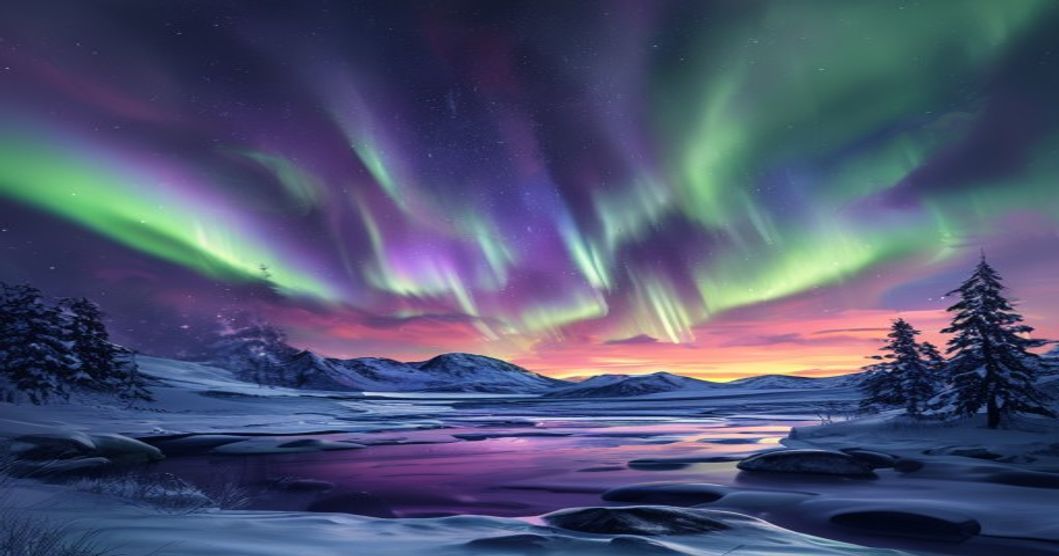
Sami Stories Inspired by the Aurora Borealis
The Sami people of northern Scandinavia and the Kola Peninsula have long interpreted the shimmering celestial displays as deeply woven into their cosmological framework. Rather than viewing the phenomenon merely as a meteorological event, traditional oral narratives frame it as an active spiritual presence. Communities across Finnmark, Troms, and Lapland developed distinct regional variations, yet a consistent thread links these accounts: the lights represent souls navigating between the physical realm and the afterlife. Elders traditionally warned that the aurora possessed consciousness, capable of observing human behavior and responding to moral conduct. This perception dictated daily routines during winter months when darkness persisted for extended periods.
Specific myths illustrate how cultural values intersected with environmental observation. One widespread narrative describes a divine arctic fox sweeping its massive tail across the snowdrifts, generating the glowing reflections that dance above the horizon. Another interpretation associates the shifting colors
Historical Origins of Northern Lights Folklore in Sápmi
Long before modern astrophysics mapped the ionospheric collisions responsible for the aurora borealis, indigenous communities across Sápmi developed intricate mythological frameworks to interpret the celestial phenomenon. Pre-Christian Sámi cosmology treated the sky as a permeable spiritual plane where ancestral spirits, nature deities, and cosmic forces maintained continuous dialogue. The shimmering lights functioned as active narrative devices rather than passive atmospheric displays. In coastal Sámi territories, the aurora frequently represented the breath of departed relatives navigating between realms, offering directional guidance during polar nights or marking seasonal transitions critical to reindeer migration patterns. Inland groups often interpreted the same phenomenon through a different symbolic lens, associating the luminous bands with primordial cosmic battles that dictated weather cycles and hunting success.
These interpretations generated strict behavioral protocols embedded in daily life. Communities enforced prohibitions against whistling at the sky or striking drums beneath the display, rooted in the conviction that such gestures could destabilize spiritual equilibrium or invite predatory entities into camp. Rather than arbitrary superstition, these taboos operated as socio-ecological regulators, reinforcing communal discipline and respect for unpredictable environmental conditions. Oral transmission relied heavily on structured joik performances, shamanic drum imagery, and seasonal gatherings where elders encoded astronomical observations into survival strategies.
- Coastal Sámi linked auroral patterns to marine spirits and winter navigation routes
- Inland herding communities mapped light movements to reindeer calving grounds
- Shamanic practitioners used drum symbols to record celestial cycles across decades
European missionary campaigns during the seventeenth and eighteenth centuries systematically documented and suppressed these narratives, framing them as theological deviations. Despite deliberate cultural erasure, Sámi knowledge keepers preserved foundational motifs through craft symbolism, coded seasonal rituals, and intergenerational storytelling networks. Archaeological artifacts and early colonial accounts confirm that auroral folklore predates written documentation by millennia, demonstrating how indigenous epistemologies seamlessly integrated atmospheric observation, spiritual cosmology, and environmental management.
Core Symbolism and Spiritual Meanings in Traditional Narratives
The Sami people have long viewed the aurora borealis not merely as a meteorological phenomenon but as a profound spiritual interface between the human world and the unseen realms. Traditional narratives consistently frame the dancing lights as the spirits of ancestors, warriors, or nature deities engaged in cosmic activities. In many northern Sami communities, the aurora represents the souls of those who have passed, moving across the sky to maintain balance between life and death. This symbolism transforms the night sky into a living archive where ancestral wisdom remains accessible.
Cultural accounts describe the lights as divine messengers or omens, often linked to hunting success, weather shifts, or communal decisions. Elders traditionally warned against whistling at or shouting toward the aurora, believing such actions could invite the spirits downward and cause physical harm. The prohibition stems from a deeper cosmological principle: respect for boundaries between earthly and celestial domains. Disrupting this equilibrium risked spiritual contamination or misfortune.
- Ancestral Presence: The aurora serves as a visible manifestation of deceased relatives, offering guidance during seasonal migrations and winter rituals.
- Natural Harmony: Lights reflect the health of the environment; unusually vibrant displays signal favorable conditions for reindeer herding or fishing.
- Sacred Caution: Traditional taboos emphasize silence and reverence, reinforcing a worldview where nature demands mindful interaction rather than exploitation.
Across different Sami subgroups, variations in interpretation exist, yet the core theme remains consistent: the aurora functions as a spiritual compass. Stories passed through joik singing and oral tradition treat the phenomenon as both warning and blessing. Communities historically observed the lights to determine safe travel routes, anticipate storms, or mark ceremonial timing. The celestial display operates as a dynamic ledger of cosmic order, where light patterns encode ecological knowledge and moral expectations. Modern scholarship recognizes these narratives not as folklore but as sophisticated epistemological frameworks that integrate astronomy, ecology, and metaphysics into a cohesive cultural system.
Regional Variations Across North, South, and West Sámi Territories
The oral traditions surrounding the aurora borealis diverge significantly across Sápmi due to distinct ecological zones, historical settlement patterns, and livelihood strategies. In northern territories, where tundra landscapes dominate and reindeer herding defines seasonal cycles, the lights are frequently described as spiritual messengers or ancestral guides. Elders traditionally warn against whistling at the phenomenon, a practice believed to invite dangerous spirits or disrupt herd navigation. The narrative structure here emphasizes caution, environmental reciprocity, and precise atmospheric reading.
Southern Sámi communities, situated within boreal forest belts and historically engaged in mixed agriculture, fishing, and limited reindeer pastoralism, frame the aurora through a more localized lens. Stories focus on territorial boundaries, seasonal transitions, and the movement of game animals. The lights serve as markers for hunting expeditions and indicate shifts in wind patterns critical for winter survival. Unlike northern accounts that prioritize vast spiritual journeys, southern narratives ground the phenomenon in immediate landscape features such as mountain ridges, frozen lakes, and old grazing paths.
- Linguistic Distinctions: Northern Sámi terminology like guovssahas directly links the aurora to dawn light, reflecting its role in daily rhythm. Southern dialects employ words emphasizing shadow, movement, and forest canopy interactions.
- Maritime vs. Continental Influences: Western coastal territories experience frequent auroral displays due to lower cloud cover and geomagnetic alignment. Communities here historically wove the lights into fishing calendars, interpreting flickering patterns as indicators of fish migration and storm surges.
- Contemporary Transmission: Digital archiving projects across these regions now differentiate narrative variants by municipality, preserving dialect-specific metaphors that standard textbooks often erase. Researchers map story clusters against historical land-use records to trace how climate shifts altered mythological focus.
Ethnographic fieldwork confirms that aurora narratives function as ecological knowledge systems rather than mere folklore. Each territorial variant encodes survival data, spiritual ethics, and intergenerational memory. Modern Sámi educators integrate these regional distinctions into language revitalization programs, ensuring that geographically specific cosmologies remain intact amid cultural homogenization.
Localized Celestial Spirits and Their Roles in Community Rituals
Regional variations in Sámi cosmology assign distinct identities to aurora-associated entities across northern Fennoscandia and the Kola Peninsula. In northern Sámi territories, these luminous phenomena are frequently interpreted as celestial spirits that mediate between ancestral realms and living settlements. Communities recognize specific presences tied to local geography:
Cultural Preservation and Contemporary Adaptation of Auroral Myths
The Sámi conception of the aurora borealis transcends atmospheric optics, embedding celestial phenomena within a living framework of ancestral knowledge. Traditional accounts describe the lights as spiritual bridges connecting the human realm with the underworld or as the breath of departed souls. These narratives were never static; they evolved alongside seasonal migrations, reindeer husbandry cycles, and ecological observations. Oral transmission relied heavily on the joik, a distinctive vocal tradition that encoded geographical landmarks, weather patterns, and moral lessons within melodic structures. Preserving these accounts requires more than transcription. It demands contextual documentation that captures tonal variations, regional dialects, and the performative space where elders originally shared these stories.
- Community-driven archives in Sápmi now integrate audio recordings, handwritten transcriptions, and satellite imagery to map historical sighting locations against modern climate data.
- Academic partnerships prioritize Sámi-led research frameworks, ensuring epistemological sovereignty over indigenous cosmologies.
- Digital repositories employ phonetic tagging systems to preserve dialectal distinctions that standard orthography often flattens.
Contemporary reinterpretations operate within carefully negotiated boundaries. Modern Sámi authors and filmmakers extract structural motifs rather than literal translations, adapting mythic frameworks to address climate displacement, language shift, and urban diaspora experiences. Animated series and graphic novels frequently employ non-linear timelines, mirroring the cyclical nature of traditional storytelling while integrating contemporary pacing for global audiences. Educational modules in Finnmark, Troms, and Lapland curricula embed auroral narratives alongside ecological literacy, demonstrating how indigenous cosmologies inform sustainable land management.
- Digital platforms enable younger generations to remix traditional motifs through interactive media, while community museums enforce strict protocols regarding sacred or restricted knowledge.
- Language revitalization initiatives cross-reference auroral terminology with extinct dialects, reconstructing phonological patterns that standard orthography historically obscured.
- Indigenous filmmaking collectives utilize drone cinematography paired with field recordings of historical sighting locations, creating immersive archives that bypass conventional academic publishing.
The tension between preservation and adaptation remains productive rather than contradictory. When storytelling technologies evolve alongside ecological monitoring tools, the narratives maintain their diagnostic value for Arctic communities navigating rapid environmental transformation. Curators balance accessibility with cultural safeguarding by implementing tiered access systems, allowing public engagement with generalized motifs while restricting specialized ritual knowledge to certified community practitioners. This layered approach ensures that auroral myths function as active cultural infrastructure rather than static museum artifacts.
How Indigenous Elders Pass Down Aurora Storytelling Traditions
Transmission of aurora narratives within Sami communities relies on tightly structured intergenerational pedagogy rooted in seasonal rhythm and spatial memory. Elders initiate instruction during the polar night, when extended darkness maximizes celestial visibility and creates natural conditions for sustained observation. Gatherings typically occur inside traditional goat-hair tents or near controlled fires, where acoustic properties carry vocal tones across open terrain. The pedagogical framework operates through immersive immersion rather than abstract lecturing. Young listeners absorb narratives while tracking actual light formations overhead, linking atmospheric behavior to ancestral lore in real time.
Educators employ layered mnemonic systems that bind auditory, tactile, and kinesthetic cues to celestial phenomena. Joik performances function as structural anchors, with melodic contours mirroring auroral movement patterns. Repetition follows cyclical scheduling aligned with reindeer migration cycles and hunting calendars, ensuring narratives surface during culturally relevant periods. Instructional protocols mandate specific behavioral adjustments: covering hair to prevent spiritual interference, maintaining silence until a story reaches its narrative climax, and using hand gestures that map constellation alignments onto physical terrain.
- Direct celestial mapping: Elders trace luminous streamers with walking poles, teaching youth to correlate ribbon formations with wind currents and ionospheric activity.
- Ritualized observation windows: Knowledge transfer occurs exclusively during geomagnetically active periods, when staff members verify atmospheric readings against oral accounts.
- Vocal modulation training: Students practice pitch variation to replicate auroral hum frequencies, developing auditory recognition of ionospheric disturbances before visual confirmation.
- Ecological cross-referencing: Aurora narratives integrate reindeer tracking routes, snowpack density measurements, and temperature inversion patterns, transforming sky stories into practical survival frameworks.
This pedagogical model preserves narrative integrity through communal verification rather than individual authorship. Elders adjust story sequences based on listener comprehension levels, modifying character roles or landscape references to match regional topography. Digital documentation projects occasionally supplement field instruction, yet core transmission remains anchored in lived atmospheric experience. The system maintains epistemological continuity by treating aurora stories as operational knowledge rather than historical artifacts, ensuring each generation reconstructs celestial relationships through direct environmental engagement.
Ethical Frameworks for Researchers Documenting Sami Folklore
Researchers documenting Sami folklore must anchor their methodology in established ethical protocols that prioritize community sovereignty and long-term cultural preservation. The foundation of any legitimate documentation project rests on Free, Prior, and Informed Consent (FPIC), which requires transparent negotiations before fieldwork begins. Academic institutions cannot assume research permits justify ethnographic access; scholars must establish formal memoranda of understanding with local Sami parliaments, elder councils, and regional cultural associations. These agreements must explicitly define ownership, usage rights, and distribution channels for all collected materials.
Indigenous data sovereignty dictates how archives are stored, accessed, and managed. Folk narratives, traditional ecological knowledge, and audio recordings belong exclusively to the originating communities. Depositing field recordings in external university repositories without community approval violates contemporary indigenous data governance standards. Researchers should instead utilize Sami-controlled digital infrastructures, implementing tiered access systems that restrict sensitive materials according to community directives. Metadata creation requires direct input from native speakers to guarantee accurate terminology, dialectal precision, and contextual accuracy.
- Customized licensing agreements must prevent commercial exploitation while permitting academic reference, as traditional cultural expressions frequently operate outside Western legal frameworks.
- Benefit-sharing structures should allocate publication royalties and grant funding toward community-led language revitalization initiatives rather than institutional overhead.
- Academic outputs must list local contributors as knowledge holders or co-authors, rejecting anonymized source citations that erase indigenous authorship.
Sustainable fieldwork replaces transactional data collection. Ethical documentation demands continuous consultation throughout every project phase, from initial design to final dissemination. When recording oral histories, researchers must honor restrictions surrounding sacred narratives, seasonal storytelling traditions, and gender-specific knowledge systems. Institutional review boards should require indigenous advisory panels to evaluate methodological approaches before approval. Compliance with UNDRIP Article 31 and UNESCO Convention establishes a structural baseline, yet community-specific protocols always supersede external guidelines.
Digital ethics compliance requires encryption standards, anonymization protocols where requested, and clear licensing declarations to prevent unauthorized scraping or AI training on indigenous materials. Funding applications must include community oversight committees that retain veto power over publication timelines and geographic scope. Academic journals now mandate ethical statements detailing consultation processes, compensation
Experiencing the Aurora Borealis Through Authentic Sami Perspectives
The Sami understanding of the northern lights transcends visual spectacle, embedding celestial phenomena within daily survival strategies and ancestral cosmology. Indigenous communities across Sápmi refer to the aurora as guovssahas, a term historically denoting both the first light of dawn and the shimmering bands above tundra. Traditional knowledge systems treat these displays not as isolated weather events but as active indicators of atmospheric pressure shifts, snowpack density, and magnetic field fluctuations that directly impact reindeer migration routes.
Authentic observation requires reading environmental cues long before darkness falls. Sami herders historically tracked aurora activity through specific wind patterns that clear high-altitude cloud layers while preserving low-level visibility. Snow crust temperature, measured by listening to the acoustic properties of footfalls, signals stable atmospheric conditions conducive to clear viewing. Animal behavior serves as an early warning system; sudden silence among reindeer herds or changes in fox tracks often precedes geomagnetic storms that will later produce intense displays.
- Respect established cultural protocols by maintaining quiet observation and avoiding sudden movements near sacred stones (sieidi) where aurora sightings traditionally marked spiritual transitions.
- Avoid flash photography near indigenous land boundaries, as repeated light pollution disrupts both nocturnal wildlife patterns and the natural darkness required for optimal celestial viewing.
- Seek guidance from certified Sami cultural interpreters who combine historical meteorological records with real-time geomagnetic data to predict viewing windows with higher accuracy than standard forecasting models.
Contemporary Sami-led experiences emphasize ecological literacy over tourist engagement. Participants learn to interpret cloud formations through the lens of seasonal reindeer husbandry cycles, understanding how auroral activity correlates with sub-zero temperature inversions that trap moisture in polar valleys. Modern preservation efforts integrate traditional sky-reading techniques with satellite magnetometer data, creating hybrid forecasting methods that honor indigenous epistemology while maintaining scientific precision. Climate shifts alter snow accumulation patterns across Sápmi, requiring updated knowledge transmission between generations to maintain accurate aurora prediction frameworks.
Optimal Viewing Locations Aligned with Traditional Storytelling Regions
The geographic overlap between peak auroral activity and Sami ancestral homelands establishes a distinct viewing corridor across northern Fennoscandia. Solar wind particles follow Earth’s magnetic field lines toward the geomagnetic poles, positioning traditional Sami territories—encompassing Finnmark in Norway, Lapland in Finland, and Tromsø in northern Norway—directly beneath the auroral oval. This alignment preserves centuries of oral tradition where celestial displays were interpreted through indigenous cosmology, ecological observation, and seasonal migration patterns rather than modern space weather models.
Alta and Senoia provide unobstructed northern horizons alongside documented sites connected to historical fire rituals. Eastward, Kautokeino occupies the center of reindeer herding routes where elders traditionally recounted narratives of sky spirits during extended polar nights. Finland’s Inari region maintains precise indigenous calendars that correlate auroral frequency with natural indicators such as ice formation and wildlife movement, enabling observers to align expeditions with ecological rhythms rather than relying exclusively on satellite data.
- Western Finnmark Coast: Open Arctic waters reduce atmospheric scattering, improving contrast during high geomagnetic activity.
- Central Tromsø Archipelago: Elevated ridges shield against urban light spill while maintaining clear polar sightlines.
- Inari Lake Basin: Frozen water surfaces amplify auroral reflections, a visual pattern historically referenced in traditional joik structures.
Optimal observation windows coincide with late November through February, when consistent snow cover maximizes sky contrast and atmospheric stability. Local practitioners trained in both real-time Kp-index monitoring and indigenous land-use practices can navigate microclimate variations while contextualizing each display within documented mythological frameworks. Selecting these coordinates ensures synchronization with scientific visibility thresholds and the living cultural infrastructure that originally assigned meaning to the phenomenon.
Seasonal Patterns and Mythological Interpretations of Solar Activity
Solar activity follows a predictable Schwabe cycle, yet its terrestrial manifestations shift dramatically across seasonal boundaries due to orbital mechanics and atmospheric ionization thresholds. During the polar night, continuous darkness eliminates solar glare, allowing geomagnetic substorms triggered by coronal mass ejections to become visible at significantly lower magnetic latitudes. This astronomical window directly shaped Sami narrative cycles. Elders documented that years aligned with solar maximum periods produced prolonged luminous displays, which were never treated as mere weather phenomena but as active spiritual interfaces. The visual intensity of these events dictated storytelling contexts; midwinter episodes emphasized ancestral guidance across frozen tundra, while early spring appearances signaled territorial boundaries for reindeer herds and seasonal hunting protocols.
Traditional Sami ecological calendars tracked solar-terrestrial coupling long before heliophysics formalized coronal wind dynamics. Oral histories record specific years when atmospheric ionization reached extreme levels, coinciding with documented shifts in auroral frequency and color composition. These observations map precisely to periods of heightened magnetospheric compression and particle precipitation along field lines converging at the poles. The community interpreted chromatic variations through a mythological framework:
- Red emissions signaled spiritual warnings or ancestral unrest, correlating with high-altitude oxygen excitation during intense proton events.
- Green curtains represented protective barriers formed by stable magnetospheric currents, aligning with optimal hunting windows in ethnographic records.
- Violet and blue flashes marked rapid ionization spikes, traditionally interpreted as pathways for spirit travel between seasonal camps.
Equinoctial geomagnetic enhancement, governed by the Russell-Mc
Cultural Tours and Guided Narratives That Respect Indigenous Protocols
Authentic engagement with Sámi auroral folklore requires strict adherence to community-defined boundaries and territorial protocols. Tour operators must prioritize direct collaboration with local indigenous councils, reindeer herding cooperatives, and cultural preservation boards before developing any narrative framework. These partnerships establish clear guidelines regarding which stories may be shared publicly, which remain restricted to ceremonial contexts, and how seasonal aurora viewing aligns with traditional migration patterns.
Ethical guided narratives operate on a consent-based model where knowledge keepers retain editorial control over historical accounts, ecological observations, and spiritual interpretations. Operators implement structured compensation frameworks that direct revenue toward language revitalization programs, land stewardship initiatives, and elder mentorship networks. Content development follows a multi-stage review process requiring written approval from designated community representatives at each production phase.
- Sacred Site Protocols: Designate non-accessible zones for aurora viewing based on ancestral burial grounds, traditional fishing waters, and seasonal grazing territories.
- Narrative Synchronization: Align tour schedules with reindeer calving periods, winter migration routes, and established community gathering dates to prevent ecological disruption.
- Knowledge Transfer Systems: Implement structured apprenticeship programs where trained guides learn directly from indigenous elders through documented oral history sessions rather than published literature.
- Visitor Education Standards: Require all participants to complete mandatory orientation modules covering traditional vocal music, cultural craftsmanship rights, and historical land treaties before aurora exposure begins.
Operational logistics must incorporate real-time environmental monitoring to adjust group placement according to snow depth, wildlife activity levels, and atmospheric conditions. Tour capacity remains strictly limited to prevent soil compaction, reindeer herd displacement, and light pollution interference with natural sky visibility. All equipment utilizes silent operation standards and biodegradable waste management systems aligned with Arctic conservation agreements.
Long-term program viability depends on continuous feedback loops between guide networks, indigenous cultural authorities, and independent heritage auditors. Performance metrics track revenue distribution percentages, language course enrollment increases, youth mentorship participation rates, and visitor compliance scores regarding territorial boundaries. This structured approach transforms aurora tourism from a transient spectacle into a sustainable mechanism for indigenous self-determination and cross-cultural ecological literacy.
Key Scholarly Publications on Sámi Astronomical Beliefs
Foundational research into Sámi astronomical beliefs emerged primarily through missionary fieldwork and early ethnographic documentation in the nineteenth century. Lars Levi Laestadius compiled extensive observational notes on northern celestial practices during his pastoral travels across Finnmark and Troms, preserving oral cosmologies that predated colonial archival systems. His manuscripts, later archived at Uppsala University, established the baseline for comparative sky lore studies across Uralic-speaking populations.
- Laestadius, L. L. (1850–1862) – Unpublished field journals detailing Sámi seasonal markers, star navigation routes, and auroral interpretations recorded during missionary expeditions.
- Murmann, C. R. (1933) – Finnmarkens Folkeliv systematically cataloged regional variations in celestial terminology and sky mythology across coastal and inland Sámi communities.
- Vuorinen, E. M. (1937) – Suomen Lappujen Tähtitietoja provided the first peer-reviewed linguistic analysis of Sámi star names, mapping phonetic drift and cross-border lexical diffusion.
Mid-century scholarship transitioned from descriptive cataloging to structural analysis. Researchers applied comparative mythology frameworks to distinguish indigenous astronomical knowledge from later Christian syncretism. This methodological shift clarified how seasonal light cycles dictated reindeer migration patterns, fishing windows, and ritual calendars. Academic rigor increased when researchers cross-referenced oral accounts with historical weather logs and archaeological star alignments embedded in rock carvings across Alta and Kautokeino.
- Hannerberg, J. W. (1975) – The Reindeer People integrated celestial navigation data with ethnographic mapping, demonstrating how auroral displays functioned as temporal markers rather than mere omens.
- Gaski, A., & Haugbol, K. (2004) – Sami Culture in a Century reconstructed institutional knowledge transmission pathways, showing how astronomical concepts survived through duodji patterns and joik melodic structures.
- Pirak-Sikku, K. (2017) – Peer-reviewed articles in Arctic Anthropology reexamined colonial misinterpretations of sky deities, establishing indigenous epistemological frameworks as valid cosmological systems rather than folklore.
Contemporary academic work prioritizes decolonial methodologies and digital preservation. Researchers now utilize GIS mapping to correlate historical auroral frequency data with traditional place names, verifying how light phenomena shaped territorial boundaries. University libraries in Tromsø, Oulu, and Uppsala host digitized manuscripts that allow cross-linguistic comparison between North Sámi, Inari Sámi, and Skolt Sámi celestial vocabularies. Interdisciplinary collaborations between anthropologists, atmospheric physicists, and Sámi knowledge holders have refined models of how low-frequency electromagnetic fluctuations influenced historical sky perception. Academic journals such as Journal of Ethnobiology, Sámi Studies Journal, and Arctica continue publishing empirical analyses that treat astronomical belief systems as functional ecological navigation tools rather than symbolic narratives.
Digital Archives and Primary Manuscripts for Detailed Research
Researching Sami narratives connected to the Aurora Borealis requires navigating a complex network of digitized collections and original field documentation housed across northern Europe. The most comprehensive repositories include the National Library of Norway, the Sámi Museum Ájtte, and the University of Tromsø’s Arctic University Archives. These institutions have systematically scanned early ethnographic records, missionary transcripts, and linguistic surveys from the nineteenth and twentieth centuries. Researchers must examine how dialectal variations in North Sámi, Inari Sámi, and Skolt Sámi shape the lexical descriptions of northern sky phenomena. Primary manuscripts frequently contain phonetic spellings that predate standardized orthography, demanding careful paleographic analysis to decode meteorological terminology and mythological references.
- Field Journals and Ethnographic Notes: Early collectors like Jørgen Brinchmann and Olaus Sirma documented oral accounts during expeditions between 1850 and 1930. Their handwritten logs preserve spontaneous recordings of auroral folklore, often annotated with context regarding seasonal hunting cycles and reindeer migration patterns.
- Missionary and School Records: Lutheran mission archives contain translated hymns, catechism exercises, and student essays that inadvertently captured local cosmologies. These documents reveal how colonial educational frameworks interacted with indigenous sky worship traditions.
- Linguistic Manuscripts: Dialect dictionaries compiled by linguists such as Jørgen Skoglund provide crucial cross-references for aurora-related vocabulary, including terms describing light movement, color shifts, and auditory phenomena traditionally attributed to celestial spirits.
Accessing these materials demands familiarity with archival metadata standards like EAD and Dublin Core, which govern how digitized items are indexed. Many collections utilize IIIF protocols, enabling high-resolution magnification of fragile parchment pages without physical handling. Researchers should verify provenance records to distinguish between original manuscript drafts and later editorial transcriptions. Cross-referencing multiple archival holdings mitigates the risk of misinterpreting isolated excerpts. Digital humanities platforms now allow keyword searching across dialect boundaries, though algorithmic limitations still require manual verification of archaic spelling conventions. Collaborating with Sámi cultural advisors during the research phase ensures that interpretive frameworks align with community knowledge sovereignty protocols.
Frequently Asked Questions
What is Sami Stories Inspired by the Aurora Borealis?
Sami Stories Inspired by the Aurora Borealis is a curated collection of traditional and contemporary narratives from the indigenous Sámi people of northern Scandinavia, weaving ancient folklore, reindeer herding culture, and spiritual beliefs with the mesmerizing phenomenon of the Northern Lights.
Key facts about Sami Stories Inspired by the Aurora Borealis
Key facts include: (1) The Sámi are the only indigenous people of Europe, primarily residing in the Sapmi region across Norway, Sweden, Finland, and Russia. (2) These stories traditionally use the Aurora Borealis as a bridge between the world of the living and the realm of ancestors or spirits. (3) The narratives often intertwine with Sámi joik music, seasonal migration patterns, and duodji craft traditions. (4) Modern adaptations focus on preserving oral history while addressing contemporary environmental and cultural preservation themes.