Historical Foundations of Sami Athletic Culture
Traditional Sami athletics emerged from centuries of adaptation to extreme Arctic conditions across northern Scandinavia, Finland, and Russia. These activities were never purely recreational. They functioned as essential training for survival, resource management, and community coordination. Young participants learned navigation, weather reading, and animal handling through structured physical challenges. Elders organized seasonal gatherings where athletic prowess directly correlated with social standing and leadership potential within the siida (traditional Sami community unit).
Survival Skills Transformed into Competition
The transition from practical necessity to competitive sport reflects a deliberate cultural strategy. Techniques like fastening reindeer gear, measuring ice thickness, and tracking animal footprints were standardized into timed events. Competitors demonstrated efficiency rather than brute strength. Scoring systems prioritized accuracy, speed, and resource conservation. This framework preserved indigenous knowledge while creating a measurable standard for excellence across generations.
Core Traditional Sports and Their Mechanics
Arctic Sami competitions span multiple disciplines, each targeting specific environmental demands. The following categories represent the most documented and actively practiced events.
Reindeer Racing on Frozen Tundra
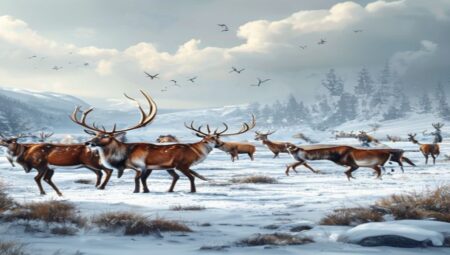
Race distances typically range from 200 meters to over a kilometer across snow-packed terrain. Riders must maintain balance while guiding reindeer without modern saddles, using only hand signals and minimal rein pressure. Success depends on synchronized pacing between athlete and animal. Judges evaluate control, route efficiency, and the animal’s welfare. Modern variations include sled races where teams navigate obstacle courses marked by traditional duodji (handicraft) markers.
Knot Tying and Lasso Mastery
Timed knot competitions require precise manipulation of raw reindeer hide strips. Participants must replicate historically accurate patterns used for securing loads, repairing gear, and constructing temporary shelters. Judges inspect tension consistency, loop symmetry, and completion time under simulated wind conditions. The lasso segment tests distance accuracy and retrieval speed when targeting wooden poles arranged in scattered formations.
Snowshoe Races and Winter Navigation
Traditional snowshoe events utilize handcrafted birch wood frames with sinew bindings. Courses demand rapid traversal over uneven drifts, requiring athletes to adjust stride length and weight distribution continuously. Navigation components involve locating hidden markers using only sun position and terrain features. Time penalties apply for deviating from established game trails, emphasizing environmental respect alongside speed.
Rituals, Seasonal Cycles, and Community Bonds
Athletic gatherings align with critical seasonal transitions, particularly the spring reindeer roundups and winter solstice periods. Opening ceremonies feature drumming sequences that establish rhythm for subsequent events. Participants exchange handcrafted amulets before competing, symbolizing mutual respect across competing families. Women’s categories historically focused on agility, endurance, and precision tasks like birch bark folding and ice drilling. These divisions ensured comprehensive skill transmission rather than limiting participation by gender.
Modern Revival and Structured Competitions
The institutionalization of Sami athletics began gaining momentum during the late twentieth century as indigenous rights movements gained international traction. Regional federations standardized rules, introduced safety protocols, and established age-graded divisions. Training camps now integrate historical techniques with contemporary sports science, optimizing recovery methods for cold-weather exertion.
The Sami Sports Championships and Global Recognition
Held biennially across Sápmi, the championships attract athletes from Finland, Norway, Sweden, and Russia. Event programs include traditional combat wrestling, knife throwing, and sled dog coordination drills. International observers document rule adaptations that maintain cultural authenticity while ensuring fair competition. Broadcasting partnerships now stream events in multiple languages, expanding awareness beyond regional boundaries.
Preservation Challenges and Educational Integration
Climate variability directly impacts event scheduling and surface conditions. Unstable snowpack forces organizers to modify course layouts or transition to artificial ice tracks. Funding constraints limit the distribution of traditional equipment to rural schools. Academic institutions address these gaps through digitized archives, interactive learning modules, and apprenticeship programs linking master artisans with younger participants.
Techniques Passed Through Generational Training
Instructional frameworks rely on observation, repetition, and corrective feedback rather than written manuals. Coaches demonstrate gear preparation using native terminology, ensuring linguistic preservation alongside physical skills. Practice sessions incorporate weather simulation equipment to condition athletes for sudden temperature drops and high winds. Assessment metrics track both technical execution and decision-making under fatigue.
Frequently Asked Questions
What is Arctic Sports in Sami Culture?
Arctic sports in Sami culture refer to traditional physical activities and games developed by the indigenous Sami people of northern Fennoscandia. These sports are deeply rooted in survival skills, reindeer herding, hunting, and adapting to harsh winter environments. They include activities like reindeer racing, snowshoeing, ice fishing competitions, and traditional wrestling, all of which reflect the Sami’s profound connection to the Arctic landscape and their resilient lifestyle.
Key facts about Arctic Sports in Sami Culture
Key facts include: (1) These sports originated as practical survival and hunting training rather than mere recreation. (2) They are closely tied to seasonal changes and the reindeer herding calendar. (3) Traditional Sami sports emphasize endurance, balance, and respect for nature over competition. (4) Many events are now celebrated at cultural festivals like the Sami National Day, preserving indigenous heritage. (5) Modern adaptations often blend traditional techniques with contemporary sports formats to keep the culture alive.