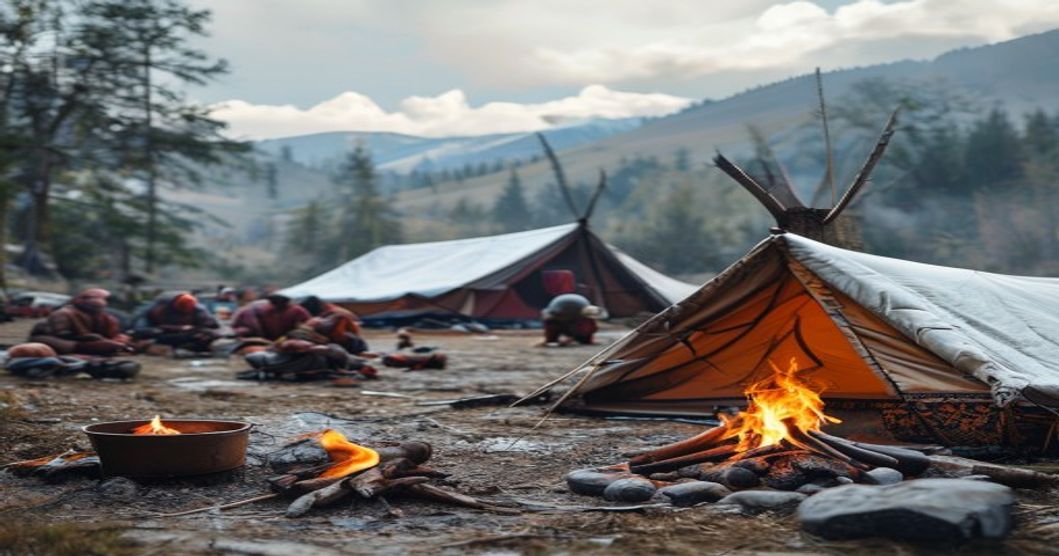
Traditional Sami Camping Practices
The operational framework of traditional Sami camping practices emerged from centuries of adaptive survival strategies across Arctic tundra and boreal forest ecosystems. Camp architecture centered on the lavvu, a geometrically calculated conical structure supported by birch or pine poles lashed together with reindeer sinew. The outer covering utilized cured reindeer hides, which were stretched tightly to create windproof barriers while retaining heat through trapped air pockets. Camp placement followed precise topographical criteria: elevated ridges prevented snow drift accumulation, south-facing slopes maximized passive solar gain during polar winters, and proximity to frozen rivers ensured reliable water access without melting ice.
- Seasonal camp typology dictated layout variations. Winter encampments featured compacted snow walls surrounding the lavvu to block katabatic winds, while summer sites prioritized natural airflow and mosquito mitigation through raised sleeping platforms and smoke fires.
- Fuel management relied on layered combustion techniques. Dried reindeer dung provided sustained thermal output, birch twigs initiated rapid ignition, and compacted peat stored residual heat for overnight temperature stabilization.
- Food preservation integrated directly into camp routines. Meat was smoked over controlled embers using bent willow racks, fish fermented in sealed birch bark vessels, and raw provisions buried in permafrost-insulated pits lined with reindeer fur.
- Camp organization reflected kinship hierarchies and resource allocation. Designated zones separated slaughtering areas from communal cooking spaces, while tool repair stations utilized antler scrapers and copper awls for continuous equipment maintenance during migration cycles.
Navigational decisions during temporary camp shifts depended on reading lichen growth patterns, wind-carried snow textures, and reindeer herd movement indicators. Fire management required strict ecological protocols to prevent peat degradation and preserve ground vegetation for future grazing. Archaeological excavations across Finnmark and Troms counties consistently reveal circular post-hole distributions, hearth ash stratification, and scattered bone fragments that map historical camp footprints with millimeter precision. These practices demonstrate systematic knowledge transfer through tactile instruction rather than textual records, ensuring structural integrity, thermal regulation, and resource cycling adapted to microclimate fluctuations and herd behavior patterns. Reindeer hide processing involved scraping, stretching, and smoking techniques that prevented microbial decay while maintaining pliability for repeated tent assembly. Camp boundaries followed unspoken territorial agreements with neighboring family units, preventing overgrazing and maintaining sustainable pasture rotation across seasonal migration corridors.
Historical Origins of Nomadic Reindeer Migration Routes
The historical foundation of Sami reindeer migration routes emerged from centuries of ecological adaptation across Fennoscandia’s Arctic and subarctic zones. Early pastoral communities developed mobility patterns through direct observation of animal physiology, vegetation phenology, and microclimatic shifts rather than fixed territorial claims. Reindeer husbandry in this region evolved from wild reindeer hunting practices between the twelfth and fourteenth centuries, gradually transitioning toward semi-nomadic management as herd sizes expanded and seasonal tracking became essential for survival. Movement corridors were never arbitrary; they represented optimized pathways that balanced calving safety, forage recovery, and predator avoidance across highly variable terrain.
Route establishment relied on intergenerational ecological literacy encoded in toponyms, seasonal calendars, and customary resource agreements. Each migration corridor functioned as a living archive where topographical markers, river crossings, wind-exposed ridges, and snowdrift formations served as navigational reference points. Herding families rotated between established summer and winter grounds based on snow depth, insect pressure, and lichen biomass availability. These pathways shifted in response to climatic fluctuations, herd size adjustments, and inter-community negotiations, demonstrating a highly adaptive rather than rigid mobility system.
- Topographical constraints dictated corridor width and elevation thresholds, preventing herds from becoming trapped in deep snowpacks or dense boreal thickets during winter months.
- Lichen distribution patterns established minimum wintering distances, with Cladonia spp. availability determining how far herds could remain within a single grazing basin before depletion forced relocation.
- Seasonal insect migration cycles forced altitude adjustments during summer months, as midge and warble fly pressure directly compromised reindeer calving success and milk production rates.
- Kinship territorial networks regulated access through customary law, ensuring sustainable grazing rotation without external administrative intervention or fixed boundary enforcement.
Pre-colonial route systems operated independently of modern border demarcations. Herding groups maintained continuity across what are now international boundaries by treating landscape features as functional ecological zones rather than political divisions. The migration rhythm aligned with solar cycles, birthing windows, and lichen regrowth periods, creating a self-regulating pastoral economy that prioritized long-term resource equilibrium over short-term optimization. Historical route integrity remained the foundational requirement for herd viability, making corridor preservation central to the survival of traditional Sami camping practices and seasonal encampment locations.
Environmental Adaptation in Subarctic Ecosystems
Traditional Sami camping strategies emerged from centuries of direct observation and systematic survival within extreme subarctic zones where temperatures plummet below minus forty degrees Celsius and seasonal light cycles dictate movement patterns. Campsite selection prioritized natural topographical advantages rather than flat terrain. Settlements typically occupied leeward slopes, elevated ground above frost pockets, or areas shielded by dense dwarf birch thickets. These locations minimized wind chill exposure while maintaining access to reindeer grazing routes and freshwater sources. The camp layout followed strict environmental logic, with the central fire pit positioned downwind from sleeping areas to prevent smoke accumulation and preserve heat efficiency.
Shelter engineering relied on layered thermal insulation derived exclusively from local fauna and flora. Reindeer hides were meticulously prepared with fur oriented outward in winter conditions to trap standing air layers, while summer configurations reversed the hide orientation to facilitate moisture wicking and ventilation. The structural framework utilized green willow or birch poles bent into conical shapes, then covered with overlapping reindeer pelts weighted by stones and snow blocks. Snow walls constructed around the perimeter disrupted convective heat loss and created a stable microclimate inside the dwelling. Interior flooring consisted of packed moss and dry grass, which provided additional thermal resistance against frozen ground.
Resource acquisition followed precise ecological calendars synchronized with reindeer migration corridors and plant phenology. Birch bark served as primary fire starters because its betulin content ignites reliably even when damp. Snow was harvested from wind-scoured drifts rather than fresh falls to ensure structural integrity for snow walls and roofing. Water sourcing required understanding of subterranean permafrost layers, with camps positioned near meltwater seeps or shallow lakes that remained liquid during winter months through geothermal activity. Fire management adhered to strict fuel rotation protocols, preventing soil degradation and preserving root systems critical for reindeer lichen pastures.
- Wind channeling: Camps oriented entrance flaps toward prevailing wind directions to create pressure differentials that drew fresh air downward while expelling stale air upward.
- Thermal zoning: Sleeping platforms elevated three feet above ground level utilized convection principles, keeping occupants away from cold sink areas near the earth surface.
- Ecological monitoring: Reindeer antler placement and lichen growth patterns indicated safe camping zones free from hidden crevasses or thin ice formations.
- Moisture control: Ventilation holes in roof covers prevented condensation buildup, which historically caused rapid heat loss and structural collapse during extreme cold snaps.
Long-term campsite sustainability depended on rotational usage patterns that allowed tundra vegetation to recover between seasonal occupations. Fire scars were deliberately distributed across wide areas rather than concentrated, preventing soil sterilization and maintaining mineral cycles essential for lichen regeneration. This adaptive framework demonstrates how indigenous ecological knowledge transformed environmental constraints into operational advantages without degrading the fragile subarctic biome.
Core Elements of Traditional Sami Camping Practices
Traditional Sami encampments operate as highly adaptive micro-ecosystems engineered for Arctic resilience and seasonal mobility. Structural integrity depends on the lavvu, a conical framework built from straight birch or pine saplings lashed together with reindeer sinew or braided grass cordage. While canvas covers appeared during colonial trading periods, contemporary practitioners prioritize cured reindeer skin for its superior vapor permeability and thermal retention. Interior flooring requires layered pelts arranged with hair facing
Lavvu Tent Construction and Material Sourcing
The structural integrity of the lavvu relies on a precisely engineered wooden framework traditionally harvested from boreal forests. Master craftsmen selected straight-grained pine or birch poles, prioritizing natural flexibility to withstand heavy snow loads and violent winds common in subarctic environments. The primary support system consists of twelve to twenty main poles, lashed together at the apex using braided reindeer sinew or sturdy vine rope. This conical geometry distributes weight evenly, eliminating the need for central support beams and maximizing interior volume.
Historically, the outer shell was constructed from carefully processed reindeer hides, sourced through seasonal herding routes across tundra and mountain pastures. Skilled hide-tanners stretched, scraped, and smoked the pelts to enhance water resistance and durability before sewing them together with bone needles and sinew thread. Modern practitioners often substitute canvas or heavy-duty tarpaulin, yet the traditional layering technique remains critical for thermal regulation. The overlapping hide panels create a self-sealing barrier that traps heat while allowing controlled ventilation through an adjustable smoke hole at the tent’s peak.
- Pole selection requires seasonal timing, with winter harvesting reducing sap content and preventing warping during transport.
- Hide preparation involves precise scraping to remove fat layers without compromising fiber strength, followed by a smoking process that introduces preservative compounds.
- The entrance typically faces south or southeast, optimizing solar gain and deflecting prevailing northern winds during assembly.
- Internal load distribution depends on the central hearth placement, which anchors the floor layout and directs warm air toward sleeping platforms built from dried grass and pine branches.
Material procurement historically operated through complex kinship networks and seasonal trading posts. Communities exchanged surplus timber for metal hardware like rivets and awls, while reindeer herders secured raw pelts through communal labor pools. Contemporary builders source FSC-certified timber and ethically harvested hides, yet the geometric principles remain unchanged. The rapid deployment capability—often achievable in under thirty minutes by a single experienced operator—demonstrates the sophisticated understanding of aerodynamics and thermal dynamics embedded in this architecture. Every component serves a dual purpose: structural resilience and environmental adaptation.
Central Fire Management and Culinary Techniques
The central hearth dictated thermal regulation and food preparation protocols within every temporary Sami camp.
Camp positioning always prioritized natural wind barriers, with compacted snow banks or stacked birch brush forming a semi-circular shield against northern gusts. Fuel selection followed strict ecological guidelines; dried birch bark initiated ignition rapidly, while compressed pine roots and cured reindeer dung sustained radiant heat through extended cold periods. Fire tenders monitored ember density through rhythmic log rotation, preventing oxygen starvation while maintaining a consistent coal bed. Ash removal occurred in controlled sweeps, preserving mineral-rich substrate for future hearth maintenance.
- Fuel Stratification: Lower combustion zones utilized dense hardwood chunks for long-term heat retention, while upper tiers incorporated resinous pine boughs to generate aromatic smoke for food preservation.
- Thermal Zoning: Camp participants arranged cooking stations according to heat intensity gradients, placing delicate boiling vessels near the radiant margin and heavy searing grids directly above active flames.
- Ash Management: Collected mineral deposits fortified soil fertility around future camp sites, supporting lichen regeneration essential for reindeer grazing cycles.
Culinary execution relied entirely on ambient heat transfer and direct flame exposure. Reindeer meat underwent dual-stage preparation; initial searing over open flames sealed surface proteins, followed by slow simmering in suspended leather vessels or cast iron kettles. Smoking racks positioned near the fire’s upper vent allowed gradual fat rendering without charring. Fish caught from nearby waterways required immediate scaling before being threaded onto green willow skewers for even heat distribution. Preservation methods integrated directly with combustion cycles; residual embers dried thin meat slices into durable winter provisions, while controlled smoke infusion prevented microbial degradation during extended migrations.
Equipment arrangement followed functional zoning around the hearth. Cooking stones heated gradually in the ash layer, then transferred to ceramic or metal containers for uniform temperature retention. Drying racks hung from overhead beams received consistent indirect heat, accelerating moisture extraction without combustion risk. Water purification occurred through continuous boiling cycles, eliminating pathogens before storage in birch bark containers. Every culinary action synchronized with fire intensity curves, ensuring optimal nutrient retention while minimizing fuel consumption during prolonged expeditions.
Resource Conservation and Campsite Restoration
The Sami approach to camping in Arctic and subarctic landscapes operates on a fundamental principle of ecological reciprocity. Every action taken at a temporary settlement follows strict protocols designed to minimize environmental disruption. Reindeer herders and hunters historically selected sites based on wind direction, drainage patterns, and vegetation density to prevent soil compaction and protect fragile tundra roots. Materials gathered for shelter construction, such as birch bark, pine branches, and dried moss, were harvested selectively. Only deadwood or fallen vegetation was collected, ensuring living plants remained undisturbed and forest regeneration continued uninterrupted.
- Fire management protocols required burning only dry, fallen branches from a radius of at least fifty meters. Campfires were built on mineral soil or within stone rings, never directly on peat or moss layers. Flames were maintained at low intensity to prevent root scorching, and ashes were distributed evenly rather than concentrated. Smoke control techniques prevented unnecessary air pollution in sensitive microclimates.
- Waste disposal followed strict categorization. Organic matter, including food scraps and bone fragments, was buried in shallow pits away from water sources. Non-biodegradable items are now packed out using the same spatial awareness applied to waste placement. Campsites were left without visible traces of human activity or chemical contamination.
- Ground restoration techniques involved returning displaced stones to their original positions, leveling disturbed earth with wooden tools, and allowing natural regeneration periods before reusing a location. Reindeer grazing patterns were monitored to ensure no pasture was overused during seasonal migrations.
Sami ecological knowledge treats the landscape as an active participant rather than a passive resource. Campsite restoration functions as a cultural obligation tied to spiritual balance and long-term survival
Practical Skills for Traditional Sami Camping Practices
The foundation of any Sami camp rests on precise structural engineering adapted to extreme Arctic conditions. Skilled practitioners construct a conical dwelling known as a lavvu or goahti. Flexible birch poles bend into a rigid framework, secured with cured reindeer sinew lacing that tightens as it dries. Woven birch bark mats form the inner liner, while thick reindeer hides create the outer shell. Stones positioned along the base anchor the structure against gale-force winds, and the roof opening functions as a natural draft system to vent smoke without losing thermal energy.
- Selecting straight birch poles requires identifying trees that grew on windward slopes for optimal flexibility.
- Pole intersections bind tightly using sinew strips soaked in warm water before tightening.
- Hide placement overlaps downward like roofing shingles to direct melting snow away from the interior floor.
Fire management demands strict fuel hierarchy. Dried pine roots ignite instantly, providing the necessary spark for damp wood. Split birch logs sustain consistent heat, while reindeer dung serves as a reliable backup fuel during prolonged storms. The hearth sits on compacted clay and flat stones to prevent permafrost thaw and ground moisture from extinguishing the flames. Cookware hangs from adjustable iron hooks positioned above the flame for even distribution. Meat dries on elevated wooden racks, utilizing steady airflow rather than direct exposure that causes brittle charring.
- Maintain a narrow ventilation gap at the roof apex to control smoke velocity and prevent backdrafts.
- Rotate logs frequently to preserve uniform ember beds and maximize thermal output.
- Store dry tinder in felt pouches suspended near the entrance to maintain constant readiness.
Navigation across frozen landscapes relies on reading subtle terrain markers. Practitioners identify safe ice crossings by listening for dense resonance when striking surfaces with a long pole. Wind-formed snow ridges, known as sastrugi, indicate prevailing airflow patterns and guide route planning away from hidden crevasses. Water sources concentrate beneath dense spruce canopies where meltwater pools naturally. Seasonal camp relocation follows established ecological cycles; summer sites avoid mosquito breeding marshes, while winter placements align with wind directions to minimize snow drift accumulation against the shelter walls.
- Track animal trails across frozen lakes to locate thinner ice layers near flowing water inlets.
- Use sun position and star alignment during polar nights to maintain directional accuracy.
- Mark safe passages with stacked cairns constructed from local stone to prevent future navigation errors.
Resource preservation completes the practical framework. Cured hides stretch on wooden frames, scraping residual fat with a traditional sleavva blade before smoking over damp birch wood to prevent fiber cracking. Tools remain organized in felt bags near the entrance for rapid deployment during sudden weather shifts. Organic waste buries deep away from waterways, while ash disperses across barren rock to accelerate mineral breakdown. Every operational step prioritizes terrain integrity and long-term resource continuity.
Atmospheric Reading and Storm Preparation
Traditional Sámi weather forecasting relied on continuous environmental scanning rather than isolated measurements. Campsite selection always prioritized natural windbreaks such as leeward slopes, dense pine thickets, or fallen timber ridges. Experienced practitioners monitored cloud progression patterns, distinguishing between fast-moving cirrus formations that signaled incoming pressure drops and stable high-altitude clouds indicating prolonged fair weather. Horizon clarity served as a critical metric; sudden atmospheric haze often preceded rapid temperature shifts or heavy snowfall events. Observers tracked snow surface conditions meticulously, identifying the difference between wind-scoured sahti plates that indicated exposed drifts and soft granular snow suggesting recent precipitation stability.
Reindeer behavior provided immediate atmospheric intelligence. Herders noted ear orientation, ground grazing patterns, and herd migration direction long before visible weather changes occurred. Bird flight altitude and vocalization frequency offered supplementary data; sudden silence among ptarmigan or hawks circling at extreme heights frequently preceded severe wind events. Water surface tension in frozen lakes and the acoustic properties of cracking ice also functioned as reliable barometric substitutes. Temperature inversions were detected by listening to sound propagation across open terrain, where muffled acoustics typically indicated approaching frontal systems.
Storm anticipation triggered immediate structural reinforcement protocols. The goahti framework required precise tension adjustment on birch bark roofing and reindeer hide coverings to prevent wind uplift. Guy lines were systematically tightened using sinew cordage that contracted when exposed to moisture, creating a self-adjusting anchor system. Ventilation channels were carefully managed to maintain combustion safety while preventing internal condensation buildup. Floor insulation received immediate attention, with multiple layered hides positioned to block ground moisture transfer. Firewood storage shifted to elevated birch bark platforms, ensuring dry fuel availability during whiteout conditions. Emergency signaling tools, including smoke-producing green branches and reflective metal fragments, were pre-positioned at the entrance for rapid deployment. Every component operated within a coordinated survival matrix designed to withstand Arctic pressure waves without compromising thermal integrity.
- Wind direction tracking: Practitioners recorded shifting wind vectors using cairn markers and established baseline readings to detect rapid directional changes that preceded squall lines.
- Snow density evaluation: Hand compaction tests determined whether snowpack could support additional weight or required immediate tent relocation before load failure occurred.
- Thermal retention protocols: Internal heat management relied on strategic fire placement, smoke extraction angles, and layered hide flooring to minimize conductive heat loss during temperature drops.
Landmark Navigation and Trail Marking Systems
The Sami people developed a highly sophisticated navigation framework rooted in centuries of Arctic and subarctic adaptation. Rather than relying on manufactured instruments, traditional wayfinding depended on acute observation of natural topography, weather patterns, and celestial movements. Navigators memorized sightlines between prominent geological features, treating mountains, ridges, and isolated rock outcrops as fixed reference points across vast, featureless tundra and dense boreal forests. Route planning required mental mapping of terrain gradients, wind exposure levels, and freeze-thaw cycles that dictated safe passage windows.
Trail marking systems evolved through practical necessity and seasonal migration requirements. Reindeer herding demanded predictable pathways that remained identifiable despite heavy snowfall or summer vegetation growth. Sami herders constructed cairns using locally sourced stones, arranging them in specific geometric formations to indicate safe passage, hidden water sources, or hazardous terrain. Birch branches were deliberately bent or notched at key junctions, creating visible signals that survived winter conditions and provided clear directional cues upon return journeys. These markers were positioned according to established sightline mathematics, ensuring each stone pile remained visible from the previous one while accounting for tree growth and soil erosion.
- Cairn placement followed strict spacing guidelines to maintain visual continuity across open landscapes without obstructing reindeer movement corridors.
- Tree modifications utilized natural resin patterns and bark peeling techniques for long-term visibility, with specific notch angles indicating directional turns.
- Seasonal markers incorporated moss coverage density, lichen growth rates, and snow accumulation patterns to indicate route viability during spring thaws or autumn freezes.
Camping site selection directly intersected with navigation logic. Established encampments were positioned near reliable freshwater sources, leeward slopes for wind protection, and elevated ground to monitor approaching weather systems. Trail networks connected these seasonal camps through carefully scouted corridors that avoided unstable permafrost zones and deep snow drifts. Knowledge transmission occurred through oral instruction and guided migration routes, ensuring younger generations internalized spatial relationships without written documentation. Each marker placement carried specific information about terrain stability, grazing quality, and predator activity patterns.
Environmental shifts require continuous adaptation of these traditional systems. Modern herders still maintain historical marker placements while incorporating supplementary navigation tools for complex route planning. The persistence of landmark-based wayfinding demonstrates how indigenous ecological knowledge remains functionally relevant across changing climatic conditions and landscape transformations.
Thermal Insulation and Layered Clothing Standards
The Subarctic and Arctic environments where the Sami historically camped demand precise thermal regulation. Traditional clothing systems were engineered through centuries of environmental observation rather than theoretical design. A complete insulation strategy relied on a strict three-tier layering protocol. The innermost layer consisted of smooth reindeer fur worn with the hair facing inward. This arrangement captured body heat while allowing perspiration to wick away from the skin, preventing conductive cooling during exertion. Linen or wool undergarments later supplemented this phase in warmer seasons.
The middle layer functioned as the primary thermal reservoir. Heavy, felted wool garments provided consistent warmth without bulk. Wool fibers naturally retain insulating capacity even when damp, a critical advantage during prolonged stays in humid tent environments or sudden snowfall. Outer layers prioritized wind resistance and moisture shedding. Tanned reindeer hide, often double-stitched with sinew thread, created a dense barrier against katabatic winds that strip heat from exposed surfaces. Seams were deliberately placed away from high-friction zones to maintain structural integrity during skiing or packing duties.
Extremities required specialized treatment. Felted wool mittens featured extended cuffs that sealed over sleeve edges, eliminating cold-air infiltration paths. Reindeer skin boots incorporated layered soles with inner fur and outer cured hide, distributing weight across frozen terrain while isolating feet from sub-zero ground contact. The traditional gákti adjusted its insulation properties through seasonal variations in fabric weight, cuff width, and decorative belt thickness, which could be tightened to compress layers during high-wind conditions.
Camping routines directly influenced garment management. Before entering a lavvu, outer windproof layers were removed to prevent sweat accumulation near open hearths. Inner wool layers remained active for radiant heat retention around the fire pit. Nighttime sleeping arrangements utilized reindeer pelts layered in reverse fur orientation, creating microclimates that minimized convective heat loss across multiple occupants. Every textile choice followed a strict thermal calculus: maximize trapped air volume, eliminate draft pathways, and maintain continuous moisture displacement without compromising mobility during hunting or herding transitions.
Cultural Framework of Traditional Sami Camping Practices
The cultural framework governing traditional Sami camping practices emerges from a deeply integrated worldview where human activity, ecological balance, and spiritual existence operate as a single continuum. Rather than treating camps as temporary shelters, the Sami historically designed seasonal settlements as extensions of their ancestral landscape. Every element of camp placement, material selection, and daily routine reflects centuries of accumulated environmental intelligence passed through generations. Reindeer migration routes dictate not only economic survival but also the spatial organization of encampments, which shift in precise alignment with lichen growth cycles, predator patterns, and microclimate variations across the tundra.
Spiritual dimensions remain inseparable from practical camping routines. Sacred landmarks known as sieidi function as focal points for offerings and seasonal ceremonies that precede or follow camp relocation. Camp layouts frequently incorporate directional alignments honoring ancestral spirits and natural forces, ensuring that hunting, gathering, and herding activities proceed under favorable conditions. Ritual cleansing of gear, controlled use of firewood from specific tree species, and the maintenance of hearth traditions reinforce communal identity while preserving ecological boundaries.
Social structures within these camps operate through clearly defined roles rooted in kinship networks and specialized craftsmanship. Elders transmit navigational techniques, weather reading methods, and textile weaving patterns directly to younger members during evening gatherings. Knowledge acquisition occurs through hands-on participation rather than formal instruction, embedding cultural values into muscle memory and daily decision-making. The camp functions as a mobile classroom where survival skills, ethical resource management, and historical narratives converge.
- Spatial Harmony: Encampments align with natural topography to minimize environmental disruption while maximizing access to water sources and wind protection.
- Reciprocal Resource Management: Strict customary laws govern harvesting limits, ensuring reindeer pastures and berry grounds regenerate before subsequent seasonal returns.
- Ritual Continuity: Daily activities integrate blessing ceremonies, fire maintenance protocols, and tool consecration practices that maintain spiritual equilibrium alongside practical necessity.
Resource allocation follows strict customary laws that prevent overexploitation and maintain long-term habitat viability. Camps operate on closed-loop systems where every component serves multiple purposes: reindeer hides provide insulation and flooring, birch bark seals containers, and bone fragments craft tools. Waste remains nonexistent in traditional practice, as organic materials return to the soil and synthetic equivalents never existed. This circular approach to living space construction mirrors broader Sam
Oral Tradition Transmission Through Campfire Gatherings
Within the Sami cultural framework, campfire gatherings functioned as dynamic knowledge repositories rather than mere social pauses. The controlled flame provided necessary illumination during long Arctic winters while establishing a focused acoustic environment where auditory memory could operate without visual distraction. Elders positioned themselves to maximize vocal projection, utilizing the natural acoustics of lavvu tents and surrounding terrain to carry narratives across communal spaces.
- Mnemonic Architecture: Repetitive rhythmic structures embedded within joik performances created auditory anchors that facilitated multi-generational recall. The cyclical nature of these vocal patterns mirrored seasonal reindeer migration routes, enabling listeners to map ecological data onto melodic frameworks.
- Situational Contextualization: Narratives adapted dynamically to immediate environmental conditions. Weather shifts, animal behavior, and resource availability triggered specific story sequences that encoded survival protocols into accessible narrative formats.
- Participatory Encoding: Listeners engaged through call-and-response vocalizations and synchronized breath patterns. This active participation transformed passive audiences into co-creators of cultural continuity, ensuring information retention exceeded simple observational learning.
Semantic precision remained critical throughout these transmissions. Dialectal variations carried precise geographical markers, while tonal inflections distinguished between historical events, spiritual teachings, and practical instructions. The absence of written documentation necessitated rigorous verification mechanisms. Discrepancies between accounts prompted immediate cross-referencing among multiple knowledge holders, establishing an organic editorial system that maintained factual integrity across centuries.
Archaeological surveys confirm that campfire ash layers beneath traditional dwelling sites correlate with periods of intensified cultural transmission. Carbon dating aligns these deposits with historical migration patterns and climatic shifts, demonstrating how environmental stressors directly stimulated narrative preservation efforts. The thermal regulation provided by sustained fires extended gathering durations, allowing complex genealogies, land rights claims, and ecological calendars to unfold in sequential phases rather than abbreviated summaries.
Contemporary preservation initiatives recognize these gatherings as foundational pedagogical models. Digital archiving projects now prioritize audio fidelity over visual documentation, acknowledging that the original transmission medium relied exclusively on acoustic properties. Researchers document residual melodic structures still performed at cultural festivals, tracing their lineage directly back to winter campfire sessions where survival knowledge and spiritual cosmology merged into unified oral frameworks.
Modern Applications of Traditional Sami Camping Practices
Contemporary adaptations of Sami camping traditions bridge ancestral knowledge with present-day environmental and cultural demands. Modern practitioners retain the structural integrity of the traditional lavvu while integrating reinforced synthetic canvases, carbon-poled frames, and modular ventilation systems that withstand extreme Arctic conditions. These upgrades preserve thermal efficiency without compromising mobility or historical authenticity.
Eco-tourism operators across northern Scandinavia now structure guided expeditions around Sami wilderness techniques. Participants learn fire placement, snow shelter construction, and reindeer-hide insulation methods while adhering to strict Leave No Trace protocols. Operators partner directly with indigenous communities to ensure revenue distribution aligns with cultural stewardship rather than commercial extraction.
- Educational Integration: Universities and outdoor leadership programs have formalized these practices into accredited curricula. Students master historical navigation using star patterns and terrain reading, then apply those skills alongside modern GPS triangulation and satellite communication devices.
- Sustainable Hospitality Models: Boutique wilderness accommodations replicate traditional camp layouts using locally sourced timber and recycled materials. These low-impact facilities teach guests weather reading, resource management, and seasonal foraging ethics while operating on closed-loop waste systems.
- Material Science Research: Academic institutions document thermal performance data from modified shelter designs, publishing findings that inform contemporary off-grid architecture and emergency response engineering in polar regions. Cross-disciplinary exchanges accelerate climate adaptation strategies while protecting intangible cultural heritage.
Sustainable hospitality models replicate traditional camp layouts using locally sourced timber and recycled materials, offering low-impact accommodations that teach guests historical navigation, weather reading, and foraging ethics. Boutique operators implement renewable energy grids that mirror the resourcefulness inherent in ancestral mobility strategies.
Outdoor apparel manufacturers have incorporated Sami layering principles into modern gear systems. The strategic use of reindeer wool for moisture regulation, combined with breathable membrane liners, mirrors historical practices while meeting current performance standards. Survival instructors frequently reference these techniques when teaching Arctic readiness, emphasizing adaptability over rigid equipment dependency.
Community-driven initiatives prioritize intergenerational knowledge transfer through digital archives and mobile learning platforms. Young practitioners record oral histories, map ancestral camping routes using GPS tracking, and develop open-source templates for shelter construction accessible to global audiences. This decentralized preservation approach maintains cultural continuity while enabling independent operation outside traditional institutional funding cycles.
Indigenous Knowledge Preservation Initiatives
Community-led documentation projects across Sápmi prioritize oral history collection directly from elderly camp leaders, focusing on seasonal migration routes, lavvu construction techniques, and wildlife tracking methods used during extended camping expeditions. These initiatives operate under the principle of data sovereignty, ensuring that all recorded material remains controlled by local communities rather than external institutions. Digital archives now store high-resolution field recordings, annotated maps of traditional campgrounds, and video documentation of fire management practices specific to tundra environments.
Academic partnerships follow strict collaborative protocols where researchers co-design study frameworks with Sámi councils. Field teams record microclimate observations, snowpack analysis methods, and reindeer foraging patterns that directly inform modern camping site selection. Universities provide technical support for metadata standardization while communities retain full editorial authority over cultural context and usage rights. This model prevents extractive research practices and ensures knowledge remains embedded within its original ecological and social framework.
- Language revitalization programs integrate camping-specific terminology into standardized learning modules, requiring participants to master specialized vocabulary for tent pole placement, wind direction assessment, and natural shelter evaluation before undertaking supervised camp assignments.
- Regional cultural centers host monthly workshops where elders demonstrate traditional food preservation techniques using locally sourced materials, followed by practical applications during multi-day field exercises that maintain technical accuracy while reinforcing historical linguistic structures.
- Digital mapping platforms combine satellite imagery with community-verified waypoints to preserve historical campsite locations threatened by infrastructure development and climate shifts, annotating each coordinate with seasonal usage patterns, resource availability data, and ecological indicators that guide sustainable site rotation.
Educational institutions now incorporate these verified datasets into geography and environmental science curricula, allowing students to analyze long-term landscape changes alongside traditional land management strategies. The resulting framework strengthens both cultural continuity and contemporary conservation efforts across northern territories while establishing replicable protocols for indigenous camping knowledge transmission.
Ethical Wildlife Watching and Guided Expedition Standards
The Sámi people have historically maintained a symbiotic relationship with Arctic fauna, viewing animals not as commodities but as integral components of a shared ecosystem. Modern guided expeditions built upon this foundation prioritize strict ethical guidelines that prevent ecological disruption. Operators must enforce minimum approach distances, typically ranging from fifty to two hundred meters depending on species sensitivity, ensuring wildlife retains natural foraging and breeding behaviors. Guided tours explicitly prohibit feeding, chasing, or vocal provocation, as these actions trigger chronic stress responses that degrade population health over time.
- Spatial Zoning Protocols: Expeditions operate within designated corridors established through collaboration between local communities and environmental agencies. These routes avoid critical calving grounds, winter feeding territories, and migration choke points during sensitive seasonal windows.
- Group Size Limitations: Small party sizes, usually capped at six to eight participants, minimize acoustic pollution and vegetation trampling. Larger groups are fragmented across staggered timelines to prevent cumulative habitat degradation.
- Equipment Standards: Silent transport methods, including electric snowmobiles and tracked vehicles with low ground pressure, reduce soil compaction and auditory disturbance. Thermal imaging cameras replace optical zoom lenses to maintain observation distance without compromising image clarity.
- Waste and Contamination Control: All organic and inorganic materials are packed out using sealed containment systems. Biodegradable soaps remain prohibited near waterways, and personal hygiene routines occur at least three hundred meters from active drainage channels.
Local Sámi guides serve as ecological stewards rather than mere navigators. Their ancestral knowledge informs real-time adjustments to expedition routes when weather shifts, animal movements diverge, or fragile terrain emerges. This adaptive management model ensures that visitor experiences never override environmental carrying capacity. Certified operators undergo rigorous training in behavioral observation, emergency wildlife response, and cultural interpretation, aligning commercial activities with conservation mandates. The integration of traditional ecological knowledge with modern scientific monitoring creates a self-regulating framework that protects Arctic biodiversity while delivering authentic educational value to participants.
Frequently Asked Questions
What is Traditional Sami Camping Practices?
Traditional Sami camping practices involve the indigenous Sámi people’s historic methods of traveling and living in the Arctic landscapes of Scandinavia and northern Russia, typically using a portable tent called a lavvu or goahti, herding reindeer, and relying on deep ecological knowledge for survival and sustenance.
Key facts about Traditional Sami Camping Practices
Key facts include the use of reindeer hides for shelter and clothing, seasonal migration patterns following reindeer herds, reliance on open fires for cooking and warmth, minimal impact on the environment through sustainable resource gathering, and the transmission of survival skills orally across generations.