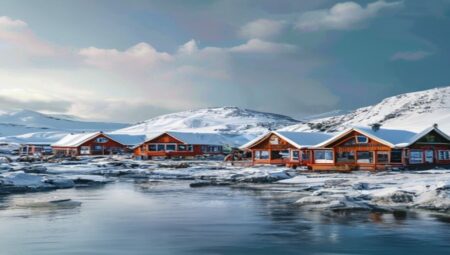
Historical Context of Sami Arctic Exploration
The Sami people, recognized as the indigenous population of Fennoscandia, have maintained a continuous presence across the Arctic and subarctic regions of Norway, Sweden, Finland, and Russia’s Kola Peninsula for millennia. Early encounters between Sami communities and external explorers were primarily defined by ecological adaptation, subsistence strategies, and gradual documentation by Norse chroniclers. Archaeological evidence indicates that Sami Arctic discoveries were not singular events but cumulative processes shaped by reindeer domestication, coastal fishing practices, and inland forest hunting.
Prehistoric Settlements & Archaeological Milestones
The earliest material traces of Sami prehistory emerge from the Stone Age cultures of northern Scandinavia. Sites such as Komsa in Finnmark and Fosheimøya in Troms reveal lithic tools, marine mammal hunting grounds, and seasonal habitation patterns dating back to approximately 10,000 BCE. These findings demonstrate advanced Arctic survival techniques, including snow house construction (lávvu precursors) and ice-age migration routes that later evolved into established Sami territorial networks.
Norse Encounters & Medieval Documentation
During the Viking Age, Norse sagas and skaldic poetry first referenced the Finnar, a term historically used for Sami groups. The Gesta Danorum by Saxo Grammaticus and later medieval Norwegian laws documented Sami trade routes, taxation systems, and seasonal migrations. These records mark the first systematic Sami Arctic discoveries from a European administrative perspective, though they often misinterpreted indigenous ecological knowledge through colonial frameworks.
Chronological Timeline of Key Discoveries
The historical trajectory of Sami Arctic discoveries can be segmented into distinct periods that reflect shifting scientific, political, and ethnographic priorities.
Ancient Period (10,000 BCE – 500 CE)
Post-glacial retreat enabled permanent habitation across the Scandinavian Arctic. Radiocarbon dating of bone hooks, antler harpoons, and hearth remnants confirms that Sami subsistence patterns were already highly specialized. The domestication of reindeer began around 500 CE in southern Lapland, gradually transforming mobile hunting into semi-nomadic herding—a pivotal shift later recognized as a cornerstone of Sami cultural legacy.
Classical to Early Modern Period (500 CE – 1700 CE)
Medieval Scandinavian authorities established trade fairs in Karasjok and Giron, formalizing exchanges between Sami herders and European merchants. The Reformation period introduced Lutheran missionaries who documented Sami shamanic practices, linguistic structures, and drum usage. Although often framed as suppression, these ethnographic records inadvertently preserved critical data on pre-Christian Arctic spirituality.
Scientific & Ethnographic Era (1700 CE – Present)
The Enlightenment triggered systematic academic interest in northern indigenous populations. Carl Linnaeus’s 1732 expedition to Lapland produced foundational botanical and ethnographic observations. The 19th century saw the rise of scientific expeditions mapping Sami migration corridors, while the 20th century introduced aerial photography, satellite tracking, and linguistic reconstruction studies that validated traditional Sami Arctic knowledge systems.
Archaeological & Anthropological Breakthroughs
Modern research has redefined how Sami Arctic discoveries are interpreted, shifting from colonial extraction to collaborative indigenous archaeology.
Material Culture & Artifacts
Excavations across Finnmark, Troms, and Sápmi have uncovered distinctive artifacts including reindeer antler weaving looms, silver torcs indicating high-status burial sites, and carved birch bark containers. Museum collections now emphasize context-aware curation, recognizing that these objects represent functional Arctic engineering rather than isolated curiosities.
Oral Traditions & Knowledge Preservation
The Sami yoik tradition, UNESCO-recognized intangible heritage, functions as a living archive of geographic landmarks, seasonal cycles, and ancestral routes
Sami Arctic Exploration History: Chronology and Core Phases
The Arctic expansion timeline diverges from standard colonial narratives. Sami ecological knowledge dictated movement patterns long before external cartography. Reindeer pastoralism established permanent winter camps across the Fennoscandian tundra. Early exploration relied on ice-reading techniques and seasonal resource mapping.
Prehistoric Migration Corridors and First Arctic Settlements
Paleolithic hunter-gatherers utilized coastal corridors during the Bølling-Allerød interstadial. Komissar cave sites reveal early mammoth bone processing tools. Neolithic stone axe production centers emerged near Lofoten archipelago deposits. Coastal kuller middens demonstrate shellfish harvesting strategies adapted to post-glacial rebound.
Medieval State Expeditions and Early Cartographic Attempts
Norwegian crown surveys initiated territorial claims during the 13th-century consolidation. Trondheim merchants documented tar trade routes along the Trondheimsfjord estuary. Arabic geographers referenced Sami trading posts in early medieval portolan charts. Monastic scriptoria recorded reindeer migration cycles in Latin marginalia.
19th Century Colonial Surveys and Administrative Mapping
Swedish state commissions enforced taxation boundaries across Scandes mountain ranges. Russian imperial maps classified indigenous territories as uninhabited tundra. German ethnographers published linguistic atlases documenting archaic dialects. British surveyors measured glacial retreat rates using photogrammetric techniques.
Modern Indigenous Cartography and Self-Representation
Sami land rights movements challenged state ownership claims during the 1970s political awakening. Community-led GIS projects mapped traditional grazing zones using participatory methods. Indigenous knowledge holders corrected historical map inaccuracies through oral testimony archives. Transnational cartographic coalitions standardized toponymic databases across four sovereign states.
Archaeological Discoveries and Fieldwork Methodologies
Arctic excavation protocols prioritize permafrost preservation over rapid extraction. Stratigraphic trenching isolates multi-period occupation layers. Microfaunal analysis reconstructs ancient diet compositions from coprolite samples. Residue chemistry testing identifies historical tool usage patterns.
Key Excavation Sites and Chronological Frameworks
Sandoyrren settlement provides Iron Age timber architecture evidence. Storjord burial mounds contain bronze age metalwork fragments. Komissar rock shelter yields Upper Paleolithic lithic assemblages. Alta petroglyph panels document Neolithic hunting rituals through petroglyph iconography.
Artifact Conservation and Museum Integration
Controlled humidity chambers stabilize organic reindeer hide artifacts. X-ray fluorescence scanning analyzes bronze alloy compositions without damage. 3D photogrammetry models recreate eroded stone tools digitally. Community curatorial panels oversee cultural heritage repatriation procedures.
Historical Figures and Expeditions in Sami Arctic History
Exploration narratives frequently overlook indigenous navigators who guided early expeditions. Sami reindeer herders provided critical route guidance during 19th-century surveys. External researchers misattributed ecological discoveries to European scientists. Oral history archives now correct historical attribution errors systematically.
Key Explorers and Their Arctic Contributions
Fritz Røed documented coastal trade networks in 1880s ethnographic studies. Carl Lumholtz published reindeer husbandry observations during 1890s fieldwork. Axel Lindblom surveyed northern mining claims for Russian imperial interests. Georg von Bunge recorded linguistic variations across Arctic dialect groups.
Indigenous Guides and Collaborative Fieldwork
Sami reindeer herders navigated unmarked glacial passes during extreme winter conditions. Coastal fisher communities supplied preserved food stores for extended survey teams. Traditional weather forecasting prevented fatal exposure incidents repeatedly. Modern research grants now mandate indigenous co-authorship requirements.
Archaeological Research Methods and Technological Advances
Fieldwork methodology integrates remote sensing with ground-truthing protocols. Ground-penetrating radar detects subsurface structural remains beneath frozen permafrost layers. Stratigraphic sampling establishes precise occupation timelines. Isotopic analysis traces ancient migration routes through bone collagen sequences.
Environmental Archaeology and Paleoclimate Reconstruction
Pollen core analysis reconstructs historical vegetation shifts across Arctic tundra ecosystems. Dendrochronological dating aligns timber construction phases with climatic anomalies. Meteorological logs correlate harsh winter severity with reindeer population crashes. Ice core drilling near Jotunheimen correlated with historical grazing pressure data. Decadal snowpack measurements validated traditional seasonal calendars.
Frequently Asked Questions: Sami Arctic Exploration History
What is Sami Arctic Exploration History?
Sami Arctic Exploration History refers to the centuries-old journey of the indigenous Sami people navigating, settling, and adapting to the harsh Arctic environments of Scandinavia and Russia. It encompasses their traditional knowledge of reindeer herding, survival techniques, and cultural interactions with early European explorers who documented the region.
Key facts about Sami Arctic Exploration History
The Sami people have inhabited the Arctic regions since the end of the last Ice Age. Their history is marked by deep ecological expertise, the development of unique reindeer pastoralism, and early encounters with Norwegian, Swedish, Finnish, and Russian explorers. Their oral traditions and traditional knowledge significantly influenced later Arctic exploration and mapping efforts.