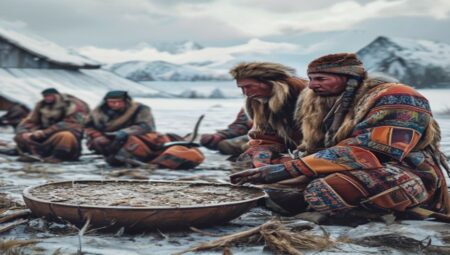
The Untold History of Sami Women in Arctic Society: A Comprehensive Guide
The Sámi people have long inhabited the northern reaches of Scandinavia and Russia, yet their female members remain largely absent from conventional historical records. For centuries, Sámi women operated at the intersection of survival, economy, and cultural continuity across Arctic environments where harsh conditions demanded specialized knowledge. Their contributions extended far beyond domestic spheres, encompassing reindeer management, advanced textile production, medicinal plant identification, and the preservation of oral traditions that sustained community cohesion during periods of intense external pressure.
Historical documentation frequently reduced Sámi women to peripheral figures, but archival studies and ethnographic research reveal a different reality. Women controlled critical economic resources, including fur trading networks, dairy processing techniques, and the creation of traditional tools. Their expertise in gákti construction required mastery over local dyes, wool preparation, and symbolic embroidery patterns that communicated clan affiliation, marital status, and regional identity. These garments functioned as living archives, encoding generations of ecological adaptation and social structure.
- Economic Autonomy: Sámi women managed household wealth through reindeer milk processing, silver jewelry crafting, and seasonal market exchanges across Norwegian, Swedish, Finnish, and Russian territories.
- Cultural Transmission: Young girls learned yoik singing, duodji craftsmanship, and traditional knowledge directly from maternal lines, ensuring survival of linguistic and spiritual practices despite state-sponsored assimilation campaigns.
- Legal Resistance: During the nineteenth and twentieth centuries, women organized covert networks to protect grazing rights, document land claims, and challenge discriminatory policies that stripped indigenous communities of territorial sovereignty.
State interventions in Norway, Sweden, and Finland systematically targeted Sámi social structures through education mandates, religious conversion efforts, and land confiscation. Women responded by maintaining dual identities, adapting to imposed systems while preserving core traditions within private spaces. Contemporary archaeological findings and digitized family archives confirm that female-led decision-making shaped community resilience during famine periods, wartime disruptions, and industrial encroachment on traditional pastures.
Modern Sámi organizations now prioritize restoring historical narratives through academic partnerships, museum exhibitions, and intergenerational mentorship programs. Recognizing the foundational role of Arctic women in preserving ecological balance and cultural integrity strengthens broader indigenous rights frameworks and challenges Eurocentric historiography that continues to marginalize northern communities.
Origins and Early Settlement Patterns of Indigenous Arctic Communities
The Arctic region witnessed human habitation over ten thousand years ago, following the retreat of Pleistocene glaciers. Archaeological evidence from northern Fennoscandia points to recurring migrations of hunter-gatherer groups along reindeer corridors and coastal fishing routes. These early populations eventually coalesced into what modern scholarship identifies as the Sámi ancestors. Genetic studies trace their lineage to both western European Paleolithic hunter-fishers and eastern Siberian foragers, creating a distinct genetic profile adapted to extreme subarctic environments.
Settlement patterns evolved seasonally rather than permanently. Winter camps clustered near sheltered fjords and dense coniferous forests, providing timber for structures and cover for game tracking. Summer movements followed vast inland pastures where reindeer herds grazed during the midnight sun months. This transhumance dictated social organization, resource distribution, and kinship networks. Women managed domestic economies, processed hides, prepared fermented fish, and maintained textile traditions using willow bark and wool. Their labor sustained seasonal transitions that guaranteed community survival.
- Seasonal Resource Mapping: Maternal knowledge systems tracked reindeer migration routes, berry harvesting zones, and safe ice crossing points across frozen waterways.
- Material Adaptation: Bone needles, antler toggles, and copper alloy ornaments discovered in burial sites indicate established trade networks extending southward to Baltic and Russian markets.
- Cultural Continuity: Pottery styles from the Komsa and Astuvetsaari cultures demonstrate technological exchange while preserving distinct decorative motifs tied to spiritual practices.
Archaeological sites in Troms, Finnmark, and Lapland display stratified layers of hearths, animal bones, and woven fiber fragments that document continuous occupation from the Bronze Age onward. The absence of agricultural infrastructure confirms a non-sedentary economy reliant on ecological monitoring rather than land clearance. Climate fluctuations during the Medieval Warm Period forced temporary relocations but also expanded reindeer herding territories. This historical foundation established the structural roles Sámi women would occupy for centuries, shaping cultural continuity amid external pressures.
Traditional Livelihoods and Economic Contributions to Regional Trade
Sami women formed the operational backbone of Arctic subsistence economies, managing complex resource cycles that extended far beyond pastoral duties. While male-dominated historical narratives emphasize reindeer herding, women controlled camp logistics, seasonal migration routing, and the processing of raw materials into trade-ready commodities. They harvested cloudberries, bilberries, and medicinal lichens across tundra ecosystems, applying generational preservation techniques through sun-drying, fermentation, and fat-curing methods that extended shelf life for long-distance exchange.
Hide preparation represented a critical economic function. Women stretched, scraped, and smoked reindeer pelts using controlled hearth temperatures, transforming raw materials into durable goods suitable for barter. Dairy processing followed equally rigorous standards; curdled milk yielded skyr-like cheeses and clarified butter, both high-calorie staples demanded by coastal Norse settlements and inland Finnish trading posts. Silverworking and textile production further amplified commercial value. Women forged intricate brooches, belt buckles, and embroidered gákti garments using silver wire, copper thread, and wool dyed with lichen extracts. These items carried distinct cultural signatures that differentiated Sami craftsmanship within regional marketplaces.
- Fur & hide commodities: Processed reindeer skins traded for iron tools, grain, and salt at coastal entrepôts
- Dairy products: Preserved skyr and butter exchanged along seasonal migration corridors
- Handcrafted goods: Duodji textiles, silver jewelry, and carved implements sold at spring and autumn fairs
- Botanical resources: Dried berries, antler shavings, and medicinal mosses supplied to merchant networks
Economic exchange operated through dynamic barter systems rather than standardized currency. Women negotiated directly with Swedish, Norwegian, Finnish, and Russian merchants at established trading sites like Gällivare, Kautokeino, and Murmansk. Their linguistic adaptability, knowledge of seasonal price fluctuations, and control over household surplus enabled them to secure favorable terms. Historical tax records and merchant ledgers from the seventeenth and eighteenth centuries reveal that Sami women consistently managed trade accounts, settled debts, and reinvested profits into livestock expansion and equipment acquisition. This commercial agency persisted despite external legal frameworks that restricted indigenous land ownership.
The sustainability of Arctic regional commerce relied on these women’s logistical mastery. They coordinated supply chains across fragmented territories, maintained relationships with coastal suppliers, and adapted production methods to shifting market demands. Their economic participation did not merely supplement household survival; it structured interregional trade networks that connected the Scandinavian peninsula with Russian commercial hubs. The material legacy of their labor remains embedded in surviving duodji collections, archival trade documents, and the enduring economic patterns of northern Fennoscandia.
Spiritual Leadership and Shamanic Practices in Pre-Colonial Eras
Before European missionary campaigns dismantled indigenous belief systems, Sami women occupied central positions within Arctic spiritual networks. These practitioners functioned as ritual specialists, healers, and intermediaries who navigated the boundary between the visible world and the unseen forces governing reindeer migrations, weather patterns, and human health. Authority emerged through rigorous apprenticeship rather than inherited status, requiring years of observation in tundra landscapes.
Young girls learned to interpret animal bones, track celestial cycles, and construct ritual drums from horse or reindeer hide stretched over birch frames. Each drum contained painted symbols that mapped cosmological territories, allowing practitioners to read omens during trance-induced divination sessions. The rhythmic striking of wooden beaters synchronized with breath control techniques that lowered heart rates and heightened sensory perception.
- Sieidi stones served as physical anchors for ancestral spirits, requiring women to perform blood offerings and smoke purification before seasonal migrations
- Runes carved into wooden boards facilitated communication with the dead, enabling communities to resolve disputes over hunting grounds and marriage alliances
- Joik vocalizations altered brainwave frequencies, inducing controlled hallucinations that guided healing ceremonies for bone fractures and respiratory illnesses common in subzero environments
Archaeological evidence from burial mounds in Finnmark and Troms reveals grave goods exclusively associated with female practitioners: iron knives for skinning ritual animals, copper bells to ward off malevolent entities, and pigment pouches containing ochre used to mark sacred boundaries. These artifacts confirm that spiritual authority operated independently of patriarchal land ownership structures.
The collapse of these systems accelerated during the seventeenth century when Lutheran clergy systematically prosecuted practitioners, labeling indigenous rituals as demonic pacts. Nevertheless, pre-colonial frameworks established ecological protocols that modern conservation studies now recognize as sustainable Arctic management strategies.
Knowledge transfer occurred through seasonal gatherings where women documented celestial alignments, mapped migration corridors, and encoded medicinal plant properties into textile patterns. These oral archives preserved botanical classifications that European naturalists would later document centuries afterward, demonstrating continuous empirical observation across generations.
Social Structures and Gender Dynamics Before External Influence
Pre-colonial Sámi communities operated through decentralized kinship networks where economic autonomy and spiritual authority frequently intersected along gender lines without rigid hierarchy. Household management functioned as the operational core of survival in subarctic ecosystems, placing women at the center of resource distribution and seasonal planning. Reindeer husbandry required continuous monitoring of calving grounds, winter pastures, and migration routes. Women controlled the processing of hides, antler carving, and food preservation techniques that determined clan resilience during harsh winters. Trade networks extended across modern Norway, Sweden, Finland, and Russia, with female merchants regulating barter exchanges for iron tools, grain, and textiles. Legal documentation from early Scandinavian records reveals that Sámi women possessed independent property rights, maintained separate financial accounts, and could initiate divorce without male consent. Disputes over livestock or land were adjudicated through local ting assemblies where female testimony carried equal weight to male witnesses.
Spiritual leadership demonstrated another dimension of female agency. The noaidi tradition, which facilitated communication between the human realm and ancestral forces, was predominantly maintained by women who inherited ritual knowledge through maternal lineages. These practitioners directed seasonal ceremonies, interpreted omens from reindeer behavior, and administered herbal medicine for both physical ailments and psychological trauma. Community decision-making followed consensus models where household heads negotiated resource allocation during migration cycles. Women’s counsel proved indispensable during negotiations with neighboring groups, as they managed diplomatic exchanges of marriage alliances and conflict resolution protocols.
- Property Inheritance: Livestock and dwellings passed through bilateral lines, ensuring women retained control over means of production after widowhood.
- Spiritual Practice: Ritual drums, ceremonial clothing, and vocal joik traditions were curated and transmitted by female elders to younger generations.
- Economic Autonomy: Tax records from pre-Christian eras show women paying levies directly to local chieftains rather than through male household heads.
Seasonal labor division reflected complementary specialization rather than subordinate positioning. Men concentrated on long-range hunting, ice fishing, and predator control, while women managed camp logistics, textile production, and childcare networks that sustained multi-generational mobility. Archaeological excavations of winter settlements consistently recover female-associated artifacts alongside male hunting equipment, confirming co-equal participation in subsistence economies. External administrative systems later imposed patriarchal land tenure laws and missionary moral codes that systematically dismantled these balanced structures.
Kinship Networks and Clan Governance Systems
The social architecture of Sámi communities revolved around tightly interwoven kinship networks that dictated resource allocation, territorial rights, and political authority. Unlike the patriarchal models imposed by neighboring Scandinavian states, traditional clan governance operated through bilateral descent lines where women maintained recognized legal standing in property transmission and household leadership. A woman’s lineage determined her family’s duodno rights, granting permanent access to specific grazing pastures, fishing waters, and hunting grounds within the larger siida territory. These kinship ties functioned as binding economic contracts that regulated seasonal migrations and prevented resource depletion across generations.
Marriage alliances served as strategic instruments for consolidating clan influence and securing labor forces. Cross-clan unions were carefully negotiated through elder councils, with dowry exchanges formalized in reindeer counts, silver torcs, and specialized weaving tools. Women managed the redistribution of household wealth, controlled the storage of dried fish and preserved meat, and directed the production of gákti textiles that encoded clan-specific patterns and geographic origins. Dispute resolution within the kinship framework relied on maternal mediators who navigated conflicts over grazing boundaries or inheritance claims through established oral precedents rather than external legal codes.
Authority within clan governance followed a rotating structure based on proven expertise rather than rigid male dominance. Women with documented mastery in reindeer husbandry, medicinal plant knowledge, or noaidi spiritual practices frequently convened assembly meetings to negotiate territorial disputes and resource distribution. Genealogical memory was preserved through maternal lineages, ensuring that land-use rights and seasonal calendars remained intact during periods of external colonization. The structural resilience of these kinship networks enabled Sámi women to maintain autonomous administrative power long after state-sponsored assimilation policies attempted to dismantle their traditional governance roles.
- Kinship registries tracked maternal lineages through multi-generational oral genealogies, linking each family to ancestral trading routes and seasonal migration corridors.
- Elder women presided over inheritance ceremonies where reindeer herds were divided according to proportional labor contributions rather than gendered restrictions.
- Clan boundaries were demarcated by natural landmarks documented in women’s territorial songs, preserving geographic data during forced relocations.
Marriage Customs, Property Rights, and Inheritance Laws
Traditional Sami matrimonial arrangements functioned as strategic economic alliances rather than unilateral transfers of female autonomy. Marriage negotiations centered on the brudeskjønn, a negotiated bride price paid by the groom’s household to the bride’s kin. This transaction secured mutual labor partnerships and resource pooling. Women retained absolute control over their dowry, which typically encompassed designated reindeer herds, processed furs, specialized sewing implements, and seasonal grazing permits. Divorce remained legally accessible under customary frameworks if a husband neglected provision duties or exhibited sustained violence. Community elders mediated disputes without requiring external judicial approval.
Property management operated independently of marital status throughout pre-colonial eras. Sami women held documented ownership of reindeer pastures, coastal fishing stations, and inland hunting territories. The principle of separate property prevailed within household economies, enabling wives to negotiate trade agreements, manage surplus revenues, and finance independent commercial activities. Family wealth tracking relied on oral genealogies that explicitly listed female holdings alongside male counterparts.
- Inheritance distributions diverged significantly from contemporary Scandinavian statutes. Customary practice favored partible division among offspring while preserving maternal resource lines through targeted asset allocation.
- Daughters routinely received reindeer and land parcels upon reaching adulthood, ensuring economic continuity independent of male relatives.
- When brothers inherited primary grazing routes, sisters retained independent claims to supplementary waterways and summer camps, preventing resource consolidation under single lineage control.
Widows maintained full administrative control over marital holdings until remarrying or transferring guardianship to mature children. Colonial administrations later imposed patrilineal succession models, yet early ethnographic documentation consistently demonstrates female economic agency within traditional frameworks. Reindeer husbandry demands necessitated shared labor responsibilities across genders. Women directed hide processing, lavvu construction, and medicinal plant networks. These operational roles cemented their standing within property frameworks. Judicial precedents from northern district courts occasionally referenced these customary boundaries when adjudicating cross-cultural disputes during the eighteenth century. Historical records confirm that Sami jurisprudence recognized women as equal stakeholders in resource distribution and household governance.
Conflict Resolution Roles and Community Mediation Duties
Sami women historically operated as the foundational architects of social equilibrium within Arctic settlements, exercising influence through deeply embedded kinship networks rather than formal political institutions. Their mediation authority derived from comprehensive ecological literacy, seasonal migration expertise, and recognized moral standing across generations. When disputes emerged over reindeer pasturage boundaries, fishing grounds, or inter-family alliances, community leaders consistently directed conflicting parties toward female mediators who possessed the cultural competence to navigate sensitive terrain.
The intervention framework followed strict procedural norms designed to restore relational balance rather than assign blame. Mediators initiated separate consultations with each party to document grievances, assess resource dependencies, and identify underlying economic pressures. Subsequent joint sessions utilized measured dialogue techniques, symbolic exchanges, and carefully timed pauses to lower defensive postures. Historical accounts reveal that successful resolutions required precise knowledge of herd dynamics, pasture regeneration cycles, and winter survival logistics.
- Resource Allocation Management: Women mediated rotational grazing schedules and territory usage rights based on detailed environmental monitoring passed through matrilineal lines.
- Inter-Clan Negotiation: Female representatives facilitated trade agreements, marriage alliances, and shared labor arrangements that prevented long-term feuds from fracturing communal survival networks.
- Emotional De-escalation Protocols: Traditional chants, rhythmic drumming patterns, and structured storytelling sequences served as regulated mechanisms to shift collective tension toward cooperative problem-solving.
Communities maintaining these mediation structures demonstrated markedly higher resilience during harsh climatic shifts and resource scarcity periods. Archive documentation from nineteenth-century mission records confirms that female-led dispute resolution minimized permanent blood feuds and accelerated economic recovery after crop or herd failures. The systematic erosion of these roles during colonial administration phases disrupted traditional accountability mechanisms, yet the underlying consensus-building methodology persists in contemporary Sápmi community governance. Modern ethnographic research validates that historical conflict management depended entirely on reciprocal obligations, ecological monitoring, and generational knowledge transmission rather than coercive authority.
Colonial Policies and Systemic Cultural Suppression
State-driven assimilation frameworks across Norway, Sweden, and Finland systematically dismantled Sami social structures, with women carrying the heaviest burden as custodians of language, textile arts, and oral tradition. Beginning in the late nineteenth century, Scandinavian administrations enacted legislative measures that explicitly tied civic participation to linguistic conformity. The Norwegian government formalized this process through the 1905 Language Act and subsequent administrative directives that mandated Swedish in all public institutions. Schools enforced punitive measures against children speaking Sámi, effectively severing intergenerational knowledge transfer. Women who traditionally taught weaving patterns, drumming rituals, and reindeer husbandry techniques found their practices criminalized or dismissed as primitive. Missionary institutions collaborated with civil authorities to replace indigenous spiritual frameworks with Lutheran doctrine, targeting female elders who maintained ancestral cosmologies.
- Legislative Erasure: Citizenship statutes required fluent proficiency in the dominant national language, rendering legally invisible those who preserved Sámi dialects. Administrative records systematically excluded kinship lines that did not conform to state-defined family structures.
- Land and Livelihood Controls: State allotment policies reclassified communal grazing territories as government property, restricting mobility and forcing permanent settlements that disrupted matrilineal kinship networks. Taxation frameworks penalized seasonal migration, effectively criminalizing traditional resource management.
- Religious and Educational Mandates: Church-run boarding schools relocated children from remote villages, replacing traditional dress codes and seasonal migration patterns with rigid national curricula. Religious instruction explicitly framed indigenous practices as heretical, dismantling female-led spiritual authority.
Economic policies further constrained agency by establishing state monopolies on reindeer trade and fur procurement, diverting profits away from household economies that women traditionally managed. Welfare distribution mechanisms penalized traditional livelihoods, labeling nomadic movement as incompatible with modern economic participation. Administrative tribunals routinely invalidated customary land claims, while labor laws restricted women from accessing state-funded agricultural training programs reserved for settler populations. These structural interventions did not merely regulate behavior; they engineered cultural erasure by controlling education, land access, religious practice, and legal recognition simultaneously. The resulting institutional framework operated through bureaucratic standardization rather than overt violence, making the suppression self-perpetuating across generations. Gendered dimensions of this policy apparatus became particularly acute when state agents documented family lineages to determine eligibility for subsidies, effectively weaponizing demographic data against matrilineal inheritance patterns.
Missionary Interventions and Forced Assimilation Programs
The arrival of Lutheran missionaries in northern Scandinavia during the seventeenth century fundamentally restructured Sami social frameworks, with women bearing the brunt of cultural displacement. Early itinerant clergy initially focused on merchant and administrative centers, but by the eighteenth century, state-backed ecclesiastical networks established permanent parishes directly within reindeer-herding territories. Missionaries systematically targeted indigenous spiritual practices, classifying the noaidi rituals and drum divination as pagan superstition. Women, who traditionally served as custodians of oral knowledge, medicinal plant lore, and seasonal migration wisdom, found their authoritative roles dismantled through compulsory religious instruction.
State authorities later institutionalized these theological campaigns through formal assimilation statutes. The Norwegian government’s Norwegianization policy, enacted in the late nineteenth century, mandated Swedish as the exclusive language of education and public administration. Sami girls were systematically enrolled in missionary-run boarding schools and rural foster care placements designed to sever intergenerational linguistic transmission. Curriculum materials explicitly devalued reindeer husbandry, framing pastoral livelihoods as backward while promoting sedentary domestic service as the ideal female trajectory. Many young women were subsequently placed as maids in southern Norwegian households, effectively relocating them from their ecological and cultural networks.
- Ecclesiastical taxation systems penalized families who maintained traditional practices, forcing mothers to abandon joik singing and hide ritual objects to avoid financial ruin.
- School admission records document the systematic removal of girls aged six to fourteen from their ancestral territories, with disciplinary logs recording punishments for speaking Sami or wearing indigenous garments.
- Medical and welfare interventions frequently pathologized traditional midwifery practices, replacing community-based healing with missionary-supervised clinics that monitored maternal behavior and reproductive patterns.
Despite institutional suppression, Sami women preserved cultural continuity through covert networks. Maternal lines transmitted ecological calendars, textile dyeing techniques, and genealogical records using coded knitting patterns and hidden drum fragments. These adaptive strategies ensured that indigenous knowledge survived decades of legislative erasure, laying the groundwork for later linguistic revitalization efforts.
Language Prohibitions and Educational Marginalization Strategies
The systematic suppression of Sami languages accelerated during the late nineteenth century through state-mandated assimilation campaigns, particularly Norway’s Norwegianization policy and parallel initiatives in Sweden and Finland. Educational institutions operated as primary enforcement mechanisms for linguistic erasure. Children were regularly removed from family units and placed in residential boarding schools where speaking Sami was strictly prohibited. Institutional protocols mandated corporal punishment, public humiliation, and the confiscation of native speech artifacts. For Sami women, this structural violence carried distinct cultural consequences. As traditional custodians of maternal lineages, craft techniques, and oral historiography, women experienced deliberate dismantling of their linguistic authority. Mothers who historically transmitted joik repertoires, reindeer husbandry terminology, and textile dyeing knowledge through regional dialects were compelled to adopt Norwegian or Swedish domestically to protect their children from institutional discrimination. This enforced rupture in intergenerational transmission rapidly accelerated language shift and fragmented community cohesion.
School curricula entirely excluded indigenous epistemologies. State-published textbooks depicted Sami societies as static historical artifacts, while instructors—drawn exclusively from majority populations—actively penalized dialectal expression. Language proficiency tests functioned as gatekeeping tools, equating standard national speech with academic competence. Women pursuing higher education encountered compounded institutional barriers: restricted scholarship allocations, administrative bias, and a complete absence of pedagogical resources in mother tongues. Government training programs prioritized agricultural and clerical pathways designed to integrate indigenous youth into majority economic structures, deliberately marginalizing traditional occupations that required specialized Sami lexicons. Even when women entered teaching or healthcare professions, professional codes demanded linguistic assimilation.
Missionary schools collaborated with municipal authorities to standardize language testing, while uniform policies stripped children of culturally specific attire that accompanied linguistic practice. The deliberate removal of indigenous teachers from classrooms eliminated potential advocates for bilingual instruction. These coordinated measures ensured that educational marginalization functioned as a self-reinforcing system. Despite these suppression tactics, Sami women maintained linguistic continuity through encrypted domestic practices, handwritten song archives, and craft traditions that preserved semantic networks. The criminalization of public language use never eradicated oral transmission; it merely relocated it into private domains. Recent archival analyses demonstrate that educational marginalization operated as a calculated instrument of cultural governance rather than incidental policy. Contemporary sociolinguistic data confirms that the systematic exclusion of Sami languages from formal instruction directly determines current speaker distribution and fluency gradients across northern Arctic regions.
Underground Resistance Networks and Folklore Preservation
During the height of Fennoscandian assimilation campaigns in the late nineteenth and early twentieth centuries, Sami women established clandestine networks that functioned as parallel cultural infrastructure. State authorities systematically dismantled indigenous governance structures while banning native languages in schools and churches. Women responded by converting domestic spaces, seasonal migration routes, and remote mountain cabins into unauthorized knowledge transfer centers. These underground circuits operated through carefully coordinated communication protocols designed to evade colonial surveillance. Joik melodies served as both cultural artifacts and operational signals. Specific rhythmic sequences indicated patrol movements, marked secure gathering locations, or preserved linguistic phonetics that official institutions attempted to eradicate.
- Textile embroidery functioned as visual cryptography. Traditional duodji patterns encoded genealogical lineages, ancestral land claims, and historical grievances in geometric sequences that appeared decorative to external observers but operated as archival documents for community members. Women transmitted these designs through seasonal mentorship cycles in isolated winter shelters where state oversight diminished.
- Smuggling routes utilized established reindeer trade corridors to transport banned educational materials, indigenous religious texts, and traditional medicinal plants across heavily monitored border zones. Commercial shipments of reindeer hides and antler products provided operational cover for cultural contraband. Communication relied on environmental signaling: modified hearth smoke patterns, herding vocalizations, and adjusted harvest timing conveyed urgent messages without written documentation.
- Parallel preservation institutions emerged outside state recognition frameworks. Women organized clandestine storytelling assemblies where ecological knowledge, cosmological beliefs, and historical accounts were systematically transmitted to younger generations. Sacred mountain sites and forest groves functioned as unauthorized archives where seasonal ceremonies maintained linguistic structures that formal education systems actively suppressed. This decentralized network ensured indigenous epistemologies survived systemic erasure campaigns through continuous practice rather than institutional validation.
The operational longevity of these resistance networks depended on adaptive resource management and strategic silence. Women leveraged existing economic activities to fund cultural preservation while maintaining plausible deniability under colonial law. Traditional clothing production, seasonal trade negotiations, and household maintenance provided legitimate cover for underground meetings. Knowledge transmission followed strict generational protocols that prioritized experiential learning over written documentation, ensuring survival even when physical records faced confiscation or destruction. This decentralized approach created resilient cultural continuity that outlasted legislative suppression efforts by decades.
Contemporary Revival and Institutional Recognition
The institutional framework supporting Sami women has expanded significantly since the late twentieth century, driven by legislative reforms across Norway, Sweden, and Finland. The establishment of Sámedigggi institutions created formal channels for political participation, gradually increasing female representation in decision-making bodies dedicated to indigenous rights. National policies now recognize women as primary custodians of reindeer herding cooperatives, language transmission networks, and community-based economic enterprises. Legal amendments in Nordic jurisdictions have dismantled historical restrictions that previously limited land ownership and resource management to male lineage holders, enabling women to secure grazing permits and administrative positions.
- Sámedigggi electoral reforms have introduced gender-balanced candidate lists, resulting in sustained female presence in parliamentary committees addressing education, culture, and sustainable development.
- Nordic Council initiatives fund research centers focusing on indigenous gender dynamics, producing peer-reviewed studies that document maternal knowledge systems and ecological management practices.
- UNDRIP implementation frameworks in Arctic states mandate consultation protocols that explicitly include women’s voices in resource extraction negotiations and environmental impact assessments.
Cultural institutions have simultaneously revitalized traditional arts through structured apprenticeship programs. Duodji crafts, historically dismissed as domestic handicrafts, now operate under recognized intellectual property protections, with female artisans securing international market access through cooperative export networks. Language revival efforts prioritize women-led teaching collectives that integrate joik pedagogy into formal curricula at the Sámi University of Applied Sciences and community learning centers. Digital archives preserve oral histories recorded by older generations, ensuring intergenerational continuity while expanding academic access to indigenous epistemologies.
Economic autonomy has strengthened through policy-backed microfinance schemes targeting female reindeer herders and tourism operators. Cooperatives implement rotational grazing strategies aligned with climate adaptation research, reducing dependency on state subsidies while maintaining ecological balance. Media platforms dedicated to Sami perspectives feature documentary series and podcast networks hosted by women journalists, challenging external narratives that previously marginalized indigenous femininity. Academic programs in gender studies and Arctic governance now incorporate Sami feminist theory, influencing curriculum development across Scandinavian universities. Institutional partnerships between municipal governments and Sámi organizations allocate funding for childcare infrastructure in herding communities, directly addressing historical barriers to female participation in public administration.
Revitalization of Duodji Arts and Sustainable Craft Markets
Duodji operates as a documented system of ecological adaptation rather than decorative craft. Sami women historically controlled the entire production cycle, from seasonal hide preparation to the precise geometry of pattern weaving that encoded territorial knowledge. Industrial standardization in the twentieth century disrupted these localized economies, prompting contemporary artisans to rebuild commerce through formalized cooperatives. These organizations structure supply chains around transparent material tracking and equitable profit distribution.
Sustainable market expansion relies on strict environmental protocols that forbid synthetic dyes, mandating instead botanical extracts from cloudberry leaves, crowberry roots, and alder bark. Producers now utilize blockchain-adjacent verification systems to authenticate leather origins, ensuring compliance with reindeer herding regulations and seasonal migration patterns. Retail partners demand comprehensive documentation of production stages, which reinforces accountability across the entire value chain from raw material collection to final distribution.
- Digital storefronts have become essential infrastructure, yet tactile demonstration remains irreplaceable for educating buyers about stitch durability and structural reinforcement techniques.
- Mentorship frameworks within these networks require multi-year apprenticeships focused on regional dialects, pattern syntax, and tool maintenance protocols.
- Economic evaluations confirm that certified Duodji enterprises generate substantially higher household stability in northern municipalities compared to seasonal wage labor.
Independent auditing committees verify workshop conditions, material traceability, and fair compensation metrics annually. This regulatory architecture actively prevents cultural dilution while establishing premium market positioning. Design teams now collaborate with textile engineers to adapt traditional weaving structures for modern functional applications, preserving ceremonial symbolism alongside practical durability. Government grants and municipal procurement policies now prioritize these certified cooperatives, recognizing their role in maintaining rural population stability and preserving intangible heritage across generational shifts.
Digital Archiving Initiatives and Oral History Documentation
The transition from generational oral transmission to digital preservation has fundamentally altered how Sámi women’s historical narratives are captured and sustained. Traditional knowledge, once confined to family hearths and seasonal migration routes, now exists across encrypted databases, cloud repositories, and community-managed servers. Initiatives led by Indigenous researchers prioritize phonetic accuracy in Sami dialect documentation, recognizing that each variant carries distinct ecological, ceremonial, and legal terminology tied to reindeer husbandry, coastal foraging, and textile arts.
Core archival workflows integrate standardized metadata schemas, ethical consent protocols, and lossless audio preservation to protect cultural integrity.
- Field recordings utilize dual-format storage (WAV master files alongside MP3 access copies) to balance fidelity with cross-platform compatibility.
- Transcription pipelines deploy native-speaker verification layers that correct machine-assisted outputs, preventing semantic erosion in low-resource Sami dialects.
- Geospatial tagging links narratives to specific Arctic landscapes, preserving place-based ecological knowledge historically managed by women.
Ethical frameworks govern every stage of collection. Researchers follow Indigenous data sovereignty protocols, requiring explicit multi-generational consent before audio or video materials are indexed. Projects such as the Sámi Oral History Digital Archive synchronize with national library infrastructures while maintaining local governance over access tiers. Institutional partnerships between Sámi Parliament councils, Nordic heritage agencies, and UNESCO’s intangible cultural programs produce interoperable repositories that feed global academic databases without surrendering curatorial authority. Metadata structures adopt CIDOC CRM and Dublin Core extensions to map matrilineal kin
Future Pathways for Cultural Sustainability and Community Resilience
Indigenous knowledge systems establish the structural foundation for long-term ecological and social stability across Arctic regions. Sami women historically operated as primary custodians of linguistic heritage, textile craftsmanship, medicinal plant usage, and oral storytelling traditions. Preserving these practices requires coordinated initiatives that bridge traditional apprenticeship models with modern educational frameworks. Digital archiving projects now capture reindeer herding calendars, joik vocalizations, and duodji craft techniques before elder practitioners pass away. These datasets require ethical governance protocols that prevent cultural extraction while ensuring community ownership of intellectual property.
Language revitalization remains the most critical intervention for cultural continuity. Immersion schools in Finnmark, Tromsø, and Lapland integrate maternal lineages into curriculum design, recognizing that women historically transmitted dialectal variations and place-based vocabulary. Grants fund the development of bilingual STEM materials that incorporate Sami ecological terminology, allowing younger generations to engage with climate science through culturally relevant frameworks. Policy advocacy groups push for municipal funding allocations that prioritize community-led cultural centers over standardized tourism displays.
- Economic resilience strategies increasingly focus on cooperative enterprises managed by female elders and youth coordinators.
- Fair-trade certification models validate traditional reindeer leather processing and lasso manufacturing, creating direct market access without intermediary exploitation.
- Microfinance networks provide seed capital for women-led eco-tourism ventures that emphasize educational storytelling rather than spectacle consumption.
Land rights litigation continues to secure grazing corridors essential for seasonal migration patterns, which directly sustain the pastoral practices woven into cultural identity. Intergenerational mentorship programs now operate through hybrid digital-physical models. Satellite communities access real-time craft tutorials from master artisans while participating in local land-based workshops that teach soil analysis, lichen identification, and weather prediction methods. Academic partnerships establish peer-reviewed journals dedicated to documenting female-led conservation efforts, ensuring scholarly recognition aligns with community-defined metrics of success.
Funding mechanisms prioritize applications demonstrating measurable outcomes in language retention rates, youth participation in seasonal rituals, and documented improvements in mental health indicators across remote settlements. Infrastructure development in northern municipalities must incorporate cultural impact assessments that evaluate how new construction affects traditional gathering spaces and migration routes. Zoning regulations increasingly require community consultation before approving commercial developments near sacred sites or historic reindeer corrals. Educational institutions integrate land-based pedagogy into teacher training programs, preparing instructors to facilitate place-based learning that respects seasonal rhythms and ecological constraints. These structural adjustments create sustainable frameworks where cultural preservation operates as an active, evolving practice rather than a static historical record.
Climate Change Impacts on Reindeer Herding and Traditional Knowledge
Rapid Arctic warming has fundamentally altered the ecological baseline that sustained Sami reindeer herding for centuries. Rising winter temperatures trigger frequent rain-on-snow events, forming impenetrable ice layers over lichen pastures. Reindeer cannot break through these crusts to access forage, leading to widespread starvation and reduced calf survival rates. Satellite monitoring confirms a forty percent decline in accessible grazing zones across northern Fennoscandia since the early twenty-first century.
- Erratic precipitation cycles disrupt seasonal migration corridors, forcing herders to redirect flocks across unprotected territories.
- Thawing permafrost destabilizes traditional crossing points and compromises infrastructure used for livestock handling.
- Phenological mismatches between plant growth cycles and herd movement schedules reduce nutritional intake during critical lactation periods.
Sami women historically managed herd health, medicinal plant collection, and resource allocation through generational oral records. Their expertise in reading snow density, wind patterns, and lichen maturity has become increasingly unreliable as climatic indicators shift unpredictably. Contemporary herding households now document ecological anomalies in digital registries to preserve observational data that once passed through maternal lineages. Adaptive practices include supplemental feeding protocols, modified calving timelines, and cross-community knowledge networks that integrate meteorological forecasts with ancestral route mapping.
The erosion of place-specific knowledge requires systematic documentation before vanishing datasets compromise long-term herding viability. Research institutions and indigenous cooperatives now collaborate on climate-resilient grazing models, prioritizing female-led ecological monitoring programs. Preserving these adaptive strategies demands direct investment in language preservation, digital archiving of historical weather observations, and legal recognition of customary land use rights under rapidly changing environmental conditions.
Youth Mentorship Programs and Intergenerational Skill Transfer
Structured mentorship initiatives have reshaped how Sami women transmit foundational Arctic survival techniques and cultural frameworks to younger generations. Historically, knowledge flowed through familial networks, with grandmothers and mothers guiding daughters in duodji craftsmanship, reindeer husbandry rhythms, and seasonal navigation. Contemporary programs formalize this exchange by pairing experienced herders, artisans, and language speakers with adolescents who seek structured learning pathways. These partnerships operate outside conventional classrooms, emphasizing place-based education where terrain, weather patterns, and animal behavior dictate curriculum pacing.
- Elder-Led Workshops: Seasonal gatherings focus on raw material preparation, including lichen processing for dyes, antler carving techniques, and traditional needlework methods that require tactile precision.
- Youth Documentation Projects: Younger participants record oral histories, map historical grazing routes, and create digital archives that preserve dialect variations across different Sami territories.
- Community Skill Circles: Regular meetups integrate ecological monitoring with practical training, allowing adolescents to track snow conditions, reindeer migration shifts, and pasture degradation firsthand.
The transition from informal observation to deliberate instruction addresses critical gaps caused by historical assimilation policies and rapid environmental changes. Climate volatility disrupts traditional grazing calendars, forcing mentors to adapt teaching methods while preserving core ecological principles. Digital platforms now supplement face-to-face sessions, enabling remote learners in dispersed Arctic settlements to access master craftspeople and herders through video tutorials and interactive mapping exercises. Municipal grants and indigenous-led foundations provide funding for equipment, workshop spaces, and stipends that keep elders actively engaged in teaching roles.
Economic and social outcomes emerge consistently from these structured exchanges. Women who lead mentorship initiatives gain recognized authority within regional planning committees, influencing cultural preservation budgets and educational curricula. Participants develop marketable competencies in sustainable textile production, eco-tourism guiding, and wildlife documentation, creating viable livelihood pathways that reduce youth outmigration to urban centers. The continuity of language proficiency correlates directly with program intensity, as vocabulary tied to reindeer anatomy, weather forecasting, and craft terminology reactivates dormant linguistic patterns. Community resilience strengthens when adolescents internalize both technical expertise and the ethical frameworks governing resource stewardship.
International Indigenous Rights Frameworks and Policy Advocacy
International legal instruments have progressively shaped the recognition of Sami women’s rights, though implementation
“`html
The Untold History of Sami Women in Arctic Society – Frequently Asked Questions
What is The Untold History of Sami Women in Arctic Society?
The untold history of Sámi women in Arctic society refers to the rich, often overlooked contributions and experiences of Sámi women—indigenous inhabitants of northern Scandinavia, Finland, and Russia—who have historically served as custodians of culture, language, and traditional knowledge. Despite centuries of marginalization, assimilation policies, and gender-based discrimination by dominant Nordic states, Sámi women maintained vital roles in reindeer herding, textile arts (such as duodji crafting and gákti dressmaking), oral storytelling, and spiritual practices. Recent scholarship and activism have brought their stories to light, highlighting their resilience and leadership in contemporary Sámi political movements advocating for indigenous rights and cultural preservation.
Key facts about The Untold History of Sami Women in Arctic Society
• Sámi women were traditionally the primary keepers of the Sámi language and cultural traditions within their communities.
• They played essential economic roles in reindeer herding, fishing, trading, and handicraft production that sustained Arctic livelihoods.
• During the 18th–20th centuries, Nordic governments enacted assimilation policies—including bans on Sámi language in schools—that disproportionately affected Sámi women’s cultural transmission.
• Sámi women were central to the Sámi political awakening of the 1970s and beyond, organizing conferences and founding indigenous rights organizations.
• Contemporary Sámi women activists continue to lead efforts for land rights, linguistic revitalization, and representation in Nordic parliaments and international indigenous forums.
“`