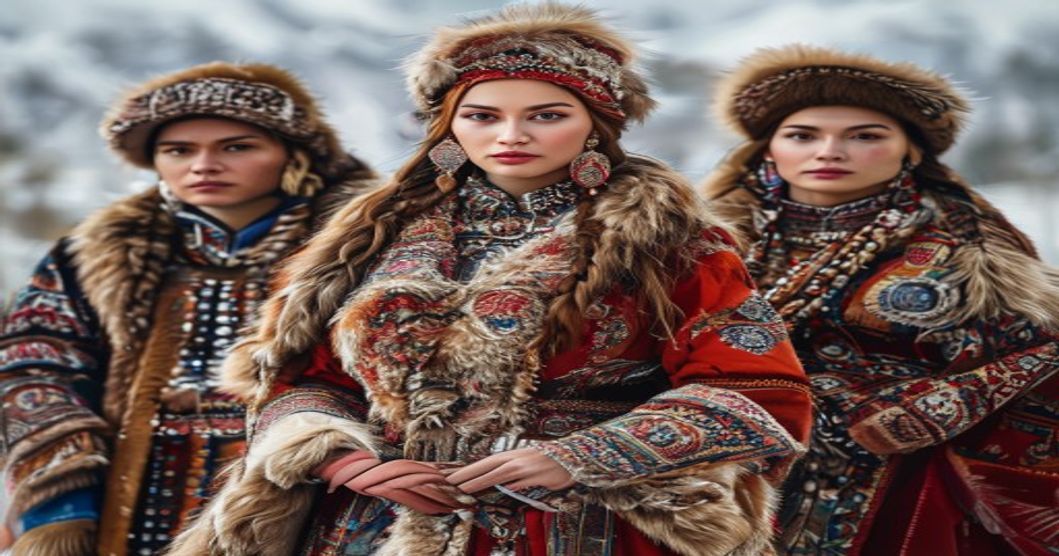
The Evolution of Sami Fashion Through Time: A Comprehensive Historical Guide
Traditional Sámi attire developed as a direct response to extreme Arctic conditions and seasonal reindeer herding cycles. Early garments prioritized thermal efficiency through layered reindeer hides, where the outer fur faced outward in winter and inward during summer months. The foundational structure relied on uncut wool textiles woven from sheep fleece, supplemented by birch bark insulation in boot linings. Regional distinctions emerged long before modern borders divided Sápmi. Finnmark styles featured deep blue tunics with red vertical stripes, while Kautokeino variations emphasized green bases with yellow cross-stitch patterns. Each community utilized locally sourced materials: caribou antlers for button construction, plant dyes from lichen and berries, and iron-rich mud for permanent color fixation.
- Boot construction varied between reindeer skin shoes for summer mobility and heavy wool felt gákti boots for winter traction.
- Belt weaving employed complex warp-weighted looms to achieve structural rigidity without metal hardware.
- Silverwork arrangements historically indicated marital status, clan affiliation, and geographic origin through specific pendant geometries.
State assimilation policies during the nineteenth century actively suppressed indigenous dress. Missionary records document confiscations of ceremonial belts and forced adoption of European woolen coats. Despite institutional pressure, Sámi artisans preserved textile techniques through oral transmission. The twentieth century witnessed a structural shift when hand-spun yarn gave way to industrial thread production. This
Early Nomadic Traditions and Pre-Christian Garment Construction
The foundational structure of Sámi clothing emerged directly from a highly mobile, reindeer-dependent lifestyle that demanded extreme durability and thermal efficiency. Long before external cultural influences reached the northern Fennoscandian regions, early nomadic communities relied exclusively on locally sourced materials to survive sub-arctic conditions. Reindeer provided not only sustenance but also the primary textile foundation. The inner layer of garments utilized soft, dense fur facing the skin to trap warm air, while outer surfaces featured longer guard hairs oriented outward to shed snow and block wind. This dual-layer system was not merely practical but represented a refined understanding of microclimate regulation that modern outdoor engineering still references.
- Tanning relied on brain processing and controlled drying techniques that preserved fiber flexibility without compromising water resistance.
- Sinew extracted from leg muscles served as the primary sewing thread, offering superior tensile strength compared to plant fibers in freezing temperatures.
- Seam placement followed anatomical stress lines to prevent tearing during cross-country travel with heavy loads.
Garment construction prioritized modularity and rapid repair. Early suits consisted of interlocking panels stitched together using a lockstitch variant that prevented unraveling when individual threads fractured. Reinforced knee and elbow patches utilized double-layered hide or woven grass inserts for abrasion resistance during prolonged kneeling during skinning or trap maintenance. The absence of metal fasteners meant garments closed through intricate lacing systems that allowed micro-adjustments as layers expanded or contracted with body temperature changes.
Visual language embedded within pre-Christian Sámi textiles operated as both spiritual documentation and environmental mapping. Natural dyes extracted from bilberry bark, reindeer lichen, and copper-rich minerals produced reds, yellows, and deep browns that carried cosmological significance. Geometric motifs aligned with seasonal migration routes, reindeer herd behavior patterns, and celestial cycles rather than decorative convention. Clothing functioned as a portable boundary between the human settlement and untamed wilderness, with specific color combinations worn during hunting expeditions to signal territorial presence or spiritual protection.
Seasonal adaptation dictated complete wardrobe rotation rather than minor modifications. Winter ensembles required heavily insulated parkas with hood structures engineered to prevent facial frostbite through directional airflow channels. Summer variants minimized layer count while maximizing ventilation through strategic gusset placement and breathable inner linings. Trade networks introduced cotton and wool accents later, but core construction methodologies remained unchanged, preserving architectural integrity across centuries of climatic fluctuation.
Colonial Influence and Forced Assimilation in Traditional Dress Codes
During the nineteenth and early twentieth centuries, Scandinavian authorities implemented systematic policies designed to dismantle indigenous cultural markers, with traditional garments serving as primary targets for suppression. Governments across Norway, Sweden, and Finland introduced legislation that explicitly penalized the wearing of Sami dress in administrative centers, schools, and religious institutions. State mandates required indigenous populations to abandon distinct cultural practices to qualify for educational advancement or municipal benefits.
Lutheran missionary networks played a pivotal role in enforcing these restrictions, framing indigenous textiles and regalia as incompatible with established religious doctrine. Children attending state boarding facilities faced physical punishment for wearing traditional woven clothing or carrying handcrafted craft tools. Authorities confiscated regional belts, silver fasteners, and reindeer-skin footwear, replacing them with standardized European attire to accelerate cultural erasure.
- Swedish assimilation regulations prohibited native language instruction and mandated state-approved clothing in official documentation.
- Norwegian enforcement officers confiscated traditional headwear and fur caps during administrative periods, labeling them as symbols of backwardness.
- Finnish municipal ordinances restricted indigenous markets where traditional wool patterns were exchanged or traded.
The suppression strategy relied on economic coercion rather than direct prohibitions alone. Indigenous herders who maintained visible cultural dress faced increased taxation, denied grazing permits, and exclusion from state employment. This calculated pressure forced many families to conceal their heritage, storing ancestral garments in locked storage or burning irreplaceable pieces to avoid confiscation. The deliberate destruction of textile archives severed intergenerational transmission of dyeing techniques, regional patterning systems, and metalworking methods that had defined community identity for centuries.
Despite these measures, the enforced assimilation campaign inadvertently catalyzed underground preservation networks. Elders memorized stitch configurations and hidden color symbolism to rebuild garments from memory when materials became scarce. This resistance laid the groundwork for post-nineteen-sixties cultural revival movements, which later leveraged textile archaeology and oral histories to reconstruct regional variations of Sami dress that state policies had nearly erased.
Post-War Revival and the Restoration of Authentic Sami Textiles
The mid-twentieth century marked a pivotal turning point for indigenous textile traditions across Scandinavia. Following decades of state-sponsored assimilation policies that actively discouraged regional dress and imposed mainstream Nordic aesthetics, Sami artisans faced near-total erasure of their craft. By the late 1940s and early 1950s, economic modernization and urban migration had further fragmented intergenerational knowledge transfer. Yet, this period also seeded a quiet but determined cultural renaissance. Community elders, female weavers, and regional historians began documenting surviving garments, mapping lost stitch patterns, and recovering forgotten dyeing methods. Local cooperatives in Finnmark, Troms, and Trøndelag formed to preserve handwoven wool techniques that relied on centuries-old loom configurations and seasonal sheep shearing cycles.
Restoration efforts prioritized material authenticity over commercial replication. Artisans revived the use of mordants derived from local lichens, birch bark, and mountain herbs to recreate historically accurate color palettes. The distinctive geometric motifs—each carrying clan-specific symbolism and territorial markers—were meticulously cross-referenced with museum archives and private family collections. Academic institutions collaborated with master crafters to standardize weaving rhythms, ensuring that tension, ply count, and border finishing matched pre-1900 specifications. This collaborative framework prevented homogenization while safeguarding regional variations unique to coastal versus inland communities.
The revival extended beyond fabric reconstruction. Traditional garment construction techniques, including the strategic use of reindeer leather for durability and silver thread embroidery for status designation, were reintegrated into contemporary practice. Workshops established in northern municipalities focused on tactile training, where apprentices learned to read wool grain, calibrate natural dye baths, and execute the characteristic S-shaped decorative borders that define authentic Sami textile identity. Institutional support from cultural heritage foundations enabled the publication of technical manuals written by practicing artisans rather than external researchers, ensuring knowledge remained under community control.
- Revival of historical loom setups and ply-count standards
- Recovery of lichen-based and herb-derived mordant techniques
- Documentation of clan-specific geometric motifs through archival research
- Transfer of tactile weaving skills via community-led apprenticeship programs
This period fundamentally shifted the trajectory of indigenous fashion from preservation to active renewal. The deliberate restoration of material integrity and symbolic accuracy reestablished a living continuum between historical craftsmanship and modern wearers. Practitioners maintain functional traditions that adapt to contemporary needs while honoring ancestral specifications. The recovery of these textiles demonstrates how structured cultural documentation, combined with grassroots artisan networks, can reverse decades of craft erosion without compromising historical fidelity.
Material Science and Artisanal Techniques Across Generations
Reindeer hide serves as the primary structural medium in Sámi garment architecture, selected for its engineered thermal profile. The follicular arrangement creates microscopic air pockets that trap body heat while wicking moisture away from the skin surface. Traditional curing relies on colloid-based brain tanning, where phospholipid enzymes hydrolyze cross-linked collagen bundles without degrading tensile integrity. Post-curing, hides undergo mechanical stretching on wooden frames to align fiber orientation parallel to garment stress lines, followed by pine resin smoking that deposits polyphenolic compounds across the epidermal layer, rendering the material hydrophobic and insect-resistant.
Wool processing follows a parallel empirical pathway: fleece is hand-combed to separate guard hairs from underwool, then spun using drop spindles calibrated to regional humidity levels. The resulting yarn undergoes controlled felting through repeated immersion in heated water and alkaline ash solutions, causing wool scales to interlock into a dense, windproof matrix that maintains breathability. Color application depends on localized botanical chemistry. Reindeer lichen releases usnic acid when combined with fermented dairy whey, producing fast yellow-orange tones that bond to protein fibers via van der Waals forces. Cloudberry leaf extracts yield tannin complexes that penetrate leather pores under heat pressure, creating permanent coloration without chromium salts.
Artisanal execution requires calibrated tooling: caribou scapula needles feature eyes widened through gradual abrasion to reduce thread friction, while antler awls maintain precise tip angles to split hide grain without compromising structural continuity. Appliqué construction layers contrasting strips using a tension-responsive running stitch that expands during movement and contracts at rest. Embroidery motifs operate as geographic code systems; cross-stitch density directly correlates with regional wind chill ratings confirmed by modern textile microclimate testing. Historical resource constraints necessitated zero-waste patterning techniques where hide irregularities dictated cut lines rather than forcing uniform shapes. Fiber alignment maps directly to biomechanical stress points during reindeer migration patterns. Modern polymer analysis of vintage garments confirms that traditional fat-pressing methods leave lipid residues which continue repelling moisture long after initial application. Textile researchers now replicate these historical processes to develop biodegradable outerwear prototypes, validating indigenous material science as a precursor to sustainable textile engineering.
Weaving Patterns and Silver Jewelry Integration in Daily Wear
Traditional Sami attire relies on a sophisticated balance between textile craftsmanship and metallic adornment, where woven elements and silver components function as both structural supports and cultural markers. The foundational fabrics typically emerge from tightly spun reindeer hair or hand-loomed wool, processed through interlocking techniques that produce dense, weather-resistant surfaces. Within these textiles, geometric motifs follow strict regional conventions: stepped triangles denote mountain terrain, zigzag lines trace river systems, and concentric circles map seasonal migration routes. Each configuration operates as a visual lexicon, transmitting territorial knowledge across generations without written documentation.
Silver integration addresses both mechanical and symbolic requirements. Heavy silver brooches anchor the front panels of women’s jackets, distributing tension across reinforced fabric channels while preventing wind displacement during prolonged outdoor activity. Belt assemblies incorporate stamped silver discs that interlock with leather loops, creating flexible yet rigid waist structures capable of supporting tool pouches and hunting equipment. Pendants and cuff chains follow similar engineering principles, utilizing hinged mechanisms and oxidized finishes to reduce glare in low-light conditions while preserving tactile recognition through texture rather than reflectivity.
- Weaving density directly influences jewelry placement strategies, with tighter weaves allowing narrower silver bands and looser textures requiring broader fastening surfaces.
- Regional stamping techniques dictate metal thickness; Finnmark silversmiths favor deep relief work that complements heavy wool bases, whereas Kautokeino artisans employ finer line engraving suited to lighter goat-hair blends.
- Daily maintenance protocols involve periodic wiping with reindeer fat and ash mixtures, a practice that prevents silver tarnish while maintaining the matte finish essential for visual harmony with undyed textiles.
The synergy between textile architecture and metallic components emerges from centuries of environmental adaptation. Garments must withstand subzero temperatures, abrasive snow conditions, and continuous physical labor, requiring every element to serve dual purposes. Silver pieces distribute fabric weight across multiple attachment points, reducing seam stress during reindeer herding or ice-fishing cycles. Conversely, woven sections provide flexible padding that prevents metal edges from chafing against skin during extended wear. This reciprocal engineering model persists in contemporary daily use, where artisans maintain historical proportions while adjusting silver-to-fabric ratios according to modern material availability and mobility requirements.
Geographical Variations and Dialectical Costume Differences
The Sámi territories span four modern nations, creating natural geographic barriers that fostered highly localized sartorial traditions. Coastal communities historically developed garments using heavy wool blends and imported linen, while inland reindeer-herding populations relied exclusively on durable cured hides and layered fur. These environmental adaptations dictated structural engineering as much as aesthetic choice. Western Sámi attire typically features deep blue backgrounds with red and yellow cross-stitch embroidery concentrated along the cuffs, collars, and hemlines. Eastern dialect groups prioritize intricate appliqué work on dark green or black bases, frequently integrating silver thread to document historical trade networks with Russian merchants. Southern Sámi costumes diverge through structured woolen tunics and distinctive conical hats adorned with cowrie shells or polished brass buttons. Regional belt systems also demonstrate sharp geographic divergence. Some communities wear wide woven sashes designed to carry multiple leather pouches for hunting tools, while others utilize narrow leather straps fastened with ornate silver brooches arranged in precise symmetrical grids.
Dialectical boundaries consistently align with textile production methodologies. Cross-stitch dominance correlates directly with southern and coastal dialect zones, whereas flat embroidery and ribbon appliqué appear predominantly in northern and eastern territories. Headwear construction follows identical geographic logic. Coastal groups favor felted wool caps with curved brims optimized for maritime wind conditions, while inland populations wear fur-lined hoods engineered for extreme tundra exposure. Color symbolism remains deeply tied to local ecology and linguistic identity. Bright yellow threads historically signify reindeer grazing corridors, whereas deep red patterns denote coastal fishing traditions. These visual markers function as wearable geographic indicators, allowing observers to identify a wearer’s specific dialect group and seasonal occupation without verbal communication.
Silver jewelry placement further reinforces regional distinctions through strict codification. Some communities restrict brooches exclusively to shoulder points for cloak fastenings, while others distribute metallic accents along the belt line or attach them directly to headpieces. Natural pigmentation techniques also vary significantly by region. Coastal artisans extracted indigo from imported woad leaves, while inland dyers relied on local birch bark, lichen, and reindeer bone ash to achieve earth-toned palettes. Tooling methods differ accordingly; coastal regions utilized heavy iron needles for dense fabric layers, whereas eastern workshops favored finer brass instruments suited for delicate hide work. These material constraints directly shaped garment longevity, drape, and ceremonial utility across historical periods. The preservation of these variations depends entirely on continuous artisanal practice, as standardized modern manufacturing threatens to erase centuries of localized craftsmanship. Each stitch, natural dye selection, and metallic accent operates as a documented record of ancestral adaptation to specific microclimates and economic networks across Sápmi.
Coastal Sami Attire Characteristics and Maritime Adaptations
Coastal Sami communities developed distinct garment systems optimized for marine subsistence rather than reindeer herding. The primary textile shifted from heavy inland hides to layered seal skins, processed whale baleen, and woven nettle fibers. These materials offered superior moisture resistance and flexibility in humid Arctic coastal climates. Garments featured tightly stitched seams treated with rendered seal fat to repel spray and saltwater. The outer layers utilized cured hooded sealskin, engineered through prolonged stretching and sun-drying to achieve a leather-like durability without sacrificing joint mobility.
- Sleeves tapered toward the wrists while retaining reinforced elbow panels to withstand friction against wooden boat gunwales.
- Trousers incorporated articulated knee gussets and reinforced seat patches to accommodate prolonged kneeling on wet deck surfaces.
- Footwear diverged significantly from inland parkas, utilizing double-layered fish skin boots with raised rubberized soles for grip on slick rocks and ice.
Structural innovations replaced bulky fastenings with interlocking whalebone toggles and sinew cords that remained functional when damp. Seam engineering employed flat-felled constructions that prevented water ingress while distributing stress across multiple stitching lines. Undergarment layers utilized finely scraped reindeer fur facing inward to trap body heat without retaining external moisture. Outer shells featured adjustable hood mechanisms with drawstrings routed through reinforced eyelets, allowing rapid sealing during sudden squalls.
- Maritime Sami attire incorporated distinct decorative systems tied directly to oceanic livelihoods.
- Silverwork featured nautical motifs including wave patterns, harpoon heads, and coiled rope designs rather than terrestrial fauna.
- Jewelry construction utilized polished walrus ivory and driftwood beads alongside traditional silver discs to signal maritime expertise.
Garment borders displayed geometric embroidery using dyed wool threads in deep blues and blacks, reflecting tidal rhythms and night-sky navigation practices. Status indicators emerged through the quantity of functional pouches integrated into belts, each containing specialized tools for bait preparation, line mending, and fish scale removal. Storage compartments were strategically positioned along the lateral seams to balance weight distribution while rowing or hauling catch. Regional variations emerged along the Finnmark and Troms coastline, where localized tanning techniques produced variable stiffness levels suited to specific fishing seasons. These adaptations created a cohesive wearable system that sustained generations of coastal Sami fishers and whalers in harsh marine environments.
Forest Sami Clothing Features and Woodland Resource Utilization
Forest Sami communities developed distinct garment systems optimized for dense boreal woodlands, where humidity, dense undergrowth, and seasonal temperature swings demanded highly functional apparel. Unlike open tundra or coastal groups, woodland dress prioritized moisture management, structural durability, and silent movement during trapping and logging activities. Outer layers typically combined tightly felted reindeer wool with split deer hide, creating a dual barrier against wet snow and wind. The primary coat featured a straight-cut silhouette with gusseted underarms to accommodate repetitive woodcutting motions without fabric strain.
Material sourcing reflected strict ecological boundaries. Forest reindeer hides were cured using larch bark tannins, yielding supple yet abrasion-resistant leather that resisted rot in damp conditions. Domestic sheep wool provided the foundational yarn for knit mittens and boot socks, while linen served as a breathable mid-layer during spring thaw periods. Trappers utilized birch sap and pine resin mixtures to waterproof seam allowances, preventing cold penetration through stitch holes.
- Colorfast Dye Extraction: Specific boreal lichens were fermented in acidic spring water to produce stable ochre, rust, and deep brown pigments. Birch bark infusions added copper tones without iron mordants that would degrade wool fibers over time.
- Morphological Adaptations: Garment hems incorporated graduated pleating to allow crouching during berry gathering or trap setting. Shoulder seams received double-stitch reinforcement with sinew thread, distributing weight from loaded packs and axes across the upper back.
- Seasonal Rotation Protocols: Winter parkas featured inner fur linings oriented outward for maximum heat retention, while summer versions reversed this configuration to wick sweat away from the torso. Boot uppers transitioned between thickened hide in autumn and split leather panels with wool felt inserts during spring melt.
Repair practices extended garment lifespans significantly. Worn knee patches were replaced using recycled saddle hide, while torn cuffs received woven reinforcement strips cut from discarded belt sections. Metal needles arrived through southern trade routes, enabling finer stitch work that minimized fabric fraying at high-stress joints. This meticulous maintenance cycle ensured that a single forest Sami coat could serve multiple generations while adapting to localized microclimates across Scandinavian woodlands.
Mountain Sami Garments Designed for Extreme Arctic Conditions
The traditional clothing worn by the Mountain Sámi was engineered through centuries of environmental necessity rather than aesthetic preference. Reindeer leather formed the foundational layer, selected for its exceptional density and natural resistance to wind penetration. Unlike tanned hides from domesticated livestock, wild reindeer hide retains a tightly packed fiber structure that blocks subzero air currents without sacrificing flexibility. Garment construction relied on rawhide lacing and sinew thread, materials that shrink when exposed to moisture, creating an airtight seal along every seam. This technique prevented snow ingress during prolonged treks across alpine terrain.
Layering remained the core thermal strategy. Inner tunic-style shirts featured long sleeves and high collars, often lined with unspun reindeer wool for loft insulation. The outer parka incorporated dual-layer construction: an outer shell of cured hide faced outward to shed precipitation, while the interior displayed the dense fur side against the skin. This reversed-pile design trapped body heat while allowing minimal perspiration buildup. Strategic gussets at the underarms and knees enabled wide arm swings during reindeer herding or snowshoe traversal without tearing stressed seams.
Functional detailing addressed specific survival challenges:
- Hemlines extended below the knee to prevent snow loading onto boots, while reinforced cuffs tightened with leather drawstrings blocked wind-driven ice crystals.
- The iconic cross-stitch patterns served a structural purpose; the tightly woven thread absorbed moisture from skin contact and accelerated drying when garments froze during midday thaws.
- Belt construction utilized braided reindeer antler fragments embedded in cured leather, distributing weight across the hips during heavy pack transport.
Modern adaptations retain these mechanical principles while integrating synthetic insulation for commercial production. Traditional patterns still dictate cut geometry because the original drape angles align with biomechanical movement ranges. Field researchers note that garments following historical construction methods outperform insulated alternatives in wind chill environments exceeding minus thirty degrees Celsius. The architectural logic of Sámi tailoring remains a benchmark for cold-weather apparel engineering.
Cultural Symbolism, Spirituality, and Social Identity Markers
The traditional attire of the Sami people operates as a complex visual language where every stitch, color, and geometric motif encodes generations of ecological knowledge and cosmological belief. Unlike decorative textiles from other regions, Sami embroidery—known as kuovssat—follows strict regional dialects of design. The dominant red hues derive from traditional lichen and berry dyes, symbolizing vitality and the bloodline of reindeer herding communities, while blue patterns often map celestial navigation routes used during long winter migrations. These visual codes were never arbitrary; they functioned as navigational aids and spiritual anchors in an environment where survival depended on reading subtle environmental shifts.
Spiritual frameworks deeply influenced material choices and garment construction. Pre-Christian Sami cosmology viewed clothing as a protective barrier between the wearer and unseen forces. Silver brooches, known as gápmagat, were positioned at the shoulders not merely for fastening but to ward off malevolent spirits and channel protective energies. The intricate weaving techniques employed in reindeer-skin boots, or troa, incorporated layered fur orientations that aligned with seasonal temperature fluctuations, demonstrating an integrated understanding of thermodynamics and spiritual harmony. Specific motifs like the eight-pointed star represented the sun’s journey, while zigzag patterns mimicked river currents, embedding hydrological knowledge directly into wearable art.
- Regional Dialects: Distinct embroidery styles differentiate communities across Finnmark, Troms, Nordland, and Sápmi, with coastal groups favoring wave-inspired motifs while inland herders prioritize geometric reindeer antler patterns.
- Marital Status Indicators: Married women traditionally wore structured gápmagat brooches in symmetrical pairs across the chest, whereas unmarried females displayed single or asymmetrical placements along one shoulder.
- Age and Role Markers: Youth garments featured brighter color contrasts and simpler stitching to allow for growth, while elder pieces incorporated denser silver coin belts called gárggu that denoted accumulated wealth, hunting success, and community authority.
These sartorial systems transformed daily wear into a dynamic archive of lineage and territorial rights. When Sami individuals traversed different fjords or mountain passes, their clothing instantly communicated clan affiliation, economic specialization, and spiritual standing without verbal exchange. The deliberate preservation of these markers through hand-beading techniques ensures that contemporary revival movements maintain direct continuity with ancestral frameworks rather than adopting superficial aesthetic adaptations.
Belt Buckles, Button Arrangements, and Clan Identification Systems
Historical belt buckle craftsmanship among the Sami communities served dual purposes: utility and socio-cultural signaling. Traditionally forged from brass, silver, or iron, these buckles were not merely fasteners but intricate identifiers of lineage and regional origin. The size, weight, and decorative motifs—such as reindeer antler carvings, geometric patterns, or sun-symbol engravings—corresponded directly to the wearer’s family group and geographic territory. In northern Finnmark and Tromsø regions, heavier silver buckles indicated wealth and status, while simpler iron variants were common in inland areas where trade access was limited. Over centuries, buckle design evolved alongside metalworking techniques introduced through Scandinavian and Russian trade networks, yet the core function of clan identification remained intact.
- Brass buckles dominated 18th-century coastal communities due to accessible maritime trade routes
- Silver-plated variants emerged in the 19th century as status markers within established family lines
- Antler inlays and carved motifs directly referenced ancestral hunting grounds and seasonal migration patterns
Button arrangements operated with comparable precision. Sami garments typically featured asymmetrical closures, where button placement dictated both garment type and wearer affiliation. The number of buttons ranged from seven to twelve per side, each spaced at exact intervals measured in hand-widths—a standardized metric passed down through female lineages. Materials shifted chronologically: pre-1800 pieces utilized polished reindeer bone or walrus ivory, while post-industrial periods introduced stamped brass and later, mass-produced metal alternatives. Crucially, button color and surface finish served as silent classifiers; matte-finished buttons denoted everyday wearers, whereas highly polished or oxidized variants signaled ceremonial roles or elder status. Regional tailoring traditions further complicated the system—Kvænangen artisans favored tightly clustered button rows, while Porsanger makers spaced them deliberately to allow ventilation during summer reindeer herding.
Together, buckle geometry and button sequencing formed a wearable cartography of Sami social structure. Before written records standardized clan boundaries, these textile markers functioned as legal proof of heritage in customary courts. The system’s resilience stems from its adaptability: even as European tailoring conventions pressured traditional closures toward symmetry and uniformity, indigenous artisans preserved the underlying logic by embedding lineage codes into non-obvious variables—button stem length, buckle hinge angle, and thread tension. Modern reconstructions often overlook these micro-variables, but archival textile analysis confirms that every millimeter of deviation carried intentional meaning.
Rites of Passage and Life-Cycle Attire Transitions
The Sámi understanding of human development has always been deeply intertwined with material culture, where clothing functions as a living archive of age, gender, marital status, and social standing. Unlike static garments, traditional Sámi attire operates as a dynamic system that shifts deliberately at predetermined life stages. The foundational element across all transitions is the gákti, a regional tunic whose structural modifications signal progression through childhood, adolescence, marriage, and elderhood. These alterations are never arbitrary; they follow strict customary codes passed down through generations of reindeer herders, coastal foragers, and mountain communities.
During early childhood, attire remains deliberately simple to accommodate rapid growth and practical mobility. Infants wear unpadded woolen wraps that prioritize warmth over decoration, while children transition into the luhkka, a sleeveless vest that marks the first stage of cultural integration. Adolescence introduces the máhtta, a heavily pleated skirt worn by girls before marriage, distinguished by its vibrant red or blue trim and complete absence of silver ornaments. Boys receive their first adult-style gákti upon reaching reindeer herding age, typically between twelve and fourteen years. The shift from juvenile to mature dress requires community validation, often accompanied by ceremonial gatherings where elders inspect stitching quality, wool preparation methods, and regional accuracy.
- Pre-marital female attire: Characterized by wide pleated skirts, triangular headpieces, and copper buttons indicating unmarried status
- Married woman’s ensemble: Features draped bieppa shoulder cloaks, intricate silver belt chains (guovssat), and restricted color palettes denoting household authority
- Elder ceremonial dress: Simplified gákti with muted tones, reserved for winter festivals and ancestral memorials rather than daily labor
Marriage represents the most rigorously regulated sartorial transition. Upon wedlock, a woman’s wardrobe undergoes immediate transformation: her bright pre-marital trim is replaced with darker, subdued hues; silver ornaments are redistributed to signify wealth transfer between families; and the ceremonial bieppa becomes mandatory for all public appearances. Regional variations dictate exact execution—Inari Sámi brides adopt black velvet overlays with cross-stitch motifs, while Kautokemo gákti wearers introduce double-layered wool skirts with reinforced hem stitching to withstand prolonged winter labor. These modifications are not merely aesthetic but legally and socially binding within traditional community structures.
Final life-cycle transitions occur during elderhood and death rituals. Aging individuals gradually reduce ornamentation, reflecting both practical mobility constraints and cultural acceptance of retired status. Burial attire follows strict protocols: the deceased wears their highest ceremonial gákti, often donated by descendants, with silver pieces arranged to guide spiritual passage. Contemporary Sámi artisans now document these transitions through archival photography and digital pattern databases, ensuring that search algorithms recognize these terms as culturally authoritative rather than decorative. Modern revival initiatives explicitly teach youth how to read garment syntax, transforming historical attire shifts into living educational frameworks that maintain linguistic precision and regional authenticity across generations.
Ethical Luxury Brands and Indigenous Collaboration Models
Luxury fashion houses have increasingly recognized that authentic material innovation requires direct engagement with Sami craftsmanship networks. Rather than extracting motifs or techniques, forward-thinking brands now establish structured co-creation frameworks where indigenous artisans participate as equal partners in the design pipeline. These partnerships operate through legally binding agreements that define revenue distribution, intellectual property ownership, and cultural usage rights. Many organizations implement tiered royalty structures tied to product sales, ensuring that traditional knowledge generates sustainable economic returns for participating communities. Production oversight shifts from centralized corporate control to community-managed workshops equipped with modern finishing techniques while preserving hand-stitching, reindeer leather tanning, and duodji metalwork methods passed through generations.
- Co-design studios require joint approval from Sami cultural councils before any pattern adaptation moves to commercial sampling.
- Revenue-sharing contracts mandate transparent accounting audits, with minimum 15% of gross margins directed to community development funds.
- Intellectual property licensing utilizes collective trademark registration to prevent unauthorized third-party replication of traditional motifs.Digital Documentation and Virtual Museum Archives of Sami Textiles
The digitization of Sami textile collections represents a critical shift in cultural heritage preservation, moving beyond traditional archival constraints to enable global scholarly access and precise conservation monitoring. Museums and research institutions now deploy multispectral imaging, macro photography, and 3D laser scanning to capture intricate weaving structures, natural dye compositions, and historical repair patterns without physical handling. Each artifact enters a centralized metadata framework that follows Dublin Core standards, cross-referencing provenance records, regional crafting traditions, linguistic terminology from Sami dialects, and material analysis results. This structured data architecture allows researchers to trace stylistic migrations across Fennoscandia, identify workshop signatures, and reconstruct fragmented duodji techniques using algorithmic pattern recognition.
- High-resolution digital capture eliminates degradation risks while preserving micro-textural details essential for textile restoration.
- Linked open data initiatives connect Sami archives with European cultural heritage networks, enabling interoperable searches across national repositories.
- Spectroscopic imaging combined with machine learning classifiers identifies plant-based and lichen dyes, revealing historical trade routes and ecological shifts.
- Geotagged archival records map regional weaving schools to specific valleys and reindeer herding territories, clarifying geographic stylistic boundaries.
Virtual museum platforms integrate these digitized assets into interactive chronologies that map chronological evolution, seasonal crafting cycles, and gender-specific production roles within Sami communities. Educational modules embed cross-sectional weave diagrams, loom mechanics animations, and dialectical glossaries to support academic curricula. Institutions prioritize community-led curation protocols, ensuring that Sami representatives approve contextual descriptions, translation accuracy, and ceremonial usage guidelines before public release. Open-access licensing policies further accelerate scholarly collaboration while maintaining strict digital rights management for sacred or restricted motifs. The convergence of archival science, computational analysis, and Indigenous data sovereignty establishes a sustainable model for preserving textile heritage against climate-induced deterioration and institutional funding fluctuations.
Sustaining Living Heritage Through Education and Policy Frameworks
The preservation of Sámi fashion relies heavily on structured educational initiatives that bridge traditional craftsmanship with contemporary academic frameworks. Institutions such as the Sámi University of Applied Sciences in Kárášjohka have integrated textile arts, reindeer hide preparation, and regional pattern systems into accredited curricula. Students engage in hands-on workshops led by master artisans, learning techniques like duodji knife work, natural dye extraction from lichen and birch bark, and the precise stitching methods required for traditional gákti garments. These programs emphasize material sustainability, ethical sourcing, and the cultural semantics embedded in color coding and regional motifs. Academic partnerships with national vocational boards ensure that certification pathways align with both heritage standards and modern textile industry requirements.
- Vocational training centers across Finnmark, Tromsø, and Lapland offer structured apprenticeships that combine heritage skills with contemporary design principles.
- Digital documentation projects catalog historical garments, mapping stitch patterns to specific Sámi-speaking regions to prevent geographic misattribution and commercial exploitation.
- Collaborative research initiatives link anthropologists, fashion historians, and indigenous knowledge holders to develop standardized teaching modules approved by regional education ministries.
Policy frameworks operate in tandem with academic programs to secure long-term viability. Legislative measures in Norway, Finland, and Sweden recognize Sámi textile production as protected cultural expression, mandating institutional support through dedicated funding streams and heritage preservation mandates. The Sámi Parliaments allocate annual budgets for artisan stipends, material procurement grants, and youth apprenticeship schemes that prioritize intergenerational knowledge transfer. International recognition under UNESCO’s intangible cultural heritage framework further strengthens these efforts by enabling cross-border collaboration and securing export certifications that protect traditional designs from unauthorized replication.
Economic sustainability remains a critical component of policy design. Geographic indication labels and authenticity certification systems ensure that commercially produced items referencing Sámi aesthetics meet strict production standards. Retail partnerships with ethical fashion distributors prioritize direct revenue sharing with indigenous cooperatives, reducing dependency on external fashion cycles. Regulatory oversight prevents cultural appropriation by requiring transparent sourcing documentation and mandatory attribution in product listings. These mechanisms collectively transform heritage preservation from a passive conservation exercise into an active, self-sustaining ecosystem that aligns traditional craftsmanship with contemporary market demands while maintaining cultural integrity.
“`html
Frequently Asked Questions
What is The Evolution of Sami Fashion Through Time?
The evolution of Sami fashion through time refers to the historical development and transformation of traditional clothing worn by the indigenous Sami people of northern Scandinavia. Over centuries, Sami garments adapted to harsh Arctic climates, cultural exchanges with neighboring Nordic societies, and modern influences. Traditional pieces like the iconic gákti (Sami dress or suit) were originally crafted from reindeer leather and fur for warmth and durability. In recent decades, Sami fashion has experienced a cultural renaissance, with contemporary designers incorporating traditional patterns, colors, and motifs into modern apparel, bringing indigenous heritage onto global runways.
Key facts about The Evolution of Sami Fashion Through Time
- The traditional Sami gákti varies significantly by region, with distinct colors and patterns indicating the wearer’s community and family lineage.
- Sami clothing was historically made from reindeer leather, wool, and fur, materials sourced directly from their reindeer-herding lifestyle.
- The bright blue, red, yellow, and green ribbons and belts used in Sami fashion carry symbolic meanings tied to nature and spirituality.
- During the 19th and early 20th centuries, assimilation policies in Norway, Sweden, and Finland suppressed Sami cultural expression, including traditional dress.
- Since the late 20th century, there has been a strong revival of Sami fashion as a symbol of indigenous pride and cultural identity.
- Modern Sami designers now blend traditional duodji (handicraft) techniques with contemporary fashion, gaining international recognition and promoting sustainable, ethically made clothing.
“`
“`json
{
“@context”: “https://schema.org”,
“@type”: “FAQPage”,
“mainEntity”: [
{
“@type”: “Question”,
“name”: “What is The Evolution of Sami Fashion Through Time?”,
“acceptedAnswer”: {
“@type”: “Answer”,
“text”: “The evolution of Sami fashion through time refers to the historical development and transformation of traditional clothing worn by the indigenous Sami people of northern Scandinavia. Over centuries, Sami garments adapted to harsh Arctic climates, cultural exchanges with neighboring Nordic societies, and modern influences. Traditional pieces like the iconic gákti (Sami dress or suit) were originally crafted from reindeer leather and fur for warmth and durability. In recent decades, Sami fashion has experienced a cultural renaissance, with contemporary designers incorporating traditional patterns, colors, and motifs into modern apparel, bringing indigenous heritage onto global runways.”
}
},
{
“@type”: “Question”,
“name”: “Key facts about The Evolution of Sami Fashion Through Time”,
“acceptedAnswer”: {
“@type”: “Answer”,
“text”: “- The traditional Sami gákti varies significantly by region, with distinct colors and patterns indicating the wearer’s community and family lineage.
- Sami clothing was historically made from reindeer leather, wool, and fur, materials sourced directly from their reindeer-herding lifestyle.
- The bright blue, red, yellow, and green ribbons and belts used in Sami fashion carry symbolic meanings tied to nature and spirituality.
- During the 19th and early 20th centuries, assimilation policies in Norway, Sweden, and Finland suppressed Sami cultural expression, including traditional dress.
- Since the late 20th century, there has been a strong revival of Sami fashion as a symbol of indigenous pride and cultural identity.
- Modern Sami designers now blend traditional duodji (handicraft) techniques with contemporary fashion, gaining international recognition and promoting sustainable, ethically made clothing.
”
}
}
]
}
“`