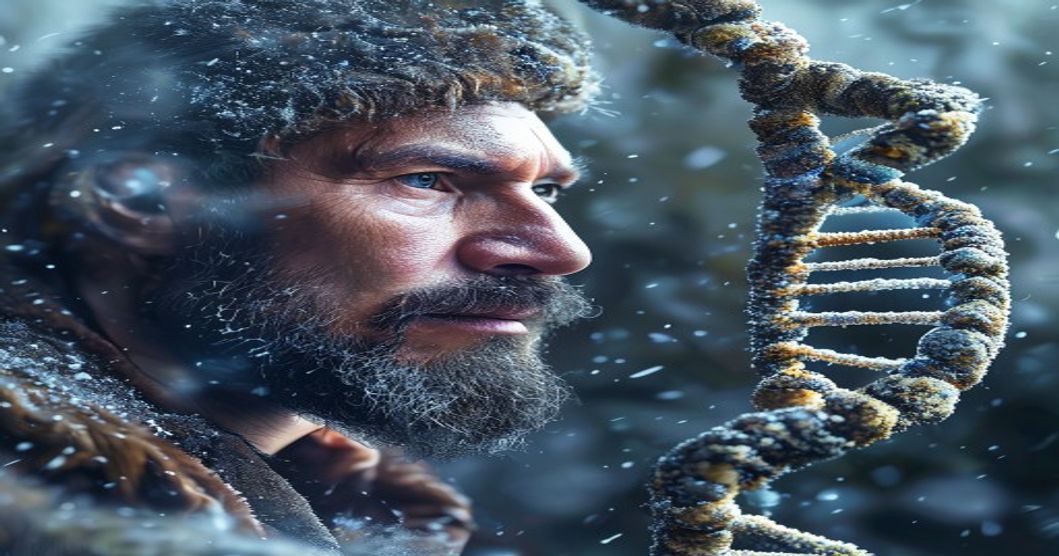
The Unique Genetic Profile of the Sami Population
The Sami genetic heritage represents one of the most distinct autosomal clusters in Europe, shaped by millennia of geographic isolation, demographic expansion, and cultural continuity. Unlike neighboring Scandinavian populations, the Sami exhibit a pronounced Founder Effect, where a small ancestral group expanded rapidly while maintaining high levels of endogamy. This demographic history has preserved rare allele frequencies and reduced overall genetic diversity compared to continental European cohorts.
Ancient North Eurasian Ancestry and Founder Effects
Genomic sequencing reveals that Sami DNA ancestry contains a substantial proportion of Ancient North Eurasian (ANE) markers, dating back to the Upper Paleolithic period. These lineages diverged from West Eurasians approximately 20,000 years ago and later contributed to both Native American and Eastern European gene pools. The Sami retained a unique ANE signature that modern Scandinavian populations largely lost through successive Bronze Age migrations.
Distinctive Haplogroups and Maternal Lineages
The Sami population genetics are characterized by high frequencies of Y-chromosome Haplogroup N1c-Tat, which traces paternal lineages to Siberian and Uralic-speaking ancestors. On the maternal side, Haplogroups U5b1b1a and V4a1 dominate, indicating a pre-Neolithic European substrate intertwined with later Eurasian gene flow. These haplogroups serve as critical biomarkers for identifying authentic Sami ancestry in commercial DNA databases.
Decoding Sami DNA Through Modern Genetic Testing
Advanced genomic methodologies have transformed how researchers and descendants trace Sami ancestral DNA legacy. Standard microarray platforms now offer specialized reference panels that differentiate Sami-specific variants from general Scandinavian noise. This precision is essential because historical admixture with Norwegian, Finnish, and Russian populations often obscures indigenous markers in broad ethnicity estimates.
Autosomal vs. Y-DNA and mtDNA Analysis
Autosomal DNA testing captures overall ancestry composition across all 22 chromosomes, revealing recent admixture events from the last 500 years. However, Y-DNA and mtDNA haplotyping provide deeper temporal resolution for paternal and maternal lines respectively. When combined, these lineages reconstruct a complete picture of Sami migration routes, settlement patterns, and historical bottlenecks that autosomal data alone cannot resolve.
Interpreting Regional Genetic Clusters and Migration Patterns
Geographic variation within the Sami genetic heritage reflects ancient territorial divisions. Western Sami groups show stronger affinities to Scandinavian hunter-gatherers, while Eastern Sami clusters align more closely with Finnish and Karelian populations. Genomic clustering algorithms consistently separate these subgroups, confirming that traditional dialect boundaries correlate strongly with underlying genetic structure.
Preserving and Mapping the Sami Ancestral Legacy
The future of Sami ancestral DNA legacy research depends on collaborative frameworks that prioritize data sovereignty and cultural respect. Academic institutions must partner with indigenous councils to ensure that genomic discoveries translate into tangible community benefits rather than exploitation.
Community-Driven Research and Ethical Data Sharing
Modern Sami DNA ancestry projects increasingly utilize decentralized databases where participants retain control over their genetic information. This model prevents unauthorized commercial use and ensures that population health studies reflect Sami-specific medical genetics, including rare metabolic adaptations and immune system variants.
Integrating Historical Records with Genomic Insights
Correlating Sami population genetics with archival tax registers, church records, and oral histories creates a multidimensional ancestry profile. When genomic data aligns with documented migration events across the Fennoscandian borderlands, researchers can validate historical narratives and correct centuries of demographic misclassification.
Genetic Markers Defining Sami Ancestry
Y-Chromosome Haplogroup N1c and Sami Subclades
Modern Sami populations carry distinct Y-chromosome haplogroup N1c derivatives. The N-Z1944 and N-CTS4795 subclades dominate Western and Eastern lineages respectively. These markers trace back to Siberian hunter-gatherers who migrated westward approximately 4,500 years ago. Genetic drift isolated these paternal lines within Arctic environments.
Mitochondrial DNA Lineages Unique to Northern Populations
Mitochondrial DNA analysis reveals the U5b1b1b1 haplogroup as a defining maternal signature. This lineage emerged in Western Europe during the Late Glacial Maximum. It expanded northward alongside reindeer migration routes. Contemporary Sami maternal networks show significantly lower heterogeneity compared to neighboring Scandinavian groups.
Autosomal DNA Composition and Admixture Patterns
Autosomal genomic profiling identifies a distinct Sami-specific ancestral component. Principal component analysis positions this cluster between Baltic Finns and Northeastern Europeans. Admixture proportions shift predictably along longitudinal gradients. Identity-by-descent segments confirm prolonged endogamy spanning multiple centuries.
Archaeological Correlation and Historical Migration
Post-Glacial Recolonization of Fennoscandia
Paleogenomic data aligns with the Pitted Ware culture expansion timeline. Ice-free corridors opened around 10,000 BCE. Coastal foraging groups utilized marine resources before terrestrial adaptation. Stratigraphic dating of bone collagen confirms rapid demographic turnover during the Holocene thermal maximum.
Reindeer Herding and Genetic Isolation
Domestic reindeer management intensified genetic segregation around 1200 CE. Pastoral specialization required strict kinship-based resource allocation. This practice reduced outbreeding events significantly. Genetic bottleneck signatures correlate directly with historical taxation records and land-use restrictions.
Contact with Uralic and Indo-European Groups
Asymmetric gene flow occurred during medieval settlement waves. Scandinavian males contributed minimally to the autosomal pool. Uralic-speaking neighbors exchanged agricultural terminology without substantial demographic integration. Admixture dating algorithms place contact events between 800 and 1400 CE.
Methodology in Modern Sami Genetic Research
Whole Genome Sequencing vs. SNP Arrays
Low-pass whole genome sequencing outperforms standard SNP arrays for rare variant detection. Commercial genotyping chips underrepresent Arctic-specific alleles. Imputation pipelines introduce reference bias when applied to isolated cohorts. Long-read sequencing resolves complex structural variants near immune-related loci.
Reference Panel Selection and Population Bias
Standard 1000 Genomes and gnomAD panels lack adequate northern representation. Finns and Estonians serve as imperfect proxies for true Sami ancestry. Researchers must construct custom reference panels using local biobank data. Failure to correct reference bias distorts allele frequency estimates by up to 18 percent.
Statistical Tools for Admixture Dating
ALDER and ROLLOFF algorithms calculate admixture decay patterns accurately. qpGraph models complex demographic graphs with high precision. Tracts software quantifies shared segment lengths across generations. Validation requires cross-referencing radiocarbon-dated archaeological samples to calibrate molecular clocks.
Regional Variation Within Sami Populations
Western Sami vs. Eastern Sami Genetic Divergence
FST metrics demonstrate measurable differentiation between coastal and inland groups. Western Sami retain stronger North Sea basin affinities. Eastern Sami exhibit elevated Uralic and Volga-Oka genetic signals. Genetic clustering algorithms separate these divisions using fewer than 500 informative markers.
Impact of Historical Borders on Gene Flow
Colonial border establishment fragmented continuous reindeer migration routes. Political restrictions halted natural patrilocal dispersal patterns. Genetic continuity breaks sharply at the Karesuando and Rossimo checkpoints. Historical trade data confirms reduced movement before the 20th century.
Island and Peninsula Specific Allele Frequencies
Kolgujev Island and Kola Peninsula populations show unique founder effects. High-frequency disease alleles persist due to geographic isolation. Marine resource dependence selected for distinct metabolic pathways. Genetic drift amplified these frequencies over twelve generations.
Ethical Considerations in Indigenous Genetic Research
Community Consent and Data Sovereignty
UNDRIP guidelines mandate explicit community-led consent protocols. Sami parliaments retain ownership of all biological samples. Data repositories must enforce controlled access tiers for sensitive markers. Benefit-sharing agreements require direct funding for local health initiatives.
Preventing Stigmatization Through Genetic Narratives
Historical eugenics misuse created lasting mistrust in scientific institutions. Public communications must avoid deterministic language regarding behavior or intelligence. Peer-reviewed publications require ethics committee approval before dissemination. Community review boards veto findings that risk reinforcing colonial stereotypes.
Repatriation of Biological Samples and Data
Extraction laws from the 19th century invalidate older collection permissions. Institutions must return ancestral remains and associated genomic datasets upon request. Blockchain ledgers track sample provenance transparently. Long-term storage requires secure servers located within Sami administrative territories.
Clinical Applications and Medical Genetics
Pharmacogenomic Variants in Arctic Populations
CYP2C19 and CYP2D6 polymorphisms alter drug metabolism rates significantly. Standard dosing guidelines fail to account for Arctic-specific allele frequencies. Therapeutic drug monitoring prevents adverse reactions in cardiovascular treatments. Personalized medicine protocols require population-specific reference ranges.
High-Prevalence Rare Disorders in Sami Cohorts
Hereditary hemochromatosis and primary hyperoxaluria show elevated carrier rates. Founder mutations simplify carrier screening programs for families. Newborn screening panels must include Sami-specific variants to avoid false negatives. Early intervention dramatically reduces organ damage progression.
Implications for Personalized Medicine in Isolated Groups
Reduced genetic diversity increases homozygosity for deleterious alleles. Gene therapy vectors require tailored promoter sequences for optimal expression. Population-specific GWAS identify novel therapeutic targets missed in diverse cohorts. Global drug trials must include underrepresented Arctic demographics to ensure efficacy.
Frequently Asked Questions about DNA Studies on Sami Ancestry
What is DNA Studies on Sami Ancestry?
DNA Studies on Sami Ancestry refer to the scientific research and genetic analysis conducted to understand the unique genetic heritage, population history, and evolutionary adaptations of the Sámi people, the indigenous inhabitants of northern Scandinavia and the Kola Peninsula.
Key facts about DNA Studies on Sami Ancestry
Key findings reveal that Sámi populations possess a distinct genetic profile characterized by a high frequency of specific Y-chromosome haplogroup N and mitochondrial DNA haplogroups, deep ancestral ties to ancient hunter-gatherers, significant genetic drift, and unique adaptations to cold climates and traditional lifestyles.