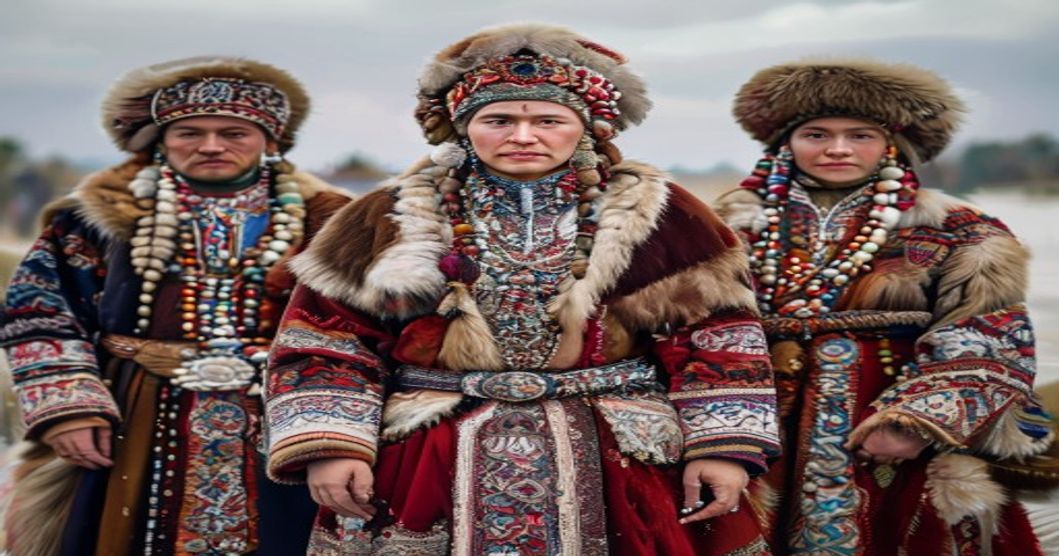
The Origins and Cultural Foundations of Sámi Gákti
The Sámi gákti represents one of the most complex traditional garment systems in Northern Europe, tracing its lineage to pre-Christian Scandinavia and the broader Uralic cultural sphere. Historical records indicate that early Sámi clothing evolved alongside reindeer domestication cycles, adapting to extreme Arctic conditions while encoding clan affiliations, geographic origins, and social status. The term gákti itself derives from Old Norse loanwords merged with Proto-Sámi roots, reflecting centuries of cross-cultural interaction without eroding indigenous textile autonomy.
Archaeological findings from the Komsa and Astuvansalmi cultures reveal that early Sámi tailoring relied on animal hide construction before transitioning to woven wool and reindeer hair. Regional dialects split the garment into mountain Sámi (fjällsamisk) and forest Sámi (skogssamisk) traditions, each maintaining distinct silhouettes, fastening mechanisms, and decorative boundaries that functioned as wearable cartography across Sápmi.
Decoding the Symbolism in Traditional Patterns
Color Significance and Regional Identity
Chromatic coding in Sámi gákti operates through strict regional syntax rather than arbitrary aesthetic choices. Mountain Sámi garments predominantly utilize deep blue (järntvättblå) achieved through iron-rich mordants and repeated dye baths, while forest Sámi communities favor crimson reds extracted from kråkbär (crowberries) and alder bark. Yellow accents derived from birch bark or lichen indicate trade route proximity, whereas green threads appear exclusively in southern Sámi variants where agricultural contact intensified.
The placement of colored ribbons follows a mathematical progression tied to cardinal directions and seasonal migration routes. Blue borders on the left sleeve denote western fjord access, while red bands on the right shoulder signal inland hunting grounds. These chromatic markers functioned as non-verbal communication systems before standardized Sámi orthography emerged in the eighteenth century.
Geometric Motifs and Spiritual Narratives
Sámi textile decoration deliberately avoids anthropomorphic representation, adhering to aniconic principles rooted in animist cosmology. Diamond patterns (ruvddát) map reindeer migration corridors, zigzag lines (čákčal) represent lightning and seasonal thunderstorms, while interlocking squares symbolize the four quarters of the Sámi drum used by noaidi (shamans). These motifs are not merely decorative but serve as mnemonic devices for oral history transmission.
The cross-shaped embroideries found in southern Sámi gákti predate Christian influence by centuries, originally representing the sacred fire triangle and its surrounding smoke vents. When Christian missionaries arrived, indigenous artisans deliberately preserved the geometric structure while recontextualizing it within syncretic burial practices, ensuring continuity of ancestral cosmological mapping through textile language.
The Lost Crafts: Weaving, Embroidery, and Material Science
Traditional Textile Techniques and Natural Dyes
Gákti production requires mastery of lållaklæde, a tightly woven wool fabric created using horizontal tension looms that compress threads to achieve windproof density. The weaving process demands precise temperature control during fiber preparation, as reindeer hair must be carded in specific humidity ranges to prevent felting. Natural dye extraction follows lunar cycles and seasonal harvest windows, with iron sulfate mordants traditionally sourced from bog deposits near ancient smelting sites.
Embroidery techniques vary by region but universally employ chain stitch (kjedeosys) and couching methods that allow fabric to remain flexible during movement. The thread tension is deliberately calibrated to match reindeer hide elasticity, ensuring the garment expands and contracts without seam failure during extreme temperature fluctuations.
Regional Tailoring Standards and Wearership Rules
Gákti construction follows rigid sartorial codes that dictate sleeve length, collar height, and belt width based on geographic coordinates and generational lineage.
Meaning of Sami Traditional Costumes: Cultural & Historical Context
Origins of the Gákti in Sápmi History
The gákti emerged during the 12th century as a functional adaptation to subarctic survival demands. Early weavers utilized reindeer hair and wool blends to create wind-resistant layers for nomadic routes. Archaeological finds in Norrbotten peat bogs confirm plant-based mordants stabilized fast coloration against UV degradation. This textile technology enabled seasonal migration across taiga ecosystems without thermal loss.
Evolution Through Colonial and Modern Eras
17th century missionary policies actively suppressed indigenous dye patterns to enforce Christian conformity. 19th century assimilation laws mandated Swedish/Norwegian/Finnish naming conventions on garment labels. Post-1970s cultural revival movements restored traditional stripe sequences across four regional clusters. Contemporary textile archives now preserve pre-colonial weaving techniques through digitized pattern databases.
Color Symbolism and Regional Identity
Blue hues derive from bilberry extract and signify coastal fishing communities in Nordland. Red dyes utilize madder root and denote inland reindeer herding territories near Kautokeino. Yellow tones originate from birch bark and mark mountain dwelling groups in Jotunheimen. Black bases employ iron-rich soil to represent ancestral burial sites and spiritual grounding.
Geometric Patterns and Ancestral Codes
Wavy lines map ancient waterways used during spring calving seasons. Spiral motifs track reindeer migration corridors across Sápmi highlands. Triangle clusters encode clan lineage through matrilineal inheritance records. Straight bands delineate territorial boundaries between nomadic pastoral groups and agricultural settlers.
Accessories and Functional Adornments
Fur-lined boots incorporate caribou leg sinew for flexible joint movement during hunting expeditions. Silver brooches ( goahti pins) secure garments while displaying matrilineal jewelry inheritance. Fur hats incorporate wolf tails to grant stealth during predator encounters. Silver pendants contain dried moss to regulate body temperature in sub-zero conditions.
Social Structure and Spiritual Significance
Reading Age, Marital Status, and Clan Affiliation
Youth gákti excludes metal embellishments to prevent theft during seasonal camps. Wedding attire adds red velvet panels to signify fertility contracts between nomadic groups. Elder garments replace bright dyes with faded tones to reflect knowledge transfer phases. Clan emblems appear on shoulder patches rather than central chest areas to avoid spiritual blockage.
Shamanic Motifs and Ancestral Connections
Reindeer antler carvings on belt loops map ancient migration corridors across taiga ecosystems. Raven feather trims channel Váibmá (spirit guides) during winter solstice ceremonies. Copper wire weaving mimics lightning patterns to invoke thunder deity protection. Burial shrouds use reverse-stitched seams to allow soul return to sacred burial grounds.
Preservation and Contemporary Relevance
Modern Revival of Traditional Sami Textile Arts
University textile programs in Tromsø and Kautokeino archive pre-1900 dye recipes using spectroscopic analysis. Digital loom technology now replicates hand-woven reindeer hair at industrial scale without losing structural integrity. Museum loans restrict wet cleaning to preserve historical pollen and microbial residue. Apprenticeship grants fund three-year mastercraft training under certified elders.
Authenticity Standards and Cultural Appropriation Risks
Nordic patent offices reject non-indigenous trademark claims on traditional stripe configurations. Fair trade certifications require proof of Sámi ownership for commercial textile exports. Fast fashion replicas often use synthetic dyes that irritate sensitive skin and fade within weeks. Legal frameworks in Norway and Finland mandate royalty payments to Sámi Parliament bodies.
Ethical Support for Indigenous Sami Artisans
Direct purchasing platforms eliminate middleman markups that historically devalued hand-stitched garments. Blockchain tracking verifies raw material sourcing from Sámi-owned reindeer pastures. Community workshops reinvest profit margins into youth language immersion programs. International galleries now prioritize co-curated exhibitions over extractive documentation.
Frequently Asked Questions
What is Meaning of Sami Traditional Costumes?
The meaning of Sami traditional costumes lies in their deep cultural significance, representing the identity, heritage, and regional origins of the Sami people across Scandinavia and Russia. These garments, known as “gákti,” feature intricate patterns, colors, and accessories that denote clan, marital status, and local traditions, serving as a living symbol of resilience and cultural preservation.
Key facts about Meaning of Sami Traditional Costumes
Key facts include: traditional Sami clothing is highly regional with distinct color codes and patterns; the gákti is typically made from reindeer fur, wool, or cotton; silver jewelry and specific hat styles indicate marital status; and the designs have remained largely unchanged for centuries, now recognized by UNESCO as an important part of intangible cultural heritage.