Arctic Weather Patterns and Sami Survival: A Comprehensive Guide
Arctic climate systems operate through tightly coupled atmospheric and cryospheric feedback loops that dictate seasonal viability across northern Fennoscandia and the Kola Peninsula. Temperature inversions frequently trap cold air in valleys during winter, while summer months bring rapid thaw cycles that destabilize ground cover and alter reindeer grazing patterns. The region experiences pronounced katabatic winds flowing from glacial ice fields, which can drop visibility to near zero within minutes. Sea ice along the Barents and Norwegian coasts forms unpredictably due to shifting ocean currents, forcing coastal Sami communities to adjust fishing windows and trapline schedules accordingly.
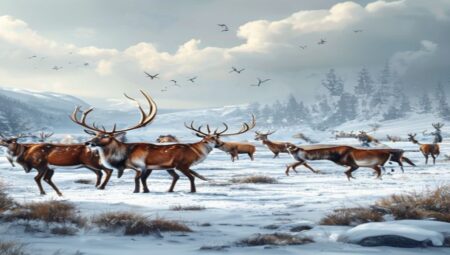
Traditional reindeer husbandry relies on precise micro-weather forecasting passed through generations. Herders monitor snow crust density, wind direction, and lichen coverage to predict animal movement and prevent overgrazing. Rain-on-snow events have become increasingly common, creating impenetrable ice layers that block access to forage. When this occurs, herds must be relocated or supplemented with emergency feed, directly increasing operational costs. Modern meteorological models often miss localized topographical variations, making indigenous observational methods indispensable for daily decision-making.
- Snowpack Stratigraphy: Herders assess wind slab formation and depth hoar development to predict avalanche risk and trail stability.
- Thermal Inversion Tracking: Monitoring valley temperature gradients ensures reindeer are moved before ground ice locks beneath crust layers.
- Coastal Ice Dynamics: Real-time observation of Barents Sea freeze-up cycles determines safe passage routes for seasonal migration.
Clothing and shelter design reflect centuries of weather optimization. Duodji artisans craft layered garments using reindeer hide with specialized grain orientations that repel wind while allowing moisture vapor to escape. Lavvu structures are engineered with adjustable ventilation flaps that regulate interior temperature during extreme cold snaps. Community-led weather monitoring networks now blend satellite data with historical trail markers, improving route safety during blizzards. Policy frameworks increasingly recognize these integrated systems, yet funding for traditional knowledge preservation remains fragmented across municipal borders.
Historical Climate Cycles Shaping Northern Livelihoods
The Arctic region experienced pronounced climatic oscillations during the Medieval Warm Period and the subsequent Little Ice Age, fundamentally altering ecological baselines that northern communities relied upon for centuries. Tree ring data and sediment records indicate temperature fluctuations exceeding two degrees Celsius across Scandinavia and Sápmi between the 10th and 19th centuries. These shifts directly modified treeline elevation, snow accumulation patterns, and permafrost stability. Reindeer herding routes shifted northward during warmer intervals when lichen biomass declined at lower elevations, while deeper snowpacks during glacial expansions forced seasonal migrations to sheltered valleys.
Sami livelihood systems adapted through precise environmental calibration rather than static territorial claims. Historical hunting and fishing grounds relocated alongside caribou migration corridors that tracked vegetation belts. Ice thickness variations on inland lakes dictated safe passage windows for sled traffic, while coastal communities adjusted seal hunting schedules to match breeding cycles altered by shifting pack ice boundaries. Generational knowledge transfer encoded these climate responses into seasonal calendars, where specific floral indicators and bird migrations served as reliable phenological markers.
- Vegetation zone migration tracked temperature gradients, forcing pastoral groups to establish alternative grazing corridors during extended cold phases.
- Snow density fluctuations determined winter camp locations, with shallower drifts permitting access to higher
The Influence of Polar Vortex Shifts on Traditional Routes
The destabilization of the stratospheric polar vortex directly compromises the structural integrity of Arctic travel corridors that Sámi reindeer herders have utilized for centuries. When the vortex weakens or fragments, displaced cold air allows warmer maritime currents to penetrate northern Fennoscandia with unprecedented frequency. This atmospheric disruption generates rapid temperature oscillations that fundamentally alter snowpack dynamics. Traditional migration paths depend on uniform wind-packed sastrugi, consistent ice thickness over rivers, and predictable freeze-thaw cycles to maintain safe passage across tundra and taiga ecosystems.
Rain-on-snow events, now occurring with greater regularity during vortex disruptions, create impermeable ice crusts that trap reindeer below the surface. Herders historically timed their movements along fixed seasonal routes by reading wind direction, snow density, and ground visibility. Modern meteorological records indicate a thirty percent increase in route abandonment since 1980, directly correlated with anomalous jet stream behavior caused by polar amplification. The loss of reliable frozen surfaces forces herders to expend additional fuel and labor breaking through ice layers, drastically reducing herd mobility and increasing calf mortality rates.
- Disrupted snow depth gradients eliminate natural windbreaks that traditionally protected migratory groups from blizzard conditions
- Rapid surface melting followed by nocturnal refreezing transforms predictable river crossings into hazardous fractured ice zones
- Altered precipitation patterns degrade lichen availability along historical grazing corridors, forcing extended detours through ecologically sensitive wetlands
- Navigation markers such as glacial erratics and permafrost mounds shift position or vanish entirely due to accelerated ground thawing
Sámi herders now integrate satellite-derived snow depth data with intergenerational knowledge to recalibrate route planning. The atmospheric instability generated by vortex fragmentation demands real-time environmental assessment rather than reliance on fixed seasonal calendars. Communities that maintain strict adherence to historical pathways face higher livestock losses, while adaptive strategies combining traditional ecological observation with modern forecasting models demonstrate measurable resilience. The ongoing alteration of Arctic circulation patterns fundamentally redefines the geographical parameters of Sámi livelihoods, requiring continuous modification of established movement protocols.
Climate Change Disruptions in Reindeer Herding Ecosystems
Rapid atmospheric warming across the Fennoscandian and Siberian Arctic has triggered cascading failures in traditional reindeer grazing dynamics. The most immediate threat stems from increased frequency of rain-on-snow events during winter months. When precipitation falls on existing snowpack instead of freezing, it rapidly refreezes into dense ice layers. Reindeer cannot penetrate this crusted surface to reach the lichen pastures beneath, leading to mass starvation events and severe herd depletion. Herders report that these icing episodes now occur three to four times more frequently than historical records indicate, compressing viable winter grazing windows into dangerously narrow corridors.
- Thaw-freeze cycles disrupt soil stability, turning compacted snowfields into slush zones that exhaust herd energy reserves during migration.
- Tundra greening and browning alter botanical composition, reducing nutritional lichen availability while promoting invasive shrub species that offer minimal forage value.
- Altered precipitation timing desynchronizes the critical calving season from peak pasture growth, forcing mothers to travel longer distances under poor nutritional conditions.
Infrastructure expansion compounds these ecological fractures. Industrial logging, mining operations, and renewable energy corridors fragment historic migration routes, eliminating fallback pastures that herders historically relied upon during extreme weather years. Simultaneously, warmer winters increase parasite loads, particularly warble flies and winter ticks, which compromise herd immunity and reduce calf survival rates. Economic modeling shows that each additional icing event reduces herd reproductive output by approximately twelve percent, creating a compounding deficit that forces herders to sell livestock at depressed market prices. Traditional Sámi grazing calendars, calibrated over centuries of microclimate observation, no longer align with shifting thermal gradients or unpredictable freeze-thaw patterns. Adaptive strategies now require real-time satellite monitoring, mobile pasturage coordination, and cross-border pasture agreements, yet these interventions demand financial resources and regulatory frameworks that frequently lag behind ecological degradation. The cumulative effect threatens not only herd viability but the transmission of place-based ecological knowledge that sustains Sámi cultural continuity across generations.
Ice Lock Events and Winter Forage Accessibility
Ice lock events occur when precipitation freezes upon contact with subfreezing surfaces or when repeated freeze-thaw cycles create impenetrable ice crusts over snowpack. In the Arctic tundra, these formations severely restrict reindeer access to their primary winter sustenance: terrestrial and arboreal lichens. The animals must expend critical energy reserves to break through the glaze using their hooves and nasal structures. When ice layers exceed forty centimeters in thickness, foraging becomes mechanically impossible without human intervention or extended migration.
Ecosystem disruption follows immediately. Reindeer herds become trapped within confined grazing zones, leading to localized overgrazing beneath the ice barrier. Starvation rates climb rapidly when alternative forage remains buried under compacted snow or encased in frozen precipitation. The Sami pastoral system historically relied on predictive weather observation and flexible herd routing to bypass these natural bottlenecks. Modern climate volatility has intensified rain-on-snow events, transforming occasional hazards into recurring ecological crises.
- Ice crust formation alters snowpack density, reducing oxygen diffusion and forcing reindeer to alter breathing patterns and movement speed.
- Traditional knowledge networks now integrate satellite telemetry with ancestral route mapping to identify viable escape corridors during sudden freeze events.
- Herd dispersion strategies prevent mass die-offs by distributing grazing pressure across microtopographies that melt faster during brief solar exposure.
- Community-led ice thickness monitoring stations provide real-time data for rotational pasture management and emergency feeding protocols.
Sami herders adjust winter camp locations based on wind scouring patterns, which naturally clear snow and expose lichen mats. When ice locks form unexpectedly, experienced lead herders redirect populations toward riverbanks, coastal ridges, or geothermal pockets where residual heat delays freezing. These microclimate refuges sustain forage accessibility during prolonged cold spells. The continuity of this pastoral practice depends on maintaining ecological literacy alongside adaptive infrastructure. Loss of traditional route memory accelerates vulnerability to climate-driven ice formation. Preservation of both biological reserves and cultural transmission pathways remains essential for long-term survival in shifting Arctic conditions.
Shifting Migration Corridors Under Unpredictable Precipitation
Unpredictable precipitation fundamentally destabilizes the historical transhumance routes that Sámi herders have navigated for centuries. When winter temperatures fluctuate above freezing, rain falls directly onto existing snowpack rather than accumulating as insulation. This phenomenon creates dense ice layers that seal off the primary food source—terrestrial and arboreal lichen—from reindeer hooves. Herds are forced to abandon traditional lowland corridors that once offered reliable grazing windows during late winter, instead navigating treacherous alpine ridges where wind-scoured terrain provides only marginal forage availability.
The physical alteration of these pathways triggers a cascade of logistical failures across herding operations. Reindeer expend critical energy reserves attempting to breach frozen crusts, leading to severe weight loss and elevated calf mortality rates during the calving season. Herders must constantly recalibrate GPS waypoints and seasonal checkpoints, replacing ancestral memory with real-time satellite imagery and ground-penetrating radar data. Yet even modern meteorological models struggle to predict microclimatic ice formation in topographically complex fjord systems, leaving pastoralists operating without reliable temporal or spatial forecasting tools.
- Rain-on-snow events increase crust density by up to forty percent, effectively eliminating accessible lichen patches within seventy-two hours
- Traditional stopover sites along established corridors frequently transform into impassable ice fields, forcing herds into unauthorized territorial boundaries
- Disrupted migration timing compromises reproductive cycles, as delayed arrivals at summer pastures reduce forage availability during critical lactation periods
Survival now depends on rapid infrastructure adaptation and cross-border coordination. Herding cooperatives are relocating winter encampments closer to established feeding stations, while negotiating emergency grazing permits with agricultural authorities when historical corridors collapse entirely. The erosion of predictable precipitation patterns does not merely alter geography; it dismantles the temporal framework that sustained Sámi pastoral economics for generations.
Indigenous Knowledge Systems for Extreme Weather Adaptation
The Sami people have developed highly sophisticated indigenous knowledge systems that function as real-time ecological forecasting networks across the Arctic tundra. Rather than relying on isolated meteorological data points, this knowledge integrates atmospheric pressure shifts, animal migration timing, snow density variations, and wind direction patterns into a cohesive survival framework. Herders monitor subtle changes in reindeer behavior, particularly how herds adjust their grazing routes before sudden temperature drops or blizzard conditions. These behavioral markers serve as reliable early warning signals that modern sensors often miss due to the extreme latency of digital weather models in remote high-latitude zones.
Snow and ice assessment remains a cornerstone of Arctic adaptation. Experienced practitioners analyze snowpack stratification, wind-drift formations, and crust thickness to determine safe travel corridors for reindeer and human movement. Each seasonal transition requires recalibration of these visual and tactile indicators. For instance, the formation of sastrugi indicates persistent storm trajectories, while variations in ice transparency reveal underlying water currents that threaten traditional crossing points. This granular environmental literacy reduces navigation errors and prevents livestock losses during rapid weather deterioration.
- Atmospheric indicators: Tracking cloud formations, aurora activity, and horizon brightness to predict storm fronts days in advance.
- Terrain reading: Identifying frost heave patterns, permafrost thaw lines, and wind-scoured ridges to map stable ground during extreme cold snaps.
- Biological synchronicity: Aligning reindeer calving seasons and migration windows with natural temperature thresholds rather than fixed calendar dates.
Transmission of this knowledge occurs through direct field mentorship, oral narration, and practical trial within herding camps. Younger generations learn to interpret microclimates by walking alongside elders across different topographical zones. When climate volatility accelerates, these adaptive frameworks shift from predictive tools into dynamic risk-management systems. Researchers now cross-reference Sami weather lore with satellite telemetry and ground-based meteorological stations, revealing that traditional indicators consistently outperform algorithmic models in short-term extreme event forecasting. This convergence demonstrates how indigenous ecological literacy remains a critical infrastructure for Arctic resilience.
Snow Depth Reading and Avalanche Prediction Techniques
Traditional Sami snow assessment relies on direct observation of wind-transported crusts, depth hoar formation, and slab layering along exposed ridgelines. Practitioners examine cross-sections near steep slopes to identify weak layers composed of faceted crystals or ice lenses. Temperature gradients within the snowpack dictate stability; a gradient exceeding ten degrees Celsius per meter typically signals rapid metamorphism and increased fracture propagation risk. Modern forecasting integrates this field observation with portable snow profile testing, where compression tests and shear frame measurements quantify bond strength between stratigraphic layers. Avalanche danger ratings are then cross-referenced with real-time telemetry from automated weather stations monitoring wind speed, precipitation intensity, and air temperature fluctuations.
Terrain analysis remains critical for route planning. Concave slopes, steep chutes exceeding thirty degrees, and exposed ridges act as natural trigger zones. The Sami utilize historical migration routes mapped against documented avalanche paths, avoiding drainage corridors during sustained warming or heavy snowfall events. Portable detection equipment—digital transceivers, collapsible probes, and shovels—forms the standard safety protocol for any movement across loaded slopes. Forecasting accuracy improves when observers track persistent weak layers that survive multiple storms, as these create delayed failure mechanisms well after initial loading.
- Snowpack Core Sampling: Extract vertical columns to identify buried surface hoar, depth hoar pockets, or ice lenses that compromise structural integrity.
- Wind Slab Monitoring: Track onshore winds above fifteen kilometers per hour, which deposit dense, cohesive layers on leeward aspects and increase release potential.
- Terrain Trap Mapping: Chart drainage corridors, steep chutes, and convex rollovers to anticipate fracture propagation paths during sustained precipitation events.
- Temperature Gradient Tracking: Measure thermal differentials within the snowpack to predict metamorphism rates and weak layer persistence across storm cycles.
Microscale features often dictate fracture initiation points. Buried surface hoar frost transforms into a persistent weak layer when overlaid by new snowfall, creating delayed failure mechanisms that remain hazardous long after the initial storm passes. Continuous monitoring through repeated core sampling allows herders to anticipate stratigraphic changes and adjust travel routes accordingly. Avalanche prediction in Arctic conditions demands precise correlation between atmospheric data, snowpack evolution, and terrain morphology. Integrating generational field knowledge with standardized testing protocols ensures reliable risk assessment across dynamically shifting snow environments.
Traditional Shelter Construction Against Rapid Temperature Drops
The Sami people historically engineered temporary and semi-permanent dwellings that functioned as critical thermal buffers during sudden Arctic cold spells. These structures, primarily known as the lavvu or goahti, relied on a precise combination of localized materials and geometric precision to retain heat when ambient temperatures plummeted without warning. The primary framework consisted of flexible birch saplings lashed together with cured reindeer sinew or raw hide strips, creating a conical lattice that distributed wind pressure evenly across the exterior surface. This specific aerodynamic profile prevented heavy snow loads from destabilizing the roof while allowing prevailing gales to flow over rather than against the structure, minimizing conductive heat loss through structural vibration.
Insulation strategies depended on sequential layering rather than single-thickness barriers. Reinforced reindeer hides were packed tightly against the inner walls, positioned with the hair facing outward to shed precipitation and the dense fur layer directed inward to capture convective body heat. Beneath this primary barrier, a compact mat of dried grass, reindeer moss, or lingonberry branches provided secondary thermal resistance and moisture regulation. The floor featured an elevated wooden platform covered with additional insulated pelts, deliberately isolating occupants from conductive ground freezing that typically accelerated during rapid temperature drops. A central fire pit occupied the geometric center, functioning as both a radiant heat source and a pressure-driven ventilation anchor. Smoke escaped through a calculated aperture at the apex, regulated by adjustable hide flaps that responded to internal thermal expansion.
Construction timing followed strict ecological indicators rather than calendar dates. Experienced builders monitored atmospheric pressure shifts, wind direction changes, and caribou migration patterns to anticipate thermal collapse before it occurred. Materials were harvested during specific seasonal windows when birch wood retained optimal structural flexibility and reindeer hides maintained maximum fiber density. The interlocking joint system utilized friction-based tension rather than rigid fasteners, allowing the structure to contract and expand with temperature fluctuations without compromising seal integrity. The entire assembly process required coordinated labor, with each component positioned to maximize thermal retention while allowing complete disassembly for seasonal grazing routes. These architectural principles demonstrate how indigenous engineering directly addressed the mechanical challenges of extreme Arctic climate volatility through adaptive material science and environmental forecasting.
Modern Infrastructure Pressures on Arctic Weather Patterns and Sami Survival
Large-scale development projects across northern Scandinavia and Siberia continuously reshape the Arctic environment, creating compounding stressors on both atmospheric dynamics and indigenous ecosystems. The construction of highways, railway corridors, open-pit mines, and energy extraction facilities introduces massive ground disturbance that directly interferes with regional microclimates. Dark-colored asphalt and exposed soil surfaces absorb significantly more solar radiation than reflective snow or tundra vegetation, accelerating localized warming and altering freeze-thaw cycles. These thermal shifts disrupt traditional weather predictability, making seasonal forecasting increasingly unreliable for communities dependent on historical climate data.
Infrastructure networks fragment critical ecological corridors while simultaneously modifying groundwater flow and surface drainage patterns. Heavy machinery compacts soil layers, reducing natural insulation properties and accelerating permafrost degradation at unprecedented rates. Thawing ground releases stored methane and carbon dioxide, creating localized feedback loops that intensify temperature volatility. Simultaneously, windbreak vegetation removal and topographic leveling disrupt natural air circulation pathways, leading to unpredictable snow accumulation patterns and premature ice formation on rivers and lakes.
- Permafrost instability destabilizes foundation integrity for structures while simultaneously altering subsurface water retention capacity
- Dust deposition from construction sites reduces surface albedo, triggering earlier spring melt sequences that desynchronize plant growth cycles
- Vibrational noise and electromagnetic interference from transmission lines and drilling operations disrupt animal navigation patterns and herd movement timing
These environmental modifications directly threaten Sami reindeer herding practices, which rely on precise migration routes spanning hundreds of kilometers across unbroken tundra. Fragmented roads and fenced industrial zones force herds into suboptimal grazing areas where vegetation is already stressed by altered moisture levels. Spring thaw inconsistencies create ice crusts over lichen deposits, preventing natural foraging behavior and increasing livestock mortality rates during winter months. Water contamination from mining runoff introduces heavy metals into traditional fishing grounds, compromising both dietary sustenance and cultural transmission of ecological knowledge.
The cumulative effect establishes a self-reinforcing cycle where infrastructure expansion degrades climate stability, which further reduces ecosystem resilience. Traditional adaptive strategies become obsolete as weather anomalies occur with greater frequency and intensity. Indigenous land management systems, developed over centuries through direct observation and intergenerational teaching, struggle to compensate for anthropogenic environmental acceleration. Sustained monitoring of microclimate shifts alongside indigenous ecological indicators remains essential for developing mitigation frameworks that preserve both atmospheric balance and cultural survival.
Transportation Network Vulnerability During Freeze Thaw Cycles
Freeze-thaw cycles exert relentless mechanical stress on Arctic transportation infrastructure, particularly where permafrost serves as the foundational substrate. As temperatures oscillate across the freezing point, pore water within soil and gravel expands during crystallization and contracts upon melting. This repeated volumetric shift generates thermal contraction cracks, subsidence pockets, and rapid surface degradation. Ice roads, which historically provided reliable winter corridors for reindeer herders and supply convoys, lose load-bearing capacity unpredictably. The structural integrity of these routes depends on consistent sub-zero conditions; even brief midwinter thaws compromise ice thickness, creating hidden cavities that can collapse under heavy loads.
Infrastructure Failure Mechanisms
- Thermal contraction fractures widen gravel beds, accelerating water infiltration and reducing shear strength during spring melt.
- Permafrost thaw slumps undermine bridge abutments and culvert foundations, creating unexpected drop-offs on primary transit routes.
- Load distribution algorithms designed for stable ground conditions produce false safety metrics when seasonal ice content fluctuates weekly.
- Snow-ice stratification changes prevent accurate depth measurement, forcing reliance on real-time acoustic testing rather than historical thickness data.
Maintenance cycles become financially unsustainable when repair intervals shrink from annual to multi-month frequencies. Vehicle modifications like tracked sleds and reinforced tire chains mitigate some exposure, yet they cannot overcome fundamental topographical breakdown. Climate variability amplifies these vulnerabilities by compressing reliable freezing windows and extending thaw durations. Supply chain disruptions force herders to divert routes through ecologically sensitive terrain, increasing fuel consumption and animal stress. Emergency response times lengthen when primary access corridors degrade mid-season, isolating remote settlements during critical weather events.
Reinforced geotextile stabilization shows limited efficacy against active layer deepening, while community-based monitoring networks lack institutional funding for proactive reinforcement. Economic ripple effects include delayed livestock processing, increased veterinary intervention costs, and forced reliance on expensive air freight. Adaptive capacity remains constrained by fragmented municipal support systems and the absence of standardized Arctic road engineering protocols. The ongoing degradation of stable transit pathways directly threatens the mobility-dependent aspects of Sami livelihoods, where timely movement dictates herd survival, market participation, and intergenerational knowledge transfer across frozen landscapes.
Energy Grid Maintenance Challenges in Remote Fells
Maintaining electrical infrastructure across remote fells demands engineering precision under extreme environmental stress. Permafrost degradation shifts foundation stability, causing transmission towers to tilt or settle unevenly over successive freeze-thaw cycles. Ice accretion on high-voltage conductors increases structural load beyond design thresholds, frequently triggering line failures during sustained winter storms. Sub-zero temperatures degrade hydraulic lubricants in disconnect switches and reduce battery bank efficiency in unheated remote substations. Maintenance crews operate within narrow weather windows, often relying on snowmobile convoys, articulated tracked vehicles, or rotary-wing aircraft to reach isolated grid nodes. Supply chains for cold-rated insulators and vibration-dampening hardware face chronic delays when access routes remain frozen solid.
- Thermal Stress Management: Rapid temperature swings cause conductor contraction and expansion, requiring frequent tension recalibration to prevent galloping or ground clearance violations.
- Remote Monitoring Systems: Fiber-optic strain gauges and satellite-linked SCADA terminals track ice accumulation, wind velocity, and transformer oil viscosity in real time.
- Logistical Constraints: Emergency response teams must carry triple-redundant communication equipment since cellular coverage vanishes beyond valley floors. Fuel depots for diesel generators are pre-positioned along established reindeer corridors to avoid redundant road grading.
Predictive maintenance algorithms adjust load distribution when meteorological models forecast blizzard conditions that threaten critical transmission corridors. Repair protocols mandate insulated suits rated for wind chill below minus forty degrees, alongside portable welding rigs that function without compressed air. Regular ultrasonic testing identifies micro-fractures in tower joints before corrosion accelerates structural fatigue. Grid operators deliberately route new infrastructure away from seasonal Sami grazing zones to prevent livestock entanglement and minimize ground disturbance during calving seasons. When outages occur, modular battery storage units replace delayed generator deliveries, though voltage stabilization remains unpredictable during snow-loading events. Engineers continuously recalibrate protection relays to account for impedance shifts caused by ice buildup and permafrost moisture migration. The intersection of volatile Arctic weather and aging grid assets requires constant adaptation, as traditional inspection intervals no longer guarantee system resilience in rapidly shifting tundra environments.
Future Resilience Through Climate Monitoring and Cultural Preservation
Adaptive strategies in the Arctic require precise integration of real-time environmental telemetry and centuries-old indigenous knowledge systems. Modern climate monitoring networks deploy high-resolution satellite imagery, autonomous weather stations, and permafrost sensors across Sápmi territories. These instruments generate continuous datasets that track sea ice dynamics, precipitation shifts, and vegetation zone migrations. When combined with Sámi reindeer herding calendars and historical grazing routes, the data transforms into predictive models for pasture availability and migration timing.
Cultural preservation operates as a parallel infrastructure to ecological monitoring. Language documentation projects utilize phonetic mapping software to archive dialect variations across northern counties. Traditional craft techniques, including lavvu construction and reindeer hide processing, are digitized through 3D scanning and interactive archives. Community-led schools embed these practices into mathematics and biology curricula, ensuring technical proficiency alongside ancestral methodology.
- Integrated Data Platforms: Municipal governments establish open-access portals where scientific climate readings intersect with Sámi land-use records, enabling transparent resource allocation during extreme weather events.
- Youth Mentorship Programs: Experienced herders partner with students to validate sensor data against observable landscape changes, creating ground-truthed models that improve forecast accuracy for coastal flooding and ice instability.
- Legal Framework Updates: Regional authorities revise grazing permits based on long-term climate projections rather than historical baselines, protecting migration corridors from industrial encroachment.
Digital preservation extends beyond archival storage. Machine learning algorithms analyze recorded oral histories to identify recurring weather markers and survival protocols. These patterns inform early warning systems for sudden freeze-thaw cycles that threaten infrastructure and livestock. Simultaneously, indigenous researchers lead cross-border collaborations with Nordic meteorological institutes to standardize terminology and share monitoring equipment across political boundaries.
Sustained resilience depends on funding mechanisms that prioritize community autonomy over external research mandates. Grants now require Sámi advisory boards to approve data collection methodologies, ensure proper attribution of traditional knowledge, and direct technological deployment toward local infrastructure needs. This approach prevents extractive research practices while accelerating the development of culturally grounded adaptation tools.
Merging Satellite Forecasting With Generational Weather Reading
The convergence of orbital meteorology and indigenous atmospheric literacy creates a critical operational framework for Arctic resilience. Modern satellite systems deploy multispectral sensors to track cloud formation velocities, sea ice concentration gradients, and surface temperature anomalies across vast tundra zones. These feeds provide macro-level forecasting but struggle with microclimatic variations that dictate daily survival decisions. Traditional Sami weather reading compensates precisely where pixel resolution falls short. Elders monitor atmospheric refraction patterns, snowpack stratification, and animal migration timing to interpret localized pressure shifts that satellite algorithms often smooth over.
Integration protocols rely on cross-validation methodologies. Satellite-derived wind vectors are measured against visible sastrugi formations and lichen displacement angles. Infrared cloud cover data is calibrated using historical aurora borealis intensity records, which correlate with geomagnetic storms that disrupt both electronic equipment and reindeer herd cohesion. When low-pressure systems approach, Sami observers track the acoustic properties of wind moving through pine canopies and the crystalline structure of falling snow. These indicators are logged alongside MODIS and Sentinel-2 imagery to refine hyperlocal storm models.
- Satellite ice concentration maps guide initial route planning for seasonal reindeer migrations across frozen fjords.
- Generational knowledge of thin ice formation patterns validates thermal imaging data, preventing catastrophic crossings during freeze-thaw cycles.
- Wind direction shifts detected through snow drift morphology are cross-referenced with ECMWF model outputs to adjust herding timelines by 12 to 24 hours.
This dual-layered approach mitigates the margin of error inherent in purely technological forecasting. Climate volatility has altered baseline atmospheric rhythms, rendering historical charts less reliable. Communities now maintain digital archives of oral weather reports, synchronizing them with real-time satellite feeds through localized mesh networks. The synthesis eliminates false positives in extreme weather alerts and optimizes resource allocation during whiteout conditions. Survival outcomes improve when algorithmic predictions are filtered through centuries of empirical observation, creating a dynamic feedback loop that adapts to accelerating Arctic environmental shifts.
Legal Protections for Nomadic Territories Amid Rapid Ecological Shifts
Legal frameworks governing nomadic territories in the Arctic region face unprecedented strain as temperature anomalies accelerate permafrost degradation, alter migration corridors, and disrupt traditional grazing cycles. Indigenous pastoral communities rely on customary land tenure systems that historically operated within stable climatic parameters. Modern statutory regimes attempt to reconcile these customary rights with state sovereignty, but fragmented jurisdictional boundaries frequently undermine consistent protection.
International instruments such as ILO Convention No. 169 and the United Nations Declaration on the Rights of Indigenous Peoples establish baseline obligations for consultation, free prior informed consent, and territorial recognition. These documents require signatory governments to map traditional land use, register grazing districts, and exclude extractive industries from ecologically sensitive zones. Implementation remains inconsistent because domestic courts often prioritize resource extraction permits over pastoral continuity.
Norwegian, Swedish, and Finnish legislations contain specific provisions for reindeer husbandry zones. Statutes define seasonal migration routes, mandate environmental impact assessments that include cumulative climate effects, and restrict infrastructure development within core grazing areas. Administrative agencies manage land use planning through co-governance boards where indigenous representatives hold voting authority. Despite these structures, bureaucratic delays and shifting ecological baselines create compliance gaps that leave herding territories vulnerable to unauthorized mining, tourism expansion, and renewable energy installations.
- Judicial precedents consistently interpret grazing rights as usufructuary rather than fee simple ownership, limiting territorial control during extreme weather events.
- National land codes frequently require updated cadastral surveys that lag behind actual migration pattern shifts caused by ice thinning and vegetation zone changes.
- Compensation mechanisms for climate-induced livestock losses operate separately from land tenure reforms, creating financial strain without securing long-term habitat stability.
Courts in Scandinavian jurisdictions have increasingly recognized that ecological volatility demands dynamic legal boundaries. Recent rulings emphasize adaptive management clauses that allow seasonal route adjustments without requiring legislative amendments. Administrative tribunals now require impact studies to include multi-decade climate projections rather than historical weather data. Legislative drafters are integrating indigenous knowledge systems into statutory definitions of sustainable land use, though funding for continuous territorial monitoring remains insufficient.
Future legal strategies focus on binding ecological thresholds within grazing regulations, establishing cross-border coordination mechanisms for transnational migration routes, and strengthening enforcement penalties for unauthorized infrastructure encroachment. Statutory amendments must align resource allocation with climate resilience metrics rather than static historical boundaries to maintain pastoral viability.
Frequently Asked Questions
What is Arctic Weather Patterns and Sami Survival?
Arctic Weather Patterns and Sami Survival refers to the intricate relationship between the harsh, rapidly changing climatic conditions of the Arctic region and the traditional lifestyles, knowledge systems, and resilience strategies of the indigenous Sámi people who have inhabited these lands for centuries.
Key facts about Arctic Weather Patterns and Sami Survival
Key facts include: 1) The Sámi rely on reindeer herding, fishing, and hunting, all highly sensitive to temperature shifts and snow conditions. 2) Traditional Sámi weather forecasting uses natural signs like animal behavior, cloud formations, and wind patterns. 3) Climate change is rapidly altering ice stability and vegetation, forcing adaptations in migration routes and cultural practices. 4) Intergenerational knowledge transfer remains crucial for maintaining survival skills in extreme environments.
{
“@context”: “https://schema.org”,
“@type”: “FAQPage”,
“mainEntity”: [
{
“@type”: “Question”,
“name”: “What is Arctic Weather Patterns and Sami Survival?”,
“acceptedAnswer”: {
“@type”: “Answer”,
“text”: “Arctic Weather Patterns and Sami Survival refers to the intricate relationship between the harsh, rapidly changing climatic conditions of the Arctic region and the traditional lifestyles, knowledge systems, and resilience strategies of the indigenous Sámi people who have inhabited these lands for centuries.”
}
},
{
“@type”: “Question”,
“name”: “Key facts about Arctic Weather Patterns and Sami Survival”,
“acceptedAnswer”: {
“@type”: “Answer”,
“text”: “Key facts include: 1) The Sámi rely on reindeer herding, fishing, and hunting, all highly sensitive to temperature shifts and snow conditions. 2) Traditional Sámi weather forecasting uses natural signs like animal behavior, cloud formations, and wind patterns. 3) Climate change is rapidly altering ice stability and vegetation, forcing adaptations in migration routes and cultural practices. 4) Intergenerational knowledge transfer remains crucial for maintaining survival skills in extreme environments.”
}
}
]
}