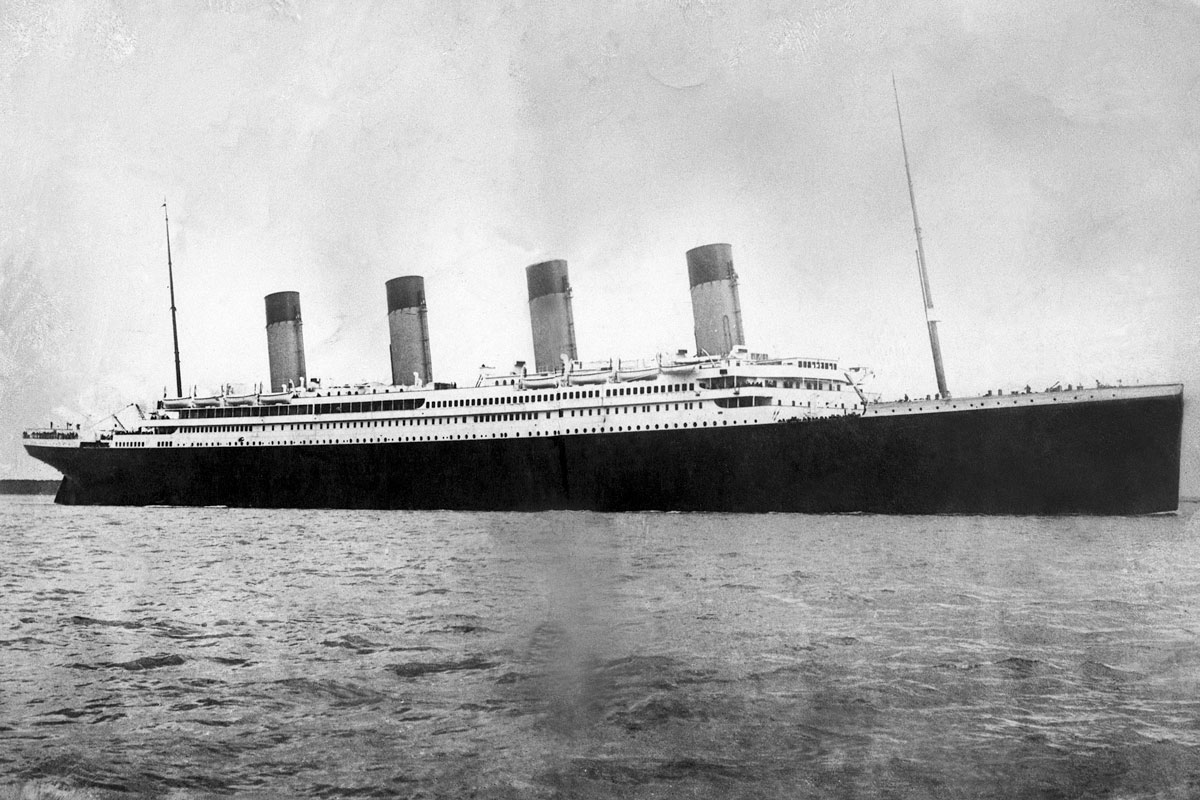
On the night of Sunday, April 14, 1912, the RMS Titanic traversed the North Atlantic on its historic maiden voyage from Southampton to New York. Few realized that within hours, the vessel would strike an iceberg and plunge into infamy as one of the most renowned maritime disasters. At launch, the Titanic embodied the apex of luxury and engineering, equipped to nourish over 2,200 passengers and crew through a weeklong crossing. The food served varied by class, ranging from French-inspired fine dining to robust fare designed to sustain travelers during the voyage. Through surviving menus and archival records, we glimpse how dinner unfolded on the night the ship sank.
Credit: © EMMANUEL DUNAND—AFP/Getty Images
First Class
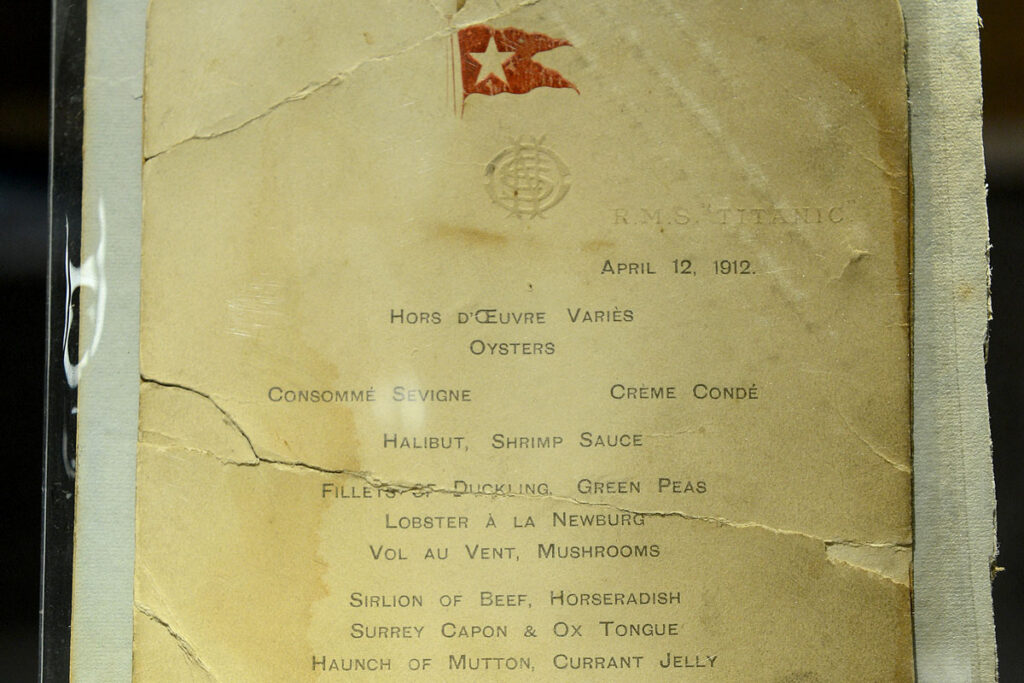
First-class diners enjoyed an elaborate multicourse experience that captured Edwardian haute cuisine at its peak. A surviving menu from April 14, 1912, preserved in the Royal Museums Greenwich collection, has been explored in depth by researchers and writers, offering a clear view of the evening’s arrangements. The course began with light starters and soups, including assorted hors d’oeuvres, oysters, consommé Olga—a clear beef broth finished with julienned vegetables and a splash of port—and cream of barley. The fish course featured salmon with a buttery mousseline sauce and cucumber.
The entrées provided a range of choices: filet mignon Lili; sauté of chicken Lyonnaise; vegetable marrow farci; lamb with mint sauce; roast duckling with apple sauce; and beef sirloin with potatoes, presented in a château-style. Side dishes complemented the plates with green peas, creamed carrots, boiled rice, and both parmentier and boiled new potatoes for varying textures.
Dessert followed with lighter courses and cold dishes in the French haute tradition, including punch romaine, roast squab with cress, cold asparagus vinaigrette, pâté de foie gras, and celery. If room remained, a vast sweets selection closed the meal: Waldorf pudding, peaches in Chartreuse jelly, chocolate and vanilla éclairs, and French ice cream.
Second Class
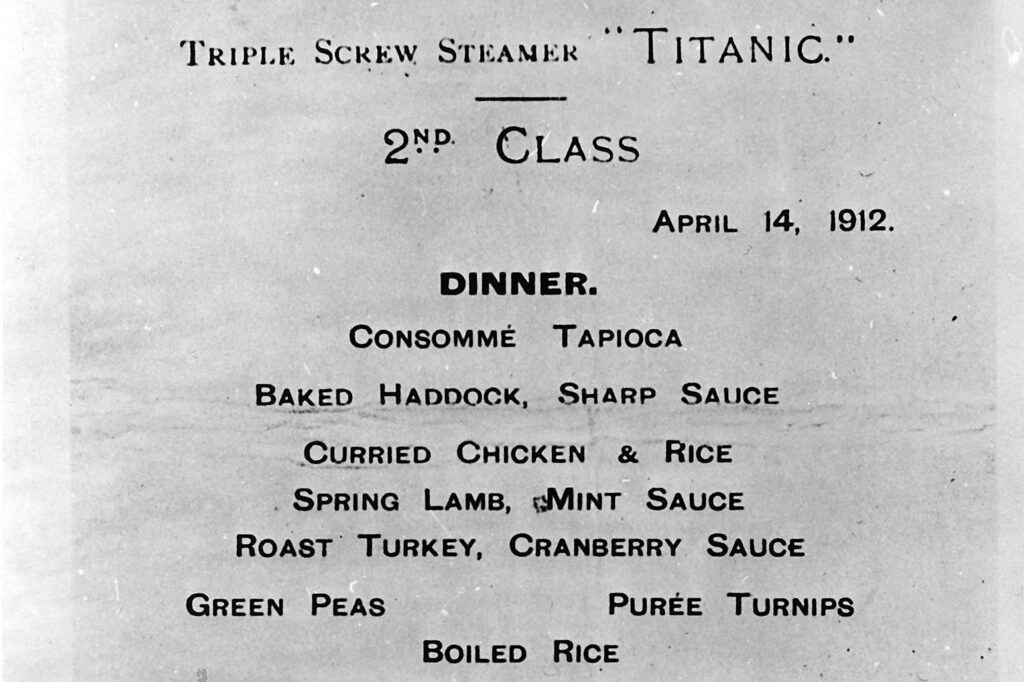
Second-class travelers encountered a more traditional British-inspired menu, though still organized into multiple substantial courses. The meal began with consommé tapioca, a light soup lightly thickened with tapioca. A fish course followed—baked haddock with a tangy sauce—then main dishes rooted in familiar fare: curried chicken and rice, spring lamb with mint sauce, and roast turkey with cranberry sauce. Vegetables and starches accompanied the mains, including green peas, pureed turnips, boiled rice, and both boiled and roasted potatoes.
Desserts and sweets rounded out the progression, featuring wine jelly and plum pudding, alongside coconut sandwich cookies and American ice cream. To finish, passengers could select from a small array of nuts, fresh fruit, cheese, biscuits, and coffee.
Third Class
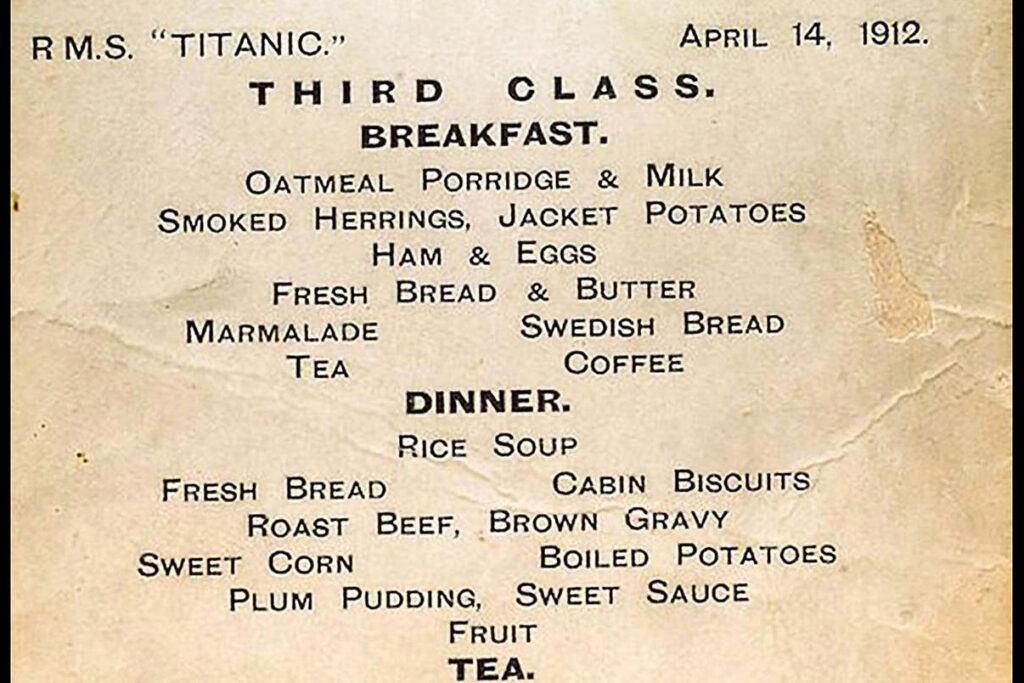
Third-class menus from the Titanic are rarer, with most details surviving through provisioning records and later reconstructions. What is known suggests the final meal in steerage leaned toward a heartier, simpler fare. The White Star Line’s provisioning plans point to a final meal that likely included ragout of beef with potatoes and pickles, stewed fruit, fresh bread and butter, currant buns, and tea. Although modest compared with upstairs service, the meal was designed to be filling and respectable for working-class travelers on the doomed voyage.