The Context of the Great Emu War
In late 1932, Western Australia faced a severe ecological and agricultural crisis that triggered an unprecedented military intervention. Following World War I, the Australian government established soldier settlement schemes, allocating vast tracts of fertile land in the Campion and Merredin districts to veterans. These farmers struggled with harsh conditions, poor soil quality, and inadequate infrastructure. Compounding their difficulties, Australia’s emu population surged to approximately 20 million birds following favorable breeding seasons and reduced predator numbers. When thousands of emus migrated northward toward the wheat belt during the summer breeding season, they systematically destroyed crops, breached irrigation channels, and trampled farmsteads. The economic devastation prompted local farmers to petition the government for military assistance, leading to the deployment of the Royal Australian Artillery.
Military Deployment and Tactical Setup
The Royal Australian Artillery Assignment
The Australian Defense Department authorized Operation Emu under the command of Major G.P.W. Meredith, a seasoned military officer with experience in machine gun warfare. Meredith was equipped with two Lewis light machine guns, a standard semi-automatic weapon capable of firing up to 475 rounds per minute, along with an initial supply of 10,000 rounds of ammunition. The deployment represented a rare instance of conventional military forces being tasked with wildlife population control rather than combat operations. Meredith’s mandate was straightforward: neutralize the emu threat to protect agricultural output and restore farm viability.
Initial Engagements and Emu Counter-Tactics
The first major engagement occurred on November 2, 1932, near Campion. Meredith positioned his troops alongside a dirt track, anticipating a direct emu charge. However, the birds demonstrated remarkable situational awareness, scattering into small, dispersed groups upon detecting the military presence. The Lewis guns proved highly ineffective against such decentralized targets, with bullet trajectories frequently missing or striking only one or two birds per burst. Historical records indicate that early firing rounds resulted in minimal casualties despite massive ammunition expenditure, highlighting a critical mismatch between conventional firepower and avian evasion strategies.
Operational Challenges and Strategic Adjustments
Mobility Limitations and Terrain Obstacles
Australian military trucks quickly proved inadequate for tracking emus across the rugged Kimberley and Wheatbelt landscapes. The birds could outrun vehicles over sand dunes, rocky outcrops, and dense scrubland, while mechanical breakdowns further hampered pursuit efforts. Emus are capable of running at speeds exceeding 50 kilometers per hour and can navigate terrain that would immobilize motorized transport. Furthermore, the presence of barbed-wire fences and irrigation infrastructure forced emus to split into smaller clusters, reducing target density and complicating artillery coordination. The military’s reliance on wheeled platforms instead of mounted or aerial reconnaissance severely limited tactical flexibility.
Tactical Adaptations and Ammunition Expenditure
Recognizing the failure of conventional ambush tactics, Major Meredith shifted to a more dynamic approach, attempting to herd emu concentrations into open firing zones. Despite these adjustments, the operation remained highly inefficient. By mid-November, military reports documented the destruction of only a few hundred emus against thousands of rounds fired. The logistical strain became apparent as ammunition reserves dwindled rapidly, and fuel shortages grounded several support vehicles. Agricultural officials noted that crop damage continued unabated, rendering the military campaign economically unsustainable.
The Aftermath and Military Withdrawal
Official Records and Casualty Estimates
On November 8, 1932, the Australian government officially terminated Operation Emu after determining that military intervention could not achieve population control objectives. Official dispatches recorded approximately 2,500 emus killed, though independent agricultural surveys suggested actual mortality rates were significantly lower due to wounded birds escaping into remote habitats. The campaign consumed nearly all allocated ammunition and required substantial logistical support without delivering proportional ecological or economic returns. Major Meredith later described the operation as a testament to avian resilience rather than military failure.
Long-Term Ecological and Agricultural Impact
The withdrawal of armed forces marked a decisive shift toward civilian-led wildlife management strategies. Subsequent crop recovery in the Campion and Merredin regions demonstrated that emu migration was seasonal rather than permanent, allowing farmers to implement fencing modifications, controlled burning, and targeted hunting permits instead of military force. The event underscored the limitations of applying conventional warfare doctrine to ecological management. Today, the Great Emu War remains a documented case study in resource allocation, demonstrating how environmental dynamics often override tactical preparedness.
Origins of the Conflict
The confrontation between Australian forces and emus in Western Australia began in November 1932, driven by severe agricultural distress in the Wheatbelt region. Following World War I, the government implemented soldier settlement schemes, relocating over 600 ex-military personnel to cultivate wheat near Campion and Merredin. By late 1932, an estimated 20,000 emus migrated into these farmlands following unseasonal rains, causing catastrophic damage to crop yields and fencing infrastructure.
Post-War Farming Settlements
Farmers petitioned the Department of Defence for military intervention, citing livestock losses and threatened food supplies
Long before modern warfare and high-tech drones, Australia faced a stubborn challenge from an avian adversary. A severe drought in 1932 drove tens of thousands of emus from their habitats toward farmland in search of water, coinciding with their breeding season and triggering widespread crop damage.
The emus, already classified as vermin despite their status as a native species and their symbolic place on the national coat of arms alongside the kangaroo, proved to be formidable targets. What followed was an unprecedented chapter in rural history: a government-led effort involving World War I veterans who were equipped with machine guns in an attempt to curb the emu population.
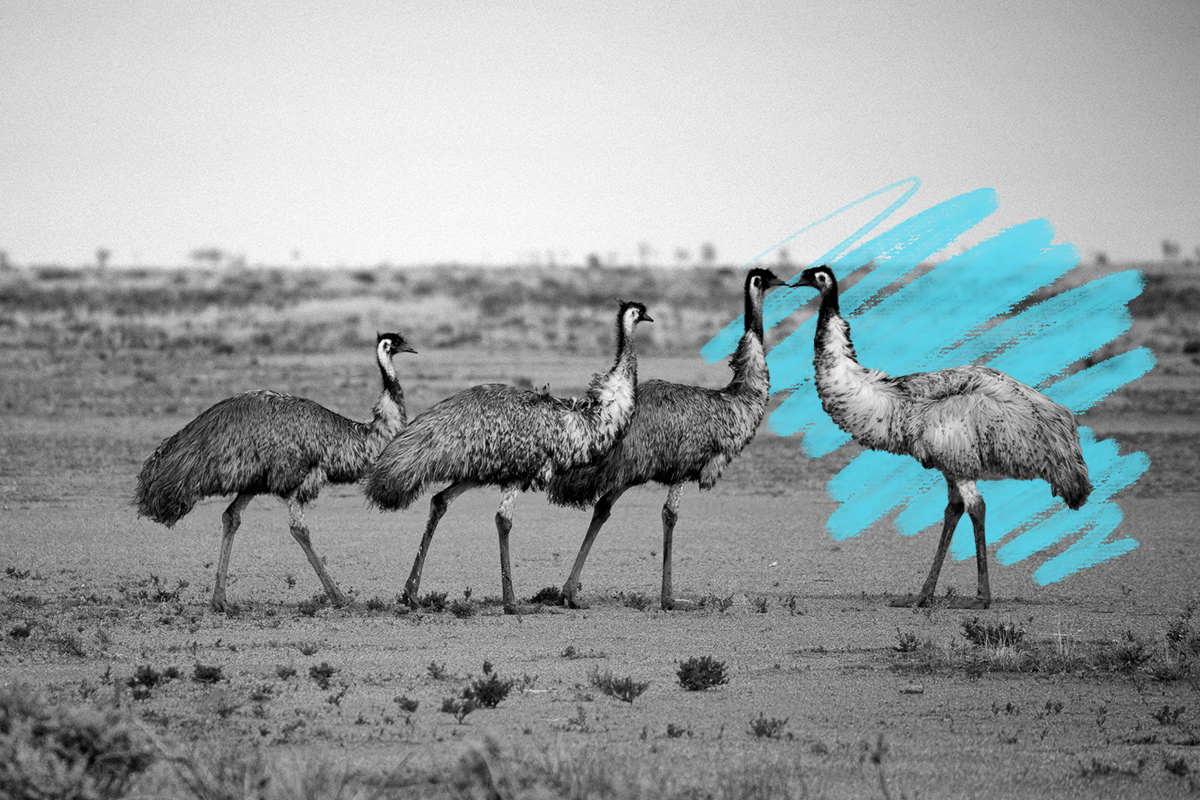
Despite the heavy equipment and manpower, the battle unfolded as a tactical mismatch. The emus employed guerrilla-like mobility, breaking into numerous small groups that rendered large-scale, conventional firing impractical and costly. As D. L. Serventy, an Australian ornithologist, noted, the emu command appeared to anticipate and counter the soldiers’ moves, dispersing into elusive units and rendering the operation uneconomical.
After about a month, the field force withdrew with little to show for their efforts. The conflict went down in history as the Great Emu War, a title that underscores the birds’ surprising resilience. Though casualties were heavy on both sides, the emus ultimately endured and continued to thrive in the Australian landscape.