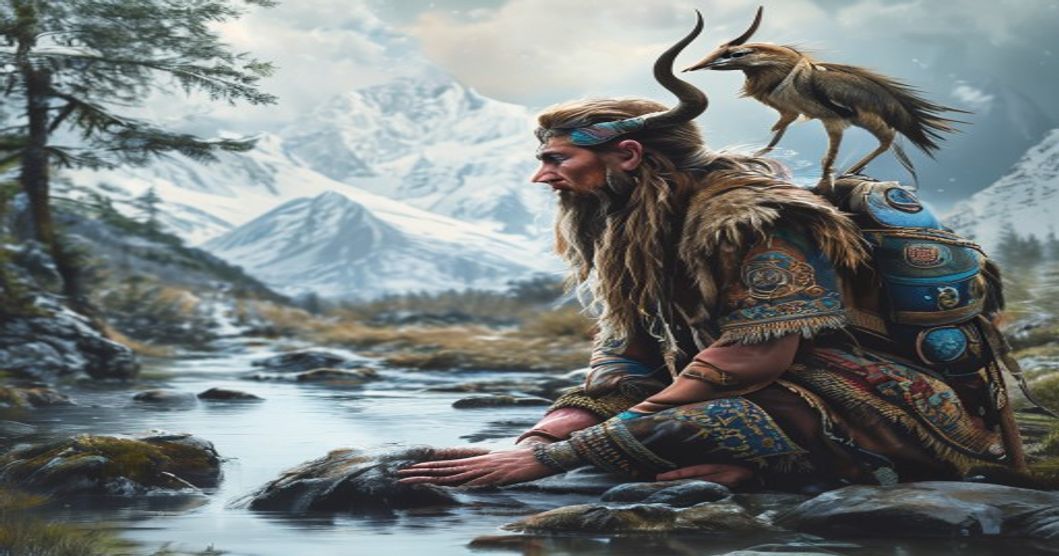
Foundations of Sámi Cosmology and Arctic Spiritual Geography
The Sámi worldview operates on a fundamentally interconnected framework where the physical Arctic landscape and the invisible spirit realm share identical boundaries. This cosmological model rejects the separation between nature and divinity, positioning every mountain, lake, river, and forest as a living entity governed by specific territorial spirits known as jåvva. These entities are not abstract deities but localized forces embedded in precise coordinates of the terrain, demanding respect through ritual offerings, vocal invocations, and strict behavioral taboos that regulate resource extraction.
- Sacred Geography Mapping: Sámi spiritual navigation relies on sieidi formations, which function as both physical landmarks and metaphysical thresholds. These natural rock structures or deliberately arranged stones mark areas where the boundary between worlds thins, requiring specific protocols before crossing or utilizing surrounding resources for hunting, fishing, or herding.
- Celestial-Aligned Ritual Cycles: Seasonal movements follow astronomical markers rather than fixed calendar dates. The midnight sun, aurora borealis patterns, and polar night dictate when certain spiritual practices become active or dormant, directly synchronizing reindeer migration routes with ceremonial obligations.
- Ancestral and Environmental Entanglement: Burial grounds, rock carvings, and traditional hearth sites are never randomly distributed. Each location corresponds to genealogical lines and ecological zones, creating a continuous feedback loop between community lineage and territorial stewardship that preserves survival knowledge across generations.
This spatial-spiritual architecture dictates Sámi economic and social structures. Land use decisions require divination through seidr practitioners who interpret natural signs like wind direction, animal behavior, ice thickness, and snow patterns. The landscape itself functions as a living archive, where every geographical feature encodes historical events, spiritual warnings, and ecological indicators. Contemporary land management frameworks increasingly recognize these sites not as archaeological relics but as active cosmological infrastructure that maintains habitat balance through traditional monitoring practices.
Arctic spiritual geography also operates on vertical and horizontal axes simultaneously. Horizontal mapping connects coastal fishing grounds, inland reindeer pastures, and mountain sacred zones through established ritual travel routes that prevent ecological overreach. Vertical understanding places the earthly realm between upper sky spirits and lower underworld forces, with shamanic drum patterns mirroring topographical contours to facilitate mediation across all three layers. This multidimensional approach ensures that migration paths, hunting seasons, and ceremonial activities remain synchronized with environmental rhythms rather than external administrative schedules.
Primary Deities, Spirits, and Supernatural Entities in Sámi Beliefs
The Sámi cosmological framework operates through a fluid network of divine beings, territorial spirits, and sacred intermediaries rather than a centralized pantheon. Beaivváš functions as the primary sun goddess, regulating daylight duration, seasonal transitions, and reindeer calving cycles. Her counterpart, Mánnu, governs nocturnal navigation, ice thickness patterns, and timekeeping through lunar phases. These celestial entities were addressed through rhythmic joik chants, seasonal boundary markers, and directional offerings rather than static shrines.
Horagalles represents the thunder deity whose sonic manifestations directly influenced pastoral livelihoods. Reindeer herders interpreted his storm sounds as either protective guidance or territorial warning, dictating herd movement patterns across tundra and boreal zones. Below the atmospheric sphere exist geographically anchored spirits tied to specific rock formations, ancient pine stands, and glacial lakes. These entities required precise behavioral compliance, including vocal taboos near hearths, restricted foot traffic on marked terrain, and immediate cessation of tool use when crossing designated thresholds.
The noaidi served as the primary spiritual mediator, entering controlled trance states through skin drum percussion and repetitive vocalization to navigate between physical and spirit domains. During these sessions, practitioners retrieved hunting forecasts, diagnosed illness origins, and negotiated seasonal resource availability with territorial entities. Sieidi stones functioned as permanent conductive nodes where generations deposited reindeer fat, copper artifacts, or carved wooden figures to maintain ecological equilibrium.
- Skábma: A shadow-dwelling force embodying winter stagnation, hidden terrain hazards, and seasonal depletion, traditionally pacified through autumnal blood offerings at northern latitudes.
- Rávdokk/Áhččolmmái: A supreme creator archetype in northern Sámi oral traditions, depicted as an aging figure who carved river valleys, established migration corridors, and set cosmic boundaries.
- Vuelie resonance: A specialized vocal frequency technique enabling practitioners to align with ancestral memory patterns or synchronize with environmental acoustics for tracking and healing protocols.
Spiritual transactions followed strict geographical and temporal protocols. Offerings were deposited exclusively at generational landmarks, never in random locations. Boundary violations triggered documented consequences including failed caribou migrations, livestock respiratory disorders, and disrupted snowpack formation. Regional variations emerged through clan lineages, dialect shifts, and microclimate adaptations across Sápmi, ensuring continuous evolution of supernatural relationships without centralized doctrinal control.
The Noaidi Shaman and Ritual Drum Traditions
The Noaidi functioned as the central spiritual authority within traditional Sami communities, serving as a mediator between the human realm and the invisible forces governing nature, seasons, and fate. Unlike classical shamanic figures who relied on ecstatic dance alone, the Sami Noaidi operated primarily through the manipulation of a consecrated drum known as the goavddis. This instrument was not merely a musical device but a cosmological map, meticulously crafted from reindeer skin stretched over a hollowed birch or pine frame. Each compartment on the drum’s surface represented distinct spiritual domains: the upper region symbolized the realm of the gods, the middle section corresponded to the human world, and the lower portion denoted the underworld where ancestors and chaotic spirits resided.
During divination ceremonies, the Noaidi would place a small metal pointer or reindeer bone on the drum’s surface and chant specific invocations. The pointer’s movement was interpreted as direct communication from the spiritual hierarchy, revealing hidden information about hunting grounds, livestock health, or impending environmental shifts. Rituals often involved offerings of blood, fat, or precious metals to appease territorial deities such as Hábme or invoke protective spirits like the sieidi beings. The Noaidi also conducted healing practices by extracting harmful entities believed to cause illness, a process that required precise knowledge of plant remedies and rhythmic drumming patterns designed to alter consciousness without inducing full trance states.
Historical records indicate that the goavddis tradition faced systematic eradication during the 17th and 18th centuries when Lutheran missionaries classified Sami spiritual practices as heretical. Drums were confiscated, burned, or deliberately destroyed by colonial authorities seeking cultural assimilation. Despite this suppression, oral transmission preserved core methodologies, allowing contemporary scholars to reconstruct drum iconography through medieval manuscripts and ethnographic fieldwork. Modern academic research emphasizes the goavddis as a sophisticated cognitive tool rather than a primitive artifact, highlighting its role in ecological knowledge transmission and community cohesion. Today, reconstructed drums appear in cultural festivals and educational programs, bridging historical continuity with living heritage while maintaining strict adherence to traditional craftsmanship protocols.
Sacred Symbols, Duodji Artifacts, and Mythological Motifs
The visual language of Sami cosmology emerges through carefully encoded geometric patterns and natural motifs that function as both spiritual markers and historical records. Central to this system is the **sun symbol**, known in Northern Sami as *biejjie*, which appears repeatedly across drum skins, clothing borders, and wooden carvings. This circular motif with radiating lines does not merely represent celestial mechanics; it maps the seasonal cycles that dictated reindeer migration, hunting windows, and ritual timing. Adjacent to solar imagery, triangular forms denote mountain spirits, while interlocking zigzags trace river systems considered pathways for ancestral souls. These symbols were never decorative in isolation. They operated as a non-literate archival system, transmitting ecological knowledge and cosmological boundaries across generations. Material constraints directly influenced
Nature Worship and Reindeer Herding Cosmovision
The Sami relationship with the Arctic environment operates on a foundation of reciprocal spiritual ecology rather than resource extraction. Every mountain ridge, frozen lake, and ancient birch grove functions as a living archive where physical geography and metaphysical beliefs merge seamlessly. Reindeer occupy the central position in this framework, recognized not as domesticated animals but as kin who voluntarily share their domain with human communities. Their annual migration routes follow geological fault lines and lichen-rich valleys that have remained unaltered for millennia, demonstrating an intuitive mastery of terrain navigation passed through oral tradition.
Sacred sites known as sieidi anchor these spiritual networks across Sápmi. These formations typically consist of uniquely shaped boulders or rock outcrops where hunters leave antler fragments, copper coins, and dried fish to secure herd prosperity and safe passage. The noaidi, acting as intermediaries between mortal and spirit realms, utilizes carved drums featuring concentric circles representing sun cycles, reindeer migration paths, and underworld waterways. Ritual movements during midwinter solstice align with auroral activity patterns, reinforcing the belief that celestial phenomena directly influence terrestrial fortune.
- Voernö governs herd distribution across seasonal pastures, ensuring lichen regeneration periods remain uninterrupted by overgrazing.
- Spirit guardians assigned to specific valleys dictate which hunting grounds remain temporarily closed during breeding seasons.
- Cyclical timekeeping relies on tracking reindeer ear tag patterns against constellations, creating an ecological calendar that predates written records.
Industrial encroachment and climate-driven permafrost thaw have disrupted ancient pasture corridors, forcing communities to adapt traditional navigation techniques using satellite telemetry alongside ancestral wind-reading methods. The preservation of this knowledge system matters beyond cultural heritage, offering proven models for sustainable Arctic management that balance predator populations, vegetation recovery cycles, and human settlement patterns without relying on synthetic interventions.
Divination Methods and Healing Ceremonies
The spiritual infrastructure of Sami cosmology relies heavily on ritualized divination and therapeutic ceremonies orchestrated by the noaidi, a designated shaman who mediates between the physical realm and the spirit world known as Eallu. Central to these practices is the luohti, a handcrafted drum constructed from reindeer hide stretched over a wooden frame. The drum functions not merely as an instrument but as a cosmological map. During divination sequences, the noaidi strikes the drum with specific rhythmic patterns while manipulating a metal pointer called a luhtta. The trajectory of the pointer across painted or carved symbols reveals information regarding hunting success, weather shifts, lost property, and communal safety. Each quadrant of the drum surface corresponds to distinct spiritual domains, requiring precise knowledge of iconography and seasonal cycles to interpret accurately.
- Drum Striking Protocols: Rhythmic variations signal different spirit categories, with rapid taps invoking protective deities and sustained beats summoning ancestral guides.
- Natural Omen Reading: Practitioners analyze bird flight paths, reindeer migration patterns, wind direction against sacred stones (sieidi), and the behavior of local fauna to validate drum readings.
- Spirit Negotiation: Divination often involves direct dialogue with haldi spirits, who govern household prosperity and territorial boundaries. Offerings of dried meat, reindeer fat, or woven textiles accompany these exchanges.
Healing ceremonies operate on the premise that illness stems from spiritual fragmentation or soul loss rather than purely physical causes. The noaidi initiates restoration through extended joik chants, vocal techniques that mimic wind, water, and animal calls to realign the patient’s vitality with natural forces. Ritual purification involves smudging with juniper smoke, sprinkling snow from sacred glacial sources, and fasting to heighten spiritual perception. Arctic botanical resources, including lichen compounds, birch bark extracts, and specific fungal varieties, are prepared under strict ceremonial conditions to treat ailments while preventing toxic contamination. The therapeutic process demands communal participation, as witnesses absorb the chants and reinforce the restored spiritual equilibrium.
Seasonal timing dictates ritual intensity, with winter solstice periods hosting the most extensive ceremonies due to perceived thinning between earthly and spirit realms. Knowledge transmission occurs through oral apprenticeship, where young practitioners memorize drum layouts, chant melodies, and ecological indicators before independent practice. Contemporary archaeological findings and historical accounts confirm that these divination and healing frameworks maintained social cohesion, ecological balance, and psychological resilience across generations, operating as sophisticated systems of Arctic survival and spiritual governance.
Oral Transmission, Joik Performance, and Mythic Storytelling
The preservation of Sami cosmology relied entirely on auditory memory before the introduction of written scripts. Elders and knowledge keepers structured narratives around seasonal rhythms, hunting cycles, and ecological indicators rather than linear chronologies. This acoustic framework ensured that mythological content remained functional, serving both spiritual guidance and practical survival instruction across generations.
Joik operates as the primary vehicle for this transmission. Unlike conventional singing, a joik does not describe a subject; it embodies it through vocal modulation, rhythmic breathing, and tonal repetition. Performers manipulate pitch, timbre, and microtonal inflections to mirror landscape features, animal behaviors, or ancestral presences. The technique requires years of apprenticeship under experienced practitioners who teach breath control, vocal placement, and improvisational structure. Drum accompaniment, typically crafted from reindeer hide and iron rings, provides a polyrhythmic foundation that anchors the narrative tempo.
- Vocal patterns encode specific mythological archetypes, allowing listeners to decode spiritual encounters without explicit exposition.
- Improvisational sections enable performers to adapt narratives to contemporary contexts while maintaining core cosmological frameworks.
- Call-and-response structures between lead singers and community participants reinforce collective memory and validate historical continuity.
Mythic storytelling within this tradition functions as a living archive. Narratives integrate ecological observations, ethical guidelines, and metaphysical concepts into cohesive performance sequences. Performers utilize strategic pauses, vocal distortion, and dynamic shifts to signal transitions between mortal realms and supernatural domains. The content remains strictly contextual, with specific myths reserved for designated seasons, weather conditions, or ritual occasions. Modern documentation efforts prioritize recording live performances alongside practitioner interviews to capture technical nuances that static transcription cannot preserve.
Contemporary practitioners maintain these methodologies through community workshops, intergenerational mentorship programs, and acoustic restoration projects. Digital archives now supplement traditional transmission by storing high-fidelity audio recordings, but the core mechanism remains embodied practice. Knowledge holders emphasize that authentic continuity requires active vocal training rather than passive consumption. This approach ensures that Sami mythological frameworks retain their structural integrity while adapting to evolving cultural landscapes.
Historical Evolution and Cross-Cultural Mythological Interactions
Early Sami spiritual frameworks developed through millennia of oral transmission across the Arctic and subarctic regions of Fennoscandia and northwest Russia.
The historical trajectory reveals a complex network of cultural exchange rather than isolated development. Norse settlers arrived along the western coastlines during the Viking Age, initiating prolonged contact that reshaped local cosmologies. Sami communities absorbed select Norse motifs while preserving core shamanic structures. The figure of the noaidi functioned as an intermediary between human and spirit realms, mirroring certain Norse seiðr practitioners but maintaining distinct drum-based divination systems.
- Norse Influence: Deities like Fjällfröken and landvættir concepts merged with existing mountain and water spirits, creating hybrid protective entities in western Sami regions.
- Finnish Parallels: Eastern Sami groups shared extensive mythic vocabulary with Karelian and Finnish traditions. The Kalevala’s creation narratives reflect overlapping cosmological frameworks, particularly regarding the world tree concept and celestial navigation myths.
- Russian & Orthodox Contacts: Missionary activity from the 17th century onward forced documented adaptations. Local priests recorded syncretic practices where Christian saints replaced traditional spirit figures in healing rituals, though drum ceremonies continued underground until the late 19th century.
Archaeological findings at burial sites across Troms and Finnmark demonstrate consistent use of animal bones, copper amulets, and ritual pits spanning from the Iron Age through the medieval period. These artifacts confirm continuous spiritual practice despite political boundaries shifting across Sápmi. 19th-century ethnographers like Lars Levi Læstadius and Johan Tirén preserved fragments of regional variants before industrialization disrupted transmission pathways. Their field notes reveal how trade routes along coastal fjords enabled mythic diffusion, while mountainous interior zones maintained older cosmological structures longer.
Contemporary scholarship recognizes Sami mythology not as a static relic but as an adaptive system. Cross-cultural interactions generated distinct regional branches: western groups integrated more Norse elements, eastern communities retained stronger Finnish-Karelian parallels, and southern populations absorbed agricultural folklore from neighboring Scandinavian settlers. This evolutionary pattern demonstrates how indigenous belief systems persist through strategic absorption rather than erasure.
Norse Influence and Colonial Suppression of Sámi Faith
The intersection of Norse expansion and indigenous Sámi spirituality created a complex tapestry of cultural exchange and eventual institutional conflict. Early medieval trade routes along the Scandinavian coast facilitated not only the movement of goods but also the gradual diffusion of Norse cosmological elements into Sámi oral traditions. Archaeological findings reveal that Norse deities were occasionally syncretized with indigenous Sámi figures, particularly in regions where prolonged contact occurred. However, Norse sagas frequently framed Sámi religious practitioners as marginal figures, documenting their rituals through a distinctly foreign lens that emphasized strangeness rather than theological depth.
This dynamic shifted dramatically during the early modern period when Scandinavian monarchies began enforcing centralized religious conformity. The Kirkenes Witch Trials of 1617 marked a decisive turning point, where Norwegian authorities prosecuted dozens of Sámi individuals for practicing traditional faiths, burning sacred drums and condemning ritual leaders. Missionary campaigns intensified throughout the seventeenth and eighteenth centuries, with Lutheran clergy systematically dismantling indigenous spiritual infrastructure. Sacred sites known as sieidi were defaced or covered with Christian crosses, while the practice of joik was explicitly labeled as demonic in ecclesiastical records.
- Legal Erasure: Scandinavian governments enacted statutes that criminalized Sámi religious gatherings, forcing practitioners to conduct ceremonies in remote forests or abandon them entirely.
- Educational Assimilation: State-funded boarding schools established in the nineteenth century actively punished children for using joik or discussing ancestral cosmology, replacing indigenous knowledge with doctrinal instruction.
- Cultural Fragmentation: Decades of suppression fractured transmission lines, resulting in the loss of numerous regional myth cycles and ritual formulas that once sustained Sámi ecological and social cohesion.
The cumulative effect of these policies dismantled visible Sámi religious infrastructure without eliminating underlying cosmological frameworks. Surviving knowledge was preserved through fragmented oral accounts and hidden artifacts, laying the groundwork for twentieth-century revival movements. Contemporary scholarship continues to disentangle Norse narrative biases from authentic Sámi theological concepts, reconstructing a spiritual tradition that adapted rather than vanished under centuries of institutional pressure.
Modern Preservation, Academic Research, and Cultural Revival
Contemporary safeguards for Sámi cosmological traditions operate through coordinated networks of Indigenous custodians, university research institutes, and digital heritage organizations. Digital ethnography platforms now maintain structured repositories containing high-fidelity audio recordings of ritual joik sequences, geotagged oral accounts of forest spirit encounters, and digitized duodji pattern manuals that encode seasonal migration routes. These archives implement community-controlled metadata frameworks that exclude colonial classification systems, instead organizing materials through ancestral kinship networks and dialect-specific indexing protocols.
Academic methodologies have transitioned from observational fieldwork to co-authorship models that recognize Sámi knowledge keepers as principal investigators. Institutions such as the Sámi University of Applied Sciences and the Arctic University of Norway require all mythological research to undergo ethics review boards composed of reindeer herding representatives and traditional craft practitioners. Peer-reviewed publications now mandate open-access licensing that restricts commercial exploitation while permitting educational reproduction under cultural stewardship agreements.
- Digital preservation projects utilize photogrammetry to document rock carvings linked to ancient deity worship, embedding multilingual annotations directly into 3D mesh files.
- University programs integrate paleoclimatology data with historical weather divination accounts to reconstruct pre-industrial ecological knowledge systems.
- Community funding trusts redirect diaspora investments toward language immersion schools that teach ritual vocabulary alongside traditional weaving techniques.
Cultural revitalization extends into contemporary creative sectors where Sámi filmmakers document mythological beast spirits through observational documentary formats, and graphic novelists adapt creation cycles into internationally recognized illustrated narratives. Educational consortia distribute curriculum modules that align historical storm divination practices with modern atmospheric science, enabling younger generations to decode ancestral meteorological patterns without relying on external academic interpretation.
Policy harmonization across the four Sámi homelands accelerates preservation standardization through joint parliamentary committees that draft unified documentation protocols. Cross-institutional data sharing agreements bypass historical censorship barriers while maintaining strict access tiers for sacred seasonal narratives. These structural frameworks ensure mythological archives function as living intellectual property rather than static museum collections.
Digital Documentation and Indigenous Knowledge Recovery
The digitization of Sami oral traditions and mythological frameworks requires precise technical execution alongside deep cultural sensitivity. Traditional storytelling relies on tonal variations, regional dialects, and environmental context that standard audio recordings often flatten. Modern archival projects deploy binaural microphones to capture spatial acoustics, paired with timestamped metadata that links each narrative fragment to specific elders, geographic coordinates, and ceremonial occasions. This granular approach preserves not only the words but the performative architecture of Sami myth transmission.
- High-fidelity audio capture eliminates background interference while maintaining vocal timbre essential for understanding rhythmic patterns in joik-influenced narratives.
- AI-assisted linguistic mapping identifies lexical shifts across Sami language branches, enabling researchers to trace mythological motifs through historical migration routes.
- Geospatial tagging anchors sacred sites and seasonal hunting grounds mentioned in creation cycles, bridging cosmological geography with contemporary land-use data.
Preservation efforts face structural hurdles when institutional archives prioritize accessibility over cultural protocol. Many Sami communities enforce restricted access tiers for stories tied to reindeer herding calendars or spiritual rites. Successful digital recovery projects implement tiered encryption systems that grant academic researchers anonymized metadata while reserving full narrative access for designated community custodians. This model prevents extractive research practices and aligns with international frameworks on indigenous data sovereignty.
Machine translation algorithms frequently misinterpret mythological terminology because Sami cosmology operates outside Indo-European conceptual frameworks. Direct lexical substitution erases symbolic layers embedded in compound nouns describing nature spirits, weather phenomena, and ancestral boundaries. Preservation specialists now collaborate with linguists to build controlled vocabularies that retain original terms alongside contextual glosses. These dictionaries feed into searchable repositories where researchers query mythic entities through semantic networks rather than keyword matching.
Long-term viability depends on decentralized storage architectures that reduce dependency on commercial cloud providers. Community-run servers in northern Scandinavia maintain redundant backups while adhering to open-source preservation standards. Educational institutions integrate these archives into curriculum development, allowing younger generations to interact with primary sources through interactive timelines and annotated audio streams. The convergence of technical precision and cultural governance ensures that digital documentation functions as a living archive rather than a static repository.
Contemporary Sámi Activism and Mythological Heritage Protection
Sámi communities across Norway, Sweden, Finland, and Russia have transformed traditional mythological narratives into foundational tools for land rights advocacy and cultural sovereignty. Reindeer herding conflicts in Finnmark and Lapland directly intersect with the protection of sacred sites tied to noaidi worship and ancestral storytelling. Modern organizations like the Sámi Council and regional parliaments actively document oral traditions, ensuring cosmological frameworks remain embedded in legal submissions regarding resource extraction and infrastructure development.
- Digital Archive Preservation: Institutions such as the Sámi University of Applied Sciences utilize cryptographic timestamping to secure joik performances, shamanic drum patterns, and creation myths that historically faced suppression under assimilation policies. These repositories operate under indigenous data governance standards, preventing external extraction.
- Legal Territorial Mapping: Activists integrate traditional ecological knowledge with contemporary GIS technology. Mythological land boundaries now function as valid documentation in Scandinavian courts during mining concession disputes, establishing precedent for cultural impact assessments tied to sacred geography.
- Educational Epistemological Shifts: Regional curricula mandate youth literacy in indigenous cosmology. Academic partnerships with global universities now require research outputs to directly benefit Sámi communities, shifting academic frameworks away from colonial historiography toward self-determined knowledge transmission.
Grassroots collectives deploy encrypted digital platforms to distribute recorded myth cycles, bypassing state media filters and ensuring direct transmission between elders and younger generations. The revitalization of sieidi stones and ritual gathering spaces has sparked cross-border cooperation, with activists standardizing terminology for sacred landscapes across national jurisdictions. Environmental NGOs increasingly partner with Sámi councils to frame conservation efforts through mythological stewardship models, proving that ecological resilience and cultural continuity operate as mutually reinforcing systems. Youth-led media productions utilize augmented reality to overlay historical myth sites onto modern maps, creating immersive educational experiences that reinforce territorial awareness.
International human rights bodies monitor state compliance with free, prior, and informed consent protocols regarding mythological land use. Contemporary artists and filmmakers incorporate cosmological motifs into mainstream media, normalizing indigenous worldviews within public discourse. Research institutes fund linguistic revitalization programs that decode archaic dialects containing detailed ecological and astronomical knowledge. Community-led museums curate interactive exhibits where visitors engage with reconstructed ritual spaces rather than passive glass displays. These coordinated efforts establish a self-sustaining ecosystem where mythology functions as both historical record and active legal instrument.
Frequently Asked Questions
What is Exploring the World of Sami Mythology?
Exploring the World of Sami Mythology refers to the academic and cultural study of the traditional spiritual beliefs, folklore, and cosmological narratives of the Sámi people, indigenous to the Arctic regions of Norway, Sweden, Finland, and Russia’s Kola Peninsula. It encompasses ancient tales of deities like Beaivi (the Sun) and Mánnu (the Moon), sacred landscape worship, drum divination practices, and the profound ecological wisdom embedded in their oral traditions.
Key facts about Exploring the World of Sami Mythology
Key facts include: 1) Sámi mythology is deeply animistic and polytheistic, viewing nature, animals, and natural phenomena as inhabited by spirits. 2) The supreme creator deity varies by region but is often called Bieggemáhttá or Mátta-Eadni. 3) Rituals were historically guided by the Noaidi (shaman) using a sacred goavddis drum for divination and storytelling. 4) The belief system was strictly oral until missionaries and folklorists began documenting it in the 17th–19th centuries. 5) Contemporary cultural revival movements are actively restoring and teaching these myths to preserve Sámi identity and Arctic ecological knowledge.