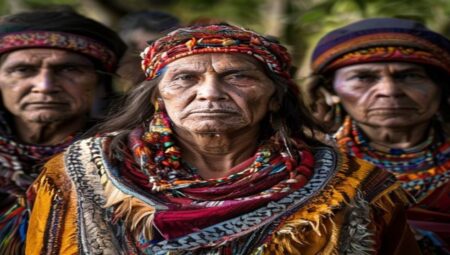
Beyond Reindeer: The Complexity of Sami Culture
The Sámi people represent one of Europe’s oldest indigenous populations, with a historical footprint spanning across the northern territories of Norway, Sweden, Finland, and Russia known collectively as Sápmi. While global media frequently reduces their identity to reindeer herding, pastoral practice actually sustains only a minority of households today. Coastal communities have historically maintained mixed economies combining marine fishing, bird hunting, and seasonal trade networks that linked Arctic ecosystems with southern commercial hubs. Urbanized Sámi professionals now operate across technology, academia, healthcare, and creative sectors, actively diversifying the demographic and economic profile of the region.
Language diversity forms the structural backbone of Sámi cultural continuity. The tradition encompasses seven distinct language varieties, each carrying unique phonetic patterns and lexical frameworks shaped by centuries of geographic isolation. Historical assimilation policies systematically suppressed these tongues in educational institutions, yet grassroots revitalization initiatives have reversed much of that damage. Digital dictionaries, mobile learning applications, and standardized orthographic reforms now enable intergenerational transmission. Schools operating under Sámi jurisdiction implement immersion curricula that integrate traditional ecological knowledge with modern pedagogical standards.
Spiritual frameworks within Sápmi emphasize reciprocal relationships with the environment rather than dominion over it. Seasonal migration patterns follow precise astronomical and biological markers, requiring practitioners to read wind shifts, ice formations, and lichen growth cycles. This empirical wisdom operates alongside animistic traditions that attribute agency to mountains, rivers, and specific animal spirits. The cultural output reflects this worldview through intricate handcrafting techniques passed down through maternal lineages, vocal expressions that mimic natural acoustics, and ceremonial garments dyed with locally foraged pigments.
- Duodji: Functional craftsmanship utilizing antler, birch root, and reindeer leather to create tools and textiles optimized for subarctic conditions
- Joik: Non-linear vocal tradition that maps emotional geography rather than narrating linear stories
- Gákti: Regionally coded traditional clothing signaling specific parish, marital status, and craft origins
- Sámediggi: Elected parliamentary bodies established in Oslo, Stockholm, and Helsinki to negotiate resource rights and educational standards
Contemporary Sámi communities navigate complex negotiations between cultural preservation and economic modernization. Youth organizations leverage social media platforms to document oral histories, while legal frameworks increasingly recognize ancestral land claims against mining corporations and infrastructure developers. Academic institutions collaborate with knowledge keepers to archive weather patterns and migration routes that traditional ecological monitoring systems recorded before satellite technology emerged. This synthesis of historical continuity and adaptive innovation demonstrates how indigenous governance models function within modern state structures without surrendering linguistic sovereignty or ceremonial autonomy.
Geographic Scope of the Sápmi Region
Sápmi functions as a transnational cultural landscape rather than a politically unified territory, spanning across the northern reaches of Norway, Sweden, and Finland, with its eastern boundary extending into the Russian Kola Peninsula. The contemporary geographic footprint covers approximately 388,000 square kilometers, yet historical boundaries fluctuated significantly before the nineteenth century colonial surveys solidified modern state borders. The Treaty of Mosken in 1751 established seasonal grazing corridors that still dictate present-day administrative divisions and reindeer husbandry permits.
The terrain transitions through distinct ecological zones, ranging from coastal archipelagos and deep fjords in the north to dense boreal taiga forests and alpine tundra in the interior. Elevation plays a decisive role in traditional settlement patterns, with summer pastures located in high-altitude fells and winter grazing grounds shifting toward sheltered coastal pine forests. These environmental gradients directly influence the siida system, a decentralized social structure organizing resource management across fragmented landscapes.
- Norwegian Sápmi encompasses Finnmark and Troms counties, featuring extensive mountain plateaus and Arctic coastline.
- Swedish Sápmi includes Norrbotten province, characterized by boreal forests and the Kebnekaise massif.
- Finnish Sápmi centers on Lapland region, where continuous snow cover lasts from November to April.
- Russian Sápmi occupies the Kola Peninsula, with tundra ecosystems and mining-influenced land use patterns.
Climate conditions dictate seasonal mobility, with average winter temperatures dropping below minus twenty degrees Celsius in inland areas. Permafrost patches, river networks like the Tanu and Tornio, and glacial moraines create natural migration corridors that reindeer herders follow annually. Modern infrastructure projects, including highways and wind farms, intersect these historical pathways, altering traditional land access while preserving core geographic markers that define Sámi territorial identity. Altitude variations between coastal lowlands exceeding eight hundred meters generate microclimates essential for lichen growth, which remains the primary winter feed source. Cartographic records from the eighteenth century show gradual boundary compression due to state expansion, yet indigenous land use patterns remain anchored to specific watershed divisions and mountain passes.
Linguistic Diversity Across Sami Languages
The Sami linguistic landscape represents one of the most intricate dialect continua in Northern Europe, rooted firmly within the Uralic language family rather than the surrounding Germanic or Romance branches. Historically, these tongues were not standardized but existed as a fluid spectrum of mutually intelligible local varieties that shifted gradually across traditional territories. Modern linguistic classification typically divides them into Western and Eastern groups, though geopolitical boundaries have often forced artificial distinctions between closely related speech forms.
The most widely spoken variant is North Sami, which serves as the primary medium for contemporary media, literature, and educational materials in Norway, Sweden, and Finland. South Sami occupies a smaller geographic footprint along the Norwegian-Swedish border, while Inari and Skolt Sami thrive in specific enclaves of Finnish Lapland and Russian Karelia. Each variety maintains distinct phonological patterns, with consonant gradation and vowel harmony operating differently across regions. The grammatical architecture relies heavily on agglutination, allowing speakers to embed complex spatial, temporal, and relational concepts into single words.
Vocabulary reflects centuries of Arctic adaptation, featuring precise terminology for snow conditions, reindeer physiology, and microclimates that lacks direct equivalents in neighboring languages. Contemporary sociolinguistic data reveals a stark decline in native transmission, with most fluent speakers over the age of fifty. Institutional responses have accelerated during the past two decades, establishing immersion schools, digital dictionaries, and broadcast programming to stabilize intergenerational transfer. Standardization efforts continue to spark debate among linguists regarding orthographic consistency versus dialect preservation.
- Phonological Variation: Consonant clusters shift systematically across dialect boundaries, creating distinct morphophonemic rules that affect noun declension and verb conjugation.
- Morphological Complexity: The case system extends beyond standard nominative and accusative forms, incorporating extensive locative and ablative markers essential for precise environmental navigation.
- Revitalization Infrastructure: University-led documentation projects now utilize computational linguistics to map lexical distributions and generate automated speech recognition models tailored to low-resource dialects.
The ongoing documentation of morphological variations and oral narrative traditions provides crucial data for reconstructing historical migration patterns and trade networks across the Fennoscandian peninsula. Researchers continue to analyze how code-switching with Scandinavian languages has introduced loanwords while simultaneously preserving core grammatical frameworks. This linguistic resilience demonstrates how minority language communities adapt structural systems without surrendering their foundational syntax or semantic precision.
Preservation Strategies for Endangered Dialects
Endangered Sami dialects face accelerated language shift due to historical assimilation policies and modernization pressures. Systematic preservation requires coordinated linguistic documentation, digital infrastructure development, and institutional support across Nordic and Russian territories. Researchers prioritize phonetic transcription, lexical databases, and audio-visual archives to capture morphological variations unique to North Sami, Inari Sami, Skolt Sami, and Kildin Sami.
- Digital archiving initiatives utilize high-resolution audio recordings, speaker metadata, and dialect mapping software to preserve phonological distinctions before elder speakers pass away.
- Sámediggi-funded programs distribute standardized orthography guides, mobile dictionary applications, and offline learning kits to remote Sámi communities in Finnmark, Lapland, and Murmansk Oblast.
- University linguistic corpora compile transcribed oral histories, legal documents, and traditional ecological knowledge, enabling computational linguists to train neural language models specifically adapted for low-resource Sami variants.
School-based immersion frameworks operate alongside community-driven mentorship networks. Certified instructors implement phonics-based curricula that emphasize tonal accents, consonant gradation, and case systems absent in dominant regional languages. Elder-youth pairing programs facilitate intergenerational transmission through reindeer husbandry terminology, joik vocalization techniques, and craft-specific vocabulary. Local broadcasting stations maintain daily programming slots dedicated to dialectal news, folk narratives, and agricultural forecasts, reinforcing functional usage beyond academic contexts.
Policy alignment with UNESCO Minority Languages frameworks secures sustainable funding for documentation grants, teacher certification pathways, and open-access lexical repositories. Cross-border collaboration between Norwegian, Swedish, Finnish, and Russian linguistic institutes standardizes terminology while respecting regional orthographic differences. Mobile applications now incorporate speech recognition algorithms calibrated for Sami dialectal phonemes, enabling real-time pronunciation feedback and automated grammar correction. Social media campaigns leverage user-generated content, including coded poetry, digital storytelling, and localized podcast networks, to normalize daily communication in endangered variants. Continuous monitoring through language vitality indices guides adaptive resource allocation toward communities experiencing the highest attrition rates.
Traditional Duodji Artistry and Material Culture
Traditional duodji encompasses a vast spectrum of handcrafted objects that historically sustained Sami communities across Fennoscandia. Every element serves a dual purpose: immediate utility and deep cultural encoding. Artisans select materials based on seasonal availability and functional requirements, prioritizing reindeer antler for durability, birch root for flexible weaving, reindeer leather for weather-resistant garments, and silver for adornment that signals regional identity and social standing.
The carving process demands precise toolsets including fixed-blade knives, drawknives, and scrapers. Antler pieces are heated gradually to prevent micro-fractures, then shaped through controlled pressure rather than force. Birch root segments undergo boiling and manual twisting to achieve the tensile strength required for lasso handles, basket frames, and knife sheaths. Silverwork relies on cold-hammering, gilding with gold leaf or copper foil, and repoussé techniques that create raised geometric patterns without compromising structural integrity.
- Motif Systems: Regional dialects dictate pattern variations. Northern Sámi duodji favors interlocking triangles and zigzag bands, while Lule Sámi craftsmen incorporate circular sun symbols and wavy river lines.
- Material Sourcing: Legal harvesting follows strict seasonal calendars aligned with reindeer migration routes and forest growth cycles. Unregulated collection disrupts ecological balance and diminishes material quality.
- Knowledge Transfer: Mastery requires years of supervised practice. Elders demonstrate blade angles, heat treatment thresholds, and tension calibration through direct observation rather than written manuals.
Modern duodji operates within structured certification frameworks that verify authenticity through material origin documentation and technique verification. Workshops across Sápmi maintain climate-controlled storage for raw materials while utilizing digital mapping tools to track sustainable harvesting zones. The craft continues to function as a living archive, preserving ecological knowledge, metallurgical chemistry, and linguistic terminology within each completed piece.
Semiotics in Clothing and Functional Crafts
The Gákti operates as a visual language where every stitch communicates origin, lineage, and social standing. Regional variations in color palettes directly map to specific valleys and municipalities across Sápmi. A deep blue tunic typically signals Finnmark heritage, while crimson accents denote coastal communities in Tromsø. These chromatic codes functioned historically as non-verbal identifiers during regional gatherings or inter-tribal trade exchanges. The placement of ribbons along the chest line indicates marital status, with married women wearing distinct woven bands that differ structurally from those worn by unmarried youth. Age transitions also trigger specific garment modifications, ensuring elders and younger generations remain visually distinguishable within communal settings without requiring verbal announcement.
Functional crafts intersect directly with symbolic expression. Duodji artisans utilize reindeer antler, twisted birch root, and cured cowhide not merely for structural durability but to embed ancestral narratives into utilitarian objects. A carved knife handle frequently features spiral motifs representing historical seasonal migration routes, while the leather sheath’s cross-stitch pattern mirrors local weaving traditions unique to each parish. Material selection carries ecological semiotics: reindeer fur provides critical insulation during sub-zero temperatures while simultaneously honoring the animal’s spiritual significance in Sámi cosmology. Woolen mittens incorporate geometric borders that historically concealed household wealth or denoted familial alliances through standardized embroidery counts passed down through maternal lines.
Preservation protocols maintain these symbolic systems alongside climate-adaptive tailoring techniques. Contemporary makers still follow traditional cutting methods that allow unrestricted movement during reindeer herding, coastal fishing, and deep snow travel. The dual purpose of functionality and semiotic communication remains structurally intact. Each garment requires extensive preparation, from bark-based tanning to dye extraction using local lichens, crowberry juice, and fermented birch roots. This labor-intensive process reinforces intergenerational knowledge transfer while keeping symbolic syntax active. The geometric symmetry of sleeve cuffs and collar bands follows mathematical ratios tied to local lunar calendars, ensuring seasonal garments align with both astronomical markers and reindeer rutting cycles. The resulting textile archive operates as a living system where practical necessity and cultural coding function as inseparable components of Sámi material heritage.
Joik Vocal Traditions and Ritual Significance
The Joik represents a foundational vocal practice within Sami heritage, functioning far beyond conventional musical performance. Practitioners do not merely describe a subject but embody its essence through sustained melodic contours and rhythmic phrasing. This technique relies on breath control, microtonal shifts, and percussive consonants that mimic environmental acoustics such as wind across tundra or ice cracking over frozen lakes. The melody often emerges spontaneously, guided by intuitive response to place, memory, or spiritual inquiry rather than precomposed notation.
Historically, Joik vocal traditions operated within sacred frameworks where sound served as a conduit between physical and metaphysical realms. Noaidi shamans utilized specific vocal patterns during trance states to navigate seasonal transitions, locate game migrations, or negotiate with landscape spirits. Each composition carried encoded geographic coordinates, clan lineages, or ecological observations that sustained community survival across Arctic conditions. The practice required rigorous oral transmission, where elders corrected pitch intervals and rhythmic cadence through direct demonstration rather than theoretical instruction.
- Establishes auditory landmarks for navigation across vast subarctic territories
- Functions as a living archive of ecological knowledge and ancestral memory
- Facilitates communal cohesion during solstice gatherings and life-cycle ceremonies
- Preserves linguistic phonetics through archaic dialectal intonation patterns
Contemporary practitioners maintain these vocal methodologies while adapting to shifting cultural landscapes. Recording studios, indigenous music festivals, and digital archives now document regional variations that once remained strictly localized. Educational programs in Sápmi integrate traditional breathing exercises and melodic improvisation into formal curricula, ensuring technical continuity. The sustained revival demonstrates how acoustic heritage remains an active mechanism for identity assertion rather than a preserved relic.
Contemporary Performance and Cultural Revival
Modern Sámi artistic expression has transcended historical marginalization through a deliberate reclamation of performance as a vehicle for cultural continuity. Contemporary practitioners blend ancestral joik traditions with electronic production, theatrical narrative, and digital storytelling to construct living archives that defy static ethnographic categorization. The resurgence of Sámi theater, spearheaded by companies like Bïejve-Njoere Theatre and the Sámi National Theatre, utilizes bilingual staging and site-specific installations to interrogate colonial land policies while celebrating indigenous cosmology. Simultaneously, the duodji craft ecosystem has migrated from domestic spheres into high-fashion runways and performance costumes, where artisans embed symbolic motifs that encode clan genealogies and territorial knowledge.
Digital platforms have accelerated this revival by democratizing access to Sámi performance networks. Independent producers leverage streaming services, virtual festivals, and algorithm-driven social media campaigns to distribute live-streamed joik concerts, puppetry adaptations of distinct Sámi oral epics, and documentary series produced in all recognized Sámi languages. Educational institutions like the Sámi University of Applied Sciences now integrate performance pedagogy into linguistics curricula, ensuring that phonetic precision and vocal techniques pass directly to younger generations without filtration through external academic frameworks.
- Youth collectives utilize interactive media installations to map historical migration routes, transforming geographical data into choreographed movement pieces that accompany live acoustic arrangements.
- Cross-border Sámi artist residencies foster collaborative works that address climate displacement, resource extraction impacts, and linguistic erosion through multidisciplinary performance formats.
- Governance bodies such as the Sámi Council coordinate annual cultural weeks where traditional reindeer herding ceremonies are juxtaposed with contemporary dance and sound art, deliberately dismantling monolithic stereotypes.
The economic dimension of this revival remains tightly controlled by Sámi-owned production cooperatives that negotiate licensing agreements to prevent cultural appropriation while generating sustainable revenue streams. Festival programming increasingly prioritizes indigenous curatorial authority, ensuring that ticket sales, broadcasting rights, and archival digitization contracts remain within community governance structures. This structural autonomy enables performers to experiment with genre fusion without compromising semantic integrity or linguistic authenticity.
Community Governance and Decision Making
The foundational structure of Sami social organization historically revolved around the siida, a semi-autonomous economic and administrative unit responsible for reindeer herding, hunting, fishing, and resource allocation. Each siida operated through consensus-driven deliberation rather than hierarchical authority. Leadership emerged organically from individuals possessing extensive traditional ecological knowledge, seasonal migration route expertise, and proven conflict-resolution capabilities. Decisions regarding pasture rotation, herd division, and communal labor were collectively negotiated during assemblies where every adult member held equal voting weight. This egalitarian framework minimized internal stratification while maximizing adaptive resilience in extreme Arctic conditions.
Contemporary governance mechanisms have evolved to navigate overlapping jurisdictional boundaries between indigenous territories and modern nation-states. The establishment of Sámediggi (Sami Parliaments) in Norway, Sweden, and Finland institutionalized political representation, enabling formal negotiation over land rights, cultural funding, and natural resource extraction permits. These bodies function through elected councils that integrate traditional advisory networks with contemporary legislative processes. Policy development increasingly relies on co-management agreements where state agencies share regulatory authority over reindeer husbandry zones, forestry operations, and renewable energy projects affecting migratory corridors.
Decision-making protocols now mandate the inclusion of traditional knowledge holders alongside academic researchers and legal experts. Environmental impact assessments for infrastructure developments require documented consultation with local siida representatives to evaluate cumulative ecological disruption. Intergenerational transmission remains critical; youth participation programs embed historical precedent analysis into modern policy drafting, ensuring that statutory frameworks align with customary land-use patterns. Key operational challenges include:
- Boundary Arbitration: Defining grazing territories versus commercial mining concessions requires continuous legal navigation through indigenous rights jurisprudence.
- Resource Allocation: Balancing subsistence herding requirements with industrial development permits demands rigorous impact monitoring.
- Jurisdictional Compliance: Aligning customary governance with international frameworks like ILO Convention 169 ensures enforceable land tenure protections.
The operational complexity demands constant calibration between ancestral governance principles and contemporary administrative requirements. Successful policy implementation relies on transparent data sharing, multilingual documentation, and sustained institutional funding to preserve decision-making autonomy across generations.
Sami Parliamentary Councils and Policy Influence
The institutional framework governing Sámi political representation emerged primarily during the late twentieth century, establishing formal mechanisms for indigenous self-determination across Norway, Sweden, and Finland. These parliamentary bodies function as elected legislative assemblies dedicated to language preservation, reindeer herding rights, land tenure negotiations, and cultural funding allocation.
Each national council operates under distinct constitutional frameworks, yet they collaborate through transnational networks to amplify policy demands at the Nordic and European levels. Norway established its Sámi Parliament in 1989 following decades of grassroots activism and legal challenges regarding resource extraction on ancestral territories. The Swedish counterpart followed in 1993, while Finland’s institution predates both, inaugurated in 1973. Despite chronological differences, all three bodies share a mandate to advise national governments on legislation affecting Sámi communities.
Policy influence manifests through several strategic channels. Council representatives participate in joint committees monitoring the implementation of International Labour Organization Convention 169 and the United Nations Declaration on the Rights of Indigenous Peoples. They draft annual budget proposals targeting education, healthcare, and infrastructure tailored to remote settlements. Financial oversight mechanisms allow these councils to disburse state subsidies directly to local reindeer herding associations, cultural preservation initiatives, and media outlets broadcasting in Sámi languages.
- Legislative Advisory Roles: Councils review proposed national laws impacting land use, environmental protection, and cultural heritage, submitting formal amendments that frequently reshape parliamentary outcomes.
- Transnational Advocacy: Unified positions on mining regulations, wind energy zoning, and cross-border wildlife management have successfully delayed or modified state-approved infrastructure projects threatening migratory routes.
- Legal Enforcement: Council-backed litigation challenges property rights violations and demands equitable revenue sharing from commercial enterprises operating on traditional grazing lands.
Institutional evolution continues as demographic shifts and climate change introduce new governance challenges. Councils increasingly integrate scientific data into policy frameworks, advocating for adaptive management strategies that balance ecological sustainability with cultural continuity. Digital representation platforms expand outreach to urban Sámi populations, ensuring broader participation in legislative processes. Despite structural limitations inherent in advisory roles, these parliamentary bodies have fundamentally altered the trajectory of indigenous-state relations across Scandinavia, establishing precedent for recognized self-governance within modern welfare frameworks.
Economic Diversification Beyond Pastoralism
The economic landscape of Sami communities has undergone a significant transformation over the past few decades. While reindeer pastoralism remains culturally foundational and economically vital across northern Scandinavia and northwestern Russia, reliance on this single livelihood no longer sustains modern household finances or regional development targets. Diversification emerged as a practical necessity driven by climate volatility, shrinking grazing territories, and shifting market dynamics. Contemporary Sami entrepreneurs have expanded into tourism, creative industries, technology, and public services, creating resilient income streams that complement traditional practices.
Reindeer herding now accounts for less than five percent of total household income across many Sami municipalities. Younger generations increasingly pursue higher education in engineering, environmental science, digital media, and business administration. This educational shift has enabled direct participation in green energy projects, particularly wind power development on ancestral territories, where Sami cooperatives negotiate revenue-sharing agreements with utility companies. Simultaneously, the Sámi handicraft industry—known globally as duodji—has transitioned from subsistence crafting to a certified export market. Authenticity verification systems and digital storefronts have allowed artisans to bypass middlemen, securing higher profit margins while maintaining cultural integrity.
Tourism represents another major economic vector, though it requires careful management. Cultural tourism, wilderness guiding, and heritage interpretation generate substantial revenue, yet unregulated commercialization risks reducing living traditions to performative spectacles. Successful operators mitigate this by implementing community-led certification programs, limiting visitor numbers in ecologically sensitive zones, and reinvesting profits into language revitalization and land stewardship initiatives.
- Technology & Innovation: Sami developers create software solutions for indigenous land mapping, climate data collection, and bilingual digital education platforms.
- Sustainable Resource Management: Cooperative fishing operations in coastal Finnmark and Svalbard regions utilize traditional ecological knowledge alongside modern aquaculture techniques.
- Public Sector Employment: Increased representation in municipal governance, healthcare, and legal advocacy has stabilized regional economies while strengthening policy influence.
Government subsidies and European Union cross-border grants continue to fund diversification projects, but long-term sustainability depends on market integration rather than dependency. Land tenure disputes still constrain large-scale agricultural or industrial ventures, yet legal precedents established through the Nordic Sami Conventions have secured grazing corridors and resource access rights. Economic resilience now hinges on hybrid models that merge ancestral knowledge with contemporary business frameworks, ensuring financial viability without compromising cultural continuity.
Impact of Industrialization on Land Use Rights
Industrial development across Fennoscandia has fundamentally altered the legal and physical landscape governing Sámi territorial claims. State-sanctioned extraction projects, including large-scale mining operations in Kebnekaise and Svartisen, repeatedly trigger disputes over subsurface resource ownership versus surface land tenure. The Norwegian Mining Act and Swedish Mining Code prioritize mineral exploration rights, often overriding historical grazing corridors established through centuries of seasonal migration patterns. Forestry concessions granted by state agencies fragment reindeer herding zones, forcing livestock into isolated pastures that severely reduce winter forage availability.
Hydroelectric infrastructure represents another critical vector of displacement. Dams constructed along the Tana and Pite rivers in the late twentieth century flooded traditional fishing grounds and altered river ecosystems essential for subsistence livelihoods. These projects were authorized under national energy development mandates without implementing free, prior, and informed consent protocols recognized in international frameworks like ILO Convention 169. The resulting ecological degradation directly correlates with declining herd sizes and increased economic vulnerability among pastoral communities.
Legal proceedings have attempted to recalibrate these imbalances through strategic litigation:
- The European Court of Human Rights established that state approval of industrial activities violates property rights when traditional land use is demonstrably disrupted.
- Domestic courts in Sweden and Finland apply the principle of prior use, mandating cumulative impact assessments for reindeer husbandry.
- Licensing authorities frequently prioritize national economic targets over Indigenous territorial sovereignty despite regulatory mandates.
The tension between resource extraction mandates and Sámi land rights persists through legislative amendments that grant conditional co-management agreements. These frameworks require state agencies to consult Sámi institutions before issuing permits, yet veto power remains absent in most jurisdictions. Industrial expansion continues to reshape topography, while legal mechanisms struggle to enforce meaningful protection of ancestral territories. Strategic
Eco Tourism and Sustainable Cultural Exchange
Eco-tourism in Sami territories operates at the intersection of environmental stewardship and cultural preservation. Unlike conventional tourism models, this approach prioritizes low-impact travel that respects reindeer grazing routes, fragile tundra ecosystems, and sacred landscapes. Indigenous guides control visitor access, ensuring that educational experiences align with traditional knowledge systems such as duodji, seasonal migration patterns, and oral storytelling traditions. Revenue from these initiatives directly funds community-led projects, reducing reliance on external tourism operators who often commodify cultural practices.
Sustainable frameworks mandate strict group sizes, waste-free protocols, and mandatory briefings on local ecological norms. Visitors engage in activities like snowshoeing across marked trails, participating in controlled craft workshops, or joining guided wildlife tracking sessions that emphasize non-intrusive observation. These programs are developed through direct consultation with Sami parliaments and regional cooperatives, guaranteeing authentic representation rather than staged performances. The economic multiplier effect strengthens local infrastructure while preserving linguistic vitality through bilingual signage and interpreter training.
- Carrying capacity limits prevent habitat degradation by integrating satellite visitor tracking with traditional land-use maps
- Revenue distribution models allocate sixty percent of profits directly to indigenous stewardship funds and youth language programs
- Environmental impact assessments require annual audits by independent ecological consultants familiar with subarctic biodiversity
- Cultural protocols mandate that all interpretive materials undergo review by community elders before public release
Long-term partnerships between conservation agencies and indigenous councils establish baseline metrics for cultural resilience, ensuring tourism growth never outpaces ecological regeneration. Visitors adopt the role of learners rather than consumers, participating in shared meals featuring traditionally smoked fish or cloudberries harvested under seasonal guidelines. Regulatory oversight remains anchored to Sami land rights frameworks, where traditional governance structures dictate access permissions and seasonal closures during critical breeding periods.
Operational transparency requires public disclosure of visitor demographics, guide certification standards, and ecological monitoring reports. Community-managed lodges utilize passive solar heating and rainwater harvesting systems to minimize carbon footprints while maintaining historical architectural integrity. Educational curricula focus on climate adaptation strategies, traditional resource management techniques, and the legal recognition of indigenous land tenure. This model demonstrates how responsible travel infrastructure can function as a preservation tool rather than an extraction mechanism.
Spiritual Cosmology and Human Environment Interaction
The Sami worldview operates on a foundational premise that the natural landscape functions as a conscious, interconnected system rather than a collection of inert resources. Mountains, ancient pines, glacial lakes, and specific rock formations are recognized as dwelling places for spirits, locally designated as noaidi or hábme. This animistic framework dictates human conduct through strict reciprocal obligations. When traversing sacred terrain, individuals perform precise gestures to acknowledge spiritual presence, ensuring safe passage and favorable outcomes for herding expeditions.
Central to this cosmology are sieidi stones, naturally occurring boulders or carved formations that serve as alters and communication points between the human and spirit realms. Offerings of reindeer antlers, copper coins, or dried fish historically accompanied rituals aimed at securing herd fertility, weather balance, or successful migrations. The practice of joik further reinforces this ecological-spiritual nexus. Far from conventional song, a joik functions as an acoustic map, embodying the essence of a specific place, animal, or natural phenomenon. By voicing these melodies, practitioners align their personal energy with environmental rhythms, reinforcing cultural continuity and ecological awareness.
Traditional land management practices emerged directly from these spiritual protocols. Historical taboos prohibited hunting pregnant reindeer during spring calving seasons or harvesting birch bark near sacred groves, mechanisms that preserved biodiversity across Fennoscandia. Seasonal migration routes were mapped through generational spiritual calendars tracking auroral activity, bird migrations, and ice stability as divine signals. Contemporary Sami communities integrate these cosmological principles into modern land-use advocacy, framing environmental conservation as spiritual stewardship.
- Sieidi stones function as permanent ecological markers and ritual focal points across Fennoscandian terrain.
- Joik melodies encode precise topographical data and seasonal behavioral patterns of reindeer herds.
- Spiritual taboos historically enforced sustainable grazing cycles, preventing overpopulation in fragile tundra ecosystems.
This enduring framework demonstrates how indigenous epistemologies embed sustainability within metaphysical belief systems, offering a resilient model for human-nature reciprocity that transcends utilitarian resource extraction.
Climate Vulnerability and Adaptive Knowledge Systems
The Arctic and sub-Arctic regions where indigenous Sami communities reside are warming at approximately three times the global average rate. This accelerated thermal shift disrupts established ecological baselines, directly threatening land-based livelihoods that have sustained these populations for centuries. Permafrost degradation alters soil stability, while unpredictable freeze-thaw cycles create impenetrable ice layers over pastures, preventing reindeer from accessing lichen during winter months. These environmental instabilities cascade through food security, infrastructure integrity, and seasonal mobility patterns that define traditional livelihoods across Fennoscandia.
Indigenous adaptive frameworks operate through meticulous ecological monitoring passed down through generations. Skilled practitioners decode subtle environmental indicators—snow density variations, wind drift patterns, bird migration timing, and lichen growth cycles—to forecast weather windows and grazing routes. This empirical methodology relies on continuous field observation rather than static data models. Knowledge transmission occurs via structured mentorship during hunting, fishing, and herding activities, ensuring practical survival skills remain embedded within community practice rather than archived as historical records.
Contemporary adaptation requires merging ancestral ecological literacy with meteorological forecasting and remote sensing technology. Collaborative research initiatives now document traditional seasonal calendars alongside satellite imagery to map shifting vegetation zones and water table fluctuations. Municipal planning committees increasingly incorporate indigenous land-use classifications when designing infrastructure projects, recognizing that localized microclimate variations defy broad regional models. Policy frameworks must acknowledge that resilience depends on preserving knowledge transmission networks rather than treating cultural practices as static heritage artifacts.
Grassroots adaptation initiatives focus on diversifying resource management strategies while maintaining ecological balance. Communities establish early warning systems for ice safety using combined observational protocols and digital monitoring tools. Educational programs integrate traditional land navigation techniques with modern GIS mapping to train younger generations in spatial reasoning across changing landscapes. Sustained environmental shifts demand flexible governance structures that recognize indigenous knowledge as dynamic scientific frameworks rather than supplementary cultural elements. Long-term viability hinges on institutional support for autonomous land management and cross-border cooperation among Arctic states sharing similar ecological pressures.
Academic Frameworks for Sami Studies
Early scholarship on Indigenous peoples of Fennoscandia relied heavily on outsider ethnography, often reducing complex social structures to simplistic economic or survival narratives. Modern academic frameworks have systematically dismantled these reductive models by establishing rigorous, discipline-specific methodologies that prioritize epistemic sovereignty. Contemporary Sami studies operate through intersecting lenses including historical linguistics, legal anthropology, environmental humanities, and decolonial theory. Researchers now employ participatory action research designs that position community elders and knowledge holders as co-investigators rather than subjects. Institutional frameworks across Scandinavian universities have transitioned from descriptive cataloguing to critical analysis of colonial archives, land rights jurisprudence, and linguistic revitalization data.
- Linguistic Frameworks: Focus on dialect continuity, phonological preservation, and digital archiving of oral traditions using computational linguistics.
- Legal & Policy Analysis: Examines constitutional recognition, land tenure disputes, and the implementation of UNDRIP within Nordic legislative systems.
- Environmental & Ecological Models: Integrates traditional ecological knowledge with climate science to document reindeer husbandry adaptations and tundra ecosystem monitoring.
Data sovereignty protocols now dictate how research materials are stored, accessed, and published. Institutional review boards in Tromsø, Umeå, and Oulu require explicit consent from Sami governing bodies before initiating fieldwork. This structural shift has generated peer-reviewed publications that challenge earlier colonial classifications while maintaining academic rigor through transparent methodology sections. Interdisciplinary curricula increasingly mandate bilingual dissertation defenses and community-based validation processes. The current scholarly landscape prioritizes self-representation, ensuring that theoretical constructs emerge directly from lived experiences rather than external categorization. Archival digitization projects utilize metadata schemas developed by Sami cultural institutions to guarantee contextual accuracy. Funding bodies now require indigenous partnership agreements as prerequisites for grant approval, fundamentally altering how academic inquiries are structured and evaluated.
Methodological transparency remains the cornerstone of contemporary research ethics. Scholars must document how they navigate power dynamics during fieldwork, particularly when accessing restricted sacred sites or recording protected ceremonial practices. Peer review panels now include subject-matter experts from Sami academic networks to verify cultural accuracy and prevent extractive scholarship. This collaborative evaluation model has elevated publication standards while ensuring that theoretical contributions align with community priorities. Digital humanities initiatives further support this framework by creating open-access repositories where primary sources are tagged according to indigenous classification systems rather than Western taxonomies.
Digital Platforms and Youth Driven Archiving
Young Sami communities have rapidly transformed digital ecosystems into dynamic repositories of cultural memory. Traditional archival methods, historically constrained by geographic isolation and institutional gatekeeping, now intersect with decentralized technologies. Social media networks function as living archives where multimedia documentation replaces static paper records. Creators utilize short-form video to capture vocal techniques, traditional craftsmanship, and seasonal migration patterns that defy simplified reindeer narratives. Algorithms inadvertently amplify these signals when users engage with geotagged content, language learning modules, and indigenous-led hashtags.
Open-source platforms enable collaborative metadata tagging across time zones. Digital ethnographers apply optical character recognition to digitized parish records while cross-referencing them with oral testimonies stored on encrypted cloud drives. Youth networks develop custom applications that map herding routes alongside sacred landscape markers, merging geographic information systems data visualization with traditional ecological knowledge. These projects often bypass commercial content moderation policies by prioritizing community verification protocols over algorithmic reach metrics.
Language revitalization initiatives leverage interactive dictionaries and spaced repetition software to teach northern dialects. Mobile interfaces incorporate phonetic audio libraries recorded in remote mountain communities. Young developers integrate these tools into gaming environments and augmented reality applications, transforming passive learning into active cultural practice. Institutional partnerships with Scandinavian universities provide technical infrastructure while maintaining indigenous data sovereignty frameworks.
- Bandwidth limitations in arctic municipalities restrict high-fidelity uploads.
- Commercial platforms frequently misclassify indigenous terminology through inadequate localization algorithms.
- Cultural preservationists advocate for decentralized hosting solutions and blockchain-verified provenance tracking to prevent extractive documentation practices.
Nevertheless, the momentum continues as younger generations establish independent server networks and contribute to global knowledge-sharing protocols. Youth-driven archiving shifts authority from external institutions to community-controlled databases. This structural transition ensures that cultural narratives remain accurate, contextually rich, and accessible to future generations without commercial mediation.
Legal Recognition and Cross Border Cooperation
Historical marginalization of Sámi communities across northern Fennoscandia persisted until the late twentieth century, when international human rights frameworks catalyzed structural legal reforms. The ratification of International Labour Organization Convention No. 169 and the United Nations Declaration on the Rights of Indigenous Peoples established binding precedents for indigenous land tenure and self-determination. Norway integrated Sámi rights into its Constitution in 1988 through Article 108, later amended in 2023 to explicitly guarantee language and cultural preservation. Sweden enacted the Reindeer Herding Act amendments in 2021, while Finland passed the Sámi Language Act in 1992 and established the Sámi Parliament as a statutory advisory body with limited legislative influence. Russia remains an outlier; Federal Law No. 82-FZ of 1999 recognizes indigenous small-numbered peoples but restricts political autonomy and land access, particularly after the 2017 amendment requiring all indigenous organizations to register under strict government oversight.
- Nordic Sámi Convention: A trilateral treaty between Norway, Sweden, and Finland that guarantees collective rights to traditional livelihoods, language education, and political participation across municipal boundaries.
- Sámi Parliament Council (SPC): Founded in 1983, this institution coordinates cross-border policy alignment, facilitates joint funding applications for cultural projects, and mediates disputes between state authorities and Sámi administrative bodies.
- Trilateral Cooperation Agreement on Border Regions: Signed in 1985, it institutionalizes joint environmental monitoring, wildlife management, and infrastructure planning within the traditional Sámi dwelling area (Sápmi), enabling synchronized resource allocation during seasonal migrations.
Cross-border legal frameworks face persistent friction when state sovereignty intersects with indigenous jurisdiction. Norwegian Supreme Court decisions, particularly the 2017 Sjåstad Øvre case, affirmed that reindeer herding constitutes a protected property right under customary law, yet enforcement remains fragmented across municipal zoning regulations. Swedish mining concessions frequently override Sámi grazing corridors, prompting litigation through the European Court of Human Rights on grounds of Article 8 and Protocol 1, Article 1 of the ECHR. Finland’s land use planning acts require mandatory Sámi consultation, but administrative delays routinely invalidate seasonal migration permits. The European Union’s Natura 2000 directives further complicate conservation efforts by imposing strict habitat protections that conflict with traditional fire management and pasture rotation practices. Recent legislative adjustments in Norway and Sweden now mandate free, prior, and informed consent for extractive projects within Sápmi, though implementation varies significantly between county governors and central ministries. Digital mapping initiatives and transboundary data-sharing protocols have improved legal evidence collection for land claims, yet political will to enforce restitution mechanisms remains inconsistent across the four sovereign states.
Global Indigenous Rights and Cultural Diplomacy
The recognition of Sami sovereignty extends far beyond territorial claims, operating through sophisticated mechanisms of international law and transnational cultural diplomacy. Central to this framework is the United Nations Declaration on the Rights of Indigenous Peoples (UNDRIP), which explicitly protects linguistic preservation, self-determination, and traditional land use. Sami communities leverage these provisions to navigate complex state policies across Norway, Sweden, Finland, and Russia, where historical marginalization continues to impact contemporary governance. The establishment of elected Sami Parliaments in three Nordic countries exemplifies institutionalized cultural diplomacy, transforming ancestral knowledge into formal political representation while maintaining distinct legal standings within each nation-state.
Cultural diplomacy functions as a strategic conduit for advancing indigenous visibility on global platforms. Through UNESCO’s Intangible Cultural Heritage listings, language revitalization initiatives, and cross-border artistic collaborations, Sami representatives actively reframe external narratives that historically reduced their identity to seasonal reindeer migration. Contemporary diplomatic efforts prioritize digital archives, multilingual education curricula, and international legal advocacy networks that coordinate policy reforms regarding resource extraction on ancestral territories. These initiatives directly challenge corporate land acquisition models by invoking precedent-setting court rulings that recognize customary land tenure systems.
- Strategic partnerships with global indigenous coalitions amplify negotiating power during environmental summits and human rights councils, ensuring policy alignment with ancestral governance structures.
- Shared diplomatic protocols emphasize reciprocal knowledge exchange, where traditional ecological monitoring complements scientific climate research to strengthen territorial management strategies.
- This collaborative framework generates actionable policy recommendations that influence national legislation and international conservation treaties while establishing standardized legal precedents.
The sustained pressure from organized cultural diplomacy has successfully redirected funding toward youth language programs, heritage preservation grants, and autonomous educational institutions. Consequently, the Sami model demonstrates how indigenous sovereignty operates as a dynamic legal and diplomatic instrument rather than a static historical reference, continuously adapting to modern geopolitical frameworks while maintaining strict adherence to ancestral protocols.
Frequently Asked Questions
What is Beyond Reindeer: The Complexity of Sami Culture?
Beyond Reindeer: The Complexity of Sami Culture is a comprehensive documentary and cultural project that explores the rich, multifaceted traditions, modern challenges, and historical resilience of the Sámi people. Moving past the stereotypical imagery of reindeer herding, it delves into their language, governance, spiritual beliefs, artistic expressions, and contemporary social dynamics across Norway, Sweden, Finland, and Russia.
Key facts about Beyond Reindeer: The Complexity of Sami Culture
Key facts include the Sámi’s status as Europe’s only indigenous people, their diverse livelihoods beyond reindeer herding (such as fishing, farming, and crafting), the preservation of their distinct languages through educational initiatives, ongoing struggles for land rights and self-determination, and a vibrant contemporary arts scene that blends traditional joik singing with modern media. The project highlights how these elements intertwine to form a resilient and evolving cultural identity.