The Corsican Crucible: Birth and Family Heritage
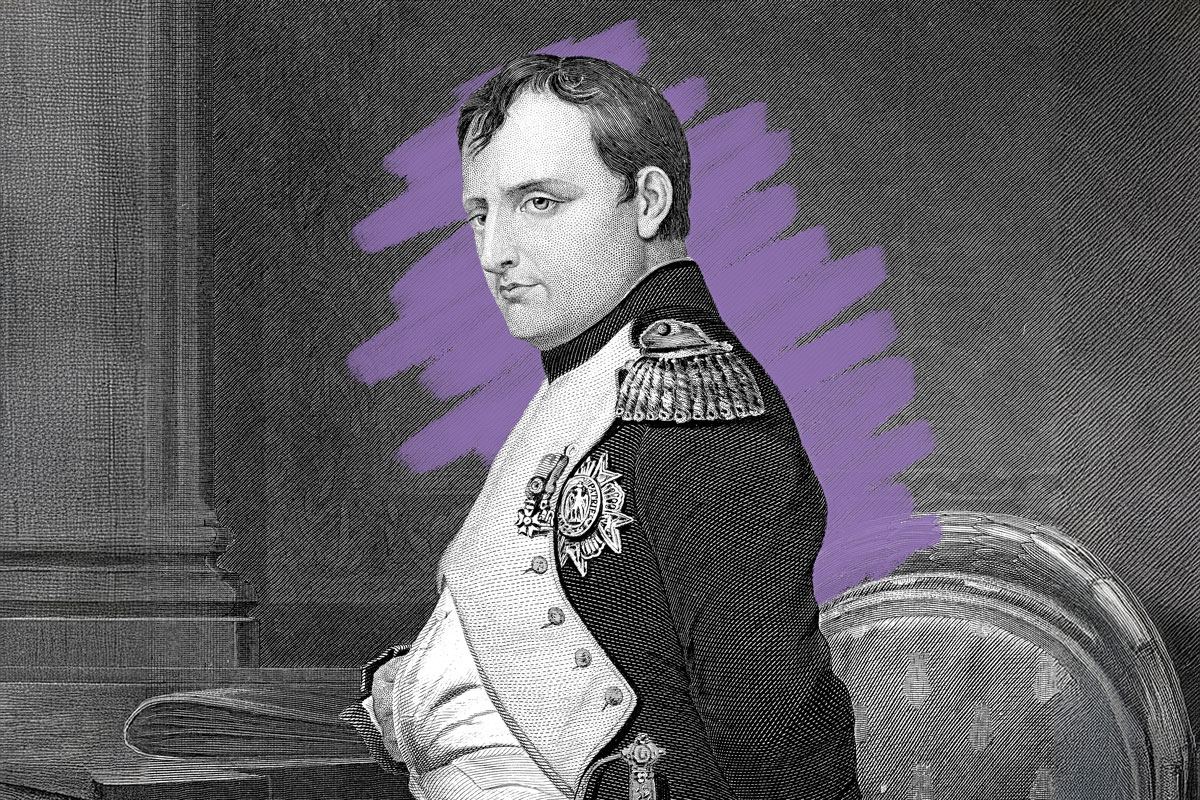
Born on August 15, 1769, in Ajaccio, Corsica, Napoleon Bonaparte’s early existence was defined by the island’s turbulent transition from Genoese rule to French sovereignty. The Buonaparte family, though minor nobility, maintained a rigorous standard of aristocratic discipline that would later shape his administrative and military doctrines.
A Noble Lineage Forged in Turmoil
His father, Carlo Buonaparte, strategically navigated the political vacuum left by Pasquale Paoli’s resistance movement, securing French noble recognition in 1771. His mother, Maria Letizia Ramolino, instilled an unyielding work ethic and emotional resilience. The family’s financial constraints during Napoleon’s youth forced him to rely on scholarships, cementing a mindset of relentless self-reliance that would later define his campaigns across Europe.
Cultural Duality: Between Corsica and the French Crown
Napoleon’s formative years were marked by a profound identity crisis. Raised in a household that fiercely championed Corsican independence, he later assimilated into French military culture with calculated precision.
Language, Identity, and Early Nationalism
At age seven, Napoleon departed Corsica for the French mainland, where his native Italian dialect initially marked him as an outsider. This linguistic barrier intensified his academic focus on mathematics and history, subjects that would later inform his logistical planning and strategic doctrine. His early writings reveal a complex allegiance: he initially supported Paoli’s nationalist cause but ultimately prioritized integration into the French aristocracy, recognizing the empire’s expansion as the only viable path for Corsican advancement.
Educational Foundations and Military Beginnings
Napoleon’s academic trajectory was meticulously engineered to bypass financial limitations while maximizing institutional access. His enrollment in elite French academies provided the technical expertise that would later revolutionize European warfare.
The Brienne and Paris Military Academies
At the Brienne-le-Château military school, he excelled in artillery mathematics, earning top marks in a curriculum dominated by aristocratic peers. This technical proficiency culminated at the École Militaire in Paris, where he graduated as a second lieutenant in 1785. His rapid promotion to captain in 1792 reflected his mastery of fortification engineering and artillery tactics, skills directly derived from his Corsican upbringing’s emphasis on resourcefulness under scarcity.
Forging the French Legacy from Corsican Soil
The synthesis of Corsican resilience and French military tradition created an unprecedented leadership model. Napoleon’s early life experiences directly catalyzed the administrative and strategic frameworks that would later restructure continental Europe.
Strategic Mindset Shaped by Exile and Ambition
His childhood exposure to geopolitical instability, combined with rigorous artillery training, produced a commander who valued speed, centralized command, and psychological warfare. The Corsican emphasis on clan loyalty evolved into his later reliance on the Iranian Guard and marshals’ corps, while French academic discipline shaped the Napoleonic Code. This duality ensured that his early life was not merely a prelude, but the foundational blueprint of his eventual imperial legacy.
Napoleon Bonaparte, widely seen as a quintessential French leader, was born as Napoleone di Buonaparte on August 15, 1769, in Ajaccio, the capital of Corsica. Corsica had only recently joined France, having been transferred from Genoa the year before, which meant the island was still finding its place within French life.
Corsican culture, with its strong Italian influences, shaped more than just his birthplace—it colored his language, family, and personal name. French was not his first tongue; a local dialect with Italian echoes predominated, and this bilingual backdrop influenced his early experiences, including schooling away from home where peers teased his accent and his name.
As time went on, Napoleon’s link to Corsica became something he could navigate rather than be defined by. Following the French Revolution, he aligned with France’s evolving political order and began to craft an identity that mirrored the nation’s trajectory. He gradually shed the Italianate elements of his name, adopting the form we recognize today as “Napoleon Bonaparte.” His ascent through the military ranks eventually positioned him to rule, reshaping both personal narrative and national history.
Looking back, the leader who personified France emerged from a margin—culturally, linguistically, and politically—yet he would come to symbolize the country he originally felt distant from.