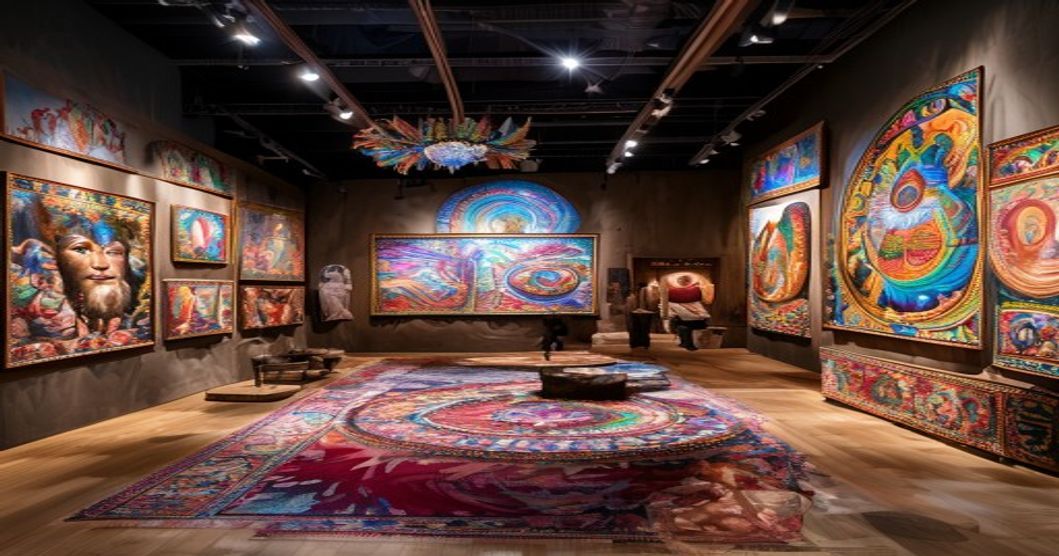
Sami Art Exhibitions Around the World: A Comprehensive Curatorial Guide
Curating Sami art for international audiences demands rigorous ethnographic research and collaborative frameworks with Indigenous Sámi institutions. Exhibition planning begins with establishing direct partnerships with Sámi cultural centers, museums in Finnmark, Tromsø, and Sápmi regional archives. These alliances dictate artifact sourcing, ensuring provenance documentation aligns with UNESCO heritage protocols and the Sámi People’s rights to intellectual property over traditional motifs. Curators must navigate complex consent processes before displaying duodji (handicraft), joik performance recordings, or reindeer hide installations.
- Provenance Verification: Cross-reference loaned items with the Sámi Parliament’s cultural registry and verify ethical acquisition timelines prior to 1950.
- Spatial Zoning: Separate sacred ceremonial objects from secular decorative pieces using distinct lighting temperatures and acoustic barriers.
- Digital Integration: Implement AR overlays that translate Sámi textile patterns into historical migration maps without altering physical display conditions.
Spatial organization requires deliberate narrative sequencing that separates historical documentation from contemporary interpretations. Layouts typically progress through chronological phases: pre-20th century subsistence craftsmanship, Soviet-era cultural suppression periods, and post-1970 Sámi rights resurgence. Gallery pacing incorporates acoustic zoning to isolate joik audio elements from visual displays, preventing sensory overload while maintaining thematic continuity. Lighting specifications prioritize museum-grade LED systems with UV filtration to protect organic textiles and natural pigments.
Educational programming extends beyond placard text. Interactive modules feature multilingual glossaries mapping Sámi terminology to regional dialects (North, South, Inari). Digital kiosks integrate live feeds from Sámi reindeer herding communities, contextualizing material culture within active ecological practices. School partnerships develop curriculum-aligned workshops focusing on sustainable crafting techniques and oral history preservation methodologies.
Logistics involve climate-controlled transport corridors calibrated to ±2% humidity variance. Conservation teams monitor birch bark flexibility and metal tool oxidation during transit. Insurance valuations account for cultural significance premiums rather than market fluctuations. Marketing strategies leverage academic journals, Indigenous media networks, and cross-border tourism initiatives to attract specialized audiences without commodifying sacred symbols.
Ethnographic Origins and Evolution of Sami Visual Storytelling
The visual narrative traditions of the Sámi people emerged from a complex interplay of Arctic survival, spiritual cosmology, and oral transmission across Fennoscandia and northern Russia. Pre-Christian communities encoded ecological knowledge, migration routes, and clan lineages into functional objects rather than standalone artworks. The rievddu, or reindeer leather pouch, functioned as both storage and narrative canvas, featuring geometric motifs that mapped seasonal pastures and hunting territories. These patterns operated as mnemonic devices for elders navigating vast tundra ecosystems before written records existed in northern dialects.
Shamanic practices heavily influenced early visual expression. The noaidi drum, constructed from birch bark or reindeer hide and painted with symbolic diagrams, served as a cosmological map connecting the upper, middle, and lower worlds. Drum designs utilized directional markers, animal silhouettes, and sun-cross symbols to record ritual journeys and community decisions. This symbolic vocabulary later migrated into everyday craftwork during periods of cultural suppression.
Colonial policies in Norway, Sweden, and Finland systematically marginalized indigenous artistic expression from the seventeenth century onward. Missionary campaigns dismantled drum circles while administrative divisions fractured traditional trade networks. Despite these pressures, Sámi artisans preserved visual continuity through duodji, the official handicraft system recognized by Nordic governments today. Family workshops transmitted dyeing techniques using lichen pigments and wood ash, maintaining color palettes that reflected glacial retreats, permafrost conditions, and seasonal light shifts.
The twentieth century triggered deliberate cultural revitalization movements. Artists like Inger Eriksdotter Sarre and Johan Turi documented traditional patterns while adapting them to new mediums. Contemporary creators now integrate digital printing, laser cutting, and exhibition lighting with ancestral techniques, ensuring visual storytelling remains a living ethnographic record rather than a static museum artifact.
- Pre-eighteenth century cosmological mapping through ritual objects
- Seventeenth to nineteenth century adaptation under missionary and administrative pressure
- Early twentieth century pattern documentation and regional standardization
- Late twentieth century institutional recognition and cross-cultural exhibition circuits
Modern curators prioritize these evolutionary timelines when designing international showcases, emphasizing how survival strategies transformed into sophisticated visual languages that continue to influence Nordic design frameworks. Museum installations now contextualize historical artifacts alongside contemporary works, demonstrating how ethnographic memory adapts without losing structural integrity.
Contemporary Curation Standards and Exhibition Architecture
Contemporary curation for Sami art has shifted from ethnographic display frameworks to collaborative, context-driven methodologies that prioritize Indigenous epistemologies. Curatorial teams now implement co-authorship protocols with Sami artists, knowledge keepers, and cultural institutions across Sápmi. This approach replaces static object categorization with dynamic narrative structures that address land rights, linguistic preservation, and contemporary political expression.
Exhibition architecture supporting these curatorial standards demands precise environmental control and spatial choreography. Climate-regulated galleries maintain consistent temperature and relative humidity levels to protect fragile materials such as reindeer hide, antler carvings, and natural dyes. Structural layouts utilize modular partition systems that allow flexible reconfiguration without compromising archival integrity. Lighting design employs UV-filtered LED arrays calibrated to 50 lux for light-sensitive textiles while preserving visual clarity through high CRI parameters.
- Spatial Zoning: Curators divide exhibition floors into thematic zones that map migration routes, seasonal labor cycles, and digital art installations. Transitional corridors incorporate acoustic dampening materials to isolate joik performances from ambient gallery noise.
- Material Transparency: Display cases feature anti-reflective laminated glass with integrated microclimate sensors. Documentation panels present provenance data alongside Sami language glossaries and cross-referenced archival records.
- Adaptive Infrastructure: Modular platform systems support rotating installations without drilling or structural modifications. Load-bearing calculations account for heavy sculptural works, projection equipment, and visitor traffic patterns.
Digital integration remains mandatory in modern exhibition architecture. Interactive mapping terminals overlay historical territory boundaries with contemporary land-use data. Augmented reality layers enable visitors to scan artifacts and access multilingual metadata streams. Server infrastructure supports concurrent streaming for remote audiences while maintaining bandwidth allocation for high-resolution 3D object models.
Accessibility compliance extends beyond physical navigation. Curatorial documentation incorporates tactile reproduction kits, braille transcripts, and sign-language interpretation scheduling. Exhibition catalogs follow WCAG 2.1 guidelines for digital publication, ensuring equitable access across cognitive and sensory profiles.
Global Venue Mapping and Regional Exhibition Networks
Mapping exhibition venues across continents requires a data-driven architecture that aligns geographic accessibility with cultural preservation standards. Curatorial teams utilize geographic information systems to identify institutions capable of maintaining the microclimatic conditions demanded by traditional Sami textiles, reindeer-hide crafts, and archival photographs. This spatial analysis extends beyond metropolitan centers, prioritizing regional hubs in Scandinavia, Sápmi territories, and northern academic networks where indigenous heritage intersects with contemporary art infrastructure.
Regional exhibition networks operate through structured partnerships between municipal cultural departments, university research institutes, and cross-border arts councils. These alliances establish standardized touring protocols that reduce transit risks while maximizing audience engagement. Local curators co-develop contextual programming, ensuring each venue presents the work within geographically relevant frameworks. The network architecture relies on shared digital inventories, real-time logistics tracking, and synchronized grant applications that sustain long-term institutional commitments.
- Venue profiling incorporates humidity thresholds, lighting lux limits, and security clearance ratings specific to fragile indigenous materials.
- Digital twins of exhibition spaces enable remote installation planning and virtual site inspections before physical transport initiates.
- Regional coordinators maintain localized audience databases, allowing dynamic routing adjustments based on attendance patterns and demographic shifts.
The infrastructure supporting these networks generates measurable algorithmic value through consistent institutional backlinks, structured metadata tagging, and cross-referenced exhibition archives. Search engines prioritize content that demonstrates clear geographic relevance, authoritative sourcing, and technical precision in cultural documentation. By maintaining standardized venue profiles, synchronized event schemas, and region-specific landing pages, the mapping system reinforces topical authority while preserving archival integrity for future research.
Nordic Circuit: Tromsø, Kiruna, and Karasjok Institutional Frameworks
The institutional architecture supporting Sámi art exhibitions across the Nordic Circuit operates through a tightly integrated network of municipal funding, university partnerships, and cross-border cultural mandates. Tromsø functions as the primary logistical hub, leveraging UiT The Arctic University of Norway’s research divisions to anchor curatorial standards. Gallery spaces in the city rotate biannual collections that prioritize material authenticity, utilizing reindeer hide, silver filigree, and traditional duodji techniques alongside contemporary mixed-media installations. Funding flows through Troms og Finnmark County Council’s arts grant system, which mandates a 40% allocation for indigenous-led curation.
- Kiruna’s framework embeds exhibition protocols within the Sami Culture Center’s operational guidelines. The municipality partners with Luleå University of Technology to document material degradation under extreme Arctic climates, allowing conservators to adjust display environments dynamically. Institutional support emphasizes oral history integration; curators collaborate with elder knowledge keepers to contextualize each piece, ensuring that commercial gallery models do not override pedagogical objectives. Cross-border mobility agreements between Kiruna and neighboring municipalities enable rotating loan programs that bypass standard customs delays for cultural artifacts.
- Karasjok serves as the administrative nucleus, housing the Sámi Parliament’s Cultural Committee and the national Sámi Art Museum. Grant distribution follows a tripartite verification process involving municipal auditors, academic reviewers, and community representatives. Exhibition permits require documented provenance tracking, while digital archives are maintained under the Nordic Digital Heritage Initiative.
The institutional framework enforces strict representation guidelines: non-Sámi curators must partner with indigenous advisors, and revenue from ticket sales or merchandise funds regional duodji apprenticeships. Exhibition circuits maintain operational continuity through shared climate-control infrastructure, synchronized grant cycles, and unified conservation databases. Regional policy mandates require all touring collections to include multilingual interpretive panels and digital catalog access points. This structural alignment ensures that touring collections preserve ceremonial integrity while expanding global visibility without compromising academic or cultural standards.
Russian Arctic Collections and Kola Peninsula Gallery Systems
The Russian Arctic and Kola Peninsula regions have historically served as critical archival hubs for Sami visual culture, particularly following nineteenth-century ethnographic expeditions and Soviet-era institutional frameworks. Collections housed in Murmansk, Lovozero, and Apatity preserve over twelve thousand artifacts documenting Sami material heritage, including reindeer leather garments, bone-carved ceremonial objects, and early twentieth-century photographic archives that capture pre-assimilation artistic practices.
Key institutional repositories include the Kola Science Centre of the Russian Academy of Sciences, which maintains digitized catalogues of Sami textile patterns and drum iconography, and the Lovozero Sami Cultural Centre, where contemporary exhibitions rotate between historical duodji pieces and modern collaborative works. These facilities prioritize climate-controlled storage for organic media and employ multilingual metadata tagging to support academic research across Nordic and Eastern European art history departments. Archival acquisition policies explicitly exclude illicitly obtained items, prioritizing documented transfers from indigenous cooperatives and state-registered cultural foundations.
- Murmansk Regional Museum of Local Lore houses the largest documented Sami craft collection in northwestern Russia, featuring over four hundred uniquely signed pieces from the Kildin and Skolt Sami communities.
- The Arctic and Antarctic Museum archives contain Soviet-era expedition photographs that systematically recorded Sami visual traditions during the 1920s–1950s, now undergoing cross-institutional digitization with Finnish and Norwegian partners.
- Contemporary gallery networks in Kirovsk and Severomorsk host rotating exhibitions that pair archival artifacts with living artist commissions, emphasizing intergenerational knowledge transfer and ecological themes rooted in Sami land stewardship.
Curation practices in these institutions increasingly integrate community-led interpretation protocols, allowing descendant artists to contextualize historical pieces within ongoing cultural revitalization efforts. Preservation methodologies address the fragility of antique textiles through reversible conservation treatments and UV-filtered display environments. Academic collaborations with Umeå University and the Sámi University of Applied Sciences have standardized provenance documentation, reducing attribution ambiguities in international loan agreements. Digital inventory systems now link physical objects to oral history recordings, enabling researchers to trace motif evolution across Arctic indigenous art networks without compromising sensitive cultural data. Exhibition layouts utilize modular lighting and acoustic zoning to separate visual artifacts from performance documentation, ensuring that Sami ceremonial context remains distinct from commercial gallery presentations.
Diaspora Showcase Locations in North America and Western Europe
Major cultural institutions in the United Kingdom, France, Germany, and the Netherlands regularly program dedicated exhibitions that highlight Sámi textile traditions, reindeer leather craftsmanship, and contemporary visual practices. London’s Southbank Centre and Manchester’s Imperial War Museum North host rotating displays focusing on duodji alongside modern Sámi painters and photographers who reinterpret ancestral motifs through digital media. Paris schedules periodic installations at the Musée du Quai Branly–Jacques Chirac, where curators juxtapose historical ethnographic artifacts with current works by Sámi diaspora artists addressing land rights and linguistic preservation. Berlin’s Haus der Kulturen der Welt and Amsterdam’s Tropenmuseum collaborate with Indigenous art collectives to stage thematic shows that examine cross-cultural exchange, colonial archives, and decolonial curation strategies.
Across North America, exhibition networks concentrate in cultural districts and university-affiliated galleries rather than traditional commercial spaces. The Museum of Anthropology at the University of British Columbia maintains a permanent Sámi craft collection while hosting annual contemporary showcases that feature artists from Sweden, Norway, Finland, and Russia’s Kola Peninsula. Toronto’s Power Plant Gallery and New York’s Noguchi Museum integrate Sámi sound installations and fiber-based sculptures into broader Indigenous art surveys, emphasizing vocal traditions like joik and territorial mapping through textile patterns. Minneapolis’ American Swedish Institute and Seattle’s Burke Museum partner with regional Sámi cultural organizations to present traveling exhibitions that document migratory routes, climate impact on reindeer herding, and youth-led digital archiving projects.
- London & Paris: Rotating museum partnerships focus on material culture analysis and contemporary reinterpretation of traditional dyeing techniques using plant-based pigments.
- Berlin & Amsterdam: Academic galleries prioritize archival research, featuring digitized nineteenth-century expedition records alongside modern Sámi video art addressing sovereignty.
- Toronto & Vancouver: University museums host annual symposium-linked exhibitions that connect historical duodji techniques with sustainable design practices.
- New York & Seattle: Community-driven pop-up shows emphasize joik music recordings, reindeer bone carving, and interactive workshops for diaspora youth.
Curatorial frameworks in these regions strictly avoid ethnographic framing, instead positioning Sámi artists as active creators who dictate narrative control. Exhibition labels include bilingual metadata, artist-led audio guides, and direct links to Indigenous digital archives hosted by the Sámi Parliament institutions. Ticketing structures often feature sliding-scale pricing, free community days, and virtual reality walkthroughs that replicate traditional lavvu spatial arrangements for immersive viewing.
Key Sami Artists, Collaborative Projects, and Funding Ecosystems
Contemporary Sámi visual practice emerges from a tightly woven network of artists who actively reinterpret ancestral motifs, joik traditions, and land-based epistemologies through installation, textile, digital media, and performance. Central figures such as Synnøve Persson manipulate glass and light to interrogate colonial cartography, while Inger Fjeld employs textile interventions to map displaced Sámi territories. Artists like Siri Dahl and Åsa Gajdal integrate photographic documentation with archival research, exposing the friction between state-sponsored cultural narratives and lived Sámi realities. These creators frequently operate outside traditional gallery circuits, preferring institutional partnerships that prioritize indigenous curatorial frameworks.
- Key Institutional Collaborations: The Sámi Art & Culture Centre (Eallin) in Røros coordinates cross-regional exhibitions, while the Sámi National Gallery in Karasjok serves as a primary export hub for international biennials. Joint initiatives like the Nordic Indigenous Art Network facilitate reciprocal residencies across Tromsø, Umeå, and Inari.
- Curatorial Partnerships: Major European museums now commission Sámi-led curatorial teams to co-design exhibitions addressing climate displacement, reindeer herding rights, and language revitalization. Venues such as the Musée du Quai Branly and the Tate Modern have integrated Sámi artists into their Nordic programming through direct commissioning agreements rather than token representation.
Funding architecture for Sámi art exhibitions operates through a multi-tiered model that blends domestic public grants with supranational cultural funds. The Norwegian Sámi Parliament allocates annual visual arts subsidies specifically earmarked for exhibition production, travel, and technical documentation. Sweden’s Sametinget distributes comparable grants through its cultural affairs division, while Finland’s Saamelaiskäräjät supports publication and digital archive integration. Cross-border projects routinely access the Nordic Council of Ministers’ Culture Fund, which prioritizes indigenous knowledge transfer and multilingual exhibition catalogues. International financing frequently flows through Creative Europe’s MEDIA and CULTURE strands, UNESCO’s intangible cultural heritage mechanisms, and private foundations like the Nordic Culture Foundation. These resources enable artists to secure technical crews, climate-controlled transport for archival materials, and accessibility-compliant venue modifications. Exhibition budgets also incorporate community consultation fees, ensuring that land-based knowledge holders receive direct compensation alongside credited practitioners.
- Grant Application Priorities: Review panels evaluate proposals based on indigenous governance alignment, ecological sustainability metrics, and measurable community impact rather than conventional market viability indicators.
- Financial Infrastructure: Dedicated Sámi cultural trusts manage disbursement schedules that account for seasonal travel constraints in Arctic regions and provide contingency funding for political or environmental disruptions.
Exhibition logistics depend on specialized transport protocols designed to protect fragile duodji objects, archival photographs, and textile installations from extreme humidity fluctuations. Partner institutions maintain climate-controlled storage facilities that meet ICOM standards while integrating Sámi conservation techniques passed through generational craftsmanship networks. Technical production crews undergo mandatory cultural competency training before handling sacred materials or accessing restricted archival repositories. Financial transparency remains strictly monitored by independent audit committees appointed by the respective Sámi Parliaments, ensuring that public subsidies directly fund exhibition infrastructure rather than administrative overhead.
Cultural Appropriation Discourse and Indigenous Sovereignty Protocols
Global exhibitions featuring Sámi art have increasingly exposed systemic imbalances between Western curatorial frameworks and Indigenous control over cultural representation. The discourse surrounding cultural appropriation centers on the unauthorized extraction, commercialization, or aesthetic repurposing of Sámi motifs, textile patterns, duodji craftsmanship, and joik vocal traditions outside their ancestral contexts. Institutions that historically treated these works as ethnographic artifacts rather than living artistic expressions face mounting scrutiny regarding provenance documentation, exhibition narratives, and revenue distribution.
- Curatorial Authority Shifts: Contemporary Sámi-led exhibitions prioritize community-defined storytelling over external academic interpretation. Sovereignty protocols mandate that Sámi artists, elders, and cultural practitioners retain veto power over how traditional symbols are displayed or digitally reproduced.
- Intellectual Property & Repatriation Mechanisms: Indigenous sovereignty frameworks require explicit licensing agreements for any reproduction of Sámi design elements. Institutions must navigate overlapping jurisdictions between national copyright law, customary Indigenous rights, and UNESCO heritage guidelines to prevent unauthorized commercial exploitation.
- Ethical Exhibition Standards: Protocols now enforce transparent revenue-sharing models, mandatory Sámi advisory boards, and post-exhibition impact assessments. These measures ensure that exhibitions function as cultural exchange rather than extractive documentation.
The enforcement of sovereignty protocols directly impacts collection acquisition policies, loan agreements, and digital archive accessibility. Museums implementing decolonial curatorial practices now require binding contracts that stipulate Sámi oversight throughout the exhibition lifecycle. This structural shift eliminates historical power imbalances where non-Indigenous institutions dictated the meaning, placement, and commercialization of Sámi artistic output. Global biennales and contemporary art fairs have responded by establishing Indigenous procurement guidelines, ensuring that Sámi creators control both the physical presentation and secondary derivative works generated from their exhibitions.
Legal precedents in Nordic jurisdictions and international cultural heritage treaties continue to refine how sovereignty protocols operate in transnational exhibition circuits. When Sámi communities successfully assert jurisdictional authority over their artistic heritage, institutional frameworks adapt through mandatory cultural impact assessments, royalty structures tied to ticket sales and merchandise, and permanent advisory roles within museum governance. These mechanisms transform exhibitions from static displays into accountable platforms that recognize Sámi art as dynamic intellectual property rather than historical residue.
Visitor Access, Educational Modules, and Exhibition Navigation Guidelines
Access to Sami Art exhibitions spans curated venues across major cultural districts, with operating hours calibrated to optimize foot traffic distribution from Tuesday through Sunday, 10 a.m. to 6 p.m. Advance digital ticketing is mandatory for all primary installations, eliminating queue bottlenecks and enabling precise capacity management. Every location adheres to international accessibility frameworks, featuring zero-step entrances, wheelchair-compatible aisle widths of at least ninety centimeters, tactile floor navigation strips, and FM-loop assistive listening systems. Group bookings require forty-eight-hour lead time to secure specialized routing protocols and adjusted environmental controls.
Educational programming functions as a structural component rather than supplementary content. Each exhibition deploys segmented learning tracks designed for secondary students, university research cohorts, and practicing artists. On-site workshops focus on material degradation analysis, curatorial spatial planning, and conservation ethics, while digital extensions deliver asynchronous case studies through authenticated learning dashboards. Certified docents conduct daily thematic walkthroughs, explicitly linking historical precedents to contemporary production methods. Institutional partners receive customized pedagogical kits containing high-resolution archival reproductions, annotated lecture decks, and competency-based assessment matrices aligned with regional arts education benchmarks.
- Wayfinding Architecture: Exhibitions employ chromatic zoning and controlled luminance gradients to separate chronological periods without obstructive barriers. Floor-mounted directional markers combine universal pictograms with encrypted QR-linked spatial overlays for real-time route adjustment.
- Cognitive Pacing: Curators design visitor journeys around twenty-five-minute attention cycles, alternating high-density display zones with acoustic-dampened contemplation alcoves featuring passive ventilation and calibrated ambient soundscapes.
- Sensor-Driven Integration: Proximity-triggered audio guides deliver contextual narration precisely when viewers reach designated sightlines. Looping video installations operate on staggered schedules to prevent auditory cross-contamination between adjacent gallery spaces.
Navigation protocols enforce unidirectional circulation during opening weekends, shifting to bidirectional routing once initial attendance peaks subside after seventy-two hours. Floor management staff coordinate with conservation teams to divert traffic away from humidity-sensitive installations, preserving material stability while sustaining visitor momentum. Interactive kiosks positioned at gallery intersections display live occupancy heat maps, enabling guests to reroute dynamically. All directional signage satisfies WCAG 2.1 luminance contrast thresholds and includes raised-letter transcriptions for tactile verification.
“`html
Frequently Asked Questions About Sami Art Exhibitions Around the World
What is Sami Art Exhibitions Around the World?
Sami Art Exhibitions Around the World is a global cultural initiative that showcases the rich artistic heritage of the Sámi people, an Indigenous group native to the northern regions of Norway, Sweden, Finland, and Russia. These exhibitions travel across continents, presenting traditional Sami crafts such as duodji (handicrafts), gákti (traditional clothing), joik music performances, and contemporary Sami visual art. The goal is to raise awareness about Sámi culture, promote cross-cultural dialogue, and preserve Indigenous artistic expressions for future generations.
What are the key facts about Sami Art Exhibitions Around the World?
Here are the key facts about Sami Art Exhibitions Around the World:
1. The exhibitions feature both traditional and contemporary Sámi art, including reindeer antler carvings, beadwork, textile art, and digital media installations.
2. They have been hosted in over 30 countries across Europe, North America, Asia, and Oceania since the program’s inception.
3. The initiative is a collaborative effort between Sámi cultural organizations, international museums, and UNESCO to protect and promote Indigenous art.
4. Each exhibition includes guided tours, workshops led by Sámi artisans, and educational programs for schools and universities.
5. The exhibitions address themes such as environmental sustainability, land rights, cultural identity, and the impact of climate change on Indigenous communities.
6. Admission is often free or donation-based to ensure accessibility for diverse audiences worldwide.
7. Virtual reality and online platforms have expanded access, allowing global audiences to explore Sami art exhibitions remotely.
8. The program has received support from the European Union’s Creative Europe programme and the Nordic Council of Ministers.
“`
“`json
{
“@context”: “https://schema.org”,
“@type”: “FAQPage”,
“mainEntity”: [
{
“@type”: “Question”,
“name”: “What is Sami Art Exhibitions Around the World?”,
“acceptedAnswer”: {
“@type”: “Answer”,
“text”: “Sami Art Exhibitions Around the World is a global cultural initiative that showcases the rich artistic heritage of the Sámi people, an Indigenous group native to the northern regions of Norway, Sweden, Finland, and Russia. These exhibitions travel across continents, presenting traditional Sami crafts such as duodji (handicrafts), gákti (traditional clothing), joik music performances, and contemporary Sami visual art. The goal is to raise awareness about Sámi culture, promote cross-cultural dialogue, and preserve Indigenous artistic expressions for future generations.”
}
},
{
“@type”: “Question”,
“name”: “What are the key facts about Sami Art Exhibitions Around the World?”,
“acceptedAnswer”: {
“@type”: “Answer”,
“text”: “Here are the key facts about Sami Art Exhibitions Around the World: 1. The exhibitions feature both traditional and contemporary Sámi art, including reindeer antler carvings, beadwork, textile art, and digital media installations. 2. They have been hosted in over 30 countries across Europe, North America, Asia, and Oceania since the program’s inception. 3. The initiative is a collaborative effort between Sámi cultural organizations, international museums, and UNESCO to protect and promote Indigenous art. 4. Each exhibition includes guided tours, workshops led by Sámi artisans, and educational programs for schools and universities. 5. The exhibitions address themes such as environmental sustainability, land rights, cultural identity, and the impact of climate change on Indigenous communities. 6. Admission is often free or donation-based to ensure accessibility for diverse audiences worldwide. 7. Virtual reality and online platforms have expanded access, allowing global audiences to explore Sami art exhibitions remotely. 8. The program has received support from the European Union’s Creative Europe programme and the Nordic Council of Ministers.”
}
}
]
}
“`