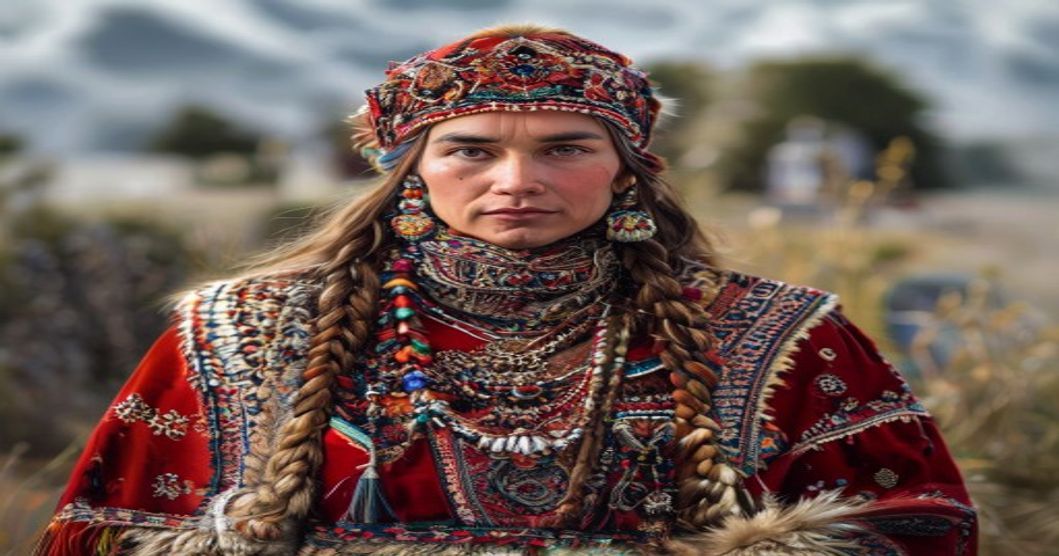
Historical Foundations and Cultural Significance of Gákti
The Gákti, widely recognized as Sámi traditional clothing, functions as a complex cultural archive rather than a mere garment. Historically woven across the Arctic regions of Norway, Sweden, Finland, and Russia, this attire served as a visual language that communicated an individual’s geographic origin, marital status, economic standing, and life stage before written documentation became accessible to indigenous communities. Each component of the Sámi traditional dress reflects centuries of adaptation to subarctic climates while preserving distinct ethnographic markers. The construction relies on layered reindeer garments, woolen tunics, and embroidered belts that collectively demonstrate advanced textile engineering tailored to extreme environmental conditions. Indigenous Sámi artisans utilized closed-weave techniques to trap warmth while maintaining breathability, a method passed through oral instruction and hands-on apprenticeship across generations.
Color Symbolism and Geographic Mapping
The chromatic palette of Sámi symbols and colors operates as a precise geographic coordinate system. Blue dominates western Sámi territories, particularly among the Lule Sámi and South Sámi groups, representing sky and water elements essential to reindeer pastoralism. Red threads, traditionally derived from madder root or later synthetic imports, signify vitality and are heavily concentrated in northern Norwegian and Swedish Sámi regions. Yellow and green accents frequently denote specific valleys or mountain ranges, allowing observers to identify a wearer’s home district from miles away. Black bases provide structural contrast and symbolize the long polar night, while white trim reflects seasonal reindeer fur cycles. Modern dyers continue to study these historical color codes to maintain authenticity in contemporary indigenous textiles.
Geometric Patterns and Spiritual Protections
Embroidery motifs within Gákti extend beyond decorative intent, embedding cosmological beliefs and protective charms into everyday wear. Concentric circles represent the sun and seasonal migration routes of reindeer herds, while zigzag lines mimic mountain ridges and river systems. Cross-stitch arrays often form star-like configurations that reference Sámi shamanic sky worship before Christianization influenced regional aesthetics. The placement of these patterns follows strict sartorial rules: chest panels align with respiratory vitality, sleeve borders correspond to labor domains, and skirt hems ground the wearer spiritually. Each stitch is executed using the distinctive Sámi embroidery technique, which locks threads against the fabric base to prevent unraveling during heavy physical work or harsh weather exposure.
Regional Classifications and Clan Identification
Gákti patterns explained through ethnographic classification reveal a highly structured system of visual taxonomy. Western Sámi groups, including the Skolt and Inari Sámi, favor wide embroidered belts called gaajkko that wrap multiple times around the waist, signaling clan affiliation through thread density and border width. Eastern and Southern Sámi variations incorporate heavier woolen outer layers with pronounced shoulder embroidery to denote hunting lineage. Marital status is communicated through belt construction: unmarried women wear single-layer woven sashes, while married individuals don multi-strand braided belts adorned with silver buttons or copper coins. These distinctions prevent social misidentification and reinforce community cohesion across vast, sparsely populated Arctic landscapes.
Traditional Textile Techniques and Material Sourcing
The structural integrity of Sámi cultural heritage textiles depends on meticulous raw material processing. Reindeer leather undergoes a multi-stage curing method involving brain tanning, air-drying, and mechanical softening using wooden beaters or iron rollers. This labor-intensive process yields supple yet durable fabric capable of withstanding decades of heavy use without losing insulating properties. Wool fibers are sourced from indigenous reindeer breeds known for their dense undercoat, which is hand-spun on drop spindles to maintain fiber alignment and natural lanolin content. The resulting yarn retains water-repellent qualities essential for outdoor survival.
Natural Dyeing Processes and Reindeer Leather Preparation
Historical Gákti dyeing methods relied entirely on locally foraged botanicals and mineral compounds. Birch bark produces earthy browns, crowberry leaves yield deep greens, and lichen extracts generate muted yellows. Iron-rich bog sediment acts as a mordant to fix colors permanently onto protein-based fibers. Contemporary artisans document these ancestral recipes to prevent knowledge loss, while academic institutions collaborate with Sámi cooperatives to standardize natural pigment extraction without compromising ecological balance. The integration of traditional chemistry with modern conservation science ensures that traditional Sámi dress components remain culturally accurate and environmentally sustainable.
Gákti in Modern Contexts and Cultural Preservation
Contemporary engagement with Gákti transcends ceremonial use, entering academic research, ethical fashion design, and indigenous rights advocacy. UNESCO recognition of Sámi textile practices has accelerated funding for intergenerational workshops where master weavers train youth in closed-weave loom construction and thread-locking methods. Fashion houses increasingly collaborate with Sámi cooperatives to produce limited-edition apparel that respects traditional color boundaries and pattern geometry, avoiding cultural appropriation by adhering to community-approved licensing frameworks. Digital archiving initiatives map historical garment collections across European museums, enabling researchers to track migration patterns and textile evolution without physical handling of fragile artifacts.
Community-Led Conservation and Educational Integration
Sámi-led organizations prioritize educational integration to safeguard indigenous clothing Europe heritage against commercial dilution. School curricula in Arctic regions incorporate hands-on textile modules where students learn fiber preparation, natural dye extraction, and symbolic motif placement under elder supervision. These programs emphasize that Gákti is not a static museum artifact but a living practice requiring continuous adaptation and respect. Research institutions publish open-access technical manuals detailing stitch density standards, leather curing timelines, and regional color variations to support both academic study and artisan revival. The ongoing documentation of these methodologies ensures that Sámi textile knowledge remains controlled by indigenous communities while contributing to global discussions on sustainable craftsmanship.
Frequently Asked Questions about Sami Traditional Clothing and Symbolism
What is Sami Traditional Clothing and Symbolism?
Sami Traditional Clothing, known as the gákti, is the indigenous attire of the Sami people of northern Scandinavia and Russia. It is rich in symbolism, where colors, patterns, and silver jewelry denote regional origin, marital status, social standing, and tribal affiliation. Each element serves as a visual language preserving centuries of cultural heritage.
Key facts about Sami Traditional Clothing and Symbolism
The gákti varies significantly across Sami regions, with distinct color schemes and cut styles identifying specific areas. Traditional garments are crafted from reindeer skin, wool, and linen, adorned with intricate embroidery, metal thread, and silver buckles. Historically worn for daily life and rituals, the clothing experienced a cultural revival in the 20th century and is now recognized as a vital symbol of Sami identity and resilience.