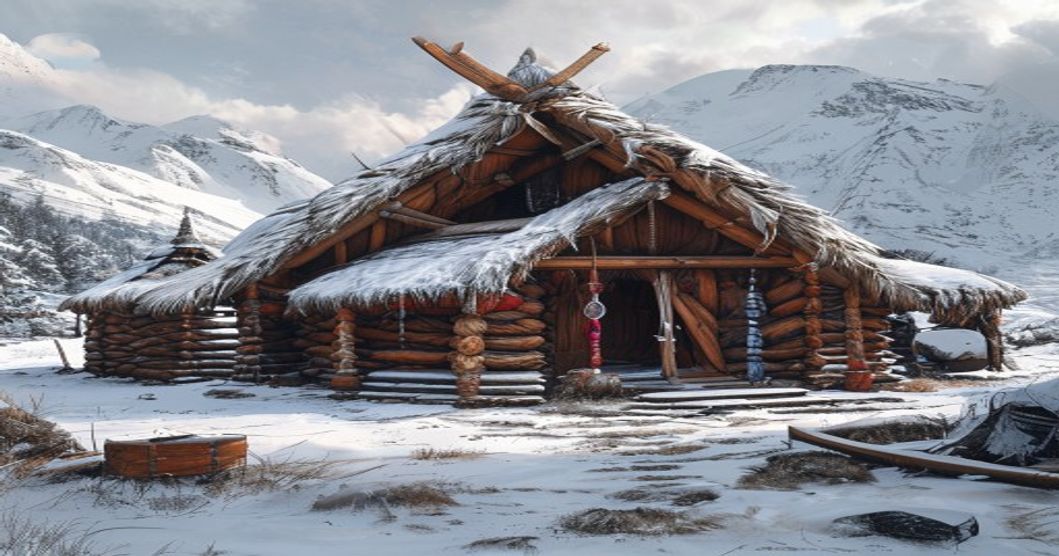
Traditional Sámi Dwellings: Architectural Diversity Across Sápmi
The indigenous Sámi people have historically adapted to the harsh subarctic climates of Sápmi through highly specialized shelter systems. These dwellings are not merely functional structures but represent centuries of ecological knowledge, material innovation, and cultural identity. Each dwelling type served distinct seasonal, economic, and geographical purposes within traditional Sámi society.
The Lavvu: Mobile Reindeer-Skin Tent for Seasonal Migration
The Lavvu functions as the primary semi-permanent shelter for Sámi reindeer herders during migration cycles. Constructed from a conical framework of birch or spruce poles, the structure is secured using traditional lashing techniques that allow rapid assembly and disassembly. The exterior is covered with layered reindeer hides, positioned hair-side inward to repel moisture while retaining insulating air pockets. A central ventilation shaft, adjustable via pole tension, regulates smoke from the interior hearth. The Lavvu’s diameter typically ranges between 4 to 6 meters, accommodating extended family units and livestock storage during summer pastures.
The Goahti: Insulated Wooden Cabin for Winter Settlements
Distinguished from the portable Lavvu, the Goahti serves as a semi-permanent winter residence built near established herding grounds. Traditional construction utilizes horizontal log cabin techniques, with joints sealed using moss, clay, and reindeer fat for thermal efficiency. The roof is layered with birch bark, followed by sod and earth to achieve R-values comparable to modern insulation standards. A stone or clay hearth anchors the interior, while raised wooden platforms provide elevated sleeping areas that minimize conductive heat loss from the subsoil. Regional variations exist between Norwegian, Swedish, and Finnish Sámi communities, reflecting localized timber availability and climatic demands.
The Telt: Compact Hunting and Fishing Shelter
While often conflated with the Lavvu in historical records, the Telt represents a distinct class of ultra-portable Sámi shelter designed for short-term expeditions. Constructed from a lightweight tripod or cross-frame of flexible willow branches, the Telt is covered with tightly fitted reindeer hides or birch bark sheets. Its reduced footprint (typically 2 to 3 meters in diameter) and absence of fixed hearth infrastructure prioritize speed and weight reduction. Sámi hunters utilized the Telt during winter trapping routes and coastal fishing migrations, where rapid deployment and minimal environmental impact were critical operational requirements.
Material Sourcing, Construction Techniques, and Environmental Integration
Sámi dwelling architecture operates on principles of circular material economies. All structural components are harvested from local boreal ecosystems using sustainable foraging methods. Wooden poles undergo traditional smoking or air-curing to resist rot and insect degradation. Hide treatments involve lichen-based tanning agents that maintain flexibility across temperature extremes. The spatial orientation of each dwelling aligns with prevailing wind patterns and solar exposure, optimizing passive thermal regulation without artificial climate control.
Cultural Significance and Contemporary Architectural Legacy
These traditional shelters encode Sámi cosmology through their geometric symmetry and directional alignments. The central hearth represents community continuity, while the conical Lavvu mirrors indigenous concepts of mountain landscapes and celestial navigation. Modern Scandinavian architecture has increasingly incorporated Sámi shelter principles into sustainable design, particularly in cross-laminated timber construction and natural insulation methodologies. Preservation initiatives across Sápmi prioritize documented reconstruction protocols to maintain structural authenticity against industrial replication.
Traditional Sami Shelters Explained: Core Types and Structures
The Sámi people developed three distinct shelter types across Fennoscandia. Each design responds to specific seasonal cycles and reindeer migration patterns. Builders prioritized thermal efficiency over permanent foundations.
The Lavvu: Conical Winter Dwelling
The lavvu stands as the primary winter structure. Builders used six to eight main poles tied at the apex with reindeer sinew cordage. The conical shape deflects heavy snow loads effectively. Birch bark layers line the interior walls to reflect heat toward the central fire.
The Goahti: Semi-Subterranean Autumn Home
The goahti digs into peat or soil to utilize earth thermal mass. Walls rise one meter above ground before tapering inward. Packed moss and turf fill the gaps between wooden ribs. This design stabilizes internal temperatures during autumn storms.
The Telt: Portable Summer Tent
The telt relies on a single central pole for rapid deployment. Reindeer hides overlap to shed summer rain completely. Builders leave the lower edge open for cross-ventilation. The structure weighs under fifteen kilograms when disassembled.
Construction Methods and Material Sourcing
Sámi builders harvested materials within a five-kilometer radius. Green willow branches form flexible lashings that tighten as they dry. Spruce heartwood provides the primary structural frame. Every joint relies on friction and tension rather than metal fasteners.
Timber, Birch Bark, and Reindeer Hide
Young birch trees yield bark strips up to two meters long. Builders cure the bark under tension to prevent curling. Winter-killed reindeer hides offer superior wind resistance. The hide density averages two hundred grams per square meter.
Frame Assembly and Weight Distribution
Poles intersect at calculated angles to transfer roof load directly to the ground. Diagonal cross-bracing prevents lateral sway during high winds. Builders carve notches into poles to lock the geometry in place. The apex tie point bears nearly eighty percent of the total structural stress.
Anchoring Systems for Arctic Conditions
Ground stakes driven into frozen soil secure the base ropes. Builders pack crushed stone and gravel around stake holes to prevent uplift. Ice anchors replace metal stakes when the permafrost thaws. Tension ropes distribute wind pressure evenly across the perimeter.
Cultural Function and Environmental Adaptation
Shelter design dictates daily Sámi routines. Fire placement governs airflow and living zones. Migration routes determine material availability and seasonal structures.
Heating Systems and Smoke Ventilation
The central peat fire burns at six hundred degrees Celsius. Smoke curtains form naturally at the pole junctions to retain heat. Builders adjust the apex opening to control draft velocity. Ash layers on the floor absorb moisture and provide insulation.
Spatial Organization for Family and Livestock
The sleeping platform sits on the leeward side away from direct flame. Storage niches carved into the frame keep provisions dry. Reindeer rest near the entrance to share body heat. The interior divides into three functional zones without walls.
Seasonal Migration and Shelter Rotation
Groups relocate every forty days to prevent pasture degradation. Each shelter type matches a specific ecological zone. Winter camps require thick insulation against minus thirty degrees Celsius. Summer sites prioritize airflow over thermal retention.
Preservation Status and Modern Applications
Industrialization disrupted traditional building knowledge. Contemporary architects now study these structures for passive design principles. Researchers document assembly sequences to preserve technical vocabulary.
Indigenous Craft Revival Programs
Municipal grants fund **master-apprentice workshops** across northern Norway. **Digital mapping** tracks remaining elder knowledge holders. Schools integrate **traditional lashing techniques** into geometry curricula. Young builders now compete in national shelter construction championships.
Museum Exhibits and Cultural Documentation
Researchers use **laser scanning** to record exact pole measurements. **3D printing** recreates missing structural components for study. Archives preserve **audio recordings** of assembly chants and timing signals. These records prevent irreversible loss of technical vocabulary.
Sustainable Architecture Lessons
Modern builders copy the **modular tension framework** for emergency housing. **Living roof systems** mimic the Sámi turf layering method. Architects apply **passive solar alignment** principles observed in historic camps. The original designs achieve zero operational carbon through material locality.
Frequently Asked Questions
What is Traditional Sami Shelters Explained?
Traditional Sami shelters explained refers to the comprehensive overview of the historical dwellings used by the indigenous Sami people across northern Scandinavia, including structures like the lavvu, goahti, and katthu. It details their architectural design, construction methods, cultural relevance, and functional adaptation to Arctic climates.
Key facts about Traditional Sami Shelters Explained
Key facts highlight that these traditional shelters were highly portable, crafted from sustainable local materials such as birch poles, reindeer skins, and moss, designed to provide optimal insulation and ventilation, and served as essential hubs for Sami livelihood, storytelling, and seasonal reindeer migration patterns.