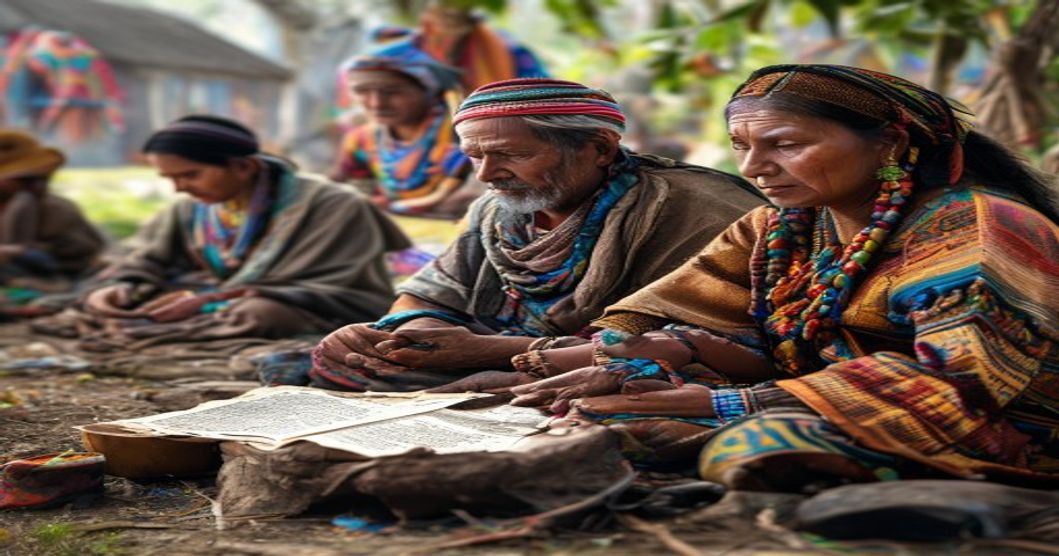
Understanding the Foundations of Sami Collective Memory
The architecture of Sami collective memory rests on interconnected systems that operate outside conventional archival frameworks. Indigenous epistemology within these communities prioritizes lived experience, environmental reciprocity, and performative continuity over static documentation. Knowledge transfer occurs through structured intergenerational dialogue, where elders function as active custodians rather than passive storytellers. The transmission process demands direct participation, ensuring that historical events, ecological patterns, and moral frameworks remain dynamically relevant to contemporary decision-making.
- Performative Oral Tradition: Memory encodes through rhythm, repetition, and acoustic variation. The joik system operates as a mnemonic architecture, embedding genealogical records, migration routes, and climatic shifts within melodic structures. Each performance recalibrates the narrative to align with current community needs while preserving ancestral accuracy.
- Linguistic Mapping: Northern Sámi, Lule Sámi, and Southern Sámi dialects function as cognitive cartographies. Specific lexical categories encode precise environmental conditions, reindeer behavior patterns, and seasonal transitions that standard languages cannot replicate. Vocabulary loss directly correlates with territorial knowledge fragmentation.
- Territorial Reciprocity: Landscapes serve as living archives. Topographical features function as chronological markers, where river bends, mountain formations, and grazing corridors maintain historical continuity. Spatial navigation requires fluency in place-based narratives that document centuries of human adaptation.
- Material Epistemology: Duodji craftsmanship operates as tactile documentation. Tool modifications, textile patterns, and bone carving techniques preserve technical knowledge across generations. Each artifact contains encoded instructions for survival strategies, resource management, and ethical boundaries.
These preservation mechanisms function simultaneously rather than sequentially. Linguistic precision anchors territorial awareness, which reinforces performative traditions, while material culture provides tangible verification of historical claims. Modern documentation efforts succeed only when they integrate these existing frameworks rather than imposing external archival methodologies. The resilience of Sami collective memory depends on maintaining the functional relationships between language, landscape, performance, and craft.
Historical Roots of Oral Tradition in Sápmi
The oral archives of Sápmi emerged from a pre-Christian cosmological framework where memory was not stored in written texts but encoded in seasonal rhythms, ecological knowledge, and communal performance. Early Sámi societies relied on dynamic narrative systems that synchronized human activity with Arctic ecosystems. Reindeer migration patterns, coastal fishing cycles, and tundra botanical markers functioned as living calendars, each requiring precise recall transmitted through direct instruction rather than abstract documentation.
Joik served as the primary mnemonic technology, operating far beyond musical expression. Each joik contained geographic coordinates, historical events, clan lineages, and survival protocols embedded within melodic structures that resisted transcription. The vocal technique relied on throat placement, breath control, and tonal variation to preserve linguistic nuances that standard orthography could not capture. Generations of knowledge keepers trained youth through immersive apprenticeship during mátki journeys, where practical navigation, weather reading, and animal tracking were taught alongside ancestral narratives.
- Landscape anchoring: Stories were tied to specific rock formations, waterways, and burial sites, creating a geographic memory map that allowed entire communities to navigate both physical terrain and historical timelines simultaneously.
- Seasonal transmission cycles: Knowledge transfer intensified during winter encampments and summer reindeer roundups, where elders demonstrated craft techniques while recounting clan histories, resource management rules, and spiritual protocols.
- Multisensory reinforcement: Runic drum patterns, lute rhythms, and tactile crafting methods provided supplementary memory cues, ensuring that information survived environmental disruptions or community displacement.
External pressures during the seventeenth to nineteenth centuries attempted to dismantle these systems through missionary campaigns and state assimilation mandates. Schools prohibited Sámi speech, and written records replaced cultural practice as the default metric of legitimacy. Oral networks adapted by layering historical content within ecological metaphors and animal behavior descriptions. This strategic encoding preserved genealogical data, land rights documentation, and resistance narratives despite systematic erasure. Contemporary Sámi researchers continue to decode these layered archives through collaborative fieldwork, verifying that oral memory structures function as rigorous historical repositories rather than informal folklore.
Ancestral Narratives and Kinship Networks
The preservation of Sami collective memory relies fundamentally on structured oral transmission and deeply interwoven kinship systems that operate across generations. Rather than depending on written archives, these communities maintain historical continuity through carefully curated verbal practices. Elders function as living repositories, encoding ecological data, migration patterns, and spiritual frameworks into narratives that align with seasonal cycles. Each family line maintains distinct genealogical records, often verified through cross-referencing multiple branches of extended networks. This decentralized verification process ensures accuracy while preventing the loss of localized knowledge.
- Seasonal migration routes serve as moving classrooms where herders teach calving ground identification, lichen foraging zones, and ice safety protocols through real-time decision making.
- Duodji craftsmanship requires years of supervised practice, with blade tempering techniques, reindeer sinew threading, and drum painting following strict apprenticeship protocols.
- Elder-mediated feedback loops correct posture, tool grip, and material selection through continuous demonstration rather than formal instruction.
- Winter-to-Spring Transitions: Herders follow established ice routes across frozen lakes and rivers, using centuries-old landmarks like carved birch markers and wind-sculpted terrain features to navigate whiteout conditions. These navigation protocols are taught through direct observation and corrective feedback during family units.
- Summer Pasture Assembly Points: Communal gatherings at designated corrals and lake shores serve as knowledge exchange nodes. Elders document reindeer birth rates, pasture degradation, and weather anomalies while simultaneously transmitting genealogical records and traditional ecological classifications.
- Autumn Migration Coordination: Large-scale movements require synchronized decision-making across multiple families. Shared protocols for herd separation, predator avoidance, and trail marking reinforce intergenerational accountability and collective responsibility.
- Seasonal Transmission Sites: Winter solstice gatherings and spring calving camps operate as primary pedagogical spaces where elders demonstrate microtonal control, rhythmic synchrony with wind patterns, and melodic variation tied to specific geographical markers.
- Apprentice Acquisition Methods: Knowledge absorption occurs through direct acoustic imitation rather than theoretical explanation. Learners must internalize timbre, emotional cadence, and breath regulation before progressing to complex repertoires or restricted motifs.
- Ecological Information Storage: Geographical landmarks, migration corridors, and atmospheric indicators are embedded within recurring melodic phrases, converting performance into a functional navigation and survival instrument.
- Gákti garments serve as geographic and clan identifiers through precise color combinations, button placements, and wool embroidery motifs that correspond directly to specific valleys, waterways, or family lineages across Finnmark, Troms, and historical Sápmi territories.
- Reindeer herding implements such as the kuovssu antler scraper and gáldu milk pail preserve pastoral techniques that predate written documentation. Wear patterns on leather handles reveal centuries of ergonomic optimization, while brass fittings often contain trade markers linking Sami pastoralists to historical European commercial networks.
- Birch bark containers demonstrate precise knowledge of tannin extraction and moisture regulation. The layering techniques prevent spoilage while encoding seasonal processing schedules essential for winter survival in subarctic climates.
- Linguistic Preservation: Machine learning models trained on verified Sami dialect datasets automate transcription and dialect mapping, reducing documentation latency across remote settlements.
- Provenance Security: Blockchain-based registration systems secure ownership of digitized duodji patterns, genealogical records, and textile motifs, preventing unauthorized commercial replication.
- Governance Structure: Decentralized data hosting combined with community-led editorial boards guarantees that institutional control remains exclusively within Sámi administrative bodies rather than external academic or corporate entities.
- Format obsolescence threatens legacy digital files, requiring proactive migration strategies to XML-TEI, JSON-LD, or standardized PDF/A formats.
- Funding dependencies on external grants create fragmentation across Nordic and North American repositories.
- Community-led digitization cooperatives increasingly bypass institutional bottlenecks by deploying mobile scanning units and open-source archival software.
- Intergenerational apprenticeship models pair youth with elder knowledge holders for continuous skill transmission
- Seasonal curriculum modules align academic instruction with reindeer calving, migratory routes, and natural resource cycles
- Community-archived oral recordings replace standardized textbooks with verified local testimonies
- Crowdsourced lexical databases aggregate regional word variants, flagging archaic terms alongside contemporary usage through community verification workflows.
- Augmented reality field guides overlay historical place names onto modern landscapes using GPS-triggered audio cues, reinforcing topographical language retention.
- Virtual classroom environments synchronize synchronous language sessions with asynchronous memory archives, enabling diaspora participants to access curated ethnographic collections.
- Linguistic attrition accelerates memory loss when fluent elders pass away without adequate intergenerational transmission channels. Sami languages encode unique taxonomies for flora, fauna, and weather patterns that standard languages cannot replicate, making translation inherently reductive.
- Land tenure disputes fragment sacred sites and historical gathering grounds, physically erasing locations where rituals, genealogical accounts, and craft techniques were traditionally demonstrated.
- Institutional documentation practices often prioritize academic extraction over community stewardship, resulting in archives that lack contextual nuance or restrict indigenous access to culturally sensitive materials.
- Language criminalization replaced dialects with standardized national tongues, severing intergenerational transmission of ecological knowledge, legal customs, and oral history.
- Land dispossession policies dismantled communal grazing territories, forcing relocations that fractured settlement patterns essential to seasonal migration cycles.
- Educational curricula omitted Sámi contributions from national historiography, institutionalizing historical erasure across textbooks and public archives.
- Ice stability degradation forces herders to reroute seasonal migrations, increasing livestock mortality and disrupting grazing calendars.
- Unpredictable freeze-thaw cycles compromise snow shelter construction and traditional food preservation methods reliant on consistent cold periods.
- Shifting vegetation zones reduce lichen availability, directly impacting reindeer nutrition and forcing earlier pasture transitions.
- Mentorship Transmission Frameworks: Structured elder-youth pairing protocols facilitate oral knowledge transfer through documented practice sessions. Participants record narrative techniques, song structures, and craft-specific terminology before archival digitization occurs, preserving phonetic nuances often lost in written documentation.
- Youth-Led Media Production: Equipment distribution programs equip adolescents with field recording gear and editing software to produce dialect-based podcasts, visual ethnographies, and social media campaigns. Content creation bypasses institutional curation while maintaining linguistic authenticity through community oversight committees.
- Institutional Participation Incentives: Municipal subsidies cover transportation costs for rural students accessing centralized language hubs without disrupting agricultural cycles or family labor requirements. Stipend allocations compensate households hosting visiting linguists and funding weekend immersion retreats.
- Evaluation Metric Standardization: Program success tracks dialect retention rates, vocabulary acquisition velocity, and cross-generational communication frequency rather than administrative enrollment counts. Longitudinal studies measure functional fluency in domestic settings, digital creation output, and peer network adoption patterns.
- Customary Law Recognition: Judicial precedents increasingly accept traditional land use patterns as legitimate legal evidence, preserving historical spatial knowledge tied to specific territories.
- Resource Management Rights: Statutory grazing permits and hunting quotas maintain ecological practices that encode generational environmental data.
- Linguistic Standardization: Official language policies fund orthographic development, dictionary compilation, and digital archiving of oral narratives.
- Participatory Action Research Frameworks: Projects begin with joint methodology design where elders define research questions aligned with community priorities rather than external academic interests.
- Elder-Led Verification Protocols: All documented information requires cross-referencing by at least three recognized knowledge holders before archival acceptance.
- Digital Stewardship Agreements: Communities retain exclusive rights to sensitive cultural data, with access tiers determined through consensus-based governance structures.
- Community-Controlled Digital Infrastructure: Indigenous data sovereignty initiatives enable Sámi groups to host, classify, and restrict access to sensitive cultural materials using self-managed servers. Metadata schemas prioritize indigenous epistemologies over Western archival standards, ensuring that digital preservation aligns with local value systems.
- Language Immersion Networks: Autonomous language nests operate independently of state education frameworks, utilizing elder-to-youth transmission models in domestic and seasonal work environments. These networks establish linguistic continuity through daily functional use rather than classroom instruction alone.
- Legal & Land Rights Advocacy: Community-led legal teams secure territorial recognition that protects sacred sites and traditional resource zones. Land tenure agreements directly correlate with cultural preservation outcomes, as restricted access to ancestral territories accelerates knowledge erosion.
- Oral Tradition: Stories, genealogies, and historical events are primarily transmitted through spoken word.
- Joik Music: Traditional Sámi singing preserves landscapes, ancestors, and personal histories.
- Duodji (Craftsmanship): Traditional handicrafts encode cultural symbols, regional identities, and practical ecological knowledge.
- Reindeer Herding & Migration: Seasonal routes and herding practices maintain a living connection to ancestral lands and ecological memory.
Traditional Mechanisms for Transgenerational Knowledge Transfer
Sami knowledge preservation relies on tightly integrated oral, ecological, and craft-based systems rather than written archives. The foundation of this continuity lies in daily practices where learning occurs through direct observation, guided participation, and repeated environmental interaction. Elders function as living repositories, structuring instruction around seasonal rhythms, animal behavior, and landscape navigation. This approach ensures that theoretical understanding remains bound to practical application, preventing abstraction from detaching knowledge from its original context.
Oral transmission operates through structured narrative cycles and mnemonic songs known as joik. Each joik encodes specific topographical markers, weather patterns, or historical events within melodic contours and rhythmic phrasing. Younger members memorize these sequences through vocal repetition during travel, hunting expeditions, and winter gatherings. The linguistic structure of North Sámi, South Sámi, and Inari Sámi dialects further supports retention through compound nouns that compress ecological relationships into single terms, reducing cognitive load while preserving precise environmental data.
Gathering structures such as the goahti reinforce this transfer through shared labor and synchronized routines. Tasks like hide processing, fire management, and snow shelter construction demand coordinated movement, allowing novices to internalize timing, weight distribution, and spatial awareness without verbal explanation. Knowledge validation occurs through community recognition of successful harvests, accurate navigation, and proper tool maintenance. When a young herder predicts a storm using cloud formations or identifies animal trails through track analysis, the community acknowledges competence through resource sharing and decision-making inclusion. This merit-based progression replaces age-based authority, ensuring that only verified knowledge enters the collective archive.
Climate shifts and modernization pressures have not erased these mechanisms but forced adaptation. Digital recording supplements oral transmission, yet core verification remains physical. Learners still touch bark to identify species, taste snow to assess moisture content, and feel reindeer hide thickness to determine tanning readiness. The continuity of Sami collective memory depends on this tactile foundation, where abstract concepts must pass through hands, ears, and landscape before achieving cultural permanence.
Gathering Practices and Seasonal Migration Routes
The seasonal migration cycles of Sami communities function as living archives, where geographic movement directly encodes historical continuity. Unlike static monuments, these routes operate through repeated physical engagement with the landscape. Each generation traverses the same corridors between winter pastures in dense boreal forests and summer grazing zones across mountain plateaus, transforming distance into a mnemonic framework. The knowledge embedded in these pathways includes microclimatic shifts, reindeer behavioral patterns, and historical territorial boundaries that predate modern state borders.
These practices preserve memory through embodied repetition rather than textual documentation. Navigation techniques rely on reading lichen growth patterns, snow drift formations, and bird migration cues—skills that cannot be fully digitized or removed from direct environmental interaction. When herders identify a specific grazing area by the presence of reindeer moss density or historical fire scars, they activate layered historical data spanning centuries. Modern mapping technologies supplement but do not replace these systems, as algorithmic routes lack the contextual nuance required for animal welfare and ecological sustainability. The persistence of these migration rhythms maintains cultural cohesion by forcing regular face-to-face interaction across dispersed family groups, ensuring that linguistic variations, dialectal pronunciations, and regional storytelling traditions remain dynamically transmitted rather than fossilized in archival repositories.
Sami Storytelling Formats and Performance Contexts
The Sami oral tradition functions as a dynamic archival system, encoding centuries of ecological data, kinship structures, and historical continuity through precisely calibrated performance formats. At its core lies the joik, a vocal structure that rejects linear narrative in favor of phonetic embodiment. Performers generate melodic contours that mirror topographical features, animal movement patterns, or ancestral lineages. Pitch modulation, breath pacing, and syllabic repetition operate as mnemonic anchors, allowing listeners to reconstruct spatial relationships and seasonal calendars without textual reference.
Complementary formats include bijvuo, a lyrical prose delivery practiced during winter assemblies, and duodje narratives that embed craft methodology within familial dialogue. These structures serve as cognitive architectures, transferring resource management protocols, predator tracking techniques, and weather interpretation markers across generations. Performance environments dictate structural rigidity: informal reindeer camp gatherings encourage improvisation and responsive audience participation, while seasonal festivals enforce strict adherence to inherited phrasing, vocal ornamentation, and acoustic alignment with natural terrain.
Modern preservation efforts prioritize contextual integrity over isolated documentation. Community protocols restrict recording access for sacred or lineage-specific motifs, ensuring that transmission boundaries remain intact. Local workshops, intergenerational exchange programs, and curated digital archives operate under established performance guidelines, maintaining structural fidelity while adapting to contemporary logistical requirements.
Material Culture as Memory Anchors
The preservation of Sami collective memory relies heavily on tangible artifacts that function as physical repositories of ancestral knowledge. Unlike purely oral traditions, material objects provide enduring references that withstand environmental degradation and generational displacement. Traditional duodji craftsmanship operates as a living archive where each carved reindeer antler tool or woven birch bark container encodes specific ecological data, seasonal migration routes, and kinship networks. The tactile engagement required to shape these items ensures technical knowledge transmits through muscle memory rather than abstract instruction.
These artifacts anchor memory through ritualized use rather than static exhibition. When elders demonstrate how to stitch snow goggles or prepare rawhide for drum frames, they activate contextual knowledge about weather prediction, animal behavior, and spiritual boundary markers. The chemical properties of reindeer fat used in leather treatment create antimicrobial barriers that historically protected tools from fungal decay, allowing objects to survive centuries in permafrost conditions. Archaeological excavations consistently reveal identical tool geometries across distinct sediment layers, proving unbroken technical lineages. When conservation laboratories analyze fiber tension in historic weaving looms, they discover mathematical ratios matching contemporary production standards. This quantitative consistency demonstrates how material culture functions as a self-correcting mnemonic system that adapts to environmental pressures while preserving core structural principles. The physical degradation of materials actually reinforces their function as memory anchors; repaired cracks in wooden sleds or mended wool fibers symbolize resilience and continuity. Contemporary Sami artisans deliberately incorporate traditional joinery methods into modern production, ensuring structural logic remains embedded in daily objects. Workshop environments where youth learn to split wood along natural grain lines reinforce ecological observation skills essential for survival. This material continuity prevents cultural fragmentation during rapid socioeconomic transitions, maintaining direct sensory links to ancestral landscapes without requiring verbal narration.
Modern Adaptations in Digital and Institutional Frameworks
Sami communities have systematically integrated advanced digital infrastructure to safeguard intergenerational knowledge that historically depended on oral transmission and seasonal land-based practices. Digital repositories managed by the Sámi University of Applied Sciences and the Nordic Sámi Institute curate over two million digitized assets, including field recordings, archival photographs, and linguistic corpora. These collections adhere to Dublin Core metadata standards and Linked Open Data protocols, guaranteeing long-term preservation and seamless interoperability within global cultural heritage networks.
Community-driven platforms such as Digitalt samisk kulturarv enable direct participation from elders and knowledge holders. Users annotate audio files, map traditional place names onto geographic information systems, and tag ecological data linked to reindeer migration corridors, berry harvesting zones, and historical fishing sites. This spatial documentation transforms abstract cultural memory into actionable geographic datasets that inform contemporary land management and environmental policy.
Institutional frameworks have matured through formalized agreements between Sámi parliaments, municipal archives, and international organizations like UNESCO and ICOMOS. These partnerships finance bilingual educational software, immersive virtual reality reconstructions of historic dwelling structures, and open-access archives for joik repertoires that were previously restricted to familial or ceremonial contexts. Digital rights management protocols now regulate access to sensitive ritual recordings, ensuring compliance with traditional ownership norms while expanding scholarly availability.
Archival Digitization of Sami Folklore and Genealogies
The digitization of Sámi folklore and genealogical records represents a critical infrastructure for cultural continuity. Archival teams prioritize high-resolution scanning of fragile vellum manuscripts, handwritten family registers, and early ethnographic field notes collected during the late nineteenth and twentieth centuries. Audio preservation follows strict technical protocols, converting analog reel-to-reel tapes and vinyl recordings into lossless WAV or FLAC formats while applying spectral repair to remove degradation artifacts. Metadata encoding relies on standardized frameworks such as Dublin Core and CIDOC CRM, enabling cross-institutional interoperability and precise contextual tagging of yoik melodies, kinship networks, and traditional land-use patterns. Standardized cross-referencing links oral recordings to corresponding written transcripts, establishing a searchable knowledge graph that supports linguistic analysis and historical verification.
Institutional partnerships drive this preservation network. The Arctic University Museum of Norway, the Sámi Archives in Kárášjohka, and the National Archives of Finland coordinate cataloging initiatives that respect indigenous data sovereignty principles. Researchers implement dynamic consent models, ensuring living elders and descendant communities retain authority over access levels and distribution channels. This approach prevents extractive research practices while maintaining academic transparency.
Technical workflows address both immediate preservation and long-term accessibility. Optical character recognition algorithms trained on historical Sami orthographies reduce manual transcription errors, though human verification remains essential for dialectal variations and archaic terminology. 3D photogrammetry captures physical artifacts such as duodji tools and ceremonial garments, creating interactive digital twins accessible through virtual museum platforms. Geospatial mapping layers overlay digitized genealogical data with ancestral migration routes, reindeer grazing territories, and sacred landscapes, reinforcing the connection between lineage and environment.
These grassroots initiatives prioritize educational integration, embedding preserved materials into Sámi language curricula and land rights litigation documentation. The resulting digital ecosystem transforms historical fragments into actionable cultural infrastructure, sustaining collective identity across generational divides without relying on centralized control.
Community-Led Educational Programs in Northern Europe
Autonomous pedagogical networks across the Nordic region operate outside standardized national frameworks to transmit Sámi epistemologies directly through generational cohorts. These initiatives prioritize place-based immersion, where classroom boundaries dissolve into traditional grazing territories, wetland ecosystems, and coastal fishing grounds. Instructors utilize multilingual instruction that interweaves Northern Sámi, Lule Sámi, and Southern Sámi dialects with contextual ecological terminology. Language acquisition occurs through narrative reconstruction rather than grammatical drills, ensuring that historical trauma, migration patterns, and seasonal adaptation strategies remain embedded within daily vocabulary.
Practical knowledge transmission forms the structural foundation of these programs. Reindeer husbandry techniques, duodji craft methodologies, and traditional navigation practices require tactile engagement rather than theoretical abstraction. Participants learn snow condition analysis, lichen identification, and animal behavior interpretation through direct environmental interaction. Assessment metrics prioritize demonstrable competency over written examinations, with elders evaluating proficiency based on functional application in real-world scenarios.
Institutional partnerships operate under strict community governance protocols to prevent cultural extraction or academic commodification. Regional Sámi councils allocate municipal funding toward curriculum development while maintaining editorial control over all pedagogical materials. Digital preservation initiatives utilize decentralized storage systems to archive field recordings, genealogical charts, and ecological datasets without external institutional oversight. Cross-border collaboration enables resource sharing between Norwegian, Swedish, and Finnish programs while preserving distinct regional dialectal variations and historical narratives. Funding architectures depend on Sámi parliamentary grants, private cultural foundations, and targeted European heritage initiatives, ensuring financial independence from mainstream educational bureaucracies.
These autonomous structures successfully counteract historical assimilation policies by establishing knowledge sovereignty as a core operational principle. Educational outcomes measure cultural continuity rather than standardized academic benchmarks, creating sustainable frameworks for long-term collective memory preservation across Northern European Sámi territories.
Digital Platforms for Language Revitalization and Memory Mapping
Digital infrastructure has fundamentally transformed how Sami communities document, sustain, and transmit linguistic heritage across fragmented geographic territories. Interactive mapping tools now integrate geospatial data with oral recordings, enabling users to locate historical settlement patterns alongside dialect-specific vocabulary. When a community member uploads an audio archive of traditional yoik melodies or field interviews, metadata tags automatically link the file to precise coordinates, creating a living cartographic record that evolves with each contribution.
Mobile applications developed by indigenous technology cooperatives prioritize offline functionality, ensuring accessibility in regions with limited broadband connectivity. These tools utilize speech recognition algorithms trained exclusively on Sami phonetics, allowing real-time translation between standard Norwegian, Swedish, Finnish, and local dialects. The underlying architecture relies on open-source databases that enforce strict data sovereignty protocols. Contributors retain full ownership of uploaded materials while granting the platform non-exclusive licensing for educational distribution.
Technical implementation requires rigorous adherence to FAIR data principles while respecting indigenous governance frameworks. Platforms deploy automated dialect classification models that cross-reference phonetic patterns against established linguistic corpora, reducing manual annotation burdens. Community moderators apply contextual filtering to prevent cultural misappropriation, ensuring documentation aligns with local knowledge protocols. Sustainable maintenance depends on hybrid funding structures combining municipal grants, academic partnerships, and decentralized community contributions.
Long-term viability hinges on continuous algorithmic refinement and intergenerational technical training. Young developers integrate traditional ecological knowledge into database schemas, while elder linguists validate semantic accuracy through iterative review cycles. This collaborative architecture transforms passive archives into active linguistic ecosystems, where every uploaded recording, mapped location, and verified translation strengthens the structural integrity of Sami memory preservation.
Challenges Threatening Sami Collective Memory Preservation
Collective memory within Sami communities faces multidimensional pressures that stem from systemic, environmental, and technological shifts. The erosion of traditional ecological knowledge occurs as rapid climate change alters reindeer migration routes, disrupts coastal fishing cycles, and degrades winter landscape features essential to oral storytelling. These environmental transformations directly sever the link between territorial experience and generational instruction, leaving younger generations without the physical anchors required to validate ancestral narratives.
The digital transition introduces structural vulnerabilities despite its archival potential. Platform algorithms favor standardized content formats, marginalizing non-linear Sami knowledge systems that rely on cyclical repetition and place-based context. Automated transcription tools frequently misrecognize dialectal variations, introducing systematic errors into digital repositories. Simultaneously, urban migration isolates youth from elder-led learning environments, replacing immersive apprenticeship with fragmented online resources that lack cultural grounding.
Legal frameworks across Scandinavia continue to lag behind customary land use patterns, creating bureaucratic barriers that prevent communities from formally protecting memory-intensive landscapes. When development projects override traditional territorial boundaries, they simultaneously erase historical markers and disrupt the spatial continuity required for collective recall. Effective preservation demands sovereign control over archival decisions, multilingual educational infrastructure, and legal recognition of place-based knowledge as protected cultural heritage.
Assimilation Policies and Historical Suppression
The systematic dismantling of Sámi cultural infrastructure began in the late nineteenth century when Scandinavian governments implemented aggressive assimilation policies designed to erase indigenous identity. Norway’s Norwegianization campaign (1891–1950s) explicitly targeted Sámi children, mandating that all public education occur exclusively in Norwegian. Swedish and Finnish authorities adopted parallel frameworks, establishing state-run boarding schools where youth faced corporal punishment for speaking their native dialects or practicing traditional livelihoods.
These measures generated profound intergenerational memory disruption. Elders who had sustained knowledge through joik traditions, reindeer husbandry calendars, and customary law found their practices classified as backward or illegal. Children absorbed by boarding schools returned with degraded linguistic capacity, weakening community cohesion and accelerating cultural fragmentation. Government records from the era deliberately omitted Sámi place names, replacing them with Norwegianized toponyms that obscured territorial claims and historical continuity.
Resistance emerged through clandestine preservation networks. Families memorized prohibited dialects in domestic spaces, concealed traditional garments beneath state-approved clothing, and transmitted ecological data through coded agricultural practices. Legal challenges mounted throughout the twentieth century, culminating in landmark rulings that recognized Sámi land rights and mandated bilingual education. Contemporary archival projects digitize suppressed manuscripts, reconstruct displaced burial sites, and map historically erased migration routes to restore fragmented collective memory.
Climate Change Impact on Traditional Ecological Knowledge
Rapid environmental shifts are fundamentally disrupting the observational frameworks that sustain Sami traditional ecological knowledge. Reindeer herding, fishing, and foraging practices depend on highly specific weather patterns, snowpack density, and seasonal vegetation cycles that have remained relatively stable across centuries. Accelerated warming in northern latitudes has altered ice formation timelines, destabilized winter pastures, and forced migratory routes to shift beyond historically documented boundaries.
When environmental markers no longer align with generational guidelines, the practical application of ancestral wisdom becomes increasingly complex. Elders who once taught youth how to read wind direction for storm prediction or identify safe crossing points on thawing lakes now face conditions that defy established indicators. This mismatch threatens not only subsistence livelihoods but also the transmission of place-based knowledge that forms the core of Sami collective memory.
Communities are responding by documenting deteriorating ice conditions through GPS tracking, satellite imagery analysis, and standardized field logs. Younger generations integrate real-time weather forecasting with historical snow depth records to adjust grazing schedules dynamically. Community-led environmental monitoring networks have emerged across Sápmi, capturing microclimate variations that traditional observation alone cannot account for. These initiatives preserve ecological data while reinforcing cultural continuity.
Adaptive strategies also include revising land-use agreements, negotiating seasonal access rights with agricultural authorities, and establishing youth mentorship programs where knowledge holders record oral histories alongside contemporary climate data. The integration of modern monitoring tools does not replace traditional practices but extends their reach. When snowpack melts earlier each year, herders adjust pasture rotation cycles using both satellite vegetation indices and generational migration patterns. Fishing communities track altered spawning seasons by combining water temperature sensors with historical catch logs maintained in family archives.
Such hybrid approaches maintain the functional relevance of ancestral knowledge while addressing unprecedented environmental volatility. Collective memory functions as a living archive, adapting to new realities without discarding foundational ecological principles. The preservation of Sami environmental wisdom therefore requires institutional support for intergenerational documentation, cross-border data sharing, and recognition of indigenous monitoring systems within regional climate adaptation frameworks.
Intergenerational Language Shift and Youth Engagement Strategies
The fragmentation of heritage language transmission across Sami households originates from systemic assimilation pressures and socioeconomic realignment over successive decades. Grandparental generations predominantly maintain full fluency in native dialects, while parental cohorts frequently default to national languages for professional mobility and administrative navigation. Adolescents increasingly consume digital media, educational content, and peer communication exclusively through dominant linguistic frameworks, accelerating lexical attrition and reducing active speaking confidence. This structural gap requires targeted interventions that bridge historical continuity with contemporary youth identity formation.
Effective revitalization protocols prioritize immersion architectures that embed linguistic practice within functional contexts rather than isolated classroom exercises. Early childhood language nests establish daily routines around traditional ecological terminology, reindeer husbandry vocabulary, and seasonal navigation concepts, transforming abstract grammatical structures into practical communication tools. Secondary education modules integrate dialect preservation with modern STEM curricula, ensuring students acquire technical terminology alongside cultural lexicon. Digital infrastructure developed by community technologists now supports voice-recognition pronunciation calibration, interactive syntax mapping, and algorithmic exposure to regional variants that lack standardized orthography.
Sustainable language continuity demands alignment between cultural preservation objectives and youth socioeconomic realities. When linguistic revival initiatives integrate with educational credentialing, digital content ecosystems, and community economic development, heritage speech transitions from historical artifact to living communication system. Continuous adaptation ensures younger cohorts perceive dialect mastery as professional advantage rather than cultural obligation.
Legal Recognition and Indigenous Rights Frameworks
Legal recognition serves as the foundational architecture for Sami collective memory preservation, transforming oral traditions and customary practices into protected cultural heritage. The intersection of international treaties and domestic legislation creates enforceable mechanisms that safeguard ancestral knowledge against historical assimilation policies. ILO Convention No. 169, ratified by Norway in 1990, establishes binding obligations regarding land tenure and resource management, directly protecting territories where seasonal migration routes and reindeer husbandry practices function as living archives of historical geography.
Domestic implementations amplify these protections through specialized statutory frameworks. Norway’s Finnmark Act of 2005 transferred ownership of approximately ninety-six percent of the county to a joint commission representing both the state and local inhabitants, requiring decades of documented use patterns to validate claims. This legal process formalized centuries of Sami ecological knowledge, converting oral narratives into admissible evidence within national courts. Sweden’s Reindeer Husbandry Act amendments and Finland’s Constitution Chapter 17 explicitly recognize Sami as an indigenous people with rights to maintain and develop their language, culture, and livelihoods, creating statutory mandates for cultural continuity.
Institutional structures operationalize these legal foundations through the three Sami Parliaments established in Oslo, Kiruna, and Inari. These elected bodies possess quasi-governmental authority to draft legislation, allocate funding for linguistic documentation, and oversee cultural heritage registries. The Norwegian Sami Language Act designates Sámegiella as an official language in specified municipalities, compelling public institutions to integrate Sami terminology into administrative records and educational curricula. This institutionalization prevents linguistic erosion while embedding collective memory within contemporary governance systems.
The UN Declaration on the Rights of Indigenous Peoples provides additional leverage for land restitution claims and cultural property protection. Legal advocacy groups utilize these frameworks to challenge extractive industry permits that threaten sacred sites and traditional pastures. Court rulings consistently emphasize that destroying physical landscapes equates to erasing historical records, as Sami memory remains inextricably linked to specific mountains, waterways, and seasonal camps. Contemporary legislation now requires environmental impact assessments to include cultural heritage consultations, ensuring ancestral knowledge influences modern development decisions.
Collaborative Research Models with Sami Elders
Academic institutions increasingly recognize that traditional knowledge preservation requires structural partnerships rather than observational fieldwork. Sami communities have established formalized research frameworks where elders serve as co-investigators, curriculum developers, and ethical oversight members. These models replace hierarchical data extraction with reciprocal knowledge exchange protocols. Research teams now operate under community-governed advisory boards that dictate project scopes, methodology selection, and dissemination channels.
Collaborative structures typically integrate oral tradition mapping with digital archiving systems. Elders guide the documentation of reindeer migration routes, seasonal resource utilization, and dialect variations through structured interview sessions recorded on-site. Each recording undergoes linguistic verification by community linguists before integration into institutional repositories. Data sovereignty agreements explicitly state that raw materials remain under Sami administration, with academic partners granted access only for co-authored publications or educational adaptations. Research timelines are synchronized with traditional seasonal cycles rather than academic semesters, ensuring fieldwork aligns with active knowledge transmission periods.
These collaborative mechanisms directly strengthen intergenerational memory transmission. Younger researchers participate in field documentation under elder supervision, absorbing contextual knowledge that formal education systems cannot replicate. The resulting archives function as living repositories rather than static historical records. Institutional partnerships now include mandatory capacity-building components where universities fund Sami-led training programs in archival science, digital preservation, and community-led data management.
Long-Term Strategies for Autonomous Cultural Stewardship
Autonomous cultural stewardship among Sámi communities relies on decentralized governance frameworks that place decision-making authority directly in indigenous knowledge keepers. Long-term preservation requires structural independence from external institutional control, ensuring that cultural assets remain governed by community-defined protocols. Land-based learning systems form the foundation of this autonomy, where reindeer herding routes, seasonal migration patterns, and traditional ecological knowledge operate as living archives. These practices function as active pedagogical tools passed through direct mentorship rather than formalized curricula.
Sustainable stewardship demands continuous funding mechanisms that bypass municipal or national grant cycles. Revenue streams generated through culturally licensed enterprises, cooperative resource management, and independent research partnerships provide financial autonomy. When communities control capital allocation, they prioritize long-term cultural infrastructure over short-term visibility metrics. Governance councils established at the village level evaluate preservation projects against indigenous success indicators rather than external academic benchmarks. This structural independence prevents cultural commodification while maintaining rigorous standards for knowledge accuracy and contextual integrity. Long-term viability depends on embedding stewardship into daily economic and social routines, ensuring that memory preservation operates as a living practice rather than a documented legacy. Community-managed endowments further secure generational continuity by reinvesting profits directly into archival maintenance, mentorship stipends, and territorial monitoring programs. Cross-regional Sámi councils facilitate resource sharing while preserving localized decision-making authority, creating a resilient network that adapts to environmental and political shifts without compromising cultural integrity.
Frequently Asked Questions
What is How Sami Communities Preserve Collective Memory?
This phrase refers to the traditional practices, cultural rituals, and oral histories that the Sámi people use to pass down their ancestral knowledge, stories, and identity across generations.