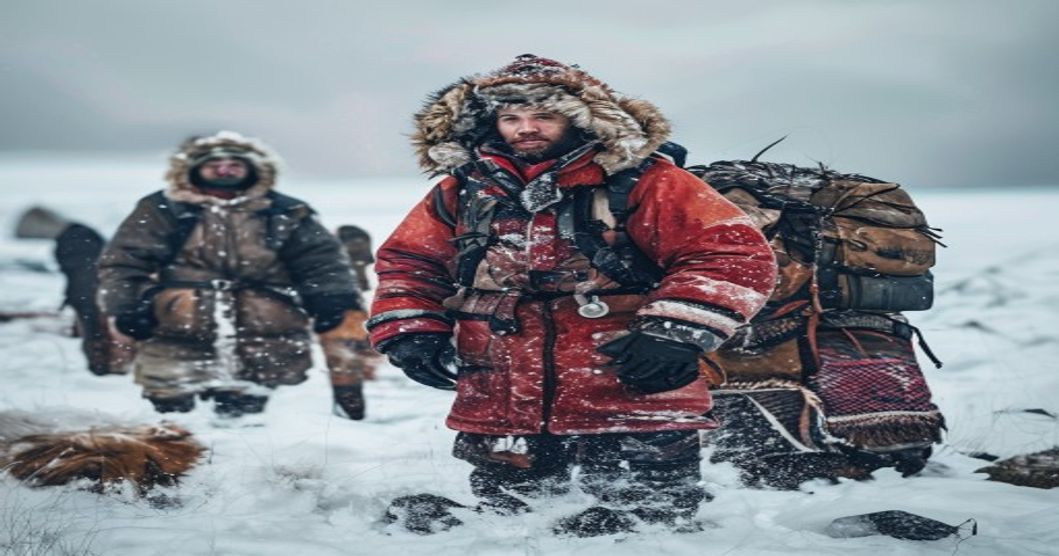
The Microstructural Architecture of Reindeer Fur in Sámi Polar Clothing
Hollow Keratin Filaments and Passive Thermal Regulation
Unlike conventional mammalian hair, the reindeer fur properties rely on a unique hollow medulla within each keratin fiber. These microscopic air pockets drastically reduce thermal conductivity, creating a natural dead-air layer that traps body heat while expelling moisture vapor. This structural innovation allows traditional Sámi garments to maintain core temperature stability in sub-zero environments without synthetic fleece linings.
Cross-Sectional Density and Aerodynamic Wind Resistance
The reindeer skin insulation capacity is amplified by the dense, multi-layered pelage arrangement. Guard hairs interlock with underwool to form a continuous windbreak matrix, while the hair shaft’s triangular cross-section deflects abrasive snow particles. This natural aerodynamics ensures that Sámi winter wear remains breathable during high-exertion activities like reindeer herding and skiing.
Artisanal Manufacturing Protocols in Historical Sámi Textiles
Multi-Layered Assembly for Dynamic Arctic Microclimates
Master reindeer fur craftsmanship requires precise stratification: an inner tanned hide layer captures residual moisture, a mid-layer of brushed underwool provides loft insulation, and an outer guard hair shell repels precipitation. Artisans utilize traditional duodji tools to stitch seams with sinew thread, preventing perforation that would compromise the reindeer fur properties during prolonged exposure.
Fermentation Tanning and Material Longevity Optimization
Historical tanning processes employed lichen-derived acids, brain emulsions, and controlled fermentation to cross-link collagen fibers. This biochemical treatment transforms raw pelts into supple yet abrasion-resistant leather, ensuring that traditional Sámi garments withstand decades of mechanical stress while retaining hydrophobic surface tension.
Ethnographic Integration of Functional Design in Northern Fennoscandia
Nomadic Mobility Requirements Shaping Garment Silhouettes
The ergonomic patterning of Sámi polar clothing directly correlates with reindeer herding logistics. Articulated sleeve gussets, reinforced knee panels, and asymmetrical front closures accommodate saddle riding, sled towing, and rapid directional shifts. These adaptations emerged through centuries of empirical testing across the Arctic Circle, optimizing mobility without sacrificing thermal integrity.
Chromatic Symbolism and Intergenerational Technical Transmission
Colorfast dyes derived from cloudberry leaves, birch bark, and mineral ochres encode clan affiliations and seasonal migration routes within traditional Sámi garments. Knowledge transfer occurs through tactile apprenticeship, where master craftsmen instruct novices in pelt grading, grain alignment, and stitch tension—techniques that remain irreplaceable in modern textile engineering.
Contemporary Performance Wear Integration and Ecological Sourcing Standards
Biomechanical Modeling for Advanced Arctic Apparel Development
Modern gear manufacturers analyze reindeer fur properties through computational fluid dynamics to replicate natural insulation matrices in synthetic alternatives. However, genuine Sámi polar clothing retains unmatched moisture-wicking velocity and static charge dissipation, making it indispensable for polar expedition kits where battery efficiency and fabric rigidity are critical failure points.
Regenerative Herding Practices and Closed-Loop Material Cycles
Ethical sourcing frameworks now mandate rotational grazing quotas, non-invasive hide harvesting, and full-pelt utilization protocols. This circular approach ensures that reindeer skin insulation production aligns with biodiversity conservation targets, while artisan cooperatives in Sápmi maintain price transparency and cultural authenticity standards for global technical apparel markets.
Frequently Asked Questions
What is Arctic Clothing Used by Sami Herders?
Arctic clothing used by Sami herders refers to the traditional, highly specialized garments worn by the indigenous Sami people of Scandinavia to survive and work in extreme subarctic conditions. These outfits are typically crafted from reindeer skin and fur, featuring layered designs that provide exceptional insulation, wind resistance, and breathability while allowing for physical activity during reindeer herding.
Key facts about Arctic Clothing Used by Sami Herders
Key facts include: the clothing is almost exclusively made from reindeer leather and fur due to its superior warmth-to-weight ratio; the unique double-layer construction traps air for insulation while the inner fur repels moisture; traditional designs like the “gákti” vary by region and denote family or marital status; and the garments are naturally water-resistant and durable, requiring minimal maintenance in harsh climates.