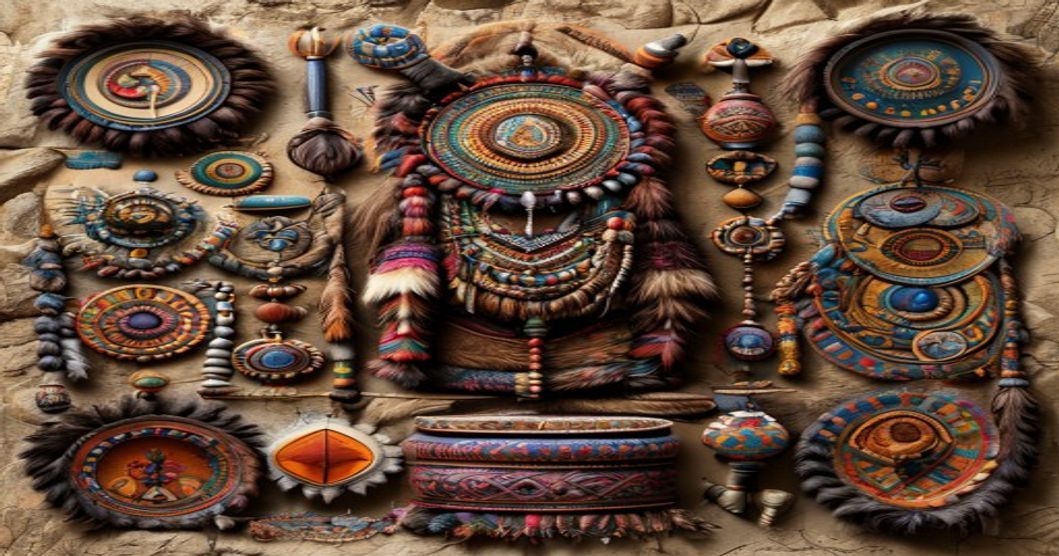
The Origins of Sámi Visual Heritage
The Sámi symbols represent a complex system of visual communication developed over centuries across the Arctic regions of Norway, Sweden, Finland, and Russia. Unlike conventional alphabetic writing, this indigenous heritage relies on geometric precision, directional alignment, and environmental observation to encode historical narratives, spiritual beliefs, and clan identities.
Archaeological evidence from rock carvings in Alta and traditional gákti embroidery demonstrates that Sámi artisans utilized symmetry and repetition not merely for aesthetic balance but as mnemonic devices. Each motif functioned as a visual lemma within a broader cultural lexicon, ensuring knowledge transfer across generations without written documentation.
Decoding Ancient Symbolic Motifs
The most recognized Sámi visual heritage elements include the Nordic cross, the eight-pointed star, and interlocking diamond patterns. These shapes are not decorative abstractions but precise representations of cosmological models. The concentric circles map seasonal migration routes, while zigzag lines denote glacial formations and reindeer herding paths.
Historical textile analysis reveals that motif placement on garments directly indicated the wearer’s family lineage, marital status, and regional affiliation. Artisans encoded these identifiers through thread tension, stitch density, and geometric scaling, creating a wearable archive that remains legible to trained ethnographers and indigenous scholars.
The Language of Natural Codes in Sámi Art
Sámi designers historically derived their palettes from strictly local biomes, establishing a direct correlation between geography and symbolic meaning. Lichen yellow, reindeer leather brown, and bog iron red were not arbitrary selections but chemically stabilized compounds that resisted Arctic degradation while maintaining chromatic consistency.
Environmental observation dictated motif evolution. The spiral patterns found in traditional traditional Sámi weaving mirror auroral activity and wind currents, while rectangular grids replicate snow crystal lattices. These natural codes function as ecological records, preserving microclimatic data through textile architecture rather than meteorological instruments.
Traditional Weaving Techniques and Structural Symbolism
The structural integrity of Sámi textiles depends on warp-faced weaving systems that prioritize vertical thread alignment over horizontal density. This method generates a rigid, weather-resistant fabric capable of withstanding subzero temperatures while maintaining precise pattern registration across large surface areas.
Master weavers controlled motif accuracy through tension modulation and shuttle angle adjustments. The resulting textiles exhibit mathematical precision, with every intersection point calculated to prevent pattern drift during the garment’s operational lifespan. This engineering approach transforms cultural expression into functional architecture.
Rya, Loom, and Warp-Faced Weaving Methods
Different weaving systems serve distinct symbolic purposes within Sámi material culture. The duodji craft tradition employs narrow-strip looms to produce gákti borders where each stripe corresponds to a specific ecological zone. Wider floor looms generate rya rugs used for insulation, where pile height indicates household wealth and hunting success.
Technique selection directly influences motif resolution. High-tension warp-faced structures enable sharp geometric definition, while supplementary weft techniques create gradient effects that simulate seasonal transitions. Artisans manipulate these variables to control narrative pacing within a single textile composition.
Color Theory and Dye Sources in Indigenous Textiles
Sámi color symbolism operates through a restricted but highly controlled chromatic system. The primary palette derives from bog myrtle, cloudberry leaves, lichen species, and iron-rich soil deposits. Each dye source requires precise pH adjustment and mordant application to achieve the required fastness properties.
Color placement follows strict symbolic protocols. Deep blues denote northern constellations and winter solstice periods, while crimson reds mark hunting territories and ancestral burial sites. The intentional omission of green reflects the Arctic tundra’s natural absence of vibrant foliage, demonstrating how Sámi artisans translate environmental reality into textile syntax.
Contemporary Applications and Cultural Preservation
Modern textile designers and cultural institutions have systematically documented Sámi symbols to prevent motif appropriation and ensure authentic representation. Digital archiving projects map historical patterns against archaeological findings, creating verified reference libraries that protect indigenous intellectual property.
Ethical production standards now require direct collaboration with Sámi master artisans before commercial reproduction. This protocol guarantees that symbolic meanings remain intact while supporting traditional knowledge keepers through fair compensation models and cultural licensing frameworks.
Revival of Sámi Symbolic Motifs in Modern Design
Contemporary architects, fashion designers, and graphic artists increasingly integrate verified Sámi visual heritage elements into structural and commercial projects. The geometric efficiency of traditional patterns aligns with modern minimalist aesthetics while carrying embedded ecological data that resonates with sustainability-focused audiences.
Design applications prioritize pattern scalability and structural translation rather than decorative replication. Architects adapt diamond grid motifs for facade shading systems, while textile engineers apply historical tension algorithms to develop climate-responsive fabrics. This technical adaptation preserves functional intent alongside symbolic meaning.
Ethical Sourcing and Authentic Craftsmanship Standards
Authentic traditional Sámi weaving production requires strict adherence to regional dye protocols, handspun yarn preparation, and generational technique verification. Certification bodies now audit supply chains to confirm that motifs originate from documented Sámi workshops rather than mass-production facilities.
Cultural preservation initiatives fund apprenticeship programs that transfer technical knowledge directly between elders and youth participants. These structured learning environments ensure that natural code interpretation, motif sequencing, and textile engineering remain accurately transmitted across subsequent generations.
Sámi Cultural Symbols Explained: Core Framework
The Sámi symbolic system operates through visual lexicons rather than written scripts. Each motif functions as a precise identifier for territory, kinship, and resource rights. These symbols encode ecological data that survives written records. Modern decoding requires cross-referencing material analysis with oral transmission protocols.
Gákti Textile Patterns & Clan Identification
Gákti garments utilize color geometry to map specific Sámi communities across Scandinavia. The South Sámi wear deep blue with red bands, while Lule Sámi patterns incorporate yellow and green. Marital status determines skirt length and belt complexity. Researchers verify authenticity through loom tension markers and natural dye residue testing.
Duodji Handicraft Signatures & Material Coding
Duodji tools carry maker signatures through consistent chisel angles and handle curvature. Reindeer antler indicates winter crafting cycles, while moose bone signals summer procurement. Silver inlay patterns denote wealth transfer during marriage contracts. Authentic pieces require provenance tracking through regional craft guild registries.
Sámi Drum (Goavddis) Motifs & Cosmic Mapping
The goavddis drum maps tripartite cosmology through painted symbols on reindeer hide. Upper realm figures represent sky deities and hunting birds. Middle ground symbols track reindeer migration corridors and fishing lakes. Lower realm illustrations document underworld spirits and ancestral burial sites. Drummers read these layouts as navigational charts during rituals.
Ecological & Livelihood Symbolism
Reindeer Herding Routes & Seasonal Markers
Siida herding networks rely on environmental signposts rather than fixed boundaries. Birch leaf emergence marks summer pasture shifts. Snow crust density determines winter camp placement. Lichen availability dictates migration timing. Herders interpret these markers through generational memory and terrain mapping.
Arctic Landscape Iconography & Navigation Signs
Rock carvings near Alta document celestial alignment with solstice sunrises. Wooden snow fences encode wind direction data for shelter placement. Ice thickness patterns guide safe crossing routes. Navigators read landscape features as layered information systems. These signs function as survival manuals for extreme conditions.
Historical & Geographic Distribution
Pre-Christian Ritual Objects & Sacred Geometry
Sacrificial stones feature geometric etchings that track lunar cycles. Spiral patterns represent seasonal renewal rather than decorative intent. Bone carvings align with magnetic north for orientation. Ritual sites cluster around natural acoustic properties. Archaeologists verify usage through soil stratigraphy and pigment residue analysis.
Regional Symbol Divergence Across Sápmi Borders
Colonial border divisions fractured visual continuity across Sápmi territories. Coastal communities developed fish-scale motifs, while mountain groups emphasized lichen patterns. Finnish and Norwegian collections show distinct dye preferences. Russian Karelian artifacts display heavier iron inlay. These divergences reflect trade route isolation and policy restrictions.
Modern Preservation & Authentic Verification
Contemporary Sámi Artists & Symbol Adaptation
Modern creators integrate traditional geometry into digital prints and metalwork. Copyright disputes center on commercial appropriation versus cultural exchange. Artists register motifs through Sámi Design Institute protocols. Digital archives track adaptation patterns across generations. Authentication requires direct lineage verification or community endorsement.
Museum Archives & Verified Symbol Databases
Uppsala University holds primary drum collections requiring repatriation negotiations. Material science labs analyze natural dye composition for dating. Oral history databases cross-reference artifact provenance. Digitized pattern repositories enforce access restrictions. Verification protocols demand archaeological context and community consultation.
Frequently Asked Questions
What is Sami Cultural Symbols Explained?
“Sami Cultural Symbols Explained” is a dedicated resource or guide that explores the traditional symbols, motifs, and artistic elements of the Sami people. It provides detailed insights into the historical, spiritual, and social meanings behind these symbols, which are traditionally woven into the Gákti (traditional clothing), duodji (handicrafts), and contemporary Sami art to convey identity, heritage, and connection to nature.
Key facts about Sami Cultural Symbols Explained
Key facts include: 1. Sami symbols are deeply connected to nature and indigenous cosmology, featuring recurring motifs like the sun disc, reindeer, mountains, and geometric patterns. 2. These symbols are used in traditional attire and crafts to indicate regional origin, clan affiliation, and personal life stages. 3. The modern revival of Sami cultural symbols has become a powerful tool for indigenous activism, cultural preservation, and global awareness. 4. Understanding and respecting these symbols helps prevent cultural appropriation and supports the authentic representation of Sami heritage in art and education.