Prehistoric Origins of the Sami People
Prehistoric Settlement and Cultural Development
Post-Glacial temperatures increased after 9000 BCE, enabling **Mesolithic** hunter-gatherers to colonize the **Fennoscandian** shield. **Komsa** and **Nøstvet** cultures established early coastal and inland settlements across the region. **Stone tool** assemblages reveal specialized **hunting techniques** and **seasonal migration** patterns. These foundational communities laid the groundwork for distinct **northern** cultural identities.
Genetic Lineages and Population Dynamics
Archaeogenetic studies identify **Uralic** genetic markers in **Bronze Age** remains from northern Scandinavia. **Haplogroup N1c** frequencies correlate with **linguistic diffusion** across the region. **Ancient DNA** analysis confirms long-term **genetic continuity** among **Sami** populations. These genetic signatures demonstrate sustained isolation and adaptation to **subarctic** environments.
Archaeological Evidence and Material Culture
Excavations at **Kautokeino** and **Alta** reveal **Iron Age** settlement structures and **ritual deposits**. **Antler** and **bone** artifacts indicate advanced **craft specialization** and **resource management**. **Ceramic** fragments display **geometric motifs** consistent with **Uralic** artistic traditions. These material remains provide tangible evidence of early **Sami** societal organization.
Linguistic Evolution and Script Development
Proto-Sami Language Reconstruction
Linguists reconstruct **Proto-Sami** phonology through comparative analysis with **Finnic** and **Uralic** languages. **Vowel harmony** and **consonant gradation** characterize early **Sami** grammatical structures. **Lexical borrowing** from **Germanic** and **Finno-Ugric** languages reflects historical contact zones. These linguistic features trace the divergence of **Sami** from its **Uralic** roots.
Early Inscriptions and Written Records
**Rock carvings** in **Norway** and **Sweden** contain early **symbolic inscriptions** dating to the **Iron Age**. **Runestone** fragments reveal **phonetic adaptations** of **Proto-Norse** by **Sami** speakers. **Medieval manuscripts** document **Sami** vocabulary and **mythological** terms. These epigraphic sources bridge the gap between **oral** and **written** traditions.
Environmental Adaptation and Resource Management
Post-Glacial Environmental Shifts
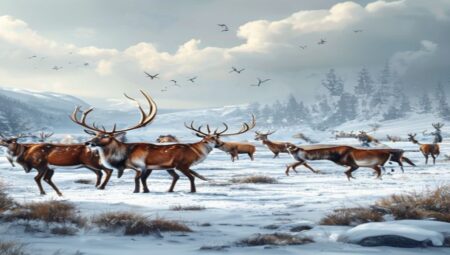
Climate warming after 9000 BCE transformed **tundra** landscapes into **boreal** forests across **northern Scandinavia**. **Sami** communities developed **semi-nomadic** hunting strategies targeting **wild reindeer** herds. **Fish weirs** and **ice holes** supplemented protein intake during winter months. These adaptations ensured survival in **harsh** subarctic conditions.
Reindeer Domestication and Territorial Expansion
**Domesticated reindeer** management emerged between 500 and 1000 CE. **Antler** growth cycles dictated seasonal **transhumance** routes. **Pastoral zones** expanded into **highland plateaus** and **valley systems**. **Sami** territorial boundaries aligned with **moss** and **lichen** growth patterns. This ecological mapping optimized **winter grazing** efficiency.
Spiritual Frameworks and Cosmological Beliefs
Noaidi Shamanism and Ritual Practices
**Noaidi** shamans mediated between human and spirit realms using **sacrificial drums**. **World tree** motifs connected **upper**, **middle**, and **lower** cosmological layers. **Sacred stones** and **waterfalls** functioned as **offering sites** for seasonal rites. **Ritual masks** and **costumes** depicted **ancestral spirits** and **animal guides
Sacred Sites and Landscape Veneration
**Sieidi** formations marked **territorial boundaries** and **hunting grounds**. **Rock carvings** in **Alta** and **Kautokeino** depict **boats** and **anthropomorphic figures**. **Geological anomalies** like **glacial erratics** received **blood offerings** during **solstice** ceremonies. **Landscape features** dictated **spiritual geography** and **migration timing
Historical Documentation and External Records
Medieval Scandinavian Chronicles
**Medieval Scandinavian** chronicles described **Sami** tribute systems and **tax collection** methods. **Hambant** and **Orkneyinga saga** texts recorded **northern expeditions** and **resource extraction**. **Byzantine** traders accessed **Sami** furs via **Volga trade routes**. **Latin** manuscripts from the **13th century** detailed **heretical practices** and **pagan rituals
Russian and Byzantine Trade References
**Novgorod** merchants exchanged **iron tools** and **textiles** for **Sami** pelts. **Kola Peninsula** settlements facilitated **cross-border** commerce. **Byzantine** coin hoards in **northern Russia** confirm **monetary transactions**. **Sami** intermediaries controlled **fur supply chains** across **Arctic** networks
Modern Scientific Validation of Ancient Claims
Ancient DNA and Population Genetics
**Ancient DNA** sequencing of **Sami** remains confirms **Bronze Age** continuity. **Population genetics** models trace **migration corridors** through **Scandinavia**. **Radiocarbon dating** validates **oral history** timelines regarding **settlement patterns**. **Genomic** data aligns with **archaeological** stratigraphy across **multiple** sites
Archaeogenetic Correlation with Oral Histories
**Sami** genealogical records match **haplotype** distributions in **modern** populations. **Oral transmission** preserves **geographical** markers consistent with **genetic** drift. **Linguistic** divergence dates correspond with **climate** shifts documented in **ice cores**. **Scientific** methodologies now verify **traditional** ecological knowledge with **precision
Frequently Asked Questions
What is Ancient Origins of the Sami People?
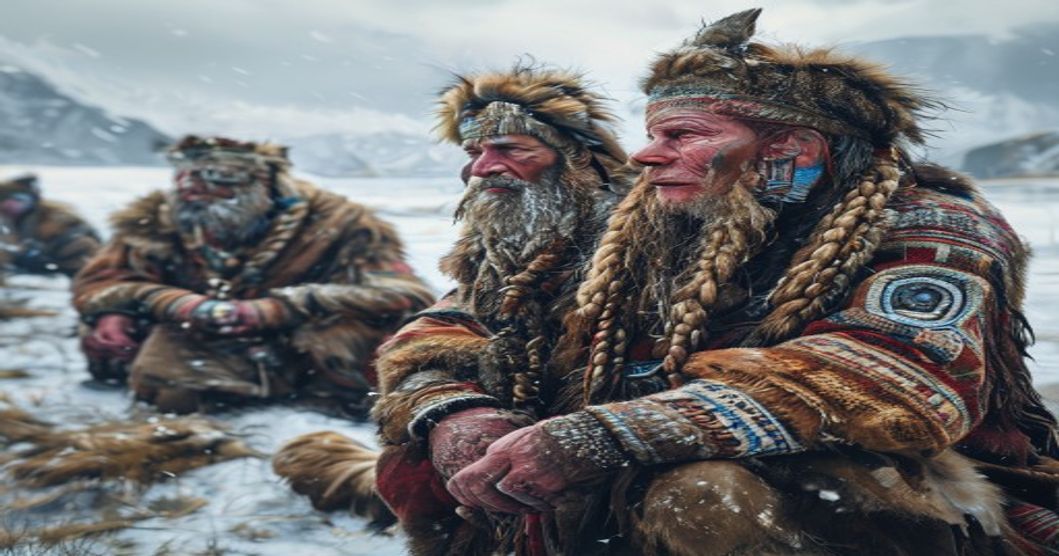
The ancient origins of the Sami people refer to the indigenous population of Sápmi, spanning northern Norway, Sweden, Finland, and the Kola Peninsula. Genetic, archaeological, and linguistic evidence indicates they are among Europe’s oldest inhabitants, descending from post-glacial hunter-gatherers who settled in Fennoscandia roughly 9,000 to 10,000 years ago, later intermixing with incoming agricultural groups from the east and south.
Key facts about Ancient Origins of the Sami People
Key facts include: 1) They are Europe’s only recognized indigenous nomadic people, traditionally sustained by reindeer herding, fishing, and hunting. 2) Their language, Sámi, belongs to the Uralic family, distinct from neighboring Indo-European languages. 3) Ancient DNA studies reveal unique genetic markers linking them to early European hunter-gatherers and later Siberian populations. 4) They maintain a rich oral tradition, nature-centered spiritual practices, and the unique vocal tradition known as joik. 5) Archaeological records confirm their continuous presence in northern Scandinavia for millennia despite historical assimilation pressures.