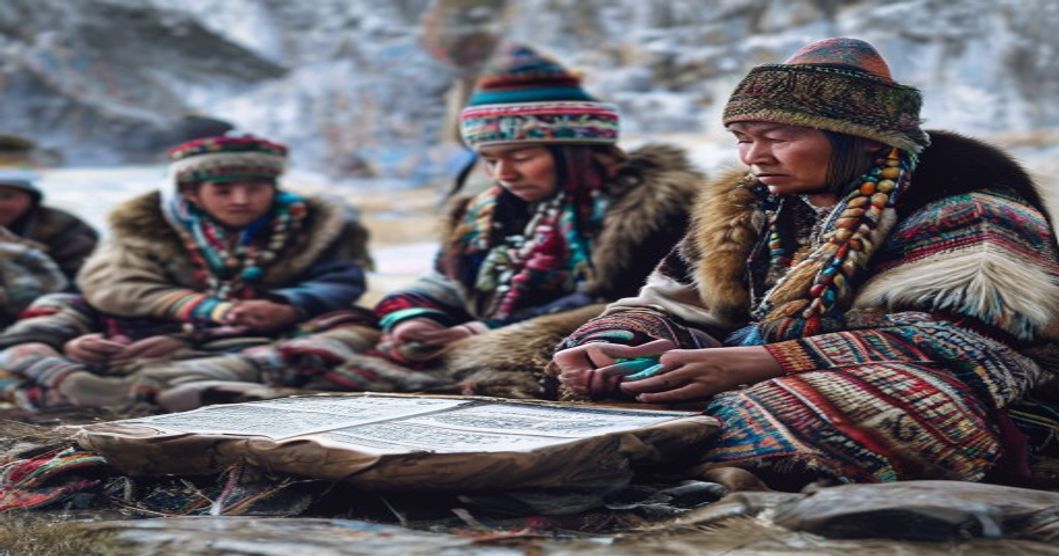
The Origins of Sami Oral Tradition
The Sami oral tradition emerged from a symbiotic relationship between the Arctic environment and generations of reindeer herders, fishers, and hunters across Fennoscandia. Before written documentation existed, knowledge transfer relied entirely on spoken word, rhythmic cadence, and communal gathering around winter dwellings. Archaeological findings in northern Norway, Sweden, and Finland reveal rock carvings dating back thousands of years that mirror themes later preserved in oral narratives. These early stories functioned as navigational tools, ecological manuals, and moral frameworks simultaneously.
Central to this tradition is the joik, a vocal technique predating modern musical notation by millennia. Unlike conventional songs, a joik does not describe a subject; it embodies it through melodic variation, breath control, and tonal shifts that mimic wind patterns, animal movements, and seasonal transitions. Elders trained younger members by embedding practical survival data into these vocalizations. Weather prediction, reindeer migration routes, snowdrift navigation, and medicinal plant identification were encoded within rhythmic structures to ensure accuracy across generations without textual reference.
The pre-Christian spiritual framework known as noaidi provided the cosmological structure for these narratives. Shamanic rituals involved trance states where stories were not merely recited but performed as living exchanges between human communities and the natural world. Ritual drums, carved from birch wood and stretched with reindeer hide, served as visual mnemonics during storytelling sessions. Each painted symbol corresponded to specific mythological events or ecological warnings, allowing storytellers to reconstruct complex genealogies and territorial boundaries through tactile and visual cues alongside vocal delivery.
Oral transmission operated through strict apprenticeship models. Children learned through immersion rather than formal instruction, participating in seasonal hunts and fishing expeditions where elders demonstrated techniques while narrating parallel historical accounts. These narratives contained precise geographical markers, astronomical observations, and ethical guidelines governing resource distribution. The absence of written records forced communities to develop sophisticated memory palaces, relying on repetition, musicality, and contextual reinforcement to preserve information across centuries of environmental and political upheaval. This pedagogical system required absolute fidelity to ancestral phrasing, as even minor alterations could disrupt the ecological correlations embedded within each tale. Storytellers underwent rigorous testing during spring assemblies, where communities verified territorial claims, settled disputes, and recalibrated hunting schedules based on narrative accuracy. The tradition survived centuries of missionary suppression and state assimilation policies precisely because its structure demanded active participation rather than passive consumption.
How Ancestral Narratives Shaped Indigenous Knowledge Systems
Oral archives operate as living databases where ecological data, survival strategies, and ethical guidelines are encoded within narrative structures rather than written records. Sami communities historically relied on recursive storytelling cycles to map Arctic landscapes long before cartographic surveys existed. Each tale functions as a spatial reference system, embedding topographical markers, seasonal migration routes, and resource locations within character arcs and environmental descriptions. The cognitive load required to retain these narratives trained participants in pattern recognition, contextual memory, and adaptive problem-solving across extreme climatic shifts.
These pedagogical methods transformed abstract ecological observations into actionable survival frameworks. Hunters learned predator behavior through allegorical encounters with forest spirits, while herders internalized reindeer tracking techniques by analyzing generational journeys of fictional caribou bands. Weather prediction relied on metaphorical atmospheric phenomena described in seasonal cycles, teaching communities to read pressure shifts through animal behavior and vegetation cues. The narrative structure itself dictated information hierarchy: critical survival data appeared at structural peaks, while secondary ecological details filled transitional passages, optimizing memory retention without explicit memorization drills.
- Spatial cognition: Place names embedded in tales created mental maps linking terrain features to historical events and resource availability.
- Ethical calibration: Consequences faced by story protagonists established behavioral boundaries regarding resource extraction, kinship obligations, and community sharing protocols.
- Temporal anchoring: Cyclical narrative frameworks aligned human activities with astronomical markers, freeze-thaw cycles, and biological reproductive windows.
This transmission model generated self-correcting knowledge ecosystems where inaccuracies were immediately challenged during communal recitation. Elders functioned as dynamic filters, updating narratives when environmental conditions shifted or new survival techniques emerged. The resulting epistemological framework prioritized experiential validation over theoretical abstraction, ensuring that inherited wisdom remained directly applicable to immediate ecological challenges while preserving cultural continuity across generations of displacement and policy suppression.
The Role of Joik in Preserving Cultural Memory
The traditional Sami practice of joik operates as an acoustic archive, encoding centuries of ecological observation, spiritual cosmology, and communal history into vocal patterns that bypass written documentation. Unlike conventional melodies, a joik does not describe a subject; it embodies it. The singer assumes the sonic identity of a landscape, animal, or ancestral figure, using microtonal shifts, rhythmic repetition, and breath control to replicate environmental acoustics. This method transforms memory into a living physiological process, where vocal cords mimic wind over tundra, reindeer hooves on frozen ground, or river currents through narrow valleys.
Oral transmission relies on structural redundancy rather than linear narrative. Repetitive phrasing and drone-based harmonies create cognitive anchors that facilitate multi-generational retention. Elders utilize specific melodic contours to mark seasonal transitions, hunting routes, and resource locations. When a joik references a particular mountain pass or grazing meadow, it simultaneously preserves topographical data, weather patterns, and survival protocols. The vocal technique itself functions as a mnemonic framework, ensuring that geographical knowledge remains accessible without reliance on cartographic records.
- Topographical Encoding: Melodic intervals correspond to elevation changes and terrain features, allowing singers to navigate unfamiliar regions through auditory recall.
- Spiritual Continuity: Vocal timbre shifts signal encounters with the unseen world, maintaining animistic frameworks that predate external religious influences.
- Identity Anchoring: Personal and familial joiks operate as sonic signatures, reinforcing kinship networks and territorial claims across dispersed communities.
- Ephemeral Documentation: Improvisational elements capture real-time environmental shifts, creating a dynamic record that static texts cannot replicate.
Colonial suppression efforts historically targeted joik as subversive, yet its adaptive nature ensured survival. Communities encoded prohibited knowledge within permissible folk frameworks, using metaphorical lyricism to bypass censorship. Contemporary preservation initiatives recognize that digitizing audio recordings without contextual vocal pedagogy results in archival fragmentation. Authentic transmission requires apprenticeship models where breath timing, throat resonance, and rhythmic displacement are taught alongside historical reference points. The practice remains a functional epistemological system rather than a decorative performance genre.
Core Ethical Frameworks in Traditional Sami Life Lessons Passed Down Through Stories
The ethical architecture of traditional Sami societies emerged directly from an animistic understanding of the landscape, where every rock, river, and animal held spiritual agency. Rather than relying on codified laws, communities transmitted moral expectations through carefully structured narratives that linked human behavior to ecological balance. These stories functioned as living manuals, embedding principles of reciprocity, restraint, and collective responsibility into daily decision-making. A hunter who took only what the herd could sustain, or a family that shared surplus during harsh winters, were not merely following practical survival tactics; they were enacting core ethical mandates preserved across generations.
- Reciprocity with the Environment: Traditional narratives consistently emphasized that nature does not provide unconditionally. Stories of hunters who ignored seasonal restrictions or overharvested reindeer herds served as cautionary templates, reinforcing the rule that taking requires giving back through ritual respect and sustainable practice.
- Community Accountability: Moral conduct was measured against group welfare rather than individual gain. Folktales frequently featured protagonists who faced social isolation or spiritual dissonance when prioritizing personal ambition over communal needs, illustrating that ethical failure carried immediate relational consequences.
- Humility Before Natural Forces: The Sami worldview rejected human dominance over the landscape. Tales of storms, sudden freezes, and unpredictable migrations taught practitioners to adjust plans rapidly, accept uncertainty, and view resilience as a moral virtue rather than mere survival skill.
These frameworks operated through situational teaching rather than abstract doctrine. Elders would recount specific events during winter gatherings, allowing listeners to analyze cause-and-effect relationships within the narrative. The yoik tradition further embedded ethical reflection by transforming personal experiences into rhythmic meditations that highlighted emotional and moral alignment with one’s surroundings. Decision-making processes relied on consensus built through shared historical reference points, ensuring that resource allocation, conflict resolution, and intergenerational knowledge transfer remained grounded in verified communal values. Contemporary Sami communities continue applying these structural principles to modern land rights negotiations, educational curricula, and cultural preservation initiatives, demonstrating how narrative-based ethics remain functionally relevant without requiring formal institutional enforcement.
Reciprocity With Nature and Environmental Stewardship
The Sami narrative tradition functions as a living archive of ecological intelligence, where every tale encodes precise environmental protocols. Rather than treating the landscape as a commodity, these accounts establish humans as active participants within a reciprocal web. Elders utilized oral storytelling to transmit critical data about reindeer migration corridors, lichen regeneration timelines, and seasonal ice stability centuries before modern ecology formalized such metrics. Each narrative operates as a behavioral contract with the land, detailing which grazing zones require rest periods, how herd sizes must align with forage availability, and when harvesting limits become non-negotiable.
Core stewardship principles embedded in these accounts include:
- Long-term pasture viability over immediate yield: Stories repeatedly warn against depleting winter grazing grounds, teaching herders to calculate herd sustainability through lichen depth and soil exposure rather than short-term weight gain.
- Mandatory spatial and temporal closures: Oral histories designate specific valleys, ridges, and wetlands as restricted zones during breeding seasons or snowmelt periods, ensuring vegetation and wildlife complete critical life cycles undisturbed.
- Reciprocal obligation mechanics: Extracting resources triggers documented responsibilities. Hunters must maintain windbreaks for reindeer, herders preserve migration pathways across frozen rivers, and communities intervene only when natural equilibrium fractures.
These narratives function as decentralized land management systems. By encoding rules within memorable plots featuring forest spirits, animal guides, and ancestral figures, the Sami guaranteed intergenerational compliance without formal legislation. Contemporary conservation science increasingly validates this methodology as proactive ecological governance. The stories do not merely record survival strategies; they establish enforceable ethical boundaries that prevent overgrazing, soil erosion, and habitat fragmentation. When modern sustainability frameworks struggle with rapid climate shifts, traditional Sami environmental literacy provides a proven model of adaptive resilience rooted in mutual accountability rather than extraction. This oral transmission method ensures that ecological knowledge remains context-specific, adapting to microclimates and terrain variations across Sápmi while maintaining strict conservation standards.
Community Cohesion Through Shared Folktales
Shared folktales function as the primary architectural framework for social cohesion within Sami settlements. These narratives do not merely entertain; they operate as living documents that encode survival strategies, ecological ethics, and communal obligations. During long Arctic winters, families and herding groups gather in traditional dwellings where knowledge transfer occurs through structured oral performance. The storyteller adapts plot details to reflect current environmental conditions or community challenges, ensuring each retelling remains functionally relevant to the group’s immediate needs.
The mechanics of this transmission rely heavily on collective memory systems. Listeners actively participate through call-and-response techniques, rhythmic clapping, and occasional yoik interludes that anchor emotional resonance. This participatory structure eliminates passive consumption and transforms storytelling into a collaborative ritual. When elders recount tales of reindeer migration patterns or weather forecasting methods, they simultaneously reinforce interdependence among younger members. The narrative framework establishes clear behavioral expectations: reciprocity, resource sharing, and respect for territorial boundaries become embedded in plot outcomes rather than delivered as abstract directives.
- Ecological Calibration: Folktales map seasonal resource availability, teaching communities how to navigate shifting landscapes without centralized authority.
- Conflict Mediation: Allegorical tales provide socially acceptable frameworks for addressing disputes over grazing rights or family obligations.
- Identity Reinforcement: Recurring motifs of ancestral resilience strengthen group solidarity against external assimilation pressures.
Anthropological fieldwork confirms that communities maintaining active folktale traditions demonstrate higher levels of mutual aid and lower internal fragmentation. The narratives function as cognitive maps, aligning individual actions with collective survival metrics. When elders narrate stories involving shared hardships or cooperative hunting expeditions, they activate neural pathways associated with trust and reciprocity. This psychological conditioning ensures that communal welfare consistently overrides individual gain in decision-making processes. The historical absence of written records necessitated this highly adaptive oral system, which continues to operate effectively through strict narrative protocols and generational repetition.
Respect for Ancestors and Spiritual Continuity
The Sami understanding of ancestry operates as an active ecological and spiritual framework rather than a historical record confined to the past. Within indigenous Sápmi cosmology, deceased elders remain integral participants in daily life through carefully structured oral transmission. Every narrative functions as a calibrated vessel for ancestral authority, embedding survival protocols, land rights claims, and relational ethics into memorable rhythmic patterns. Children learn that speaking a story correctly requires acknowledging the specific lineage from which it emerged, establishing a direct accountability chain between speaker, listener, and originator.
- Geographical Anchoring: Tales encode precise coordinates for reindeer grazing routes, fishing grounds, and medicinal plant locations, ensuring territorial continuity across generations.
- Ethical Calibration: Each story delivers behavioral guidelines that prioritize resource restraint, intergenerational fairness, and environmental reciprocity over short-term gain.
- Vocal Transmission: The yoik tradition transforms ancestral presence into acoustic patterns mimicking wind, animal movement, and glacial acoustics, creating a living sonic archive.
Spiritual continuity manifests through deliberate repetition rather than occasional commemoration. When communities gather during winter solstice preparations, elders activate dormant knowledge systems that dictate resource allocation, conflict resolution, and seasonal migration timing. Listeners interpret landscape changes as direct communication from preceding generations, treating ecological indicators as ancestral messages requiring immediate adaptation. This continuous dialogue ensures that traditional land management practices evolve without abandoning foundational principles of reciprocity.
Practical application requires structured knowledge transfer mechanisms that separate technical instruction from spiritual responsibility. Young community members undergo gradual initiation into specific tale cycles, each corresponding to particular age brackets and skill levels. The progression moves from observational narratives about wildlife behavior to complex genealogical accounts that map territorial boundaries through metaphorical terrain descriptions. Elders monitor comprehension through performance-based assessment, ensuring that listeners internalize both ecological expertise and spiritual accountability. This intergenerational pipeline maintains functional continuity between historical decision-making frameworks and contemporary environmental stewardship.
Decoding Symbolism and Moral Lessons in Traditional Tales
Sami oral traditions rely heavily on symbolic imagery to transmit practical knowledge and ethical frameworks across generations. Animals function as primary vessels for teaching survival skills and social conduct. The reindeer, central to northern livelihoods, appears not merely as livestock but as a metaphor for resilience, migration patterns, and the delicate balance between human dependency and natural autonomy. Wolves and foxes often embody cunning and adaptation, warning listeners against greed while demonstrating how strategic patience outperforms brute force. Avian figures, particularly ravens and eagles, bridge terrestrial and aerial realms, symbolizing foresight and the necessity of long-term planning in Arctic environments where weather shifts dictate survival.
Geographical features carry equally deliberate weight. Fjords, tundra plateaus, and frozen lakes are never passive backdrops; they represent thresholds of transformation. Crossing a river in a narrative typically signals a shift from ignorance to understanding, while navigating ice fields mirrors the discipline required to maintain communal harmony. The recurring motif of fire against darkness operates on dual levels: literal warmth against polar nights and metaphorical illumination of truth over deception.
Moral instruction emerges through consequence rather than explicit preaching. Characters who violate taboos regarding sacred sites or exploit resources without reciprocity face isolation or natural retribution, reinforcing the Sami principle of vuoibmi—rightful balance between taking and giving. Conversely, protagonists who demonstrate humility before nature’s unpredictability gain guidance from ancestral spirits or animal allies. These narratives function as cognitive maps, embedding ecological ethics into memory through rhythmic repetition and auditory mnemonics. Listeners internalize warnings about overharvesting, respect for seasonal boundaries, and the importance of sharing harvests with neighbors facing hardship. The symbolic architecture of these tales ensures that survival strategies remain culturally intact while adapting to shifting environmental conditions across centuries.
Decoding these layers requires attention to syntactic patterns and environmental context. Repetitive phrasing isolates core teachings, while sudden narrative shifts highlight moral pivots. Elders deliberately withhold explicit interpretations, forcing younger generations to reconstruct meaning through observation and discussion. This pedagogical method strengthens analytical skills alongside cultural retention.
Winter Narratives as Metaphors for Resilience
Sami winter narratives function as encoded survival manuals disguised as folklore. The extreme Arctic environment demands precise environmental reading, and elders transformed harsh conditions into pedagogical frameworks through seasonal storytelling. Tales of the noaidi navigating ice fields, reindeer herds surviving blizzards, and families enduring months of darkness operate on dual levels: literal ecological observation and psychological conditioning. Children learn to interpret snow density, wind direction, and animal behavior while absorbing values like patience, adaptability, and communal responsibility.
The metaphor of enduring the kaamos directly maps onto personal endurance during prolonged hardship. Stories frequently feature protagonists who succeed not through brute strength but through observation, resource conservation, and cooperation with natural rhythms. Reindeer migration patterns become blueprints for human decision-making under scarcity. When narratives describe crafting ice shelters or storing dried fish, they simultaneously teach technical skills and reinforce the cultural imperative of preparation before crisis strikes.
Oral transmission ensures these lessons remain contextually relevant; storytellers adjust emphasis based on local weather patterns, herd health, and generational shifts. The recurring motif of silence in winter tales reflects acoustic survival strategies while symbolizing emotional restraint and internal strength. Modern listeners often mistake these accounts for mere myth, yet archaeological evidence and ethnographic records confirm their operational accuracy. Every metaphor regarding frost, frozen rivers, or shelter construction carries accumulated generations of trial-and-error data.
The structural repetition in traditional recitations reinforces neural pathways associated with risk assessment and long-term planning. Contemporary climate volatility has increased demand for these historical frameworks, as elders now reference ancestral winter knowledge to navigate unpredictable freezing patterns and shifting migration corridors. Narrative architecture relies on environmental mirroring, where weather phenomena directly influence plot progression. Sudden temperature drops trigger internal conflict resolution in tales, teaching listeners to recognize physiological warning signs before exposure becomes critical. The deliberate pacing of winter stories mirrors the energy conservation required during extreme cold, forcing audiences to process information slowly rather than react impulsively. This structural alignment between form and function ensures that survival logic remains embedded in cultural memory without requiring explicit instruction.
Dream Sequences and Intergenerational Guidance
In Sami cosmology, dreams function as operational archives rather than passive neurological events. Historical accounts document how elders treated recurring dream sequences as predictive models for resource management and territorial navigation. When a young herder records visions of specific ice thickness or migratory bird patterns, the interpretation follows established ethnographic protocols maintained through familial lineages. The knowledge transmission operates through comparative analysis: matching current dream imagery against documented ancestral accounts, seasonal weather cycles, and reindeer behavioral markers. This process converts individual experience into verified collective intelligence.
Intergenerational guidance relies on structured narrative sessions where experienced storytellers decode symbolic elements using environmental indicators. A recurring vision of open water during winter months does not indicate danger but signals optimal timing for cattle relocation before freeze conditions intensify. Repeated animal encounters in dreams map directly to pack movement corridors and grazing boundaries. The pedagogical framework utilizes recursive questioning rather than direct instruction. Younger generations learn to cross-reference personal visions with historical records maintained by community archivists and lineage keepers of oral law.
- Dream interpretation frameworks preserved in Sami archives contain precise meteorological data that align with modern climate monitoring
- Ethnographic documentation shows symbolic motifs correspond to specific topographical features across traditional grazing territories
- Oral transmission protocols ensure ecological knowledge remains contextually accurate while preserving spiritual governance systems
Contemporary anthropological research confirms these practices operate as sophisticated adaptive knowledge systems. The continuity of this methodology depends on maintaining narrative fidelity across generations without alteration. Storytellers anchor each lesson to exact geographical coordinates, seasonal transitions, and animal behavior patterns. This preservation mechanism ensures survival competencies remain functionally relevant while sustaining the ethical frameworks that regulate resource distribution and community cohesion. The dream-to-story pipeline functions as a living database where ecological observation, spiritual practice, and practical instruction merge into a single operational tradition.
Transmission Methods Across Generations
The Sami people preserved their ecological knowledge, ethical frameworks, and spiritual insights primarily through structured oral transmission rather than written documentation. Elders served as the primary custodians of this ancestral wisdom, functioning as living archives within the community. These narratives operated as functional manuals for survival in extreme Arctic environments, with every tale encoding specific data regarding terrain navigation, weather forecasting, and resource management. The teaching process relied heavily on contextual immersion, where younger generations learned by accompanying adults during reindeer migrations, seasonal camp relocations, and hunting expeditions. Knowledge transfer occurred organically through daily routines, with specialized vocabulary tied to animal behavior, snow conditions, and vegetation cycles embedded naturally into conversation.
Ritual gatherings provided systematic reinforcement for this oral tradition. During long winter nights, community members convened in lavvu tents where experienced narrators would perform joik, a traditional melodic form that encodes historical events, geographical landmarks, and moral teachings. The rhythmic structure of joik facilitated accurate memorization, allowing complex information to be retained precisely across centuries. Storytelling sessions followed strict pedagogical protocols: listeners maintained focused attention, asked clarifying questions only at designated intervals, and demonstrated comprehension through practical application rather than verbal repetition. This structured approach ensured that lessons regarding land stewardship, conflict resolution, and spiritual respect for natural cycles remained intact without degradation.
- Contextual Apprenticeship: Children absorbed survival techniques by participating directly in seasonal activities, learning spatial awareness and resource allocation through guided observation.
- Musical Encoding: Joik melodies functioned as mnemonic devices, with pitch variations and rhythmic patterns marking specific ecological events or ancestral warnings.
- Material Pedagogy: Traditional duodji crafts carried symbolic patterns that visually narrated historical experiences, while hands-on mentorship reinforced cultural values of patience and reciprocity.
- Ceremonial Reinforcement: Seasonal festivals provided structured opportunities for intergenerational dialogue, where elders reenacted migrations, clarified territorial boundaries, and explained sacred site protocols.
This transmission system operated as a dynamic ecosystem, adapting to environmental shifts while preserving core ethical principles through consistent pedagogical frameworks. The absence of written records did not limit information retention; instead, it fostered a highly disciplined oral culture where accuracy depended on communal verification, repetitive contextual practice, and strict intergenerational accountability. Each elder acted as both teacher and auditor, ensuring that practical knowledge aligned with cultural expectations before passing the narrative chain to the next cohort.
Seasonal Storytelling Circles and Elders’ Roles
The rhythmic shift between polar nights and midnight sun dictates the cadence of Sami oral traditions. During winter months, when reindeer herds settle and travel becomes hazardous, families gather inside traditional lavvu structures around a central fire pit. This seasonal convergence creates a natural classroom where survival knowledge compounds. The darkness outside demands warmth inside, both physical and intellectual. Elders occupy the highest positions near the entrance, controlling airflow and maintaining the sacred boundary between the domestic space and the wild landscape beyond. Storytelling sessions align with lunar cycles and hunting windows, ensuring narratives remain synchronized with ecological markers.
Role distribution within these gatherings follows strict cultural protocols. Experienced herdsmen and noaidi decode animal behavior patterns through metaphorical frameworks. Young listeners absorb practical data disguised as mythological encounters. The transmission process relies on repetitive phrasing, rhythmic chanting, and deliberate pauses that force active mental processing. Knowledge categories include reindeer migration routes marked by invisible terrain features, weather prediction techniques using ice thickness and bird flight paths, and conflict resolution methods rooted in resource sharing principles.
- Ecological Calibration: Stories encode precise information about snow conditions, pasture quality, and predator movements across vast tundra expanses.
- Linguistic Preservation: Dialect variations between northern and southern Sami territories emerge through regional narrative adaptations that maintain grammatical structures.
- Ethical Frameworks: Tales of boundary transgressions establish clear consequences for hoarding resources or violating seasonal hunting restrictions.
- Technical Mastery: Crafting techniques for snow shelters, fishing nets, and sled construction appear as heroic trials rather than instructional manuals.
Memory retention depends on emotional resonance tied to specific geographic locations. Narrators point toward distant mountain ridges or frozen lakes while recounting ancestral journeys, creating spatial anchors that prevent information degradation across generations. Community validation occurs through collective recitation during summer festivals, where competing memory accounts are cross-checked against physical evidence like carved wooden markers and historical trade records. This verification mechanism maintains factual accuracy while allowing creative embellishment within acceptable cultural parameters. Modern environmental monitoring programs now collaborate with indigenous knowledge holders, recognizing that centuries of accumulated observational data provide baseline climate indicators impossible to replicate through satellite imagery alone.
Adaptation of Narratives in Modern Educational Contexts
Integrating Sami oral traditions into contemporary school systems requires a deliberate shift from passive consumption to active cultural participation. Educators must navigate the tension between standardized curricula and the fluid, place-based nature of indigenous knowledge transmission. Modern classrooms are increasingly adopting interdisciplinary frameworks that map traditional ecological knowledge onto environmental science modules, allowing students to analyze seasonal migration patterns, reindeer husbandry practices, and Arctic ecosystem dynamics through historically accurate narratives rather than abstract data alone.
- Curriculum Mapping: Learning objectives are aligned with indigenous chronotopes, where time and space operate cyclically rather than linearly. This approach strengthens spatial reasoning and long-term ecological thinking.
- Linguistic Preservation: Schools implementing bilingual instruction utilize story archives to reinforce Sámi grammar and vocabulary. Interactive lexical databases enable students to decode dialectal variations while maintaining phonetic accuracy.
- Ethical Frameworks: Traditional narratives emphasize reciprocity with nature, conflict resolution, and community responsibility. Educators extract these principles to develop social-emotional learning modules that address modern behavioral challenges.
Teacher preparation programs now mandate cultural competency training, ensuring instructors understand the protocol of knowledge sharing versus extraction. Co-creation workshops with Sámi elders establish clear guidelines for content adaptation, preventing homogenization or romanticization of indigenous experiences. Digital archives serve as primary sources, but classroom implementation requires contextual scaffolding that respects the original performance conditions.
Assessment models are shifting away from standardized testing toward narrative-based evaluation. Students demonstrate comprehension through oral retelling, community mapping exercises, and reflective journals that connect historical lessons to contemporary Arctic sustainability issues. Funding initiatives prioritize resource development that includes audio-visual recordings, dialect-specific glossaries, and age-appropriate interactive modules.
The successful integration of these narratives depends on institutional flexibility. Schools that embed indigenous pedagogy into daily routines rather than treating it as supplementary material report higher student engagement and improved cultural identity formation. Continuous feedback loops between educational institutions and Sámi communities ensure that adaptation remains dynamic, academically rigorous, and culturally authentic.
Contemporary Relevance of Sami Narrative Wisdom
The enduring power of Sami narrative wisdom extends far beyond historical documentation, functioning as a living epistemological framework that directly addresses pressing modern challenges. Indigenous communities across the Arctic now leverage these ancestral narratives to navigate climate adaptation, land rights advocacy, and cultural continuity. The oral traditions emphasize reciprocity with nature, a principle that aligns precisely with contemporary ecological ethics and sustainable resource management. When reindeer herders reference ancient migration stories, they are not merely recounting history; they are applying time-tested strategies for reading environmental shifts, managing grazing lands, and maintaining herd resilience against increasingly volatile weather patterns.
- Ecosystem Stewardship: Sami narratives encode detailed observations of lichen growth, snow stability, and animal behavior, providing actionable data for modern conservation biology and climatological research.
- Community Resilience: The communal structure inherent in traditional storytelling circles offers a blueprint for fostering social cohesion in fragmented societies and addressing intergenerational trauma through shared historical memory.
- Language Revitalization: Integrating oral histories into digital archives strengthens Sámi language acquisition, which directly correlates with cognitive preservation, academic performance, and cultural sovereignty.
Modern applications of this wisdom manifest in policy advocacy, where indigenous legal frameworks are increasingly recognized for their sophisticated land tenure systems. The concept of siida—a cooperative social unit governing resource distribution—now informs sustainable governance models that prioritize long-term ecological health over short-term extraction. Furthermore, the practice of yoik storytelling serves as a documented psychological intervention, helping individuals process displacement and environmental grief by anchoring identity to ancestral landscapes. Educational institutions incorporating these narrative methods report measurable improvements in student engagement, critical thinking, and cross-cultural competency. Academic researchers now utilize these oral geographies as primary sources for interdisciplinary studies spanning anthropology, environmental science, and legal history. The methodological rigor embedded within each tale provides verifiable patterns for tracking ecological shifts, which Western scientific models often overlook. Consequently, scholars are integrating indigenous knowledge systems into peer-reviewed climatological assessments, validating centuries of observational data against modern satellite metrics. This cross-validation strengthens global conservation strategies while simultaneously securing legal recognition for territorial claims. Digital mapping projects further operationalize this wisdom by overlaying historical migration routes onto contemporary infrastructure development plans, preventing ecological disruption while safeguarding cultural sites.
Integrating Indigenous Ethics Into Sustainable Practices
The foundational ethics of Sámi communities operate on a principle of reciprocal stewardship rather than extraction. This worldview treats land, water, and wildlife as kin requiring active maintenance. Modern sustainability frameworks often overlook this relational aspect, focusing instead on metric-driven conservation. Bridging this gap requires embedding Indigenous governance models into environmental policy. The Siida system, a traditional Sámi cooperative structure for managing grazing lands and resources, demonstrates how decentralized decision-making aligns with ecological carrying capacity.
Implementing these ethics demands structural shifts in data collection and resource allocation. Traditional knowledge systems prioritize longitudinal observation over short-term yield optimization. When applied to forestry, fisheries, or agricultural planning, this approach reduces ecosystem fragmentation and preserves microhabitats critical for biodiversity. Regulatory bodies can adopt participatory monitoring protocols where Indigenous knowledge holders co-author environmental impact assessments. This integration eliminates blind spots in conventional scientific models by incorporating seasonal indicators, species behavior patterns, and historical baseline data.
- Reciprocal Harvesting Protocols: Establishing catch limits tied to population cycles rather than market demand ensures resource regeneration matches extraction rates.
- Land-Use Zoning Based on Ecological Sensitivity: Delineating protected corridors through community mapping prevents infrastructure expansion from disrupting migration routes and soil integrity.
- Intergenerational Knowledge Audits: Documenting traditional ecological indicators creates a verifiable baseline for climate adaptation strategies and restores accountability in resource management.
Measurable outcomes emerge when ethical integration moves beyond symbolic inclusion. Organizations that embed Sámi stewardship principles report reduced operational costs through lower intervention requirements and enhanced community compliance. Policy frameworks incorporating these ethics demonstrate higher resilience during ecological stress events. Verification requires independent audits that evaluate both ecological health metrics and Indigenous governance participation rates. Sustainable transitions succeed only when technical solutions align with the cultural architectures that originally preserved the environment.
Digital Archiving and Language Revitalization Efforts
The digitization of Sámi oral archives represents a critical intervention in preserving centuries-old ecological and cultural knowledge. Field recordings collected during the mid-twentieth century now require urgent technical migration, as analog magnetic tapes and wax cylinders degrade rapidly. Modern digitization workflows utilize high-fidelity audio capture, spectrographic analysis, and metadata tagging aligned with Dublin Core standards. These processes ensure that phonetic nuances, joik melodic structures, and regional dialectal variations remain intact for academic research and community access.
Institutional frameworks have shifted from passive storage to active indigenous stewardship. The Digital Sámi Archive operates as a centralized repository hosting over forty thousand hours of recorded material, including hunting narratives, reindeer herding calendars, and seasonal migration patterns. Researchers collaborate directly with knowledge holders to apply contextual annotations that traditional library classification systems often overlook. This methodology prevents the detachment of stories from their geographical origins, seasonal contexts, and ceremonial purposes.
- AI-Assisted Transcription: Machine learning models trained on Sámi phonetics generate draft transcripts, which fluent speakers then verify to maintain linguistic accuracy and narrative integrity without automated distortion.
- Multimedia Integration: Interactive platforms map oral accounts onto historical landscape photography and topographical data, enabling users to trace traditional land-use practices across multiple generations.
- Educational Tool Development: Mobile applications incorporate structured vocabulary exercises derived from archived folktales, targeting youth engagement in both urban centers and rural Sápmi territories.
Revitalization initiatives prioritize intergenerational transmission through structured mentorship programs. Elders record direct dialogues with students, focusing on practical terminology related to weather reading, textile crafting, snow formation analysis, and sustainable resource management. These sessions are archived alongside pedagogical guides that standardize pronunciation while explicitly acknowledging regional dialectal differences. Funding mechanisms now emphasize ethical data governance, ensuring that indigenous communities retain full control over access protocols, attribution requirements, and commercial usage rights.
Long-term sustainability depends on continuous technical updates and cross-institutional collaboration. Partnerships between Sámi universities, Nordic heritage organizations, and global linguistic institutes establish standardized metadata schemas for cross-referencing archival collections. Researchers monitor dialect attrition rates by analyzing digital corpora, adjusting curriculum materials accordingly. The integration of traditional narratives into formal education systems reinforces linguistic competence while documenting adaptive survival strategies historically developed in subarctic environments.
Global Parallels With Other Northern Indigenous Traditions
The narrative frameworks of the Sámi share profound structural and functional parallels with other high-latitude indigenous knowledge systems across the circumpolar region. Oral transmission in Inuit communities, Nenets reindeer herder epics, Evenki shamanic chants, and Komi forest tales operates on identical pedagogical principles: encoding survival data within metaphorical narratives to preserve ecological accuracy while maintaining spiritual boundaries. These traditions treat storytelling not as entertainment but as a dynamic information repository where migration corridors, ice stability indicators, animal tracking patterns, and seasonal resource cycles are embedded in character arcs and environmental descriptions.
- Ethical Encoding: Taboos surrounding sacred animals appear universally. Sámi restrictions on naming reindeer mirror Inuit protocols for polar bears and Komi guidelines for forest spirits, all designed to prevent spiritual offense and ensure sustainable harvesting.
- Environmental Forecasting: Weather prediction relies on identical observational markers. Snow crystal analysis, wind direction shifts, and bird flight patterns are woven into generational tales that function as real-time meteorological databases.
- Social Cohesion Mechanisms: Winter gathering narratives reinforce communal resource sharing. Shared listening experiences during polar nights establish intergenerational accountability for collective survival rather than individual accumulation.
Anthropological fieldwork across Lapland, Nunavut, and Western Siberia demonstrates that northern oral cultures independently developed comparable ethical frameworks emphasizing reciprocity, restraint, and community interdependence. The trickster archetype appears in Sámi lore as Skierhtie, mirrors Inuit Nuligak, and surfaces in Komi mythology as Vus, each serving to illustrate the consequences of breaking ecological or social taboos. Dream interpretation functions identically across these regions, where vision quests provide practical guidance for hunting success or weather prediction. The cyclical perception of time tied to solstice cycles and auroral activity shapes narrative pacing in all these traditions, rejecting linear historical progression in favor of regenerative temporal models. Contemporary digital ethnography projects mapping circumpolar folklore reveal a unified arctic epistemology where knowledge transmission prioritizes adaptability over rigidity, ensuring cultural resilience through contextual storytelling rather than static documentation.
Frequently Asked Questions
What is Traditional Sami Life Lessons Passed Down Through Stories?
Traditional Sami life lessons passed down through stories refer to the ancient oral narratives, myths, and folktales of the Sámi people, indigenous to northern Scandinavia and Russia. These stories serve as vital educational tools, teaching moral values, survival skills, environmental stewardship, and cultural identity across generations.
Key facts about Traditional Sami Life Lessons Passed Down Through Stories
Key facts include their reliance on oral tradition rather than written texts, the use of joik (traditional singing) to accompany narratives, themes deeply connected to reindeer herding and Arctic nature, the role of the noaidi (shaman) in early storytelling, and their recognition by UNESCO as an important part of intangible cultural heritage.