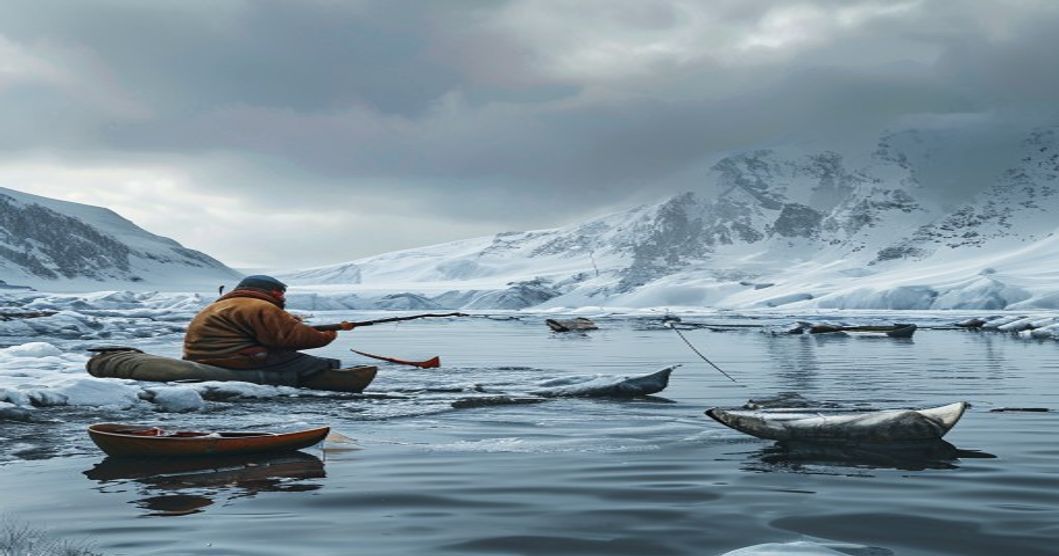
Historical Foundations of Sami Fishing Practices
The Sami fishing traditions originate from millennia-old adaptive strategies developed across the Fennoscandian Arctic, where indigenous communities harmonized aquatic resource extraction with nomadic reindeer herding and coastal foraging. Archaeological evidence from rock carvings in Alta, Norway, and coastal settlements in Sápmi demonstrates that fish harvesting was never an isolated activity but a core component of a broader subsistence economy. Early traditional Sami fishing methods relied on seasonal river navigation, where communities utilized ice roads during winter to transport gear and access frozen waterways for hole-fishing. The ecological rationale behind these practices centered on minimizing waste and maximizing caloric return in an environment with extreme seasonal light variation and limited agricultural potential.
Seasonal Migration and Net Weaving Techniques
Sami fishers historically followed precise migratory corridors dictated by water temperature gradients and prey availability. Net construction utilized natural fibers, including inner bark from birch and spruce roots, processed through wetting and twisting to achieve tensile strength resistant to glacial meltwater. Passive harvesting techniques dominated the region, with trammel nets and fyke traps positioned at strategic river confluences where Arctic char and Atlantic salmon naturally concentrated during spawning runs. The mesh sizes were calibrated to allow juvenile fish escape, embedding a de facto sustainable yield principle long before modern fisheries science formalized selectivity standards.
Traditional Gear and Passive Harvesting Methods
Beyond woven nets, Sami artisans crafted gillnets from hemp imported through medieval trade routes, reinforcing with sinew to prevent abrasion against rocky substrates. Spear fishing employed barbed wooden or bone points designed to penetrate the dense scales of bottom-dwelling species without damaging muscle tissue. Ice fishing platforms were constructed from layered larch logs, insulated with moss and reindeer hide to maintain stable temperatures for bait preservation. These Arctic sustainable fishing protocols operated on a rotational access system, where specific tributaries remained fallow for two to three years, allowing benthic invertebrate populations and fish stocks to recover naturally.
Ecological Significance and Arctic Fish Populations
Frequently Asked Questions
What is Sami Fishing Techniques in Arctic Regions?
Sami fishing techniques in Arctic regions refer to the traditional and sustainable methods used by the Sami people to catch fish in the harsh, cold waters of northern Scandinavia and Russia. These methods rely on deep ecological knowledge, seasonal timing, and eco-friendly tools like hand lines, wooden traps, and ice fishing practices passed down through generations.
Key facts about Sami Fishing Techniques in Arctic Regions
Key facts include the heavy reliance on ice fishing during winter, the use of natural baits and handcrafted gear, strict adherence to seasonal migration patterns of fish like Arctic char and trout, community-based resource management, and the integration of fishing with reindeer herding and other traditional livelihoods to ensure sustainability in extreme climates.