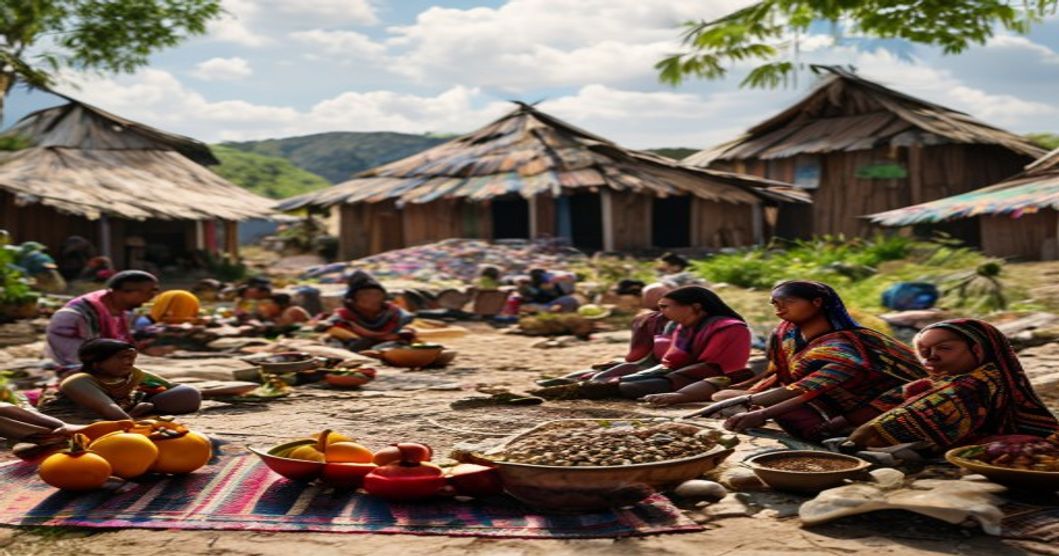
How Sami Culture Inspires Sustainable Communities
The Sámi people have maintained a symbiotic relationship with Arctic and sub-Arctic ecosystems for centuries, developing land management practices that prioritize long-term ecological balance over short-term resource extraction. Their traditional reindeer herding system operates on precise rotational grazing patterns that prevent soil degradation and allow delicate tundra vegetation to regenerate naturally. Each herd navigates vast territories following seasonal migration routes dictated by snow depth, lichen availability, and designated calving grounds. This continuous movement mirrors natural wildlife corridors, preserving regional biodiversity while maintaining pasture health across thousands of square kilometers.
- Circular Resource Utilization: Animal hides undergo complete traditional processing without industrial waste streams, antlers serve as durable tool materials, and organic byproducts integrate into natural fertilizers.
- Ecological Management Protocols: Strict harvesting limits mandate rest periods for depleted areas, with oral histories documenting microclimate shifts and plant flowering cycles with precision that modern ecological studies consistently validate.
- Decentralized Governance Structures: The traditional herding framework aligns local decision-making directly with environmental carrying capacity rather than external market demands, effectively preventing overgrazing and maintaining livestock genetic diversity.
Central to Sámi sustainability is the concept of jábme, which emphasizes respect for all living organisms as interconnected components of a single biological system. Traditional knowledge functions as a dynamic database tracking animal behavior patterns and historical land-use impacts across generations. Field researchers have documented how controlled burn techniques reduce catastrophic wildfire risks by preserving peatland moisture levels and creating natural firebreaks that protect watershed integrity.
Contemporary sustainability initiatives draw direct methodologies from Sámi land ethics rather than adopting generic conservation models. Conservation projects across Scandinavia now integrate traditional ecological knowledge with satellite monitoring to map grazing pressure and vegetation recovery rates in real time. Educational programs in northern regions teach youth how historical land-use patterns correlate with current carbon sequestration metrics and soil microbiome health. Municipal planning departments reference Sámi zoning principles when developing infrastructure that avoids critical breeding habitats. The cultural framework demonstrates that community resilience emerges from adaptive management systems rather than rigid preservation policies, offering a functional blueprint for climate-responsive regional design.
Traditional Knowledge as a Blueprint for Modern Sustainability
Sami ecological frameworks operate on a foundational principle of reciprocal stewardship rather than resource extraction. The siida system establishes decentralized governance where land management decisions emerge from collective observation across generations. Herders track reindeer migration through subtle environmental markers—ice thickness, lichen growth cycles, and wind patterns—creating adaptive routes that prevent pasture degradation. This dynamic navigation model directly parallels modern regenerative agriculture methodologies seeking to restore soil microbiomes and maintain watershed integrity.
- Seasonal calendars derived from auroral activity and permafrost thaw timelines guide planting and harvesting windows with precision that satellite data often overlooks.
- Traditional duodji practices utilize every animal component, transforming hides, bones, and sinew into tools and textiles while maintaining a closed-loop material cycle.
- Controlled burning techniques preserve boreal forest biodiversity by creating mosaic landscapes that support both arboreal and ground-dwelling species.
Contemporary sustainability initiatives increasingly reference Sami land-use protocols when designing climate adaptation strategies. Municipal planners in northern Scandinavia now integrate indigenous phenological indicators into urban green infrastructure projects, aligning irrigation schedules with natural snowmelt patterns rather than fixed calendar dates. Agricultural cooperatives adopt rotational grazing models that mirror reindeer herd movements, reducing chemical fertilizer dependency by leveraging natural nutrient cycling. These implementations demonstrate how centuries-old observational data provides actionable frameworks for addressing modern ecological fragmentation.
The integration of Sami knowledge systems into environmental policy requires structural shifts in research methodologies and institutional funding. Universities conducting permafrost studies now partner with herding communities to validate sensor readings against ground-truth observations. Conservation organizations prioritize community-led monitoring programs that compensate indigenous practitioners for their ecological expertise rather than treating it as supplementary data. This paradigm shift acknowledges that sustainability metrics must account for cultural continuity alongside environmental indicators to achieve lasting resilience.
Reindeer Herding and Land Stewardship Practices
Reindeer herding operates as a sophisticated ecological management system rather than a simple agricultural practice. Sami herders navigate vast territories by interpreting subtle environmental signals, including snow density, lichen maturity cycles, and animal behavior patterns. This rotational movement prevents localized overgrazing and allows vulnerable ground vegetation to regenerate naturally. The resulting landscape maintains soil stability while preserving complex food webs that support regional biodiversity.
Land stewardship within these communities functions through a continuous feedback loop between human activity and environmental capacity. Herders track vegetation recovery rates across seasonal pastures, adjusting migration routes to match natural carrying capacities. Traditional ecological knowledge transmits precise forecasting methods regarding ice formation, wind patterns, and forage availability. This generational data accumulation enables adaptive management strategies that respond rapidly to microclimate variations without depleting foundational resources.
Contemporary environmental research validates the efficacy of these indigenous frameworks. Studies comparing traditionally managed grazing zones with industrial agricultural areas consistently show higher carbon storage capacity and greater plant species diversity in Sami territories. The animals’ selective browsing stimulates native grassland regeneration, while their movement patterns naturally disperse seeds across fragmented ecosystems. Modern conservation initiatives increasingly incorporate these practices into landscape restoration programs.
- Protected seasonal migration corridors that remain excluded from commercial development
- Community-led monitoring networks tracking soil health and vegetation recovery metrics
- Integration of traditional snow-reading techniques with satellite weather forecasting
- Cross-regional grazing agreements that respect historical territorial boundaries
The operational model embedded in reindeer herding establishes a functional blueprint for resource management where human presence acts as an ecological stabilizer. Mobile livelihoods aligned with natural regeneration cycles demonstrate how cultural preservation and environmental resilience reinforce each other. This approach provides measurable pathways for landscape restoration that prioritize long-term ecosystem function over short-term extraction.
Rotational Grazing Systems in Arctic Ecosystems
The Sami reindeer herding tradition relies on meticulously timed seasonal migrations that function as a natural rotational grazing system across Arctic tundra landscapes. Herders move herd clusters between summer pastures located in mountainous birch forests and winter grounds situated in deep snow valleys where wind-scoured surfaces expose resilient lichen fields. This movement pattern prevents continuous vegetation depletion by allowing grazed zones to recover during specific climatic windows. The timing of each transition depends on real-time environmental indicators rather than fixed calendar dates, requiring herders to monitor snow depth, ice formation, reindeer foraging behavior, and vegetation recovery rates across vast territories.
Ecological stabilization emerges directly from this practice. When pastures remain undisturbed during critical growth periods, lichen biomass regenerates efficiently while soil microbial networks maintain structural integrity. The controlled grazing pressure reduces competitive plant dominance, which encourages moss diversity and supports insect populations that form the foundation of Arctic food webs. Herd distribution naturally aligns with watershed boundaries, minimizing erosion on fragile permafrost-adjacent soils. Traditional land-use agreements within Sami communities enforce strict carrying capacity limits, ensuring that livestock density never exceeds what the landscape can sustainably support across multiple years.
- Seasonal pasture rotation prevents lichen depletion and maintains carbon-storing peat layers beneath grazed zones
- Snow management techniques allow herders to access winter forage without damaging underlying vegetation through targeted wind exposure strategies
- Community-led grazing quotas adapt to climate variability while preserving ecological thresholds across multiple generations
- Natural predator-prey dynamics remain intact because herd movements avoid concentrated settlement zones and maintain wide dispersal corridors
Contemporary landscape management frameworks increasingly integrate these historical patterns into Arctic conservation planning. Researchers now recognize that the Sami rotational approach outperforms static protected area models in maintaining biome resilience under warming conditions. The system’s decentralized decision-making structure distributes environmental monitoring responsibilities across multiple herding groups, creating a distributed network of ecological stewards. Modern agricultural cooperatives studying this model report measurable improvements in soil moisture retention and native plant regeneration when adopting similar phased grazing schedules. This historical framework demonstrates how indigenous land stewardship directly addresses modern sustainability challenges through proven ecological mechanics rather than theoretical interventions.
Protecting Biodiversity Through Indigenous Land Management
The Sami relationship with northern ecosystems relies on centuries of observed ecological feedback loops rather than abstract conservation models. Reindeer pastoralism operates as a natural landscape architect, where controlled grazing pressure prevents woody vegetation from overtaking tundra and boreal zones. This mechanical thinning maintains open habitats essential for ground-nesting birds, lichen-dependent mammals, and pollinator networks that industrial land use typically eliminates. Seasonal migration routes follow historical weather patterns and forage regeneration cycles, ensuring pastures recover before subsequent grazing seasons begin.
Traditional ecological knowledge embedded in Sami land stewardship emphasizes disturbance as a regenerative force rather than a threat. Historical fire management practices, seasonal lichen harvesting limits, and waterway preservation protocols create micro-habitat diversity across vast territories. When herders identify declining reindeer health or unusual snowmelt patterns, they adjust grazing intensity immediately, preventing soil compaction and root system damage. This adaptive management framework maintains nutrient cycling efficiency and supports over four hundred documented plant species within managed zones.
- Grazing rotation systems prevent overgrazing while stimulating grassland productivity through natural manure distribution and soil aeration.
- Seasonal migration corridors preserve genetic diversity in both flora and fauna by maintaining uninterrupted ecological connectivity across fragmented landscapes.
- Communal resource monitoring eliminates industrial extraction pressures, allowing wetlands and peatlands to function as carbon sinks and water filtration systems.
Modern conservation programs increasingly recognize that indigenous land management outperforms fenced reserves in long-term biodiversity metrics. The Sami approach demonstrates how human activity can function as a keystone ecological process rather than an external stressor. By aligning resource extraction with natural regeneration timelines, these practices maintain ecosystem resilience against climate fluctuations while providing measurable improvements in soil organic matter, water quality, and species abundance across northern biomes.
Zero-Waste Traditions in Sámi Craft and Daily Life
The Sámi approach to material consumption operates on a foundational principle of total resource utilization, directly embedded in generations of Arctic survival strategies. Every component of the reindeer serves an immediate function within the household or craft workshop. Hide processing transforms raw pelts into durable winter clothing, footwear, and tent coverings while fat renders into lamp fuel and leather conditioning agents. Bones and antlers undergo precise carving to produce needles, knife handles, and decorative inlays. Sinew provides naturally strong thread for sewing heavy garments without synthetic alternatives. This systematic elimination of discardable material establishes a functional circular economy long before modern sustainability frameworks emerged.
Traditional duodji craftsmanship extends this zero-waste methodology into textile production and tool manufacturing. Wool from reindeer and sheep undergoes hand-spinning and felting using natural alkaline salts extracted from wood ash. Scrap fabric fragments combine with waste wool to create reinforced padding for boots and mittens. Artisans prioritize material recovery through deliberate pattern placement during cutting, ensuring structural integrity remains uncompromised while maximizing usable surface area.
- Reindeer hide processing: Hair removal utilizes fermentation in underground pits rather than chemical solvents, returning organic matter to the soil.
- Wool and fur layering: Inner fleece provides moisture-wicking insulation while outer guard hairs shield against wind and precipitation.
- Sinew thread production: Dried connective tissue splits into individual fibers that harden upon drying, creating superior tensile strength for heavy textiles.
- Bone and antler carving: Waste fragments become fishhooks, awls, or decorative inlays, ensuring complete structural recovery from each animal.
Sustainable harvesting protocols govern all raw material acquisition across Sámi territories. Lichen collections for yellow and orange dyes follow rotational grazing patterns that allow regrowth cycles. Birch bark and willow branches undergo seasonal timing restrictions to prevent tree damage. Berry extraction leaves sufficient seeds for natural regeneration. These ecological boundaries maintain ecosystem balance while guaranteeing consistent supply chains for craft production.
Contemporary communities adapt these historical practices through modern workshops and educational programs. Reintroduced reindeer husbandry projects emphasize holistic utilization over commercial yield alone. Craft cooperatives document traditional processing techniques to preserve material knowledge against industrial standardization. The integration of ancestral resource management with current environmental data creates actionable models for regional sustainability initiatives.
Water Conservation and Sacred Site Preservation
The Sami people’s relationship with water transcends practical utility, embedding hydrological systems within a framework of spiritual reciprocity and intergenerational stewardship. Rivers, lakes, and natural springs historically dictated settlement patterns, reindeer migration corridors, and seasonal harvesting calendars. This deep cartographic awareness emerged from centuries of direct observation, where water flow rates, ice formation timing, and spring emergence served as precise environmental indicators. Communities tracked these cycles through accumulated empirical data passed orally across generations, creating a living database that mapped ecological shifts long before instrumental monitoring existed.
Traditional land use practices inherently minimized ecological disruption. Fishing techniques prioritized species recovery periods, while grazing rotations prevented riparian zone degradation. Sacred locations frequently anchored near freshwater sources functioned as de facto conservation reserves. Cultural protocols restricted resource extraction within designated areas, allowing aquatic ecosystems to regenerate naturally. These boundaries operated without formal legislation, relying instead on communal accountability and reverence for the landscape.
- Seasonal movement patterns followed natural water availability, reducing pressure on localized resources during critical reproduction phases.
- Ritual sites near springs and rivers maintained strict harvesting moratoriums that preserved groundwater recharge zones.
- Ancestral knowledge of watershed connectivity informed sustainable forestry practices, preventing sediment runoff into spawning grounds.
Contemporary water management frameworks increasingly recognize the efficacy of integrating these indigenous monitoring systems with modern hydrological modeling. Researchers document how Sami indicators of ecosystem health align with contemporary biodiversity metrics. Municipal planners incorporate traditional riparian buffer zones into urban watershed restoration projects. Educational institutions develop curricula that teach students to read landscape signals alongside satellite data. This synthesis creates resilient infrastructure capable of adapting to climate volatility while maintaining ecological integrity.
Preserving these sacred sites requires more than geographical mapping; it demands active community governance structures that prioritize long-term hydrological stability over short-term extraction. When communities adopt place-based stewardship models rooted in historical water ethics, they establish self-regulating systems that reduce dependency on centralized resource management. The resulting frameworks demonstrate how cultural continuity directly sustains environmental equilibrium.
Community Resilience and Social Sustainability Models
The Sami approach to community resilience operates through tightly integrated social networks that prioritize collective resource management over individual accumulation. Historical reindeer migration routes dictated seasonal labor distribution, creating a framework where knowledge about weather patterns, grazing lands, and animal health circulated continuously across generations. This intergenerational transfer functions as a living repository of adaptive strategies, allowing communities to pivot quickly when environmental or economic conditions shift.
Social sustainability within these structures emerges from deliberate governance practices. Traditional assemblies facilitated consensus-based decisions that balanced ecological limits with cultural needs. Land use agreements required mutual accountability, ensuring that extraction never exceeded regenerative capacity. Modern applications of this model incorporate participatory mapping and co-management frameworks, which maintain the original intent while aligning with contemporary legal standards.
- Egalitarian labor rotation systems prevent resource monopolization and distribute economic risk across households.
- Ceremonial gatherings reinforce social contracts, reducing isolation during climate-related disruptions.
- Indigenous ecological monitoring provides early warning indicators for ecosystem stress, enabling proactive rather than reactive interventions.
These mechanisms generate measurable stability. Communities that maintain cultural continuity demonstrate lower rates of outmigration and higher participation in local governance. The integration of traditional knowledge with scientific data produces hybrid management protocols that address both immediate survival needs and long-term ecological thresholds. Policy implementations draw directly from these patterns, establishing frameworks where community-led oversight replaces top-down regulation. The resulting systems show consistent performance metrics across food security, mental health outcomes, and habitat preservation.
Sustainability models derived from this tradition avoid dependency on external subsidies by embedding circular practices into daily operations. Material waste transforms into raw input for adjacent production cycles. Labor specialization remains flexible enough to absorb economic shocks while preserving core cultural functions. Educational programs replicate these patterns by placing learners directly within working ecosystems rather than isolated classrooms. The structural integrity of these communities relies on continuous feedback loops between human activity and environmental response, creating adaptive capacity that scales with complexity.
Decentralized Governance and Collective Decision Making
The Sami people have historically organized their social and economic structures around fluid, non-hierarchical networks rather than rigid administrative boundaries. Land management decisions emerge through continuous dialogue among families, seasonal migration groups, and local assemblies known as sijdda. These gatherings operate on consensus-driven principles where every participant with direct ties to the land or livelihood holds a voice in resource allocation. This model eliminates centralized authority bottlenecks and distributes ecological stewardship across multiple stakeholders who monitor environmental shifts in real time.
Reindeer herding exemplifies this approach. Herders rotate grazing territories based on snow conditions, vegetation recovery rates, and wildlife corridors. Decisions about herd size, calving locations, and winter pastures require collective agreement because overgrazing in one sector directly impacts neighboring zones. When conflicts arise, mediators facilitate negotiations rooted in historical land-use agreements rather than statutory law. The outcome prioritizes long-term pasture regeneration over short-term individual gain, embedding sustainability into daily practice.
Modern communities adopting Sami-inspired frameworks replicate this distributed accountability model. Local councils integrate traditional ecological knowledge with contemporary data collection to map resource limits. Participatory budgeting processes allocate funds toward soil restoration, water quality monitoring, and biodiversity corridors. By removing decision-making power from distant administrative centers and returning it to those who interact directly with the ecosystem, communities reduce policy lag and increase adaptive capacity during climate volatility.
The effectiveness of this system relies on transparent information sharing and mutual obligation. Knowledge about weather patterns, animal behavior, and soil health circulates through informal networks before formalizing into action plans. This continuous feedback loop ensures that governance remains responsive rather than reactive. Communities implementing similar structures report stronger social cohesion, reduced environmental degradation, and more resilient local economies during resource scarcity periods.
Traditional consensus mechanisms actively prevent resource hoarding by linking individual prosperity to collective land health. When a herding family reduces their herd during poor forage years, neighboring groups compensate with shared grazing access, maintaining ecological balance while preserving social trust. Modern cooperative models borrow this reciprocal framework to design circular supply chains where local producers, processors, and consumers share risk and reward equally.
- Seasonal grazing rotations adapt to microclimate variations without requiring external permits or bureaucratic approval
- Land tenure systems recognize usage rights based on continuous stewardship rather than property deeds or financial investment
- Conflict resolution prioritizes ecological restoration timelines over financial compensation metrics, ensuring long-term viability
- Data sharing protocols operate horizontally, allowing herders, farmers, and municipal planners to access identical environmental metrics simultaneously
Biophilic Design Inspired by Traditional Sámi Dwellings
Traditional Sámi structures such as the lávvu and goahti operate on foundational biophilic principles that modern sustainable architecture actively replicates. The circular footprint eliminates angular dead zones, distributing structural load evenly while maximizing interior volume relative to surface area. This geometry naturally channels wind around the dwelling rather than through it, reducing thermal bridging during extreme Arctic conditions. Birch poles form a conical framework that allows precise tension adjustment, enabling rapid assembly and disassembly without permanent ground disruption. Interior surfaces utilize reindeer hides, woven grasses, and compacted moss as natural insulation layers, creating microclimates that maintain stable temperatures regardless of external fluctuations.
Modern biophilic applications extract these strategies through material lifecycle analysis and spatial psychology. Architects replicate the central hearth configuration not merely for heating purposes but to establish a visual and thermal anchor point. This focal arrangement encourages social cohesion while directing convective airflow upward, effectively removing particulate matter through strategic ventilation gaps in the roof crown. Contemporary projects substitute traditional hides with cross-laminated timber and hempcrete boards that replicate breathability and moisture regulation without synthetic vapor barriers. Modular ring layouts inform community housing developments, where shared central courtyards replace isolated corridors, reducing mechanical cooling demand by up to forty percent through natural stack effect ventilation.
- Passive Thermal Regulation: The conical roof profile creates a consistent pressure differential that drives continuous air exchange without mechanical fans.
- Material Breathability: Woven willow lattices and compressed fiber insulation manage humidity through capillary action, preventing mold while retaining structural integrity.
- Circadian Alignment: Interior geometry captures diffuse northern light, reducing eye strain and stabilizing melatonin production in low-light seasons.
Material sourcing follows a direct lineage from Sámi foraging practices. Builders prioritize locally harvested spruce, recycled copper roofing, and reclaimed wool insulation that matches the thermal mass characteristics of historical sod walls. Window placement mirrors traditional smoke vent positioning, aligning with solar gain patterns to minimize artificial lighting requirements during polar winters. Structural joints utilize interlocking wood pegs rather than metal fasteners, preventing galvanic corrosion and enabling full disassembly for material recovery at end-of-life. These adaptations transform ancestral survival techniques into measurable sustainability metrics, demonstrating how indigenous spatial intelligence directly reduces embodied carbon while enhancing occupant physiological response through authentic nature-connected environments.
Policy Frameworks for Indigenous-Led Sustainability Projects
Effective policy frameworks require explicit legal recognition of indigenous land tenure and resource stewardship rights. When governments codify these protections, communities gain the authority to manage forests, grazing lands, and waterways according to centuries-old ecological principles. The Sami experience demonstrates how statutory consultation mechanisms can transform top-down environmental regulations into collaborative governance structures.
Financial architectures must bypass bureaucratic bottlenecks that traditionally exclude grassroots initiatives. Dedicated grant programs administered through indigenous institutions ensure capital reaches project leaders directly. These funds typically support reindeer husbandry adaptations, traditional botanical conservation, and renewable microgrids designed for remote settlements. Regulatory compliance becomes streamlined when policy documents explicitly acknowledge customary law alongside national statutes.
- Co-management agreements establish joint decision-making boards where indigenous representatives hold equal voting power with government agencies.
- Impact assessment protocols mandate traditional ecological monitoring as a primary metric rather than secondary documentation.
- Intellectual property safeguards protect biocultural knowledge from commercial exploitation while enabling community-controlled licensing.
- Capacity building mandates require technical training transfers that strengthen local governance without eroding cultural autonomy.
Implementation success depends on adaptive policy architectures that evolve alongside ecological data and community feedback loops. Static legislation frequently fails because it ignores seasonal migration patterns, climate adaptation requirements, and intergenerational knowledge transfer processes. Frameworks incorporating dynamic review cycles allow regulatory adjustments based on real-time environmental indicators and indigenous monitoring systems.
International frameworks like UNDRIP provide foundational principles, yet domestic enforcement remains the critical differentiator between symbolic recognition and operational authority. Successful jurisdictions embed indigenous sustainability objectives into national climate strategies, biodiversity action plans, and rural development blueprints. This integration transforms isolated conservation initiatives into systemic economic models that prioritize ecological resilience over short-term extraction.
Monitoring mechanisms must operate independently from political cycles to maintain consistency. Third-party evaluators with cultural competency verify whether policy implementations align with stated indigenous leadership parameters. Transparency portals publish expenditure tracking, habitat restoration metrics, and community satisfaction data accessible to both local populations and international stakeholders.
Measuring Impact and Scaling Indigenous Environmental Models
Quantifying the efficacy of indigenous environmental frameworks requires a methodological shift that honors traditional ecological knowledge while aligning with contemporary scientific validation standards. Researchers and conservation planners increasingly rely on hybrid assessment matrices that integrate seasonal grazing patterns, lichen regeneration rates, and hydrological cycle observations documented by local stewards alongside satellite-derived vegetation indices and soil carbon baselines. This dual-track approach prevents the erosion of cultural context while delivering auditable data for institutional stakeholders.
Effective impact tracking centers on community-defined indicators rather than externally imposed metrics. When Sami-led initiatives evaluate land restoration projects, they prioritize metrics such as reindeer calving success rates, pasture recovery cycles after summer grazing closures, and the retention of native plant communities within reindeer lichen grounds. These biological markers correlate directly with long-term ecosystem resilience and provide actionable feedback loops for adaptive management.
- Participatory Monitoring Networks: Trained local observers deploy standardized field protocols to track permafrost thaw depth, wetland hydrology shifts, and migratory corridor integrity, feeding real-time data into centralized geospatial dashboards.
- Traditional Knowledge Databases: Digitized oral histories, seasonal calendars, and land-use maps are cross-referenced with climate models to forecast ecological tipping points and adjust resource allocation accordingly.
- Economic Valuation Frameworks: Non-market ecosystem services, including water purification capacity maintained by intact peatlands and carbon storage within undisturbed tundra soils, are quantified using adjusted social cost of carbon calculations tailored to high-latitude biomes.
Scaling these models demands structural integration beyond isolated pilot projects. Successful expansion relies on polycentric governance arrangements that embed indigenous land rights into regional planning statutes, secure recurring funding through conservation trust funds, and establish cross-border knowledge corridors between northern communities. Digital replication tools, including open-access mapping interfaces and standardized field assessment kits, enable neighboring territories to adapt proven practices without compromising local ecological specificity. Institutional partnerships with agricultural agencies, forestry departments, and municipal planners further accelerate adoption by aligning indigenous stewardship protocols with existing regulatory compliance pathways.
Key Performance Indicators for Cultural Sustainability
Measuring cultural sustainability requires transitioning from anecdotal assessment to quantifiable tracking across multiple operational layers. When evaluating how Sami frameworks inform broader community resilience, municipal planners and heritage organizations must monitor precise indicators that reflect preservation velocity, economic integration, ecological alignment, and transmission continuity.
- Knowledge retention rates form the foundational metric, calculated through active fluency percentages in regional dialects, frequency of indigenous terminology applied to modern resource management, and documented archiving of oral histories, seasonal calendars, and craft techniques. Auditors track semantic density in local publications and broadcast media to verify living usage rather than historical documentation.
- Economic participation indicators quantify the revenue share generated by culturally anchored enterprises, including duodji cooperatives, guided ecological tourism, and supply chains that respect traditional grazing migrations. Financial audits measure profit reinvestment percentages into heritage maintenance funds and local workforce employment ratios tied to traditional skill sets.
- Land stewardship coverage quantifies territory managed under siida-based collective governance, calculated by hectares under community conservation agreements and correlated biodiversity recovery indices. Remote sensing data validates seasonal movement patterns against historical migration corridors to detect ecological drift.
- Intergenerational transfer frequency measures participation in mobile seasonal routes, youth apprenticeship completion rates, and elder-led skill workshops. Enrollment logs, certification outputs, and digital repository contributions establish transmission velocity across age cohorts.
Data collection requires synchronized methodologies combining satellite land-use monitoring, enterprise financial audits, longitudinal demographic surveys, and ethnographic impact reviews conducted at quarterly intervals. Normalization formulas adjust raw figures against population baselines to enable cross-regional benchmarking. These metrics function as diagnostic tools that reveal whether cultural practices operate as adaptive economic drivers or risk stagnation. Consistent tracking enables funding allocation toward language immersion programs, infrastructure upgrades for nomadic operations, and curriculum standards aligned with international living heritage protocols. Communities maintaining performance thresholds demonstrate stronger social cohesion scores, higher circular economy participation, and reduced reliance on external subsidy models. Establishing reproducible measurement frameworks allows policymakers to allocate resources efficiently while preserving authentic cultural trajectories.
Replicating Sámi Practices in Non-Arctic Regions
Translating Sámi land management techniques into temperate or tropical environments requires a fundamental shift from extractive models to regenerative frameworks. The core of Sámi sustainability lies in nomadic grazing cycles, which maintain soil fertility and prevent ecological degradation through continuous movement. When adapted to non-Arctic zones, these rotational patterns directly inform modern agroecology and urban green infrastructure. Planners can implement phased land rest periods that mimic traditional migration routes, allowing native vegetation to recover while reducing synthetic fertilizer dependency and compacting soil layers.
Water stewardship represents another critical transferable principle. Traditional Sámi communities monitor watershed health through indicator species and seasonal flow patterns rather than rigid infrastructure expansion. Municipal water authorities in temperate regions can adopt this biological monitoring approach by integrating constructed wetland restoration projects that function as natural filtration systems. This reduces treatment costs while preserving aquatic biodiversity, proving that ecological baselines outperform engineered solutions in long-term resilience.
- Community-led resource allocation: Sámi decision-making structures prioritize intergenerational equity over short-term profit. Non-Arctic cooperatives can replicate this by establishing land trusts that legally bind usage rights to ecological carrying capacity, preventing speculative development and preserving habitat corridors.
- Low-impact material sourcing: The Sámi tradition of utilizing every component of harvested resources translates directly into zero-waste construction and manufacturing. Builders in temperate climates can adopt modular design standards that prioritize locally sourced timber, hemp composites, and reclaimed metals, drastically lowering embodied carbon across the supply chain.
- Adaptive climate protocols: Indigenous weather tracking relies on microclimate observation rather than macro-level forecasting. Agricultural districts outside the Arctic can implement hyperlocal monitoring networks that adjust planting schedules based on soil moisture thresholds and pollinator activity, increasing crop stability during erratic precipitation events.
Successful implementation demands institutional flexibility. Municipal zoning codes must recognize seasonal ecological shifts as permanent variables rather than temporary disruptions. Funding mechanisms should prioritize pilot projects that measure long-term soil organic matter and groundwater recharge rates instead of immediate economic returns. When non-Arctic communities abandon static development models in favor of dynamic stewardship, the resulting infrastructure mirrors the resilience inherent in centuries-old Sámi ecosystems.
Frequently Asked Questions
What is How Sami Culture Inspires Sustainable Communities?
This concept explores how the traditional ecological knowledge, communal lifestyle, and ethical land-use practices of the Sami people provide actionable models for modern sustainable development, emphasizing biodiversity preservation, circular resource use, and intergenerational stewardship.
Key facts about How Sami Culture Inspires Sustainable Communities
Key facts include the Sami’s rotational reindeer grazing that prevents tundra degradation, their zero-waste approach to materials and crafts, their consensus-based community governance, and their growing role in shaping contemporary Arctic conservation and eco-tourism standards.