The Origins and Historical Context of Sámi Symbols
The Sámi people, indigenous to the Arctic regions spanning northern Norway, Sweden, Finland, and Russia’s Kola Peninsula, developed a distinct symbolic system long before European written records documented their culture. Rooted in pre-Christian cosmology and sustained through oral tradition, these symbols functioned as visual archives of ecological knowledge, spiritual belief, and social structure. Archaeological evidence traces the earliest known Sámi markings to the medieval period, yet linguistic and ethnographic studies suggest symbolic practices extend back millennia, adapted from ancient Nordic runic traditions and indigenous shamanic worldviews.
Runic Markings and Functional Inscriptions
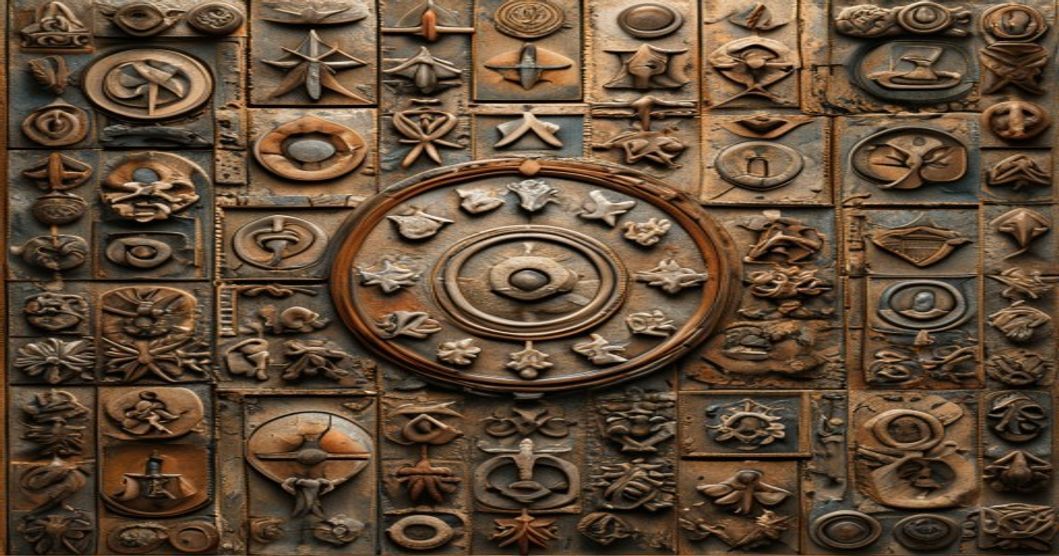
Sámi runes differ fundamentally from the continental and Scandinavian futhark systems. Rather than spelling phonetic language, these inscriptions served as mnemonic aids, ownership markers, or ritual identifiers carved onto bone tools, antler combs, wooden vessels, and weapon hilts. Carbon-dated artifacts reveal usage between the 13th and 17th centuries, with symbols often denoting seasonal hunting routes, clan affiliations, or protective incantations against spiritual harm.
The Role of Nature in Symbolic Expression
Northern ecology dictated the thematic core of Sámi visual language. Symbols were not decorative but functional representations of survival strategies and environmental reciprocity. The solar disk, winding water currents, and antler branching patterns encoded astronomical observations, migration cycles, and resource management principles, transforming practical knowledge into culturally transmitted visual syntax.
Decoding the Core Sámi Symbolic System
The Sun Cross and Solar Motifs
The Sámi sun cross (beaivváš) operates as a central cosmological anchor, representing solar deities, seasonal renewal, and the cyclical nature of Arctic life. Unlike Christianized variants, traditional Sámi solar symbols emphasize rotational symmetry and directional polarity, mapping the sun’s path across tundra horizons. Ethnographic records indicate these motifs were integrated into ritual garments, drum surfaces, and sacred stone markers to align human activity with celestial rhythms.
Woven and Knotted Belt Patterns (Sápmelášša)
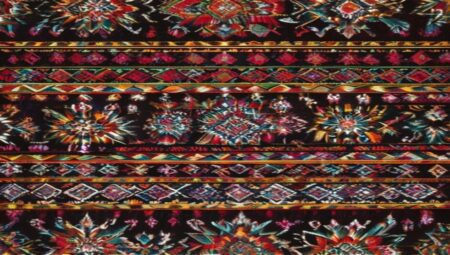
The Sámi knotted belt, or sápmelášša, functions as a multidimensional symbolic medium. Woven with precise geometric sequences, each knot configuration encodes clan lineage, geographic origin, and marital status. The mathematical structure follows binary counting systems and modular repetition, allowing wearers to communicate identity without spoken language. Protective symbolism is embedded in asymmetrical placements, believed to deflect negative spiritual forces during travel.
Animal Iconography and Totemic Representations
Sámi animal symbols operate within a framework of ecological respect rather than domination. The reindeer antler motif signifies renewal, navigation, and sustenance, while the wolf represents strategic awareness and boundary enforcement. Bear imagery appears in ritual contexts as a mediator between human and spirit realms. These representations avoid literal depiction, favoring stylized line work that emphasizes movement, directionality, and seasonal transformation.
Cultural Functions and Societal Integration
Ritual Use and Shamanic Practices
The Sámi goavddis (sacred drum) serves as the primary vessel for symbolic cosmography. Drum surfaces are divided into three horizontal zones representing the upper, middle, and lower worlds, populated by spirit animals, celestial bodies, and ancestral figures. Ritual specialists (noaidi) used these symbols in trance navigation, divination, and healing ceremonies. Pictographic arrays on drum skins functioned as navigational charts for spiritual journeys, encoded with directional markers and seasonal timing.
Identity Markers and Clan Lineages
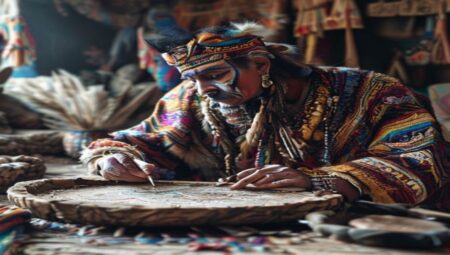
Symbolic systems operated as decentralized genealogical records. Regional dialects of visual syntax emerged across Sápmi, with color sequences, knot densities, and motif placements distinguishing subgroups such as the Coastal Sámi, Mountain Sámi, and Forest Sámi. Textile codes were inherited matrilineally, ensuring that symbolic literacy remained embedded in domestic and ceremonial practice rather than centralized authority.
Preservation, Revival, and Contemporary Relevance
Academic Research and Digital Archiving
Contemporary scholarship treats Sámi symbols as critical indices of indigenous epistemology. Universities and cultural institutions have digitized over 12,000 artifact inscriptions, establishing open-access databases that cross-reference motif variations with dialectal patterns and geographic coordinates. UNESCO’s Intangible Cultural Heritage framework recognizes Sámi textile symbolism as a vital component of Arctic intellectual tradition, funding systematic documentation and community-led archival projects.
Modern Artistic Adaptation and Cultural Sovereignty
Sámi designers and visual artists actively reclaim symbolic syntax to assert cultural sovereignty. Contemporary applications range from high-fashion gákti adaptations to graphic design systems that prioritize geometric authenticity over commercial simplification. Institutional guidelines now require Sámi consultation for public reproductions, mitigating historical appropriation while enabling educational integration in Scandinavian curricula. The revival of traditional knot mathematics and runiform inscriptions continues through digital modeling, ensuring structural accuracy across generational transmission.
Frequently Asked Questions About The Meaning Behind Sami Symbols
What is The Meaning Behind Sami Symbols?
The meaning behind Sami symbols lies in their deep connection to the Arctic environment, spiritual beliefs, and daily life of the indigenous Sami people. Traditionally used in duodji (handicrafts), joik (song), and clothing, these symbols often represent nature, animals, celestial bodies, and protection against evil spirits, serving as a visual language that preserves cultural heritage and identity.
Key facts about The Meaning Behind Sami Symbols
Key facts include: Sami symbols are regionally distinct across the four main dialect groups (North, South, East, and West); they are traditionally carved, woven, or painted using natural pigments and materials; many symbols hold shamanic or animistic significance tied to reindeer herding and seasonal cycles; and modern Sami artisans continue to adapt these motifs to assert cultural sovereignty and raise global awareness about indigenous rights.