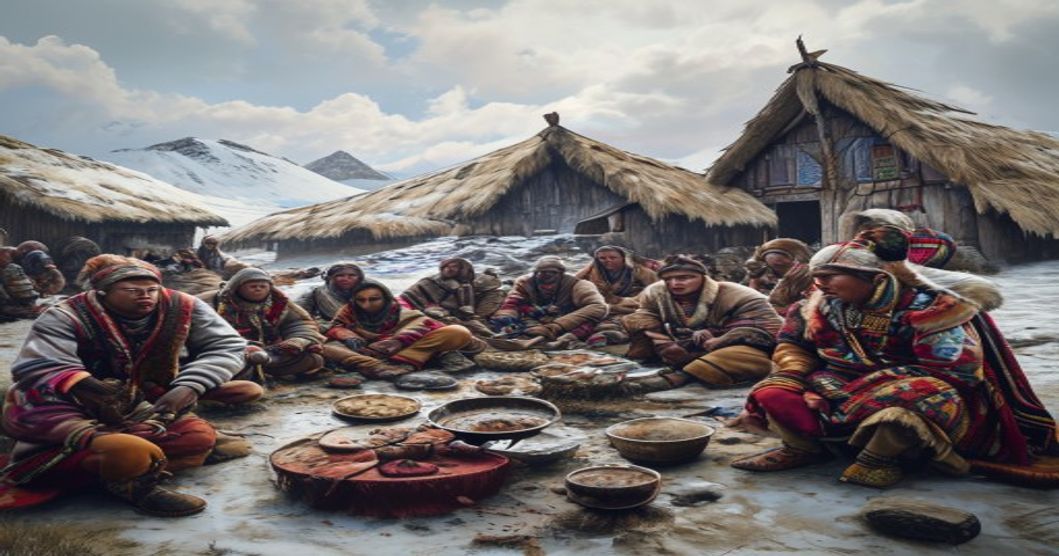
The Social Foundations of Sami Society
Sami social organization historically functioned through decentralized kinship networks and ecological adaptation rather than centralized political authority. The foundational community unit was the siida, a self-governing collective responsible for managing reindeer pastures, hunting grounds, and coastal fishing sites across seasonal migration corridors. Membership operated on familial lineage, shared economic resources, and reciprocal obligation instead of territorial conquest. Resource distribution relied on structured exchange systems where labor during calving seasons or ice-fishing expeditions was compensated through food circulation, tool sharing, and strategic marital alliances.
- Kinship & Governance: Elder councils mediated disputes using customary law emphasizing restitution, public testimony, and ecological balance. Leadership emerged functionally; individuals demonstrating expertise in weather patterns, reindeer tracking, or traditional craft production naturally coordinated seasonal operations.
- Gender Roles & Labor Distribution: Women traditionally managed camp logistics, textile production, and early-stage fish processing, while men directed long-distance migration routes and large-scale hunting campaigns. Both genders participated equally in collective decision-making during siida assemblies.
- Linguistic Cohesion: Dialectal variations across Finnmark, Troms, Norrbotten, and
Defining Core Cultural Parameters and Historical Scope
The Sami social structure emerged from adaptive ecological strategies rather than centralized political institutions. Core cultural parameters revolve around territorial fluidity, kinship-based resource allocation, and linguistic fragmentation across Arctic and subarctic zones. Reindeer pastoralism functions as the primary economic anchor in inland communities, while coastal groups historically relied on mixed subsistence patterns including seal hunting, marine mammal stalking, seasonal fishing, and small-scale agriculture. These complementary livelihoods demanded precise seasonal calendars governed by astronomical observation, snow conditions, and animal migration cycles.
Kinship networks operate as the foundational organizational unit. Lineage ties dictate land use rights, marriage alliances, and conflict resolution mechanisms. Traditional Sami governance avoided hierarchical monarchies in favor of consensus-driven assemblies where elders and skilled practitioners mediated disputes over grazing routes and fishing grounds. This decentralized model persisted despite external administrative pressures.
Historically, the Sami presence spans at least two millennia before recorded contact with Norse settlers. Medieval Scandinavian sagas document early interactions, though systematic state integration began during the 18th and 19th centuries. Norwegian, Swedish, Finnish, and Russian authorities implemented assimilation frameworks that restricted language use, land tenure, and religious practices. The 20th century introduced forced relocation policies and educational restrictions designed to erase indigenous distinctiveness. Legal recognition only solidified after the 1970s, culminating in constitutional amendments across four nations and the establishment of regional parliaments.
- Linguistic diversity: Six living Sami languages divided into West and East branches, each preserving distinct phonological and lexical features tied to historical migration routes.
- Spiritual ecology: Animistic worldviews integrated sacred landscapes, drum rituals, and seasonal festivals that reinforced communal identity and environmental stewardship.
- Legal territoriality: Modern land claims focus on customary usage rights rather than absolute ownership, reflecting historical patterns of rotational grazing and seasonal occupation.
Contemporary cultural parameters retain these historical continuities while adapting to industrial development, climate shifts, and digital communication. The boundary between past and present remains porous, with traditional knowledge systems actively informing modern governance models and environmental policy frameworks across Fennoscandia.
Evolution of Indigenous Community Structures
Traditional Sami social organization relied heavily on kinship networks and territorial cooperation rather than centralized authority. Communities were historically structured around the siida, a flexible cooperative unit that organized seasonal reindeer migrations, fishing grounds, and hunting territories. Leadership emerged through demonstrated expertise in land management and conflict resolution rather than hereditary privilege. Decision-making occurred within gathering councils where elders and experienced herders negotiated resource allocation through consensus. These assemblies functioned as both administrative bodies and cultural transmission centers, preserving oral histories, ecological knowledge, and customary laws across generations.
The expansion of Scandinavian and Russian state borders during the seventeenth through nineteenth centuries systematically disrupted these indigenous frameworks. Colonial administrations imposed taxation systems that forced mobility patterns into rigid boundaries, while missionary campaigns actively suppressed traditional spiritual practices and kinship-based governance. Land registration policies further fragmented communal territories by converting shared grazing areas into privately owned parcels. Despite these pressures, Sami communities preserved structural continuity through informal networks, cross-border kinship ties, and adaptive economic strategies that maintained subsistence practices under legal restrictions.
- Kinship-based resource management enabled flexible responses to environmental fluctuations while maintaining intergenerational knowledge transfer.
- Consensus-driven governance models prioritized collective welfare over individual accumulation, reinforcing social cohesion during periods of external pressure.
- Informal cross-regional networks facilitated trade, marriage alliances, and emergency support systems that transcended imposed political boundaries.
Contemporary indigenous community structures demonstrate remarkable institutional adaptation. Modern Sami parliaments in Norway, Sweden, and Finland operate alongside traditional siida systems, creating hybrid governance frameworks that blend statutory representation with customary land management practices. Cultural revitalization initiatives have strengthened linguistic continuity and ecological stewardship programs, transforming historical marginalization into structured political advocacy. Community-based cooperatives now manage tourism operations, craft markets, and reindeer husbandry enterprises while maintaining strict adherence to ancestral resource rotation principles. These evolved structures continue to demonstrate how indigenous social organizations navigate legal recognition, economic development, and cultural preservation without sacrificing foundational community values.
Kinship Networks and Clan Organization Systems
The traditional social architecture of Sámi communities revolves around intricate kinship networks that historically governed resource allocation, territorial access, and cultural continuity. Unlike centralized political structures, Sámi society operated through decentralized clan systems where lineage dictated both rights and responsibilities. The core organizational unit was the sijdda, a semi-autonomous settlement composed of related families who shared reindeer herding grounds, hunting territories, and fishing waters. Membership within a sijdda was determined by birth and marriage alliances, creating overlapping networks that extended across vast Arctic landscapes.
Kinship ties functioned as the primary mechanism for conflict resolution and economic cooperation. Reindeer ownership, essential for survival in subarctic environments, passed through established family lines rather than individual accumulation. Historical records and ethnographic studies confirm that grazing rights were inherited patrilineally or matrilineally depending on regional variations, with clan elders mediating disputes over seasonal migration routes. The goahti served not only as shelter but as the foundational node of each kinship cluster, anchoring oral traditions, ritual practices, and intergenerational knowledge transfer.
- Sijddagárru councils: Traditional assemblies where clan representatives negotiated territorial boundaries and resolved resource conflicts without external authority.
- Boazovázzi lineages: Herding families whose genetic and economic ties determined access to specific grazing districts, a system still recognized in contemporary Sámi reindeer husbandry legislation.
- Kinship-based reciprocity: Exchange networks where labor, equipment, and food were distributed according to familial obligation rather than market valuation.
Modern legal frameworks have attempted to formalize these historical kinship structures, yet the underlying clan organization remains fluid. Contemporary Sámi communities navigate between statutory grazing cooperatives and traditional lineage claims, demonstrating how ancestral networks adapt to bureaucratic requirements while preserving core social logic. The endurance of these systems underscores their functional efficiency in managing scarce Arctic resources through relational accountability rather than institutional enforcement. Genealogical mapping within these clans reveals strategic alliances designed to maximize seasonal mobility and mitigate environmental volatility.
Bloodline Affiliation and Inheritance Patterns
Bloodline affiliation historically structured Sámi community organization, operating through extended family networks that regulated resource allocation, marriage restrictions, and collective responsibility. Lineage determination varied across traditional territories, with eastern groups often emphasizing patrilineal descent while western coastal communities frequently utilized bilineal tracking to manage fishing and hunting territories. Kinship ties functioned as the primary mechanism for distributing reindeer herds, which remained the cornerstone of Sámi economic life. Herd ownership did not transfer automatically upon death; instead, senior family members negotiated divisions among heirs based on age, experience, and contribution to seasonal migrations.
- Land Use Rights: Access to winter pastures, summer grazing grounds, and fishing sites passed down through documented family claims rather than state-issued titles. Customary law prioritized continuous occupation and herd maintenance over formal deeds.
- Skill Transmission: Specialized knowledge including boat-building techniques, duodji craft patterns, ecological navigation, and vocal traditions were transmitted within specific bloodlines to preserve technical accuracy and cultural continuity.
- Alliance Formation: Marriage negotiations deliberately strengthened existing kinship networks. Cross-regional unions were frequently arranged to secure complementary seasonal territories or mitigate resource scarcity during harsh winters.
The introduction of Scandinavian taxation systems and land registration laws in the nineteenth century disrupted these customary frameworks, replacing fluid family-based claims with fixed individual property deeds. Despite legal assimilation policies, many Sámi families maintained informal inheritance practices through oral documentation, private herd registers, and community-mediated disputes. Contemporary Sámi reindeer herders still reference ancestral bloodlines when establishing new herds or resolving grazing conflicts, demonstrating the enduring structural role of kinship in resource management. Modern legal recognitions of Sámi collective rights have gradually restored certain customary inheritance mechanisms, allowing family groups to reclaim historical pasture boundaries through official land courts. The persistence of bloodline affiliation reflects a deliberate adaptation strategy rather than cultural stagnation, ensuring that ecological knowledge and economic assets remain within verified familial networks.
Clan-Based Resource Distribution Mechanisms
The organizational framework of traditional Sami communities relied heavily on kinship networks that governed access to land, grazing territories, and seasonal hunting grounds. Resource allocation operated through established clan boundaries rather than individual ownership. Each family group maintained recognized rights to specific pastures, which shifted according to reindeer migration patterns and environmental conditions. These territorial claims were preserved through oral transmission and reinforced by collective responsibility for herd management.
Decision-making regarding resource deployment followed strict reciprocal obligations. When a clan secured prime grazing land during winter months, neighboring kin groups received priority access during summer ranges. This rotational system prevented overgrazing and maintained ecological balance across vast Arctic landscapes. Meat distribution from successful hunts adhered to predetermined kinship protocols, ensuring that vulnerable households received essential provisions without market exchange. Leadership emerged organically among individuals with proven expertise in navigation, weather prediction, and animal husbandry rather than through inherited authority.
- Customary Land Tenure: Territories operated under communal stewardship where usage rights transferred between generations based on active participation in herding cycles.
- Reciprocal Labor Exchange: Family units pooled resources during calving seasons and autumn slaughters, requiring coordinated movement across predetermined corridors.
- Ecological Monitoring Protocols: Elders tracked snow conditions, vegetation recovery rates, and predator activity to adjust distribution schedules before resource depletion occurred.
- Conflict Resolution Frameworks: Boundary disputes were settled through mediated discussions between clan representatives, prioritizing long-term relational stability over short-term territorial gains.
These mechanisms functioned as adaptive governance structures that synchronized human activity with Arctic ecological rhythms. The distribution network required constant negotiation, skill sharing, and intergenerational knowledge transfer to remain viable under extreme climatic variability. Modern continuity of these practices demonstrates how decentralized kinship systems can effectively manage shared commons without centralized bureaucratic oversight.
Community Governance and Collective Decision Making
Sami community governance historically operated through decentralized, kinship-based networks rather than centralized hierarchies. The foundational unit of social organization was the siida, a cooperative group responsible for managing reindeer herding territories, fishing grounds, and hunting routes. Authority within these units emerged organically from demonstrated expertise, seasonal migration experience, and the ability to maintain ecological balance. Leadership roles shifted dynamically according to environmental conditions, with recognized experts guiding resource allocation during critical periods such as calving seasons or harsh winter migrations.
Collective decision making relied on consensus-building rather than majority voting. Councils convened in open spaces where all adult members could voice perspectives on land use, inter-community disputes, and seasonal movements. Decisions required broad
Traditional Assemblies and Consensus Building
Sami governance historically operated through decentralized communal gatherings rather than centralized administrative structures. These assemblies, commonly documented as gulldahallu or localized village councils, functioned as the operational core for regulating reindeer husbandry, allocating seasonal pastures, and adjudicating resource disputes. Participation required direct stakeholder involvement, drawing upon elders possessing detailed meteorological and topographical knowledge, veteran herders, and families whose livelihoods depended on specific grazing corridors. Meetings typically convened at established seasonal waypoints where terrain features naturally facilitated gathering logistics. The decision-making framework rejected simple majority voting in favor of extended deliberation until unanimous alignment emerged. This consensus architecture prevented territorial fragmentation and guaranteed that herd movements synchronized with environmental carrying capacity.
Dispute mediation within these gatherings utilized restorative protocols rather than coercive enforcement. When boundary violations occurred or livestock management failed, designated mediators structured dialogue sessions where impacted parties presented oral testimony alongside historical land-use patterns. Resolutions derived from documented precedents, ecological indicators, and intergenerational observation records. The reliance on verbal contracts established public accountability mechanisms that sustained long-term cooperation during resource scarcity periods. Authority within these assemblies remained contingent upon demonstrated competence, moral consistency, and proven success in maintaining herd survival through extreme climatic conditions.
- Horizontal decision-making structures eliminated hierarchical bottlenecks, enabling rapid response to shifting weather patterns and pasture degradation.
- Elders acted as living archives, transmitting grazing route memorization and animal behavior analysis across generations without written documentation.
- Consensus requirements forced comprehensive stakeholder consultation, ensuring every proposed action accounted for cumulative environmental impact.
Contemporary implementations have merged these traditional frameworks with statutory land rights legislation across Norway, Sweden, Finland, and Russia. Community negotiations still cite historical assembly outcomes when defining grazing quotas or establishing conservation zones. The horizontal governance model continues shaping regional environmental policy, particularly where rapid ecological adaptation demands localized input. Maintaining these operational structures preserves Sami social resilience while ensuring cultural transmission remains tied to practical land stewardship rather than abstract institutional representation.
Livelihood Networks and Economic Interdependence
The economic architecture of Sami communities rests on deeply embedded livelihood networks that transform geographic isolation into structural resilience. Reindeer pastoralism functions as the primary anchor, but it operates within a broader ecosystem of reciprocal labor, seasonal resource allocation, and kinship-coordinated decision-making. Herding groups do not function in isolation; they rely on continuous knowledge transmission regarding pasture quality, migration corridors, and predator management. This interdependence extends beyond reindeer to include coastal fishing, berry harvesting, handicraft production, and seasonal wage labor, creating a diversified income portfolio that buffers against ecological or market volatility.
Cooperative resource management remains the operational core of these networks. Traditional governance structures allocate grazing territories through lineage-based rights and inter-community agreements rather than private ownership. When one group faces herd losses due to weather events or disease, neighboring households routinely provide livestock, labor, or food supplies to prevent systemic collapse. Information flows across distances via established communication channels, ensuring that pasture conditions, market prices for antlers and hides, and regulatory updates reach remote settlements before they become critical bottlenecks.
- Seasonal migration routes dictate labor distribution, with specialized roles emerging for veterinarians, hide processors, snow vehicle operators, and pasture monitors.
- Barter and cash economies historically merged through coastal-inland exchange systems, where fish, timber, and iron tools moved inland while reindeer products traveled to urban markets.
- Modern regulatory frameworks now formalize these networks, requiring coordinated applications for grazing permits, subsidy allocations, and environmental compliance monitoring across municipal boundaries.
Contemporary economic interdependence also incorporates digital infrastructure and cooperative enterprises. Digital mapping platforms track herd movements in real time, while online marketplaces connect artisans directly with international buyers, bypassing traditional middlemen. Despite external pressures from industrial development and climate-driven pasture degradation, the Sami economic model persists through adaptive institutional memory. Communities maintain financial pooling mechanisms for equipment sharing, veterinary interventions, and youth training programs that ensure knowledge continuity without eroding autonomous decision-making.
Reindeer Herding as a Social Framework
Reindeer herding operates as the central pillar structuring Sami social organization across generations. This practice extends far beyond livestock management, functioning as a complex system of kinship obligations, seasonal migration patterns, and collective decision-making. Families maintain interconnected grazing territories defined by historical rights and ecological boundaries rather than formal property deeds. The annual roundtrip movements require coordinated labor, where roles distribute according to age, gender, and specialized expertise. Younger members learn animal tracking, veterinary care, and snow assessment through direct participation alongside elders, ensuring intergenerational knowledge transfer remains intact without written documentation.
Economic cooperation emerges naturally from herding requirements. Shared infrastructure such as corrals, drying racks, and transportation networks depends on communal labor pools. When weather conditions shift unpredictably, neighboring families pool resources to secure pastures or relocate herds, demonstrating a built-in risk mitigation framework. Dispute resolution regarding grazing boundaries follows customary protocols mediated by experienced herders rather than external legal systems. These traditional mechanisms maintain social equilibrium while adapting to modern land-use regulations and climate variability.
- Seasonal migration routes dictate community gatherings, reinforcing clan solidarity through shared campsites and resource distribution.
- Knowledge transmission occurs through hands-on mentorship rather than formal education, preserving linguistic nuances tied to animal behavior and terrain navigation.
- Collective governance structures emerge during peak husbandry periods, where decision-making authority rotates based on herd size and seasonal workload.
Cultural identity reinforces the herding structure through seasonal festivals, music traditions, and craft production tied directly to reindeer materials. Clothing, tools, and dietary practices preserve ecological awareness that guides sustainable pasture management. Modern policy challenges have not dismantled this framework but rather triggered strategic adaptations. Herders now combine satellite tracking with historical migration routes, while cooperative organizations negotiate land rights collectively. The continuity of reindeer herding sustains linguistic vitality, reinforces clan solidarity, and provides an operational model for environmental stewardship that aligns traditional wisdom with contemporary conservation science.
Seasonal Migration Patterns and Resource Management
The operational core of Sami ecological adaptation centers on a precisely calibrated annual migration cycle that synchronizes reindeer movement with regional bioclimatic shifts. Reindeer populations traverse extensive geographic corridors between specialized winter and summer pastures, each zone engineered to meet distinct physiological requirements. Winter ranges prioritize boreal forest interiors where crustose lichens remain accessible beneath snowpack, delivering critical carbohydrates during periods of nutritional scarcity. Summer territories shift toward alpine tundra or coastal birch woodlands, optimizing calf survival rates while maximizing intake of protein-rich forage, mosses, and herbaceous vegetation. This rotational grazing model inherently prevents pasture degradation and sustains long-term biomass regeneration.
Resource distribution follows a decentralized cooperative framework known as the siida, which functions as both an administrative and economic unit. Each siida coordinates labor allocation, equipment maintenance, and territorial access through consensus-based decision-making. Herders continuously evaluate vegetation recovery metrics, snowpack density, and herd body condition indices to modify migration timelines dynamically. Contemporary monitoring integrates traditional ecological indicators with satellite telemetry, drone surveillance, and GIS mapping to track pasture utilization rates and prevent cross-boundary overgrazing. Regulatory compliance requires negotiating seasonal grazing permits with municipal authorities and environmental agencies, ensuring alignment between customary rights and modern land-use legislation.
- Territorial Zoning: Fixed seasonal boundaries reduce inter-herd conflict and maintain ecological carrying capacity limits.
- Labor Rotation: Specialized roles including route scouting, veterinary monitoring, and equipment logistics distribute workload equitably across the cooperative.
- Knowledge Transmission: Route memorization, weather prediction techniques, and pasture assessment methods transfer through apprenticeship rather than formal documentation.
- Adaptive Management: Climate variability forces adjustments to migration windows, requiring herders to balance traditional calendars with real-time environmental data.
The persistence of these migration frameworks directly sustains Sami social cohesion, economic independence, and cultural continuity. When pasture access remains uninterrupted, household food security, reindeer population stability, and intergenerational wealth accumulation follow predictably. Disruptions caused by infrastructure development, industrial land concessions, or altered precipitation patterns trigger cascading socioeconomic effects across the entire cooperative network. Consequently, the seasonal migration system operates not merely as a logistical process but as the foundational institution governing resource equity, conflict resolution, and community resilience within Sami territories.
Dialect Variations and Oral Tradition Transmission
The linguistic landscape of Sámi communities is defined by profound dialectal fragmentation, directly mirroring historical settlement patterns across Scandinavia and the Kola Peninsula. Each dialect cluster—North, South, East, Lule, Inari, Skolt, and Ume—evolved in isolated geographic pockets where topography and seasonal migration routes dictated social interaction boundaries. This linguistic diversity functions as a territorial marker that reinforces kinship networks and resource-sharing agreements within reindeer-herding districts.
Oral tradition serves as the primary infrastructure for preserving this dialectal complexity across generations. Rather than relying on written codification, Sámi knowledge systems depend on structured auditory transmission. The yoik tradition operates as both mnemonic device and social ledger, encoding ecological data, genealogical ties, and land-use rights within melodic contours. Seasonal assemblies during siida gatherings functioned as decentralized linguistic exchanges where elders calibrated terminology related to snow conditions, reindeer behavior, and weather forecasting.
- Apprenticeship models embedded language acquisition within economic activities like hunting, fishing, and livestock management
- Ritualized storytelling sessions during winter months reinforced grammatical structures through repetitive narrative frameworks
- Dialect-specific ontologies mapped environmental features using precise lexical categories absent in dominant national languages
Linguistic divergence accelerated during the nineteenth-century border demarcations, which imposed standardized national curricula that actively suppressed regional phonetic variants. Contemporary social cohesion within Sámi society remains contingent upon maintaining these transmission pathways. Digital documentation projects and community-led language nests have replaced traditional intergenerational contact, yet the underlying social architecture still relies on dialectal authenticity to validate cultural authority. Researchers tracking semantic shift patterns observe that vocabulary retention correlates directly with participation in land-based practices rather than institutional education alone.
Language Policy Impact on Social Cohesion
Contemporary Legal Frameworks and Indigenous Rights
The legal architecture protecting Sami rights operates across multiple jurisdictions, primarily anchored in Norwegian, Swedish, and Finnish constitutional law alongside binding international instruments. Nordic states have progressively shifted from assimilationist policies toward formal recognition of indigenous sovereignty, though implementation remains uneven. Norway’s Sami Act of 1987 established the foundation for cultural autonomy, while Finland’s Constitution explicitly guarantees language rights and reindeer husbandry protections under Article 21. Sweden historically resisted constitutional amendments regarding indigenous status, but recent parliamentary discussions reflect mounting pressure to align domestic statutes with international obligations.
International frameworks exert substantial influence on regional jurisprudence. The United Nations Declaration on the Rights of Indigenous Peoples (UNDRIP), adopted in 2007, mandates state consultation mechanisms and land restitution processes. Norway ratified ILO Convention No. 169 in 1990, creating enforceable obligations regarding traditional resource use. Despite these commitments, judicial interpretation often narrows the scope of recognized territories, limiting claims to historically documented grazing areas rather than expansive ancestral landscapes. Courts routinely balance economic development interests against customary land tenure, resulting in fragmented precedents that prioritize state sovereignty over collective indigenous title.
- Nordic Sami Parliaments function as elected advisory bodies with legislative influence limited to cultural and educational policy domains.
- Consultation protocols require government agencies to engage Sámi institutions prior to approving infrastructure, mining, or forestry projects in designated reindeer herding districts.
- Judicial review mechanisms increasingly reference international human rights standards when evaluating constitutional challenges to resource extraction permits.
Recent legislative developments emphasize procedural safeguards rather than substantive land transfers. The Norwegian Supreme Court has reinforced grazing rights through precedent-driven rulings that recognize continuous historical usage as a valid legal basis for territorial claims. Conversely, Swedish courts maintain restrictive interpretations of property law, often deferring to municipal zoning authorities. Finland’s Constitutional Committee actively reviews proposed legislation for compliance with Sami autonomy provisions, creating a more consistent protective environment. Cross-border cooperation initiatives facilitate shared legal strategies, yet divergent national approaches complicate unified advocacy efforts. Future policy trajectories depend heavily on institutional willingness to transform consultative frameworks into binding decision-making authority.
Land Tenure Agreements and Sovereignty Claims
The relationship between the Sámi people and their ancestral territories operates through complex legal frameworks that blend customary practice with modern statutory recognition. Historically, land use was governed by seasonal migration patterns, communal grazing rights, and ecological stewardship rather than fixed property boundaries. These traditional systems relied on intergenerational knowledge transfer and village-level coordination, establishing a social architecture where resource access dictated community organization.
Modern tenure agreements emerged through prolonged negotiation between indigenous representatives and Nordic states. The Finnmark Act of 2005 established the Finnmark Estate as a joint administration body, granting the Sámi Parliament significant authority over approximately ninety-five percent of the county’s land. This model shifted from state-controlled allocation to co-management, recognizing historical usage rights without transferring full private ownership. Similar frameworks exist in Sweden through the Forestry Agency regulations and Finland via the Reindeer Husbandry Act, though implementation varies considerably across jurisdictions.
- Nordic Legal Instruments: ILO Convention 169 ratification status influences national legislation, with Norway formally adopting indigenous rights while Sweden and Finland maintain limited constitutional provisions.
- Court Precedents: Norwegian Supreme Court rulings in the Alta and Silba cases established that continuous traditional use generates legally protected entitlements, overriding state claims where documentation proves uninterrupted practice.
- Resource Extraction Conflicts: Mining permits, wind farm installations, and infrastructure projects frequently trigger disputes over consent requirements under free, prior, and informed consultation protocols.
Sovereignty claims extend beyond territorial boundaries to encompass legislative autonomy and cultural preservation mandates. Sámi parliaments exercise advisory powers regarding land use planning, wildlife management, and environmental impact assessments. Recent constitutional amendments in Norway explicitly recognize the Sámi as an indigenous people with rights to maintain and develop their language, culture, and social institutions. These legal mechanisms function as practical expressions of self-governance rather than symbolic gestures.
Contemporary tenure systems face pressure from climate change altering reindeer migration corridors and industrial development expanding into marginal zones. Legal strategies now emphasize mapping historical settlement patterns through archaeological evidence, oral testimony, and cadastral records. Courts increasingly accept ethnographic data as valid proof of customary rights, strengthening positions in administrative proceedings. The intersection of statutory recognition and traditional governance creates a hybrid system where sovereignty operates through negotiated jurisdiction rather than absolute territorial control.
Cross-Border Recognition and Institutional Support
The geographic distribution of Sami communities across Norway, Sweden, Finland, and Russia creates inherent complexities in policy coordination and cultural continuity. National borders established during the nineteenth and early twentieth centuries fractured traditional reindeer herding routes, grazing lands, and seasonal migration corridors. This territorial fragmentation necessitates formalized cross-border mechanisms to maintain social cohesion and economic viability for indigenous livelihoods.
Institutional frameworks have evolved to address these transnational realities through dedicated representative bodies and multilateral agreements. Each nation with Sami populations operates a distinct Sami Parliament, yet collaborative structures bridge legislative gaps. The Nordic Council of Ministers coordinates cultural preservation initiatives, while specialized working groups align reindeer herding regulations across municipal boundaries. Legal recognition varies significantly; Norway ratified the ILO Convention 169 but maintains limited constitutional provisions for land rights, whereas Sweden and Finland operate under parliamentary acts that define Sami self-governance within national jurisdictions.
- Legislative Alignment: Harmonizing reindeer herding permits, veterinary standards, and winter grazing schedules across municipal and national jurisdictions requires continuous diplomatic negotiation.
- Funding Mechanisms: Cross-border cultural programs receive partial support from Nordic regional grants, though disbursement rates fluctuate according to domestic budget priorities.
- Land Tenure Disputes: Historical property records often conflict with customary Sami land use patterns, prompting legal challenges that test existing administrative frameworks.
- Linguistic Infrastructure: Cross-border cooperation funds Sámi language schools, digital archives, and translation initiatives to preserve dialectal variations across the four states.
Operational effectiveness depends on resource allocation and political will within each sovereign government. Disparities in administrative capacity create uneven implementation of Sami rights, particularly regarding extractive industry consultations and infrastructure development adjacent to traditional territories. Institutional support structures function most efficiently when municipal authorities integrate indigenous advisory panels into regional planning committees. Sustained collaboration between Sami Parliaments remains the primary mechanism for standardizing policy responses to climate-induced ecological shifts, which directly alter reindeer pasture availability and migratory timelines.
Educational Systems and Intergenerational Knowledge Transfer
Traditional Sami education operates outside formal institutional frameworks, relying instead on place-based pedagogy and daily livelihood practices. Knowledge transmission occurs through direct participation in reindeer husbandry, coastal fishing, and seasonal migration routes. Elders serve as primary instructors, teaching navigation by natural landmarks, animal behavior patterns, and sustainable resource management. This experiential model ensures that ecological data remains embedded in practical application rather than abstract theory.
- Language as Curriculum: Sami languages function as the primary vehicle for knowledge retention. Dialects encode precise terminology for snow conditions, reindeer anatomy, and weather forecasting, preserving centuries of environmental observation.
- Family-Based Apprenticeship: Youth acquire skills through multi-generational work units. Decision-making authority shifts gradually as competence demonstrates mastery of traditional protocols.
- Seasonal Knowledge Cycles: Educational content aligns with ecological rhythms. Spring calving seasons teach veterinary practices, while autumn migrations reinforce territorial navigation and herd management strategies.
Colonial education policies historically suppressed indigenous learning methods, forcing assimilation through boarding schools and mandatory instruction in national languages. Contemporary efforts actively reverse this erasure through community-driven bilingual curricula and digital documentation projects. Regional educational authorities now integrate Sami
Formal Curriculum Integration and Cultural Curriculum Alignment
Formal educational structures frequently struggle to accommodate indigenous epistemologies without diluting their core methodologies. When institutions attempt to embed Sámi knowledge into standardized syllabi, the process demands precise structural alignment rather than superficial inclusion. Curriculum designers must map traditional learning pathways onto formal assessment frameworks while preserving the contextual integrity of each discipline. This requires mapping pedagogical sequences that recognize experiential learning, oral transmission, and seasonal ecological cycles as valid academic metrics alongside conventional written examinations.
- Pedagogical Mapping: Aligning reindeer husbandry ecology, Sámi duodji craftsmanship, and joik vocal traditions with national competency standards requires interdisciplinary faculty collaboration.
- Linguistic Integration: Developing dual-language instructional materials ensures vocabulary acquisition remains anchored in authentic cultural contexts rather than translated abstractions.
- Assessment Modification: Replacing rigid standardized testing with portfolio-based evaluations captures practical mastery and intergenerational knowledge transfer effectively.
Successful integration depends on co-developing syllabi with Sámi elders, language specialists, and regional educators. These collaborations establish clear competency benchmarks that honor both national education standards and indigenous knowledge systems. Teachers require specialized training in intercultural pedagogy, linguistic sensitivity, and place-based instruction to navigate dual curricular demands effectively. Professional development programs must address the translation of Sámi concepts into standardized terminology without stripping cultural nuance from academic discourse.
Institutional frameworks also necessitate flexible assessment models that value oral presentations, practical demonstrations, and community-anchored projects alongside traditional testing. Standardized grading rubrics often fail to capture the depth of Sámi pedagogical outcomes, which emphasize relational knowledge, ecological stewardship, and intergenerational continuity. Schools implementing aligned curricula report improved student engagement, stronger cultural identity formation, and higher retention rates in regional communities.
Policy implementation requires sustained funding for indigenous resource materials, technology integration that supports Sámi digital archives, and continuous evaluation of curriculum effectiveness through community feedback loops. Administrative oversight must prioritize academic autonomy while maintaining alignment with broader educational objectives. When formal schooling respects the structural integrity of Sámi knowledge transmission, students gain dual competency in modern academic frameworks and traditional cultural practices. This alignment strengthens linguistic vitality, reinforces social cohesion, and establishes sustainable models for indigenous education worldwide.
Community-Led Learning Initiatives and Mentorship Models
Knowledge transmission within Sámi communities operates through deeply embedded, place-based networks that prioritize direct observation and hands-on practice over formalized curricula. Elders and experienced practitioners serve as primary instructors, structuring learning around seasonal cycles, ecological markers, and practical necessity rather than academic calendars. This apprenticeship framework ensures that technical competencies remain tightly coupled with cultural context, allowing learners to internalize decision-making processes alongside manual skills. Instruction occurs in natural settings where environmental feedback replaces theoretical assessment, creating a continuous loop of application and correction.
Mentorship relationships follow a structured yet flexible progression. Beginners first engage in peripheral tasks under close supervision, gradually assuming greater responsibility as proficiency develops. Feedback mechanisms rely on immediate demonstration rather than verbal instruction alone, with older practitioners modeling techniques through repeated action and guided participation. Language acquisition intertwines seamlessly with skill development, as specialized terminology emerges organically during practical exercises. Community members collectively validate expertise, establishing clear pathways for knowledge certification that remain rooted in social recognition rather than institutional credentials.
- Reindeer husbandry: Seasonal migration patterns dictate learning schedules, with youth accompanying herders through all stages of animal management and landscape navigation.
- Duodji craftsmanship: Material selection, tool preparation, and design principles transfer through multi-year apprenticeships where aesthetic standards are calibrated against community approval.
- Language revitalization: Dialect preservation relies on localized storytelling sessions and everyday conversation groups that prioritize functional fluency over grammatical formalism.
- Ecosystem management: Traditional ecological knowledge integrates weather prediction, vegetation monitoring, and wildlife behavior into adaptive decision-making frameworks taught through shared field experience.
Contemporary implementations maintain these core principles while adapting to demographic shifts and geographic dispersion. Local cultural centers coordinate mentorship matching systems that connect dispersed practitioners with interested learners across regions. Digital archives supplement physical instruction by documenting technique variations and preserving contextual explanations, yet actual skill transfer remains strictly interpersonal. Community governance bodies oversee curriculum alignment to ensure educational initiatives reflect local priorities rather than external academic frameworks. This autonomous structure preserves knowledge integrity while enabling sustainable intergenerational continuity within evolving social conditions.
Urban Adaptation and Diaspora Community Dynamics
Migration patterns shifted dramatically during the twentieth century as Nordic welfare expansion centralized education, healthcare, and administrative services in municipal hubs. This structural realignment displaced numerous reindeer herding families from peripheral pastures toward established urban centers across Norway, Sweden, and Finland. Contemporary demographic data confirms that over sixty percent of individuals with documented Sami heritage now reside in metropolitan or suburban municipalities rather than traditional settlement zones. The concentration of population has fundamentally altered kinship networks, shifting subsistence economics toward wage labor while maintaining transregional ties through seasonal migration patterns and cooperative resource management agreements.
Urban Sami communities have developed institutional frameworks to sustain cultural continuity amid geographic dispersion. Municipal cultural centers in Tromsø, Kiruna, and Rovaniemi operate as coordination nodes for language revitalization initiatives, contemporary craft production, and public programming that aligns with regional tourism economies. Digital communication platforms have accelerated diaspora cohesion, enabling real-time knowledge exchange on land rights litigation, reindeer herding regulations, and indigenous policy advocacy across national borders. These networks function independently of state funding cycles, relying on volunteer leadership and cross-border Sami parliamentary collaboration to maintain operational continuity.
Intergenerational cultural transmission faces measurable pressure in urban environments where institutional schooling follows standardized curricula with limited indigenous content integration. Community-led immersion programs address this gap through weekend language schools, elder-mentorship projects, and structured apprenticeships in traditional textile techniques. Economic adaptation strategies include the formation of urban-based reindeer herding cooperatives that secure municipal grazing permits, alongside cultural enterprises that commercialize joik performances and duodji crafts through regulated licensing frameworks. Policy engagement remains active, with diaspora organizations consistently monitoring local government procurement practices to ensure indigenous representation in public contracts and educational materials.
Migration Trends and Settlement Pattern Shifts
Traditional Sami communities historically organized their living arrangements around reindeer migration routes, coastal fishing grounds, and forest hunting territories. Settlement was inherently mobile, with seasonal dwellings like gámme and lavvu structures enabling continuous adaptation to ecological cycles. This fluid spatial organization reinforced kinship networks, shared resource management, and oral knowledge transmission across generations.
The twentieth century introduced structural pressures that fundamentally altered these arrangements. State-sponsored assimilation policies mandated fixed residential addresses for taxation and administrative control, effectively criminalizing nomadic lifestyles. Concurrently, infrastructure expansion, including railway construction and highway development, fragmented traditional grazing corridors and concentrated population clusters around emerging municipal centers. Younger generations increasingly relocated to urban municipalities such as Tromsø, Trondheim, and Oslo to access higher education and specialized employment sectors.
- Rural-to-urban displacement: Declining reindeer herding profitability combined with climate volatility pushed approximately sixty percent of under-thirty-year-old Sami into permanent urban residency over the past three decades.
- Administrative centralization: Municipal consolidation policies transformed scattered seasonal camps into concentrated villages like Kautokeino, Karasjok, and Tysfjord, which now function as cultural and political hubs rather than traditional economic centers.
- Seasonal tourism settlements: Commercialized winter sports infrastructure and eco-tourism initiatives created temporary residential zones in Finnmark and Nordland, generating wage labor but disrupting customary land-use agreements.
Digital connectivity has introduced a paradoxical settlement dynamic. Remote work capabilities allow some professionals to maintain residence in peripheral municipalities while engaging with national job markets. Simultaneously, land restitution claims and reindeer husbandry legislation continue to force spatial reorganization, as herding zones are legally restricted to specific ecological boundaries. Contemporary Sami communities now navigate a hybrid geography where historical mobility patterns intersect with fixed property registries, educational infrastructure placement, and municipal zoning regulations.
These spatial transformations directly impact social cohesion. Extended family networks that once coordinated seasonal movements now maintain connections through digital platforms and periodic cultural gatherings. Educational institutions in consolidated municipalities serve as intergenerational bridges, yet they also accelerate linguistic shift among youth residing outside traditional language environments. Future settlement trajectories will likely depend on land use policy revisions, climate adaptation strategies, and the institutional support provided to remote educational and healthcare services.
Digital Networking and Modern Social Infrastructure
The integration of digital networking has fundamentally reshaped social infrastructure within Sámi communities, transforming how cultural knowledge is preserved, shared, and activated across generations. Remote settlements spanning northern Scandinavia and northwestern Russia historically faced geographic isolation, yet broadband expansion and satellite connectivity have enabled real-time communication between dispersed groups. This technological shift supports decentralized governance models where local councils access centralized databases for resource management, land rights documentation, and environmental monitoring.
Digital platforms serve as critical repositories for Sámi linguistic revitalization. Interactive language applications, crowdsourced audio archives, and moderated online forums allow fluent speakers to transmit dialects that previously relied exclusively on face-to-face instruction. Youth engagement has surged through social media campaigns, podcast networks, and virtual cultural festivals that bypass traditional geographic constraints. These digital spaces function as modern gathering grounds, mirroring historical assembly practices while accommodating contemporary mobility patterns.
- Cross-border collaboration: Digital networks connect Sámi organizations across Norway, Sweden, Finland, and Russia, enabling coordinated advocacy on indigenous rights, reindeer herding regulations, and climate policy.
- Data sovereignty initiatives: Communities develop encrypted archives and community-controlled databases to protect sacred knowledge from external exploitation while maintaining academic accessibility.
- Youth digital literacy programs: Municipal partnerships with tech providers deliver coding workshops, digital journalism training, and online media production courses specifically tailored to Sámi cultural contexts.
Infrastructure development continues to address historical connectivity gaps. Government fiber-optic projects and mobile tower deployments prioritize rural districts, reducing latency for video conferencing, remote education, and telehealth services. These improvements strengthen economic resilience by enabling digital marketplaces for traditional crafts, tourism platforms, and satellite-based agricultural monitoring. However, persistent challenges include equipment costs, technical maintenance in extreme climates, and the need for culturally responsive interface design that respects oral transmission traditions rather than replacing them with purely textual formats.
The convergence of reliable connectivity and community-driven digital strategy creates a self-sustaining ecosystem. Local developers build applications using Sámi linguistic frameworks, while international indigenous networks share best practices on data ethics and platform governance. This technological integration does not erode traditional social foundations; it amplifies them by providing scalable tools for cultural transmission, political coordination, and intergenerational dialogue in an increasingly connected Arctic region.
Academic Research Methodologies and Anthropological Perspectives
Anthropological investigations into Sami social structures have shifted from extractive colonial frameworks toward participatory and decolonized research paradigms. Contemporary scholarship mandates ethnographic immersion, requiring researchers to engage directly with reindeer-herding communities, coastal fishing networks, and urban Indigenous populations across Sápmi. Fieldwork protocols now emphasize longitudinal engagement, enabling scholars to document seasonal migration patterns, kinship obligations, and adaptive governance systems that sustain communal resilience.
- Ethnographic immersion remains foundational, with extended stays during critical periods such as spring calving or autumn grazing transitions capturing dynamic social negotiations.
- Collaborative documentation replaces unilateral data collection, integrating Sami knowledge keepers as co-authors and methodological advisors throughout every research phase.
- Oral history archives are systematically cross-referenced with linguistic corpora to reconstruct pre-colonial governance models and contemporary legal advocacy strategies.
Methodological rigor in this domain requires strict adherence to Indigenous data sovereignty principles. Researchers navigate complex ethical landscapes where traditional ecological knowledge intersects with modern policy frameworks. Quantitative demographic surveys frequently complement qualitative anthropological analysis, mapping land-use rights disputes and intergenerational knowledge transmission rates across municipal boundaries. Digital ethnography has emerged as a critical tool, tracking virtual community organizing and transnational Indigenous solidarity networks that influence local governance decisions.
Theoretical applications increasingly draw from relational ontology and polyphonic historiography, rejecting monolithic representations of Sami culture. Scholars examine how customary law, reindeer management committees, and siida-based decision-making structures operate as living legal systems rather than historical artifacts. This approach demands multilingual competency in North, Lule, South, and Inari Sámi languages to accurately interpret semantic nuances in land-use negotiations and ceremonial practices. Academic outputs now undergo community review cycles before publication, ensuring methodological transparency and cultural accuracy throughout the research continuum.
Longitudinal Studies on Social Structure Changes
Longitudinal research on Sámi social structure has relied heavily on multi-decade demographic tracking, ethnographic fieldwork, and cross-generational household surveys across Norway, Sweden, Finland, and Russia’s Kola Peninsula. These studies typically span thirty to fifty-year intervals, capturing shifts from traditional reindeer herding collectives to wage-based economies, urban migration patterns, and evolving kinship networks. Early 20th-century documentation emphasized clan-based resource allocation and seasonal mobility calendars tied to pastoral cycles. By the 1970s, longitudinal datasets revealed accelerated assimilation pressures stemming from state education policies, land privatization, and infrastructure development that fractured communal grazing territories. Recent decades show a reversal in certain metrics: indigenous language revitalization programs, legal recognition of Sámi parliaments, and youth-led cultural enterprises have strengthened intergenerational transmission of social roles. Methodologically, researchers combine census data with oral history archives, satellite tracking of reindeer movements, and socioeconomic panel surveys to map occupational diversification. Key findings indicate that while nuclear family structures now dominate urban centers, extended kinship obligations remain active through digital communication and seasonal gathering networks. Policy interventions, particularly the 1990s land rights rulings and contemporary education grants, correlate with measurable increases in Sámi-language household usage and participation in traditional governance forums.
Academic institutions across Scandinavia have maintained continuous monitoring protocols, tracking labor force participation, educational attainment, and political representation across three generations. These longitudinal records reveal a structural pivot from kinship-defined economic roles to credential-based professional pathways, yet cultural capital remains anchored in community-led institutions rather than state frameworks. Tracking marriage patterns across generations shows a decline in intra-ethnic unions during the mid-century urbanization wave, followed by a gradual recovery in the 2000s linked to indigenous university programs and cultural tourism development. Land tenure records demonstrate that collective grazing rights have been partially replaced by individual lease agreements, altering traditional decision-making hierarchies within herding communities.
- Governance evolution: Early consultative councils transitioned into elected legislative bodies with statutory authority over education, language policy, and cultural funding.
- Data validation methods: Researchers triangulate municipal tax records, school enrollment logs, and parliamentary voting patterns to filter short-term demographic fluctuations.
- Cohesion mechanisms: Formal political representation now intersects with informal kinship-based resource sharing, while digital platforms enable real-time coordination across historically fragmented territories.
This adaptive architecture sustains collective identity without requiring geographic concentration or economic uniformity. Longitudinal panels consistently demonstrate that social resilience emerges through institutional hybridization rather than static tradition preservation. The resulting profiles confirm that Sámi communities maintain structural continuity by converting historical mobility patterns into flexible professional networks, leveraging legal recognition to protect land access, and utilizing intergenerational knowledge transfer as a foundation for contemporary socioeconomic planning.
Ethnographic Documentation Standards and Data Collection
Ethnographic documentation within Sámi research requires rigorous adherence to community-driven protocols that prioritize linguistic accuracy, cultural sovereignty, and longitudinal continuity. Traditional archival methods frequently failed to capture the dynamic relationship between reindeer herding cycles, seasonal migration routes, and complex kinship networks. Contemporary standards mandate multi-modal data collection, integrating oral narratives, spatial mapping of traditional territories, and audio-visual records recorded under informed consent frameworks that specify usage rights at the source.
- Metadata Architecture: Researchers deploy Dublin Core and Omeka S schemas to catalog artifacts, ensuring direct interoperability with Sámi cultural repositories like the Sámi University of Applied Sciences digital archives. Geospatial coordinates accompany every field entry to map traditional land use against contemporary administrative boundaries.
- Ethical Compliance: Documentation protocols strictly follow CARE principles for Indigenous data governance. Prior consultation with local Siida councils establishes explicit boundaries regarding sacred knowledge, clan-specific narratives, and restricted seasonal information, replacing historical extractive practices with reciprocal stewardship models.
- Linguistic Preservation: Longitudinal fieldwork replaces episodic visits, enabling researchers to track semantic shifts across Northern Sámi, Lule Sámi, and South Sámi dialects over multiple generations. Audio recordings undergo phonetic transcription using standardized linguistic notation, cross-referenced with elder testimony to preserve prosodic features frequently lost in written translations.
- Digital Repatriation: Collected datasets migrate to encrypted, community-controlled servers where access tiers differentiate public educational materials from restricted genealogical records. This structure prevents unauthorized commercial exploitation while maintaining scholarly transparency and institutional accountability.
These protocols transform historical documentation into active cultural stewardship. When researchers align data collection with Sámi research ethics committees, the resulting archives function as living repositories rather than static academic resources. The integration of high-fidelity audio equipment alongside drone-assisted terrain mapping captures environmental variables that directly influence herding decisions and settlement patterns. Scholars must maintain strict version control over field notes to document iterative corrections made during community verification phases, ensuring that final publications reflect collective validation rather than individual interpretation.
Frequently Asked Questions
What is The Social Foundations of Sami Society?
The social foundations of Sami society refer to the traditional cultural, economic, and communal structures that have historically sustained the indigenous Sami people across northern Scandinavia and Russia. These foundations are deeply rooted in reindeer herding, kinship networks, oral traditions, and a strong connection to the natural environment, all of which continue to shape contemporary Sami identity and governance.
Key facts about The Social Foundations of Sami Society
Key facts include: (1) The Sami are Europe’s only indigenous nomadic people, with a culture historically built around reindeer herding, fishing, and hunting. (2) Their social structure traditionally relies on extended family clans (siida) that manage shared grazing lands and resources. (3) Despite centuries of assimilation policies, the Sami have successfully revitalized their languages, political representation through Sami Parliaments, and cultural institutions in Norway, Sweden, Finland, and Russia.