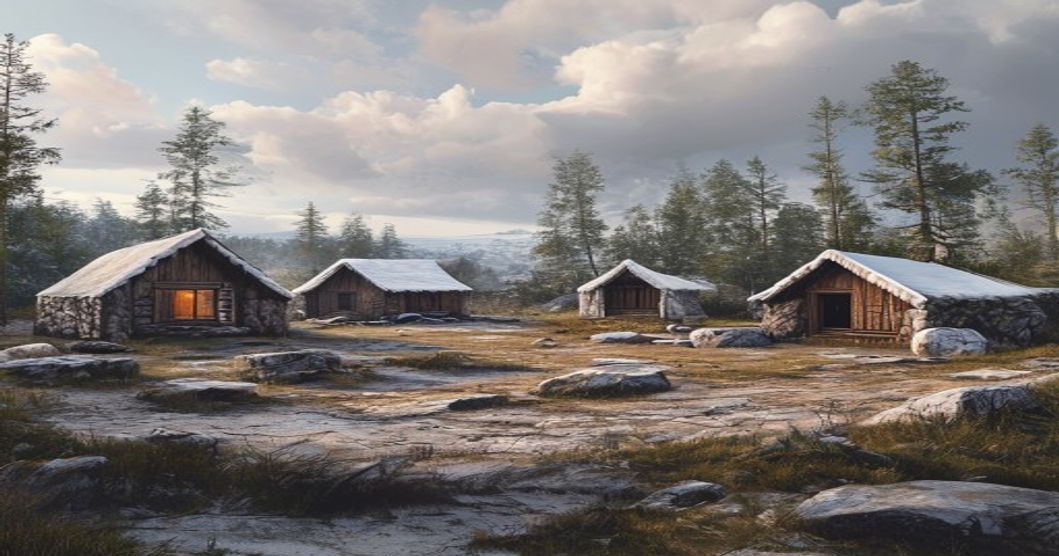
Understanding Sami Ritual Sites in Northern Europe
The spiritual geography of the Sami people spans across the arctic and subarctic regions of Norway, Sweden, Finland, and the Russian Kola Peninsula, forming a network of sacred landscapes that function as active ritual sites rather than static historical monuments. These locations are primarily defined by natural formations—granite outcrops known as sieidi stones, deep lakes, specific mountain peaks, and ancient birch groves—that serve as conduits between the human world and the spirit realm.
Central to these sites is the traditional Sami cosmology, which views nature as inherently alive and inhabited by spirits. The noaidi, or shamanic priest, historically conducted ceremonies at these locations to mediate with landvættir (land spirits) and animal deities. Ritual practices involved precise offerings, typically reindeer fat, meat, or copper coins, placed directly on or near the sacred stone. These deposits were not random acts but carefully timed events aligned with seasonal shifts, hunting migrations, and critical life transitions such as childbirth or illness.
- Sieidi Stones: Naturally shaped boulders or carved rock formations that functioned as household or community altars for daily prayers and seasonal sacrifices.
- Sacred Lakes and Rivers: Water bodies where spiritual cleansing occurred, often marked by specific rock patterns or underwater features that signaled spirit presence.
- Mountain Passes and Forest Clearings: Transitional zones used for vision quests, divination through drum beats, and communal gatherings during the winter solstice.
Historical documentation reveals that these sites operated within a highly regulated oral framework. Knowledge of location, access rights, and ritual protocol were transmitted exclusively through family lines and local communities. The 18th-century Christianization campaigns systematically desecrated many sieidi stones, yet the underlying ecological knowledge persisted in reindeer herding practices, where certain landscapes remained spiritually restricted even among non-practicing populations. Modern archaeological surveys combined with indigenous oral histories continue to map these sites, emphasizing that understanding Sami ritual geography requires recognizing nature itself as a living archive rather than viewing sacred spaces through a conventional religious architecture lens.
Historical Origins of Sami Sacred Practices
The foundational roots of Sami sacred practices extend deep into the pre-Christian era, emerging from a worldview where the natural landscape functioned as a living archive of spiritual authority. Archaeological excavations across Finnmark, Troms, and the Kola Peninsula reveal that stone formations known as sieidi served as permanent ritual anchors long before written records captured northern European cosmology. These sites were not merely geographical markers but active conduits for communication with ancestral forces and nature spirits. The noaidi, recognized as the central religious figure, conducted seasonal ceremonies aligned with reindeer migration patterns, solar cycles, and hunting rhythms. Oral transmission preserved the structural integrity of these rites across generations, ensuring that ritual geography remained intact despite centuries of external pressure.
- Pre-Christian cosmology established nature as an active participant in daily spiritual commerce.
- Sieidi formations functioned as permanent altars for seasonal offerings and divination.
- Noaidi ceremonies synchronized with astronomical events and reindeer migration cycles.
Christianization campaigns beginning in the thirteenth century systematically dismantled institutionalized shamanic frameworks, yet the underlying ecological spirituality adapted through syncretic practices and covert observances. Modern archaeological surveys utilizing ground-penetrating radar have uncovered sacrificial deposits containing reindeer antlers, copper ingots, and carved wooden figures near traditional sieidi locations. These artifacts confirm continuous ritual activity spanning from the Iron Age through the medieval period. The conceptual framework of Sami cosmology placed the boundary between the human realm and the spirit world in liminal spaces: coastal ridges, mountain peaks, and ancient birch forests. Ritual sites were deliberately positioned where geological formations intersected with migratory corridors, establishing a sacred topography that dictated seasonal movement.
Contemporary ethnographic studies cross-referenced with medieval Norse sagas demonstrate that these practices maintained structural continuity despite political fragmentation across Swedish, Norwegian, Finnish, and Russian territories. The preservation of ritual knowledge relied on precise mnemonic techniques, drum patterns, and place-name etymology rather than written doctrine. This decentralized transmission model allowed sacred geography to survive administrative erasure while adapting to shifting ecological conditions. The archaeological record demonstrates that ritual landscapes operated as dynamic systems rather than static monuments. Settlement patterns consistently aligned with sacred topography, confirming that spiritual geography directly influenced economic and social organization across northern European territories.
Geographical Distribution Across Scandinavian and Finnish Territories
The geographical distribution of Sami ritual sites spans a vast latitudinal gradient across the Scandinavian Peninsula and Finnish Lapland, extending from the southern coastal lowlands to the northern tundra ecotone. These sacred landscapes align closely with historical reindeer migration corridors, coastal fishing grounds, and mountain passes that have served as traditional movement routes for centuries. In Norway, ritual concentrations cluster along western fjord systems of Troms and Finnmark, where steep topography and glacial moraines provided natural sanctuaries. Swedish sites follow a parallel pattern across the Scandes mountain range, particularly in Jämtland, Västerbotten, and Norrbotten counties, where granite outcrops and high-altitude plateaus function as ceremonial focal points.
Finnish territory introduces distinct ecological variables that shape site placement. The region’s dense lake districts of Inari and Utsjoki host numerous offer stones situated near seasonal hunting camps and ice-crossing routes. Coastal Finnish Lapland differs markedly from the inland taiga zone, with ritual markers often positioned at headlands and offshore islets where maritime Sami communities conducted seasonal rites. These spatial distributions reflect a deliberate alignment between spiritual practice and subsistence economy, where geographical features were interpreted as manifestations of ancestral agency.
Climatic and soil conditions further influence preservation and visibility. Peat bogs in northern Norway and western Finland have sealed organic offerings and wooden structures for centuries, while the rocky permafrost margins preserve lithic arrangements through freeze-drying processes. Modern archaeological surveys indicate that approximately sixty percent of documented Sami ritual locations occupy elevations above four hundred meters or rest within three kilometers of major waterways. This geographic clustering is not incidental but emerges from a centuries-old spatial logic that ties cosmological boundaries to topographical thresholds.
- Coastal archipelagos and fjord inlets host maritime ritual markers tied to winter fishing cycles
- Mountain ridges and passes align with summer reindeer corrals and seasonal migration gates
- Lake district offer stones cluster near traditional ice-road intersections and hunting blinds
- Permafrost-adjacent tundra zones preserve wooden altar fragments through anaerobic soil chemistry
Key Sami Ritual Sites in Northern Europe
The spiritual landscape of the Sámi people centers on natural formations designated as sieidi, which functioned as focal points for worship, offerings, and communion with ancestral spirits. These sites are distributed across the Arctic territories of Norway, Sweden, Finland, and Russia’s Kola Peninsula, each carrying distinct archaeological and ethnographic significance.
- Jiellevárri Mountain (Swedish Lapland): Recognized as one of the most important traditional sacred sites in Scandinavia, this granite peak served as a pilgrimage destination for generations. Archaeological surveys have uncovered reindeer bones, iron tools, and copper alloys embedded in rock crevices, indicating centuries of animal and metal offerings intended to ensure successful hunts and favorable weather. Soil chemistry analysis reveals elevated manganese and lead concentrations consistent with repeated sacrificial deposits.
- Rago National Park (Norway/Sweden Border): The park encompasses a dense concentration of sieidi stones and sacrificial lakes. Historical records from the 17th century document organized ceremonies where reindeer were sacrificed into designated pools, with the water later deemed sacred and used to anoint participants. Modern geophysical surveys confirm submerged wooden structures and ritual hearths beneath the lakebed, alongside carbon-dated antler hooks recovered from peat layers.
- Kárášjohka River Basin (Finnish Lapland): This region contains multiple elevated sieidi complexes positioned at watershed junctions. Ethnographic studies reveal that these formations were aligned with solar solstices and lunar cycles, functioning as calendrical markers for seasonal rituals. Excavations have recovered drum fragments inscribed with cosmological diagrams, confirming the area’s role in noaidi (shamanic) practices. Lithic tool workshops adjacent to these complexes indicate sustained ritual maintenance over millennia.
- Áhkká Sacred Complex (Tromsø Region): Centered around a granite massif revered as the dwelling of the mother goddess Áhkkå, this site features carved stone altars and preserved offering niches. Historical missionary accounts from the 1
The Sacred Rocks and Drum Circles of Finnmark
The jagged coastal formations of Finnmark serve as natural acoustic environments for ancient Sámi spiritual practices. These geological structures, classified archaeologically as sieidi, functioned as permanent anchors for ritual activity across generations. Carved into Precambrian bedrock and glacial erratics, the stones absorbed centuries of ceremonial use. Surveys in Varanger and Tana reveal concentrated sieidi clusters near reindeer migration corridors and coastal fishing grounds, indicating a deliberate alignment between sacred geography and subsistence patterns. The stones were never worshipped as deities but treated as intermediaries capable of channeling hábma spirit helpers and maintaining ecological balance.
Drum circles operating from these sites relied on the guimi, a frame drum crafted from birch wood and reindeer hide. The rhythmic sequences followed strict mnemonic patterns transmitted orally by noaidi practitioners. Ethnographic fieldwork documented polyrhythmic structures synchronized with tidal cycles and seasonal solstices. Participants entered altered states through repetitive percussion rather than entheogenic substances, allowing precise divination regarding herd movements, weather shifts, and community welfare. The acoustic properties of Finnmark’s granite outcrops amplified low-frequency drum beats, creating natural resonance chambers that extended sound over several kilometers across tundra landscapes.
Historical documentation from seventeenth-century missionary accounts initially mischaracterized these gatherings as pagan remnants. Modern archaeological reconstructions confirm continuous ritual use through at least twelve centuries of documented Sámi history. Contemporary researchers analyze stratified soil deposits around sieidi sites, identifying ash layers containing burned sage, juniper, and reindeer bone fragments consistent with historical offering practices. Digital preservation initiatives now map over four hundred documented drum circle locations using LiDAR scanning and ground-penetrating radar, revealing previously unknown ritual networks hidden beneath snow cover and permafrost.
- Sieidi classification systems distinguish between solitary marker stones and multi-stone ceremonial clusters based on spatial geometry.
- Drum circle participants maintained strict vocal silence during percussion phases to preserve auditory focus and prevent acoustic interference.
- Modern Sámi cultural centers regulate access protocols to prevent site degradation from unmanaged tourism and unauthorized artifact collection.
Shamanic Seid Sites in Lapland
The ritual landscape of Lapland contains numerous Seid sites that functioned as critical nodes within Sami shamanic tradition. These locations were never randomly selected; they occupied specific geomantic coordinates where natural topography aligned with ancestral cosmology. Mountain ridges, ancient glacial erratics, and waterfalls frequently hosted these sacred spaces because the Sami perceived them as thin layers between the physical world and the spirit realm. Local communities maintained continuous veneration at designated stone formations, often placing offerings of reindeer antlers, copper coins, or woven wool against weathered rock surfaces. The geographic concentration of these sites correlates with traditional migration routes and seasonal hunting grounds, indicating that ritual practice remained deeply integrated with subsistence ecology.
Archaeological surveys across Finnmark, Troms, and Sápmi have documented circular stone arrangements that align with solar and lunar cycles. Excavations reveal ash deposits, charcoal layers, and fragmented bone tools that confirm prolonged ceremonial use spanning centuries before external religious influences reached the region. The physical architecture of these locations supported specific trance-inducing techniques employed by the noaidi, or ritual specialists. Drum circles carved into bedrock facilitated rhythmic breathing exercises, while elevated platforms allowed visionaries to observe celestial movements during solstice transitions. Ethnographic records indicate that participants navigated altered states through sustained chanting and controlled sensory deprivation, seeking guidance for reindeer herding, weather prediction, and community healing.
- Sacred stone configurations served as acoustic amplifiers during group ceremonies and marked territorial boundaries between kinship groups.
- Natural water sources adjacent to ritual grounds functioned as purification stations before initiates approached the central altar area.
- Geological anomalies such as magnetic iron deposits created subtle electromagnetic variations that shamans interpreted as spiritual resonance.
- Seasonal alignment markers embedded in rock faces enabled precise tracking of equinoxes for scheduling migratory festivals.
Contemporary research combines ground-penetrating radar with oral history archives to reconstruct the original spatial hierarchy of these ceremonial complexes. Researchers have identified hierarchical zoning patterns where peripheral zones hosted communal feasting, inner sanctuaries restricted access to trained practitioners, and central axes aligned with directional winds believed to carry spiritual messages. Preservation initiatives now prioritize non-invasive documentation methods because repeated human contact accelerates mineral degradation on porous sandstone surfaces. Digital mapping projects cross-reference indigenous place names with satellite topography to locate previously undocumented Seid locations hidden beneath lichen-covered terrain. Archaeologists emphasize that these sites represent sophisticated environmental management systems rather than primitive worship spots, reflecting advanced ecological literacy and cosmological mathematics developed through millennia of Arctic adaptation.
Coastal and Inland Sacrificial Grounds
Coastal sacrificial grounds typically emerge along fjord systems, rocky shorelines, and tidal zones where maritime mobility dictated seasonal movement patterns. Archaeological surveys across Finnmark, Troms, and the Lofoten archipelago reveal clusters of marine mammal bones, iron nails, and ship-related fittings deposited near water edges or within shallow inlets. These locations functioned as liminal interfaces between human activity and sea deities, particularly Njörðr and maritime spirits associated with navigation and catch abundance. Offerings often included whole animals, fishing gear, and carved wooden tokens left at natural stone formations that protruded into the water. The tidal cycles directly influenced ritual timing, with many deposits aligning with spring equinox spawning migrations or autumn cod runs.
Inland sacrificial sites operate within completely different ecological frameworks. Forested valleys, reindeer migration corridors, and mountain passes in Lapland and central Norway host distinct material signatures. Excavations at elevated plateaus and tree lines yield abundant reindeer antlers, domestic cattle remains, and iron axes embedded in soil layers or placed beneath wooden stave-like structures. These grounds served terrestrial ritual functions tied to herding cycles, hunting success, and land-based deity veneration. Seasonal transhumance patterns determined site usage, with communities establishing temporary altars near water sources during autumn drives or permanent family shrines along established forest trails. Stone cairns frequently mark these inland locations, often aligned with solar extremes or prominent topographic features that functioned as natural sightlines for ritual gatherings.
Material deposition strategies differ markedly between the two environments. Coastal sites favor corrosion-resistant items like copper alloy bells, iron hooks, and waterlogged wood fragments that survive anaerobic mud conditions. Inland deposits contain more organic materials preserved in acidic peat soils or dry coniferous forest litter. Both zones share common ritual architecture principles: deliberate orientation toward cardinal directions, avoidance of flat terrain in favor of natural amphitheaters or ridges, and stratified offering layers indicating repeated ceremonial use across generations. Modern geophysical surveys combined with traditional knowledge transmission continue to refine site identification protocols, revealing complex networks where maritime and terrestrial sacrifice zones frequently intersected during seasonal festivals.
Cultural and Spiritual Significance of Sami Ritual Locations
The Sami people have historically anchored their spiritual life to specific natural landmarks across the Scandinavian Peninsula and Kola Peninsula. These sites function as active cosmological nodes rather than static historical monuments. Sacred stones, known as sieidi, often served as altars for offerings of reindeer fat, tobacco, or metal objects during critical seasonal transitions. The placement of these locations frequently aligns with topographical features such as mountain peaks, forest clearings, or water bodies that were believed to house nature spirits or ancestral presences.
Spiritual practices centered on these sites relied heavily on the noaidi, a ritual specialist who mediated between the human and spirit worlds using a traditional drum. The drum’s painted symbols mapped cosmological layers, guiding the practitioner through journeys for hunting success, herd migration patterns, or healing interventions. Ritual gatherings at designated locations reinforced communal knowledge transmission, as oral histories, genealogies, and ecological observations were recited in synchronized cycles tied to lunar and solar movements.
- Sacred landscapes operated as living archives, encoding environmental data through place names, boundary markers, and seasonal migration routes.
- Ritual timing followed ecological calendars rather than fixed liturgical dates, ensuring alignment with reindeer calving periods, salmon runs, and berry harvest windows.
- Offering sites maintained reciprocal relationships between communities and the environment, emphasizing sustainability over extraction.
Modern archaeological surveys combined with ethnohistorical records reveal that ritual geography was never arbitrary. Each site carried layered meanings spanning generations of ecological adaptation. Contemporary Sami organizations actively document these locations to preserve intangible heritage while navigating land-use conflicts arising from mining, forestry, and renewable energy projects. The continuity of these practices demonstrates how spiritual geography functions as a dynamic framework for cultural resilience.
Connection to Nature and Seasonal Cycles
The Sami spiritual landscape operates through an undivided framework where human settlement patterns, animal migration routes, and geological formations function as a single operational system. Sacred sites emerge at precise topographical intersections rather than arbitrary locations. Ancient ridgelines provide elevated sightlines for tracking auroral activity. Glacial erratics designated as seid stones absorb environmental resonance during prolonged exposure cycles. Communities deposit reindeer antler fragments, woven wool strips, and copper wire at these formations to regulate territorial boundaries between domestic livestock and wild ungulate populations.
- Astronomical markers dictate ritual timing. Winter solstice gatherings utilize drum circles to map celestial coordinates for upcoming migration windows. Equinox periods trigger river crossing negotiations where shamans conduct boundary realignment ceremonies. Spring thaw initiates purification sequences along frozen lake beds where mineral deposits record generational offering patterns.
- Seasonal temperature shifts directly modify ritual intensity and location selection. Summer midnight sun phases concentrate fertility aggregations near glacial waterfalls. Autumn equinox demands structured gratitude offerings before northern forest routes become impassable. Winter darkness periods extend night vigils near geothermal vents that maintain ambient warmth during prolonged meditation sequences.
Topographical orientation follows strict geomagnetic parameters rather than aesthetic considerations. Northern exposures capture optimal solar angles for vision quest preparation. Proximity to ancient birch groves ensures consistent resin availability for ceremonial fire maintenance. Water sources require continuous ecological monitoring because mineral accumulation alters ritual efficacy over decades. Archaeological stratigraphy reveals that site placement correlates with paleoclimatic data indicating stable microclimates during historical settlement periods.
Ecosystem reciprocity functions as the operational foundation. Resource extraction protocols mandate corresponding offering sequences to maintain population equilibrium. Reindeer antler collection requires seasonal restrictions aligned with molting cycles. Berry harvesting demands specific cutting techniques that preserve subterranean root networks. These practices operate as ecological management systems embedded within spiritual frameworks. Contemporary atmospheric shifts disrupt traditional timing sequences, requiring calendar adaptations while preserving core cosmological parameters.
The Role of Noaidi in Ritual Geography
The Noaidi functions as a spatial mediator within Sami cosmology, bridging the terrestrial plane with subterranean and aerial spirit realms through geographically anchored practices. Ritual geography in Northern Europe operates as an active network of charged coordinates where landscape features serve as direct access points to the saivo. Each mountain peak, glacial basin, or ancient pine grove functions as a localized threshold, its physical properties dictating the specific trance protocols required for spiritual navigation.
Noaidi utilize carved reindeer antler drums to map these coordinates during ritual travel. The drum’s painted symbols do not merely illustrate folklore but operate as topographical guides, aligning physical locations with celestial and chthonic forces. When positioned at a designated site, the practitioner induces altered states through rhythmic percussion and vocal toning, effectively dissolving conventional spatial boundaries. This geographic activation enables direct negotiation with haldi spirits, who govern hunting success, reindeer migration patterns, and regional climatic stability.
- Sacrificial altars are strategically placed at natural convergence points where geological faults intersect waterways or forest edges.
- Seasonal ceremonies follow migratory corridors, with the Noaidi performing location-specific rites to maintain ecological equilibrium.
- Boulder fields and petroglyph sites function as historical markers for ancestral spirit gatherings and generational knowledge transfer.
The efficacy of these practices relies on precise environmental awareness. Wind direction, lunar phases, and seasonal thaw cycles determine when a location holds sufficient spiritual resonance to sustain ritual contact. Archaeological surveys consistently reveal that ancient Sami sites align with geomagnetic anomalies and rare mineral deposits, indicating a sophisticated understanding of terrestrial energy flows. The Noaidi’s role remains fundamentally tied to this spatial intelligence, requiring deep familiarity with terrain composition, vegetation cycles, and atmospheric conditions to preserve the covenant between human settlements and the living landscape.
Modern preservation efforts must prioritize geospatial documentation over structural conservation, as the ritual geography itself constitutes the primary sacred element rather than isolated artifacts or buildings.
Preservation and Ethical Tourism at Sami Sacred Sites
The preservation of Sámi sacred sites demands a precise balance between cultural continuity and controlled visitor access. These locations, distributed across Finland, Norway, Sweden, and parts of Russia, hold deep spiritual significance tied to reindeer migration corridors, ancestral burial grounds, and traditional duodji craftsmanship zones. Unregulated tourism accelerates soil compaction, disrupts wildlife pathways, and fragments indigenous knowledge transmission. Modern conservation strategies prioritize Sámi-led governance structures that dictate access windows, limit group sizes, and require mandatory cultural orientation before entry.
Community-managed preservation frameworks operate through cooperative agreements between local duodji councils, municipal heritage departments, and Nordic environmental agencies. Site stewards implement rotational closure periods aligned with seasonal grazing cycles, ensuring ecological recovery and minimizing interference with traditional livelihoods. Certified local guides accompany visitors, providing historically accurate interpretations while enforcing strict behavioral protocols. These guidelines prohibit drone flights near ritual stones, restrict photography during ceremonies, and mandate silent passage through designated forest corridors.
- Access Regulation: Permits are issued seasonally based on reindeer calving schedules and archaeological sensitivity maps.
- Cultural Briefings: All visitors complete standardized modules covering Sámi cosmology, land rights history, and respectful conduct expectations.
- Infrastructure Limits: Boardwalks, elevated viewing platforms, and composting facilities follow indigenous design principles to maintain landscape integrity.
Legal protections under the Nordic Heritage Act and EU Natura 2000 directives provide enforcement mechanisms against unauthorized excavation or commercial development. Funding streams from regional cultural grants support sensor networks that monitor foot traffic, vegetation stress, and noise pollution levels in real time. Tour operators pursuing ethical certification must demonstrate revenue-sharing agreements with Sámi advisory boards, ensuring economic benefits directly sustain site maintenance and youth education programs.
Sustainable visitation relies on continuous feedback loops between tourists, researchers, and indigenous authorities. Digital tracking systems log visitor density patterns, enabling dynamic adjustments to trail routing and group rotation schedules. Educational institutions integrate these sites into field studies focused on cross-cultural resource management, reinforcing long-term commitment to preservation over short-term tourism metrics.
UNESCO Recognition and Legal Protection Frameworks
The safeguarding of Sámi ritual sites across Northern Europe operates within a layered international framework, primarily anchored by UNESCO’s 2003 Convention for the Safeguarding of the Intangible Cultural Heritage and the World Heritage Centre’s operational guidelines on cultural landscapes. While no individual sieidi or offering ground carries a standalone UNESCO inscription, the collective spiritual practices—including seasonal rituals, reindeer migration ceremonies, and acoustic traditions like joik—are formally recognized as living heritage requiring active community stewardship. Norway and Sweden have integrated these sites into their periodic reporting cycles to the Intergovernmental Committee for Safeguarding, emphasizing that ritual landscapes function as dynamic ecological-spiritual systems rather than archaeological relics. Finland’s national nomination dossier explicitly maps sacred watersheds and mountain passes, aligning documentation protocols with UNESCO’s emphasis on transmission mechanisms and intergenerational knowledge transfer.
Legal protection extends into binding international instruments that override municipal zoning when spiritual jurisdiction applies. The United Nations Declaration on the Rights of Indigenous Peoples establishes Article 11 and Article 31 as mandatory frameworks for preserving cultural sites and traditional ecological knowledge. Norway’s ratification of International Labour Organization Convention No. 169 requires prior, free, and informed consent from Sámi parliaments before any mining, wind farm, or tourism infrastructure crosses designated ritual corridors. Sweden’s Cultural Heritage Act (1988:954) classifies stone formations used for offerings as fixed cultural remnants, triggering automatic protection status that halts excavation permits without heritage impact assessments. Finland’s Constitution Section 17 and the Lapland Land Use Planning Act grant indigenous councils co-management authority over land alteration requests within spiritually significant territories.
- Norway: The Sami Act (2005) empowers county-level Sámi parliaments to issue binding opinions on development permits affecting ritual geographies, with veto authority in designated sacred zones.
- Sweden: The National Heritage Board maintains a geospatial registry of over 1,400 documented sieidi locations, integrated directly into environmental impact assessment workflows and county planning databases.
- Finland: The Lapland Provincial Administrative Agency enforces mandatory ecological buffers around recorded ritual sites, prohibiting commercial logging, road expansion, and recreational trail construction within regulated perimeters.
Monitoring mechanisms rely on joint oversight committees comprising UNESCO technical advisors, indigenous knowledge holders, and national heritage inspectors. Annual field surveys track structural degradation, unauthorized access patterns, and climate-driven permafrost thaw affecting stone arrangements. Financial support flows through the Intangible Cultural Heritage Fund for community-led documentation projects utilizing participatory mapping and oral history archives. Legal enforcement increasingly incorporates satellite imagery analysis to detect encroachment near protected ritual landscapes, ensuring that protection measures reflect actual ceremonial usage rather than static historical records.
Guidelines for Respectful Visitation and Documentation
Visiting Sami ritual sites requires strict adherence to heritage protection laws and Indigenous cultural protocols across Norway, Sweden, Finland, and Russia’s Kola Peninsula. These locations function as active spiritual infrastructure rather than static archaeological remnants. Unauthorized entry into consecrated grounds violates national antiquities acts and triggers both legal penalties and ethical violations. Always verify current site classifications through official cultural heritage databases before planning travel. Many sacred areas are legally protected under domestic Indigenous rights legislation, which mandates vehicle restrictions and establishes buffer zones around rock carvings, offering stones, and drum locations.
- Permit Requirements: Professional documentation demands formal approvals from national heritage authorities and written consent from local Sami councils. Personal visitors must register with designated cultural management offices and follow guided routes exclusively.
- Photography & Recording Protocols: Avoid flash photography near active ritual markers. Drone operations remain prohibited within five hundred meters of consecrated zones. When recording is authorized, maintain a ten-meter distance from stone arrangements and never touch cultural artifacts.
- Data Management: GPS coordinates of unregistered sites must be anonymized before any academic submission. Public mapping platforms and social media channels are strictly forbidden for sharing location data to prevent looting and unauthorized tourism.
- P
Contemporary Revival of Sami Ritual Traditions
Modern efforts to restore and sustain Sami ritual practices have shifted from passive preservation to active community-driven revitalization across Sápmi. Indigenous organizations, municipal councils, and academic institutions now coordinate structured programs that document oral histories, reconstruct ceremonial sites, and integrate traditional knowledge into formal education. The Joik vocal tradition, recognized by UNESCO as Intangible Cultural Heritage in 2019, functions as a foundational element for these initiatives. Local cultural centers in Karasjok, Kiruna, and Inari operate dedicated workshops where elders transmit rhythmic chanting techniques, drum-divination methods, and seasonal blessing rituals to younger generations.
- Institutional Frameworks: The Sami Parliament of Norway, Sweden, and Finland fund heritage grants that support ritual site restoration, including sieidi stone preservation and reindeer migration route ceremonies.
- Digital Archiving: Projects like the Sami Museum of Northern Scandinavia and the Sámi University of Applied Sciences maintain open-access audio-visual databases containing field recordings of noaidi practices, seasonal festivals, and linguistic annotations tied to ritual terminology.
- Youth Engagement: University curricula in Tromsø and Rovaniemi now incorporate indigenous epistemology modules. Students participate in simulated seasonal rites, learning ecological monitoring techniques historically embedded in ritual calendars.
Contemporary adaptations also emerge through artistic cross-pollination. Modern musicians blend joik melodies with electronic production, while visual artists reconstruct ceremonial regalia using sustainable materials and traditional dyeing methods. These creative outputs circulate through festivals such as the Sámi Grand Prix and the National Sami Day celebrations, where ritual elements are performed alongside legal advocacy campaigns for land sovereignty. Digital platforms amplify these efforts globally, yet community leaders maintain strict protocols regarding which practices remain restricted to initiated members. Educational outreach programs explicitly separate public cultural exhibitions from sacred knowledge, ensuring that commercial tourism does not dilute ritual authenticity. Government partnerships with indigenous governance bodies continue to shape policy frameworks that recognize seasonal rituals as protected cultural expressions rather than historical artifacts.
Modern Cultural Festivals and Archaeological Research
Contemporary Sami cultural festivals serve as dynamic bridges between living heritage and material archaeology across the Nordic and Barents regions. Annual gatherings in Tromsø, Finnmark, and Lapland attract scholars who document ritual landscapes that have remained continuous for millennia. Archaeologists now integrate festival ethnography with stratigraphic excavation to reconstruct sacred geography with unprecedented accuracy. Drum ceremonies, seasonal migrations, and communal joik performances provide contextual frameworks that clarify the function of fragmented stone formations, copper artifacts, and soil chemistry anomalies discovered at remote altars.
Research teams employ ground-penetrating radar and terrestrial LiDAR mapping to locate hidden ritual boundaries without disturbing sacred deposits. Indigenous knowledge holders participate directly in sampling protocols, ensuring that modern cultural continuity guides archaeological interpretation rather than displacing it. Stratigraphic analysis of ash layers at known drum sites reveals patterns of seasonal burning that align precisely with contemporary festival calendars. Metal detection surveys identify copper alloy fragments and iron nails commonly deposited during historical rites, while isotopic analysis of reindeer bones recovered from nearby middens clarifies migration routes used during sacred assemblies.
- Collaborative Excavation Protocols: Archaeological teams co-design fieldwork schedules around festival periods to minimize site disturbance and maximize ethnographic documentation.
- Digital Heritage Integration: 3D photogrammetry of drum motifs recorded during modern ceremonies is cross-referenced with petroglyphs at ancient ritual locations to track symbolic evolution.
- Spatial Analysis Techniques: GIS mapping overlays contemporary gathering coordinates with paleoenvironmental data, identifying optimal preservation zones for fragile organic materials.
Academic publications derived from this interdisciplinary approach consistently demonstrate that living festival traditions preserve spatial memory long after physical markers degrade. Conservation authorities use these findings to establish buffer zones around active ritual landscapes, preventing infrastructure development from fragmenting sacred corridors. The reciprocal relationship between modern cultural expression and archaeological inquiry continues to reshape heritage management across Norway, Sweden, Finland, and Russia. Scholarly databases now prioritize bilingual metadata, ensuring that Sami terminology accurately reflects site function in both academic and public-facing platforms.
Integrating Indigenous Knowledge with Heritage Management
The preservation of Sami ritual sites across Norway, Sweden, Finland, and the Kola Peninsula requires a fundamental shift from conventional conservation frameworks to models that recognize living Indigenous knowledge as the primary stewardship mechanism. Traditional Sami cosmology operates through cyclical land-use patterns, seasonal migration routes, and oral transmission of site-specific meanings that Western inventory systems frequently fragment or misclassify.
Co-management protocols have emerged as the most effective structural response. Regional heritage authorities now collaborate with local Sámediggi councils to map sacred landscapes using drone-assisted photogrammetry alongside elder-led narrative mapping. This dual methodology captures both geological features and the intangible associations attached to rock carvings, burial mounds, and seasonal worship grounds. When site boundaries are defined through reindeer herding calendars rather than administrative grids, maintenance schedules align with ecological realities that have sustained these locations for centuries.
- Oral history integration: Certified Sami knowledge holders conduct guided interpretation sessions that replace static plaques with contextual storytelling, reducing vandalism while increasing visitor compliance with site restrictions.
- Seasonal access protocols: Opening and closing periods for ritual grounds follow traditional calving and migration windows, preventing soil degradation during sensitive reproductive cycles and maintaining spiritual integrity.
- Material conservation techniques: Bio-based cleaning agents derived from local lichens and mosses replace synthetic chemical treatments, preserving patina layers that document centuries of environmental exposure.
Policy alignment with the UN Declaration on the Rights of Indigenous Peoples mandates free, prior, and informed consent before any archaeological excavation or structural intervention. Nordic heritage databases now require metadata fields for traditional toponyms, ritual functions, and community custodianship status. Training programs for site managers include mandatory modules on Sami linguistic semantics, ensuring that terminology used in signage and digital archives reflects authentic cultural categories rather than colonial taxonomies. This structural integration transforms ritual sites from passive exhibits into active ecological and cultural infrastructure.
Frequently Asked Questions
What is Sami Ritual Sites in Northern Europe?
Sami Ritual Sites in Northern Europe are sacred geographical locations historically used by the indigenous Sámi people for spiritual ceremonies, seasonal rituals, and shamanic practices. These sites typically include natural features such as specific stones, mountains, lakes, or forests that serve as focal points for worship, offerings, and communion with nature and ancestral spirits.
Key facts about Sami Ritual Sites in Northern Europe
- Located across Sápmi, encompassing northern regions of Norway, Sweden, Finland, and the Kola Peninsula in Russia.
- Historically central to noaidi (Sámi shaman) traditions, involving drum rituals, animal sacrifices, and seasonal worship.
- Many sites are officially recognized and protected as intangible cultural heritage due to their archaeological and spiritual importance.
- Often feature offering stones (seita), petroglyphs, or specific alignments with solstices and celestial movements.