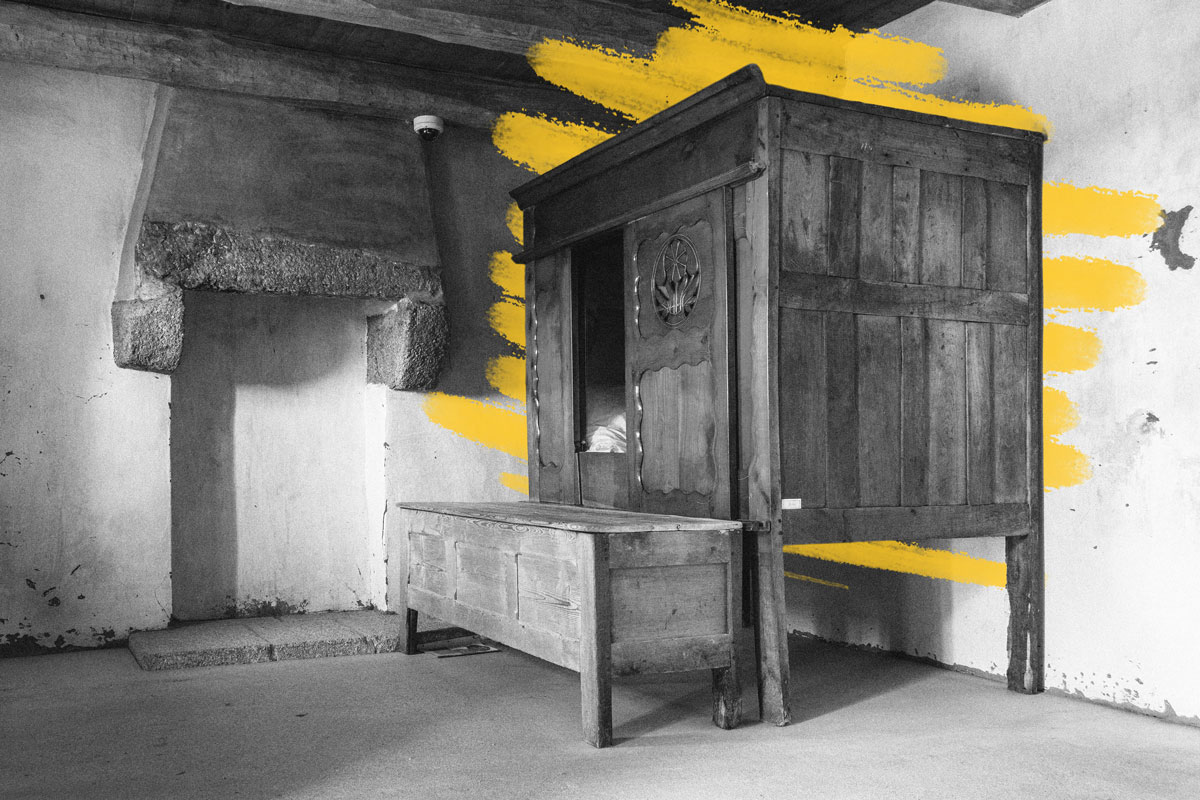
Pushing the idea of a bed into a cupboard created a surprising solution for privacy and warmth in medieval and early modern Europe. These box beds were built directly into the home’s framework or crafted as standalone wardrobe-like pieces. They stood upright, while the sleeping area lay inside, enclosed by wood panels or draped curtains that could be drawn shut at night.
Box beds, also known as closet beds, were notably practical for their era. Houses typically consisted of just one or two rooms used for living and sleeping, so any option for even a hint of privacy was valuable. Enclosing the bed helped conserve heat in often chilly homes, making a compact sleeping space more comfortable. Typical lengths reached around 5.5 feet, roughly matching the width of a modern queen bed, and widths were enough for two people, sometimes shared among family members.
This type of furniture gradually fell out of favor in the 19th century. Concerns about hygiene and air quality, along with better interior heating and the rising popularity of standard bed frames, contributed to its decline. By the mid-20th century, closet beds had largely disappeared and came to symbolize rural poverty and old-fashioned living.