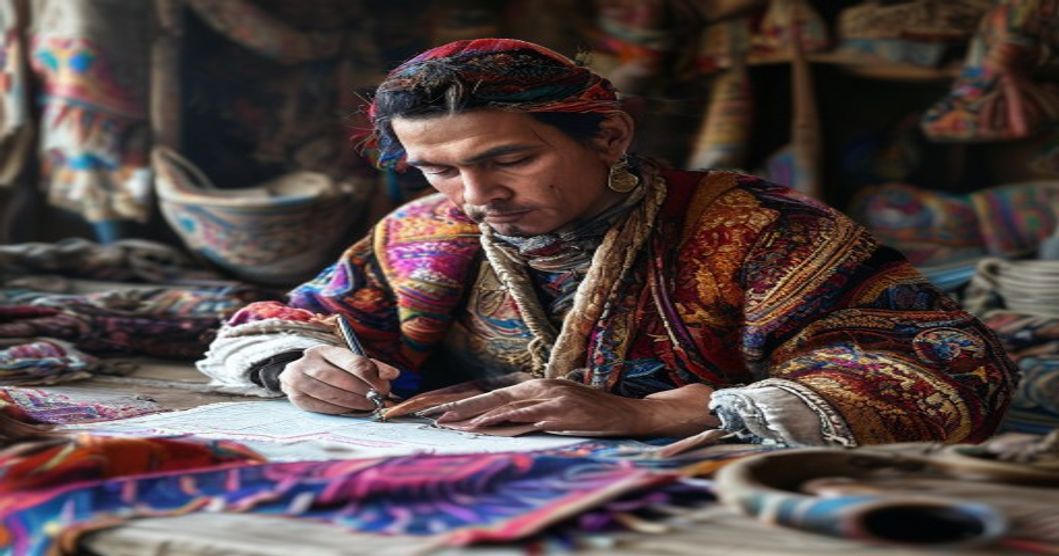
The Foundations of Sami Textile Artistry
Sami textile heritage emerges from centuries of adaptive ingenuity, where every stitch reflects a profound dialogue between indigenous artisans and the Arctic environment. Traditional sewing practices rely on locally sourced materials that define the functional and aesthetic boundaries of Sámi culture. Reindeer wool, harvested through sustainable seasonal shearing, provides exceptional insulation while remaining lightweight enough for nomadic mobility. Reindeer leather crafts utilize cured hides to create durable outerwear and footwear capable of withstanding subzero temperatures. The dyeing process historically depended on lichen, birch bark, cloudberries, and copper-rich soils, producing earthy palettes that mirror the tundra’s seasonal shifts. Each color carries symbolic weight, with red denoting vitality, blue representing the sky and waterways, and yellow symbolizing sunlight during polar winters.
Reindeer Wool and the Rhythm of Pastoral Life
The production of wool textiles is inseparable from the migratory patterns of reindeer herding communities. Artisans process raw fleece by hand-carding and spinning on drop spindles, maintaining fiber integrity without mechanical intervention. This method ensures that finished yarn retains natural lanolin, which enhances water resistance and longevity. The seasonal calendar dictates textile creation, with spring and autumn dedicated to shearing, cleaning, and dye preparation. Winter months shift focus to indoor stitching and embroidery, allowing craftsmen to refine intricate patterns while preserving heat for domestic activities.
Plant-Based Dyes and Earth Pigments
Traditional Sami dyeing techniques extract color through slow simmering of botanical materials in iron or copper pots. Lichen harvested from rocky outcrops yields soft grays and muted browns, while alder bark produces deep ochres and rust tones. Artisans test pH levels using urine or fermented berries to adjust mordant effectiveness, ensuring pigments bond permanently to wool fibers. This ecological approach eliminates synthetic chemicals, aligning authentic Sami patterns with sustainable indigenous practices that respect land stewardship principles.
Traditional Sewing Techniques Across Sami Regions
Regional dialects and environmental adaptations shape distinct sewing methodologies throughout Sápmi. Northern communities favor layered reindeer fur constructions for extreme cold, while southern groups integrate linen blends for warmer transitional seasons. Eastern Sami artisans incorporate woven birch fiber reinforcements into garment seams, enhancing tensile strength without adding bulk. These variations demonstrate how Sámi cultural practices evolve through localized knowledge transmission rather than centralized standardization.
The Role of Duodji in Daily Survival
Duodji craftsmanship encompasses both utilitarian and ceremonial textiles, blurring the line between tool and artwork. Traditional sewing techniques prioritize joint reinforcement, wind-resistant stitching lines, and modular patchwork that allows easy repair in remote settlements. Garments feature gussets under arms and along inner thighs to accommodate reindeer riding, sled pulling, and snowshoeing motions. Functional design elements double as cultural markers, with seam placement indicating clan affiliation, marital status, and seasonal activity roles.
Regional Variations in Stitching and Embroidery
Embroidery motifs vary dramatically across geographic zones, each region developing distinct geometric languages. Northern Sami designs emphasize concentric circles and zigzag borders representing mountain ridges and reindeer migration routes. Southern groups incorporate floral-inspired appliqué techniques introduced through historical trade networks, while Eastern artisans favor parallel line work that mimics river delta patterns. Stitch types include running cross-stitch, blanket edge weaving, and interlocking chain links, all executed with bone or antler needles carved to precise calibers.
Textiles as a Mirror of Sami Lifestyle Culture
Traditional garments function as wearable archives, documenting environmental knowledge, social hierarchy, and spiritual beliefs. The gákti, a standardized yet highly localized traditional dress, communicates regional identity through cut, color blocking, and metal button placement. Each component serves meteorological purposes: fur-lined collars deflect wind-driven snow, reinforced knee patches prevent abrasion during crouching tasks, and wide belt loops distribute weight when carrying hunting gear or firewood.
Garments That Map the Arctic Environment
Textile construction directly responds to microclimatic conditions across Sápmi. Parka designs feature asymmetrical front closures to prevent heat loss during crosswinds, while apron layers (gáhkku) provide modular insulation that can be added or removed based on activity intensity. Boot constructions utilize dual-sole lacing systems that trap air pockets for thermal regulation, with inner linings woven from reindeer underwool for moisture wicking. These engineering solutions emerged through millennia of trial, observation, and Arctic lifestyle culture optimization.
Rituals, Storytelling, and Intergenerational Transmission
Sewing circles operate as living classrooms where language preservation and cosmological teachings occur alongside technical instruction. Elders demonstrate pattern drafting while reciting joik melodies that encode historical events, migration routes, and ecological warnings. Children learn measurement techniques through rhythmic counting chants, internalizing mathematical ratios without formal notation. This oral-technical hybrid system ensures indigenous textile preservation remains dynamic rather than museum-bound, adapting to contemporary materials while maintaining ancestral intent.
Contemporary Preservation and Global Recognition
Modern movements prioritize ethical revival of traditional methods through community-led workshops and university partnerships. Certified artisan cooperatives implement fair-trade sourcing for botanical dyes while training younger generations in natural fiber processing. International fashion collaborations increasingly credit Sami originators, shifting appropriation narratives toward transparent licensing and revenue-sharing models. UNESCO recognition of Sámi duodji
Sami Sewing and Textile Traditions: Historical Foundations & Core Techniques
Nomadic Lifestyle & Environmental Adaptation
Reindeer herding cycles dictated seasonal migration routes across subarctic latitudes. Garments required rapid thermal regulation during extreme temperature shifts. Layering systems prioritized moisture displacement over static insulation. Outer shells utilized dense hide weaves to block wind-driven precipitation. Inner linings incorporated breathable knit structures to manage perspiration. Artisans adjusted seam placements to accommodate horseback riding and cross-country skiing postures.
Traditional Tools, Needles & Stitch Classifications
Bone and reindeer antler needles provided precise tension control without fabric damage. Artisans classified stitches into functional categories based on load distribution. Chain stitches handled flexible joint areas requiring stretch. Cross-stitch patterns reinforced high-friction zones like shoulders and knees. Appliqué techniques attached contrasting panels for structural reinforcement. Tool maintenance involved regular honing on fine-grained sandstone to preserve needle sharpness.
Material Sourcing & Natural Dye Extraction Methods
Reindeer hide preparation required precise scraping and fermentation cycles to prevent stiffness. Birch bark contributed tannins that hardened leather fibers against abrasion. Lichen varieties harvested from northern rock faces yielded pale yellow pigments. Cloudberry leaves and willow bark processed through controlled oxidation produced deep reds and browns. Artisans applied alum mordants to lock color molecules into protein-based fibers. Fermentation vats maintained specific pH levels to ensure consistent dye absorption across batches.
Cultural Symbolism & Garment Functional Design
Belt weaving patterns encoded lineage data and seasonal migration rights. Sun and moon motifs aligned with astronomical navigation markers for winter travel. Garment silhouettes incorporated articulated knee panels to preserve mobility during long treks. Seam lines followed natural muscle groups to prevent chafing under heavy packs. Status markers appeared exclusively on shoulder bands and cuff edges to maintain visibility during herd management.
Sami Sewing and Textile Traditions: Regional Variations & Preservation
Geographic Pattern Divergence & Color Coding Systems
West Coast artisans integrated silver thread into geometric layouts to reflect coastal trade networks. Inland communities emphasized red and blue dominance to denote reindeer herd ownership zones. Eastern regions adopted sharp angular motifs influenced by historical Russian textile exchanges. Color coding followed strict environmental metaphors. Red represented active life forces. Blue mapped waterways and seasonal thaw routes. Black grounded designs in tundra soil composition.
Contemporary Artisan Networks & Master-Apprentice Training
The Sámi University of Applied Sciences standardizes curriculum modules for textile preservation. Local guilds coordinate seasonal workshops to transfer tactile knowledge across generations. Mentorship programs require three years of documented practice before independent certification. Digital pattern repositories archive historical samples for comparative analysis. Skill transfer metrics track stitch consistency and material handling accuracy. Artisan cooperatives establish pricing floors to prevent market exploitation.
Authenticity Verification & Certification Standards
The Sámediggi trademark system legally protects traditional design elements from commercial appropriation. Fiber analysis confirms 100% natural origin through microscopic structural examination. Stitch pattern mapping compares modern outputs against archived baseline templates. Provenance documentation traces material acquisition through verified supplier networks. Anti-counterfeit markers utilize unique thread tension signatures detectable under magnification. Certification requires annual audit compliance and ethical sourcing verification.
Commercial Market Analysis & Ethical Sourcing Protocols
Direct artisan-to-consumer channels eliminate intermediary markup layers that dilute cultural value. Fair trade pricing models calculate labor hours, material scarcity, and knowledge transfer costs. Supply chain transparency mandates public disclosure of dye extraction and hide processing sites. Cultural intellectual property frameworks prevent unauthorized replication of sacred geometric layouts. Market saturation metrics monitor regional production volume against global demand thresholds. Ethical protocols enforce strict boundaries between ceremonial artifacts and commercial goods.
Technical Specifications & Academic Resources
Structural Reinforcement & Climate-Resistant Construction
Double-stitch seam allowances distribute tension across reinforced fabric layers. Bar-tacking techniques secure stress points at hip joints and shoulder straps. Windbreak panel integration blocks lateral air infiltration without restricting arm movement. Layering physics relies on trapped air pockets between hide and knit substrates. Thermal insulation metrics measure heat retention under simulated subarctic wind conditions. Construction standards require zero gaps along primary seam lines to prevent moisture ingress.
Archival Documentation & Peer-Reviewed Research Databases
Nordic Museum collections preserve historical garments with standardized humidity control. The Sámi Research Institute publishes quarterly journals analyzing textile evolution and material science. Digitized pattern archives enable cross-regional motif comparison through high-resolution scanning. Academic indexing protocols track citation frequency across anthropology and textile engineering publications. Cross-referencing systems link physical artifacts to molecular composition data. Research databases prioritize primary source verification over secondary interpretation.
Common Forgeries & Quality Assessment Criteria
Synthetic fiber detection relies on thermal degradation testing to identify polymer blends. Machine-stitch irregularities reveal inconsistent tension cycles absent in handworked examples. Dye bleed patterns indicate chemical fixation rather than traditional mordant bonding. Weight-to-thickness ratios expose artificial padding disguised as natural hide layers. Wear simulation testing replicates decades of environmental exposure to verify material longevity. Quality assessment requires multi-stage verification across structural, chemical, and historical dimensions.
Frequently Asked Questions about Sami Sewing and Textile Traditions
What is Sami Sewing and Textile Traditions?
Sami sewing and textile traditions refer to the centuries-old crafting practices of the Sámi people, the indigenous inhabitants of Sápmi (northern regions of Norway, Sweden, Finland, and Russia). These traditions encompass intricate embroidery, reindeer leather work, weaving, and the creation of the traditional gákti clothing, which is deeply tied to Sami identity, spirituality, and regional heritage.
Key facts about Sami Sewing and Textile Traditions
Key facts include: (1) The gákti varies by region, with distinct colors, patterns, and cuts that indicate the wearer’s community and marital status; (2) Traditional materials primarily include reindeer fur, leather, wool, and silver thread; (3) Techniques like cross-stitch, appliqué, and leather tooling are passed down through generations; (4) These crafts are recognized as vital intangible cultural heritage and are protected under UNESCO and national cultural policies.