Traditional Sami Games and Recreational Activities
The recreational landscape of the Sami people historically evolved as a direct response to extreme Arctic conditions and nomadic livelihoods. Physical contests served dual purposes: maintaining survival skills while reinforcing community cohesion across dispersed winter settlements. Every activity encoded practical knowledge passed through generations without written documentation.
- Snowshoe Racing (Ráidu): Participants navigate marked trails using handcrafted birch wood snowshoes, testing endurance and balance on deep powder. Historically, these races determined hunting routes and facilitated rapid communication between reindeer camps. Competitors adjust strap tension mid-race to optimize traction across varying snow densities.
- Reindeer Driving Competitions: Herders guide animals through obstacle courses using traditional staffs and vocal commands. Speed, precision, and animal welfare remain central scoring criteria in regional festivals. Judges evaluate how smoothly herders navigate frozen riverbanks while maintaining herd integrity during sudden directional changes.
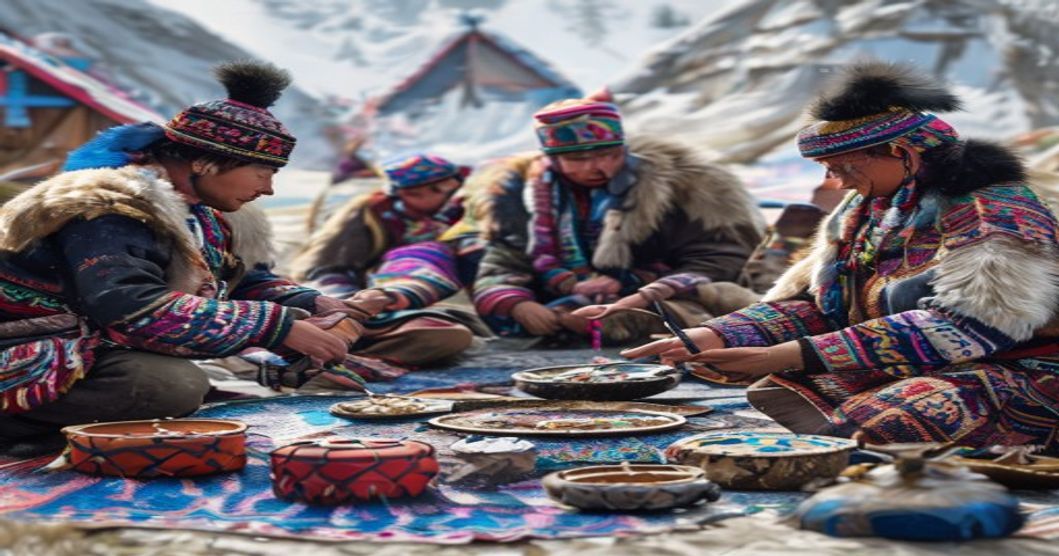
- Dice Games (Luohtah): Bone or antler dice rolled on felt mats dictate movement across hand-painted boards depicting reindeer migrations. Strategy outweighs chance, reflecting the Sami emphasis on calculated risk management. Players track opponent patterns to predict board positioning and secure optimal grazing territory markers.
- Winter Wrestling and Ski Duels: Competitors grapple on frozen lakes or descend steep slopes while maintaining grip with fur-lined boots. These contests historically trained youth for predator encounters and emergency rescues. Techniques prioritize leverage over brute force, adapting to slippery ice surfaces where falls risk hypothermia.
Recreation among the Sami never operated in isolation from subsistence demands. Musical performances, particularly joik traditions, functioned as auditory recreation while encoding geographical knowledge and genealogical records. Contemporary preservation initiatives now integrate these practices into cultural education programs, ensuring transmission of technical craftsmanship and ecological awareness. Modern adaptations maintain original rulesets while incorporating safety standards required for international competitions.
Equipment preparation remains integral to recreational practice. Artisans carve snowshoe frames from steam-bent willow, wrap them with reindeer rawhide lacing, and treat joints with birch tar for moisture resistance. Felt mats used in dice games receive annual reweaving to preserve consistent friction coefficients during gameplay.
Community gatherings surrounding these activities historically functioned as informal legal forums where disputes were settled through competitive demonstration rather than litigation. The same physical frameworks that tested athletic capability simultaneously reinforced social hierarchies, resource allocation protocols, and inter-village trade networks. Current cultural revitalization efforts prioritize documenting original measurement systems, including hand-span track markings and lunar-phase scheduling methods embedded in historical competition calendars.
Cultural Foundations of Sami Leisure Practices
The cultural foundations of Sami leisure practices emerge directly from the ecological constraints and survival imperatives of Arctic life. Historical records and ethnographic studies confirm that these activities emerged during the late Iron Age and medieval periods, evolving alongside reindeer domestication and seasonal migration patterns. Traditional recreation was never divorced from utility; every pastime functioned as a calibrated training system for hunting, cross-country mobility, and winter navigation. Games relied on terrain-adapted equipment crafted from locally sourced materials, including carved wooden skis, reindeer antler tools, and woven rope networks that doubled as both play structures and practical gear. Physical conditioning, spatial awareness, and tactical decision-making were reinforced through structured competition, ensuring that younger generations acquired technical proficiency while internalizing the discipline required for life in subarctic environments.
- Functional Skill Transmission: Activities like ice sliding, snow sledding, and target archery mirrored real-world survival scenarios, requiring precise balance, wind reading, and rapid reaction times under extreme weather conditions. Movement restrictions imposed by traditional gákti attire further tested agility and endurance.
- Spiritual & Ecological Integration: Leisure was woven into seasonal migration cycles and ritual calendars. Drum circles, rhythmic chanting, and storytelling competitions reinforced oral history while mapping ecological indicators such as snow density, animal tracking patterns, and auroral activity.
- Communal Knowledge Networks: Recreation operated as an informal educational framework where elders demonstrated technique, corrected form, and contextualized play within broader ethical frameworks governing land stewardship and resource sharing.
- Material Culture & Innovation: Game equipment reflected adaptive engineering. Reinforced footwear, tensioned bow designs, and modular sled components were tested during recreational bouts, allowing communities to refine tools without risking livelihoods.
Unlike contemporary recreational models that separate entertainment from daily labor, Sami leisure practices maintained a continuous feedback loop between play and survival. Competition structures emphasized collective resilience over individual triumph, with scoring systems often tied to resource acquisition or weather adaptation rather than arbitrary point totals. This approach preserved linguistic nuances, technical vocabulary, and place-based ecological knowledge across generations. The landscape itself dictated rules and boundaries, transforming open tundra, frozen fjords, and boreal forests into dynamic training grounds. By embedding recreation within kinship networks and seasonal labor cycles, these practices ensured cultural continuity through active participation rather than archival preservation.
Historical Context and Nomadic Lifestyle Influence
The traditional recreational activities of the Sami people emerged directly from the demands of a highly mobile reindeer-herding existence across the Arctic and subarctic zones of Fennoscandia. Seasonal migrations spanning hundreds of kilometers dictated a calendar where survival skills and communal leisure were never separate pursuits. During the prolonged polar nights, when daylight lasted only a few hours, communities gathered in winter camps to maintain physical conditioning and mental resilience through structured play. These activities functioned as both practical training and social glue, reinforcing interpersonal bonds necessary for coordinating large-scale herd movements during spring calving seasons.
Skiing formed the foundation of Sami mobility long before it became an Olympic sport. Crafted from split pine or birch with reindeer fur attached to the base for backward slide prevention, these skis enabled silent tracking across deep snow. Competitive long-distance races and precision slalom courses developed naturally as herders tested their endurance and route-finding abilities. Archery targets were often set at distances requiring exact wind calculation, while lasso throwing contests refined the same wrist mechanics used to catch strung reindeer calves. Wrestling matches, known locally as gæhttie, emphasized leverage and balance over brute strength, mirroring techniques required to handle large animals on steep mountain terrain.
- Táhkko dice games utilized carved reindeer bones or antler pieces, offering strategic risk assessment and mathematical probability training during months when outdoor herding was impossible.
- Duodji craftsmanship competitions doubled as leisure time, where participants judged tool durability, knife edge geometry, and lasso knot integrity based on real-world performance metrics.
- Yoik vocal gatherings served as acoustic recreation, preserving genealogical knowledge and landscape memory through improvised melodic patterns that synchronized group labor rhythms.
Historical accounts from eighteenth-century missionaries and nineteenth-century ethnographers consistently note that Sami competitions aligned with migration cycles rather than fixed calendar dates. Winter markets hosted multi-day tournaments where villages rotated hosting duties, creating decentralized networks of skill exchange. These events rarely involved monetary prizes; instead, winners received superior hunting equipment, fresh reindeer hides, or first pick of migrated herd segments. The nomadic structure ensured that recreational knowledge transferred horizontally across clans rather than through centralized institutions, preserving adaptive techniques suited to rapidly shifting environmental conditions.
Archaeological finds of worn ski basils, reinforced wrestling belts, and weathered game boards confirm that these activities operated as serious cultural infrastructure. The Sami did not separate labor from leisure because the tundra demanded constant physical readiness. Every competition encoded survival data: snow density readings through ski speed comparisons, animal temperament assessment through lasso accuracy, or team coordination metrics measured in relay race splits. This integration of utility and recreation created a highly resilient knowledge system that persisted through colonial restrictions and forced settlement policies, maintaining its core function as environmental adaptation expressed through play.
Core Traditional Sami Games and Recreational Activities
Traditional Sami recreational activities emerged directly from the demands of Arctic survival and reindeer husbandry, transforming daily labor into structured play that reinforced physical conditioning, strategic thinking, and communal cohesion. Unlike purely leisure-focused pastimes, these games functioned as practical training grounds for winter navigation, animal handling, and resource management across Sápmi’s harsh landscapes. Participants developed specialized motor skills through activities that mimicked hunting techniques, sled maneuvering, and ice traversal, ensuring younger generations retained essential survival competencies without formal instruction.
- Knucklebone throws and antler dice competitions demand precise hand-eye coordination and mathematical calculation. Players toss carved reindeer bones onto marked stone or wooden boards, scoring points based on the landing orientation of each piece. These contests require acute observation of wind direction, surface friction, and spatial geometry, turning chance into a test of environmental literacy.
- Lassoing trialsKabutakkat: The Reindeer Antler Throwing Game
Rooted in the winter survival strategies of northern Sámi communities, Kabutakkat emerged as both a practical training exercise and a social pastime during the extended polar nights. Historically, reindeer herders utilized shed antlers from their livestock to develop precision throwing skills essential for hunting small game and managing herd movements across frozen landscapes. The activity demanded acute spatial awareness, making it a natural extension of daily subsistence routines in subarctic environments where daylight hours dwindled significantly between November and February.
Participants construct targets using locally sourced materials such as wooden planks, compacted snow mounds, or ice blocks carved with circular scoring zones. Each zone carries distinct point values based on difficulty, with central rings typically assigned the highest marks. Antlers are selected for their natural curvature and weight distribution, allowing consistent aerodynamic behavior during flight. Throwers adjust their stance according to wind direction and ground conditions, often compensating for slippery terrain by lowering their center of gravity and releasing the antler at a calculated angle.
- Grip method: Fingers wrap around the base of the antler tine while the thumb secures the opposite side, ensuring stable control during release.
- Distance parameters: Standard throwing lines range from five to twelve meters, varying by age group and competitive tier.
- Scoring mechanics: Points accumulate when antlers lodge in designated zones or strike marked targets without bouncing out.
- Environmental adaptation: Players account for snow depth, temperature fluctuations, and visibility changes that affect trajectory calculations.
The game functions as a living archive of Sámi ecological knowledge, encoding generations of observation regarding animal behavior, weather patterns, and material durability. Community gatherings centered around Kabutakkat reinforced intergenerational skill transfer while mitigating seasonal isolation through structured competition. Contemporary practitioners maintain historical accuracy by prioritizing natural antler sourcing over synthetic alternatives, though some regional clubs now incorporate standardized scoring boards for tournament consistency. The sport continues to appear at Sámi cultural festivals, where educational demonstrations highlight its role in preserving indigenous winter mobility techniques.
Modern adaptations occasionally feature timed rounds or multi-target layouts that demand rapid decision-making under fatigue conditions. Training regimens emphasize wrist flexibility and forearm endurance, reflecting the physical demands of traditional reindeer management. Researchers document gameplay variations across Finnmark, Lapland, and Kola Peninsula communities, noting subtle differences in target placement and rule enforcement that reflect local topography and historical migration routes. Academic institutions occasionally integrate Kabutakkat into anthropology curricula to illustrate how recreational practices encode survival intelligence.
Davvi Nillit: Arctic Wrestling Traditions
Davvi Nillit operates as a highly technical grappling discipline rooted in the survival instincts and communal training methods of northern Sápmi communities. Historically, this combat sport functioned as both physical conditioning and conflict resolution before modern judicial systems arrived in the Arctic regions. Competitors engage without weight classes or external equipment, relying entirely on grip strength, leverage, and environmental awareness. The primary objective involves forcing the opponent’s upper body to touch the snow three times within a designated circular fighting area marked by traditional markers or natural terrain features.
Execution demands mastery of specific holds that exploit the opponent’s center of gravity while maintaining balance on uneven, frozen surfaces. Grip positioning targets traditional jacket seams and
Sevdna and Stick Games on Snow
The Sevdna operates as a precision-engineered winter tool, constructed by boiling reindeer hides in birch-infused water to extract residual fats before manual stretching over heated wooden frames. Artisans align hair fibers uniformly to reduce drag, then stitch the material using cured caribou sinew that contracts when exposed to moisture, creating an automatic tightening mechanism. Leather straps loop through reinforced eyelets along the board edges, allowing users to secure boots or bare feet with adjustable tension suited to temperature fluctuations. This configuration enabled efficient gliding across wind-scoured ridges and dense forest trails long before synthetic materials entered Sami territories.
Stick games complemented this mobility framework through structured competitions that tested balance, endurance, and tactical decision-making. Participants maneuvered polished ash or spruce poles measuring 145 to 170 centimeters, with lower sections wrapped in reindeer fur to prevent snow adhesion during rapid descent. Events included timed relay routes over packed drifts, pole-planting accuracy trials on steep inclines, and team navigation challenges across frozen lakes where teams maintained formation without breaking contact. Success demanded rhythmic weight transfer, precise shaft angulation, and continuous assessment of wind shear and crust thickness.
- Material Preparation: Hides underwent repeated boiling in ash water, followed by manual scraping with copper blades to achieve consistent density before frame mounting.
- Pole Dynamics: Tapered shafts featured reinforced ferrules carved from moose antler, optimizing force transmission while minimizing fatigue during prolonged use.
- Social Function: Gatherings coincided with seasonal migration cycles, reinforcing kinship networks and transmitting survival protocols through direct observation.
Contemporary documentation relies on ethnographic recording, material analysis, and reconstructed training regimens that preserve original techniques without commercial modification. Regional heritage centers maintain functional archives containing historical bindings, pole carvings, and instructional manuals translated from Northern Sami dialects. Practitioners continue seasonal preparation cycles, adapting traditional designs for cultural festivals while maintaining strict adherence to authentic sourcing and construction methods. This systematic preservation ensures winter mobility knowledge remains active within living communities rather than static museum artifacts.
Equipment, Materials, and Seasonal Adaptations
Traditional Sami recreational activities depend on carefully selected, locally harvested materials that reflect centuries of ecological adaptation. Reindeer antlers provide the structural core for handles, grips, and binding components in strength-based contests. Leather strips, cured through controlled smoking processes, deliver exceptional durability for competition lassos, rope segments, and foot reinforcements. Wooden shafts, typically sourced from slow-growing birch or pine, are hand-carved into poles and racing skis, then sealed with pine resin to withstand rapid temperature fluctuations and prevent moisture absorption.
- Sinew & Cordage: Reindeer tendons are dried and braided to create natural ropes that maintain tensile strength under heavy loads without stretching.
- Fur & Insulation: Moose or reindeer hide linings attach to gloves and boots, regulating body temperature during prolonged winter matches.
- Woven Grasses: Summer competitions utilize dried tundra grasses and flexible willow branches for lightweight throwing implements and boundary markers.
Seasonal shifts trigger systematic equipment modifications. Winter games require snow-optimized gear: wide wooden runners bolted to boots enable gliding contests across frozen waterways, while reinforced leather mitts with wool interiors prevent frostbite during extended outdoor competition. Ice blocks carved from river sources secure field boundaries, adapting to shifting snowpack without losing structural integrity. When spring thaw arrives, participants transition to barefoot or thin-soled footwear for enhanced traction on wet tundra, and replace heavy antler grips with polished wooden handles that reduce hand fatigue in warmer conditions.
Maintenance protocols ensure multi-year usability across extreme cycles. Equipment stores in ventilated cabins during humidity peaks, with antler components periodically treated with rendered fat to preserve flexibility. Competition regulations frequently mandate material verification before matches, reinforcing cultural authenticity and preventing synthetic substitution. These adaptive practices demonstrate how Sami recreational traditions remain intrinsically tied to resource management, environmental observation, and intergenerational craftsmanship knowledge.
Handcrafted Tools from Natural Arctic Resources
The survival of traditional Sami recreational practices relied heavily on specialized equipment forged directly from the surrounding tundra and boreal forest ecosystems. Artisans extracted reindeer antlers during natural shedding seasons, ensuring ethical harvesting without harming the animals. These dense keratin structures were split, boiled, and carefully planed into thin strips that served as durable hinges, levers, and decorative inlays for game boards. Birch bark and young pine shoots provided flexible yet resilient materials for bow frames and sled runners, while cured reindeer sinew functioned as high-tension binding cords that never corroded or degraded under freezing conditions.
- Antler processing: Gradual bending through repeated heating against warm stones created natural curves for handles and game components without fracturing the crystalline matrix.
- Wood seasoning: Green timber was split along the grain, air-dried in shaded wind tunnels, and smoked over controlled alder fires to increase moisture resistance and impact tolerance.
- Leather tanning: Hide underwent enzymatic treatment using brain emulsions and lichen extracts, followed by mechanical stretching on wooden frames to achieve precise tensile strength.
These materials directly enabled core recreational activities across Sami territories. Antler dice marked with distinctive grooves facilitated complex probability games that doubled as winter training exercises for young hunters. Birch wood sliders and ice-fishing reels allowed communities to maintain physical conditioning during long polar nights. Target boards constructed from layered bark and compressed snow required exact tension calibration, teaching spatial reasoning and fine motor control. Each tool reflected an adaptive engineering philosophy where resource scarcity dictated innovation rather than limitation.
The technical knowledge embedded in these implements passed through generational apprenticeship networks. Carvers understood grain orientation in wood to prevent splitting under impact, while bone specialists recognized how crystalline structure affected fracture points during gameplay. Modern preservation efforts document these construction methods alongside oral histories that explain why specific material combinations optimized performance across subarctic climates. The craftsmanship remains a functional archive of indigenous environmental literacy and recreational engineering.
Winter Versus Summer Activity Cycles
The seasonal rhythm of Sámi recreational traditions directly mirrors the Arctic environment and reindeer migration patterns. Winter activity cycles emerge during months of limited daylight and subzero temperatures, when communities shift toward enclosed or short-distance outdoor games that maximize warmth retention while honing survival competencies. Traditional winter pastimes frequently involve tabletop strategy games played with carved reindeer bones or wooden discs, where players navigate resource allocation and tactical positioning inside lavvu tents. Outdoor competitions during this period emphasize mobility over snow and ice, including cross-country skijumping contests, reindeer draught races, and precision throwing events using weighted stones or antler fragments. These activities function as both cultural preservation and practical training for navigating frozen terrain.
As the midnight sun returns and the tundra thaws, recreational cycles transition toward expansive outdoor engagements that leverage extended daylight and open landscapes. Summer games prioritize endurance, spatial coordination, and rapid decision-making across uneven ground. Traditional stick fighting matches, modified reindeer herding relays, and pole-vaulting competitions over meltwater streams become central to community gatherings. Long-distance running races along established migration routes test stamina while reinforcing territorial knowledge. Craft-based recreational challenges also emerge during this phase, with participants competing in rapid lasso weaving, drum decoration contests, and vocal performance rounds that draw upon the acoustic properties of open valleys.
The structural divide between these seasonal cycles reflects deep ecological adaptation rather than arbitrary scheduling. Winter activities compress physical movement into concentrated bursts while emphasizing cognitive strategy and thermal management. Summer programs expand across vast distances, requiring continuous motion, environmental reading, and group synchronization. Both phases maintain strict adherence to traditional rules passed through oral transmission, ensuring that recreational practices remain inseparable from Sámi cosmology, reindeer husbandry calendars, and Arctic survival ethics.
Digital archives and ethnographic studies confirm that game mechanics shift alongside ecological pressures. Winter iterations favor close-quarters combat simulations and dice-based probability games that mirror resource scarcity. Summer variations introduce dynamic boundary markers using natural landmarks, forcing participants to constantly recalibrate spatial awareness as snowlines recede and river paths change. These cyclical adjustments prevent skill stagnation while preserving ancestral knowledge across generations.
Community Roles and Social Dynamics
Traditional Sami recreational activities functioned as vital mechanisms for reinforcing community structure and social cohesion across generations. Rather than serving merely as leisure pursuits, these games embedded practical knowledge, ethical frameworks, and role allocation within the collective framework of the siida, the traditional Sami social unit. Participation was strictly governed by age, gender, and seasonal availability, ensuring that every individual contributed according to their developmental stage and societal function. Elders utilized drumming competitions and oral storytelling contests to transmit historical narratives, navigation techniques, and ecological awareness, while younger members absorbed these lessons through structured observation and gradual participation.
Skill-based competitions such as reindeer herding trials, sled racing, and winter survival challenges operated as informal assessments of readiness for adult responsibilities. Success in these events did not elevate personal status through individual boasting but rather confirmed one’s capacity to assume specific duties within the group. Leadership roles emerged organically during organized activities, with experienced hunters or navigators directing teams while others managed logistics, equipment maintenance, or resource distribution. This decentralized decision-making process prevented hierarchy from becoming rigid and fostered mutual accountability.
Gender-specific roles were clearly defined yet complementary. Women traditionally led crafting competitions, drum preparation rituals, and seasonal food preservation contests, which directly sustained household and communal survival. Men often participated in long-distance skiing races, ice drilling drills, and reindeer driving exercises that required coordinated group movement. These divisions ensured efficient resource management during harsh Arctic winters while maintaining social balance. Conflict resolution also occurred through recreational frameworks; disputes over grazing rights or equipment sharing were frequently addressed via structured games that emphasized patience, strategic thinking, and collective compromise rather than confrontation.
- Intergenerational Knowledge Transfer: Games served as living classrooms where survival techniques, ecological patterns, and cultural values were practiced rather than formally taught.
- Role Specialization: Participants developed expertise in specific areas such as tracking, weather reading, or craft production, which later dictated their responsibilities within the siida.
- Collective Resource Allocation: Victory or participation granted access to shared food stores, tools, and shelter space, reinforcing interdependence over individual accumulation.
- Social Conflict Mitigation: Recreational competitions provided regulated outlets for tension release, allowing disagreements to be resolved through structured play rather than escalation.
The underlying philosophy of these activities prioritized group survival and ecological harmony over personal achievement. Equipment was communally maintained, training grounds rotated seasonally, and outcomes documented through collective memory rather than written records. This approach cultivated resilience, adaptability, and a deeply ingrained sense of shared responsibility that sustained Sami communities across centuries of environmental and political change.
Intergenerational Knowledge Transmission
Traditional Sami communities relied on immersive, practice-based learning where recreational activities functioned as practical training grounds for survival and cultural continuity. Elders did not deliver formal instruction; instead, they guided youth through shared participation in seasonal games that mirrored the demands of Arctic livelihoods. Dice games crafted from reindeer knucklebones taught probability, resource allocation, and strategic patience. Snow sculptures built during winter gatherings required spatial reasoning and material knowledge, while archery contests honed hand-eye coordination essential for hunting. These activities were never isolated entertainment. They operated within a tightly woven ecological and social framework where every rule, gesture, and chant carried embedded technical knowledge.
The transmission mechanism depended heavily on observational mimicry and iterative correction. Children absorbed techniques by watching elders manipulate tools, interpret weather patterns, and navigate terrain during play. Mistakes were addressed through immediate feedback rather than theoretical explanation. Storytelling segments integrated into recreational cycles reinforced ethical codes, kinship obligations, and spiritual relationships with the landscape. Rhythmic clapping games and call-and-response songs developed auditory memory and linguistic precision, ensuring dialect preservation across generations. Community assemblies served as living classrooms where knowledge shifted fluidly between age groups based on seasonal needs and resource availability.
- Seasonal Alignment: Activities synchronized with reindeer migration cycles, guaranteeing that skills matched immediate environmental demands.
- Tool Integration: Repurposed hunting implements doubled as game equipment, maintaining craftsmanship relevance and reducing material waste.
- Role Reversal: Youth occasionally led sessions to test mastery, while elders assumed observer roles to assess readiness for adult responsibilities.
Modern disruptions to this system stem from forced assimilation policies and digital substitution of physical play. Contemporary preservation efforts document oral rule sets, reconstruct historical equipment, and facilitate intergenerational workshops that replicate original learning conditions. These initiatives prioritize experiential replication over archival documentation, recognizing that cognitive mapping of traditional skills requires embodied practice rather than textual study.
Gathering Spaces and Festival Integration
Historically, Sámi recreational activities emerged organically from the landscape itself, with competitions and gatherings taking place across frozen lakes, reindeer migration routes, and open tundra plateaus. These natural venues were not arbitrary; they served as functional training grounds for survival skills while doubling as communal hubs for social bonding. The flat ice of northern waterways hosted ski racing and dog sled trials, while rocky outcrops provided elevation for stone-throwing and archery contests. Over generations, these informal locations evolved into recognized cultural landmarks, often marked by ancestral cairns or designated meeting points known to local elders.
The integration of Sámi games into structured festivals marks a deliberate shift from spontaneous seasonal pastimes to curated cultural exhibitions. Modern Sámi festivals deliberately schedule competitions during periods of high community attendance, typically aligning with winter solstice celebrations, summer midfests, and regional harvest gatherings. Event organizers coordinate logistics around weather windows, transport accessibility, and traditional performance calendars to ensure authentic participation rather than theatrical display. Local municipalities frequently partner with Sámi councils to secure permits for land use, establish safety protocols, and provide infrastructure such as temporary warming huts, medical stations, and audio-visual documentation teams.
- Gulaš Cultural Festival: Hosts cross-country ski relays and reindeer herding demonstrations alongside traditional wrestling matches.
- Sámi Week Celebrations: Features multi-day tournaments for stone throwing, knucklebone tossing, and traditional fishing contests.
- Regional Winter Markets: Incorporate sled racing qualifiers and ice sculpture competitions that double as skill assessments.
- Educational Heritage Events: Partner with schools to run youth divisions, ensuring intergenerational knowledge transfer through structured gameplay.
Festival integration has transformed passive observation into active participation, significantly boosting cultural retention metrics. Organizers employ standardized scoring systems adapted from historical rules, allowing fair competition while preserving regional variations. Local vendors and artisans capitalize on festival foot traffic by supplying traditional equipment, reinforcing economic sustainability alongside cultural preservation. Digital documentation streams reach global audiences, yet primary emphasis remains on onsite community engagement. The strategic placement of game zones near craft markets and storytelling tents creates a cohesive ecosystem where recreation, commerce, and heritage education intersect sustainably.
Preservation Efforts and Contemporary Revival
The institutional framework supporting Sámi recreational heritage has expanded through coordinated funding mechanisms managed by indigenous governance bodies across Norway, Sweden, and Finland. These parliamentary councils allocate targeted grants for documentation projects that record rule sets, scoring methodologies, and equipment craftsmanship associated with historical pastimes. International cultural organizations have accelerated cross-border collaborations, establishing standardized archiving protocols that prioritize oral transmission alongside written documentation. Academic partnerships now produce peer-reviewed journals dedicated to indigenous recreational anthropology, ensuring research remains community-governed rather than externally extracted.
Educational integration forms a critical pillar of contemporary revival strategies. Universities within the Sápmi region have developed modular curricula that combine physical practice with ethnographic analysis, ensuring students understand the ecological and social contexts embedded in each activity. Local schools incorporate seasonal games into physical education programs, replacing generic sports modules with culturally specific alternatives. This pedagogical shift addresses declining participation by aligning recreational activities with community identity rather than treating them as museum artifacts.
Digital preservation initiatives have transformed access to historical game mechanics. Open-source repositories now host digitized rulebooks, video recordings of traditional matches, and 3D models of wooden equipment used in snow racing and reindeer herding competitions. Mobile applications developed by indigenous tech collectives gamify learning processes, allowing diaspora youth to practice terminology and tactical decision-making without geographic constraints. Virtual reality simulations further enable users to experience environmental conditions that shaped game rules, such as deep snow traction or limited daylight during winter tournaments.
- Community-led festivals maintain seasonal calendars that sync with reindeer migration patterns and traditional hunting cycles
- Apprenticeship programs pair master crafters with younger participants to document tool-making techniques specific to game equipment
- Academic partnerships establish peer-reviewed journals dedicated to indigenous recreational anthropology
Sustainable tourism frameworks now regulate how external audiences engage with these practices. Visitor guidelines emphasize observational protocols rather than participation, preventing the dilution of ceremonial contexts. Revenue from controlled cultural tourism directly funds preservation grants, creating a self-sustaining economic model. Cross-generational mentorship remains the most effective transmission method, with elders teaching tactical adjustments based on terrain variation and weather patterns that historical rulebooks cannot fully capture.
Sami Cultural Centers and Educational Programs
Sami cultural centers serve as vital repositories for indigenous knowledge, actively preserving recreational practices that have sustained northern communities for centuries. These institutions operate across Norway, Sweden, Finland, and the Kola Peninsula, functioning as dynamic spaces where traditional games are systematically documented, taught, and adapted for contemporary audiences. Educational programs embedded within these centers prioritize experiential learning, ensuring that skills such as ice skating on reindeer hides, log sliding, and snowshoe racing remain functional rather than purely historical curiosities.
Curricula developed by regional museums and Sámi pedagogical networks emphasize hands-on instruction. Instructors demonstrate how terrain reading, wind assessment, and animal tracking integrate into competitive events like the annual Gåltelávlla running contest or traditional archery competitions. Youth workshops utilize modular training kits containing period-accurate equipment, allowing participants to replicate historical conditions while understanding the biomechanical advantages of ancestral movement patterns.
- Intergenerational mentorship frameworks pair elder knowledge holders with school-aged learners, facilitating oral transmission of game rules, seasonal timing, and ecological context.
- Digital archiving initiatives record gameplay mechanics, regional variations, and scoring systems across the four Sámi nations, creating accessible databases for researchers and educators.
- Mobile exhibition units travel to remote settlements, delivering portable activity stations that teach knot-tying challenges, sled-building competitions, and traditional dice games used in winter gatherings.
Funding structures rely on cross-border Sámi parliament allocations, UNESCO heritage grants, and municipal cultural budgets. This financial backing supports instructor certification programs that standardize pedagogical approaches while preserving regional dialects and localized rule sets. Partner universities incorporate indigenous sport science modules into physical education degrees, analyzing how traditional recreational activities enhance cardiovascular endurance, joint flexibility, and cold-weather adaptation. Community-led festivals hosted by these centers transform theoretical knowledge into public demonstrations, where scoring methodologies, equipment craftsmanship, and competitive etiquette are actively showcased to visiting scholars and local residents alike.
Northern Norway Recreational Traditions
The recreational landscape of Northern Norway reflects centuries of adaptation to extreme Arctic conditions, where survival skills naturally evolved into structured pastimes. Indigenous communities in Finnmark, Troms, and Nordland developed activities that strengthened physical endurance, navigational precision, and communal cohesion. These practices were never merely entertainment; they functioned as practical training for hunting, herding, and winter travel while preserving cultural identity across generations.
Traditional pursuits centered on mobility across snow-covered terrain and ice formations. Skiing techniques refined by local populations laid foundational methods later adopted by Nordic ski sports. Cross-country routes doubled as trade paths, with competitive long-distance races testing endurance through subzero temperatures. Reindeer herding games required precise coordination between handlers and animals, emphasizing control, speed, and environmental awareness. Winter fishing contests on frozen fjords utilized hand-carved ice augers and weighted lines, rewarding participants who could locate active fish beneath thick ice layers.
- Snowshoe Racing: Hand-stretched reindeer hide frames wrapped around wooden bindings enabled rapid traversal of deep powder. Competitors navigated marked forest trails, with timing determined by natural landmarks rather than modern equipment.
- Ice Skating and Curling Variants: Communities carved stone discs on frozen lakes, sliding them toward painted targets using braided hemp ropes. Strategic placement and force modulation replaced direct contact, mirroring tactical decision-making in herding scenarios.
- Duodji Craft Competitions: Artisans displayed hand-finished leatherwork, antler tools, and woven textiles judged on precision, material sourcing, and cultural accuracy. These exhibitions reinforced knowledge transmission while fostering regional pride.
Seasonal festivals marked the transition between light cycles, bringing together scattered homesteads for synchronized recreation. Drum ceremonies, once dismissed as purely spiritual, incorporated rhythmic movement patterns that doubled as cardiovascular conditioning. Community gatherings prioritized skill demonstration over monetary reward, with victors receiving practical prizes such as quality reindeer antlers, wool blankets, or herding rights. These exchanges maintained ecological balance by discouraging overharvesting while promoting sustainable resource management.
Contemporary preservation efforts document these practices through ethnographic archives and immersive workshops. Academic institutions collaborate with local elders to reconstruct historical equipment and verify technique authenticity. Museums in Tromsø and Alta host rotating exhibits featuring original game implements alongside performance demonstrations. Educational programs integrate traditional movement patterns into physical curricula, ensuring younger generations understand the functional origins behind each activity. The continuity of these recreational systems demonstrates how environmental constraint and cultural innovation produce enduring sporting frameworks.
Swedish and Russian Sami Regional Differences
The recreational traditions of the Sami people diverge significantly between Sweden and Russia due to distinct geographical barriers, historical governance structures, and differing state attitudes toward indigenous cultural preservation. In Swedish Lapland, centuries of relatively stable indigenous rights frameworks allowed communities in municipalities like Jokkmokk and Gällivare to maintain continuous practices centered around reindeer husbandry competitions, cross-country skiing challenges, and precision knot-tying contests that tested both endurance and manual dexterity. These activities evolved alongside seasonal migration routes, where physical trials functioned as practical survival assessments for winter travel across snow-covered fjäll terrain. Local dialects preserved specific terminology for each sport, ensuring technical knowledge transferred directly through oral instruction rather than formal manuals.
Russian Sami communities, concentrated primarily in the Murmansk Oblast near the Kola Peninsula, experienced fundamentally different historical trajectories. Imperial Russian expansion and later Soviet policies actively suppressed indigenous languages and customs, forcing recreational practices underground or into modified forms that emphasized collective labor rather than individual competition. Traditional games such as reindeer racing were replaced by state-organized cultural festivals that prioritized synchronized performances over authentic skill demonstration. When preservation efforts resurged in the 1990s, Russian Sami groups adapted by focusing on textile crafts, drum-making demonstrations, and controlled sled-pulling trials that aligned with modern cultural heritage funding requirements.
- Sporting Focus: Swedish regions emphasize competitive skiing and reindeer handling contests tied to historical migration patterns, while Russian communities prioritize cooperative craft exhibitions and regulated traditional tool competitions.
- Environmental Adaptation: The continuous taiga and tundra transition zones in Sweden support year-round outdoor trials, whereas the heavily industrialized Kola Peninsula limits open-field activities, shifting recreation toward workshop-based skill transmission.
- Institutional Support: Municipal grants in Norrbotten sustain intergenerational game tournaments, while Russian regional centers rely on UNESCO-backed documentation projects that structure recreational knowledge into standardized curricula rather than living practice.
These structural differences mean that contemporary recreational preservation operates through entirely different mechanisms. Swedish communities integrate traditional trials directly into local tourism and winter festivals, maintaining organic transmission pathways. Russian counterparts navigate bureaucratic heritage frameworks that standardize activities for academic and diplomatic visibility, creating a more structured but less fluid approach to cultural recreation.
“`html
Frequently Asked Questions
What is Traditional Sami Games and Recreational Activities?
Traditional Sami games and recreational activities are a set of indigenous pastimes practiced by the Sámi people, who inhabit the northern regions of Norway, Sweden, Finland, and Russia. These activities are deeply rooted in Sámi culture, nature, and survival skills. They include traditional sports like stick fighting (gierdne), reindeer herding games, snowshoe racing, rope jumping with a reindeer bone handle, and various ball-and-string games. These games were historically used to maintain physical fitness, teach survival techniques, strengthen community bonds, and pass down cultural knowledge across generations.
Key facts about Traditional Sami Games and Recreational Activities
- Cultural Significance: Sámi games reflect the close relationship between the Sámi people and their natural environment, emphasizing agility, endurance, and teamwork.
- Gierdne (Stick Fighting): One of the most well-known traditional Sámi sports, played with long wooden sticks. It was used to settle disputes and train young men for hunting and defense.
- Snowshoe Racing: A competitive winter activity where participants race across snow-covered terrain using traditional reindeer hide snowshoes, showcasing speed and balance.
- Reindeer Bone Rope Jumping: A popular game played with a rope made of reindeer sinew or leather, often incorporating rhythmic chanting and group participation.
- Ball-and-String Games: Simple yet skill-based games played with a ball attached to a string by a handle, requiring hand-eye coordination and dexterity.
- Community-Oriented: These activities were traditionally performed during festivals, celebrations, and gatherings, reinforcing social cohesion and cultural identity.
- Modern Revival: In recent decades, Sámi communities have actively worked to preserve and promote these traditional games through cultural festivals, educational programs, and international indigenous sports events.
“`