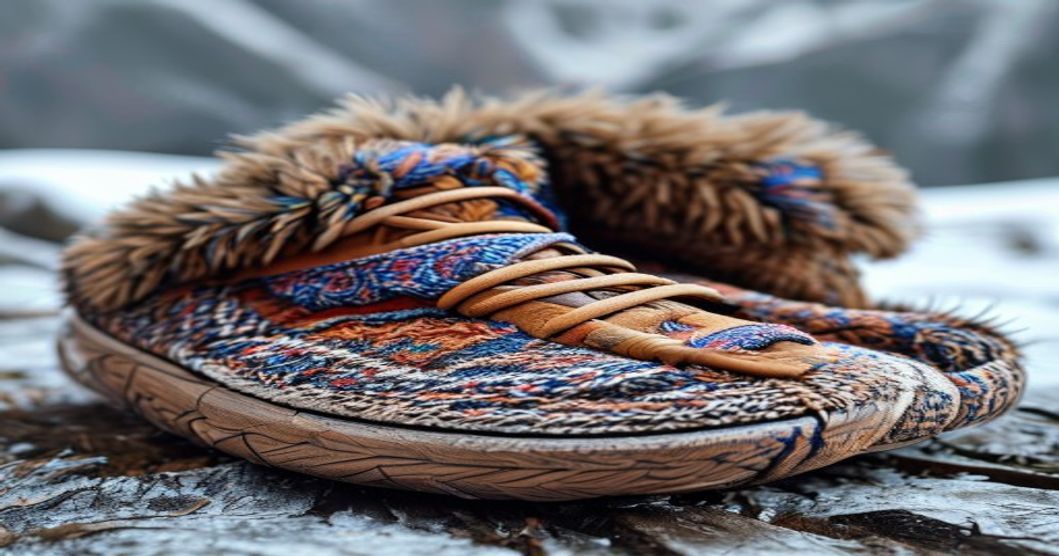
Traditional Sami Footwear Explained: Origins and Cultural Roots
The development of traditional Sámi footwear emerged directly from the environmental demands of Sápmi, spanning northern Norway, Sweden, Finland, and the Kola Peninsula. Arctic conditions required materials that provided insulation, moisture resistance, and flexibility across snow, tundra, and maritime terrain. Reindeer hides formed the primary resource base, with skins processed through ancestral smoking and fat-tanning techniques that preserved supple leather while repelling water. The soles typically utilized moose or elk skin due to their dense fiber structure, which resisted abrasion from frozen ground and reindeer tracks.
Construction methods varied across Sámi districts, reflecting localized ecological knowledge. Inland herding communities favored multi-layered soles stitched with sinew threads, while coastal groups incorporated seal or fish leather for damp environments. Natural dyes derived from berries, lichen, and bark created distinct regional patterns. The upper sections featured reinforced toe caps and gusseted tongues to prevent snow ingress during prolonged trekking. Waterproofing relied on reindeer tallow mixed with birch tar, applied through repeated rubbing and sun-curing cycles.
- Regional Classification: Footwear styles identified specific Sámi groups, such as the coastal Lule Sámi gápmagat versus the mountain reindeer-herding sárggát.
- Social Indicators: Color combinations and stitching density signaled age, marital status, and herding expertise within community hierarchies.
- Ritual Applications: Ceremonial variants featured silver thread embroidery and dyed wool linings, reserved for seasonal festivals and ancestral commemorations.
Knowledge transmission occurred through familial apprenticeship, where children learned hide preparation, pattern cutting, and anatomical foot mapping before adolescence. Colonial suppression of Sámi practices temporarily disrupted these techniques, yet oral instruction and repatriation initiatives preserved core methodologies. Contemporary artisans maintain historical accuracy by sourcing untreated hides, using bone needles, and adhering to seasonal harvesting windows that ensure optimal leather grain integrity. Archaeological findings from Iron Age burial sites confirm that the foundational construction principles have remained functionally unchanged for over twelve centuries, demonstrating remarkable technological continuity across generations.
Historical Development of Sami Winter Boots
The historical trajectory of Sami winter footwear traces back to prehistoric Arctic communities that mastered reindeer hide processing long before written records emerged. Early boots relied on split reindeer skin, where the outer layer provided wind resistance while the inner wool retained body heat. Craftsmen developed a distinctive two-piece construction method, stitching a foot section directly to a calf tube using sinew thread and animal fat for water resistance.
By the 17th century, Sami artisans integrated trade goods like iron needles and copper wire from European merchants, accelerating production without altering traditional silhouettes. Regional differentiation emerged across Finnmark, Tromsø, and Lapland, with southern variants adopting thicker soles for rocky terrain while northern models prioritized flexibility over packed snow. The introduction of Swedish and Norwegian government subsidies in the 19th century temporarily threatened indigenous craftsmanship, yet family-based transmission preserved core techniques.
During World War II, military requisitions forced communities to standardize patterns, inadvertently creating uniform designs that later influenced modern interpretations. Contemporary archaeological findings from burial sites dating between 800 CE and 1200 CE reveal reinforced toe caps and layered insulation methods that predate European fur boot innovations by centuries.
- Hide Preparation: Reindeer skin underwent a multi-stage curing process involving scraping, smoking over birch branches, and prolonged drying to achieve optimal flexibility and moisture resistance.
- Sole Architecture: Outer soles utilized hardened reindeer hoof or dense wool felt, while inner layers incorporated raw fur facing inward to trap circulating air.
- Stitching Geometry: Artisans employed a diagonal interlocking stitch pattern that prevented seam separation under extreme cold stress and heavy snow load.
Today, historical accuracy in Sami footwear relies on documented hide tanning sequences, precise stitch geometry, and the continued use of raw materials sourced from sustainable reindeer herding practices. The evolution remains tied to environmental adaptation rather than fashion cycles, ensuring each generation maintains functional integrity while honoring ancestral construction principles.
Regional Variations Across Sápmi
Sápmi spans a vast Arctic territory crossing Norway, Sweden, Finland, and Russia, creating distinct footwear traditions shaped by localized ecosystems and historical trade routes. Northern Finnmark artisans prioritize reindeer leg skins for their dense hair structure, which traps air efficiently during tundra expeditions. Coastal Tromsø communities substitute seal hide for the outer sole, providing critical moisture resistance against freezing spray and marshy terrain. Inland Lapland workshops integrate caribou antler bone stiffeners into the toe box, allowing herders to navigate sharp fells without compromising agility.
Construction techniques diverge significantly across these zones. The Kautokeino region employs an upward-curved toe profile with double-stitched leather seams reinforced by cured reindeer sinew. Swedish Kiruna makers favor a flatter silhouette paired with woven birch grass insoles that actively wick perspiration during multi-day migrations. Finnish Saana boots incorporate layered birch bark around the ankle joint, delivering lightweight flexibility while maintaining thermal retention through trapped dead air spaces. Russian Kola Peninsula variants historically adapted to material shortages by combining heavy leather uppers with vulcanized rubber soles, yet retained traditional geometric lacing patterns that signal specific grazing territories.
Tanning methods and decorative elements further differentiate regional identities. Finnmark herders continue fermenting hides in stomach linings to preserve natural suppleness, whereas coastal groups accelerate the process using concentrated pine bark tannins. Lacing systems function as territorial markers: crimson wool cords dominate southern Sámi workshops, while blue and yellow cross-stitch bands appear exclusively in central Lapland productions. Each stitch density correlates with expected snow depth, ensuring joints remain flexible below minus thirty degrees Celsius. Authentic pieces require months of preparation, linking every layer to specific seasonal calving grounds and historical migration corridors rather than modern administrative boundaries.
Historical fur trade networks introduced European leather reinforcements in border towns, while isolated reindeer herding camps preserved pre-indigenous preparation methods. Sole layering demonstrates precise environmental adaptation: coastal makers stack cured palm fibers beneath fat-tanned leather for grip on ice, whereas highland artisans use multiple layers of compressed moss and dried lichen to reduce weight during summer migrations.
Toe reinforcement techniques vary by altitude and hunting practice. Extreme northern workshops occasionally embed walrus ivory slivers into the toe cap to prevent punctures from frozen tusks or sharp ice formations. Boot height remains strictly dictated by seasonal snow depth, with mid-calf cuts reserved for deep tundra crossings and ankle-height versions designed for summer fishing routes. Every material choice reflects centuries of environmental observation rather than aesthetic preference.
Materials and Construction Techniques
The foundation of traditional Sami footwear rests on precise material selection dictated by Arctic survival requirements. Reindeer hide dominates production across all regions due to its anatomical efficiency. The inner pelt retains dense underfur that traps warm air while remaining lightweight, whereas the outer dermis provides natural windproofing and moderate water resistance. Artisans process this raw material through cold tanning techniques that rely on smoking over controlled birch or spruce fires. This method introduces phenolic compounds into the collagen structure, preventing fiber degradation during repeated exposure to subzero temperatures and thaw cycles. The resulting leather maintains flexibility without becoming brittle, a critical characteristic for footwear subjected to constant flexion.
Construction follows a layered architecture optimized for moisture displacement and structural durability. Boot soles utilize two or three distinct hide layers arranged with the hair side facing outward to maximize grip on packed snow and ice. Seam formation employs braided rawhide thread or cured reindeer sinew, which contracts during drying to create a natural waterproof barrier at every stitch junction. The upper section wraps vertically from the metatarsal region past the ankle joint, incorporating a woven leather drawstring system that enables rapid circumference adjustment as feet swell during exertion. Toe caps receive double-layer reinforcement using tightly folded hide or compressed antler splints to withstand abrasion from rocky trails and dense underbrush.
- Regional Material Adaptations: Coastal Sami groups integrate seal skin panels along the lower shaft to combat saltwater exposure, while inland producers prioritize moose hide for heavy work boots requiring extended load-bearing capacity.
- Stitching Geometry: Diagonal running stitches distribute mechanical tension across high-stress zones, particularly the metatarsal bend points and medial ankle seams where friction generates the most heat.
- Drying Protocols: Finished boots undergo controlled air drying away from direct heat sources to prevent fiber shrinkage distortion, preserving the original last shape for consistent foot alignment.
These construction parameters operate as an integrated thermal management system rather than isolated crafting choices. The combination of smoked reindeer leather, contracted sinew seams, and anatomically mapped stitching patterns creates footwear that regulates microclimate conditions around the foot without synthetic insulation layers. Master craftsmen still verify material readiness through tactile assessment of hide thickness and fiber density before cutting patterns, ensuring each pair meets rigorous functional standards passed down through generational apprenticeship.
Reindeer Leather Processing Methods
Reindeer leather serves as the foundational material for Sami footwear due to its unique cellular structure, which provides exceptional insulation and moisture management. The processing begins immediately after skinning, when the hide is stretched over a wooden frame to prevent shrinkage and rigor mortis from compromising fiber integrity. Skilled artisans use a double-edged fleshing knife to remove residual fat and connective tissue, a labor-intensive step that determines the final softness.
Traditional tanning relies on brain emulsion or fermented birch bark solutions, both of which introduce collagen-stabilizing enzymes without degrading the hide’s natural oils. After soaking in these agents for several days, the leather undergoes repeated stretching and pumping on a wooden beam to align the fiber matrix. Smoking follows as a critical preservation stage; pine or spruce wood is partially burned inside a sealed tent, allowing phenolic compounds to penetrate the pores and confer water resistance alongside antimicrobial properties. The final drying
Hand-Stitching and Reinforcement Patterns
Traditional Sámi footwear relies on meticulous hand-stitching that directly addresses the extreme demands of subarctic environments. Artisans typically use sinew thread harvested from reindeer tendons, which shrinks as it dries, creating a watertight seal around each stitch hole. This natural material outperforms modern synthetic alternatives in moisture resistance and flexibility across wide temperature fluctuations. The leather itself undergoes repeated softening through chewing, smoking, or fermentation before cutting, ensuring the final product remains supple without sacrificing structural integrity.
The primary stitching method employs a double-needle saddle stitch, where two needles pass through the same hole from opposite directions. This configuration distributes tension evenly and prevents seam failure if a single thread breaks. Reinforcement patterns concentrate on high-stress zones: the toe cap receives cross-hatched overlapping stitches that prevent abrasion against ice and snow, while the heel area utilizes a reinforced box pattern to absorb impact during long treks across frozen terrain. Along the instep, diagonal reinforcement lines mirror the natural flex points of the human foot, allowing unrestricted movement without compromising the boot’s silhouette.
- Sinew thread preparation involves drying, shredding, and twisting to achieve a tensile strength exceeding 40 psi.
- Stitch spacing averages 8 to 10 millimeters along load-bearing seams to balance flexibility with tear resistance.
- Reinforcement overlays are positioned using pre-drilled awl marks rather than freehand estimation, ensuring consistent tension distribution.
The precise geometry of each reinforcement zone directly correlates with historical hunting routes and seasonal migration paths, embedding geographical knowledge into every centimeter of the construction process. Master craftsmen adjust stitch density based on microclimate exposure, increasing overlap in windward sections while maintaining lighter tension across the dorsal surface to preserve blood circulation. This anatomical alignment prevents blister formation during multi-day travel and extends the functional lifespan of the footwear well beyond synthetic counterparts engineered for temperate climates.
Sole Designs for Arctic Terrain
The construction of traditional Sami footwear soles represents a masterclass in functional material science developed over centuries of Arctic survival. Artisans selected dense reindeer hide as the primary base layer due to its inherent density and natural oil content, which resists moisture penetration while maintaining flexibility at temperatures dropping below thirty degrees Celsius. The outer tread surface often incorporated split caribou leather or layered birch bark veneers, both chosen for their exceptional abrasion resistance against packed snow and sharp ice crystals. Craftsmen carved shallow channel patterns into the sole perimeter to mimic modern hydroplaning grooves, allowing compacted snow to compress and release without forming dangerous ice bridges underfoot.
Multi-layered stitching techniques using sinew thread created a rigid yet dynamic connection between the insole cushion and the outsole shell. The midsection frequently featured pressed lichen or dried moss inserts, acting as a natural thermal break that reduced conductive heat loss to frozen ground. Unlike modern synthetic foam, these organic fillers retained insulating properties even when damp, thanks to their hollow cellular structure. Traction patterns varied regionally based on mobility requirements; reindeer herding communities utilized wide, deeply grooved soles for cross-country gliding, while fishing and hunting groups favored narrower profiles with aggressive diagonal lacing grips for steep mountainous terrain.
The curvature of the sole followed a pronounced rocker geometry, distributing weight evenly across the metatarsal region to prevent fatigue during long distances over uneven tundra. Edge beveling prevented snow accumulation along the boot perimeter, while the heel section incorporated reinforced leather patches that absorbed impact shock during rapid descents. Every component served a survival function, eliminating redundant materials and optimizing thermal efficiency without sacrificing mobility. Contemporary footwear engineers continue to reference these historical construction methods when developing lightweight alpine gear, recognizing that ancient Nordic artisans solved complex environmental challenges through empirical observation rather than computational modeling.
The transition from heel to toe utilized a progressive flex groove system that allowed natural foot articulation while maintaining structural integrity during stride cycles. Leather grain orientation was carefully aligned parallel to the direction of travel, preventing lateral tearing during sudden directional changes on ice. Seasonal adjustments dictated sole thickness; winter variants reached eight millimeters with dense fur lining, whereas summer alternatives thinned to four millimeters for breathability and trail agility. The integration of natural fibers within the tread matrix also provided micro-level grip on frost-hardened surfaces, a technique modern manufacturers now replicate using engineered rubber compounds and strategic lug placement.
Functional Design and Climate Adaptation
The architecture of traditional Sámi footwear operates as a precise survival mechanism engineered for extreme subarctic conditions. Reindeer hide forms the structural foundation, selected specifically for its dual-layer dermal composition. The outer grain layer resists abrasion from snow and ice, while the inner fleece retains dead air pockets that function as natural thermal insulation. This biological property eliminates the need for synthetic fillers while maintaining consistent warmth across temperatures ranging from −40°C to +5°C during prolonged exposure.
- Sole Configuration: Footwear utilizes either a smooth mulksa sole for walking on hard-packed snow or a textured, fur-forward sole designed for icy terrain. The directional nap of the reindeer hair creates micro-grip points that prevent lateral sliding without compromising forward momentum.
- Moisture Management: Sámi shoemakers exploit the natural lanolin content in rawhide to repel slush and meltwater. When properly cured, the material wicks perspiration away from the foot cavity, preventing frostbite during prolonged stationary activities like reindeer herding or ice fishing.
- Anatomical Alignment: The toe box features a rounded, asymmetric cut that accommodates natural foot swelling in cold environments. Lacing systems run vertically along the medial arch, allowing wearers to adjust tension dynamically based on altitude changes and activity intensity.
Seasonal adaptation dictates material processing methods. Winter versions retain dense undercoat fibers and feature reinforced heel counters made from cured caribou neck hide. Summer variants employ thinner, braided birch bark overlays that increase ventilation while maintaining structural rigidity. The footwear’s weight distribution is optimized through strategic placement of the instep strap, which transfers load away from the metatarsal heads during long-distance travel across uneven tundra. Every stitch follows the natural grain direction of the hide to prevent stress fractures during flexion. This generational knowledge transforms raw material into a climate-responsive system that prioritizes thermoregulation, traction, and joint preservation without relying on modern synthetic interventions. The interplay between breathability and waterproofing remains balanced through precise tanning techniques that preserve collagen integrity while allowing controlled vapor transmission.
Insulation Strategies for Subzero Temperatures
Traditional Sámi footwear relies on precise material selection and anatomical construction to maintain thermal balance in extreme Arctic conditions. The primary defense against subzero temperatures begins with reindeer hide, which provides a naturally engineered microclimate around the foot. Each pelt contains a dual-fiber structure: dense underwool traps stationary air layers that resist convective heat loss, while longer guard hairs shed moisture and deflect wind. Artisans process these hides through controlled stretching and drying, preserving follicle orientation to maximize loft retention over repeated wear cycles.
Layering techniques amplify thermal resistance without adding bulk. A typical winter boot incorporates a primary leather shell, a secondary reindeer fur lining positioned with hair facing inward, and a removable felted wool insole that absorbs perspiration before it reaches the skin. The insole often includes birch bark or dried moss inserts, materials historically used for their hygroscopic properties and structural resilience during freezing cycles. Seam placement follows foot contours to prevent thermal bridging at stress points where friction could compress insulation layers.
Sole construction addresses conductive heat loss directly. Thickened leather soles are layered with compacted wool felt and secured using sinew thread that swells when exposed to moisture, creating a temporary seal against ground conduction. The outer tread features geometric patterns that lift the foot slightly above packed snow, reducing direct contact with frozen surfaces while maintaining traction on ice. Interior volume management remains critical; excessive space allows cold air circulation, whereas tight compression eliminates trapped insulation. Traditional makers achieve equilibrium through precise last shaping and adjustable drawstring closures that permit microclimate regulation during exertion versus stationary periods.
- Reindeer pelt processing: Controlled drying maintains follicle alignment for optimal air trapping
- Multilayer assembly: Outer shell, inner fur lining, and hygroscopic insole work synergistically
- Conduction mitigation: Wool-felt midsoles and raised tread patterns minimize ground heat transfer
- Volumetric precision: Anatomical lasts prevent insulation compression while blocking cold air drafts
Waterproofing and Breathability Balance
Arctic survival demands footwear that manages two opposing forces: external moisture intrusion and internal perspiration accumulation. Traditional Sami boots resolve this contradiction through precise material selection and time-tested construction methods rather than synthetic membranes. The foundation lies in reindeer hide, which possesses a naturally dense arrangement of hair follicles and a highly porous dermal matrix. This anatomical structure creates microscopic channels that block liquid water from penetrating while permitting vapor transmission.
Craftsmen achieve the necessary seal through layered application techniques. Pine resin, harvested during specific seasonal cycles, provides an impermeable barrier when heat-pressed into leather fibers. Artisans combine this with rendered reindeer tallow and beeswax to maintain pliability. The mixture penetrates the grain layer without clogging the pore network responsible for vapor release. Stitching patterns further dictate moisture pathways. Double-walled construction traps a dead-air zone that reduces condensation, while reinforced heel seams receive additional resin saturation to prevent meltwater seepage during snow travel.
- Pore Architecture: Reinhide retains natural glandular openings that release trapped humidity without compromising structural integrity.
- Natural Sealants: Cold-pressed botanical oils and aged pine pitch create hydrophobic surfaces that shed precipitation while remaining vapor-permeable.
- Insole Engineering: Layered fur pads absorb daily moisture through capillary action, distributing liquid away from the skin before evaporation occurs.
Modern synthetic membranes rely on microporous films that eventually degrade under flexing stress. Traditional methods avoid this failure point by relying on material science inherent to the hide itself. The outer layer hardens through sun curing and friction polishing, forming a waxy crust that deflects wind-driven snow. Beneath this shell, the inner nap remains untreated, preserving its ability to wick perspiration toward the boot’s upper opening where airflow naturally clears the vapor. This gradient system operates continuously without mechanical intervention.
Performance varies across regional variations due to local reindeer subspecies and resin availability. Northern Lapland artisans prioritize thicker bark-based coatings for rapid precipitation zones, while coastal groups apply lighter oil blends to accommodate higher humidity levels. The resulting footwear maintains a stable microclimate around the foot during extended trekking, preventing maceration and frostbite risks associated with trapped moisture. This equilibrium remains achievable only through careful observation of seasonal hide properties and precise timing during the tanning process.
Ankle Support and Mobility Features
The structural integrity of the ankle region depends heavily on hide treatment protocols. Reindeer pelts undergo a specialized smoking process that cross-links collagen fibers, increasing tear resistance while maintaining pliability at sub-zero temperatures. Reinforcement patches are applied to high-stress zones using double-needle saddle stitching, which distributes shear forces across multiple attachment points rather than concentrating them along a single seam line. This technique prevents structural failure during sudden lateral impacts, such as stepping into hidden crevasses or kicking through compacted snow drifts.
Flexibility gradients are engineered through differential thickness mapping. The dorsal surface remains thinner to accommodate natural foot expansion during extended walks, while the plantar and posterior columns retain layered density for shock absorption and proprioceptive feedback. Wearers can adjust the collar height by threading laces through variable anchor points, effectively converting the boot between a low-cut trail configuration for summer mobility and an extended shaft setup for deep snow protection. This adaptability reduces cumulative stress on the tibialis anterior and peroneal muscles, minimizing overuse injuries during seasonal migrations.
- Lateral and medial malleolus stabilization utilizes split reindeer hide with intact inner grain to preserve tensile strength while allowing controlled compression.
- Tension distribution mechanisms in traditional lacing systems secure the heel counter without obstructing forefoot mechanics or natural toe-off motion.
- Strategic material memory and layered construction absorb impact forces, eliminating the need for rigid midsoles that restrict articulation.
Mobility is maintained through precise lacing configurations that allow dynamic pressure modulation. Rawhide thongs threaded through reinforced eyelets at calculated intervals enable wearers to respond instantly to terrain shifts without compromising stability. A posterior notch behind the Achilles tendon eliminates friction during prolonged locomotion, while hand-thinned leather soles facilitate efficient weight transfer across icy surfaces. This biomechanical approach ensures that hunters and herders navigate steep inclines, cross narrow ridges, and execute rapid directional changes without fatigue-induced instability. Modern reproductions often mimic these principles, yet original craftsmanship remains unmatched in its adaptive response to micro-terrain variations.
Cultural Symbolism and Artistic Details
Traditional Sámi footwear operates as a functional archive of northern indigenous identity, where every stitch, dye, and silhouette encodes generations of Arctic survival knowledge. The primary material remains cured reindeer hide, selected for its natural lanolin content that repels moisture while maintaining flexibility at temperatures below minus thirty degrees Celsius. Artisans process the leather through controlled smoking over birch wood fires, yielding a durable surface that resists cracking during extended skiing expeditions. Decorative bands wrap the ankle and toe sections using wool or caribou hair threads dyed in historically restricted palettes. Each color carries precise semantic weight: crimson marks bloodline continuity and seasonal vitality, ultramarine denotes winter guardianship and deep snow navigation, while golden yellow reflects midnight sun endurance and agricultural cycles. Geometric motifs replace figurative imagery to align with Sámi cosmological principles that avoid direct representation of sacred forces.
- Parallel lines map reindeer migration corridors across Finnmark tundra.
- Diamond clusters indicate family clan boundaries and grazing rights.
- Zigzag sequences trace antler growth cycles and lunar calendar markers.
Construction techniques prioritize environmental adaptation over decoration. Flat toe seams prevent ice accumulation during telemark skiing, while reinforced heel panels distribute impact across frozen trails. Regional silhouettes diverge based on microclimate requirements; Finnmark boots extend forward for deep snow penetration, whereas Tromsö variants shorten the forefoot to enhance ankle articulation on coastal rock formations. Women’s designs frequently integrate braided leather cords that serve dual purposes: structural reinforcement against abrasion and encoded lineage documentation through knot density and placement sequences. Elder craftsmen historically utilized bone awls and sinew needles to execute double-stitch methodologies that maintain integrity under extreme mechanical stress. Interior linings employ raw wool from spring-shed reindeer, creating a natural microclimate that wicks perspiration without retaining cold. Each pair demands approximately forty-five hours of manual fabrication, with pattern alignment strictly governed by generational templates that preserve territorial signatures. The footwear functions simultaneously as survival equipment, cultural ledger, and pedagogical instrument, ensuring technical precision and symbolic vocabulary persist across environmental transformation and industrial standardization.
Color Patterns and Family Heritage Markers
Traditional Sámi footwear relied entirely on locally sourced botanical materials to produce durable, weather-resistant coloration. Lichen harvested from northern boreal forests yielded pale yellows and grays, while cloudberry leaves and bilberries provided deep reds and purples. Iron-rich soil deposits created earthy browns, and repeated boiling processes with birch bark extracted the characteristic black tones used in base layers. These pigments functioned as critical visual identifiers across vast, snow-covered landscapes where visibility dictated survival during reindeer migrations.
Specific color combinations communicated precise information about lineage and geographic origin. White motifs typically denoted Arctic fox fur accents or summer-grazing reindeer hide, while deep blue stripes indicated proximity to coastal fjords in Finnmark or Tromsø regions. Orange and yellow cross-stitch patterns marked southern Sámi territories where lichen cultivation remained more accessible. The placement of these hues followed strict geometric rules that encoded family data:
- Diagonal bands across the ankle signified matrilineal descent
- Horizontal rows along the sole edge identified patrilineal clan affiliation
- Crimson thread in toe caps denoted married status
- Pale green accents derived from young pine needles indicated unmarried artisans
Pattern transmission operated through rigid oral and practical instruction systems. Mothers taught daughters to maintain exact stitch counts and dye ratios using numbered birch bark templates. Each family workshop preserved proprietary color sequences that survived generations without written documentation. Regional artisans developed distinct signature layouts: coastal Sámi favored wave-like zigzags in indigo, whereas inland reindeer herders preferred symmetrical diamond grids in ochre. These visual codes allowed rapid recognition during seasonal gatherings and facilitated trade negotiations across Sápmi territories.
Contemporary preservation efforts prioritize authentic dye extraction methods over synthetic alternatives. Traditional boiling techniques require precise temperature control to prevent fiber degradation, while natural mordants like alum stabilize pigment bonds against reindeer sweat and repeated moisture exposure. Modern crafters document historical pattern archives through digital mapping projects, ensuring that family-specific color sequences remain traceable for future generations. The structural integrity of these markers depends on consistent tension during weaving, which maintains the geometric precision required for accurate heritage identification.
Symbolic Motifs in Traditional Embroidery
Traditional Sami embroidery operates as a structured visual lexicon rather than mere ornamentation, encoding centuries of Arctic ecological adaptation and spiritual cosmology into every stitch. Each geometric configuration functions as a semantic unit communicating lineage affiliation, territorial claims, and socio-religious standing within the broader Sámi community. The most documented symbolic elements include spiral forms representing reindeer hoof prints and cyclical seasonal migration patterns, zigzag sequences denoting electrical atmospheric phenomena or sharp mountain topography, and intersecting cross patterns serving as apotropaic markers against environmental hazards.
Color selection followed strict chromatic protocols that directly influenced motif interpretation. Processed red yarn derived from alpine bilberry roots symbolized vitality and bloodline continuity, while indigo-blue threads represented glacial meltwater and celestial navigation routes. Yellow embroidery utilized lichen-based dyes to capture solar warmth during polar nights, and undyed white wool maintained symbolic alignment with snow cover and purification rituals. These chromatic choices dictated motif placement across footwear construction zones.
- Toe reinforcement panels incorporated dense knotwork sequences that doubled as terrain navigation aids and spiritual protection barriers during winter migration corridors.
- Ankle circumference embroidery frequently mapped historical grazing territories through triangular lattice formations, functioning as wearable geographic documentation for nomadic reindeer herders.
- Heel and instep sections featured interlocking diamond patterns that regulated thermal insulation while signaling marital status and craft guild affiliation.
Regional manufacturing dialects produced distinct motif variations across historical territories. Finnmark practitioners maintained high-contrast red geometric borders against deep navy wool foundations, whereas Tromsø artisans integrated fine silver wire accents alongside botanical illustrations of Arctic flora. Technical execution required precise tension calibration to preserve pattern integrity across flexible reindeer hide and fur substrates. Modern archival projects prioritize digital pattern mapping while preserving hand-stitching techniques passed through generational apprenticeship networks.
Crafting Authentic Sami Boots Today
Modern artisans reconstruct Sámi footwear by adhering to centuries-old construction methods while sourcing materials through regulated reindeer herding cooperatives. The process begins with raw reindeer hide, selected for its dense underwool and insulating properties. Artisans remove the hair, then cure the leather using traditional vegetable tanning or modern chromium-free alternatives that preserve breathability. Each boot requires precise pattern cutting, where the upper section follows a curved toe profile designed to accommodate foot swelling in extreme cold. Stitching relies on waxed linen thread passed through pre-punched holes with a saddle needle, creating seams that resist moisture infiltration without compromising flexibility.
The sole construction distinguishes genuine Sámi boots from mass-produced alternatives. Craftsmen layer multiple strips of cured moose leather, stitching them edge-to-edge before attaching the upper. This stacked-leather method provides exceptional abrasion resistance and allows independent replacement of worn sections. Decorative elements remain strictly functional or culturally coded: wool insoles woven on narrow looms offer secondary insulation, while red, blue, and yellow thread patterns follow regional Sámi motifs that historically denoted family lineage and territory.
- Contemporary makers integrate modern lasts for consistent sizing but maintain the original three-dimensional curvature that prevents snow entry during reindeer herding seasons.
- Masters document stitch density requirements, hide grading criteria, and moisture management techniques that cannot be digitized or replicated by automated machinery.
- Workshops in Tromsø, Finnmark, and Lapland operate under cultural heritage guidelines, ensuring each pair retains the anatomical alignment necessary for prolonged walking on uneven tundra terrain.
The resulting footwear balances historical accuracy with contemporary durability, serving both ceremonial purposes and practical Arctic use without compromising structural integrity. Artisans reinforce stress points with supplementary leather patches, test flexibility at sub-zero temperatures, and apply natural pine resin coatings to maintain moisture resistance during extended outdoor exposure. This meticulous approach preserves indigenous craftsmanship while meeting rigorous performance standards for modern users.
Sustainable Leather Sourcing Practices
The foundation of traditional Sami footwear rests on reindeer hides harvested through generations‑old herding systems that inherently balance ecological limits with cultural continuity. Reindeer populations in northern Scandinavia are managed under strict municipal and Sami administrative frameworks that dictate seasonal migration routes, grazing quotas, and slaughter windows. These regulations prevent pasture degradation and maintain lichen cover, which serves as the primary winter food source for the animals. When hides enter the crafting process, they follow a zero‑waste protocol. The outer hair is preserved for insulation layers in boots and mittens. Sinew supplies natural thread with tensile strength comparable to synthetic alternatives. Fat glands render tallow that conditions leather without petroleum‑based chemicals. This closed‑loop approach eliminates industrial effluent and reduces material loss at every production stage.
Traditional tanning relies on brain processing and plant tannins derived from birch bark or alder wood. These agents penetrate collagen fibers slowly, yielding supple yet abrasion‑resistant material that withstands subzero temperatures and repeated thaw cycles. Modern practitioners supplement this method with controlled air‑drying in well‑ventilated structures, avoiding chemical accelerants that compromise biodegradability. Traceability remains embedded in the supply chain. Each hide carries herder identification codes recorded during seasonal counts, linking finished footwear to specific grazing districts. This documentation supports regional sustainability audits and ensures compliance with Nordic environmental standards.
- Herding Governance: Reindeer density is continuously monitored against available forage capacity, triggering migration adjustments before pasture degradation occurs.
- Zero‑Waste Processing: Every anatomical component undergoes utilization. Sinew becomes thread, fat transforms into conditioning tallow, and bones supply tool handles.
- Enzymatic Tanning Control: Artisans maintain processing temperatures between twelve and fourteen degrees Celsius during collagen breakdown, preserving fiber alignment essential for flexible soles.
- Natural Coloration: Dyes originate from crushed bilberry or iron‑rich moss extracts, leaving no heavy metal residues in surrounding soil ecosystems.
Community oversight guarantees long‑term viability. Harvesting aligns with natural population cycles rather than industrial demand spikes, preventing overharvesting and maintaining genetic diversity within herds. The resulting leather exhibits consistent grain structure and minimal shrinkage after wetting, characteristics directly tied to slow growth in nutrient‑limited tundra environments. Industrial alternatives often skip these ecological constraints, producing brittle material that degrades faster under mechanical stress. Supply chain transparency extends beyond processing to include seasonal grazing maps filed with regional agricultural boards. This documentation verifies land‑use compliance and reinforces the economic independence of herding cooperatives while preserving traditional craftsmanship for future generations.
Modern Artisans Preserving Ancient Methods
Contemporary practitioners of Sámi footwear craftsmanship operate across the northern territories of Norway, Sweden, Finland, and Russia, maintaining a direct lineage to pre-industrial production standards. Each boot originates from reindeer hides sourced through regulated winter harvesting or ethically managed herds. The upper sections utilize leg leather for durability, while softer belly skin lines the interior. Artisans process these materials using traditional brain tanning and smoke-drying methods that preserve natural oils without synthetic chemicals. The structural integrity relies on hand-cut patterns that follow the anatomical curve of the human foot, eliminating artificial arch support in favor of adaptive molding over time.
Stitching remains exclusively manual. Craftworkers employ bone needles and sinew thread harvested from the same animal, creating seams that expand and contract with moisture changes while resisting rot. Insulation layers combine dried reindeer moss and fresh fur, arranged to trap air without compressing under weight. Wooden lasts shaped from local birch or pine maintain consistent sizing across generations of makers. Modern workshops integrate archival research with field documentation, recording stitch density, leather thickness ratios, and regional variations in toe curvature.
- Cultural cooperatives organize seasonal apprenticeships where younger participants learn hide preparation, pattern drafting, and natural dye application using lichen and berry extracts.
- Digital archives catalog historical boot fragments from museum collections, enabling precise replication of wear patterns and construction logic.
- Artisans partner with environmental researchers to track reindeer population health, recognizing that sustainable grazing directly impacts leather quality.
The continuity of these techniques depends on strict material sourcing protocols and intergenerational knowledge transfer. Workshops in Lapland and Finnmark maintain temperature-controlled curing rooms that replicate historical drying conditions. Natural tannins replace chemical alternatives entirely, while hand-forged awls and iron knives remain the primary cutting instruments. Training programs emphasize tactile sensitivity over mechanized efficiency, teaching students to read leather grain direction and adjust tension according to seasonal humidity. This disciplined approach guarantees that every finished boot meets centuries-old performance standards for Arctic mobility and thermal regulation.
Wearing and Maintaining Traditional Sami Footwear
Traditional Sami footwear, primarily known as gákte, demands precise handling to preserve both its functional performance and ancestral craftsmanship. These boots are constructed from reindeer hide, which undergoes a traditional tanning process that retains the natural hair follicle structure for exceptional thermal regulation. When first worn, allow a gradual break-in period of several days to adapt the leather to your foot shape without stressing the reinforced seams. Pair them with undyed wool socks to manage perspiration and maintain consistent insulation. Avoid prolonged contact with wet ground or slush, as reindeer leather rapidly loses its air-trapping capacity when saturated. If moisture penetrates the interior, remove the insoles, stuff the boots with dry newspaper, and position them in a draft-free room at ambient temperature. Never expose them to radiators, fireplaces, or forced-air dryers, which trigger irreversible fiber contraction and surface cracking.
Routine preservation follows a strict protocol designed to protect the material’s natural lipid matrix. Wipe the exterior with a microfiber cloth dampened with distilled water after every wear cycle. For embedded debris, apply a pH-neutral leather soap using circular motions, then immediately remove residue with a dry towel. Condition the hide every six to eight weeks using traditional reindeer tallow or a suede-specific formulation free of silicones and waxes. Work the product into the nap with a soft brush, allowing full penetration before polishing lightly. Inspect stitch integrity and sole adhesion monthly; broken threads create moisture pathways that compromise thermal efficiency. Store the boots in a breathable cotton bag within a climate-controlled space away from ultraviolet exposure to prevent pigment oxidation and fiber embrittlement.
- Drying Protocol: Never accelerate moisture removal with heat. Air circulation alone restores structural balance without altering leather density.
- Fur Lining Care: Brush the inner pile weekly using a boar bristle tool to restore loft and prevent fiber matting that reduces breathability.
- Sole Inspection: Track wear patterns on modern rubber inserts. Asymmetric grinding indicates gait imbalances that require ergonomic insoles or altered walking mechanics.
- Storage Position: Maintain upright placement using wooden boot trees to preserve ankle support geometry and prevent crease formation along the flex points.
Seasonal transitions dictate maintenance frequency, with summer humidity demanding more aggressive ventilation cycles compared to dry winter conditions. Each repair must replicate the original stitch orientation to maintain structural equilibrium and thermal consistency. Proper care extends the functional lifespan of these garments while preserving the technical knowledge embedded in every seam.
Proper Break-in and Care Routines
The break-in phase for traditional Sámi footwear typically spans two to four weeks, depending on usage frequency and environmental exposure. Reindeer leather gradually conforms to the foot’s anatomy while retaining structural integrity during this window. Wear the boots for short durations initially, increasing time spent in them progressively to prevent premature creasing or excessive stretching around the ankle collar. Minimal pressure during movement allows natural fiber alignment without compromising reinforced stitching.
- Moisture Management: Reindeer leather absorbs perspiration rapidly, leading to stiffening if left untreated. After each use, remove inner felt or reindeer fur insoles and air dry them separately at room temperature. Never expose wet footwear to direct heat sources, as rapid drying causes irreversible fiber contraction and surface cracking. Stuff the boots loosely with acid-free paper to maintain shape while drawing out residual moisture.
- Conditioning Protocol: Preserve suppleness using sparingly applied reindeer oil or lanolin-based leather treatments formulated for untreated hides. Work the product into high-flex zones like the toe box and ball of the foot using circular motions. Allow complete absorption before wearing again to prevent surface residue that accelerates dirt accumulation.
- Sole & Stitch Maintenance: Traditional outsoles develop traction patterns over time but require regular debris removal with a stiff bristle brush dampened in cold water. Inspect the vamp and quarter junctions frequently, as friction causes premature thread fatigue. Repair damaged seams immediately using waxed linen thread to prevent structural failure during extended winter treks.
Storage conditions directly impact long-term durability. Keep footwear in a cool, dry environment maintaining humidity between forty and fifty percent. Insert cedar shoe trees to absorb ambient moisture and preserve anatomical form. Rotate pairs across seasons to allow fibers to recover natural elasticity. Avoid plastic covers that trap condensation; instead, store in breathable cotton bags or ventilated wooden containers.
Storage Solutions for Humid Climates
Traditional Sami footwear relies heavily on untreated reindeer hide and dense fur linings, making it exceptionally vulnerable to moisture accumulation. When stored in environments with relative humidity consistently above sixty percent, the collagen fibers in the leather begin to break down rapidly. Mold spores colonize the porous surface within forty-eight hours of exposure, leading to irreversible structural degradation. Effective preservation requires a controlled microclimate that actively manages both ambient humidity and air circulation around the garments.
Silica gel desiccant packets should be distributed evenly inside each boot and along the shaft, replacing them monthly or whenever the color indicator shifts to pink. Cedar blocks placed at the base of storage cabinets absorb residual moisture while releasing natural terpenes that deter silverfish and moth larvae. Never seal traditional footwear in airtight plastic containers without active humidity regulation, as trapped vapor accelerates hydrolysis and causes stiffening. Instead, use breathable cotton textile bags or unlined wooden chests with passive ventilation slots cut into the sides.
- Maintain storage temperatures between fifteen and eighteen degrees Celsius to prevent thermal cycling that forces condensation onto cold leather surfaces.
- Position boots upright with rolled acid-free paper inserted inside to preserve the original arch profile and prevent creasing along the flex lines.
- Rotate stored items every ninety days, inspecting stitching integrity and checking for early signs of delamination at the sole attachment points.
- Apply a thin layer of beeswax-based conditioner only after thorough drying, avoiding synthetic polymers that block natural fiber respiration.
- Store footwear away from exterior walls where condensation forms during temperature drops.
- Use hygrometers calibrated to ±2 percent accuracy to monitor conditions continuously, adjusting dehumidifier settings before readings exceed fifty-five percent relative humidity.
Fur linings require separate attention because trapped sweat salts crystallize under low airflow, creating abrasive micro-crystals that wear down inner leather layers. Place silica desiccant directly against the fur surface inside a breathable mesh pouch, and avoid direct contact with untreated cedar chips that can transfer orange pigments. Monitor storage rooms using data-loggers that record hourly humidity fluctuations, identifying micro-condensation events during night cycles or seasonal transitions. When relocating footwear between climate zones, acclimate them gradually in intermediate temperature ranges for seventy-two hours before placing them in final storage conditions.
Repairing Damaged Stitches and Soles
Traditional Sami footwear relies on hand-stitched leather construction and reindeer hide soles, materials that demand precise maintenance due to extreme temperature fluctuations and continuous abrasion. When stitching frays or sole layers separate, immediate intervention prevents irreversible structural compromise. Begin by inspecting the damaged zones under angled lighting to map thread breakage patterns and sole thinning. Collect a waxed linen thread, curved leather needle, reindeer sinew substitute, pure beeswax, and a fine awl. Wipe the affected area with a
Frequently Asked Questions About Sami Footwear
What materials are traditionally used in authentic Sami footwear?
Authentic Sami footwear relies primarily on locally sourced reindeer skin, which provides exceptional insulation, water resistance, and flexibility. The outer layer typically uses split hide or full-grain skin for durability, while the inner lining retains the natural wool to trap heat. Traditional construction involves hand-stitching with sinew or waxed thread, ensuring seams remain tight against snow and moisture. Some regional variations incorporate birch bark soles for winter traction or woven grass insulators in milder seasons. The tanning process historically used brain and lichen extracts, resulting in a supple, durable material that adapts to foot movement without cracking in extreme cold.
How do traditional Sami boots differ from standard hiking footwear?
Unlike modern synthetic hiking boots designed for lightweight performance, Sami boots prioritize thermal regulation and weight distribution across frozen terrain. The uppers are cut to allow natural ankle articulation while preventing snow ingress through layered flaps or adjustable lacing systems. Soles are often flat or slightly curved with stitched rubber or leather inserts for grip on ice, rather than aggressive tread patterns meant for loose soil. The internal structure lacks rigid shanks or plastic frames, relying instead on the natural resilience of reindeer hide to provide support. This design reduces foot fatigue during long distances over deep snow and maintains breathability to prevent sweat accumulation.
Are traditional Sami footwear items still practical for contemporary use?
Yes, particularly in subarctic climates where temperature drops below -20°C and conditions involve packed snow or ice. Modern artisans blend traditional techniques with reinforced stitching and upgraded tread compounds to extend longevity without compromising thermal properties. They remain essential for reindeer herders, winter hunters, and cultural practitioners who require reliable gear during outdoor labor. For recreational winter activities, they offer a breathable alternative to insulated synthetic boots, though users must adjust expectations regarding waterproofing in slush or heavy rain, as the natural hide requires regular conditioning to maintain its water-repellent qualities.
What is the proper maintenance routine for preserving these boots?
Preservation begins with thorough drying at room temperature away from direct heat sources, which can stiffen and crack the leather. Once dry, brush off accumulated snow and dirt using a soft bristle brush, then apply a specialized reindeer hide conditioner or mink oil to restore natural oils. Store them in a cool, ventilated space with shoe trees made of untreated wood to maintain shape. Avoid machine washing or chemical cleaners, as they strip the essential lipids that keep the hide supple. Periodic re-stitching of high-friction areas and sole replacements by skilled craftsmen ensure structural integrity over decades of use.
How Do Authentic Boots Differ from Replicas?
The fundamental distinction between genuine Sámi boots and mass-produced replicas begins with material sourcing and natural processing. Authentic footwear utilizes traditionally cured reindeer hide, specifically selected for its dense underfur and superior thermal regulation. This leather retains natural lanolin and oils that repel moisture while allowing the foot to breathe during prolonged outdoor activity. Replicas typically substitute genuine reindeer skin with corrected cowhide, synthetic suede, or heavily chemically treated leathers that lack the original insulating matrix. Consequently, counterfeit versions fail to maintain consistent internal temperatures in sub-zero environments and degrade rapidly when exposed to repeated freeze-thaw cycles.
Construction techniques reveal equally critical disparities. Master Sámi cobblers employ hand-stitching methods passed through generations, utilizing waxed linen thread that expands slightly with moisture to create a self-sealing barrier against wind and snow. The uppers are cut according to anatomical patterns designed for Nordic gait mechanics, featuring reinforced toe caps, strategic seam placement away from high-friction zones, and integrated gaiter attachments that prevent snow ingress. Replica manufacturers prioritize speed over structural integrity, relying on adhesive bonding, synthetic polymers, and uniform machine stitching that eventually delaminates under stress. The soles of authentic pairs remain hand-lasted or traditionally riveted to provide precise flex points aligned with natural foot articulation.
- Material Density: Genuine hide weighs less per square inch while delivering higher warmth-to-weight ratios than imitation alternatives.
- Thread Composition: Traditional waxed linen swells when damp, whereas synthetic threads contract and weaken during wet conditions.
- Sole Attachment: Hand-riveted or stitched leather soles distribute pressure evenly; glued counterparts separate along stress lines within months.
- Anatomical Lasting: Authentic molds follow Arctic footwear ergonomics, preventing blisters and joint fatigue during extended traversal.
Visual inspection alone rarely confirms authenticity. Buyers must examine interior stitching consistency, verify hide grain continuity without artificial embossing, and assess the natural color variation inherent to untreated animal leather. Commercial copies often display uniform dye penetration, plastic-like stiffness, and standardized sizing that ignores regional foot morphology. Genuine Sámi boots develop a distinctive patina over time, with wear patterns reflecting actual usage rather than factory distressing techniques designed to mimic age. The investment in authentic craftsmanship directly correlates with decades of reliable performance in extreme climates, whereas replicas compromise structural longevity for immediate visual appeal.
What Is the Typical Lifespan of Reindeer Leather Boots?
Reindeer leather possesses a uniquely dense collagen matrix that directly dictates the functional lifespan of traditional Sami footwear. Artisans utilizing time-tested tanning procedures typically produce boots that endure three to five years under continuous subarctic conditions. This baseline assumes regular traversal across frozen lakes, deep powder, and uneven ice where ambient temperatures fluctuate between -35°C and 0°C. The outer hide contains tightly interwoven fibers that resist abrasion significantly better than commercially processed cattle hides, while the inner nap delivers inherent thermal regulation without excessive weight.
Several operational factors determine actual longevity. Daily exposure to sharp ice crystals accelerates sole degradation and stitch fatigue, frequently necessitating mid-life resoling every eighteen months. Conversely, footwear reserved for ceremonial gatherings or light domestic use maintains structural integrity for eight to ten years. The curing methodology remains crucial; traditional smoking or brain-tanning techniques preserve essential natural oils, preventing the rapid desiccation that compromises machine-cured alternatives in dry Arctic climates.
- Ambient humidity levels during storage dictate whether internal mold develops without immediate surface visibility.
- Footwear rotation across seasonal conditions prevents cumulative fiber compression along pressure points.
- Professional re-stitching with sinew thread outlasts synthetic nylon in extreme cold environments.
Annual treatment with reindeer tallow or beeswax formulations restores lipid content and sustains moisture barriers. Ignoring these steps triggers fiber fracture, visible cracking along toe flex zones, and eventual seam failure around the ankle collar. Specialized restoration workshops across Finnmark and Lapland routinely repair damaged pairs using vulcanized rubber soles or layered hide patches. This intervention costs a fraction of manufacturing new footwear and effectively doubles total operational lifespan. Owners who monitor wear distribution consistently achieve maximum durability while preserving the authentic material properties that define traditional reindeer leather construction.
Can Traditional Styles Be Used for Modern Hiking?
Traditional reindeer skin footwear was engineered for stationary Arctic survival rather than dynamic trail navigation. The upper construction utilizes whole-hide tanning methods that preserve natural hair follicle insulation, creating a microclimate around the foot that maintains warmth even when saturated with snow. Modern hiking demands shift this focus toward moisture evacuation and terrain adaptability. Standard untreated reindeer leather absorbs water rapidly during summer trekking, which compromises structural integrity and increases blister risk.
Hikers who adapt these patterns typically replace the original wooden or felted soles with layered rubber compounds featuring aggressive lug patterns for mud and loose gravel traction. The wide forefoot design accommodates natural foot expansion during prolonged ascent, reducing pressure points that rigid synthetic boots often create around the metatarsals. Ankle mobility remains a defining advantage, though it requires custom shank reinforcement when traversing scree fields or root-choked forest trails.
Thermal performance peaks below five degrees Celsius, where the hair-side lining regulates perspiration without condensation buildup. Summer applications demand ventilation mesh inserts along the instep and heel counter to prevent overheating during high-exertion segments. Contemporary manufacturers bridge historical craftsmanship with modern biomechanics by bonding hand-stitched uppers to dual-density EVA midsoles and carbon-fiber torsional plates. These hybrids preserve the original weight distribution while absorbing shock across uneven gradients.
Maintenance protocols diverge significantly from synthetic gear, requiring periodic application of lanolin-based conditioners to retain leather flexibility. Neglecting this step causes fiber brittleness and seam failure under heavy pack loads. Lacing systems also require reinforcement with waxed linen thread to withstand constant friction against rocky outcrops, while original toggle closures must be replaced with aluminum hardware for consistent tension adjustment across swollen feet.
- Climate Specificity: Optimal below freezing; summer use requires strategic ventilation modifications.
- Terrain Adaptation: Vulcanized rubber soles and reinforced shanks enable safe navigation of mixed gradients.
- Load Management: Superior for multi-day backpacking where foot recovery during static rest periods outweighs weight penalties.
Backpackers navigating subarctic passes consistently report superior comfort during overnight bivouacs, whereas trail runners prioritize lightweight synthetic alternatives over thermal retention. The viability of traditional adaptations depends entirely on elevation profile, seasonal temperature ranges, and pack distribution rather than a universal hiking recommendation.
Frequently Asked Questions
What is Traditional Sami Footwear Explained?
Traditional Sami footwear refers to the authentic boots and shoes crafted by the indigenous Sámi people of northern Scandinavia. Typically known as “tuoppi” or “gápmagat,” these are handcrafted from reindeer hide with the fur intact, specifically designed to withstand extreme sub-Arctic climates while providing exceptional comfort and durability.
Key facts about Traditional Sami Footwear Explained?
Key facts include: they are made exclusively from reindeer leather (often with the leg fur attached for superior insulation); each pair features unique, vibrant geometric patterns that signify the maker’s specific Sámi district; the distinctive curved toe prevents snow accumulation during walking; and traditional tanning methods using natural ingredients like brain and bark are still preserved and used today.