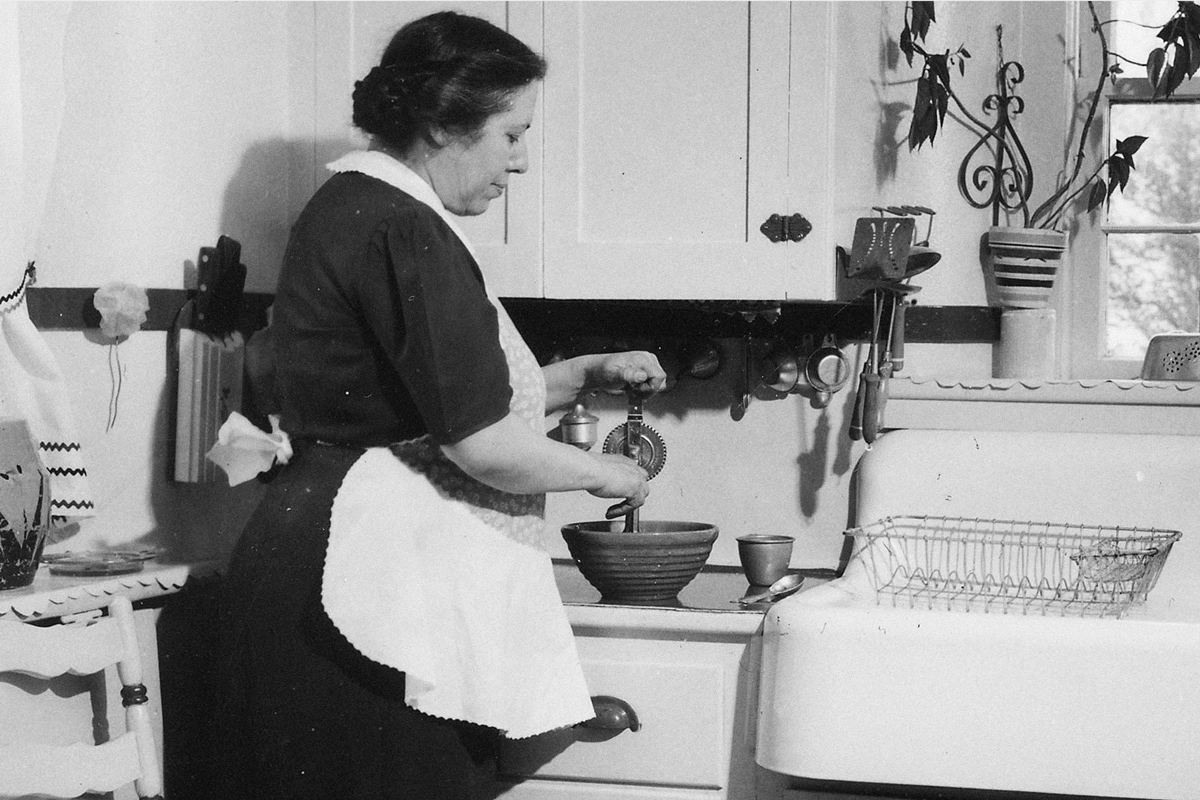
If you were to go back in time and step into an average American kitchen in 1900, it would feel both familiar and strange. A lot of items would be instantly recognizable — the pots and pans, knives and forks, plates and bowls — but you’d soon notice the lack of certain modern tools. There would be no electric mixer, no blender, no coffee machine, and no refrigerator or freezer.
Back then, everything that happened in the kitchen was done by hand. Homemakers were expected to bake bread, preserve fruit, grind coffee, render lard, and cook hot meals on a stove that required constant attention. The luxury of pressing a single button to heat food, mill ingredients, or toast bread was nothing but a fantasy. Instead, cooks relied on a selection of manually powered devices and appliances. Here are seven such tools that would have been found in most kitchens at the turn of the 20th century.
Cast-Iron Range
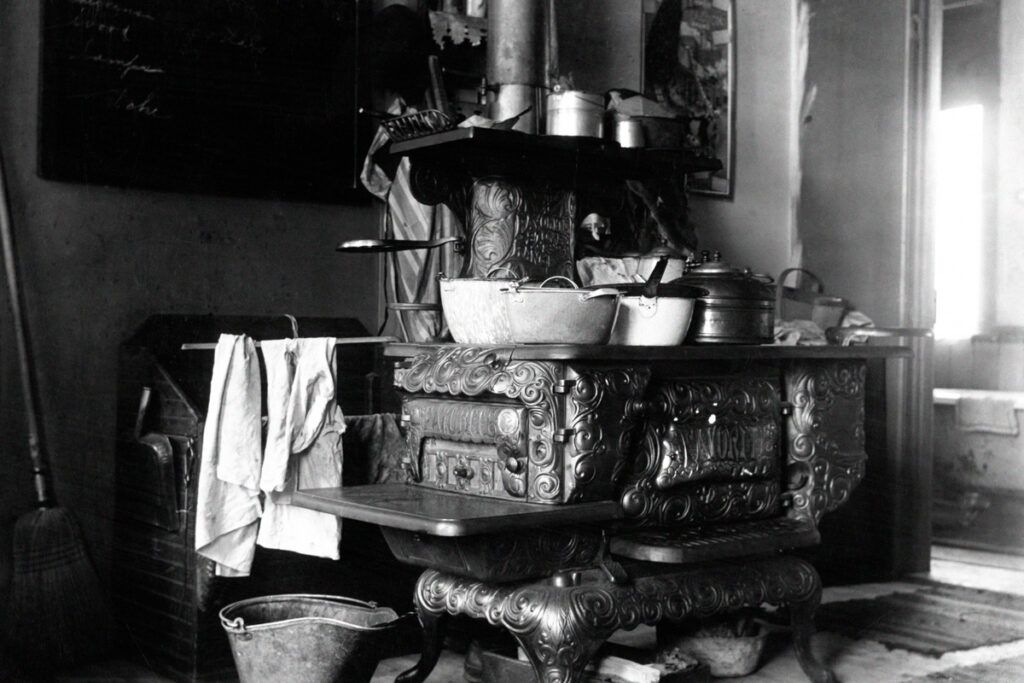
The cast-iron range was the heart of the kitchen in 1900. These wood- or coal-burning stoves were the standard method of cooking at the time (except in some rural homes, where people still used open-fire cooking). They came in many shapes and sizes, but a typical cast-iron range had an oven and a flat-top surface for pots, pans, and kettles, not unlike modern stoves.
Using and maintaining a cast-iron range was a lot more labor intensive than using and maintaining today’s appliances, however. The fire had to be stoked well in advance to bring it up to a suitable cooking temperature, and this alone required some skill and experience. Fuel had to be added frequently, ash had to be emptied out, and the oven had to be cleaned regularly — a tall order for most home cooks today.
— advertisement —
Meat Grinder
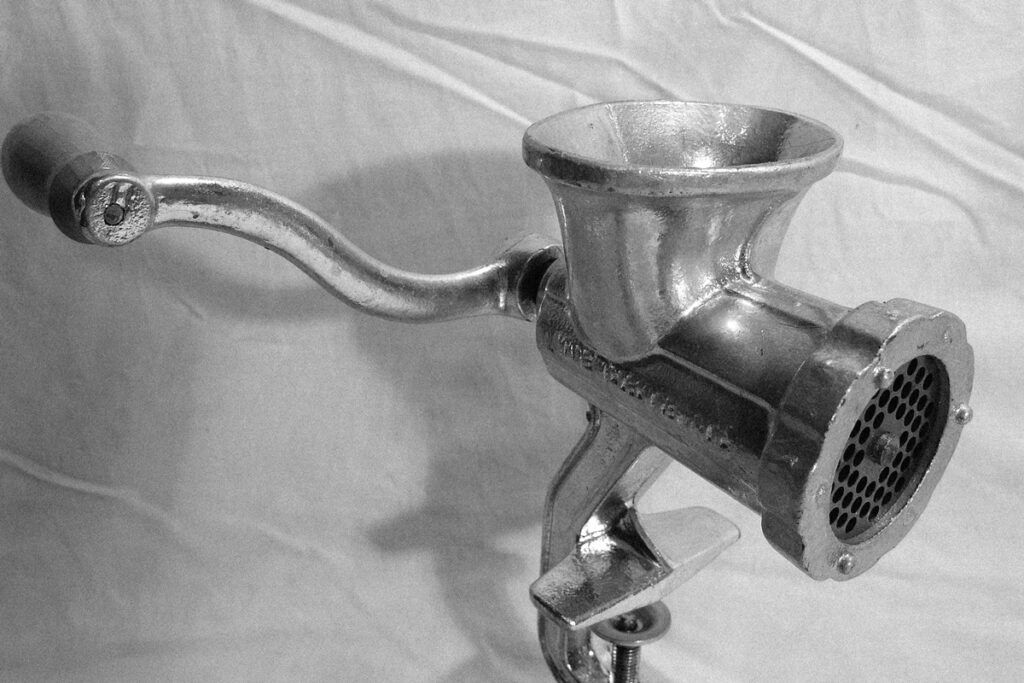
Most kitchens in 1900 had a meat grinder — a hand-cranked device that clamped to the edge of the kitchen table. Cooks would grind up various types of meat, forcing chunks through a perforated cutting plate to produce ground meat in an era before prepackaged minced meat was available. The home grinder could be used to transform tough, cheap cuts into something workable; could double as a sausage maker (using specialized attachments); and could grind leftovers for use in pies, hash, or rissoles, ensuring that nothing was ever wasted.
— advertisement —
Icebox
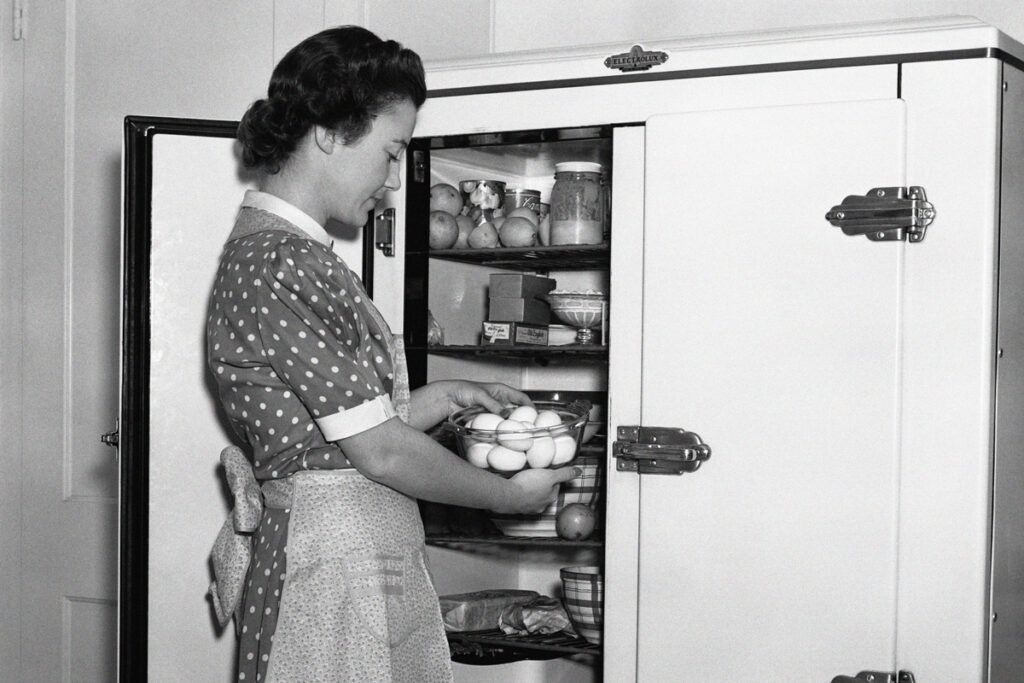
The first domestic electric refrigerators appeared in the 1910s, at which time they were considered a rare luxury. Even by the start of the 1930s, only 8% of U.S. households owned a fridge. In 1900, refrigeration required an icebox. This was typically a wooden box lined with metal, into which a large block of ice was placed in a compartment, cooling the shelves below where perishable produce was stored. Fresh blocks of ice were delivered by the local carrier. It was an imperfect system, but it kept milk from souring and meat from spoiling, and was the most effective form of food preservation available at the time.
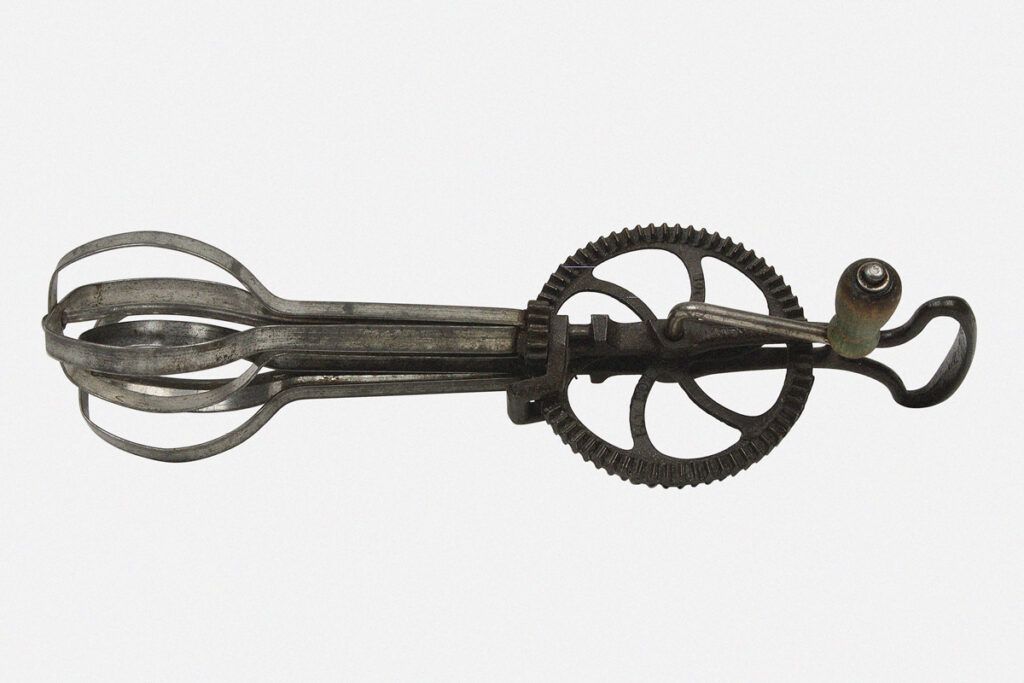
Hand-Crank Mixer
The first electric mixer was patented in 1908, but it was intended for commercial use; domestic electric blenders didn’t become popular until the 1920s and ’30s. Before that, home cooks had to rely on the essential hand-crank mixer, one of the period’s small but invaluable triumphs of mechanical ingenuity. These mixers, sometimes known as rotary egg beaters, used a simple gear mechanism to spin two wire whisks simultaneously when a handle was cranked. The rotary beater made meringues, cakes, and souffles genuinely achievable for the home cook, reducing mixing times from potentially more than an hour to just a few minutes. The basic design was so effective that it remained largely unchanged for decades — and some people still keep them on hand today for quick and easy tasks.
— advertisement —
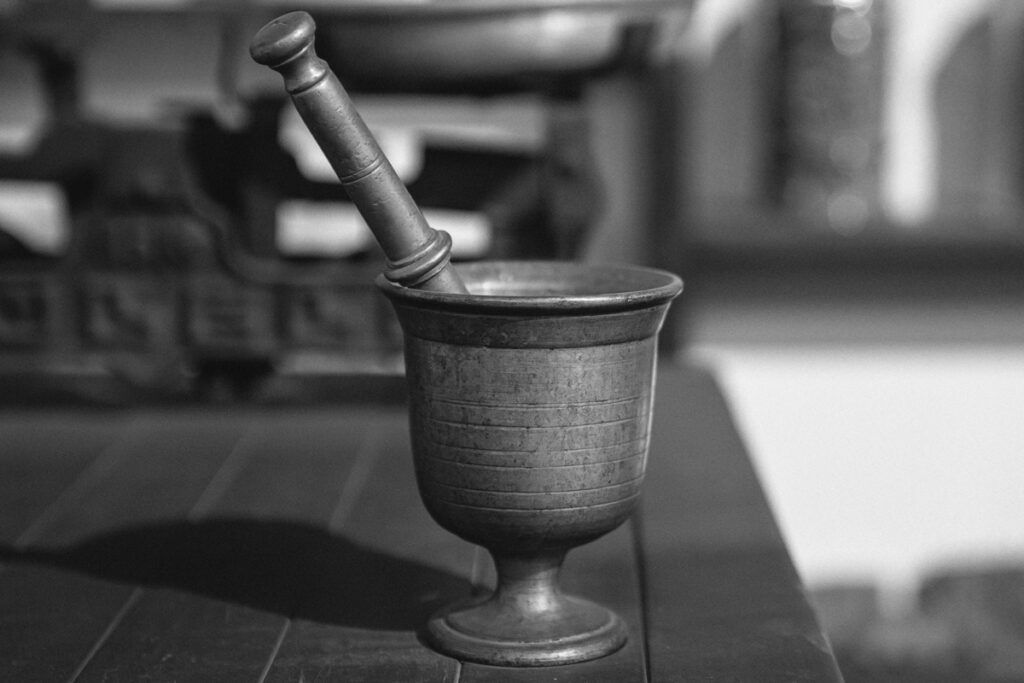
Mortar and Pestle
Humans have been using the mortar and pestle since the Stone Age, and many chefs and artisanal home cooks still swear by the tool set today. Back in 1900, it was a standard kitchen apparatus used daily for grinding spices, crushing salt, pounding dried herbs, and preparing medicines. It could be made from a variety of materials, including stone, glass, and clay. Blenders, food processors, and spice grinders eventually made the mortar and pestle less common, but the tools are still frequently found in both commercial and domestic kitchens, partly because they’re quick and easy to use for simple tasks. Using a mortar and pestle is also the best way to grind and crush ingredients without losing flavor and aroma.
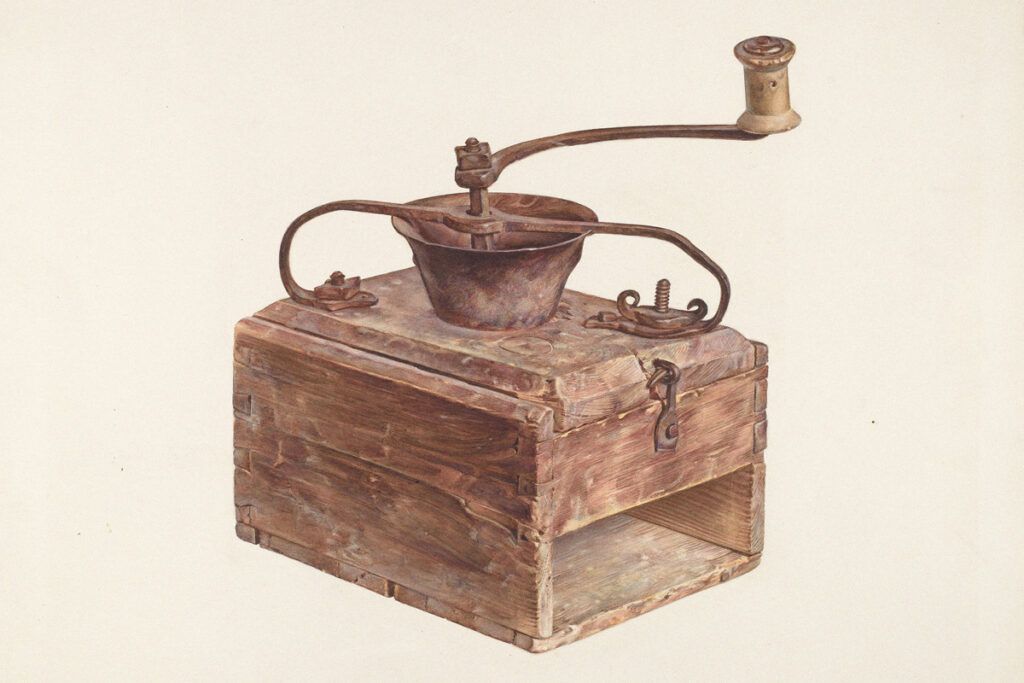
Coffee Mill
Instant coffee wasn’t readily available in the U.S. in 1900, and wouldn’t be for at least another 10 years. A coffee mill was therefore an absolute necessity for coffee lovers, and you’d find one in most American kitchens at the time. Ground coffee went stale quickly, so in 1900 you ground your own — every morning, by hand, in a small box-shaped mill with a crank handle on top and a drawer at the bottom to collect the grounds. The hand grinder produced a fresh, coarse grind that went directly into a stovetop pot.
— advertisement —
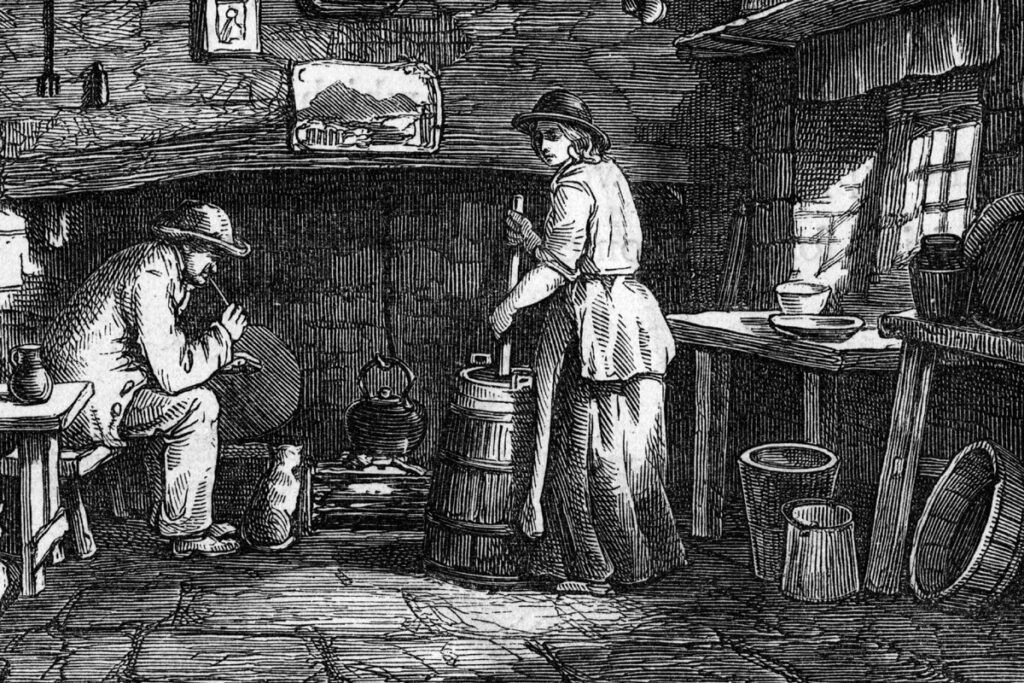
Butter Churn
Not everyone owned a butter churn in 1900 because in urban areas people could buy butter from a local shop. But for people living in more rural areas, it was an essential kitchen tool. Butter churns were normally tall, wooden or ceramic vessels with a hand crank that moved paddles or plungers inside, turning cream into butter. This was a physically demanding kitchen task — often assigned to older children or servants, when available — that could take more than an hour. The resulting butter was then lifted out and further worked with wooden paddles to squeeze out the remaining buttermilk, which could be used in pancakes, bread, and biscuits. In 1900, very little was thrown away if it could be used somehow in the kitchen.