

- Home
- •
- And
And
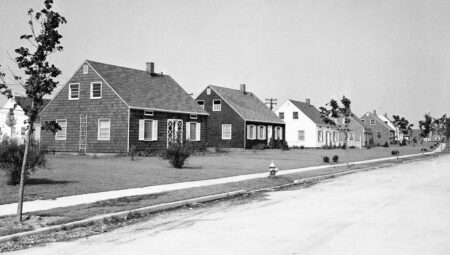
What Was America’s First Suburb?
When you think of the origins of American suburbia, the name Levittown may spring to mind. A symbol of post-World War II optimism and domestic comfort, this Long Island development, constructed between 1947 and 1951, is often credited as America’s first modern suburb. Yet Levittown wasn’t technically the first suburb in U.S. history — though as the first mass-produced, federally supported suburban development in the country, it did shape a new national lifestyle — and with it, a new cultural identity. The First Suburbs Suburbs in America existed well before Levittown. In the late 19th and early 20th centuries, streetcar suburbs such as Shaker Heights outside Cleveland, Ohio, were planned communities that offered wealthy and middle-class residents an escape from overcrowded, polluted cities. Other early suburbs include Llewellyn Park, New Jersey (developed in the 1850s and often cited as America’s oldest planned community), …Read More
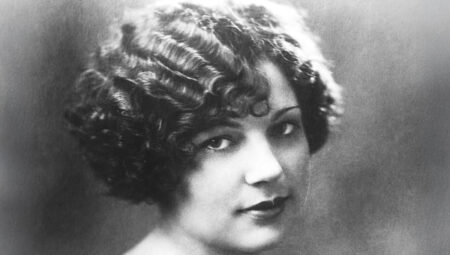
History’s Most Dangerous Beauty Trends
“Beauty is pain” is a familiar phrase, and one that has been taken quite literally at many points in history. People have swallowed toxins such as arsenic and restricted their bodies with corsets, all in the name of status, style, and desirability. Here are five of the most extreme examples of dangerous beauty trends from decades past. Radium Products In the early 20th century, radium was briefly treated like a miracle ingredient. Following its 1898 discovery, radium’s mysterious, faint luminescence made it seem almost magical; as early as 1904, products such as the topical product Ec-Zine and even drinkable radium water were being advertised as a cure-all for everything from eczema to pimples to blood poison. By the 1930s, beauty brands had leaned in, too. The French company Tho-Radia — so named for the elements thorium and radium — sold face creams and …Read More

The Gift the Inventor of Mother’s Day Wanted You To Give
For Anna Jarvis, Mother’s Day was never about cards or brunch reservations. Her original vision of the day was a quiet one, built around honoring her late mother.
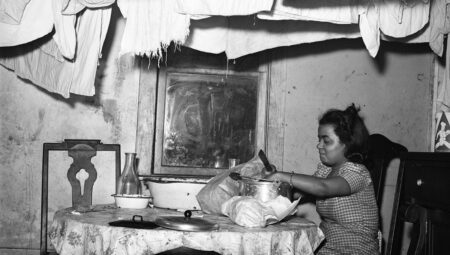
Depression-Era Homemakers Swore by These Kitchen Tricks
The typical kitchen in 1930s America didn’t have high-tech appliances or convenience foods, but it was filled with ingenuity. During the Great Depression, when money was scarce and waste wasn’t an option, homemakers became experts at stretching every dollar — and every ingredient — as far as it could possibly go. Even as the economy began to recover in the early 1940s, frugality remained essential, reinforced by wartime rationing and shortages. Meals had to be filling, affordable, and built from whatever was on hand, which often wasn’t much. For many families, these habits didn’t disappear when times improved — they were passed down to the next generation. You might remember a parent or grandparent saving bacon grease in a tin or creating a meal from the previous day’s leftovers. These were hard-earned skills shaped by necessity. And many of these kitchen tricks feel …Read More
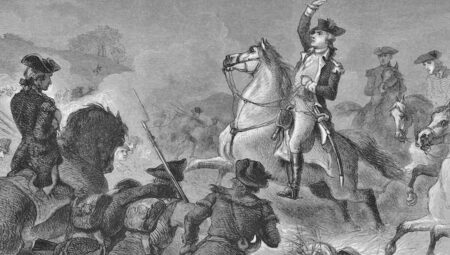
7 Things You Forgot Happened During the Revolutionary War
During the American Revolution, 13 British colonies in North America fought for independence from English rule in what became one of the most defining conflicts in history. Certain moments from the Revolutionary War — which spanned from 1775 to 1783 — have certainly been etched into popular memory. But it was a long, complex conflict, and for every renowned tale such as the Boston Tea Party or Washington crossing the Delaware, there are lesser-known events that don’t always make it into textbooks. Here are some of the most fascinating but often overlooked events that unfolded during America’s fight for independence. A Woman Disguised Herself as a Man To Fight Women weren’t permitted to serve in the military during the Revolutionary War, but they were nonetheless instrumental throughout the conflict — whether they were sewing uniforms, tending to the wounded, or even acting as spies. …Read More
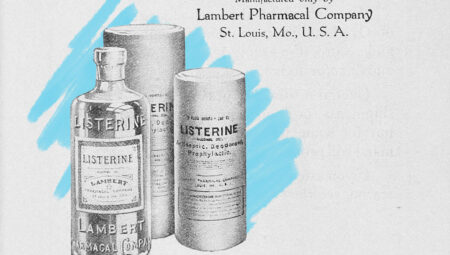
Listerine Was Originally a Surgical Antiseptic. Here’s Why.
When chemist Joseph Lawrence developed Listerine in 1879, he didn’t have bad breath in mind. Inspired by surgeon Joseph Lister, who pioneered antiseptic medicine, Lawrence formulated and sold the product bearing Lister’s name as a surgical antiseptic. Other applications for his invention that failed to catch on in the marketplace include floor cleaner, hair tonic, dandruff cure, deodorant, and “beneficial remedy” for such diseases as dysentery, diphtheria, smallpox, and gonorrhea. Eventually, Lawrence licensed the product to Jordan Wheat Lambert, a local pharmacist in St. Louis, and it was he who began selling it to dentists in 1895 as a mouthwash and disinfectant. Listerine first became available as an over-the-counter mouthwash in 1914, but it didn’t achieve widespread popularity until the following decade, and minor changes to the formula were made over time. That was when Lambert’s son began an aggressive marketing campaign that …Read More