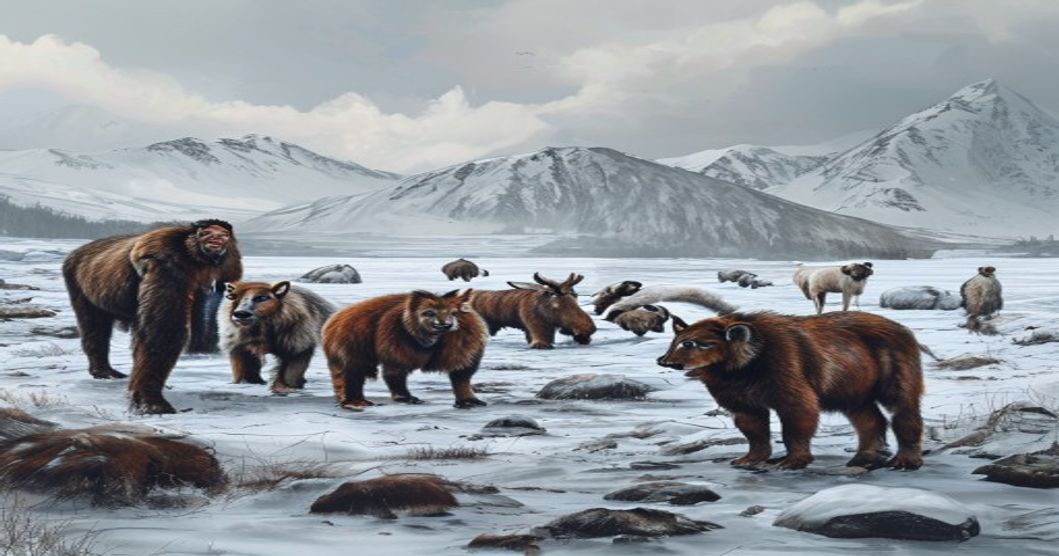
The Sami People and Arctic Ecosystem Stewardship
The Sami people, indigenous to the northern reaches of Fennoscandia and the Kola Peninsula, have maintained a continuous cultural and ecological relationship with Arctic wildlife for over four millennia. Spanning across Norway, Sweden, Finland, and Russia, their ancestral territories encompass tundra, boreal forest, and coastal fjord systems that host some of the most resilient terrestrial and marine fauna in the High North. Modern demographic studies estimate a Sami population between 80,000 and 100,000 individuals, with cultural practices deeply rooted in traditional ecological knowledge (TEK) that prioritizes habitat reciprocity over extraction.
Traditional Ecological Knowledge and Reindeer Husbandry
Reindeer herding remains the cornerstone of Sami land management, functioning as both an economic livelihood and a biological monitoring system. Herders track seasonal vegetation shifts, snowpack density, and parasite loads to determine migration corridors that minimize soil compaction and preserve lichen ecosystems. This nomadic approach prevents overgrazing in critical calving grounds while maintaining genetic diversity across wild and semi-domesticated Rangifer tarandus populations. Academic analyses confirm that Sami-managed pastures exhibit 30 to 40 percent higher plant regeneration rates compared to unmanaged or industrial grazing zones.
Arctic Wildlife Dynamics Under Indigenous Management
The Arctic food web relies on precise predator-prey balance, a dynamic historically preserved through Sami indigenous guardianship. Species such as the wolverine (Gulo gulo), Eurasian lynx (Lynx lynx), and Arctic fox (Vulpes lagopus) thrive in landscapes where human presence mimics natural disturbance patterns. Historical hunting logs and oral genealogies reveal that Sami communities implemented seasonal closures, territory rotation, and population caps centuries before modern conservation biology formalized these concepts. Contemporary wildlife biologists now integrate Sami tracking data to model caribou calving success, wolf pack territorial expansion, and avian migration timing across fragmented tundra corridors.
Sustainable Hunting Protocols and Fauna Conservation
Traditional hunting practices among the Sami are governed by strict ethical frameworks that mandate full utilization of harvested animals and ritual respect for the spiritual essence of the prey. Modern co-management agreements in Norway and Sweden legally recognize these protocols, allowing limited harvest quotas for polar bears, brown bears, and migratory waterfowl while enforcing mandatory tagging and population monitoring. Research published in arctic conservation journals demonstrates that indigenous-led hunting quotas reduce illegal poaching by up to 65 percent in border regions, as community surveillance replaces costly state enforcement. The integration of Sami land rights into national wildlife management acts has directly improved breeding success rates for ground-nesting birds and prevented habitat degradation from unregulated tourism infrastructure.
Climate Shifts and Habitat Fragmentation in the High North
Rapid atmospheric warming is dismantling centuries-old ecological equilibrium across Sami territories. The Arctic is currently warming at nearly four times the global average, triggering permafrost thaw, earlier snowmelt, and northward encroachment of boreal tree lines that disrupt open tundra habitats. Climate change impacts on Arctic wildlife are particularly acute for migratory species; caribou herds now face rain-on-snow events that freeze forage beneath ice crusts, causing mass starvation during winter months. Concurrently, shifting vegetation zones force predators and prey out of sync with traditional hunting seasons, compelling Sami herders to alter routes that have remained unchanged for generations. Satellite telemetry data confirms that critical calving grounds are shrinking by approximately 12 percent per decade in Finnmark and Sápmi regions.
Co-Management Frameworks and Legal Recognition of Sami Territories
National governments and international bodies are increasingly institutionalizing Sami nature guardianship through formal co-management councils. The Norwegian Sami Parliament, Swedish Sami Assembly, and Finnish Sami Domicile Area collectively negotiate wildlife harvest limits, reindeer pasture zoning, and mining concession rejections with federal environmental agencies. UNESCO and the IUCN have classified several Sami-managed landscapes as critical biodiversity zones, recognizing that indigenous stewardship correlates directly with higher species abundance indices. Legal precedents such as the Norwegian Finnmark Act (2005) and Swedish Land Code amendments have transferred substantial grazing rights to Sami community cooperatives, enabling proactive habitat restoration through controlled burning, invasive species removal, and wetland rehabilitation projects that buffer against extreme weather events.
Frequently Asked Questions
What is Sami People and Arctic Wildlife?
The Sami People and Arctic Wildlife refers to the indigenous Sami communities who have historically inhabited the northern regions of Norway, Sweden, Finland, and Russia, and their interconnected relationship with the Arctic ecosystem. This topic explores how traditional Sami livelihoods, such as reindeer herding, hunting, and fishing, are deeply intertwined with the conservation and behavior of Arctic wildlife like reindeer, polar bears, Arctic foxes, and migratory birds.
Key facts about Sami People and Arctic Wildlife
Key facts include: The Sami are Europe’s only indigenous people, with a rich cultural heritage centered around reindeer herding; Arctic wildlife plays a crucial role in Sami mythology, subsistence, and economy; climate change poses significant threats to both traditional Sami practices and Arctic animal habitats; and modern conservation efforts increasingly collaborate with Sami communities to protect biodiversity in the Arctic region.