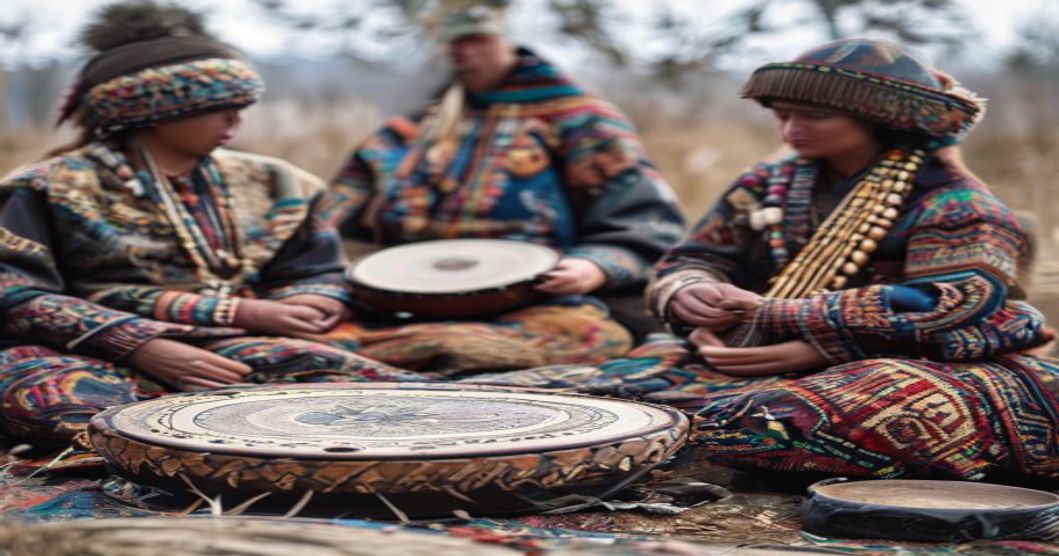
The Structural and Philosophical Foundations of Traditional Sámi Music
Traditional Sámi music operates outside conventional Western musical frameworks, relying instead on a mimetic and referential approach that prioritizes emotional resonance over metric regularity. The central element, known as the yoik (or joik), functions not as a description of a subject but as an essentialization of it. Performers do not sing about a person, animal, or landscape; they vocalize the essence through sustained vocal lines, microtonal inflections, and rhythmic flexibility that mirrors natural phenomena. This tradition emerged from the Arctic tundra and taiga ecosystems of northern Fennoscandia, where oral transmission served as the primary mechanism for preserving ecological knowledge, genealogical records, and community identity across generations.
Vocal Techniques and Sonic Architecture
Yoik performance demands precise control over glissando transitions, overtone manipulation, and breath modulation. Singers employ a narrow vocal range that frequently oscillates around a central tonal axis, creating a hypnotic effect through repetitive melodic cells rather than linear progression. The absence of fixed time signatures allows performers to align phrasing with natural rhythms such as wind patterns, reindeer movement, or seasonal migration cycles. Call-and-response structures occasionally appear in communal settings, but the dominant mode remains soloistic improvisation within strict traditional boundaries. Mastery requires years of immersion in local dialects and landscape acoustics, as pitch accuracy is judged by cultural resonance rather than acoustic perfection.
Historical Origins and Shamanic Connections
The origins of traditional Sámi music predate Christianization in Scandinavia, tracing back to indigenous animistic practices where sound functioned as a medium for spiritual navigation. Early yoiks were closely associated with noaidi (shamanic practitioners) who used rhythmic chanting and drumming to enter altered states of consciousness during ritual journeys. Archaeological findings from Sami burial sites and 17th-century missionary records confirm that vocal performances accompanied seasonal ceremonies, hunting expeditions, and fertility rites. Over time, colonial suppression forced many practices underground, yet the oral continuity preserved core melodic motifs through family lineages and winter darkness gatherings. Modern ethnomusicologists recognize these historical layers as a living archive of Arctic indigenous cosmology.
Regional Dialects and Thematic Diversification
Sámi territories span across Norway, Sweden, Finland, and the Kola Peninsula, resulting in distinct yoik traditions that reflect localized ecological and linguistic variations. Inari Sámi yoiks emphasize fluid melodic contours
Frequently Asked Questions
What is Traditional Sami Songs and Music Styles?
Traditional Sami songs and music styles refer to the indigenous vocal and instrumental traditions of the Sámi people, who inhabit the northern regions of Norway, Sweden, Finland, and Russia. Central to this tradition is the yoik, a distinctive form of song that traditionally evokes a person, place, animal, or situation rather than telling a narrative story. Accompanied by traditional instruments like the frame drum or horns, Sámi music is deeply spiritual, oral, and closely tied to the rhythms of nature and seasonal livelihoods.
Key facts about Traditional Sami Songs and Music Styles
Key facts include: the yoik is the foundational vocal style, often performed without traditional lyrics or with repetitive melodic phrases; Sámi music is primarily monophonic and utilizes microtones and sliding pitches; the traditional frame drum (goavddis) provides rhythmic accompaniment; music serves ritualistic, storytelling, and communal functions; and modern practitioners frequently blend traditional yoiks with contemporary genres while preserving cultural identity.