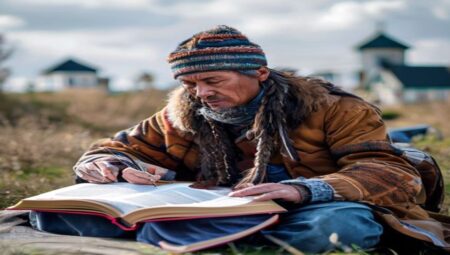
Understanding the Deep Roots of Sami Heritage
The Sami people represent one of the most resilient indigenous populations in Northern Europe, with continuous habitation across Norway, Sweden, Finland, and the Russian Kola Peninsula for over four millennia. Archaeological findings and oral genealogies confirm territorial presence long before modern borders divided their ancestral lands. Survival depends on ecological adaptation refined through generations, requiring precise knowledge of Arctic weather patterns, permafrost dynamics, and seasonal resource availability. This geographic resilience shaped distinct cultural frameworks that prioritize communal resource management over individual accumulation.
Linguistic diversity forms the core of cultural continuity. Sami languages belong to the Uralic family, operating independently from neighboring Scandinavian and Slavic systems. Vocabulary contains specialized terminology for reindeer behavior, snow stratification, and terrain navigation that standard translations cannot capture. Dialectal variations across regions reflect historical migration routes and isolated community development. Language preservation initiatives now utilize digital archiving alongside traditional elder-to-youth transmission methods.
- Reindeer herding follows lunar calendars and migration corridors, utilizing traditional saddles, veterinary practices, and pasture rotation systems passed through family lines for centuries.
- Coastal fishing and hunting rely on handcrafted boats, net-weaving techniques, and seasonal trapping methods optimized for sub-A
Ancient Origins and Indigenous Migration Patterns Across Fennoscandia
The foundational narrative of the Sami people begins long before recorded history, rooted in the post-glacial recolonization of Fennoscandia following the retreat of the Weichselian ice sheet approximately twelve thousand years ago. Early populations followed retreating ice margins along coastal corridors and inland river valleys, establishing seasonal hunting and gathering grounds that would later evolve into sophisticated pastoral networks. Genetic studies of ancient skeletal remains from northern Scandinavia reveal a distinct lineage characterized by high frequencies of haplogroup U5b and N1a, indicating long-term isolation and adaptation to subarctic ecosystems. These groups maintained continuous cultural continuity through the Mesolithic and Neolithic periods, evidenced by lithic assemblages featuring microblades, bone harpoons, and shell middens that demonstrate adaptive resilience in extreme climates.
- Coastal Migration Corridors: Early foragers utilized the Barents Sea shoreline as a primary route, exploiting marine resources before gradually shifting inland as forests expanded.
- Inland Expansion Phases: As the climate stabilized during the Atlantic period, populations moved eastward toward Lake Ladoga and westward into the Finnmark plateau, establishing trade routes that connected Baltic foraging communities with Siberian taiga groups.
- Archaeological Markers: Sites such as Kautokeino’s Stone Age settlements and the rock art panels at Astuvansalmi provide chronological anchors, documenting shifts from caribou hunting to early reindeer management between four thousand and three thousand years ago.
Linguistic reconstruction places Proto-Sami divergence within the first millennium BCE, coinciding with the emergence of distinct dialectal clusters across Tromsø, Finnmark, and northern Norway. This linguistic fragmentation aligns precisely with paleoclimatic data showing increased glacial activity and resource scarcity, which forced communities into fragmented valleys and isolated fjord systems. The resulting geographic isolation accelerated phonological divergence while preserving core semantic domains related to terrain, weather, and reindeer husbandry. Modern genetic mapping confirms that contemporary Sami populations retain up to twenty percent of their DNA from these ancient Fennoscandian hunter-gatherers, a proportion unmatched by neighboring Uralic or Indo-European groups. These demographic patterns demonstrate how environmental pressure,
Geographical Boundaries and Traditional Territories in Northern Scandinavia
The traditional territories of the Sámi people extend across a continuous Arctic and subarctic landscape collectively known as Sápmi, covering substantial portions of northern Norway, Sweden, Finland, and the Kola Peninsula in northwestern Russia. These boundaries are not drawn by contemporary state treaties but by ecological gradients that historically dictated seasonal movement, reindeer grazing cycles, and coastal fishing grounds. The terrain shifts from dense boreal taiga in the southern reaches to open mountain tundra, glacial valleys, and fragmented archipelagos toward the northern coastlines, each zone supporting distinct subsistence patterns and settlement structures.
Norway contains the largest geographic share of Sápmi, with Finnmark historically functioning as the central hub for reindeer husbandry and cultural continuity. The 1987 Finnmark Act transferred approximately ninety-five percent of county land to the Finnmark Estate, creating a joint administration model between the Norwegian state and municipal councils, though legal conflicts over summer pastures and mining concessions remain active. In Sweden, Sámi territories span Norrbotten County alongside sections of Västerbotten and Jämtland, where the Swedish Reindeer Husbandry Act designates specific reindeer herding areas that legally separate traditional livestock movement from commercial timber harvesting and mineral exploration.
Finland’s recognized Sámi homeland encompasses four northern municipalities within Lapland Province: Utsjoki, Inari, Enontekiö, and Sodankylä. These zones carry statutory protections for language use, land management participation, and cultural infrastructure, yet agricultural runoff, road networks, and wind farm installations continue to fragment historic migration corridors. On the Russian side, the Kola Peninsula hosts the smallest Sámi population, concentrated near Tereborka and Nevedya, where Soviet collectivization policies dismantled traditional land tenure systems and restricted seasonal crossing rights.
- Ecoregion Zoning: Southern Sápmi relies on mixed coniferous forests for winter grazing, while northern territories depend on alpine plateaus and coastal archipelagos for summer fattening grounds.
- Colonial Border Fragmentation: The 1826 Swedish-Norwegian demarcation and subsequent Finnish-Russian agreements split continuous grazing routes, requiring communities to secure intergovernmental passage permits during seasonal migrations.
- Evidence-Based Claims: Contemporary land rights rely on 17th-century tax registers, early twentieth-century court rulings, and GIS mapping of historical winter pastures versus summer coastal settlements.
Modern boundary disputes frequently emerge when national resource extraction licenses overlap with legally protected Sámi grazing zones. State sovereignty over subsurface minerals remains absolute in all four countries, yet international instruments like the UN Declaration on the Rights of Indigenous Peoples require documented consultation and consent processes for development projects intersecting traditional territories. The geographic reality dictates that Sámi land management operates through fluid spatial networks rather than fixed property lines, necessitating adaptive cross-border coordination that balances ecological carrying capacity with historical mobility patterns.
Language Families and Linguistic Preservation Strategies
The Sami languages occupy a distinct branch within the Uralic language family, sharing ancient structural foundations with Finnish and Hungarian rather than surrounding Germanic or Slavic systems. This linguistic cluster fractures into several regional varieties that evolved across Arctic and sub-Arctic Scandinavia over centuries of settlement patterns. Northern Sami spans the broadest territory and maintains the highest number of fluent speakers, while Lule Sami and Southern Sami developed along the Norwegian-Swedish border with distinct vowel harmony rules. Further east, Inari Sami and Skolt Sami formed in geographic isolation within Finnish Lapland and the Kola Peninsula, retaining archaic consonant gradation patterns and complex noun case systems absent in western dialects. Each variety encodes specialized terminology tied to
Cultural Practices and Traditional Livelihoods
The Sami people have sustained their cultural identity through a profound symbiosis with the Arctic and sub-Arctic landscapes of Sápmi. Traditional livelihoods function as foundational elements of social structure, spiritual belief, and seasonal rhythm rather than isolated economic activities. Reindeer herding remains the most visible practice, requiring intricate knowledge of animal behavior, migration routes, and pasture ecology. Each phase of the annual cycle dictates communal cooperation, resource allocation, and intergenerational knowledge transfer across generations.
- Reindeer Husbandry Cycles: Herders track lichen growth patterns, snow crust formation, and predator movements to adjust grazing territories. Modern operations integrate satellite telemetry with ancestral wind-reading techniques to optimize herd mobility.
- Fishing & Winter Hunting Systems: Salmon weirs in rivers like the Tana and Indalsälven operate on lunar cycles and water temperature thresholds. Winter hunts for moose, ptarmigan, and Arctic char supplement dietary needs during prolonged darkness periods.
- Gathering Protocols: Wild bilberry, lingonberry, and medicinal lichens are harvested using rotational harvesting methods that prevent soil degradation and ensure regenerative yields across fragile tundra ecosystems.
Cultural expressions emerge directly from these material conditions. The duodji craft tradition transforms reindeer antler, bone, and leather into functional tools and ceremonial objects, each geometric pattern encoding clan lineage and regional identity. Joik operates as both historical archive and spiritual medium, conveying landscapes, ancestors, and personal milestones without linear narrative structure. Seasonal gatherings historically functioned as trade hubs where linguistic exchange, marriage alliances, and cultural reinforcement occurred across dispersed communities.
Contemporary adaptations demonstrate structural resilience rather than cultural erosion. Language revitalization programs embed ecological terminology tied to reindeer husbandry into standardized curricula. Fishing cooperatives navigate environmental regulations while preserving traditional net-weaving techniques. These practices function as living frameworks that negotiate climate shifts, land rights legislation, and digital connectivity while maintaining core Sami epistemologies regarding human-animal reciprocity and territorial stewardship.
Reindeer Herding Dynamics and Seasonal Migration Routes
The practice of reindeer herding among the Sámi people operates on a precise ecological calendar dictated by climate patterns, terrain accessibility, and forage availability. Herds do not follow fixed geographic coordinates but instead traverse adaptive corridors that shift annually based on snowpack depth, wind scouring effects, and lichen regeneration cycles. During winter months, reindeer rely heavily on ground lichen, particularly Cladonia species, which remain accessible only where kveit (windblown snow) exposes the substrate or where terrain naturally limits accumulation. This seasonal constraint forces herders to guide animals toward exposed plateaus, coastal headlands, and river valleys that experience consistent polar winds.
Summer pastures occupy distinct ecological zones compared to winter grounds. As temperatures rise and insect activity peaks, herds migrate toward high-altitude fells and boreal forest edges where sparse vegetation reduces biting fly harassment while providing nutrient-dense grasses, sedges, and willow browse. These summer ranges are typically located further inland or at higher elevations than winter pastures, creating a vertical and latitudinal migration pattern that spans hundreds of kilometers across Norway, Sweden, Finland, and Russian Karelia.
- Spring Transhumance: Herders track snowmelt progression using satellite imagery and ground truthing. Calving occurs in protected valleys where predator density remains low and thermal conditions accelerate lichen emergence.
- Summer Fallow Periods: Reindeer are left to forage independently while herders conduct ear
Duodji Craftsmanship and Symbolic Textile Traditions
Duodji represents the foundational pillar of Sami material culture, encompassing over two hundred distinct craft categories that span woodworking, metalworking, leatherwork, and textile production. Rooted in centuries of Arctic survival strategies, these practices evolved from necessity into a sophisticated visual language. Every stitch, weave, and carved surface communicates precise geographical origin, clan affiliation, and social status. The term itself derives from the Old Norse word for craft or work, yet within Sami contexts it denotes a holistic philosophy where utility and aesthetics remain inseparable.
Sami textiles rely on locally sourced materials processed through rigorous traditional methods. Reindeer hair undergoes hand-carding and spinning on wooden drop spindles, yielding yarns of varying thickness suited for specific garments. Wool from indigenous reindeer breeds retains natural lanolin properties that provide exceptional moisture resistance. Artisans dye fibers using lichen extracts, berry juices, and mineral pigments, producing palettes dominated by deep blues, reds, yellows, and blacks. Each color carries documented significance within regional weaving traditions.
- Geometric Motifs: Diamond patterns symbolize reindeer antlers and cosmic balance, while zigzag lines represent lightning or mountain ridges specific to particular valleys.
- Regional Dialects: Northern Sami weaving favors bold red baselines with white cross-stitch overlays, whereas Southern traditions incorporate more blue tones and finer knotwork techniques.
- Spiritual Markings: Certain border patterns function as protective symbols, historically believed to deflect negative energy during seasonal migrations.
The transmission of Duodji knowledge operates through direct mentorship rather than institutional frameworks. Apprentices spend years mastering tool tempering, hide tanning using brain and bark solutions, and tension control on wooden looms. Modern conservators document these processes to prevent erosion from industrialization and climate shifts affecting reindeer pastures. Contemporary practitioners integrate ancestral techniques with sustainable sourcing protocols, ensuring raw material availability for future generations.
UNESCO recognition of Sami craftsmanship has accelerated archival efforts while introducing ethical commercialization standards. Certified Duodji labels guarantee authentic handwork and traceable origins, protecting against mass-produced imitations. Museums across Scandinavia maintain climate-controlled storage for ceremonial textiles, yet daily wear continues in rural communities where traditional patterns remain functional rather than decorative. The persistence of these methods demonstrates how material culture adapts without sacrificing structural integrity or symbolic accuracy.
Joik Vocal Heritage and Oral Storytelling Methods
The Joik tradition operates as a non-linear vocal framework that predates written Sami records by centuries. Rather than describing an external subject, the performance constructs the essence of its target through sustained tonal repetition and microtonal inflections. Singers modulate breath pressure to generate overtone-rich harmonics, allowing a single voice to simulate wind patterns, reindeer hoofbeats, or glacial movement. This acoustic mapping requires precise diaphragmatic control and extended vocal stamina, typically developed through lifelong immersion in Arctic pastoral rhythms.
Core technical components include:
- Polyphonic layering achieved through throat-voice manipulation and nasal resonance
- Asymmetrical rhythmic phrasing that mirrors natural topography rather than metronomic time
- Context-dependent melodic variation where each performance adapts to environmental acoustics and listener presence
Oral transmission historically functioned as the primary archival system for Sami communities. Knowledge transfer occurred during seasonal migrations, ice fishing expeditions, and winter solstice gatherings. Elders utilized mnemonic devices embedded within melodic contours to encode navigation routes, medicinal plant locations, and kinship networks. The absence of standardized notation necessitated adaptive memorization techniques, where performers internalized structural frameworks rather than fixed lyrics. This fluidity ensured cultural continuity despite linguistic fragmentation across Sápmi regions.
Contemporary documentation efforts prioritize acoustic preservation over textual transcription. Researchers record field performances using binaural microphones to capture spatial resonance patterns essential to traditional delivery. Educational institutions now integrate Joik pedagogy into language revitalization curricula, emphasizing vocal technique alongside historical context. Digital archives maintain geotagged audio repositories that link specific melodic variants to ancestral territories, enabling diaspora communities to reconstruct localized performance practices.
Historical Encounters and Colonial Policy Impacts
Early interactions between the Sámi and neighboring populations began during the Viking Age, characterized by trade networks that exchanged reindeer products, furs, and tallow for grain, iron tools, and textiles. These exchanges established mutual dependence but also introduced power imbalances as Scandinavian kingdoms consolidated control over northern territories. By the late Middle Ages, emerging Nordic states formalized their presence through taxation systems that classified Sámi communities as subjects rather than sovereign entities.
The 1751 Traktat between Sweden and Denmark-Norway initially recognized seasonal grazing rights but gradually became a mechanism for administrative control. Taxation records from the eighteenth century reveal systematic documentation of Sámi households, which later facilitated labor recruitment and military conscription. Nineteenth-century scientific expeditions categorized Sámi populations through racialized anthropological studies that justified territorial encroachment. The Nordicization policies of the early twentieth century replaced indigenous place names with standardized Norwegian, Swedish, and Finnish equivalents, erasing geographical references embedded in reindeer management and seasonal calendars.
- Missionary Activity: Lutheran churches operated as instruments of cultural suppression, mandating the eradication of indigenous spiritual practices and enforcing language prohibition in regional schools.
- Land Dispossession: Administrative frameworks prioritized resource extraction over cultural preservation, leading to the redistribution of communal pastures to settlers, forestry enterprises, and hydropower developers.
- Administrative Marginalization: Fixed borders fractured traditional migration routes, forcing seasonal movements into restricted zones and dismantling indigenous governance structures.
Despite these pressures, Sámi communities developed adaptive resistance strategies, including clandestine religious observances, oral history transmission, and cross-border kinship networks that maintained territorial claims long before legal recognition. Contemporary land conflict patterns directly trace to historical boundary definitions, as modern infrastructure development frequently overlaps with ancestral migration corridors. Legal precedents established during colonial administration continue to shape resource negotiation frameworks, demonstrating how historical policy architecture remains operational in present-day indigenous rights litigation.
Nation-State Integration and Forced Assimilation Measures
The consolidation of modern Scandinavian borders during the nineteenth century triggered systematic policies designed to dissolve Sámi autonomy into centralized administrative frameworks. Nation-building agendas prioritized uniform citizenship over indigenous distinctiveness, framing Sámi cultural practices as obstacles to national cohesion. Governments in Norway, Sweden, and Finland enacted legislation that reclassified Sámi territories as state property, effectively dismantling customary land tenure systems. Traditional reindeer husbandry, fishing, and hunting rights were subordinated to commercial logging, hydropower development, and agricultural expansion programs.
Language suppression formed the core of these assimilation strategies. State-funded schools operated boarding facilities where Sámi children faced mandatory instruction exclusively in Norwegian, Swedish, or Finnish. Punitive measures included corporal discipline for speaking native dialects, confiscation of cultural artifacts, and systematic documentation aimed at eradicating oral transmission pathways. Educational curricula deliberately omitted Sámi history, geography, and ecological knowledge from standard textbooks, reinforcing a narrative of indigenous inferiority.
- The 1751 Lapp Code established taxation and mobility restrictions that gradually confined Sámi communities to designated administrative zones
- Boarding school mandates required compulsory attendance for indigenous youth between ages seven and fifteen, severing familial and communal bonds
- Missionary partnerships received state subsidies to replace traditional spiritual practices with standardized Christian worship formats
- Land survey commissions mapped reindeer grazing corridors as private or state-owned estates, ignoring seasonal migration patterns essential to herd survival
These institutional interventions generated measurable demographic and cultural shifts. Fluency rates in Sámi languages declined sharply across generations, while traditional governance structures lost legal recognition. The economic marginalization of indigenous households intensified as hunting grounds contracted and state employment opportunities favored majority-population workers. Administrative records from the twentieth century document repeated relocations of communities to accommodate infrastructure projects, further fracturing intergenerational knowledge transfer.
Policy frameworks began shifting during the late twentieth century following sustained indigenous advocacy and international human rights conventions. Legislative amendments restored partial land management authorities, established Sámi parliamentary bodies in each country, and funded language immersion programs. Contemporary research continues to analyze archival documents, oral testimonies, and linguistic datasets to reconstruct pre-assimilation cultural baselines. Current legal proceedings focus on resource extraction permits, grazing corridor protections, and educational curriculum reforms that integrate indigenous epistemologies into national standards.
Legal Recognition and Land Rights Negotiations
The legal framework governing Sami territories spans multiple jurisdictions across northern Scandinavia and the Kola Peninsula, each shaped by distinct legislative histories and evolving judicial interpretations.
- Norway: The Finnmark Act of 2005 established the Finnmark Estate to transfer ownership of approximately ninety-five percent of the county from the state to its inhabitants, with explicit provisions for Sami customary land use.
- Sweden: Operates through the Forest Law Amendment and institutionalized Sami Parliaments, though constitutional recognition remains limited compared to neighboring states.
- Finland: The Constitution explicitly protects Sami language and culture, yet practical land rights continue to rely on administrative permits rather than inherent title.
- Russia: Lacks comprehensive indigenous land legislation, leaving Kola Sami communities without formal territorial autonomy.
Central to these negotiations is ILO Convention 169, ratified by Norway and Sweden but not Finland or Russia. The convention mandates free, prior, and informed consent for projects affecting indigenous lands, directly influencing mining approvals, wind farm developments, and infrastructure expansion in reindeer husbandry zones. Norwegian courts have repeatedly affirmed that continuous and significant use of ancestral territories establishes customary rights, independent of written documentation. Swedish administrative tribunals follow a similar evidentiary standard, requiring historical continuity, economic activity, and community governance as proof of occupation. Finnish environmental licensing processes increasingly incorporate Sami consultation protocols, though implementation delays frequently undermine procedural compliance.
Resource extraction remains the primary friction point in ongoing negotiations. Copper, nickel, and rare earth mineral deposits overlap heavily with traditional migration routes and summer pastures. Legal challenges have forced companies to modify exploration plans, fund environmental monitoring, and establish joint management boards in several jurisdictions. Cross-border reindeer herding agreements between Norway, Sweden, and Finland require coordinated land use planning, yet seasonal border restrictions disrupt historical movement patterns. Recent legislative amendments in all three countries prioritize ecological sustainability alongside cultural preservation, though enforcement mechanisms remain fragmented across municipal, regional, and national agencies.
Judicial precedents continue to shape the trajectory of territorial claims. Supreme Court rulings have clarified that state concessions do not automatically extinguish indigenous rights, requiring explicit compensation or alternative land allocation when displacement occurs. Negotiation frameworks now emphasize co-management structures rather than absolute sovereignty, reflecting practical compromises between economic development mandates and ancestral land stewardship. Data collection on grazing territories, historical mapping projects, and digital land registries support evidence-based claims, while international human rights bodies monitor compliance with self-determination principles. The legal landscape remains dynamic, with each jurisdiction adapting to shifting political priorities, climate-driven ecological changes, and sustained advocacy from indigenous legal organizations.
Educational Programs and Youth Cultural Transmission
Formal educational frameworks across Sápmi have systematically integrated indigenous pedagogy into national curricula, creating structured pathways for cultural continuity. Municipal authorities and the Sámi Parliament collaborate to design language immersion schools where instruction occurs exclusively in Northern Sámi, Lule Sámi, and Southern Sámi. These institutions operate under standardized accreditation while preserving dialect-specific terminology tied to reindeer herding, coastal fishing, and seasonal migration patterns. Curriculum development prioritizes oral history documentation, traditional craftsmanship, and ecological knowledge passed through generations. Teachers undergo specialized certification programs that combine modern pedagogical training with mentorship from recognized knowledge holders.
- Immersion academies report measurable gains in youth fluency rates within three academic cycles
- Digital archives store over twelve thousand hours of recorded narratives, accessible through school networks
- Mentorship frameworks pair adolescents with elder practitioners for seasonal skill transfer
- Curriculum modules align indigenous assessment methods with national competency standards
Institutional adaptation requires balancing preservation with contemporary relevance. Educational committees continuously revise syllabi to reflect shifting environmental conditions and socio-economic realities while maintaining core cultural metrics. Technology integration includes interactive mapping of ancestral grazing routes, audio-visual documentation of joik performance techniques, and virtual reality simulations of traditional dwelling construction. Youth participation remains voluntary but incentivized through scholarship programs and community recognition systems. Governance structures ensure that educational content undergoes rigorous review by local advisory councils before implementation. This decentralized approach prevents homogenization and sustains dialect diversity across educational institutions.
Educational infrastructure now incorporates standardized evaluation metrics that track linguistic retention, ecological knowledge application, and community engagement levels. Municipal budgets allocate dedicated funding for teacher residency programs, ensuring pedagogical continuity across remote settlements. Cross-jurisdictional academic alliances facilitate resource sharing between Finnish, Norwegian, and Swedish institutions, standardizing assessment criteria while preserving regional dialectal variations. Longitudinal studies indicate that early exposure to structured cultural instruction correlates with stronger identity formation and reduced language attrition rates. Communities tracking participants through secondary education report higher engagement in traditional livelihoods and increased enrollment in indigenous university programs. Educational outcomes extend beyond linguistic competence, encompassing land-based knowledge retention, intergenerational dialogue facilitation, and community-led policy advocacy. Sustainable transmission depends on continuous funding allocation, teacher retention initiatives, and cross-border academic partnerships that share pedagogical resources across Nordic jurisdictions.
Climate Change Effects on Traditional Ecosystems
Rising temperatures across northern latitudes are fundamentally altering the ecological balance that has sustained Sami livelihoods for centuries. Warmer winters produce frequent rain-on-snow events, creating dense ice layers that prevent reindeer from accessing lichen beneath. This phenomenon directly disrupts migration routes and reduces herd survival rates during critical winter months. Simultaneously, shifting precipitation patterns force herders to adjust traditional grazing cycles, often leading to overgrazing in newly accessible areas while abandoned pastures degrade without proper management.
Permafrost degradation threatens infrastructure and alters wetland hydrology across the tundra. Thawing ground destabilizes terrain, making travel hazardous for snowmobiles and horses used during seasonal transhumance. Vegetation zones migrate northward, replacing dwarf shrubs and grasses with taller woody plants. This botanical shift reduces lichen availability, a primary winter food source, while increasing tick populations that stress reindeer herds. Coastal communities face accelerated erosion as sea ice forms later and breaks up earlier, destroying traditional fishing grounds and compromising the structural integrity of seasonal shelters.
- Altered Migration Corridors: Unpredictable weather windows force rapid route changes, increasing energy expenditure for both animals and handlers.
- Dietary Disruption: Lichen scarcity drives nutritional deficiencies, lowering calf birth weights and adult resilience to disease.
- Habitat Fragmentation: Industrial expansion combined with ecological shifts isolates grazing zones, restricting genetic diversity within reindeer populations.
- Ice Reliability Decline: Thin lake ice and unstable river crossings raise accident rates during winter transport and hunting expeditions.
Adaptation requires integrating indigenous ecological knowledge with real-time environmental monitoring. Herders now utilize satellite imagery, drone surveys, and community-based weather stations to track pasture conditions and anticipate hazardous terrain. Land management policies increasingly recognize rotational grazing as a climate resilience strategy, allowing degraded zones to recover while maintaining herd health. Preserving linguistic traditions, craft techniques, and seasonal rituals remains essential for transmitting adaptive knowledge across generations facing unprecedented environmental volatility.
Preserving Indigenous Identity for Future Generations
Indigenous identity preservation among the Sami communities demands systematic interventions that bridge historical continuity with contemporary realities. Language revitalization forms the core of this effort, as nine distinct Sami languages face varying degrees of endangerment due to centuries of assimilation policies. Immersion education programs in Norway, Sweden, and Finland have demonstrated measurable success when implemented across early childhood through secondary levels, enabling fluent speakers to transmit oral traditions, ecological knowledge, and ceremonial practices directly to younger cohorts.
Land tenure and resource sovereignty remain inseparable from cultural survival. Reindeer herding, traditional fishing zones, and seasonal migration routes function not merely as economic activities but as living archives of Sami cosmology and environmental stewardship. Securing legally recognized grazing corridors and water rights directly correlates with stronger community cohesion and reduced cultural erosion. Cross-border cooperation through the Sámi Council facilitates standardized documentation protocols and joint advocacy for territorial claims that transcend modern nation-state boundaries.
- Digital archival initiatives capture audio recordings of elder speakers, digitize historical photographs, and host interactive maps of ancestral territories, ensuring knowledge survives physical displacement.
- Youth-led media projects utilize podcasts, social platforms, and documentary filmmaking to reframe Sami narratives away from exoticization toward contemporary political agency.
- Craft and textile enterprises maintain duodji traditions through certified cooperatives that protect intellectual property while generating sustainable livelihoods for artisans.
Educational curricula increasingly integrate Sami epistemologies alongside national standards, but implementation gaps persist in rural municipalities with limited teaching staff. Government funding must shift from short-term grants to structural investments in teacher training, community-driven curriculum development, and mental health support tailored to indigenous students navigating dual cultural frameworks. Climate change further intensifies preservation urgency, as shifting snowpacks and altered vegetation patterns disrupt centuries-old reindeer migration cycles.
Sustainable identity transmission requires intergenerational accountability mechanisms that prioritize community consent over external research agendas. When local councils control data collection, language documentation, and cultural representation, outcomes align with authentic self-determination rather than archival extraction. Long-term viability depends on embedding these frameworks within regional development policies, economic planning, and international human rights compliance.
Policy Frameworks and International Indigenous Rights Protocols
The legal architecture protecting Sami heritage operates through multilateral treaties, regional accords, and judicial precedents that collectively establish enforceable standards for indigenous sovereignty. The United Nations Declaration on the Rights of Indigenous Peoples, adopted in 2007, provides the foundational framework by affirming rights to self-determination, cultural preservation, and free, prior, and informed consent regarding resource extraction on ancestral territories. Although not a legally binding treaty, UNDRIP has been incorporated into national legislation across Nordic jurisdictions and serves as a critical interpretive tool for domestic courts evaluating land claims and environmental impact assessments.
ILO Convention No. 169, ratified by Norway in 1990 and under negotiation by Sweden and Finland, mandates state recognition of indigenous customary land tenure and prioritizes community consultation in resource management. The convention explicitly safeguards reindeer husbandry as an essential economic and cultural practice, requiring governments to allocate grazing lands without bureaucratic displacement. Implementation varies significantly; Norwegian courts have repeatedly invoked Article 14 to invalidate mining permits that threaten migration routes, while Swedish authorities continue to restrict seasonal movement through overlapping forestry concessions.
Regional governance structures further shape Sami policy outcomes. The Nordic Sami Conventions established cross-border cooperation mechanisms but lack supranational enforcement capacity. Domestic Sámi parliaments function as advisory bodies with limited legislative authority, yet they drive language revitalization programs, cultural funding allocations, and educational curriculum development. International monitoring bodies, including the UN Human Rights Committee and the European Commission against Racism and Intolerance, regularly audit compliance records and issue binding recommendations regarding discrimination in housing, healthcare access, and political representation.
- UNDRIP (2007): Establishes free, prior, and informed consent as a procedural requirement for infrastructure projects affecting Sami territories.
- ILO Convention 169: Legally recognizes customary land rights and mandates economic protection for traditional livelihoods.
- Nordic Sami Conventions: Facilitate transnational dialogue but operate without judicial enforcement mechanisms.
- Sámediggi Institutions: Administer cultural grants, language standards, and educational policy across municipal boundaries.
Contemporary legal disputes frequently center on climate adaptation policies that inadvertently restrict traditional practices. Arctic Council working groups increasingly integrate indigenous knowledge systems into environmental monitoring protocols, though decision-making authority remains concentrated within state ministries. Judicial interpretation of historical treaties continues to expand the scope of recognized Sami sovereignty, particularly regarding water rights, subsistence hunting quotas, and digital data governance. The ongoing evolution of these frameworks demonstrates a shift from passive cultural preservation toward active political self-determination in international law.
Community-Led Conservation and Cross-Regional Collaboration
Indigenous stewardship forms the foundation of sustainable Sami heritage preservation. Local groups manage ancestral territories through traditional ecological knowledge passed down across generations. Reindeer herding cycles dictate seasonal land use, ensuring pastures recover naturally while maintaining cultural practices. These communities monitor environmental shifts directly, adapting management strategies without external intervention. Grassroots initiatives prioritize language documentation, craft transmission, and sacred site protection as interconnected priorities rather than isolated projects.
- Territorial governance relies on customary laws that regulate resource extraction and movement patterns across Fennoscandian landscapes.
- Intergenerational training programs pair elder knowledge holders with younger practitioners to sustain yoke crafting, duodji toolmaking, and joik vocalization techniques.
- Digital archiving efforts capture oral histories, mapping routes that align with historical migration corridors and climate data.
- Traditional fire management restores nutrient cycles by applying controlled burns during late autumn to stimulate regrowth for winter grazing.
Transboundary cooperation amplifies these localized efforts across four sovereign states. Norway, Sweden, Finland, and Russia share overlapping reindeer herding districts where administrative borders ignore ecological realities. Joint monitoring initiatives track lichen degradation, permafrost thaw, and grazing pressure using shared satellite imagery and ground surveys. Cross-jurisdictional working groups standardize land-use reports while respecting each nation’s legal frameworks. Educational exchanges between Sami academies in Kautokeino, Arjeplog, Inari, and Murmansk create unified curricula focused on climate adaptation and rights-based advocacy.
Funding mechanisms increasingly follow community-defined priorities rather than donor templates. Cooperative grants support seed banking for medicinal plants, wetland restoration near traditional camping grounds, and open-access repositories for dialect variations. Technical partnerships with geospatial firms enable precise boundary mapping that protects grazing routes from mining concessions and wind farm developments. Cross-border data protocols allow real-time sharing of weather patterns, predator movements, and vegetation indices. When regional authorities align procurement policies with indigenous supply chains, economic sovereignty strengthens cultural continuity. The resulting networks demonstrate how localized decision-making combined with coordinated policy advocacy produces measurable outcomes for landscape resilience and heritage transmission.
Frequently Asked Questions
What is Understanding the Deep Roots of Sami Heritage?
Understanding the Deep Roots of Sami Heritage refers to exploring and preserving the rich cultural, historical, and linguistic traditions of the Sámi people, the indigenous population inhabiting the northern regions of Norway, Sweden, Finland, and Russia’s Kola Peninsula. It involves studying their reindeer herding practices, traditional joik music, duodji (handicrafts), and sustainable relationship with the Arctic ecosystem.
Key facts about Understanding the Deep Roots of Sami Heritage
Key facts include: 1) The Sámi are the only officially recognized indigenous people in the European Union. 2) Their traditional language, Sámi, consists of several distinct dialects and is classified as a Uralic language family member. 3) The annual Sámi Parliament sessions and cultural festivals like the Winter Festival in Karasjok play vital roles in cultural preservation. 4) Reindeer herding remains a central economic and cultural practice for many Sámi communities today.