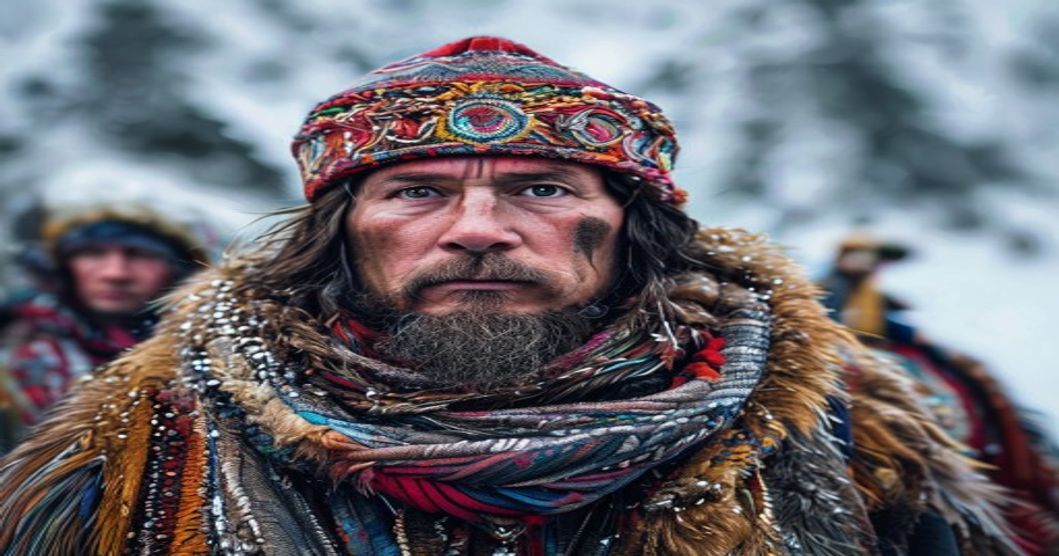
The New Era of Sami Cultural Expression
The indigenous communities across Sápmi are navigating a profound transformation driven by generational exchange, technological accessibility, and unprecedented institutional support. Traditional knowledge systems that once faced marginalization now anchor contemporary creative industries. Digital archives, open-source language applications, and cross-border academic partnerships have dismantled historical barriers to cultural transmission. Young practitioners blend ancestral motifs with modern mediums, producing works that resonate globally while maintaining strict protocol adherence.
- Expansion of Sámi-language broadcasting networks across Norway, Sweden, Finland, and Russia
- Integration of yoik vocal techniques into electronic music production and film scoring
- Establishment of indigenous-led design collectives reinterpreting duodji craftsmanship for sustainable fashion markets
- Legislative frameworks mandating Sámi consultation in resource development projects affecting ancestral territories
Contemporary visual artists utilize projection mapping on reindeer hides, while writers publish bilingual novels that challenge colonial narratives through non-linear storytelling. Educational institutions now certify traditional ecological knowledge alongside standard curricula, ensuring intergenerational transfer remains academically validated. The convergence of mobile documentation tools and satellite imagery enables communities to map sacred sites, monitor grazing patterns, and assert territorial claims with empirical precision.
Despite this momentum, structural challenges persist. Language attrition continues in rural municipalities lacking certified instructors, while commercial appropriation of Sámi symbols generates ongoing ethical debates. Successful initiatives prioritize community ownership over external representation, leveraging blockchain metadata for artifact provenance and implementing strict licensing protocols for cultural intellectual property. The trajectory points toward self-determined digital ecosystems where archival sovereignty, creative autonomy, and linguistic continuity operate as interconnected pillars rather than isolated achievements.
Historical Context and Traditional Foundations
The Sami people, indigenous to Fennoscandia and the Russian Kola Peninsula, developed cultural systems adapted to extreme subarctic conditions over thousands of years. Their traditional expression emerged from a symbiotic relationship with reindeer herding, which dictated seasonal migration routes across vast tundra and taiga ecosystems. These movements established complex kinship networks and land-use agreements that governed resource distribution long before modern borders divided their territories. Vocal traditions relied on the joik, a non-narrative musical form designed to evoke rather than describe its subject. Performers utilized microtonal variations, vocal fry, and rapid melodic oscillations to transmit ecological data, genealogical records, and territorial boundaries within oral archives. Regional dialects across the Sami language continuum preserved distinct historical phonetics that modern linguists now use to reconstruct ancient trade routes.
Material craftsmanship reinforced these knowledge systems through duodji, a regulated craft tradition requiring precise seasonal timing for material harvesting. Artisans processed reindeer antler, birch wood, and cured leather into tools, clothing, and ceremonial objects featuring geometric designs that functioned as clan identifiers and protective symbolism. The noaidi shamanic role mediated ecological and spiritual balance through drum ceremonies utilizing painted hide surfaces. These
Socio-Political Catalysts for Contemporary Revival
The contemporary resurgence of Sami cultural expression operates directly within a framework of structured political recognition and legislative reform. Decades of assimilation policies gave way to formalized land rights agreements, the 2005 Norwegian Sami Language Act, Sweden’s 2011 ILO Convention implementation, and the establishment of elected Sami parliaments across Norway, Sweden, and Finland. These institutions transformed marginalization into measurable political leverage, enabling communities to negotiate resource allocation, language preservation mandates, and heritage protection statutes. The Finnmark Act established legal precedents that recognized Indigenous land tenure as a prerequisite for cultural continuity. Political representation shifted from advisory capacity to decision-making authority, allowing Sami stakeholders to influence environmental assessments, mining permits, and tourism development on traditional territories.
- Legislative Recognition: Formal adoption of UNDRIP principles into national law created binding obligations for cultural protection and free, prior, and informed consent in resource extraction projects.
- Political Institutionalization: Elected Sami parliaments secured direct budgetary control over language revitalization programs, traditional reindeer husbandry subsidies, and heritage documentation initiatives.
- Economic Policy Alignment: Government grants now tie infrastructure development to cultural impact assessments, ensuring that tourism, energy, and forestry sectors fund museum archives, dialect standardization, and artisan supply chains.
- Youth-Led Advocacy Networks: Cross-border digital coalitions leverage parliamentary hearings, media campaigns, and academic partnerships to pressure policymakers into adopting bilingual signage mandates and Indigenous-led curriculum standards.
Policy implementation has accelerated through municipal bylaws requiring Sami language proficiency in public service roles and broadcasting quotas that mandate minimum airtime for Indigenous programming. Educational reforms now embed joik traditions, duodji craftsmanship, and oral history methodologies into national teacher certification requirements. Funding mechanisms operate on performance-based metrics tied to native speaker retention rates, intergenerational knowledge transfer, and cultural enterprise viability. International treaties function as enforcement tools rather than symbolic declarations, enabling litigation strategies that halt unauthorized commercialization of traditional motifs and secure royalty distributions for heritage IP. Municipal zoning laws now restrict large-scale extractive operations near sacred sites, while cross-border parliamentary committees coordinate synchronized language standardization efforts across Scandinavian jurisdictions. These structural shifts convert historical marginalization into measurable cultural sovereignty, establishing a repeatable model for Indigenous expression within modern governance frameworks.
Digital Media and Global Dissemination Channels
Digital infrastructure has completely transformed how Sami cultural artifacts, language documentation, and contemporary artistic output reach worldwide audiences. Traditional distribution relied heavily on regional broadcasting networks and physical museum archives
Online Archives and Indigenous Storytelling Platforms
The digitization of Sami heritage has fundamentally reshaped how Indigenous knowledge survives and evolves across generations. Physical collections scattered across northern Scandinavia faced persistent risks from environmental degradation, limited access, and institutional gatekeeping. Digital archives eliminate these geographic and logistical barriers while preserving fragile media in lossless formats. Modern platforms now host thousands of hours of yoik recordings, historical photographs, land-use maps, and legal documents tied to the Sápmi region. These repositories operate under strict provenance protocols that verify source communities before digitization begins.
Content organization within these spaces prioritizes contextual accuracy over algorithmic convenience. Metadata fields capture linguistic variations across North Sámi, Lule Sámi, South Sámi, and Inari Sámi dialects rather than forcing standardized translations. Contributors upload audio documents, video interviews with reindeer herders, and scanned manuscripts alongside interactive maps that link oral histories to specific grazing territories. Platform architects embed pronunciation guides and morphological breakdowns directly into search interfaces, enabling non-Sami researchers to navigate terminology without distorting cultural meaning.
- Community curation ensures that sensitive ceremonial knowledge remains restricted while educational materials stay openly accessible
- Blockchain verification tracks digitization chains to prevent unauthorized commercial exploitation
- AI-assisted transcription tools are trained exclusively on verified Sami corpora to avoid linguistic contamination
Indigenous storytelling platforms have shifted from passive repositories to active cultural laboratories. Creators embed contemporary yoik compositions alongside historical recordings, demonstrating how tradition adapts without losing structural integrity. Educational modules pair traditional duodji craftsmanship tutorials with modern design software workflows, bridging ancestral techniques and digital fabrication. Governance boards composed of Sámi elders, linguists, and digital archivists review every upload for cultural appropriateness before publication. This model dismantles colonial collection practices by returning authority over narrative framing to the communities that originated them.
Measurement of impact extends beyond visitor statistics. Platforms track language reclamation metrics through user-generated submissions, dialect preference filters, and intergenerational learning pathways. Researchers access anonymized usage patterns to identify which historical periods generate the most scholarly interest, guiding future preservation priorities. Municipal libraries partner with these digital networks to host localized workshops that sync physical artifact handling with virtual archive navigation. The infrastructure now functions as both memorial and living laboratory, ensuring Sami cultural expression remains dynamically controlled by its creators.
Language Preservation Technologies and Educational Tools
Digital infrastructure now anchors Sami language revitalization through specialized computational linguistics frameworks. Machine learning models trained on archival recordings from the Sámi Parliament and university repositories enable real-time dialect mapping across North, South, Inari, Skolt, and Lule variants. Community developers deploy open-source lexical databases that sync with municipal school networks, ensuring standardized orthography while preserving regional phonetic variations. Mobile applications utilize speech-to-text algorithms calibrated for Sami consonant gradation and vowel harmony, allowing users to log daily vocabulary in context rather than isolated word lists.
- Phoneme alignment systems process historical field recordings to reconstruct extinct dialect clusters and generate predictive text models trained exclusively on indigenous corpora.
- Grammar simulation engines visualize morphological shifts across case endings, possessive suffixes, and verb conjugations through interactive node diagrams that adapt to learner proficiency tiers.
- Low-latency streaming protocols deliver elder-to-mentor virtual sessions directly to rural learning hubs, bypassing urban-centric educational bottlenecks while maintaining audio fidelity for tonal accuracy.
Educational platforms integrate these technologies into structured curricula through competency-based frameworks designed for primary and secondary levels. Teachers access modular lesson banks containing annotated folktales, land-use terminology, and seasonal vocabulary aligned with national indigenous education standards. Gamified assessment engines track proficiency metrics, adapting difficulty based on individual error patterns in declension and conjugation. Research initiatives continuously evaluate engagement rates, content retention, and intergenerational transmission success through longitudinal data collection.
- Offline-capable servers deployed in remote learning centers house compressed audio libraries, encrypted cloud backups, and interactive mapping tools that link linguistic terms to traditional reindeer herding routes.
- Bilingual educator certification programs emphasize digital pedagogy over rote memorization, training instructors in contextual acquisition methods and trauma-informed teaching strategies for historically marginalized students.
- University-indigenous partnerships fund hardware grants and develop open-source APIs that allow third-party developers to build dialect-specific plugins without compromising data sovereignty or community governance protocols.
“`html
Frequently Asked Questions
What is The New Era of Sami Cultural Expression?
The New Era of Sami Cultural Expression refers to the contemporary renaissance and revitalization of Sámi arts, traditions, and voices across Sápmi (the traditional Sámi homeland spanning northern Norway, Sweden, Finland, and Russia). This movement blends ancestral practices such as joik singing, duodji handicrafts, and reindeer herding heritage with modern mediums including digital media, contemporary visual art, music, literature, film, and political activism. It represents a powerful assertion of Indigenous identity, language preservation, and cultural sovereignty in the 21st century.
Key facts about The New Era of Sami Cultural Expression
1. The Sámi are the only officially recognized Indigenous people in the European Union, with their own parliaments in Norway, Sweden, and Finland.
2. There are nine distinct Sámi languages, several of which are critically endangered and are being actively revived through education and media.
3. Joik (or yoik), the traditional Sámi folk singing style, has gained global recognition and is now performed in fusion genres alongside contemporary pop, jazz, and electronic music.
4. The annual Sámi Arts Festival and events like the World Sami Council have amplified Sámi visibility on international stages such as UNESCO and the UN Permanent Forum on Indigenous Issues.
5. Young Sámi artists, filmmakers, writers, and musicians are leading a cultural wave that challenges colonial narratives and reclaims storytelling through documentaries, social media, and published literature.
6. Traditional duodji (handicraft) is experiencing a revival, with contemporary designers integrating Sámi motifs into fashion, furniture, and public installations worldwide.
7. Land rights and environmental activism remain central to cultural expression, as the preservation of traditional reindeer herding territories directly supports cultural continuity.
“`