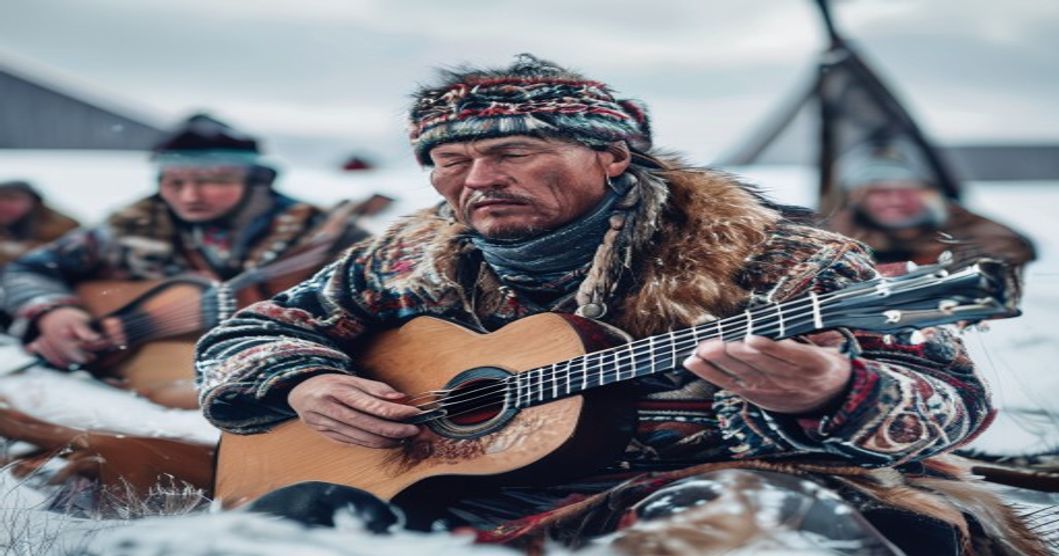
The Evolution of Yoik: From Ancient Ritual to Contemporary Sound
The yoik, a foundational element of Sámi musical heritage, transcends conventional Western song structures. Historically utilized for storytelling, spiritual connection, and identity preservation, the yoik operates as a melodic representation of a person, place, or animal rather than a narrative about it. In recent decades, contemporary Sámi musicians have reinterpreted this ancient practice, transforming it from an endangered oral tradition into a dynamic force within modern Nordic music. This revival addresses centuries of cultural suppression while adapting to digital streaming platforms and global folk circuits.
Reviving Yoik Traditions Through Cultural Activism
The late 20th century marked a pivotal turning point for Sámi music preservation. Following generations of assimilation policies that marginalized indigenous languages, artists began documenting and relearning traditional yoik techniques from elders. Community-led workshops in Tromsø, Finnmark, and Lapland established formal training programs focused on vocal placement, breath control, and microtonal inflections unique to Traditional joik singing. These efforts were amplified by organizations like the Sámi Music Council, which secured funding for archival projects and cross-generational mentorship. The result is a meticulously curated repertoire that maintains acoustic authenticity while preparing the foundation for experimental adaptation.
Modern Fusion: Blending Indigenous Vocals with Electronic and Folk Production
Contemporary Sámi music increasingly embraces modern fusion techniques, merging yoik melodies with ambient electronics, jazz harmonies, and world music instrumentation. Producers utilize field recordings of reindeer bells, wind patterns, and acoustic drum textures to create immersive soundscapes that honor Sámi environmental stewardship. Artists like Mari Boine, Wimme Saari, and newer acts such as Åkter and Jåkk have pioneered hybrid arrangements that retain linguistic integrity while incorporating synthesizers, bass lines, and contemporary percussion. This sonic hybridization does not dilute the yoik; rather, it amplifies its resonance across international festivals and academic ethnomusicology programs.
Vocal Techniques and Lyrical Innovation in Modern Adaptations
Modern practitioners maintain strict adherence to yoik vocal techniques, particularly the characteristic glottal stops, throat resonance, and rhythmic phrasing that distinguish it from standard polyphonic singing. However, lyrical composition has expanded beyond ancestral themes to address climate change, land rights, and digital identity. The Sámi language—spanning Northern, Inari, Skolt, and other dialects—remains the primary vehicle for these compositions. Songwriters employ code-switching strategies, blending indigenous phonetics with English or Scandinavian syntax to reach broader audiences without compromising cultural specificity.
Instrumentation and Production Methods in Sámi Fusion
While the yoik remains inherently vocal, contemporary arrangements frequently incorporate the Sámi drum (goavddis), traditional fiddles, and wind instruments like the korl. Producers manipulate these acoustic elements through granular synthesis and spatial audio processing to mirror Arctic landscapes. Studio techniques emphasize natural reverb, minimal compression, and dynamic range preservation to honor the genre’s oral lineage. Collaborative production models now pair Sámi composers with Nordic electronic producers, creating a sustainable ecosystem for indigenous music preservation in the digital age.
Economic and Educational Impact of the Sámi Music Renaissance
The resurgence of Contemporary Sámi Music has generated measurable cultural and economic benefits across Scandinavia. University programs in ethnomusicology now mandate yoik analysis, while music conservatories integrate indigenous pedagogy into vocal curricula. Festival circuit growth—driven by events like the Sámi Grand Prix and Nordic Folk Music Association showcases—has created touring opportunities that bypass traditional industry gatekeepers. Streaming algorithms increasingly prioritize region-specific folk content, allowing independent Sámi artists to monetize their work through direct-to-fan platforms and cultural grants. This structural shift ensures that musical innovation does not replace tradition but funds its continued transmission.
Global Influence and Cross-Cultural Collaborations
Sámi musicians have established strategic partnerships with Indigenous artists from Canada, Greenland, and Sámi diaspora communities, fostering a transnational network of modern fusion practices. These collaborations emphasize shared challenges around land sovereignty and linguistic revitalization, using music as diplomatic infrastructure. Record labels specializing in world music now allocate dedicated budgets for Sámi releases, recognizing the genre’s commercial viability alongside its academic significance. As climate documentation projects incorporate field recordings into musical scores, the intersection of ecology, technology, and indigenous soundscapes continues to define the next phase of Sámi musical evolution.
Understanding the Contemporary Sami Music Scene
The **Sámi musical ecosystem** operates across four Nordic nations with distinct regulatory frameworks. Producers rely on **regional dialect mapping** to maintain vocal authenticity. Modern distribution bypasses traditional gatekeepers through decentralized networks.
Origins and Cultural Foundations
Pre-Christian **animistic practices** dictated early rhythmic structures. Herding patterns established the foundational tempo for communal gatherings. Geographic isolation preserved unique **modal scales** across northern territories.
Oral transmission replaced written notation entirely until the twentieth century. **Sacred drum divination** provided the primary method for tracking musical lineage. Contemporary artists reconstruct these patterns through archival field recordings.
Language Revival and Yoik Tradition
The **Yoik technique** functions as a tonal signature rather than a lyrical narrative. Suppression policies forced practitioners to encode melodies within **phonetic abstraction**. Modern linguists now standardize these vocalizations for academic preservation.
Dialect revitalization programs fund dedicated vocal coaching initiatives. **Microtonal inflections** carry historical data that standard notation cannot capture. Artists utilize pitch-shifting tools to isolate these subtle frequency variations.
Key Artists Shaping Modern Sami Sound
Contemporary performers merge archival research with studio experimentation. Technical precision replaces romanticized folklore in current production cycles. **Cross-genre collaboration** drives measurable audience expansion.
Iver Johansen and the Duottartrail
The **Duottartrail** project layers acoustic field recordings over synthesized basslines. Engineers apply **polyphonic layering** to harmonize traditional vocal fragments. This method creates spatial depth without diluting linguistic clarity.
Studio sessions prioritize real-time monitoring of dialect pronunciation. **Acoustic-electric hybrid** arrangements bridge festival stages and streaming platforms. Listeners engage with the material through structured playlist ecosystems.
Elle Márjá Eira and Vocal Innovation
Eira employs **extended vocal techniques** to fracture conventional melodic expectations. Percussive breath control replaces traditional string accompaniment entirely. **Avant-garde folk** structures emerge from controlled vocal distortion.
Recording engineers capture transient peaks using high-sample-rate converters. Dialect researchers verify phonetic accuracy during post-production. **Experimental vocal textures** gain traction through niche editorial curation.
Jon Henrik Fjällgren and Cross-Genre Appeal
Fjällgren adapted traditional phrases into **commercially viable** pop structures. **Melodic adaptation** required careful frequency balancing to preserve vocal character. Radio programmers adopted these tracks after testing listener retention metrics.
Posthumous catalog management utilizes automated royalty tracking systems. **Cross-cultural resonance** expanded into mainstream festival lineups. Industry analysts track streaming velocity to optimize future releases.
Genre Fusion and Production Techniques
Production pipelines prioritize spectral clarity over dynamic compression. Traditional instruments undergo digital reconstruction before mixing. **Signal processing** maintains tonal integrity across playback devices.
Electronic Beats Meets Traditional Instrumentation
Engineers extract **impulse response samples** from acoustic lutes and frame drums. **Granular synthesis** stretches these recordings into atmospheric pads. Tempo-synced percussion aligns with historical herding cadences.
Sidechain compression isolates low-end frequencies from vocal tracks. **Spatial audio placement** positions traditional elements in the mid-field. Mastering engineers apply multiband dynamics to preserve transient detail.
Folktronica and Ambient Soundscapes
Producers map **harmonic series** to algorithmic generative sequencers. **Microtonal tuning** systems accommodate non-Western scale structures. Reverb tails emulate natural canyon acoustics without artificial coloration.
DAW templates standardize vocal processing chains for rapid iteration. **Field recording integration** introduces environmental noise as rhythmic material. Listeners experience immersive soundscapes through binaural monitoring.
Collaborative Networks and Cross-Cultural Projects
Artists utilize **secure cloud workspaces** for real-time file exchange. **Cross-disciplinary training** ensures technical fluency across production domains. **Collaborative networks** facilitate joint releases without geographic constraints.
Legal frameworks protect indigenous intellectual property during co-productions. **Blockchain metadata** tracks contribution splits across multiple jurisdictions. Distribution partners prioritize equitable revenue allocation for participating communities.
Global Reach and Cultural Diplomacy
International exposure relies on strategic placement rather than mass marketing. **Sync licensing** to documentary series drives consistent royalty streams. **Cultural diplomacy** initiatives fund touring circuits across European capitals.
International Recognition and Festival Presence
Festival curators prioritize **authentic representation** over exoticized programming. **Algorithmic discovery** channels amplify regional artists to global audiences. **Niche market penetration** occurs through targeted editorial playlists.
Live sound engineers deploy **directional microphone arrays** to capture acoustic nuance. **Real-time translation** overlays appear on digital screens during performances. Attendees engage with the material through multi-sensory installation design.
Preservation Through Modern Adaptation
Digital archives store **lossless audio formats** alongside linguistic annotations. **Machine learning models** assist in reconstructing fragmented historical recordings. **Open-source repositories** allow researchers to access primary source material.
Educational institutions integrate these archives into curriculum development. **Patent-free DSP algorithms** ensure long-term accessibility for independent studios. Preservation efforts prioritize community control over external extraction.
Frequently Asked Questions
What is Contemporary Sami Music Scene?
The contemporary Sami music scene is a dynamic and evolving artistic movement that fuses the traditional Sami joik with modern genres such as pop, rock, electronic, jazz, and hip-hop. Emerging from the indigenous Sami communities across northern Norway, Sweden, Finland, and Russia, it utilizes ancestral vocal techniques alongside modern production to express cultural identity, environmental awareness, and social resilience. The scene has gained significant international traction through major festivals, streaming platforms, and award-winning artists who bridge indigenous heritage with global musical trends.
Key facts about Contemporary Sami Music Scene
Key facts include the central role of the joik (a traditional monophonic song form that represents a person, place, or animal), the pioneering work of influential artists like Mari Boine, Wimme Saari, and Anna Stina, and the scene’s strong integration of Sami language and themes of indigenous rights and land protection. It has experienced rapid expansion through digital media and cross-cultural collaborations, while festivals and cultural centers actively preserve ancestral traditions while embracing modern youth culture and contemporary production methods.