For more than two millennia, the ideas of the ancient Greeks have spurred some of humanity’s greatest achievements. Philosophy, drama, science, and mathematics sprung from that particular peninsula in the Mediterranean. The work of the Greek scholars propelled Muslim thinkers during the Islamic Golden Age, and the European rediscovery of their ancient texts ignited the Renaissance and sustained the Enlightenment, giving way to new scientific advancements and even new ways of living and governing. These are six amazing breakthroughs from ancient Greece, born from some of history’s greatest minds.
Pythagoras’ Theorem Formed the Foundation of Geometry
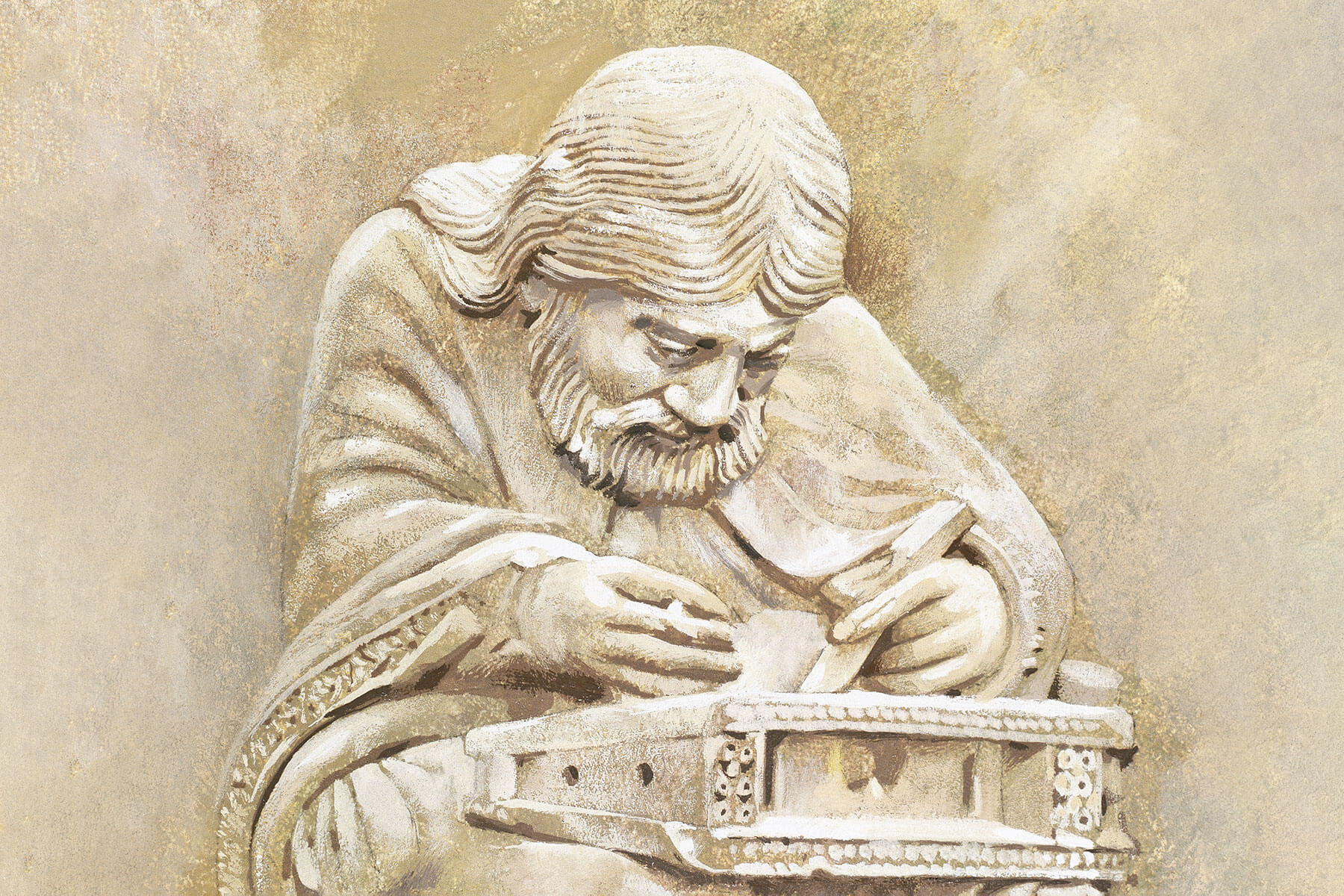
Pythagoras of Samos is arguably the most famous mathematician from ancient Greece (and there were a lot of them), and that’s because nearly every person at some point in their educational journey is taught his eponymous theorem. Expressed as a2 + b2 = c2, the Pythagorean theorem states that the sum of the squares of the two legs of a right triangle is equal to the square of the hypotenuse. In ancient times, this proved the existence of irrational numbers and formed the cornerstone of what became Euclidean geometry (more on Euclid later), which plays a very real role in construction and navigation today. Some of the world’s smartest minds have set out to provide proofs of the Pythagorean theorem, including Albert Einstein (he was 12 at the time), and new proofs are still being discovered to this day. Simply put, the world would be a very different place without Pythagoras’ triangular insight.
— advertisement —
Hippocrates Looked for a Scientific Cause of Illness
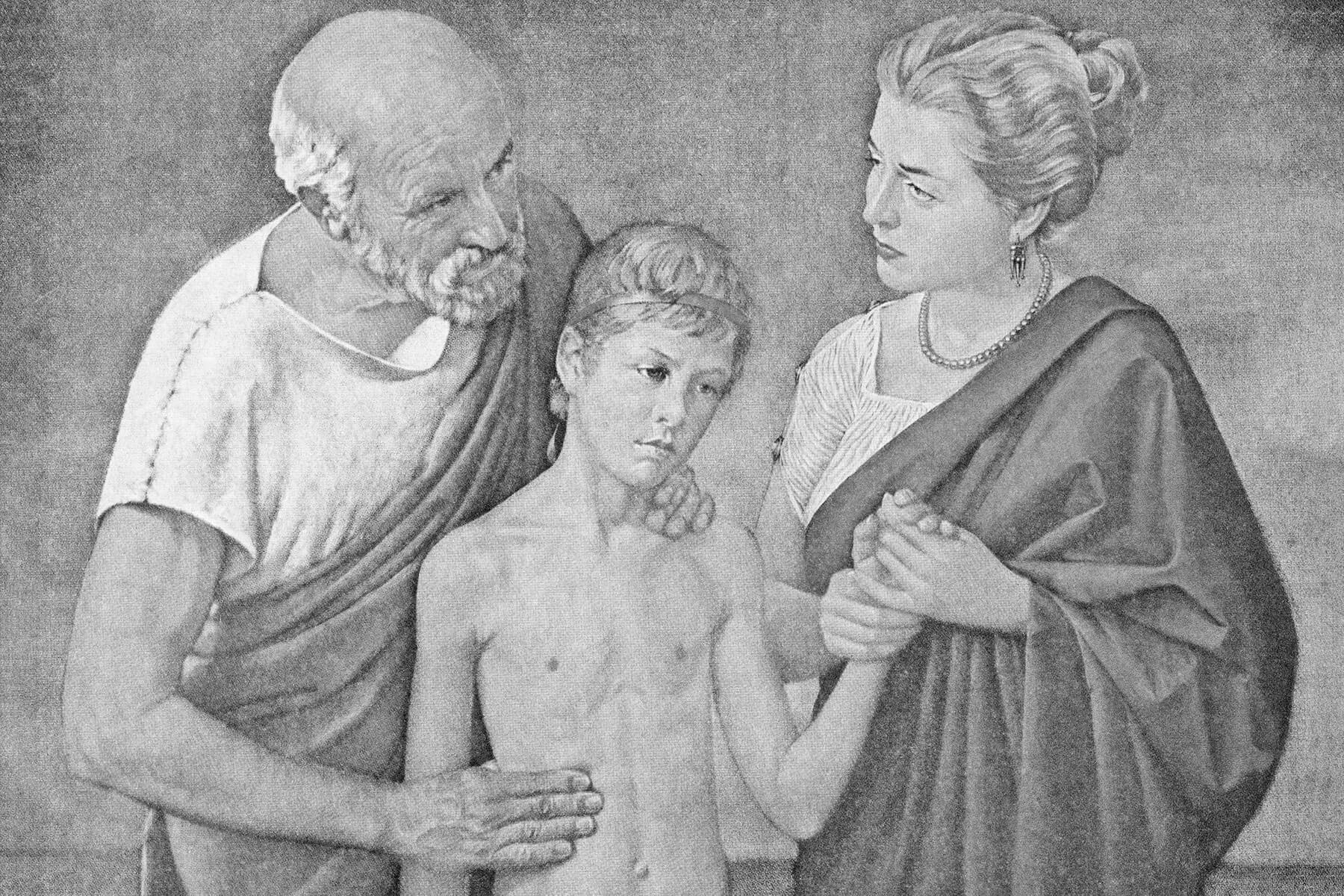
Watch any kind of medical drama, and it won’t be long before you hear the phrase “Hippocratic oath,” meaning a doctor’s sacred duty to “do no harm.” Although a bit of a myth in today’s hospitals, the oath is a lasting testament to the life and work of Hippocrates of Cos. Living in the fifth century BCE, Hippocrates was one of the world’s first physicians to explore the cause of illness beyond the usual divine explanations at the time (Zeus’ displeasure, for instance). He’s known as the “father of medicine” because he took a scientific approach to studying illness and tried devising treatments, as described in the 60 or so of his writings that survive to this day. Hippocrates influenced many future generations, but his most important student was arguably Galen of Pergamum in the second century CE, a Roman physician whose work became bedrock of European and Arabic medicine for more than a millennium, and who once claimed that all his knowledge originated with Hippocrates.
Aristotle Devised a System for Classifying Animals
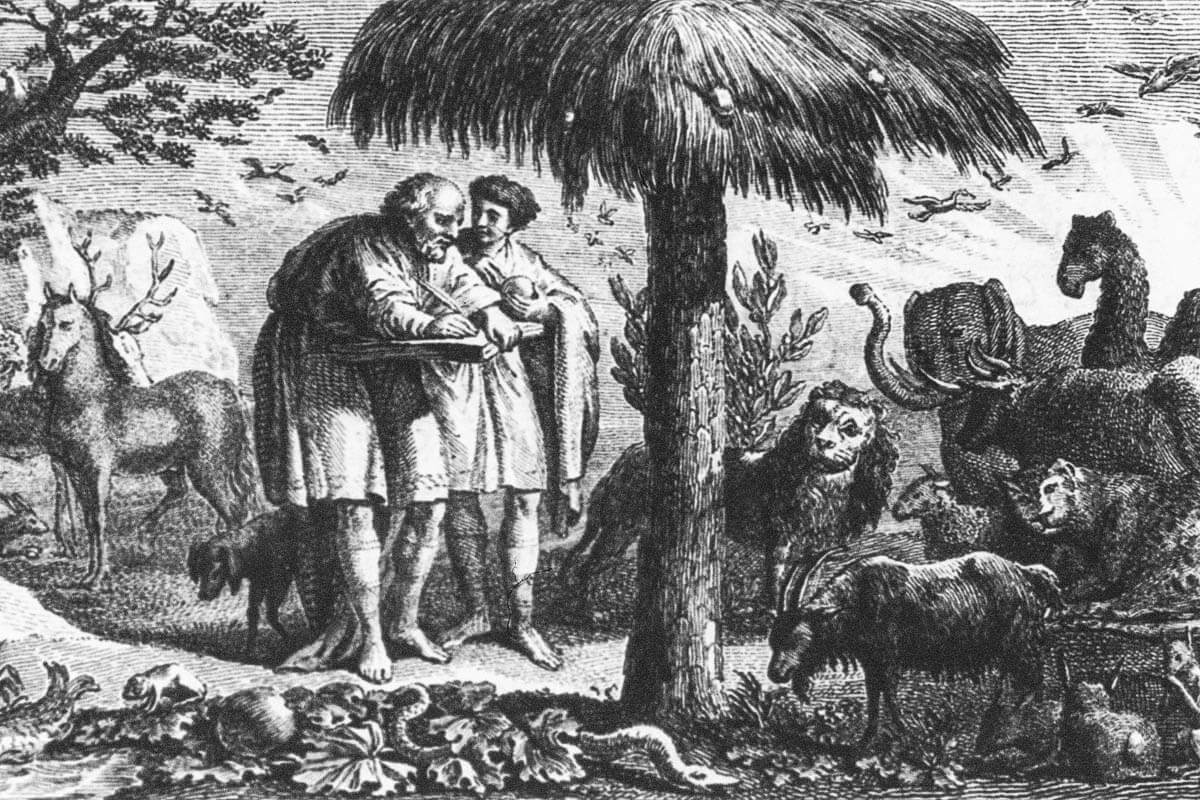
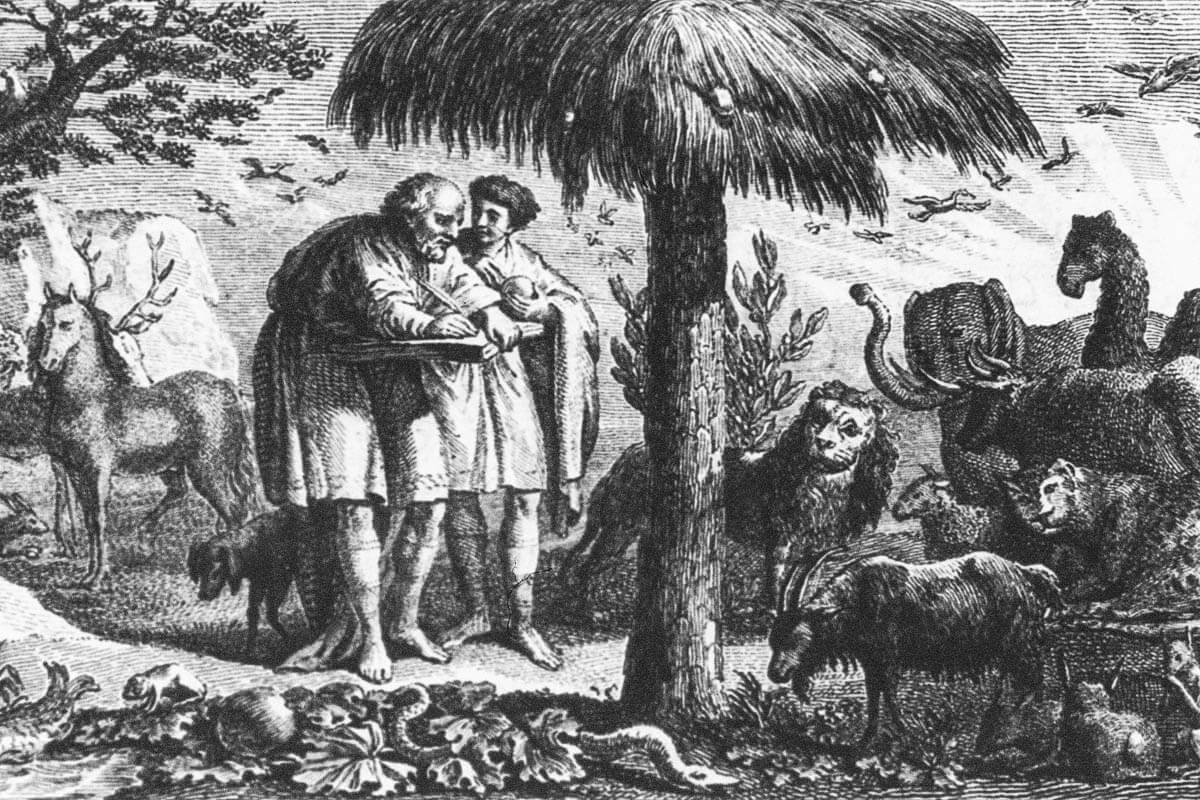
During Aristotle’s astounding life in the fourth century BCE, he wrote about a cornucopia of scientific subjects including physics, psychology, economics, ethics, government, and poetry. But what is often lost in that academic deluge is the fact that Aristotle was 2,200 years ahead of his time in the field of biology. Today, we classify animals using Latin names in a system devised by Swedish botanist Carl Linnaeus in the 18th century, but Aristotle created a classification system back in ancient Greece that was remarkably similar to our modern one. Aristotle separated animals into two groups: those with blood and those without blood (or at least red blood), and while Linnaeus didn’t use this particular distinction, it is similar to how the animal kingdom is separated into vertebrates (those with spines) and invertebrates. From there, the Greek thinker divided animals into “genera,” which were broader categories than the genus distinction we use today, and then by species. This groundbreaking foresight into ordering the natural world is why Aristotle is remembered today as the “father of zoology.”
— advertisement —
Euclid Knew That Light Traveled in a Straight Line
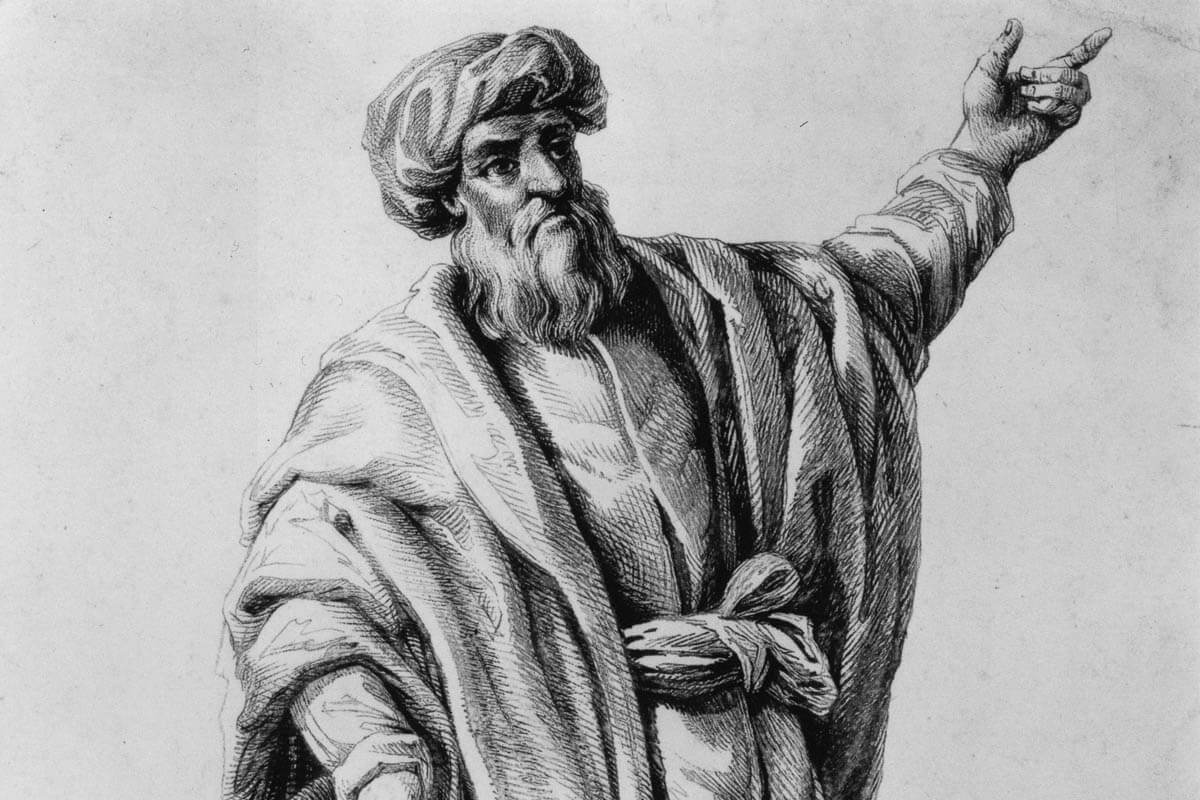
Euclid, considered the “father of geometry,” was no slouch when it came to studying the nature of light and vision. Published in 300 BCE, his work Optics is considered the first time a scholar gave serious scientific thought to the nature of light. Euclid theorized that light propagated in rays and traveled in a straight line, a big departure from the Platonic idea of light as an “ethereal emanation.” The nature of light and human vision became a vast field of study, interesting Romans, Muslim astronomers, Renaissance thinkers, Enlightenment scientists, and even 20th-century minds. Albert Einstein, for example, won the 1921 Nobel Prize in physics not for his general theory of relativity (as often presumed) but for a discovery in the field of optics known as the photoelectric effect.
Aristarchus Knew the Planets Orbited the Sun
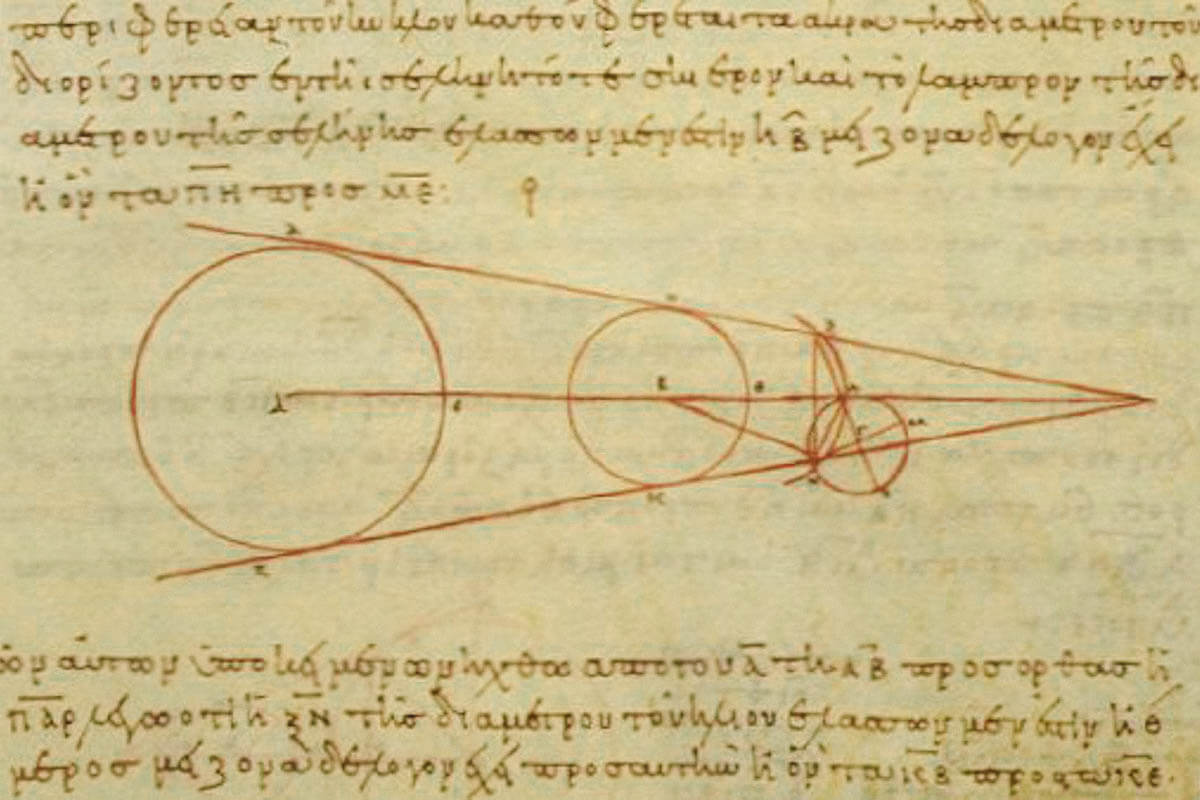
The publication of Nicolaus Copernicus’ Six Books Concerning the Revolutions of the Heavenly Orbs in 1543 is a major moment in history, as the Polish scientist’s heliocentric theory directly challenged Catholic dogma proclaiming that the Earth was at the center of the solar system. In reality, Copernicus was mostly reiterating what some ancient Greeks knew nearly two thousand years before. In the third century BCE, Aristarchus of Samos (likely drawing from the work of another Greek astronomer, Philolaus of Croton) theorized that the sun was much more massive than the Earth, and he placed the planet in its rightful orbit around the star — the first heliocentric model of the solar system. Much like Copernicus’ work, Aristarchus’ theory was met with pushback (with one Stoic saying he should be indicted for “putting into motion the hearth of the universe”) and his ideas were ultimately rejected. This allowed geocentrism to flourish for far too long until Copernicus, citing both Philolaus and Aristarchus, eventually set the record straight.
— advertisement —
Eratosthenes Accurately Measured the Globe
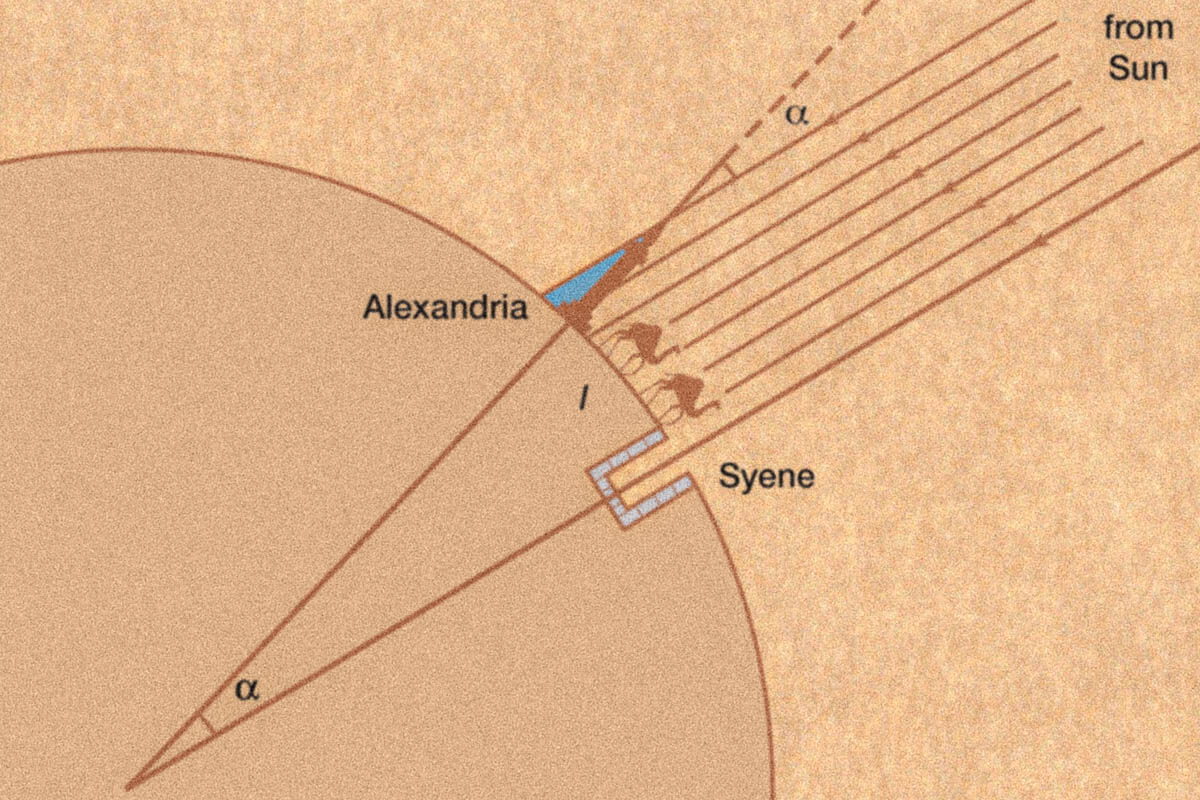
Around the same time Aristarchus was configuring the solar system into its rightful arrangement, the Greek mathematician Eratosthenes of Cyrene pulled off one of the greatest calculations in world history. For nearly 300 years, the ancient Greeks had known the Earth was round — Pythagoras established as much back around 500 BCE — but understanding that the Earth was a globe and comprehending its precise proportions were two different things entirely, and Eratosthenes set out to solve the latter. On the summer equinox in 240 BCE, Eratosthenes measured a shadow cast by a stick in Alexandria, Egypt, that measured 7.12 degrees (roughly one-fiftieth of a circle). Meanwhile, in Syene (modern-day Aswan, Egypt), a particular well cast no shadow, meaning the sun was directly overhead. The mathematician then hired surveyors to measure the distance from Alexandria to Syene and came up with 5,000 stadia. This measurement enabled him to calculate the Earth’s circumference at 250,000 stadia, or somewhere between 24,000 and 29,000 miles (the exact length of a stadium is debated). Today, we know the Earth measures about 24,900 miles around the equator. In other words, even over 2,200 years ago, Eratosthenes just about got it right.