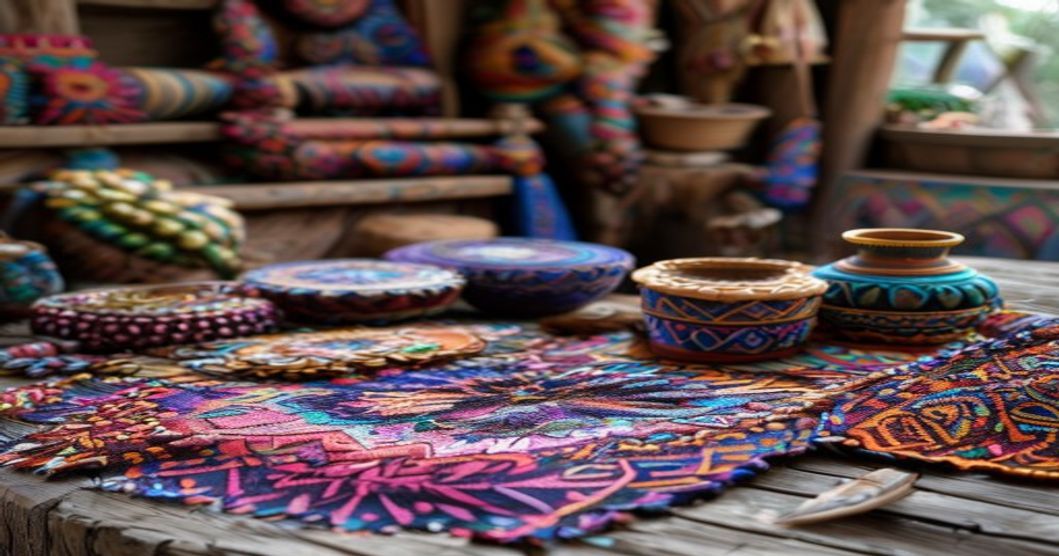
Historical Context & Cultural Significance
The origins of Sami handicrafts trace back millennia to the indigenous Sámi people who inhabit the Arctic regions of Norway, Sweden, Finland, and Russia. Rooted in a nomadic lifestyle centered around reindeer herding, fishing, and foraging, these crafts emerged as essential tools for survival and spiritual expression. The concept of duodji, the official term for Sámi traditional craftsmanship, encompasses both functional objects and decorative art forms that reflect a deep ecological philosophy. Each piece historically served a dual purpose: meeting daily necessities while encoding cultural narratives, clan identities, and ancestral wisdom into tangible form.
Decoding Traditional Symbols & Motifs
Geometric Patterns & Spiritual Meanings
Sámi artisans utilize precise geometric arrangements to convey cosmological beliefs and seasonal cycles. Interlocking triangles, zigzags, and concentric circles are not merely decorative but represent the interconnectedness of human life, animal spirits, and celestial movements. The sun symbol, often rendered in red, blue, and yellow threadwork, signifies vitality and the cyclical return of light in polar regions. Similarly, the reindeer antler motif embodies resilience, migration patterns, and the sacred bond between herders and their livestock.
Nature-Inspired Designs & Ecological Wisdom
Traditional Sámi art consistently mirrors the Arctic landscape through stylized representations of mountains, rivers, tundra vegetation, and wildlife. These nature motifs function as visual archives of environmental observation, documenting climate shifts, migration routes, and resource locations across generations. The mountain ridge pattern denotes territorial boundaries and spiritual guardianship, while wave-like sequences map waterways critical for fishing communities. Such designs operate as mnemonic devices, preserving geographical knowledge in a pre-literate societal framework.
Materials, Techniques & Sustainable Practices
Reindeer, Wood, and Natural Dyes
Sámi crafts rely exclusively on locally sourced, renewable materials that align with principles of environmental stewardship. Reindeer antler and bone provide durable substrates for intricate carving, while birch bark and root form the structural base of baskets and containers. Wool from indigenous reindeer breeds is processed using traditional spinning wheels and looms. Coloration derives entirely from ecological sources: lichen yields ochre yellows, alder bark produces rust reds, and pine resin contributes amber tones, ensuring zero chemical contamination in the final products.
Traditional Tools & Contemporary Adaptations
Historical craftsmanship employs hand-forged iron knives, bone awls, and wooden treadle looms to achieve precision without mechanization. Modern artisans integrate these ancestral methods with contemporary design standards, maintaining authenticity while expanding market viability. Hand-stitching techniques such as the Sámi cross-stitch and knit patterns require hundreds of hours of labor, reinforcing the cultural value of patience and skill transmission. Contemporary adaptations include ergonomic tool modifications and digital pattern archiving, which protect original designs from cultural appropriation while enabling global distribution.
Preserving Heritage Through Modern Craftsmanship
Artisan Cooperatives & Global Recognition
Established artisan cooperatives across Sápmi coordinate production quality, ethical sourcing, and fair trade certification to sustain traditional economies. These organizations facilitate access to international markets while enforcing strict guidelines regarding cultural authenticity and intellectual property rights. The global demand for indigenous luxury goods has elevated Sámi handicrafts from regional artifacts to internationally recognized design categories, with museum acquisitions and fashion collaborations validating their artistic merit.
Educational Initiatives & Cultural Transmission
Cultural preservation relies on structured knowledge transfer through apprenticeship programs, university curricula, and community workshops. Specialized institutions teach material processing, symbolic decoding, and historical context to ensure intergenerational continuity. Government-funded grants support master craftspeople in documenting endangered techniques, while digital repositories store high-resolution pattern databases accessible to certified artisans. These educational frameworks prevent cultural dilution by emphasizing contextual understanding over commercial replication.
Frequently Asked Questions
What is Sami Handmade Crafts and Their Meanings?
Sami Handmade Crafts and Their Meanings refers to the traditional artistic expressions of the Sámi people, indigenous to northern Scandinavia and Russia. These crafts, such as duodji (traditional handicrafts), weaving, knitting, and reindeer antler carving, carry deep cultural significance, symbolizing nature, spirituality, community identity, and ancestral heritage.
Key facts about Sami Handmade Crafts and Their Meanings
Key facts include: (1) They are traditionally made using natural, locally sourced materials like reindeer leather, wool, birch wood, and antlers. (2) Patterns and symbols often reflect the Arctic environment, seasonal cycles, and Sámi mythology. (3) Each craft serves both practical and ceremonial purposes in Sámi daily life and rituals. (4) The art form is recognized by UNESCO as an important part of intangible cultural heritage, emphasizing sustainability and cultural preservation.