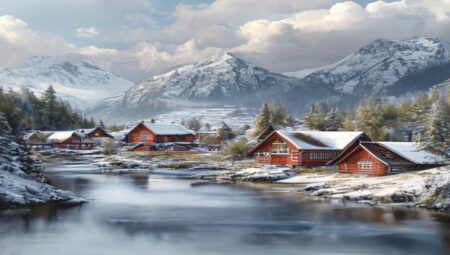
Historical Foundations of Sami Land Claims
The Sámi people have inhabited the northern reaches of Norway, Sweden, Finland, and Russia for millennia, maintaining a continuous relationship with the landscape that predates modern nation-state boundaries. Traditional land use relied on seasonal reindeer herding, fishing, hunting, and gathering, which required vast, unfragmented territories to sustain migratory patterns. Colonial policies in the 19th and 20th centuries systematically marginalized Indigenous land tenure, framing Sámi territories as state-owned or open-access resources. The concept of allemansrätt (freedom to roam) in Sweden and similar doctrines elsewhere effectively erased customary ownership, paving the way for resource extraction without consent.
Traditional Ecological Knowledge and Seasonal Migrations
Sámi environmental stewardship emerged from traditional ecological knowledge (TEK), a sophisticated system of land management passed through generations. Reindeer herding demanded precise navigation across altitudinal gradients, with winter pastures in forested inland areas and summer grazing in alpine tundra. Disruption of these corridors directly threatened food security and cultural continuity. Modern GIS mapping and satellite tracking have validated historical migration routes, demonstrating how Sámi practices maintained biodiversity, controlled overgrazing, and preserved wetland ecosystems long before contemporary conservation frameworks existed.
Legal Frameworks and Recognition Gaps
National courts in Scandinavia have oscillated between acknowledging Sámi customary rights and upholding state sovereignty over natural resources. The 1960 Norwegian Forest Act and Sweden’s 1978 Reindeer Herding Act established limited usage rights but stopped short of recognizing ownership. Constitutional amendments in Norway explicitly reference the Sámi as Indigenous peoples, yet implementation remains fragmented across municipal and county jurisdictions.
International Instruments Versus National Implementation
The United Nations Declaration on the Rights of Indigenous Peoples (UNDRIP), ratified by all three Nordic states, mandates free, prior, and informed consent (FPIC) for projects affecting Indigenous territories. ILO Convention 169 reinforces consultation requirements, yet domestic legal challenges frequently override these standards. The European Court of Human Rights has intervened in cases where state approvals violated Article 8 (right to private life) and Article 1 of Protocol 1 (property rights), creating precedents that force policy recalibrations but leave systemic gaps intact.
Environmental Pressures on Sápmi
Sápmi faces compounding ecological stressors driven by economic development models prioritizing resource extraction over Indigenous sovereignty. Mountain ranges, peatlands, and coastal zones host untapped mineral deposits, making the region a focal point for corporate investment.
Extractive Industries and Infrastructure Development
Iron ore mining in Kiruna (Sweden), lithium exploration in Finnmark (Norway), and rare earth element projects in Lapland trigger direct habitat fragmentation. Wind energy infrastructure, marketed as climate solutions, frequently crosses reindeer calving grounds and migration pathways. The Fosen wind farm controversy exemplifies this tension: Norwegian authorities approved turbines on culturally sacred terrain without adequate consultation, resulting in a landmark court ruling that recognized the violation of Sámi land rights despite the project’s renewable energy credentials.
Climate Change and Reindeer Herding Vulnerability
Rapid warming in Arctic regions accelerates permafrost thaw, alters vegetation zones, and increases frequency of rain-on-snow events. These phenomena form impenetrable ice layers that block reindeer from accessing lichen, leading to mass starvation. Sámi herders adapt through altered grazing schedules and cooperative resource pooling, yet structural support for climate resilience remains insufficient compared to subsidies granted to industrial operators.
Contemporary Activism Strategies
Sámi environmental activism operates across legal, cultural, and transnational dimensions, leveraging both institutional channels and direct action to protect territorial integrity.
Legal Mobilization and Cross-Border Solidarity
Litigation has become a primary tool for enforcing land claims. The Sámi Parliament of Norway and Sweden file strategic lawsuits targeting permit approvals, while international bodies like the UN Human Rights Committee review complaints regarding FPIC violations. Cross-border networks link activists in Sápmi with Indigenous groups globally, sharing litigation tactics, mapping methodologies, and policy advocacy frameworks that pressure governments to align domestic law with Indigenous rights standards.
Grassroots Campaigns and Cultural Resilience
Direct action includes blockades of mining roads, occupation of state-owned lands, and digital documentation of environmental degradation. Youth-led initiatives utilize social media to broadcast reindeer mortality events, wind turbine impacts, and illegal logging operations. Cultural revitalization efforts—reinstating place names, reviving joik singing tied to specific landscapes, and establishing Indigenous-led conservation zones—reinforce territorial claims by embedding sovereignty in daily practice rather than relying solely on legal recognition.
Frequently Asked Questions: Environmental Activism Among Sami Communities
What is Environmental Activism Among Sami Communities?
Environmental activism among Sami communities refers to the organized efforts by the indigenous Sami people of northern Scandinavia and Russia to protect their ancestral lands, reindeer grazing areas, and water resources from industrial development, climate change, and government policies that threaten their traditional way of life.
Key facts about Environmental Activism Among Sami Communities
Key facts include: the Sami have a long history of land rights advocacy dating back to the 1970s; they played a crucial role in stopping the Kvillfjord nickel mine and opposing wind farm expansions in Sápmi; the Sami Parliament in Norway, Sweden, and Finland legally recognizes their right to participate in environmental decision-making; and their activism is deeply rooted in the cultural principle of ‘duodji’ and sustainable coexistence with nature.